Buenos Aires Guide 2026
Buenos Aires runs on steak, tango, and late nights. Dinner starts at 10 PM, milongas don’t fill until midnight, and the Sunday ritual is an asado that stretches past 4 PM. It’s a city of grand European architecture, chaotic football passion, and the kind of cafe culture where nobody rushes you. In 2026 the peso has stabilised, the blue dollar gap has vanished, and card payments finally work everywhere — making this the easiest time to visit in a decade.
$40–70/day budget
18°C avg
Visa-free 90 days / ARS $
12 Essential Buenos Aires Attractions
Buenos Aires packs world-class museums, iconic architecture, and free attractions into a walkable grid. Many of the best experiences — wandering Recoleta Cemetery, browsing San Telmo Market, exploring El Ateneo Grand Splendid — cost nothing at all.
| Attraction | Price (ARS / USD) | Highlight |
|---|---|---|
| Teatro Colón | Tour ARS 12,000 (~$9) | World’s 3rd-best opera house, 50-min guided tour |
| Recoleta Cemetery | Free | Eva Perón’s tomb, 4,691 vaults, Beaux-Arts masterpiece |
| MALBA | ARS 5,000 (~$3.50); Wed half-price | Latin American modern art, Frida Kahlo, Botero |
| Casa Rosada | Free (book online) | Presidential palace, Museo del Bicentenario below |
| El Ateneo Grand Splendid | Free | 1919 theatre converted to bookstore, NatGeo “most beautiful” |
| San Telmo Market | Free | 1897 iron-frame market, antiques, Sunday fair spills 30+ blocks |
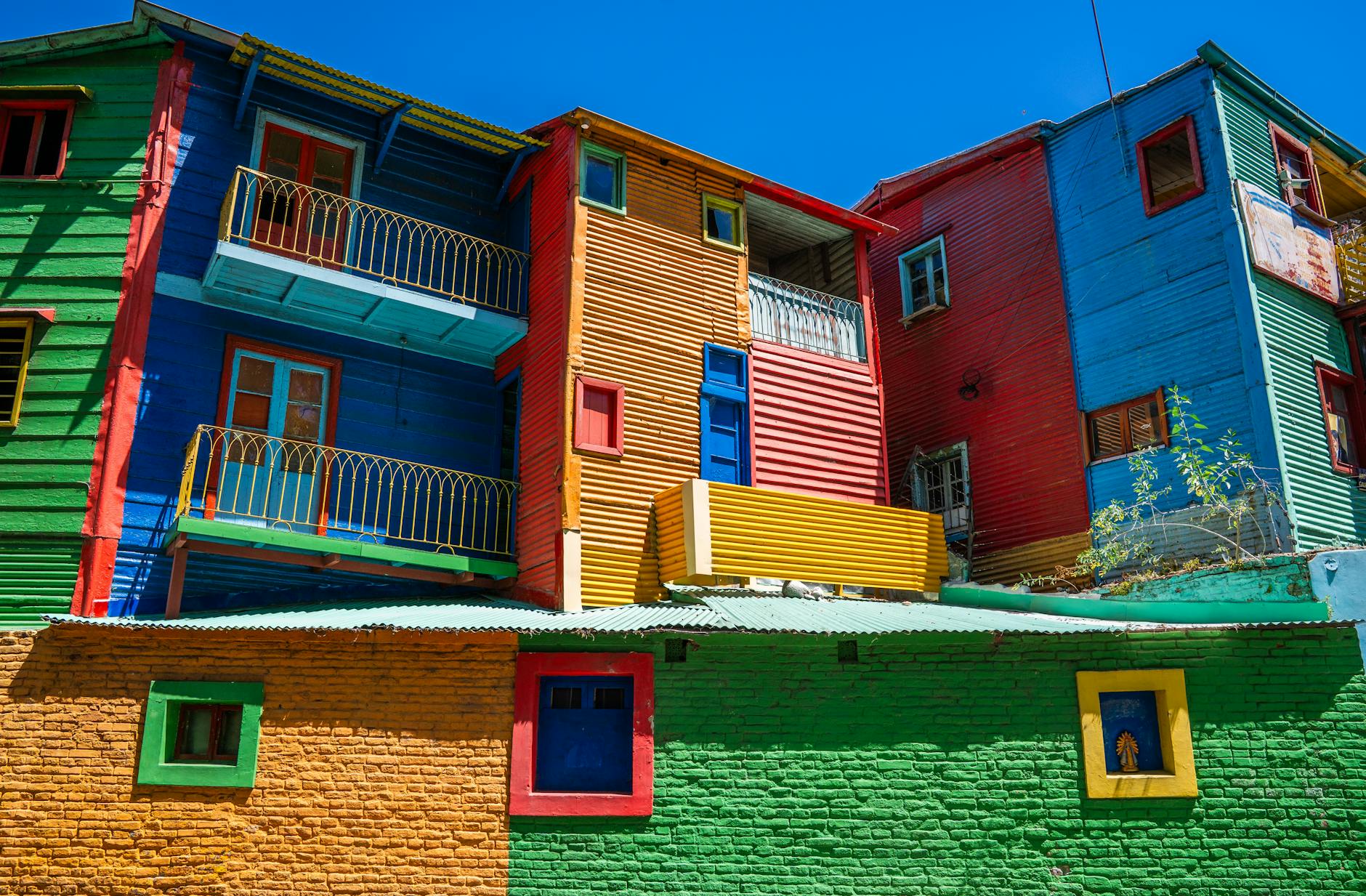
| El Caminito (La Boca) | Free | Colourful street museum, tango performers, Quinquela Martín murals |
| Museo Nacional Bellas Artes | Free | Largest public art collection in Argentina, Rodin, Goya, Monet |
| Centro Cultural Kirchner (CCK) | Free | Former post office, La Ballena Azul concert hall, exhibitions |
| Jardín Japonés | ARS 3,000 (~$2) | Largest Japanese garden outside Japan, koi, tea house |
| Planetario Galileo Galilei | ARS 2,000 (~$1.50) | Iconic 1960s dome in Palermo woods, light shows |
| Museo Evita | ARS 4,000 (~$3) | Eva Perón’s life, dresses, letters, Palermo Chico mansion |
Recoleta Cemetery — The City of the Dead
Argentina’s most visited attraction is a cemetery. Opened in 1822, Recoleta Cemetery contains 4,691 vaults spread across winding marble streets — an entire city in miniature, with domes, columns, stained glass, and angels. The architecture is extraordinary: Beaux-Arts, Art Nouveau, Art Deco, and Neo-Gothic, all crammed into a few hectares.
Everyone comes for Eva Perón’s tomb (Familia Duarte, look for the flowers and plaques). But don’t stop there: find the tomb of Rufina Cambaceres (the girl who was buried alive in 1902 — her coffin has scratch marks), the Paz family mausoleum (modelled on Rome’s Pantheon), and the Civil family’s elaborate marble angel. Free guided tours run Tuesday–Friday at 11 AM and weekends at 11 AM and 3 PM (in Spanish, 45 min). English tours available through private guides ($15–30 USD).
El Ateneo Grand Splendid — The World’s Most Beautiful Bookstore
A 1919 theatre designed by Peró and Torres Armengol, converted into a bookstore in 2000. The balconies became bookshelves, the stage became a reading café, and the original frescoed ceiling by Italian artist Nazareno Orlandi remains intact overhead. National Geographic named it “the most beautiful bookstore in the world” in 2019. Admission is free — walk in, take the elevator to the upper levels for the best views, and have a coffee on the stage (ARS 4,000–6,000). Located on Avenida Santa Fe 1860 in Recoleta/Barrio Norte.
Teatro Colón — A Guide to Argentina’s Grandest Stage
Opened in 1908 and consistently ranked among the world’s top three opera houses alongside La Scala and the Palais Garnier, Teatro Colón seats 2,487 with standing room for 500 more. The acoustics are considered near-perfect — Luciano Pavarotti called it “the best sound in the world.”
Guided tours run every 15 minutes daily (ARS 12,000/~$9, 50 min). You’ll see the main auditorium, the golden horseshoe of balconies, backstage workshops where 1,500 staff build sets and costumes, and the underground rehearsal halls. Book online at teatrocolon.org.ar to skip the queue.
Performances are the real prize. Opera, ballet, and symphony tickets range from ARS 5,000 to ARS 80,000 (~$4–$57) depending on the seat. The 2026 season opens in March and runs through December. Standing-room paraiso (paradise) tickets go on sale same-day for as little as ARS 3,000 — arrive early.
Asado — The Ritual of Argentine Beef
Asado isn’t just grilled meat — it’s Argentina’s national ritual. A proper asado starts with chorizo and morcilla (blood sausage) on the grill, followed by provoleta (grilled provolone), then the main cuts over slow embers for 2–3 hours. Understanding the cuts is essential: bife de chorizo (sirloin strip, no bone), entraña (skirt steak, the local favourite), vacío (flank, slow-grilled), tira de asado (short ribs, cross-cut), and molleja (sweetbreads, crispy outside, creamy inside).
Best Parrillas in Buenos Aires
Don Julio — The World’s Best Steakhouse
World’s 50 Best Restaurants 2025: #10. Latin America’s 50 Best: #3. Michelin 1★ + Green Star (sustainability). Pablo Rivero’s Palermo parrilla on Guatemala 4691 has become the hardest reservation in South America. The cattle come from Rivero’s own regenerative farm 90 km from Buenos Aires — Aberdeen Angus and Hereford, raised, butchered, and dry-aged in-house.
Prices (April 2026): Bife de chorizo angosto ARS 82,000 (~$59), bife de chorizo ancho ARS 89,000 (~$64), molleja ARS 49,000, provoleta ARS 15,000, cubierto ARS 6,000/person. Wine by glass from ARS 27,000. Dinner for two with wine: ~ARS 500,000 (~$360). Yes, it’s expensive by BA standards — and still half what a comparable meal costs in London or New York.
Reservations: Book 90 days ahead via website or WhatsApp (more availability via WhatsApp). Walk-in waitlist opens daily at 6 PM — expect 1–2 hours, but they serve complimentary sparkling wine and mini empanadas while you wait.
More Outstanding Parrillas
- La Cabrera (Palermo) — Famous for its portion sizes and table covered in small side dishes (matambre, provoleta, grilled vegetables). Full meal from ARS 90,000 (~$64) per person. Happy hour 6:30–8 PM daily: 40% off the entire menu. Open since 2001.
- El Pobre Luis (Belgrano) — The locals’ parrilla. No tourist crowd, just excellent lomo and entraña in a no-frills setting. Half the price of Palermo.
- La Brigada (San Telmo) — Waiters cut your steak with a spoon to show tenderness. Walls covered in football memorabilia. Bife de lomo ~ARS 22,000–28,000.
- Cabaña Las Lilas (Puerto Madero) — Michelin-listed, waterfront parrilla with own cattle ranch. Bife ancho ~ARS 30,000–38,000. Tourist-friendly but genuinely excellent.
Essential Buenos Aires Food
Beyond steak, porteño food reflects Italian immigration (pizza, pasta, gelato), Spanish traditions (empanadas, churros), and a fierce local identity (choripan, dulce de leche on everything).
| Dish | Price (ARS) | Where to Try |
|---|---|---|
| Empanada | 2,000–3,500 each | El Sanjuanino (Recoleta), La Cocina, cumana |
| Pizza (muzza slice) | 3,000–5,000 al molde | Gþerrín, El Cuartito, Las Cuartetas |
| Choripán | 3,000–5,000 | Costanera carts, La Boca street vendors |
| Milanesa napolitana | 10,000–16,000 | El Pobre Luis, any bodegón |
| Medialunas | 2,000–3,000 each | Any panadería, Café Tortoni |
| Ñoquis del 29 | 8,000–14,000 | Any restaurant on the 29th of each month |
| Helado (1/4 kg) | 4,000–7,000 | Cadore, Lucciano’s, Rapanui |
| Alfajor | 1,500–3,000 | Havanna, Cachafaz, Guaymallén (budget) |
| Bondiola sandwich | 4,000–7,000 | Street carts near Costanera |
| Locro | 8,000–12,000 | Any bodegón, especially May 25 (national dish day) |
Buenos Aires Pizza — Not What You Expect
Forget thin-crust Italian. Buenos Aires pizza is thick, doughy, and drowned in cheese — a legacy of Genovese immigrants. The classic order: muzza (mozzarella, ARS 24,000 for a whole pie at Gþerrín as of Aug 2025), fugazza (onion, no cheese), and fugazzeta (onion with cheese, invented at Banchero in La Boca in 1893). Add fainá — a chickpea flatbread stacked on top of your pizza slice.
- Gþerrín (Corrientes 1368, since 1932) — The temple. Eat al mostrador (standing at the counter) for the authentic experience. Slice of muzza ~ARS 5,000.
- El Cuartito (Talcahuano 937, since 1934) — Boxing memorabilia on walls, thick slices, Quilmes on tap.
- Las Cuartetas (Corrientes 838, since 1932) — Named after the verse form, across from Gþerrín. Late-night favourite after theatre.
- Banchero (La Boca, since 1932) — The birthplace of fugazzeta. Worth the trip to La Boca before dark.
Empanadas — Argentina’s Perfect Snack
Every Argentine province has its own style. Tucumanas (hand-cut beef, cumin, egg, potato, fried) are rich and heavy. Salteñas (ground beef, egg, olive, scallion, baked) are the Buenos Aires classic. El Sanjuanino in Recoleta has been the benchmark for decades — crispy fried empanadas in a rustic tavern setting. Budget ARS 2,000–3,500 per empanada; a dozen makes a full meal for two for ARS 24,000–42,000 (~$17–30).
Where to Eat — Michelin Stars & Latin America’s 50 Best
Argentina received its inaugural Michelin Guide in November 2023, covering Buenos Aires and Mendoza. The 2025 edition awarded 10 stars across both cities. However, in April 2026 the Argentine government announced it would cease funding the guide — the future of Michelin Argentina remains uncertain. The restaurants, of course, remain excellent regardless.
| Restaurant | Stars / Ranking | Style & Price |
|---|---|---|
| Aramburu | ⭐⭐ Michelin / LatAm #35 | 16-course tasting, ARS 80,000–120,000 (~$57–86). Recoleta. |
| Don Julio | ⭐ Michelin + 🌿 Green Star / World #10 / LatAm #3 | Parrilla, ARS 150,000–250,000 (~$107–179) per person with wine. Palermo. |
| Trescha | ⭐ Michelin / LatAm #36 | Chef’s counter, seasonal Argentine. Villa Crespo. |
| Crizia | ⭐ Michelin (NEW 2025) / LatAm #40 | Seafood fine dining, sustainable fisheries. Palermo. |
| Niño Gordo | LatAm #21 | Argentine-Asian fusion. Palermo. |
| El Preferido de Palermo | LatAm #24 | Classic bodegón, organic ingredients. Pablo Rivero. |
| El Mercado | LatAm #27 | Open fire, clay oven, taverna. San Nicolás. |
| Julia | LatAm #50 | Intimate 8-seat team, ethical dining. Palermo. |
Bib Gourmand — Best Value Restaurants
Michelin’s Bib Gourmand list highlights excellent quality at moderate prices. Buenos Aires has 10 Bib Gourmands (2025 edition):
- Ácido (Palermo) — Modern Argentine small plates, natural wines. Inventive and affordable.
- Ajo Negro (San Telmo) — Open-fire Argentine-Asian fusion. Smoky, creative, great value.
- Anafe (Palermo) — Seasonal menu with garden ingredients.
- Café San Juan (San Telmo) — Legendary neighbourhood restaurant, massive portions, Leandro Cristóbal’s cooking.
- Elena (Retiro, Four Seasons) — Hotel restaurant that transcends the genre. Excellent steaks.
- Gran Dabbang (Palermo) — Indo-Argentine spice-forward cooking. No reservations, tiny space.
- La Mar (Puerto Madero) — Gastón Acurio’s Peruvian cevichería.
- MN Santa Inés (Palermo) — Open-fire, pastoral setting, ingredient-driven.
- Proper (Palermo) — Refined modern Argentine bistro.
- Sacro (Palermo) — Mediterranean-Argentine, great wine list.
Café Culture — Buenos Aires’ Bares Notables
Buenos Aires protects its historic cafes under the Bares Notables programme — over 80 historic establishments with preserved interiors, many dating to the early 1900s. A café con leche with medialunas (croissants) is the universal porteño breakfast, running ARS 5,000–8,000 (~$4–6).
Café Tortoni — Buenos Aires’ Most Famous Café
Founded in 1858 on Avenida de Mayo 825, Café Tortoni is the oldest cafe in Buenos Aires. The dark wood, stained glass, and marble tables have hosted Borges, Gardel, and Alfonsina Storni. There’s no entrance fee — just order. Café con leche ARS 4,000–6,000, churros con chocolate ARS 5,000–7,000. The basement hosts nightly tango shows (from $85 USD with dinner).
The queue: Expect a 15–30 minute wait on weekends. Go at opening (8 AM) or late afternoon (4–5 PM) to walk straight in.
More Bares Notables
- La Biela (Recoleta) — Under the famous rubber tree, across from Recoleta Cemetery. The terrace is where Recoleta’s elderly locals hold court. Café con leche ARS 5,000–7,000.
- Los 36 Billares (Corrientes) — Pool hall and café since 1894. Still has working billiard tables upstairs.
- Café de los Angelitos (Rivadavia) — Art Nouveau showpiece from 1890, now a tango dinner-show venue ($85–190 USD). The afternoon coffee service is calmer and cheaper.
- El Federal (San Telmo) — 1864, the oldest bar in San Telmo. Exposed brick, antique furniture, and a menu of porteño classics.
Helado & Dulce de Leche
Argentine ice cream rivals Italian gelato — and the dulce de leche flavour is non-negotiable. The standard unit is a 1/4 kilo (2 flavours, ARS 4,000–7,000). Serious heladeros age their dulce de leche base for 72+ hours.
- Cadore (Corrientes 1695) — The connoisseur’s choice since 1957. Dulce de leche granizado (with chocolate chips) is the signature. Long queues on summer evenings.
- Lucciano’s (multiple locations) — Modern, Instagram-friendly, individual flower-shaped scoops on sticks. Higher price, stunning presentation.
- Rapanui (originally from Bariloche) — Patagonian chocolate tradition. The chocolate amargo con almendras (dark chocolate with almonds) is exceptional.
- Freddo (chain) — Reliable quality everywhere, open late. The tramontana flavour is a local classic.
Alfajores: Two soft biscuits sandwiching dulce de leche, coated in chocolate or meringue. Havanna (70% dark chocolate, ARS 2,500–3,000 per unit) is the premium brand. Cachafaz is the gourmet rival. Guaymallén (ARS 500–800) is the beloved budget option — a soft, humble alfajor that outsells all others.
Drinking in Buenos Aires
Malbec & Argentine Wine
Argentina is the world’s fifth-largest wine producer, and Malbec is king. A good bottle of Malbec costs ARS 5,000–12,000 (~$4–9) at a vinoteca, and a glass in a restaurant runs ARS 4,000–8,000 (~$3–6). That’s less than what you’d pay for house wine in most European capitals.
Key wine bars: Pain et Vin (Palermo, natural wines), Aldo’s Vinoteca (Palermo Soho), Aní (Villa Crespo), Vico Wine Bar (San Telmo). Most offer tasting flights for ARS 8,000–15,000.
Beyond Malbec: Try Torrontés (aromatic white from Salta), Bonarda (Argentina’s second red grape), and Cabernet Franc (increasingly fashionable in Mendoza).
Fernet con Coca
Argentina’s unofficial national drink: Fernet-Branca mixed with Coca-Cola over ice, typically 30/70 ratio. Originally Italian, Argentina now consumes more Fernet than the rest of the world combined. A Fernet con Coca costs ARS 3,000–6,000 in a bar. Ordering it marks you as an honorary Argentine.
Cocktail Bars & Speakeasies
- Tres Monos (Palermo) — World’s 50 Best Bars 2025 #10, Best Bar in South America. Punk aesthetic, pink neon, graffiti walls. Guatemala & Thames.
- Presidente Bar (Microcentro) — World’s 50 Best Bars #21 (climbed 29 places). Elegant hotel bar, signature “Entre las Nubes” cocktail served in a miniature hot-air balloon.
- CoChinChina (Palermo Soho) — World’s 50 Best Bars #26. Vietnam-France fusion aesthetic, debuted after just one year. Asian-Latin cocktails.
- Florería Atlántico (Retiro) — World’s 50 Best Bars #90, on the list for 11 consecutive years. Enter through a flower shop refrigerator door, descend to a basement bar themed around immigrant ships. Cocktails ARS 8,000–15,000. Signature: Príncipe de los Apóstoles yerba mate gin.
Craft Beer
Buenos Aires’ craft beer scene exploded in the 2010s. Palermo Hollywood is the epicentre. A pint runs ARS 4,000–8,000. Key brewpubs: Strange Brewing, Berlina, Antares, On Tap (multiple taps from local micros).
Mate — The Argentine Ritual
Mate (MAH-teh) is more than a drink — it’s a social ritual. Dried yerba mate leaves steeped in a gourd, sipped through a metal straw (bombilla), and passed around the circle. It’s everywhere: parks, offices, bus stops, football matches. Key etiquette: don’t say thank you until you’re done (gracias means “no more for me”), don’t stir the bombilla, and don’t take too long — sip and pass.
Where to buy: Any supermarket sells yerba mate (ARS 3,000–6,000/kg). For a proper gourd and bombilla set, try the San Telmo Market or shops on Defensa street (ARS 5,000–25,000 depending on quality).
Tango — From Milongas to Grand Shows
Tango was born in the port barrios of Buenos Aires in the 1880s, a mix of African, European, and criollo rhythms. Today it lives in two parallel worlds: tourist dinner shows and authentic milongas where locals dance.
Milongas — Where Locals Dance
A milonga is a social tango dance. Entry costs ARS 5,000–10,000 (~$4–7), usually including a free beginner class before the main dance. Dress code is smart-casual; dance shoes recommended but not required.
- La Viruta (Palermo) — The best milonga for beginners. Wed–Sun, classes from 7 PM, dancing until 4 AM. After 2 AM on Wednesdays and Fridays, entry is free. Multi-level venue with tango, salsa, and cumbia on different floors.
- Salón Canning (Palermo) — Traditional milonga in a classic salon. Mon and Wed. The codigos (traditional etiquette) apply: cabeceo (head-nod invitation to dance), men lead, women accept or decline with eye contact.
- La Catedral (Almagro) — A former warehouse with graffiti walls, candles, and a bohemian crowd. Tue and Sun. Cover ~ARS 6,000. Less formal than Canning.
- El Beso (Tribunales) — Small, intimate, serious dancers. Traditional codigos strictly observed.
Tango Dinner Shows
Tourist shows combine a multi-course dinner with professional tango performances. The dancing is world-class even if the format is commercial. Budget from $45 (show only) to $300+ (VIP dinner).
| Show | Price (USD) | Notes |
|---|---|---|
| El Viejo Almacén | From $45 show / $60 dinner | San Telmo, intimate, since 1969 |
| Café de los Angelitos | $85 show / $120–190 dinner | Gorgeous Art Nouveau venue, Rivadavia |
| Esquina Carlos Gardel | $80–150 | Named after tango’s greatest singer, Abasto |
| Rojo Tango | From $220 | Faena Hotel, Puerto Madero. The most exclusive show. |
8 Buenos Aires Neighbourhoods
San Telmo — Tango, Antiques & Cobblestones
The oldest residential neighbourhood, with cobblestone streets, crumbling colonial buildings, and the legendary Sunday antiques market on Calle Defensa that stretches 30+ blocks. Street tango performers at Plaza Dorrego, craft beer bars on Estados Unidos, and some of the city’s best parrillas. Best for: first-time visitors, culture, nightlife.
Palermo — The Biggest & Trendiest
BA’s largest barrio splits into sub-neighbourhoods. Palermo Soho (Plaza Serrano) has boutiques, design shops, and brunch spots. Palermo Hollywood has the restaurant and bar scene (named for TV studios). Palermo Chico is the embassy district with Museo Evita and MALBA. The Bosques de Palermo (Palermo Woods) offer 400 hectares of parks, the Jardín Botánico, and the Planetario. Best for: dining, shopping, nightlife.
Recoleta — Old Money & Grand Architecture
Buenos Aires’ most elegant neighbourhood. The cemetery, MNBA (free), the massive rubber tree outside La Biela, and Avenida Alvear lined with French-style mansions. Weekend craft markets in Plaza Francia. Expensive restaurants but free attractions. Best for: architecture, museums, upscale dining.
La Boca — Colour, Football & Caution
Caminito’s painted tin houses, Boca Juniors’ La Bombonera, and a gritty port heritage. Visit during daylight only — stick to the tourist corridor around Caminito and Fundación Proa. Don’t wander more than 2–3 blocks from the main strip. Worth it for the atmosphere and street art.
Puerto Madero — Waterfront & Modern Buenos Aires
Converted 19th-century docklands with glass towers, the Puente de la Mujer pedestrian bridge, the Ecological Reserve (350 hectares of wild parkland along the river), and upscale restaurants. Safe, clean, and corporate. Cabaña Las Lilas (Michelin-listed parrilla) is here. Best for walking, not necessarily for the best value dining.
Microcentro & San Nicolás — The Bustling Core
The Obelisco, Teatro Colón, Calle Florida pedestrian shopping street, and Avenida 9 de Julio (the world’s widest avenue, 140 metres across). Congested during the week but has the city’s best pizza strip along Corrientes (Gþerrín, El Cuartito, Las Cuartetas). El Ateneo Grand Splendid is on Avenida Santa Fe, just north.
Villa Crespo — Buenos Aires’ Next Food District
Formerly the leather district, now the city’s hottest emerging neighbourhood for dining. Trescha (Michelin 1★) is here. Less polished than Palermo, better value, and increasingly walkable. Great for leather goods shopping on Calle Murillo (outlet stores).
Belgrano — Chinatown & Local Life
Quiet, residential, with Buenos Aires’ compact Barrio Chino (Chinatown) on Arribeños street. Supermarkets stocked with Asian ingredients, dim sum restaurants, and the free milonga at La Glorieta in Barrancas de Belgrano park. Best for: authentic local life away from tourists.
Football — Boca, River & the Superclásico
Football in Buenos Aires isn’t a sport — it’s a religion. The city has more professional football clubs than any other city on earth. The two giants: Boca Juniors and River Plate.
La Bombonera (Boca Juniors)
The vibrating concrete bowl in La Boca, capacity 54,000, where Maradona became a god. The Passion Museum and stadium tour costs ARS 8,000–12,000 (~$6–9). Match tickets are members-only — Boca requires a socios membership to purchase. Tourists must use authorised resellers (LandingPad BA, Tangol) or purchase hospitality packages ($150–400 USD including food/drink). Facial recognition entry is mandatory at all Argentine football stadiums since 2024 — you must register your face via the club’s app before match day. Don’t buy from street touts.
Estadio Más Monumental (River Plate)
River Plate’s stadium in Núñez, Argentina’s largest. Currently undergoing expansion to 81,000+ seats — the renovation is ongoing through 2026, with parts of the stadium closed during construction. Museum tours available on non-match days (ARS 2,000–3,200, ~$1.50–2.30). Same facial recognition system as Bombonera — register before going.
The Superclásico
Boca vs River is the biggest match in world football. Next Superclásico: April 19, 2026 at La Bombonera (Liga Profesional). Tickets are virtually impossible for non-members — hospitality packages through authorised agencies run $300–600+ USD. If you can’t get in, watching at a bar in San Telmo or Palermo during a Superclásico rivals the stadium atmosphere.
San Telmo Sunday Market
Every Sunday, Calle Defensa transforms into a 30+ block open-air market running from Plaza de Mayo to Parque Lezama. Antiques, vintage clothing, leather goods, mate gourds, silver jewellery, and street food. The indoor Mercado de San Telmo (1897) houses permanent stalls with coffee roasters, empanada counters, wine bars, and cheese shops.
Best strategy: Arrive by 10 AM to browse without crowds. The outdoor market runs 10 AM–5 PM. Start at Plaza de Mayo and walk south. By noon, the live music, tango dancers, and human statues are in full swing at Plaza Dorrego. The indoor market is open daily.
Street Art & Culture
Buenos Aires is one of the world’s great street art cities. Unlike most cities, it’s legal here — building owners invite artists to paint entire building façades. The result is an ever-changing open-air gallery across multiple neighbourhoods.
Street Art Districts
- Palermo Soho (around Plaza Serrano) — The most accessible concentration. Every block has murals, paste-ups, and stencil work. Artists include Martín Ron, Alfredo Segatori, and international visitors.
- Barracas — Less touristy, more raw. Pasaje Lanin is a single street where every house façade is a mosaic by artist Marino Santa María. Free, stunning, and easy to miss.
- Colegiales — Large-scale murals on apartment buildings. Quieter than Palermo.
- La Boca — Beyond Caminito, Boca’s side streets have powerful political and social murals.
Guided tours run $20–40 USD per person (3–4 hours). Buenos Aires Street Art and Graffitimundo are the best-known operators. Self-guided is free — just walk.
Bookshops & Literary Buenos Aires
Buenos Aires has more bookshops per capita than any other city in the world. Beyond El Ateneo, explore Calle Corrientes (blocks of bookshops open until midnight), Eterna Cadencia (Palermo, independent), Libros del Pasaje (Palermo, with café), and the Feria del Libro in La Rural (April–May). Borges, Cortázar, and Sabáto are everywhere. The city was named UNESCO City of Design in 2005.
Shopping
- Calle Florida — Pedestrian shopping street from Plaza de Mayo to Plaza San Martín. Department stores, leather shops, tourist souvenirs. Crowded but convenient.
- Palermo Soho — Independent designers, boutiques, concept stores. Argentina’s best young fashion talent. Plaza Serrano weekend market.
- San Telmo Market & Fair — Antiques, vintage, handmade silver, mate gourds, leather belts. Best on Sundays.
- Galerías Pacífico (Florida & Córdoba) — Elegant mall in a 1889 Beaux-Arts building. Ceiling murals by Berni, Castagnino, Colmeiro, Spilimbergo, and Urruchúa.
- Calle Murillo (Villa Crespo) — Leather factory outlets. Jackets from ARS 80,000–200,000 (~$57–143), half the price of downtown.
- Outlet stores: Argentine leather (jackets, bags, shoes) is world-class and relatively cheap. Look for brands like Prune, Uma, Mishka, Rapsodia.
6 Day Trips from Buenos Aires
| Destination | Getting There | Cost & Highlights |
|---|---|---|
| Tigre Delta | Mitre train from Retiro (30 min, ARS 500) | Boat tours $3–15, lanchas colectivas ARS 3,000–5,000. River islands, fruit market, Puerto de Frutos craft market. |
| Colonia del Sacramento, Uruguay | Buquebus/Seacat ferry (1–3 hrs) | From $62 USD return. UNESCO historic quarter, cobblestone streets, lighthouse. Passport required. |
| San Antonio de Areco | Bus from Retiro (2 hrs, ARS 5,000–8,000) | Gaucho culture capital. Estancia day visits from $60 USD (horseback riding, asado, folk shows). |
| Montevideo, Uruguay | Buquebus ferry (2.5 hrs) or bus (8 hrs) | From $80–120 USD return by ferry. Mercado del Puerto, Ciudad Vieja, Rambla waterfront. |
| La Plata | Bus/train from Constitución (1 hr) | ARS 2,000–4,000. Neo-Gothic cathedral (Argentina’s largest), Museo de La Plata (natural history, ARS 3,000). |
| Estancia day trip | Transfer included (1–2 hrs from BA) | $80–200 USD full day. Horseback riding, gaucho demonstrations, full asado lunch with wine. |
Getting Around Buenos Aires
From the Airport
| Option | Price (ARS / USD) | Time |
|---|---|---|
| Tienda León shuttle | ARS 10,500–15,000 (~$8–11) | 50–60 min to Terminal Madero |
| Taxi/Remise | ARS 30,000–50,000 (~$22–36) | 40–60 min, use official taxi stand |
| Uber/Cabify | ARS 20,000–40,000 (~$15–29) | 40–60 min, cheaper but grey legality |
| Bus 8 (local) | ARS 650 (~$0.50) | 2+ hrs, SUBE card required, not recommended with luggage |
Ezeiza (EZE) is 35 km southwest — the international airport. Aeroparque (AEP) is in the city for domestic and regional flights (Palermo, 15 min taxi ride downtown).
SUBE Card
The rechargeable transit card is essential — you cannot pay cash on buses, and it’s cheaper on the Subte. Buy one at any kiosk or Subte station for ARS 880 (~$0.60) and load credit. Register your SUBE online for cheaper fares and transfer discounts (50% off first transfer, 75% off subsequent within 2 hours).
Subte (Metro)
Six lines (A–E plus H) covering the central grid. April 2026 fare: ARS 1,414 (registered SUBE) / ARS 2,124 (unregistered). Fares increase monthly throughout 2026 — check buenosaires.gob.ar/subte for current prices. Runs 5 AM–10:30 PM Mon–Sat, 8 AM–10 PM Sun. Line A has heritage wooden carriages from 1913 (La Brugeoise) on weekends.
Colectivos (Buses)
180+ routes covering every corner of the city, 24/7. Fare: ARS 470–650 depending on distance (April 2026). SUBE required. Use the Cómo Llego app or Google Maps for route planning. Tell the driver your destination and they’ll set the fare on the machine.
Taxis & Rideshare
Black-and-yellow taxis are metered. Flag drop: ARS 1,920–2,300 + ARS 192 per 200 metres. 20% surcharge 10 PM–6 AM. A typical cross-city ride costs ARS 5,000–10,000 (~$4–7). Uber and Cabify operate in a legal grey zone — technically unregulated but widely used. Drivers may ask you to sit in the front seat to avoid looking like a rideshare.
Buenos Aires Budget Guide
Buenos Aires remains one of the world’s great budget destinations for travellers paying in USD/EUR, even as the peso stabilises.
| Category | Budget ($40–70/day) | Mid-Range ($80–150/day) | Luxury ($200+/day) |
|---|---|---|---|
| Accommodation | Hostel dorm $8–15 | Boutique hotel $40–80 | Faena/Alvear $250–600+ |
| Food | Pizza + empanadas $5–10 | Parrilla dinner $30–65 | Don Julio / Aramburu $60–180 |
| Transport | Subte + walking $2–3 | Subte + taxis $5–10 | Remise/Uber $15–25 |
| Activities | Free museums + markets | Milonga + museum $10–15 | Tango show + football $100–300 |
What’s New in Buenos Aires for 2026
- Cepo lifted: Argentina’s currency controls (cepo cambiario) were lifted in April 2025, ending the parallel blue dollar market. Official, MEP, and blue rates converged to within 5% (ARS 1,370–1,460 per USD as of April 2026). Use your card everywhere — no more hunting for cuevas or arbolitos.
- Card payments universal: Argentina’s digital payment infrastructure caught up — even market vendors and taxi drivers accept cards/QR codes. Still carry some cash for kiosks and old-school parrillas.
- Subte fares increase monthly: Automatic monthly adjustments throughout 2026. Check the official site for current fares before your trip.
- Michelin Guide uncertain: The Argentine government ceased funding the Michelin Guide in April 2026. The 2025 stars (10 total across BA and Mendoza) still stand, but the future of the programme is unclear.
- Estadio Monumental expansion: River Plate’s stadium is being expanded to 101,000 capacity. Construction ongoing through 2026 — some sections closed on match days.
- Feria del Libro 50th anniversary: The 50th edition of Buenos Aires’ legendary book fair runs April 23–May 11, 2026. Entry ARS 8,000–12,000 (~$6–9).
- Reciprocity fee eliminated: No entry fees for US, Canadian, or Australian citizens. Most nationalities enter visa-free for 90 days.
Parks & Green Spaces
Buenos Aires isn’t just concrete and cobblestones. The city has surprisingly large green spaces, from European-style formal gardens to a wild nature reserve on the waterfront.
Reserva Ecológica Costanera Sur
350 hectares of wild wetlands and grasslands on reclaimed land along the Río de la Plata, right next to Puerto Madero’s glass towers. Free admission. Walking trails wind through marshes, lagoons, and forest. Bird watching is excellent — over 340 species recorded. Open daily sunrise to sunset. Enter from Avenida Tristán Achával Rodríguez. Weekday mornings are quietest; weekends draw joggers, cyclists, and families.
Bosques de Palermo
400 hectares of parks, lakes, and gardens in the heart of Palermo. Free. The Rosedal (rose garden) has 18,000 rose bushes around an artificial lake — peak bloom October–November. Rent pedal boats (ARS 3,000–5,000/hr), jog the perimeter path, or spread out for mate on the grass. The Jardín Botánico Carlos Thays (free, 7 hectares) features 5,500 plant species in a beautiful 1898 layout. Stray cats are residents.
Parque Tres de Febrero & Jardín Japonés
Within the Palermo Woods, the Jardín Japonés (ARS 3,000/~$2) is one of the largest Japanese gardens outside Japan. Koi ponds, stone bridges, bonsai collection, and a tea house serving matcha and Japanese pastries. Peaceful even on weekends.
Buenos Aires Events & Festivals 2026
- Lollapalooza Argentina — March 13–15. Hipódromo de San Isidro. 100,000/day. Headliners: Sabrina Carpenter, Chappell Roan, Lorde, Tyler The Creator.
- Feria del Libro — April 23–May 11. La Rural. 50th anniversary edition. Latin America’s largest book fair.
- BAFICI — April (dates TBC). Buenos Aires International Festival of Independent Cinema.
- Festival de Tango — August (typically last 2 weeks). Free milongas, concerts, and the World Tango Championship. The biggest tango event on earth.
- La Noche de los Museos — November (1 night). 200+ museums and cultural spaces open free until 3 AM.
- Argentine Independence Day — July 9. Military parades on Avenida 9 de Julio, locro served everywhere.
When to Visit Buenos Aires
Best months: March–May and September–November (autumn and spring). Mild temperatures (15–25°C), fewer crowds, and the city’s parks are beautiful. Summer (December–February) is hot and humid (30–35°C) but vibrant. Winter (June–August) is cool (8–15°C) but dry, with fewer tourists and lower prices. Buenos Aires is a year-round destination — there’s no bad time, just pack layers.
Practical Information
Safety
US State Department rates Argentina Level 1 (“Exercise Normal Precautions”). Central Buenos Aires is generally safe. Smart precautions:
- La Boca: Daytime only. Stay within 2–3 blocks of Caminito. Don’t wander into residential streets.
- Retiro bus station area: Avoid after dark.
- Motochorro scam: Motorbike snatch-and-grab of phones/bags. Keep phones in pockets, bags on your non-street side.
- Mustard/bird-dropping scam: Someone “accidentally” stains your clothing, offers to help clean while an accomplice steals your bag. Refuse help and walk away.
- Counterfeit bills: Learn to identify fake ARS 1,000 and 2,000 notes. Use ATMs at proper banks (not standalone ones).
Currency & Tipping
Exchange rate (April 2026): USD 1 ≈ ARS 1,370–1,460. Official and blue rates have converged. Use international debit/credit cards for the best rate. Tipping: 10% at restaurants (not included in bill), ARS 500–1,000 per bag for hotel porters, round up for taxis.
Language
Spanish with the distinctive porteño accent — “ll” and “y” pronounced as “sh” (calle = “CA-sheh”, yo = “sho”). Vos replaces tú (“vos sos” instead of “tú eres”). English is spoken in tourist areas and upscale restaurants but basic Spanish goes a long way in neighbourhoods.
Timing & Local Rhythms
Buenos Aires runs late. Dinner starts at 9:30–10 PM (don’t arrive at a restaurant at 7 PM — you’ll eat alone). Nightlife starts at midnight, peaks at 2–3 AM, and clubs don’t close until 6–7 AM. Sundays are sacred — families gather for asado, shops close, and the streets are quiet except for San Telmo Market. Monday many museums are closed. Plan accordingly.
Power & Plugs
Argentina uses Type I plugs (three angled pins, same as Australia) at 220V. Some older buildings have Type C (European two-pin). Bring a universal adapter. Power cuts (cortes de luz) happen occasionally in summer heat waves — your hotel will have a generator.
SIM Cards & Data
Buy a prepaid SIM from Claro, Movistar, or Personal at any kiosk or phone shop. Bring your passport for registration. 30-day plans with 10–20 GB data cost ARS 5,000–10,000 (~$4–7). Wi-Fi is widely available in cafes and hotels. Mobile data works on the Subte.
More South America on AiFly
Planning a wider trip? Read our other Latin America guides:
- Medellín, Colombia City Guide — Comuna 13, bandeja paisa, eternal spring.
- Bogotá, Colombia City Guide — Museo del Oro, ciclovía, Andrés Carne de Res.
- Los Angeles City Guide — Taco trucks, Getty Center, Pacific Coast Highway.