Havana José Martí International Airport (HAV) — The Complete Master Guide 2026
Cuba’s currency reality is the most complex of any LATAM airport: CUP at the official rate, MLC for hotels and state shops, USD/EUR cash for the informal market — and the rate spread between them runs 10x or more. You need a Tourist Card (~€22–US$50) and proof of medical insurance to enter; US travellers also need an OFAC-compliant category. The 1959-vintage T1 still handles domestic; T3 is the main international; bring more cash than you think.
⚡ 2026 Quick Reference — Key Facts at a Glance
T1 domestic · T2 US charter / Caribbean · T3 main international (Europe, LatAm)
14 km · 25–45 min taxi off-peak · 60+ min in heavy traffic
CUP official + MLC for hotels + USD/EUR for informal market · cards almost useless
~€25–35 · T3 desk · cash only (USD or EUR)
~€22–30 or US$50 · bought from airline / consulate / on arrival
Required · carry policy printout in English/Spanish
Need OFAC-compliant category · not regular tourism
Don’t drink it. Bottled water mandatory
🏢 1. Three Terminals: T1, T2 & T3
Havana’s airport, named after the 19th-century Cuban poet and independence hero José Martí, runs on multiple terminals built across different decades. T1 (the original 1959 building) handles domestic flights only. T2 was built for US charter operations and now mainly handles Caribbean regional traffic. T3 (the main international terminal, 1998) processes the vast majority of European and Latin American international flights. The terminals are not connected airside; transferring between them takes 10–20 minutes by airport shuttle.
🛫 Terminal 3 — The Main International
Airlines: Cubana de Aviación (the Cuban flag carrier, Russian Sukhoi-equipped), Air France (Paris CDG), KLM (Amsterdam, codeshare), Iberia (Madrid daily), Air Europa (Madrid), Aeroméxico (Mexico City), Copa (Panama City), Avianca (Bogotá), Aerolíneas Argentinas (Buenos Aires), Conviasa (Caracas), Wingo (Bogotá), TUI Airlines (Frankfurt seasonal), Condor (Frankfurt seasonal), Eurowings (Düsseldorf seasonal).
Layout: Two-storey 1998 terminal with 8 contact gates plus 6 remote stands. Walk time check-in to furthest gate: 8–12 minutes. The 1998 build shows visible wear; air conditioning is unreliable in the public hall but better at the gates. Most travellers from Europe arrive here.
📥 Terminal 2 — The Former US Charter, Now Mostly Caribbean
Airlines: American Airlines (under OFAC license, when permitted), Delta (when permitted), JetBlue (charter under license), regional Caribbean carriers, occasional charters. The 2017 Trump-era restrictions on US-Cuba charters cut traffic substantially; the post-2021 Biden-era partial reopening, then the 2025 Trump-era readjustments, have left T2 underutilised. As of 2026, T2 is again primarily a charter facility with limited scheduled service.
Layout: Single-storey concourse, 4 contact gates plus remote stands. The 2017–2025 dance of US sanctions has cycled this terminal through different states; check your airline’s confirmation for current terminal assignment.
The terminals at HAV are not connected airside; transferring between them requires exiting one terminal landside and walking or taking a shuttle bus to the next, 10–20 minutes. If you have an inbound from Europe to T3 connecting to a domestic flight at T1, allow 90–120 minutes for the transfer including immigration entry, baggage claim, walking/shuttling, re-check-in, and security. This is one of the few major airports where the terminal-to-terminal walk is genuinely an obstacle.
🛂 2. Tourist Card, Insurance, Currency Reality & US OFAC
Cuba’s entry rules are unusual among LATAM countries. Most foreign passports require a Tarjeta del Turista (Tourist Card) — not a visa stamp but a separately purchased entry permit, sold by your airline, at the Cuban consulate, or sometimes on arrival. You also need proof of medical insurance covering Cuba (any standard travel insurance with explicit Cuba coverage works). US travellers face an additional layer: the OFAC sanctions regime requires fitting into one of 12 authorised categories (general tourism is not one). The currency situation is the most operationally complex in LATAM.
Tarjeta del Turista · ~€22–US$50
Most western passports need a Tourist Card for Cuba — not a visa stamp but a separately purchased entry permit valid for up to 90 days. Buy it from your airline (Iberia, Air France, KLM, Aeroméxico all sell at check-in for €22–30 or US$22), at the Cuban consulate in your home country, or sometimes on arrival at HAV (~US$50, US dollar bills only, exact change preferred). UK passport holders have a slightly different process (separate card colour, identical price). Lost cards at the airport on departure cost €25 to replace.
Currency Reality · CUP, MLC & Cash USD/EUR
Cuba’s 2021 monetary unification ended the dual CUC/CUP system; the Cuban Peso (CUP) is the only legal currency now. The official rate is no longer the old 24:1 — the government floated it in December 2025 and it now sits in the low hundreds of CUP per USD; the informal market runs higher still, well above 500:1 USD depending on the day. Hotels and state shops use MLC (Moneda Libremente Convertible), a dollar-pegged digital currency loaded on a card. For practical tourism: bring USD or EUR cash, exchange a portion at the unofficial rate via your hotel or trusted casa-particular host; foreign cards almost don’t work; ATMs frequently empty.
US OFAC Sanctions · 12 Categories
US citizens and residents face OFAC sanctions on Cuba. General tourism is not authorised; you must fit into one of 12 categories: family visits, official government business, journalism, professional research, educational activities, religious activities, public performances, support for the Cuban people (the most-used), humanitarian projects, private foundations work, exporting telecom info, certain authorised export/import. Most US travellers use the ‘Support for the Cuban People’ category, which requires staying at private casas, eating at paladares, and avoiding state hotels. Records must be kept for 5 years.
Cuba mandates proof of medical insurance covering health emergencies. Standard international travel insurance with explicit Cuba coverage works (most providers include Cuba). Print or carry digital proof in English or Spanish. Since 2022 you also need to fill the D’Viajeros e-Form within 48 hours of arrival — an online customs/health declaration; takes 5 minutes online. The QR code is checked at HAV arrivals.
🚚 3. Transport: 14 km, Cuban Taxis & No Uber
HAV sits 14 km southwest of Old Havana via Avenida Boyeros / Rancho Boyeros. Off-peak that’s 25–45 minutes; rush-hour or rain stretches it to 60+. There is no rail/Metro link. Uber, InDriver and other ride-hailing apps don’t operate in Cuba; the country’s tight regulatory environment and the lack of normal banking integration prevent them. You have two options: an official airport taxi, or a private (state-licensed but informally arranged) car.
⭐ Official Airport Taxi (Cubataxi)
HAV runs licensed Cubataxi (state-operated) desks immediately past Customs at T3. Pay at the desk in cash (USD or EUR); they don’t take card. The price is fixed by destination zone. Yellow cars only.
~€25–35
~€22–30
~€30–40
~€120–180 (2 hrs)
📱 No Uber, No Apps — The Cuban Reality
Uber, InDriver, Cabify, DiDi and all ride-hailing apps don’t operate in Cuba. Cuba’s tight regulatory environment, the lack of normal banking integration, and US sanctions affecting Cuban-domiciled US-payment-network access prevent them. The closest equivalent is the ‘A la Carta’ private-car service bookable through your hotel or casa particular host. WhatsApp-based informal car services (drivers operate through their own networks) are common but require local language and contact.
🚌 Public Bus — Don’t
The P-12 public bus route theoretically connects HAV to central Havana for ~10 CUP (a few cents at the unofficial rate). Skip it. No luggage racks, gets dangerously crowded at peak hours (‘la guagua’), no schedule reliability, and the route involves transfers most tourists wouldn’t navigate. There’s also a Tour Bus from the airport but it operates only during the morning/evening hotel pickup waves. Cubataxi or pre-arranged private car is your only realistic airport-transfer option.
🎌 To Varadero — Different Airport, 130 km East
If your destination is the Varadero beach resort area (130 km east of Havana), check whether your flight is to HAV or to VRA (Juan Gualberto Gomez Airport, Varadero). Most charter flights and some scheduled European services route directly to VRA, saving the 2-hour transfer from HAV. If you’ve booked HAV but your hotel is in Varadero, allow 2 hours by Cubataxi (~€120–180 per car). Pre-arranged transfers via your hotel are typically €100–150.
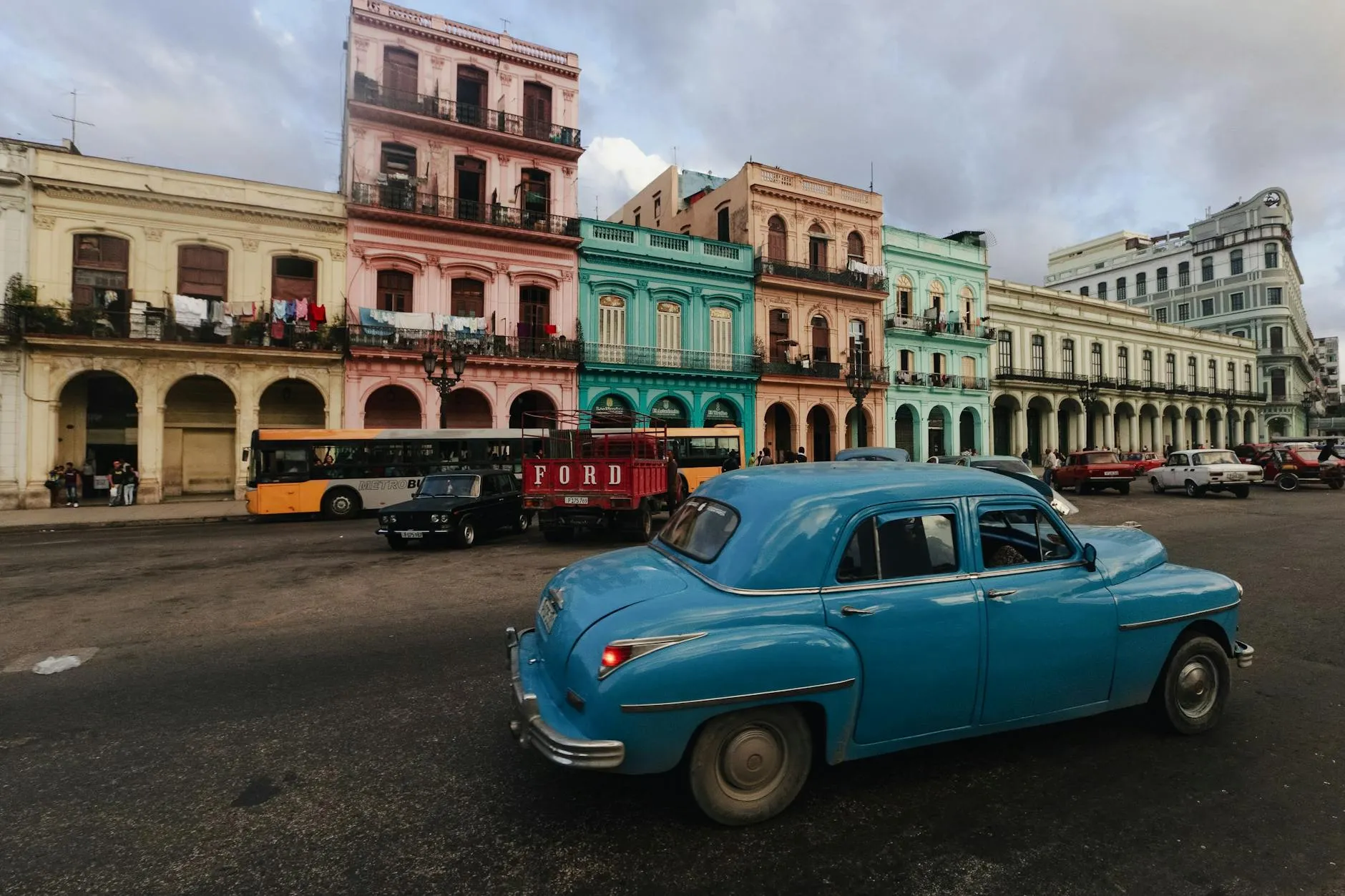
The famous 1950s American cars (Almendrones / Cocotaxis / Yank Tanks) operate in Havana for tourists. They’re slower, hotter (no AC), and the “authentic” charm wears thin in 32°C humidity. For day-trip touring of Old Havana, the open-top Buick or Chevrolet rental at €30–60/hour is genuinely fun. For the airport-to-hotel transfer with luggage, stick with a modern Cubataxi or pre-arranged car; you’ll be hot and tired enough without authentic vintage suspension.
🛍️ 4. Lounges: Sala VIP T3
HAV’s lounge offering reflects Cuba’s economic reality: limited and showing wear. The main option is the Sala VIP T3 (a paid walk-in lounge in the international terminal). No Plaza Premium, no Priority Pass network — the Priority Pass and similar networks haven’t established Havana coverage due to US sanctions affecting card-network integration.
✨ Sala VIP T3 (international airside, paid walk-in)
~€35–453-hour stay
Paid walk-in only · cash USD/EUR · not Priority Pass eligible
05:00–22:00 daily
Limited / Limited
HAV has no Priority Pass-eligible lounge in 2026, and no Plaza Premium, LoungeKey or DragonPass coverage either. US sanctions affect the card-network integration that these programmes rely on (Mastercard/Visa/Amex have limited Cuban presence). This is unlikely to change without a significant US sanctions reset. If you have only Priority Pass and no airline status, plan to use Sala VIP T3 paid walk-in (~€35–45) or wait at the gate.
🥩 5. Food & Duty-Free: Mojitos, Cohibas & Havana Club
Lechón (slow-roasted whole pig, served with rice, beans and yuca) is Cuba’s national dish. The T3 food court does it for ~€8–12 a plate — not gourmet but a credible airport rendering. Skip the airport McDonald’s and Burger King — you can have those anywhere. Try the moros y cristianos (black beans and rice cooked together, the “Moors and Christians” named for the colour contrast) on the side.
Cuba grows excellent specialty coffee in the eastern Sierra Maestra mountains. Café cubano (small, strong, very sweet espresso) is the local default. The T3 food court does it for ~€1–2. Café con leche (with steamed milk) is the breakfast version. The HAV coffee is genuinely good — better than most Caribbean coffees, comparable to good Colombian or Jamaican origin.
Havana Club rum — the export-gift default — Havana Club Añejo 7 Años at €15–20 a bottle, Havana Club Selección de Maestros at €25–35, Havana Club Maximo for the splurge at €1,200+. Cuban cigars are the world’s most prestigious; Cohiba Behike, Cohiba Esplendidos, Romeo y Julieta Churchill, Montecristo No. 2 at duty-free for €15–180 each. Limit your import to your home country’s allowance — US travellers traditionally face cigar/rum import restrictions, and the rules cycle with administration changes; check current OFAC. EU passport holders can typically bring 50 cigars + 1 litre of rum duty-free into the EU. Cuban coffee whole-bean at €5–10 a bag.
The Mojito was invented in Havana in the 16th century as a precursor cocktail (El Draque) and codified into the modern form in the 20th. The Sala VIP T3 bar makes a credible airport rendering with Havana Club rum, fresh mint, lime and sugar (free with your access). Order it “tradicional” not “turistico” for the proper version. Pair with a Cohiba duty-free for the iconic Cuban combination.
💡 6. Insider Tips: US Sanctions, Currency Chaos, Internet
Cuba’s currency situation is famously chaotic. Bring USD or EUR cash — both work, EUR slightly preferred at most casinos and casas particulares. Don’t rely on cards; foreign cards rarely work due to US sanctions affecting payment networks. Don’t exchange at the airport — the official Cadeca rate is poor; exchange a portion through your casa particular host or a trusted hotel at the unofficial rate (10x better). Bring more cash than you think — the country lacks the modern card infrastructure of even nearby DR or Cancun.
Internet access in Cuba is limited but improving. Most casas particulares now have Wi-Fi (often Cubacel-tier slow). For mobile data, buy a Cubacel SIM at the airport on arrival — ~€25 for 20 GB / 30 days. Cubacel is the only mobile carrier in Cuba; international roaming is expensive and limited. Cubacel eSIM exists as of 2024 for compatible iPhones — buy online before travel for a smoother arrival. Most hotel and public Wi-Fi requires a Nauta card — ~€1 per hour, sold at hotels and ETECSA offices. The Wi-Fi is slow but functional for messaging.
Cuba tap water is not safe to drink, including airport washroom taps. Bottled water airside runs ~€2–4 for 500 ml. Sala VIP T3 has free filtered water. In casas particulares and hotels, hosts provide bottled water; supplies sometimes run short during the high season — bring iodine tablets or a Steripen as backup if you’re going off the beaten path.
Cuba is widely regarded as among the Caribbean’s safer destinations for solo female travellers — violent crime is rare, tourist-area police presence is active, and the general orientation is towards visitors. The catcalling (‘piropos’) is constant but mostly harmless; ignore it. Avoid the Centro Habana area at night east of the Malecón; daytime walking through Habana Vieja, Vedado, and Playa is fine. Don’t hail street taxis; use Cubataxi or pre-arranged car only. The HAV airport itself is safe and well-policed.
The Atlantic hurricane season runs June 1 to November 30; peak risk is mid-August through October. Cuba gets hit roughly every 3–5 years. If booking June–November, get travel insurance with hurricane coverage; book directly with airlines for easier rebooking. Cuba’s heat year-round is intense: 28–33°C daytime, 23–26°C overnight, humidity 75–90%. December–April is the dry season with consistent sunshine and lower humidity — the best time to visit.
Tipping is significant in Cuba because Cuban state-employed workers earn very low official salaries. Tip 10–15% in restaurants and paladares; €1–2 per drink; €5–10 per day for casa-particular hosts; €1–2 per bag for porters. Tip in EUR or USD bills — it’s far more valuable to the recipient than CUP at the official rate. Small bills (€1, €5, US$1, US$5) are best. Cigars and Mojitos at private bars are tip-friendly: round up generously.
❓ Frequently Asked Questions
📊 2026 Summary Data Table
| Feature | Current Data (2026) |
|---|---|
| IATA Code | HAV |
| Terminals | T1 domestic + T2 US charter / Caribbean + T3 main international (1998) · not connected airside · transfer 10–20 min via shuttle |
| Distance to Old Havana | 14 km via Avenida Boyeros · 25–45 min off-peak · 60+ min in heavy traffic |
| Currency reality | CUP; official rate floated Dec 2025, now in the low hundreds of CUP per USD (was 24:1) + informal market well above 500:1 USD + MLC for hotels · bring USD/EUR cash · cards rarely work |
| Cubataxi to Old Havana | ~€25–35 cash USD/EUR · flat zone-based at the desk · no card |
| Uber / InDriver / Cabify | None — ride-hailing apps don’t operate in Cuba (regulatory + sanctions barriers) |
| Sala VIP T3 lounge | ~€35–45 / 3-hour stay · paid walk-in cash USD/EUR · not Priority Pass eligible · Mojito bar with Havana Club |
| Tourist Card & insurance | Required · Tourist Card €22–30 (US$22 from airline, US$50 on arrival) + medical insurance proof + D’Viajeros e-Form within 48h of arrival |
| US OFAC sanctions | 12 authorised categories (general tourism not authorised) · most US travellers use ‘Support for the Cuban People’ category · 5-year record-keeping |
| Climate | Tropical Caribbean · 28–33°C year-round · humidity 75–90% · hurricane season Jun–Nov peak Aug–Oct · dry season Dec–Apr (best time) |
| Tap Water | Not safe — bottled only (€2–4 airside) |
| Internet & SIM | Cubacel only mobile carrier · eSIM available 2024+ · ~€25 for 20 GB / 30 days · hotel/public Wi-Fi requires Nauta card €1/hour |