Cibao International Airport (STI) — Airport Guide 2026
Santiago de los Caballeros is the DR’s second city and the undisputed capital of Dominican premium cigars — and Cibao International is the airport that connects the Cibao valley’s tobacco economy and its large diaspora to the US northeast, handling 2.2 million passengers in 2025 on a route map that is roughly 80% New York, Newark, and Boston.
Quick Reference
STI / MDST
Aeropuerto Internacional del Cibao
Santiago de los Caballeros — second-largest city in the DR
15 km southeast — 20–30 min by road
172 m (565 ft)
One international terminal (gates B1–B6); separate charter/domestic and cargo buildings
11/29, 2,620 m asphalt — handles A320/321, 737, occasional widebody charter
2,209,666 — third-busiest in the DR
JFK (1,078,673 pax), Newark (490,697), Boston (160,424)
JetBlue (~20 daily); also American, Delta, United, Frontier, Copa, Air Europa, Arajet
Dominican peso (RD$); USD widely accepted at airport and tourist-facing venues
≈ RD$59–60 = US$1; ≈ RD$68 = €1 — verify before travel
E-Ticket (free, mandatory, entry + exit); tourist card + departure tax bundled in airfare
Extended through 31 Dec 2026 for EU/UK/US/CA/BR/CL/AR/CO/EC tourists
US$25–35 (RD$1,500–2,100)
≈ RD$700–900 (US$12–15); UberX private only — no taxi-hail product at STI
Puerto Plata US$45–60; Cabarete US$50–65
Sala Zafiro (Priority Pass / LoungeKey); no airline flagship lounges
Claro (best rural coverage) or Altice; prepaid SIM ≈ RD$150; eSIM works on arrival
Not potable — bottled only (RD$25–50 / 500 ml)
10% legal service charge already on restaurant bills; extra 5–10% customary
Monumento a la Restauración (Tue–Sun 9:00–18:00); Centro León (Tue–Sun 10:00–19:00, RD$150, free Tue)
La Aurora factory, est. 1903 — free tours by appointment, weekdays 8:00–17:00; Tamboril cigar town a short drive east
Puerto Plata coast (~1h / 60–70 km); 27 Charcos de Damajagua (~40 km); Jarabacoa mountains (~45–60 min)
Procigar Festival, Santiago leg: 17–20 February 2026
US$700M rebuild underway since Dec 2021; completion targeted early 2027
🏗️ Terminal Layout & the Long Rebuild
Cibao opened on 18 March 2002 — late enough that the region’s tobacco and agricultural wealth had been funnelling through Santo Domingo for decades before anyone decided Santiago deserved its own international terminal. The original rationale was economic and political rather than touristic: the Cibao valley is the country’s productive interior, and before 2002 an international flight meant a two-plus-hour drive south to the capital.
The current terminal is compact and linear. Six gates — B1 through B6 — five with jet bridges (B1–B2, B4–B6); B3 boards by stairs across the apron. Arrivals and departures share one hall; you won’t get lost and you won’t walk far. The separate domestic/charter terminal (stands A1–A3) handles charters rather than scheduled flights; there’s a cargo facility off the side.
What you’ll notice in 2026 is construction. A major expansion has been running since December 2021 and is not finished. The project scope grew from roughly US$300 million to an estimated US$700 million by mid-2025, and the full build-out includes a new international terminal with nine contact stands, a runway extension of about 380 m, a new taxiway, and a mixed-use development adjacent to the airfield. Completion is targeted for early 2027. For now you’re using the old terminal while active construction proceeds nearby — expect some signage detours and a building site visible on approach.
⚠️ Evening arrival crunch
JFK and EWR banks land in overlapping windows, and the single immigration hall backs up when they do. Build 45–60 minutes from wheels-down to curb on a busy evening — not 20.
The passenger split explains the operational character of the place. In 2025 JFK alone accounted for 1,078,673 passengers; Newark added 490,697, Boston 160,424. You are in a diaspora airport — people travelling to family, carrying overstuffed bags, flying a route their relatives have been flying for twenty years. Plan for full overhead bins and a baggage hall that processes large, slow carousels.
🛂 Border, E-Ticket & Fees
The E-Ticket
The Dominican Republic’s entry and exit form is electronic and free. The official site is eticket.migracion.gob.do, run by the Dirección General de Migración. Fill it out within 72 hours of travel in either direction, collect a QR code, and you’re done. The form is in English and Spanish and takes about ten minutes.
⚠️ E-Ticket scam sites — do not pay
A cluster of third-party sites rank prominently for “Dominican Republic E-Ticket” and charge US$20–60 to submit the free government form on your behalf. They offer no advantage. If a site asks for card details to file your E-Ticket, close the tab.
Tourist card, departure tax, and airport fees
These no longer require cash at the airport. The US$10 tourist card and US$20 departure tax are bundled into your airfare by every operating carrier, as are the airport fee increases that took effect 1 November 2025 — the infrastructure usage fee rose from US$19.67 to US$20.77, baggage handling from US$3.32 to US$3.50 per passenger. If a desk on departure tries to collect a cash “departure fee,” check your ticket’s tax breakdown first. In almost every case you’ve already paid it.
Passport validity (2026 temporary measure)
A flexibility measure for passport validity, first introduced on 1 December 2024, remains in force through 31 December 2026 for tourists from the EU, UK, US, Canada, Brazil, Chile, Argentina, Colombia, and Ecuador travelling purely for tourism. Stays are granted up to 30 days, extendable at the Migration Department in Santo Domingo. This is explicitly time-boxed — confirm it still applies if you’re reading this after 2026.
No US or EU pre-clearance operates here; there is no electronic travel authorisation beyond the free E-Ticket. Yellow fever vaccination is not required for arrivals from Europe, North America, or most of the Caribbean unless your specific itinerary includes a yellow-fever-endemic country — check based on your routing, not a generic rule.
💱 Currency
The Dominican peso (DOP, written RD$) is legal tender. As of May 2026, the rate sits around RD$59–60 to the US dollar and roughly RD$68 to the euro — verify on the day, as the peso has drifted weaker through 2025–26. Notes run RD$50, 100, 200, 500, 1,000, and 2,000; coins RD$1, 5, 10, and 25.
Practically: US dollars are accepted across all tourist-facing spending at STI and in the city — taxis, hotels, tour operators, larger restaurants. You’ll receive change in pesos, often at a rounding that favours the vendor, so small bills help. Withdraw pesos from a terminal ATM on arrival for anything street-level: colmados, públicos, local comedores. There is no meaningful parallel exchange market in the DR — bank and casa-de-cambio rates track the official rate closely, which removes the calculation that complicates neighbouring economies.
🚖 Getting Into the City
Santiago has no airport train and no metro — the country’s only metro is in Santo Domingo. Getting from STI to the city is a road decision.
Official airport taxi
Stands sit immediately outside the terminal exit and operate around the clock. The fare to downtown Santiago runs US$25–35 (RD$1,500–2,100) for the 15-km, 20–30-minute run. SUV/luxury vehicles cost more than a standard sedan. Longer runs are zone-priced from the same desks: Puerto Plata US$45–60, Cabarete US$50–65. These fares are not metered — agree the price before you get in, and the published bands are your reference if a driver opens high. Pre-booking a transfer online is worth doing in the December–April peak; less important in quieter months.
Uber
Rideshare works in Santiago, but with one wrinkle: Uber’s taxi-hail product is restricted at STI, so you order a private UberX rather than the taxi option. A run into the city typically prices at RD$700–900 (about US$12–15) — the single biggest saving available at this airport over the taxi rank. The trade-offs: a short walk to a designated meeting point, and driver scarcity late at night when the JFK/EWR banks land simultaneously. If you arrive after 22:00 and nothing materialises in ten minutes, the taxi rank is the reliable fallback. Cabify is not consistently present in Santiago — don’t count on it.
🚖 Uber vs taxi — the real math
Uber ≈ US$12–15. Official taxi ≈ US$25–35. Pre-booked private transfer ≈ US$30–45. The app saves you real money; the desk saves you a driver hunt at midnight.
Públicos and guaguas
Santiago’s shared cars (públicos) and minibuses (guaguas) are how the city actually moves, at a few tens of pesos per ride. They don’t serve the airport on any tourist-useful route, and with luggage after an international flight they’re not practical. Use them inside the city once you’re there.
Car rental
The usual majors operate desks at STI. Renting makes sense if your plan is the north coast (Puerto Plata, Cabarete, Sosúa) or the mountains (Jarabacoa, Constanza) rather than the city itself — Santiago is congested and street parking is a contact sport. Reserve ahead; the on-site fleet is small and sells out in peak season. Dominican driving is assertive; the Santiago–Puerto Plata autopista is fast and in good shape, but secondary roads are not, and motoconchos weave unpredictably on both.
🛋️ Lounges
STI has one lounge worth using: Sala Zafiro (formerly branded Salón VIP), on the second floor of the international terminal, east side, by the elevator. It accepts Priority Pass and LoungeKey, with a pay-at-the-door option if you hold neither. Hours are effectively all-day; no reservations. The package is standard — catering, Wi-Fi, TV, seating away from the gate hold-room.
A second space, the Turquesa Lounge, appears in arrivals listings. Its card-programme acceptance is not reliably confirmed for 2026 — check the current Priority Pass app entry for STI before counting on it.
🛋️ Sala Zafiro — Priority Pass accepted
Second floor, east side, by the elevator. No reservations; first-come. On a packed evening departure bank it’s often the only place to find a quiet seat and a working power outlet — worth using if you have the card.
What’s absent, stated plainly: there are no airline flagship lounges at STI. No American Admirals Club, no Delta Sky Club, no United Club, no JetBlue lounge. The carriers that dominate the route map operate point-to-point here — this is not a connecting hub, so none of them have built a branded space. If you hold elite status or a premium-cabin ticket expecting a home-airline lounge, Sala Zafiro on a Priority Pass or paid basis is what’s on offer.
🍽️ Food Before You Fly
Airside dining at STI is what you’d expect from a small terminal geared to early-morning JFK departures: a handful of cafés and quick-service counters, airport pricing, no reason to arrive hungry and hoping. A bottle of water that costs RD$25–50 at a city colmado runs two to four times that past security. Eat in Santiago before you come.
The food worth your time is in the city:
🍌 Mofongo — the dish to order
Green plantains fried and mashed in a wooden pilón with garlic and chicharrón, typically topped with shrimp or stewed meat. A plate at a working comedor in Santiago runs roughly RD$250–450 (US$4–8). Tourist-zone prices elsewhere on the island can triple that.
La bandera dominicana — rice, red beans, stewed meat, side salad — is the daily lunch most Santiagueros eat; the cheapest honest meal in the city. Sancocho, a heavy meat-and-root-vegetable stew, is the weekend and celebration dish. Tostones (twice-fried plantain discs) turn up as a side everywhere. Coffee is taken short and strong — ask for a café and you’ll get something closer to an espresso than the filter cup US travellers expect.
For city-priced groceries, water, and rum or coffee before you fly, La Sirena is the Dominican hypermarket chain with a large Santiago store. Bottled water and snacks here are a fraction of airside prices; local rum and coffee stock well below what the airport charges for the same brands.
A cold Presidente — the national lager, drunk in the green half-litre “jumbo” bottle — is the drink to have with a meal in Santiago. None of this is available in honest form after security.
🚬 Duty-Free & What to Actually Buy
Skip the generic perfume-and-liquor wall. Santiago’s actual product is cigars, and the city rolls roughly 90% of the Dominican Republic’s premium output. Arturo Fuente, La Aurora, La Flor Dominicana, Davidoff — all made within a short drive of the airport. The airside cigar counter exists for the traveller who forgot; buying from a reputable Santiago shop, the La Aurora factory, or the cigar town of Tamboril beats it on both selection and price.
Dominican rum (Brugal, Barceló, Bermúdez are the big three) and Dominican coffee are the other sensible buys, and the airport prices those reasonably. Check your destination’s customs allowances before you fill a bag with rum and cigars — the US and EU both cap what you can carry back.
💡 Beyond the Terminal
Santiago is a working city. It has a few specific things worth your time and a lot of country that isn’t reachable on a short stop.
Layover viability — honest arithmetic
STI is 15 km, 20–30 minutes, from the city centre each way. You need to be back at the terminal at least 2 hours before an international departure, and check-in/bag-drop queues for the JFK/EWR banks are real. That’s a minimum of roughly 4 hours of transit-and-buffer overhead before you’ve seen anything.
- Under 5 hours: stay airside
- 6+ hours: Monumento and a meal are achievable
- Full day: north coast or mountains are reachable by car
Any pitch of a “Santiago beach trip” on a layover is nonsense — the nearest real coast is an hour north on the Puerto Plata side.
⏱️ Layover minimum for the city
Budget at least 6 hours total layover before committing to a city run. Four of those hours are eaten by transit each way plus the 2-hour pre-departure buffer. Under that threshold you’re doing it for the taxi ride.
Monumento a los Héroes de la Restauración
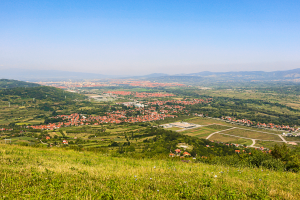
The hilltop tower on Avenida Monumental — honouring the 1863 War of Restoration against Spain — gives the best panorama over the city and the Cibao valley. Open Tuesday–Sunday, roughly 9:00–18:00. About 15–20 minutes from the airport by taxi; US$25–35 each way or considerably less by Uber.
Centro León
The Centro Cultural Eduardo León Jimenes is Santiago’s serious museum — Dominican art, history, and the tobacco story of the Cibao, funded by the León Jimenes tobacco family. Open Tuesday–Sunday 10:00–19:00. General admission RD$150 (about US$2.50), children RD$100, free on Tuesdays. A proper two-hour visit and the best primer on why this region matters.
Cigars: La Aurora and Tamboril
La Aurora, founded in 1903, is the oldest cigar factory in the country. Free tours by appointment (reserve ahead by phone), weekdays roughly 8:00–17:00. You walk the floor where leaves are sorted, rolled, and aged. The neighbouring town of Tamboril, a short drive east of Santiago, is wall-to-wall cigar workshops and the place to buy at factory prices — a box that costs real money in a US shop is a fraction of that here, customs allowances permitting.
If your visit falls on 17–20 February 2026, that’s the Santiago leg of the Procigar Festival — the country’s premium-cigar week, with factory tours, dinners, and tastings. It sells out and books months ahead; it’s a plan-for, not a walk-up event.
Day-trips (with real drive times)
- Puerto Plata and the north coast — ~1 hour / 60–70 km north on the autopista. Beaches (Playa Dorada, Sosúa, Cabarete for kitesurfing), Fortaleza San Felipe, cable car up Isabel de Torres.
- 27 Charcos de Damajagua — the canyoning waterfall jumps on the Santiago–Puerto Plata highway, ~40 km / 1 hour from Santiago. A full-day outing, not a layover stop. Tours run 7 or 12 of the 27 pools depending on water level; go with an outfitter.
- Jarabacoa — mountain town in the Cordillera Central, ~45–60 minutes south. Cooler air, rivers, access to the highest peaks in the Caribbean. A genuine day-trip with a car; the road climbs and curves.
📶 Connectivity & Practical Notes
SIM and data
The terminal has free Wi-Fi — adequate for messaging and check-in, less so for sustained work. For mobile data, the two networks are Claro (widest coverage, including rural Cibao and the mountain roads to Jarabacoa) and Altice (competitive city coverage, similar pricing). A prepaid Claro SIM runs around RD$150 (about US$2.50) with tourist data bundles of 3–5 GB on short validity; Altice offers comparable packages from roughly RD$49–139. An eSIM bought before you fly skips the kiosk queue and works on landing.
Tap water and tipping
Do not drink the tap water — not in hotels either. Bottled is cheap at RD$25–50 per half-litre at a colmado; use it for brushing teeth too if you have a sensitive stomach.
Restaurants add a 10% legal service charge (la ley) to the bill automatically. It’s normal to leave an extra 5–10% on top for good service, but check the receipt — double-tipping on top of la ley is a common reflex from US visitors that’s worth catching.
Safety
Santiago is a normal mid-sized Latin American city. The realistic risks are petty theft and phone-snatching, not violence targeting tourists. Keep your phone out of sight on the street, don’t flash large amounts of cash or expensive camera gear, use Uber or a hotel-arranged taxi at night rather than unmarked street cars, and apply standard after-dark caution near bus terminals. Tourist-facing areas — Centro León, the Monument, the better hotels — are fine in daylight. Read your own government’s current travel advisory before you go, not a version from a year ago.
❓ FAQ
📊 At a glance — STI 2026
| Category | Detail |
|---|---|
| Airport / codes | Cibao International — STI / MDST |
| City served | Santiago de los Caballeros (2nd city, Cibao valley) |
| Opened | 18 March 2002 |
| Distance to centre | 15 km SE — 20–30 min |
| Elevation | 172 m — no altitude considerations |
| Terminal | One international (gates B1–B6); separate charter + cargo |
| Runway | 11/29, 2,620 m asphalt |
| 2025 passengers | 2,209,666 (3rd in the DR) |
| Top routes | JFK (1.08M), Newark (491k), Boston (160k) |
| Lead carrier | JetBlue (~20 daily); AA, DL, UA, Frontier, Copa, Air Europa, Arajet |
| Currency | Dominican peso (RD$); USD widely accepted |
| Rate (May 2026) | ≈ RD$59–60 / US$1; ≈ RD$68 / €1 — verify |
| Entry admin | E-Ticket (free, entry + exit); tourist card + departure tax in fare |
| Passport-validity flex | Through 31 Dec 2026 for EU/UK/US/CA/BR/CL/AR/CO/EC tourists |
| Airport taxi to city | US$25–35 (RD$1,500–2,100) |
| Uber to city | ≈ RD$700–900 (US$12–15); UberX private only |
| Onward taxi zones | Puerto Plata US$45–60; Cabarete US$50–65 |
| Lounge | Sala Zafiro (Priority Pass / LoungeKey); no airline lounges |
| SIM / data | Claro (best coverage) or Altice; prepaid ≈ RD$150; eSIM works |
| Tap water | Not potable — bottled only (RD$25–50 / 500 ml) |
| Tipping | 10% service charge already on bills; 5–10% extra customary |
| Key sights | Monumento a la Restauración; Centro León (Tue–Sun 10–19, RD$150, free Tue) |
| Cigars | La Aurora factory (1903, free tours by appt, weekdays 8–17); Tamboril town |
| Day-trips | Puerto Plata coast (~1h); Damajagua falls (~40 km); Jarabacoa (~45–60 min) |
| 2026 event | Procigar Festival, Santiago leg: 17–20 Feb 2026 |
| Expansion | US$700M rebuild since Dec 2021; completion targeted early 2027 |