Palanga International Airport (PLQ) Airport Guide 2026 — Ferry, Bus, Then The Dunes
Palanga International Airport (PLQ) sits 7 km from the centre of Palanga and about 25 km north of Klaipėda, on Lithuania’s short stretch of Baltic coast. It is the smallest of the three airports run by Lithuanian Airports, and in 2025 it had its best year ever — nearly 448,400 passengers. The route map is northern: Amsterdam, Bergen, Copenhagen, Dublin, London Stansted, Oslo and Riga, with charters to Antalya and Sharm el Sheikh. Bus 31 runs airport–Palanga–Klaipėda for €1.60 with a card, and from Klaipėda a €1.70 return ferry ticket puts you on the Curonian Spit, the UNESCO dune peninsula that is the real reason to fly here. Lithuania is Schengen and in the euro.
Last verified: September 2026.
⚡ 2026 Quick Reference — Key Facts at a Glance
PLQ / EYPA — Liepojos road 1, LT-00169. Palanga branch of JSC Lithuanian Airports, which also runs Vilnius and Kaunas
7 km from Palanga city centre, ~25 km from Klaipėda, ~330 km from Vilnius
Route 31, Klaipėda–Palanga–Airport, a minibus service. €1.80 cash to the driver, €1.60 with a Klaipėda transport card or the e.Ticket Klaipėda app
Route 3, Palanga–Airport–Šventoji. Route 100 also links Klaipėda bus station and the airport
Klaipėda → Smiltynė by Smiltynės perkėla ferry, €1.70 return for a foot passenger, then a local bus down the Spit — Smiltynė↔Nida €8.00
Old terminal (E. Galvanausko bul. 1) — pedestrians and cyclists, 06:00–24:00. New terminal (Nemuno 8) — vehicles too, open 24 hours
Motor vehicles pay a local fee at the Alksnynė control post, km 10 of the Smiltynė–Nida road. Car €10 from 21 Aug to 19 June, €50 from 20 June to 20 Aug
Euro (€) — Lithuania joined the euro area on 1 January 2015. Nothing to convert, unlike Poland, Norway or Denmark
Schengen and EU. EES has been operational since 10 April 2026. Note that Dublin is an external-border flight — Ireland is in the EU but not in Schengen
Not in operation, no applications collected, no launch date published. The fee is already fixed at €20
None to plan on. The airport’s published passenger services run to cafés, shops, ATMs, a currency exchange, tax refund and Wi-Fi, and stop there
🏢 1. Lithuania’s Third Airport, Having Its Best Year
Palanga is the small one. JSC Lithuanian Airports runs three airports — Vilnius, Kaunas and Palanga — and this is the coastal branch, at Liepojos road 1, a few minutes’ drive from a beach resort and half an hour from Lithuania’s only seaport. It is one terminal, and everything in it is within sight of everything else. There is no transfer complex and no need for one: essentially every passenger here is starting or ending a journey, not connecting.
The number that matters is the trend. In 2025 Palanga handled nearly 448,400 passengers — the highest in the airport’s history, on the Palanga tourist board’s own figure. For an airport of this size, on a coast with a three-month summer, that is a serious result, and it reflects a route map that has quietly become more useful than the passenger count suggests.
Where you can actually fly
The airport’s own flight search offers Amsterdam, Bergen, Copenhagen, Dublin, London Stansted, Oslo, Riga and Sharm el Sheikh; the Palanga tourist information centre lists regular services to Amsterdam, Bergen, Copenhagen, London, Oslo and Riga, with charters to Antalya and Sharm el Sheikh.
Look at the shape of that. Five of the scheduled routes go north or west — two Norwegian cities, Copenhagen, Amsterdam and Riga — and only London and Dublin go to the British Isles. This is not a Mediterranean airport with a couple of city breaks bolted on. It is a Nordic and North Sea airport, which makes complete sense once you know who holidays on the Lithuanian coast and where the Lithuanian diaspora went. Riga is the connecting route: airBaltic’s hub is a short hop away and opens the rest of Europe with one change, and the airport’s own news in late 2025 flagged airBaltic increasing frequencies on key Lithuanian routes for summer 2026.
The practical consequence for you: if your destination is not on that list, the honest answer is often Vilnius or Kaunas — but both are 240–330 km away, which is a four-hour problem, not a one-hour one. Price the whole journey, not the fare. Our aifly price check shows what routes have actually been selling for.
Baggage rules are where a cheap fare turns expensive, and the carriers serving this coast are not consistent with one another. Whichever you end up on, check the tier before you pay — our Ryanair baggage guide, airBaltic baggage guide and Norwegian baggage guide cover the common ones, and the aifly baggage checker compares them side by side.
What the terminal has
The airport publishes a short list of passenger services and it is worth reading as a whole, because the omissions are as informative as the entries: cafés, shops, ATMs, a currency exchange, tax refund, Wi-Fi, UNIPARK parking, car rental and special assistance.
Two things stand out. The first is that there is a currency exchange at an airport in a euro country — which tells you exactly who arrives here: Norwegians with kroner, Britons with pounds, Poles with złoty. The second is the absence: no lounge appears anywhere in that structure, and you should not plan on one.
Assistance for reduced mobility must be arranged through your airline when you book, as everywhere in the EU. Liquids in hand baggage follow the standard 100 ml rule.
🛂 2. Schengen and the Euro — Lithuania Has Both, and Dublin Is The Catch
Lithuania joined the EU in 2004 and is a full member of the 29-country Schengen area. Flights to and from Amsterdam, Bergen, Copenhagen, Oslo and Riga are internal Schengen flights: no passport control at either end.
The external-border routes are where attention is needed, and one of them surprises people:
- London Stansted — the UK is outside both the EU and Schengen.
- Dublin — Ireland is in the EU but not in Schengen. It sits in the Common Travel Area with the UK instead and runs its own border. A Dublin flight from Palanga is a full external-border crossing in both directions, and it is the single most-missed fact on this airport’s route map.
- Antalya and Sharm el Sheikh — Türkiye and Egypt, external in the ordinary way.
Note also that Bergen and Oslo are Schengen but not EU. Norway is one of four non-EU Schengen states, so those flights have no passport check but do cross a customs and VAT frontier — which is why duty-free works differently in that direction than it does to Amsterdam.
The EU Entry/Exit System has been operational since 10 April 2026. For a non-EU passport it replaced stamping with a digital record: name, travel document, fingerprints and a facial image, and the date and place of every entry and exit, with overstays calculated automatically. The first crossing after 10 April 2026 is the slow one, because that is when the biometrics are enrolled; every later crossing is a match against an existing file and is much quicker. At an airport this size, one arriving Stansted or Dublin flight is enough to fill the hall — give yourself the time.
ETIAS is not in operation. No applications are being collected and no launch date has been published. The fee is already fixed at €20, with exemptions for under-18s, over-70s and family members of EU citizens. There is nothing to apply for and nobody can legitimately sell you one today.
| Passport | Visa for a short stay in Lithuania? | EES applies? | ETIAS when it launches? |
|---|---|---|---|
| Lithuanian / EU / EEA / Swiss | No — freedom of movement | No | No |
| UK | No — 90 days in any 180 | Yes | Yes |
| USA / Canada / Australia / NZ / Japan | No — 90 days in any 180 | Yes | Yes |
| Türkiye | Schengen visa required | Yes — linked to the visa | Covered by the visa |
The money question, and why Lithuania is the easy one
Of the airports along this coast, Palanga is the simplest to budget for. Lithuania adopted the euro on 1 January 2015, converting the litas at a fixed €1 = 3.45280 LTL. There is no conversion to think about, no peg to watch and no leftover-notes problem — and the Bank of Lithuania still exchanges old litas without a deadline.
Say the two things separately, because travellers conflate them constantly: Schengen governs your passport, the euro governs your wallet, and they are not the same list. Norway is in Schengen and not in the euro. Denmark is in the EU and Schengen and not in the euro. Poland, immediately south of here, is in the EU and Schengen and uses the złoty. Lithuania is the one on this coast where both boxes are ticked.
Cards work everywhere that matters — including, usefully, on the Curonian Spit local buses, at the Nida bus station, and at the Alksnynė control post where the vehicle fee is collected. Carry a small amount of cash anyway for a village café or a smoked-fish stall on the Spit, but you will not need much of it.
🚌 3. Getting Out: Two Buses, One Ferry, and a Toll
Palanga’s ground transport is genuinely cheap and slightly fiddly. There are three journeys people make from this airport, and they work differently.
To Palanga — 7 km
Bus route 3 runs Palanga–Airport–Šventoji and is the public option into town; the resort centre is only 7 km away. Taxis and ride-hailing wait outside. Palanga’s taxi trade publishes no fixed airport fare, so agree the price or use an app; the tourist board points at taksipalanga.lt and CityBee for car share.
To Klaipėda — 25 km
Route 31, Klaipėda–Palanga–Airport, is a minibus service rather than a full-size bus, and it is the link most arriving passengers want. The fare is the giveaway detail: €1.80 in cash to the driver, or €1.60 with a Klaipėda public transport card or in the e.Ticket Klaipėda app. Route 100 also connects Klaipėda bus station and the airport. Timetables move with the season — check them on the day rather than trusting a printed one.
There is no railway station in Palanga. The nearest are Kretinga, about 12 km away, and Klaipėda at 25 km. If you are heading inland to Vilnius, Šiauliai or Telšiai, look up “Palangos LINK” in the LTG Link ticketing system: it is a combined train-and-bus product where one ticket covers the whole journey, and you book it by selecting Kretinga (Palanga) as your destination. It saves you buying a separate bus leg at Kretinga, which is exactly the sort of thing nobody tells you.
To Nida and the Curonian Spit — the journey that matters
This is why most visitors fly to Palanga, and it is a three-leg trip: airport → Klaipėda → ferry → bus down the Spit. None of the legs is expensive; the constraint is the last one.
Leg 1 — the ferry. AB Smiltynės perkėla runs the crossing from Klaipėda to Smiltynė on the northern tip of the Spit. There are two terminals and choosing the right one matters:
| Terminal | Address | For | Hours |
|---|---|---|---|
| Old ferry terminal (North horn) | E. Galvanausko bul. 1 | Pedestrians and cyclists only | 06:00–24:00 |
| New ferry terminal | Nemuno str. 8 | Vehicles, plus pedestrians and cyclists | Open 24 hours |
Fares are almost nominal. A foot passenger pays €1.70 return — and the return half is valid on any day, so there is no need to buy a second ticket coming back. A passenger with a bicycle also pays €1.70, with the bicycle itself carried free. Taking a car costs €23.20 return (category M1/N1); a motorhome is €46.40 and a motorcycle €7.70. Passengers travelling in a vehicle do not need their own ticket. Discounted fares under Lithuania’s transport concessions law are sold only at the terminal ticket offices, not online.
Frequency differs sharply between the two terminals. From the old terminal, sailings run roughly twice an hour — at :00 and :30 through the middle of the day, thinning to hourly in the evening until 22:00, with returns from Smiltynė at :15 and :45. From the new terminal the service is far denser: departures at :00, :20 and :40 for most of the day, plus overnight sailings around midnight, 01:00 and from 05:40. If you are on foot and the old terminal’s gap does not suit you, the new terminal takes pedestrians too.
Leg 2 — the bus down the Spit. From Smiltynė, local buses run the length of the Lithuanian half of the peninsula: Smiltynė – Alksnynė – Juodkrantė – Pervalka – Preila – Nida. Journey time end to end is a little over an hour. The service is roughly hourly through the day, and this is the leg to plan around: it is not frequent, and missing one costs you sixty minutes.
Fares are flat and published:
| Journey | Fare |
|---|---|
| Smiltynė ↔ Nida | €8.00 |
| Smiltynė ↔ Juodkrantė | €3.00 |
| Juodkrantė ↔ Nida | €6.00 |
Tickets are sold on the bus, by cash or card, online at autobusubilietai.lt, or at Nida bus station (Naglių 18E). There is also a through coach from Vilnius to Nida — departing Vilnius early morning, Klaipėda late morning, arriving Nida around midday, with a mid-afternoon return — which is worth knowing about if your trip starts in the capital.
Leg 3, if you drive. Bringing a car onto the Spit means paying the Neringa local fee at the Alksnynė control post, on the 10th kilometre of the Smiltynė–Nida road. It is a one-off charge, payable by card or cash at the post, or in advance through the UNIPARK ticket system, and it is strongly seasonal:
| Vehicle | 21 Aug – 19 June | 20 June – 20 Aug |
|---|---|---|
| Car (M1) | €10 | €50 |
| Motorcycle, moped, scooter (L1–L5) | €10 | €10 |
| Bus up to 30 seats, truck up to 5.5 t | €30 | €50 |
| Motorhome, or car towing a caravan | €20 | €50 |
| Bus over 30 seats | €70 | €100 |
| Truck over 5.5 t, tractor | €50 | €100 |
| Electric-only vehicle | Free | €25 |
An annual car permit is €500. Read that peak column again: a car costs five times as much between 20 June and 20 August, and the ferry adds €23.20 return on top.
Do the arithmetic before you decide, because it does not go the way people assume. Taking a car to Nida and back outside the peak window costs €33.20 all in — €23.20 ferry plus the €10 fee — and carries everyone in the vehicle, since passengers in a car need no ferry ticket. Two people on foot pay €3.40 for the ferry plus four bus journeys at €8.00 each: €35.40. Off-peak, the car is already the cheaper option, and for a family it is not close.
Inside the peak window it flips, but only for small groups: €73.20 for the car against €35.40 for two on foot — and about €70.80 for four on foot, which is a wash. So: between 20 June and 20 August, two people should leave the car in Klaipėda; four people probably should not. (The ferry fares above are return tickets, valid on any day back. The Spit bus fares are published per journey, so double them for a round trip.)
🛋️ 4. There Is No Lounge — Plan The Café Instead
Do not arrive at Palanga expecting a lounge. The airport’s published passenger services list runs cafés, shops, ATMs, currency exchange, tax refund and Wi-Fi, and nothing that resembles a lounge appears in it. A card that gets you into contract lounges across Europe will not get you into anything here.
That is the right decision for an airport of this size, and it makes the practical planning simple: you buy a coffee and you sit in the departure hall. What it does mean is that a long connection or an early check-in is a plain wait rather than a comfortable one, so time your arrival to the check-in window rather than turning up three hours early out of habit. In summer, when the whole coast is busy, the terminal is at its fullest in the middle of the day.
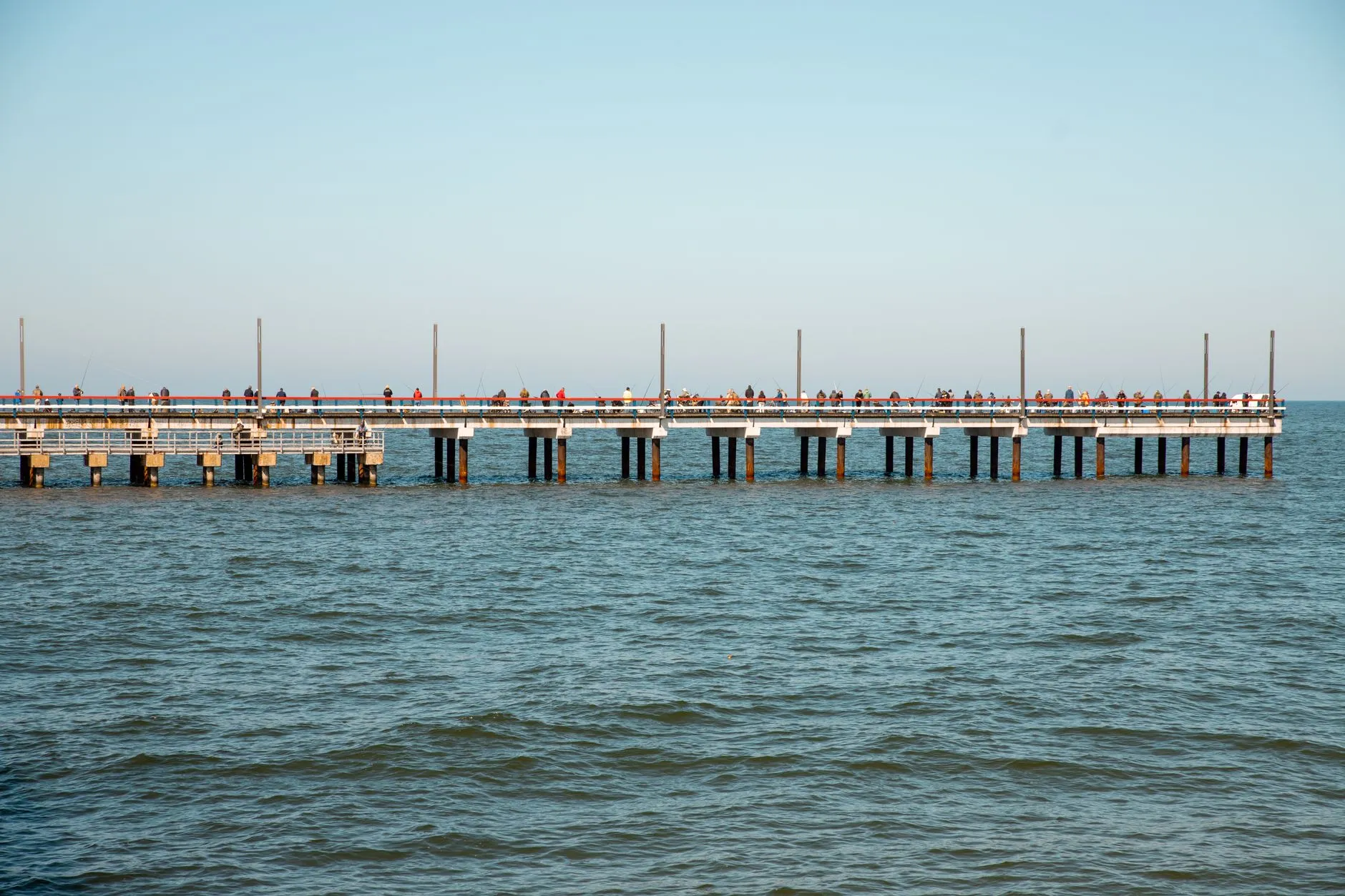
If you need somewhere better to spend two hours, the answer is not inside the airport — it is Palanga, seven kilometres away, which has a beach, a pier and a botanical park, and which you can reach on bus 3 for the price of a coffee.
🍽️ 5. Airport Coffee, and the Food Worth Leaving For
Catering at PLQ is cafés and shops — a coffee, a sandwich, a bottle of water, a magazine. It is honest and it is small, and the airport’s own list does not pretend otherwise. Buy what you need and move on.
The eating happens outside, and this stretch of coast has a specific larder rather than a generic Lithuanian one.
Smoked fish is the Curonian Spit’s food. The peninsula’s villages were fishing settlements before they were resorts — the UNESCO listing describes exactly that transition, from fishermen’s villages to holiday settlements — and smokehouses still sell smoked bream, eel and mackerel straight over the counter in Juodkrantė, Preila and Nida. Buy it wrapped in paper and eat it with rye bread. That is the regional dish, and it is the one thing on this coast you genuinely cannot get properly anywhere else.
Beyond it, the Lithuanian standards are worth a meal each. Šaltibarščiai — cold beetroot soup, shocking pink, served with hot boiled potatoes on the side — is a summer dish and this is a summer coast, so the timing works. Cepelinai, potato dumplings stuffed with meat, are heavier and belong to a colder day. Klaipėda’s old town does both, along with a beer scene that has grown fast.
Shopping at the airport is limited, but the tax refund service matters if you live outside the EU: Lithuania is inside the EU VAT area, so the standard EU refund rules apply and the airport handles the paperwork side. Check the current thresholds with the shop where you buy — they change, and no airport publishes them reliably.
💡 6. Insider: The Spit Is The Reason
You can have a good weekend in Palanga without leaving it. But the reason to fly to this airport rather than any other is the Curonian Spit, and it deserves the plain description.
It is a sand-dune peninsula 98 km long and between 0.4 and 4 km wide, separating the Baltic Sea from the Curonian Lagoon, shared between Lithuania and the Russian Federation and inscribed by UNESCO as a cultural landscape. It formed about 5,000 years ago from sand moved by currents onto moraine islands and was then forested. Heavy logging in the 17th and 18th centuries set the dunes moving, and they buried the oldest villages. By the turn of the 19th century it was clear that people could not go on living there without intervention, so dune stabilisation began — and has never stopped. A protective dune ridge was built along the seashore and the Great Dune Ridge was pinned down with trees and brushwood hedges.
That is what you are walking on: a landscape that exists because people have held it in place for two hundred years. Forests and sand dominate; the eight settlements together cover about 6% of the land. Nothing else in the Baltic looks like it.
Nida is the far village, the one with the wooden fishermen’s houses, the Thomas Mann summerhouse, the lagoon-side harbour and the Parnidis dune behind it. Juodkrantė is closer to Smiltynė and easier as a half-day. Smiltynė itself, at the northern tip, is where the ferry lands and where the Lithuanian Sea Museum sits.
Palanga is the other half of the trip and is unashamedly a resort: a long sand beach, a pine forest behind it, and a pier you walk out onto at sunset because everyone does. Its serious attraction is the Palanga Amber Museum, in the Tiškevičiai palace inside Birutė Park — amber is the Baltic’s own material, and this is the collection that explains it. Birutė’s Hill in the same park is a pre-Christian sacred site. There is also the Antanas Mončys Art Museum, the Palanga Resort Museum and the Museum of Exile and Resistance.
Klaipėda is the working city: Lithuania’s only seaport, a German-built old town from its centuries as Memel, and the ferry terminals for the Spit. It is the practical base if you want a city rather than a resort.
Three practical calls
Fly PLQ if you are going to the Curonian Spit, Palanga, Klaipėda or western Lithuania, and one of those eight or nine routes serves your city. The airport-to-dunes journey costs a few euros and takes a morning.
Do not fly PLQ if your real destination is Vilnius or Kaunas — you would be adding 240–330 km at the wrong end of the trip.
And decide about the car before you book it, with the calculator out. Outside 20 June–20 August a car to Nida and back is €33.20 including the ferry and carries the whole party — cheaper than two people on foot at €35.40. Inside the peak window the fee jumps to €50 and the car becomes €73.20, which two people on foot beat comfortably and four people on foot barely match. The rule of thumb: off-peak, drive; in high summer with one or two of you, don’t.
❓ Frequently Asked Questions
📊 2026 Summary Data Table
| Category | Detail |
|---|---|
| IATA / ICAO | PLQ / EYPA |
| Official name | Palanga International Airport — Palanga branch of JSC Lithuanian Airports |
| Address | Liepojos road 1, LT-00169, Palanga, Lithuania |
| Location | 7 km from Palanga city centre; Klaipėda ~25 km, Kretinga ~12 km, Kaunas ~240 km, Vilnius ~330 km |
| Annual passengers | Nearly 448,400 in 2025 — the highest in the airport’s history |
| Destinations | Airport flight search: Amsterdam, Bergen, Copenhagen, Dublin, London Stansted, Oslo, Riga, Sharm el Sheikh. Palanga TIC also lists charters to Antalya |
| Terminal services | Cafés, shops, ATMs, currency exchange, tax refund, Wi-Fi, UNIPARK parking, car rental, special assistance |
| Lounge | None published |
| Bus to Klaipėda | Route 31 (minibus), Klaipėda–Palanga–Airport. €1.80 cash to the driver, €1.60 by Klaipėda transport card or e.Ticket Klaipėda app. Route 100 also links Klaipėda bus station and the airport |
| Bus to Palanga | Route 3, Palanga–Airport–Šventoji |
| Rail | No station in Palanga. Nearest Kretinga (~12 km) and Klaipėda (~25 km). “Palangos LINK” = one combined LTG Link train + bus ticket; book to Kretinga (Palanga) |
| Taxi / car share | Taxi and ride-hailing outside the terminal; no fixed published airport fare. CityBee car share; car rental at the airport |
| Ferry to the Spit | AB Smiltynės perkėla, Klaipėda → Smiltynė. Old terminal E. Galvanausko bul. 1, pedestrians and cyclists, 06:00–24:00, ~2 sailings an hour. New terminal Nemuno 8, vehicles too, 24 hours, departures at :00/:20/:40 most of the day |
| Ferry fares (return) | Foot passenger €1.70 (return valid any day) · passenger with bicycle €1.70, bike free · car M1/N1 €23.20 · motorcycle €7.70 · motorhome €46.40 · bus M2 €46.40. Concession fares sold only at the ticket offices |
| Spit buses | Smiltynė–Alksnynė–Juodkrantė–Pervalka–Preila–Nida, roughly hourly, a little over an hour end to end. Smiltynė↔Nida €8.00, Smiltynė↔Juodkrantė €3.00, Juodkrantė↔Nida €6.00. Cash or card on board, autobusubilietai.lt, or Nida bus station (Naglių 18E). Through coach Vilnius–Nida daily |
| Spit vehicle fee | Alksnynė control post, km 10 of the Smiltynė–Nida road. Car €10 (21 Aug–19 June) / €50 (20 June–20 Aug) · motorcycle €10 · motorhome or caravan €20/€50 · bus ≤30 seats €30/€50 · bus >30 seats €70/€100 · EV free / €25 in peak. Annual car permit €500. Card, cash or UNIPARK in advance |
| Currency | Euro (€) — adopted 1 January 2015 at €1 = 3.45280 litas. The Bank of Lithuania exchanges litas without a deadline. Cards accepted on Spit buses, at Nida bus station and at the Alksnynė post |
| Border regime | EU and Schengen (one of 29). EES operational since 10 April 2026. External-border routes: London Stansted, Dublin (Ireland is EU but NOT Schengen), Antalya, Sharm el Sheikh. Bergen and Oslo are Schengen but not EU — a customs frontier without a passport check |
| ETIAS | Not in operation, no applications collected, no launch date published; €20 fee already set |
| Curonian Spit | UNESCO cultural landscape shared by Lithuania and the Russian Federation. 98 km long, 0.4–4 km wide, formed ~5,000 years ago; dune stabilisation since the early 19th century and continuing. Eight settlements cover about 6% of the land |
| Palanga sights | Palanga Amber Museum in the Tiškevičiai palace, Birutė Park, Birutė’s Hill, the sea pier, Antanas Mončys Art Museum, Palanga Resort Museum, Museum of Exile and Resistance |