Pescara Abruzzo Airport (PSR) Airport Guide 2026 — Italy’s Emptiest Mountains Start Here
Abruzzo Airport sits about 4 km southwest of Pescara city centre on the Via Tiburtina, which makes it one of the closest-in airports in Italy: the €3 TUA4FLY bus links the terminal directly to Pescara Centrale railway station, and from that platform you can be in the Gran Sasso foothills or on the Trabocchi coast the same afternoon. Everything happens on one ground floor. Ryanair dominates the route map, with Neos, Wizz Air Malta and a seasonal Luxair alongside. Italy is Schengen and Eurozone, so euros and EES apply. Abruzzo is the reason to come: two enormous national parks, a UNESCO Geopark, and some of the emptiest mountain country in western Europe.
Last verified: September 2026.
⚡ 2026 Quick Reference — Key Facts at a Glance
€3.00 single, valid 90 minutes across the whole Pescara–Chieti metropolitan area. Terminal ↔ Pescara Centrale (station underpass terminal). Buy in the TuaGO app, at the Phoenix Tour desk inside the terminal, or on board by card only — no cash accepted on board
TUA urban service, airport ↔ Pescara centre ↔ Stazione FS, roughly one every 20 minutes
€20 on the airport’s own published tariff (€25 to the outskirts, €35 to Chieti). Radio Taxi +39 085 35155
PSR / LIBP — Aeroporto Internazionale d’Abruzzo, run by SAGA S.p.A.
~4 km southwest of Pescara centre, Via Tiburtina km 229.1
Euro (€) — Italy is in the Eurozone. Two ATMs in the terminal; the outdoor car-park kiosk is card-only
None. No Priority Pass lounge here — the operator’s Italy directory lists 19 airports and Pescara is not one of them
Schengen · EES live since 10 April 2026
Not yet running. The Commission states no ETIAS applications are being collected; the fee is set at €20
Daily from 04:00 until the last flight of the day
🏢 1. One Ground Floor, One Runway, and a Seven-Page Website
Pescara is a genuinely small airport and it does not pretend otherwise. Everything a departing passenger touches — check-in desks, security, the gates — is on the ground floor of a single terminal building. The current terminal dates from 1996, was expanded in 2011 and restructured in 2018. There is one runway, 04/22, 2,419 metres of asphalt, which is why you will not see a widebody here.
The airport is operated by SAGA S.p.A. (Società Abruzzese Gestione Aeroporto), founded in 1981 and 99.99% publicly owned, mostly by the Abruzzo Region. The Ministry of Transport granted SAGA a thirty-year concession on 14 June 2007.
How big is it actually
SAGA’s own 2026 Service Charter records 1,114,691 passengers in 2025 — the highest figure in the airport’s history and roughly 300,000 more than 2024, with record summer peaks and October up 53%. Cross the million mark and an airport starts behaving differently: more routes, longer queues at one security lane. Pescara has crossed it once. Plan for a terminal built for a smaller airport than the one it now is, particularly on a July Saturday when three Ryanair departures stack up inside an hour.
The terminal is open every day from 04:00 until the last flight arrives or departs. There is no overnight lounge, no 24-hour landside café, and nowhere comfortable to sleep — if your flight is at 06:00, either stay in Pescara and take the first bus, or park overnight.
What is inside
The honest list, from the operator’s own pages: free unlimited Wi-Fi; two ATMs, one just outside arrivals and one beside the ticket office; free charging points for phones, tablets and laptops on the ground floor with no time limit; a shared prayer room open to all; a SAGA ticket desk on the ground floor that can sell you a replacement air ticket if your airline strands you; and a TUA/Phoenix Tour travel agency next to the bar selling bus tickets.
Note what is not on that list. The whole of SAGA’s public navigation is home, in-airport, live flights, transport, parking, baggage and FAQ. There is no shops-and-restaurants directory, no lounge page and no published destination map anywhere on it. That is a fair signal of the retail scale: treat the airside offer as one bar and a small shop, and eat in Pescara before you come.
Who flies here
Ryanair is the airport, with roughly 22 destinations — Milan Malpensa and Bergamo, Turin, Catania, Trapani, Alghero, Cagliari, London Stansted, Brussels Charleroi, Bucharest, Tirana, Kraków, Wrocław, Prague, Barcelona Girona, Valencia, Luxembourg and Malta among them. Neos adds Milan Malpensa, Bari, Tenerife, Gran Canaria and a Sharm el-Sheikh service. Wizz Air Malta runs Tirana and Bucharest. Luxair operates a seasonal Luxembourg link. That is four airlines and about 27 destinations across a dozen countries.
What Pescara lacks is a full-service carrier and a hub feed. There is no ITA Airways service, no Rome or Frankfurt or Munich connection, no interlining, no through-checked bags. Every itinerary through Pescara is a self-connect and every misconnection is your own problem. If you need to reach a long-haul flight, budget an overnight somewhere — or check what the same trip costs from Rome on our flight price checker before committing to Pescara.
Because the network is almost entirely low-cost, cabin-bag rules decide the real price of the ticket. Ryanair and Wizz price a wheeled cabin bag as an extra; run the numbers through our baggage fee checker, and read the specifics in the Ryanair baggage allowance guide and the Wizz Air baggage allowance guide before you pack.
🛂 2. Schengen, the Euro, and an EES Post That Barely Gets Used
Italy has been inside the Schengen area since internal border checks with Italy were lifted in October 1997, and it uses the euro — Schengen and the Eurozone are separate things, and Italy is in both. For anyone arriving from another Schengen country, which is most arrivals at Pescara, there is no passport control at all. You walk off the aircraft and out.
The EU Entry/Exit System (EES) became fully operational across all Schengen countries on 10 April 2026, after a progressive roll-out that began in October 2025. It replaces the passport stamp: non-EU nationals arriving for a short stay now have their facial image, fingerprints and travel-document data recorded digitally. On a first crossing that takes a few minutes at the booth; on later crossings within the record’s validity it is a fingerprint or face check and it is fast.
Pescara’s exposure to this is unusually small, which is part of the argument for using it. The airport’s only non-Schengen scheduled traffic is Albania (Tirana) and Egypt (Sharm el-Sheikh). Everything else — Italy, Spain, Belgium, Romania, Poland, Czechia, Malta, Luxembourg — is internal. If you hold a non-EU passport and you are used to hour-long EES queues at big Mediterranean gateways, this is not that airport.
ETIAS is not running yet. The European Commission’s own Smart Borders page states plainly that ETIAS is not in operation and that no applications for travel authorisations are being collected, and that the EU will announce the start date several months before launch. The fee has been fixed at €20 by Commission Delegated Regulation (EU) 2025/1411, with applicants under 18 or over 70 and qualifying family members of EU citizens exempt from the fee though still required to hold an authorisation. Practical consequence: any website charging you for an ETIAS today is selling you nothing. Do not buy one.
Documents: EU, EEA and Swiss citizens can enter Italy on a national identity card. Everyone else needs a passport, and Italy’s border police will refuse entry on an invalid document — the airport says so explicitly, and there is no appeal at the desk in Pescara.
🚌 3. TUA4FLY, Lines 8 and 38, and the Train From Pescara Centrale
This is the section that decides whether Pescara is worth flying into, so here is the detail.
The airport bus: TUA4FLY
TUA — Società Unica Abruzzese di Trasporto, the Abruzzo regional operator — runs an express link between the terminal and the Pescara Centrale bus terminal in the railway station underpass. The ticket is called TUA4FLY and, since the trial period ended on 1 July 2026, it costs €3.00 and is valid for 90 minutes across the entire Pescara–Chieti metropolitan area. That validity is the useful part: one €3 ticket covers the airport run and a connecting city bus at the other end, provided you stay inside the 90 minutes.
Four things will trip you up, and TUA publishes all of them:
- Buying is not enough — you must activate the ticket manually before you board. An unactivated ticket sitting in the TuaGO app is not a valid fare. This is the single most common way visitors get fined in Italy.
- On-board purchase is card only. The validators aboard take credit and debit cards. They do not take notes or coins.
- Group travel: you can buy and activate several tickets on one account, but the passengers must travel together on the same vehicle at the same time.
- You can buy at the airport itself — the Phoenix Tour agency next to the bar has been TUA’s in-terminal sales desk since August, selling TUA4FLY tickets and UNICO passes.
There is also a combined Trenitalia ticket marketed as Airlink: you can buy the TUA4FLY bus leg together with your rail ticket through any Trenitalia channel (website, app, station machines, ticket offices, tobacconists). The catch, spelled out by TUA, is that the bus leg cannot be bought on its own through Trenitalia — for a standalone bus ticket you use TUA’s channels. And the two legs are legally separate contracts, so a delay on one does not entitle you to anything on the other.
The timetable is day-by-day rather than clock-face. TUA’s September 2026 schedule has first departures around 04:30–05:00, last departures close to 23:50, and a handful of runs just after midnight to catch late arrivals — but the spacing is uneven, with gaps of two to three hours in the middle of some days. Check tuabruzzo.it for the day you actually fly. One live warning: the airport’s own transport page publishes a different, sparser hourly timetable with a long afternoon gap. Where the two disagree, believe the operator, not the airport.
The city buses
Separately from the express, TUA’s ordinary urban lines 8 and 38 run airport ↔ Pescara centre ↔ Stazione FS at roughly one every 20 minutes, which is the better bet if you want a stop in the middle of town rather than at the station. The Chieti–Pescara line calls at the airport every 15 minutes (SATAM runs the same corridor every two hours).
The train — the reason to fly here
Pescara Centrale is where Abruzzo actually opens up. It sits on the Adriatic main line (north to Ancona, Rimini and Bologna; south to Foggia and Bari) and on the trans-Apennine line to Sulmona, Avezzano and Rome. Trenitalia runs direct Rome–Pescara services; journey times vary enormously by service type, with the fastest around three and a half hours and slow regional workings much longer, so check the specific train rather than an average. From the same station, TUA coaches reach L’Aquila hourly, Teramo, Ortona, Avezzano, and Sulmona–Roccaraso–Castel di Sangro; SATAM runs to Naples; Ferrovie del Gargano to Foggia. Nearly every long-distance bus from the airport is sold as change at Pescara Centrale — the airport is a spur, the station is the hub.
Taxis and driving
The airport publishes fixed taxi tariffs, which is rare and worth using as a reference: €20 to central Pescara, €25 to the outskirts, €35 to Chieti town or Chieti Scalo. Radio Taxi is +39 085 35155.
Car hire desks are on the ground floor opposite arrivals — and note SAGA’s warning that even with a prepaid booking you must go to the counter in the terminal before collecting the car. The pickup lot is signed Rental Car and marked in red on the ground, to the left of the arrivals exit under the covered canopy.
Parking is an uncovered 500-space lot a few metres from the terminal, open 24 hours, no booking needed. First 15 minutes free; €15 for 24 hours; €35 for 3 days; €55 for 7 days, with an average +20% surcharge on a published list of peak days (25 April, 1 May, 2 June, 15 August, 8/25/26 December, 1 and 6 January, Easter). Pay at one of two self-service machines before returning to the car — the indoor one by the ticket office takes cash and cards, the outdoor one takes cards only, and the exit barriers take no payment at all. Lose your ticket and the tariff is €160.
| Option | Time | Price | Frequency |
|---|---|---|---|
| TUA4FLY express to Pescara Centrale | Short — the airport is 4 km out | €3.00, valid 90 min metro-wide | Day-specific timetable, first ~04:30–05:00, last ~23:50, plus a few post-midnight runs |
| City bus 8 or 38 to Pescara centre / Stazione FS | Slower, more stops | TUA urban fare | ~every 20 minutes |
| Chieti–Pescara line (TUA) | Direct to Chieti | TUA fare | ~every 15 minutes |
| Taxi to central Pescara | Shortest | €20 fixed airport tariff | On demand, +39 085 35155 |
| Taxi to Chieti | — | €35 fixed airport tariff | On demand |
| Airport car park | Metres from the door | 15 min free · €15/24h · €35/3d · €55/7d | 500 spaces, 24h, no booking |
🛋️ 4. There Is No Lounge. Plan Around It
Pescara has no Priority Pass lounge. That is not an inference from a missing page: Priority Pass’s Italy directory enumerates the Italian airports where it has a lounge — Alghero, Bari, Bologna, Brindisi, Cagliari, Catania, Florence, Milan Bergamo, Milan Linate, Milan Malpensa, Naples, Olbia, Palermo, Pisa, Rome Fiumicino, Trieste, Turin, Venice and Verona, nineteen in all — and Pescara is not among them. Neither is there an airline lounge, because no full-service airline serves the airport.
There is also no fast track worth the name, no airline with a premium cabin, and no separate business-class check-in. Everyone queues the same way at the same ground-floor security lane. On a summer morning with two or three low-cost departures inside an hour, that lane is the whole airport experience, and it is the reason SAGA advises arriving about two hours before a scheduled departure.
What you get instead is free unlimited Wi-Fi, free uncapped charging points on the ground floor, and seats. Bring a book, buy water after security, and do not plan a long airside layover here — there is nothing to do with three spare hours in this terminal. If you have three spare hours, take the €3 bus into Pescara and spend them on the seafront.
🍽️ 5. Arrosticini, Parrozzo and Montepulciano: Eat Before You Fly
The airport’s catering is a bar. Abruzzo’s food, on the other hand, is one of the strongest arguments for the region, and almost all of it is a bus ride away.
Arrosticini are the regional signature: thin skewers of cubed mutton or castrato, grilled fast over a long narrow charcoal trough called a canala, salted, eaten with your fingers, counted by the dozen. This is shepherd food from the Gran Sasso plateaus and it is served everywhere from mountain refuges to Pescara seafront restaurants. Order more than you think you need.
Brodetto alla pescarese is the coastal counterpart — a tomato-and-pepper fish stew built from whatever the Adriatic boats landed, distinct from the Marche and Romagna versions further north.
Parrozzo is Pescara’s own cake, invented in the city in 1920 by baker Luigi D’Amico: a dome of semolina, almonds and citrus zest under a dark chocolate shell, designed to imitate the round shape and burnt crust of rustic corn bread. Gabriele d’Annunzio — Pescara’s most famous son — tasted it and wrote a madrigal in Abruzzese dialect about it, La Canzone del Parrozzo. It travels well in its box and it is the single best edible souvenir from this airport’s catchment.
Confetti di Sulmona are the other one. Sulmona, an hour inland by train, has been making sugared almonds since 1783, when Bernardino Pelino founded what is still one of Italy’s oldest confectionery houses. The real thing is a whole peeled almond built up in sugar layers with no starch filler, which is why it is lighter and cleaner-tasting than the supermarket version. Pelino runs a factory museum in Sulmona.
To drink: Montepulciano d’Abruzzo is the region’s dominant red and its most produced wine — dark, soft-tannined, absurdly good value; Cerasuolo d’Abruzzo is the same grape made as a deep rosé and is what locals actually drink with fish; Trebbiano d’Abruzzo is the white. Zafferano dell’Aquila DOP, grown on the Navelli plateau above 700 m, is among the most prized saffron in the world and is small, light and expensive — the ideal thing to carry home in hand luggage.
Do not expect to buy any of this well at the airport. Buy it in Pescara or Sulmona.
💡 6. Insider: Gran Sasso, the Trabocchi Coast and Sulmona
Abruzzo is the point. Roughly a third of the region is protected, and the parks are large, high and genuinely empty by western European standards.
Gran Sasso e Monti della Laga National Park
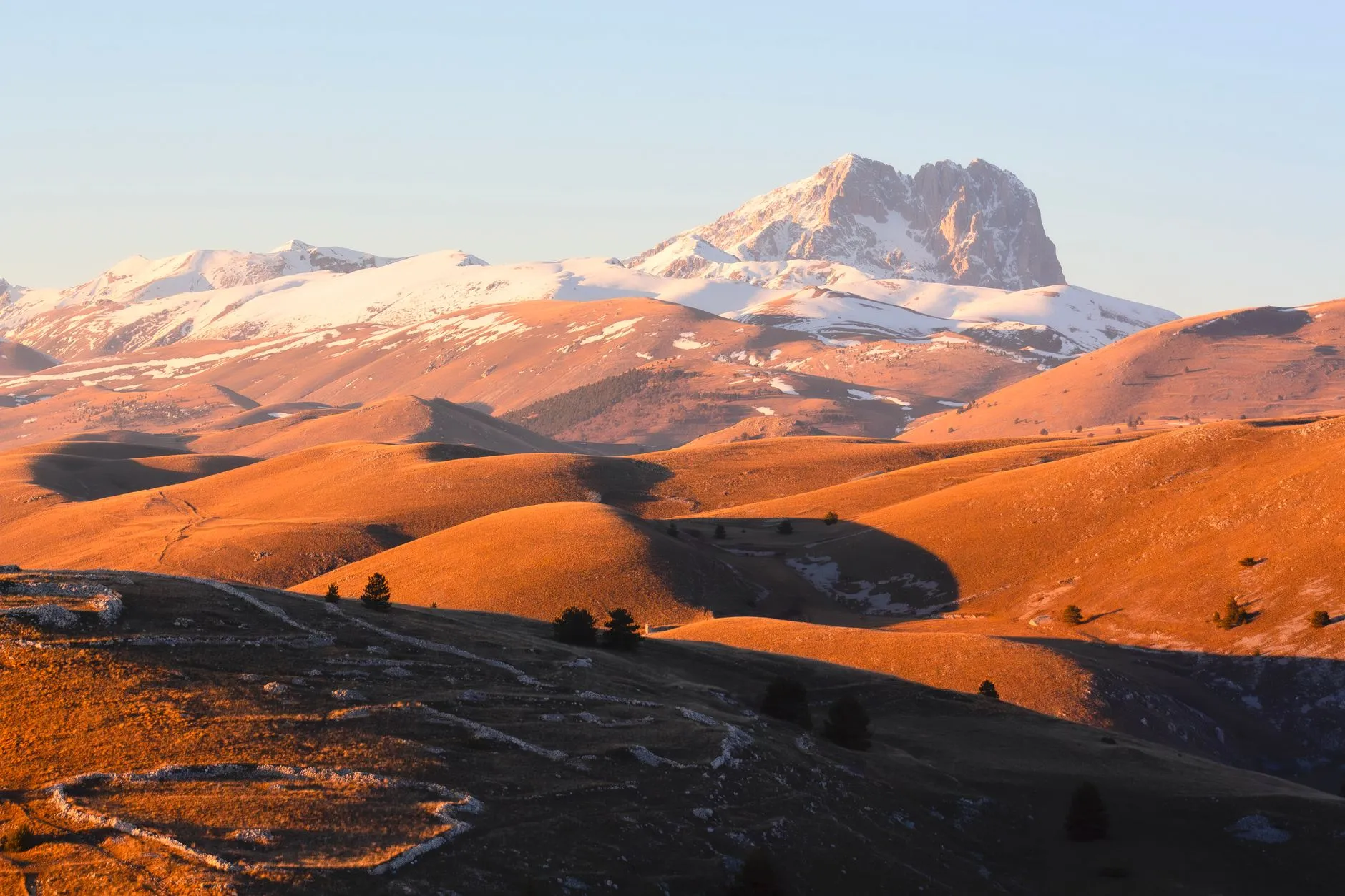
The park spans the provinces of Teramo, L’Aquila and Pescara in Abruzzo plus slices of Rieti in Lazio and Ascoli Piceno in Marche, and covers a little over 2,000 km². Its centrepiece is Corno Grande at 2,912 m — the highest peak in the entire Apennine chain. Below it lies the Calderone, considered Europe’s southernmost glacier, and beside it the vast high plateau of Campo Imperatore, a treeless upland grazing system that people call Italy’s Little Tibet and that gets used as a stand-in for central Asia in films. From Pescara Centrale, TUA runs hourly to L’Aquila, which is the practical base.
Majella National Park
Smaller at 628 km² but arguably more dramatic, with Monte Amaro at 2,793 m. It became a UNESCO Global Geopark on 21 April 2021. Its wildlife is the draw: around 20 Marsican brown bears, one of central Italy’s largest concentrations of a critically endangered endemic subspecies; roughly 100 Apennine wolves in eleven packs, with 17 GPS-collared for monitoring; and Abruzzo chamois, reintroduced in 1991 after decades of local extinction. You will not casually see a bear. Knowing they are there changes the walk anyway.
The Trabocchi coast
South of Pescara, past Ortona, the Adriatic shore is studded with trabocchi — spider-legged wooden fishing platforms cantilevered out over the rocks, originally built to net fish without a boat, now many of them restored and several converted into restaurants where you eat on the structure itself. The old Adriatic railway along this coast was decommissioned in 2005 and its alignment converted into the Via Verde della Costa dei Trabocchi, a flat, traffic-free cycle path linking Ortona, San Vito Chietino, Rocca San Giovanni, Fossacesia, Torino di Sangro, Casalbordino and Vasto. Published lengths differ depending on which extensions are counted — you will see both 42 km and 60 km quoted — so plan from the current official route map rather than a round number. It is almost entirely paved, with an unsurfaced stretch through the Punta Aderci reserve, and because it was a railway it is dead flat. Rent a bike in Ortona; take a train from Pescara Centrale to get there.
Sulmona and the inland towns
Sulmona sits in a bowl ringed by the Majella, was Ovid’s birthplace, makes the confetti, and is one of the most agreeable small towns in central Italy to spend a day in. Beyond it are the stone villages of the Gran Sasso foothills — Santo Stefano di Sessanio, and the ruined hilltop fortress of Rocca Calascio, which is the photograph everyone comes back with.
Pescara itself
Be realistic: Pescara is a working Adriatic city, largely rebuilt after 1943, with a very long sand beach, a good fish market, the striking Ponte del Mare cycle-and-foot bridge, and the house where d’Annunzio was born. It is a pleasant place to eat and swim and a poor place to sightsee. Use it as a base and a transport hub, and spend your days in the mountains or on the Trabocchi coast.
The honest verdict on this airport
Pescara is worth flying into if Abruzzo is your destination, if you are comfortable with a self-connecting low-cost network, and if you value being 4 km and €3 from a mainline railway station. It is a poor choice if you need a hub connection, a lounge, an early-morning departure without a hotel, or a flight that exists in February — the network thins outside the summer. Check what your route actually costs from Rome or Ancona before you assume Pescara is cheaper.
❓ Frequently Asked Questions
📊 2026 Summary Data Table
| Category | Detail |
|---|---|
| IATA / ICAO | PSR / LIBP |
| Official name | Aeroporto Internazionale d’Abruzzo (Abruzzo Airport) |
| Operator | SAGA S.p.A., founded 1981, 99.99% publicly owned; 30-year concession granted 14 June 2007 |
| Location | Via Tiburtina km 229.1, ~4 km southwest of Pescara city centre |
| Terminals | 1 — check-in, security and gates all on the ground floor. Built 1996, expanded 2011, restructured 2018 |
| Runway | Single runway 04/22, 2,419 m asphalt |
| Annual passengers | 1,114,691 in 2025 (SAGA 2026 Service Charter) — a record, ~300,000 up on 2024 |
| Terminal hours | Daily 04:00 until the last flight of the day |
| Airlines | Ryanair (~22 destinations), Neos, Wizz Air Malta, Luxair (seasonal) — ~27 destinations, 12 countries |
| Full-service / hub feed | None. No ITA Airways, no Rome or Frankfurt connection, no interlining — every connection is self-connect |
| Airport bus | TUA4FLY, €3.00, valid 90 min across Pescara–Chieti; terminal ↔ Pescara Centrale; activate before boarding; card only on board |
| City buses | TUA lines 8 and 38, airport ↔ Pescara centre ↔ Stazione FS, ~every 20 min; Chieti line ~every 15 min |
| Taxi tariffs (published) | Pescara centre €20 · Pescara outskirts €25 · Chieti €35 · Radio Taxi +39 085 35155 |
| Parking | 500 uncovered spaces, 24h, no booking. 15 min free · €15/24h · €35/3d · €55/7d · ~+20% on listed peak days |
| Lounges | None. Not on Priority Pass’s 19-airport Italy list; no airline lounge |
| Currency | Euro (€) — Italy is in the Eurozone. Two ATMs in the terminal |
| Border | Schengen since October 1997 · EES fully operational since 10 April 2026 · ETIAS not yet in operation, fee set at €20 |
| Free Wi-Fi | Yes, unlimited, plus free uncapped charging points on the ground floor |
| Region | Gran Sasso e Monti della Laga NP (Corno Grande 2,912 m) · Majella NP / UNESCO Global Geopark 2021 (Monte Amaro 2,793 m) · Via Verde della Costa dei Trabocchi · Sulmona |