Malmö (MMX) Airport Guide 2026 — When Kastrup Wins Instead
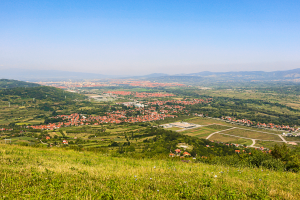
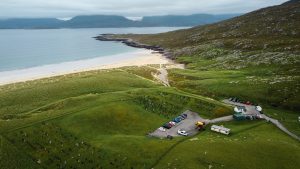
Malmö Airport sits out in the Svedala countryside south-east of the city, 40 to 50 minutes from Malmö Central by coach, and it is the only major Swedish airport that has to justify its existence against a foreign one. 854,961 travellers used it in 2025 — inside a terminal Swedavia built to handle three and a half to four million. The number that decides everything here: from that same Malmö Central platform an Öresund train reaches Copenhagen Airport in 23 minutes. Ryanair, Wizz Air and Skåne Aviation carry the scheduled flying, on about six routes. Money is the Swedish krona, not the euro. Around you: Skåne, and Denmark twenty minutes away.
Last verified: September 2026.
⚡ 2026 Quick Reference — Key Facts at a Glance
MMX / ESMS — one terminal, gates G1–G9A, opened 1 December 1972 as Malmö-Sturup, renamed Malmö Airport in 2007. Operated by Swedavia, in the municipality of Svedala
Vy flygbussarna, Malmö C ↔ Malmö Airport. Adult 139 SEK one-way (~€12.50), youth 8–25 129 SEK, under-8s free (up to four per adult). 40–50 minutes, roughly every 115 minutes, timed to flight departures. Malmö C stop K; at the airport, right outside the terminal
Skånetrafiken route 147, Svedala station ↔ Malmö Airport, launched 16 August 2026, timed to trains at Svedala. Change at Svedala Stortorget, a 7-minute walk from the station. Zone-priced — buy in the Skånetrafiken app
Neptunbus, three or four daily each way to and from Copenhagen, for Wizz departures and arrivals only. Book at least three days ahead
From Malmö C, an Öresund train reaches Copenhagen Airport in 23 minutes, four times an hour. Your own airport is twice as far away in time
Ranks directly outside the terminal; pre-booked pickups inside by domestic baggage claim. Sweden has no regulated taxi tariff — read the yellow comparison-price sticker and agree a fixed price before you get in
Pre-booked indoor weekend parking advertised from SEK 149/day (~€13.35); book on swedavia.com rather than driving up
Swedish krona (SEK). Sweden is in the EU but not in the eurozone — nobody here prices in euros, and Denmark across the bridge uses Danish kroner, a third currency again. FOREX has a desk in the terminal
None. No lounge on the 2026 terminal map, none in Swedavia’s own service listing. A Priority Pass card is worth nothing at MMX
Schengen. EES has been fully operational since 10 April 2026 and has replaced passport stamping for non-EU travellers. ETIAS is not running, no applications are being taken, and the fee is set at €20
🏢 1. One Terminal, Built for Four Million, Carrying Under One
Malmö Airport opened on 1 December 1972 as Malmö-Sturup, replacing Bulltofta on the edge of the city, and took the plain name Malmö Airport in 2007. In the fifty-odd years since, more than 58 million passengers have passed through. In 2025 it handled 854,961 of them, across 17 international destinations and one domestic, off a single 2,800-metre runway.
Hold those two numbers together, because they explain the building. After the 2006 rebuild — when the walls between the domestic and international halves came down — Swedavia rates the terminal at three and a half to four million passengers a year. It is currently carrying about a fifth of that. The practical result is the most relaxed airport experience in southern Sweden: you will not queue, you will not fight for a seat, and you will walk from the kerb to your gate in a few minutes. It is also why there is so little inside it.
The layout is one flat public hall with check-in along it, a single security channel, and gates G1 to G9A beyond. Non-Schengen arrivals are separated by a glazed corridor with a passport-control point before the baggage hall; Swedish Customs and the police work from mobile units rather than permanent posts, and the police office is on the second floor. Domestic and international arrivals are separate doors on the same frontage. There is free Wi-Fi across the whole airport, ATMs, a FOREX desk, and a marked meeting point for passengers with reduced mobility.
Who actually flies here
The scheduled network is small enough to list in full, and honesty about it is the most useful thing this guide can do.
| Airline | Where |
|---|---|
| Ryanair | London Stansted · Warsaw Modlin · Zagreb (the three routes Ryanair’s own route data lists from MMX) |
| Wizz Air | Belgrade · Podgorica |
| Skåne Aviation | Stockholm Bromma, several times a week, launched 12 April 2026 — Bromma puts you much closer to central Stockholm than Arlanda does |
| Charter (winter 2026/27) | Gran Canaria and Tenerife with Ving |
Swedavia’s airline listing also carries SAS, Sunclass Airlines, Jettime, AIS Airlines, Trade Air and GP Aviation, with Aviator as ground handler — a mix of scheduled, charter, seasonal and cargo operators. Swedavia does not publish a static route list; the destinations page is a live search, so check the departures board for the week you are travelling rather than trusting any list, including this one, months out.
What is not here is as important. There is no long-haul, no hub connection, and no network to roll onto if your flight goes wrong. Every ticket out of Malmö is point-to-point. Ryanair and Wizz between them carry most of the seats, which means their cabin-bag rules decide what your trip really costs — see our Ryanair baggage guide, Wizz Air baggage guide and SAS baggage guide, or put them side by side in the aifly baggage checker.
Security is the old regime here
Malmö has not been given the new scanners. Swedavia is explicit that only the new security hall in Terminal 5 at Stockholm Arlanda allows liquids and electronics to stay in the bag. At Malmö, the classic rules apply: liquids in containers of up to 100 ml, all of them inside one clear, resealable bag of at most one litre, one bag per person, taken out and put in a tray. Laptops and large electronics come out too. Coats, belts with big buckles and pocket contents go in the tray.
Liquid medication and baby or dietary food must be presented separately but do not have to go in the litre bag. If you leave electronics buried in your rucksack, the bag goes through the X-ray twice and a screener has to come and find you — at a small airport that is a five-minute penalty, not a thirty-second one, because there is only one lane.
🛂 2. Sweden’s Border: Schengen, EES, and the Bridge Check Nobody Warns You About
Sweden is a Schengen country, so a flight from Warsaw, Zagreb, Belgrade or Podgorica into Malmö is an internal Schengen arrival with no routine passport control. That is the easy half.
EES — live, and it changed what happens at the desk
The EU’s Entry/Exit System became fully operational on 10 April 2026, after a progressive rollout that started on 12 October 2025. It applies to non-EU nationals entering the 29 countries that use it for a short stay, and it has replaced the stamping of passports.
What the system records, in the Commission’s own terms: your name, your travel-document data, biometric data — fingerprints and a captured facial image — and the date and place of each entry and exit. Refusals of entry go in too. The point of it is automatic detection of overstayers, so the 90-days-in-180 clock is now counted by a machine rather than by an officer reading ink.
In practice: your first registration takes longer than a stamp ever did, because fingerprints and a face capture have to be taken. Later crossings are quicker, and are increasingly handled by self-service kiosks and automated gates. You will not meet this at Malmö on a flight from within Schengen. You will meet it on your first entry into Schengen wherever that happens — and if you are connecting through Copenhagen from outside the EU, that is where it happens.
ETIAS — status, not a date
ETIAS is not in operation. The Commission’s own page says so plainly: it “is currently not in operation and no applications for travel authorisations are collected at this point”, and the EU “will inform about the specific date for the start of ETIAS several months prior to its launch”.
Two things follow. First, the fee: it has been set at €20, replacing the €7 figure that circulated for years — so any site quoting €7 is out of date, and any site quoting a launch date is guessing. Second, and more usefully: nobody can sell you a valid ETIAS today, because none exist. Sites offering to process one, expedite one or check your eligibility for a fee are selling you nothing. When it does start, applications will be made through an official EU website or app, and the current framework exempts under-18s, over-70s and family members of EU citizens from the fee.
The bridge check — carry the passport anyway
Here is the thing that catches people out on exactly the trip this guide is about. Öresundståg’s own traffic notice states that border controls of passengers entering Sweden are currently being carried out, and that this affects passengers crossing the Öresund Bridge. Schengen or not, if you fly into Copenhagen and take the train to Malmö, expect to show photo ID on the Swedish side. A driving licence is not reliably enough for a non-Nordic citizen; bring the passport. Check the current position at oresundstag.se before you travel, because the controls are renewed in cycles rather than being permanent law.
Money
Swedish kronor. Sweden is an EU member but not a eurozone member, and this is not a country where euros are quietly accepted — they are not. It is, however, close to cashless: card and phone work everywhere, including on buses, and many Swedish businesses no longer take notes at all. Do not buy kronor at a bad rate before you fly, and if a card terminal offers to charge you in your home currency, decline and pay in SEK.
One trap specific to this corner of Europe: crossing the bridge changes currency as well as country. Denmark uses Danish kroner, which are a different currency from Swedish ones at a different rate, and Danish shops do not take SEK. A Malmö–Copenhagen day out involves two currencies and one card.
🚌 3. The 139-Krona Coach, Bus 147, and the 23-Minute Train
Malmö Airport is not near Malmö. It is in Svedala municipality, out in the fields, and every option below is a real journey rather than a hop.
| Option | Route | Time | Price |
|---|---|---|---|
| Vy flygbussarna coach | Malmö C (stop K) ↔ Malmö Airport, via Studentgatan, Triangeln, Södervärn, Persborg, Jägersro Center and Svedala E65 | 40–50 min | Adult 139 SEK (~€12.50) · youth 8–25 129 SEK · 0–7 free, up to four per adult |
| Skånetrafiken bus 147 | Svedala station (change at Svedala Stortorget) ↔ Malmö Airport | Timed to trains; 15 or 20 min to change at Svedala | Zone-priced — check in the app |
| Neptunbus | Copenhagen ↔ Malmö Airport, Wizz Air flights only, 3–4 daily | Not published | Book on neptunbus.com, at least 3 days ahead |
| Taxi | Rank outside the terminal | Varies | Deregulated — no fixed tariff. Agree a price first |
| Öresund train (the alternative) | Malmö C → Copenhagen Airport, via Triangeln and Hyllie | 23 min | Skånetrafiken cross-border fare |
The coach
Vy flygbussarna runs the airport coach and it is the default for anyone without a car. Adult single 139 SEK, young person aged 8–25 129 SEK, children 0–7 free with up to four per paying adult. Tickets are valid for three months in either direction and are non-refundable once bought, so an early purchase costs you nothing in flexibility.
The catch is frequency. The published pattern is a departure roughly every 115 minutes — call it every two hours — with the timetable built around flight departures rather than a clock face. On a network of six routes, that is defensible; on a missed connection it is brutal. Look up your specific departure rather than assuming a bus will be there. The Malmö C stop is stop K; at the airport the coach waits immediately to the right as you come out of the terminal. Journey time is 40–50 minutes depending on traffic.
Bus 147
New since 16 August 2026, Skånetrafiken’s route 147 links Svedala station to the airport, with two new stops built for it — Svedala Hangarvägen (with a shelter for the return) and Malmö Airport. The timings are set against train arrivals at Svedala from the Malmö–Lund–Helsingborg and Ystad–Simrishamn lines, giving 15 or 20 minutes to change. The change is at the Svedala Stortorget bus stop, which is about a seven-minute walk from the station — build that in.
This route is genuinely useful if you are coming from eastern Skåne rather than from Malmö itself, and it is the first time the airport has had a proper local public-transport link rather than only a city coach. Skånetrafiken prices by zone rather than by a published flat fare, so get the price in the app — the fare depends on which zones you cross, and children 0–6 travel free within Skåne.
Taxi
Taxis wait directly outside; if you pre-booked, the pickup point is inside by the domestic baggage claim. Swedish taxi pricing is fully deregulated and there is no meter rate you can rely on. Every car must display a comparison price in large black digits on a yellow background — the fare for a standard 10 km, 15-minute journey — and the highest price the car charges must be shown too. You are not obliged to take the first car in the rank. Ask for a fixed price, make sure it is entered in the meter before you set off, and keep both the card slip and the meter receipt.
Driving and parking
Most of MMX’s traffic arrives by car, which tells you something. The airport advertises pre-booked indoor weekend parking from SEK 149 a day (about €13.35) and runs a parking customer-service line around the clock on +46 (0)10 109 68 10. Rates move and the drive-up price is not the booked price, so book online. Car-hire desks are in the terminal.
And the honest option: don’t use this airport
From Malmö Central, the Öresund train reaches Copenhagen Airport in 23 minutes — timetabled at :05, :20, :35 and :50 past most hours through the middle of the day, stopping at Triangeln and Hyllie on the way. That is not a rough figure; it is what the current Öresundståg timetable says, valid to 12 December 2026.
Now do the arithmetic. Malmö C to your own airport: 40–50 minutes on a coach that runs every two hours. Malmö C to Copenhagen Airport: 23 minutes on a train that runs every 15. Kastrup is closer to Malmö in time than Malmö Airport is, and it has well over a hundred destinations including long-haul, against six. Unless the specific route you want flies from MMX, or you are driving and parking, the train to Kastrup is the better plan — run the fare comparison first with the aifly price check, because the flight price difference has to beat a €12.50 coach and 27 extra minutes, and usually it does not.
🛋️ 4. There Is No Lounge
Malmö Airport has no lounge. Not a contract lounge, not a paid walk-up room, not a Priority Pass facility. The 2026 terminal map marks two cafés, a duty free, a WHSmith, a FOREX desk, toilets, an ATM and a smoking area — and no lounge of any kind. Swedavia’s own service page for Malmö lists currency exchange, cash withdrawal and Wi-Fi, and nothing else. If you hold a lounge card, it buys you nothing here, and you should not plan a long dwell on the assumption that a quiet room exists.
There is no fast-track product either, and at 855,000 passengers a year through a terminal sized for four million there is no need for one. Free Wi-Fi covers the whole airport. The compensation for having nothing is that you can arrive genuinely late by big-airport standards — but check the airline’s own closing times, because Ryanair and Wizz enforce theirs to the minute regardless of how empty the hall is.
🍽️ 5. Two Cafés, a Duty Free, and the Skåne You Should Actually Eat
The complete catering and retail list, from Swedavia’s own 2026 terminal map:
- Espresso House — kiosk and bistro bar, the Swedish coffee chain you will meet in every station in the country.
- WayCup Kiosk & Bistro Bar — the second café-bar unit.
- Malmö Duty Free — the airside shop.
- WHSmith — books, press, snacks.
- FOREX — currency exchange, plus ATMs in the hall.
That is it. Two coffee counters and two shops. Eat before you come, and be aware of the duty-free rules that actually apply: within the EU you can buy perfume, cosmetics and confectionery at duty-free prices both ways, but tobacco is sold at town prices, not duty-free prices, because Sweden is in the EU customs and tax area. Only travellers ending their journey outside the EU get genuinely duty-free spirits, wine and tobacco. Age limits in Swedish shops are 18 for tobacco and 20 for alcohol — higher than most of Europe, and enforced.
What Skåne is good at
Skåne is Sweden’s farm, and its food is heavier, sweeter and more German than the rest of the country’s.
- Spettekaka. The county’s protected cake — egg and sugar batter poured over a rotating cone in front of an open fire until it forms a tall lattice tower. Sold in boxed slices. Nothing else in Sweden looks like it.
- Äggakaka. A thick baked egg pancake, served with fried salt pork and lingonberries. A working lunch, not a dessert.
- Skånsk senapssill and the herring table. Mustard-cured herring is the Skåne variant; a proper sillbord runs to five or six cures.
- Rågkaka and kavring. Dark, sweet, dense Skåne rye breads that keep for a week and travel well.
- Wallenbergare and råraka for the Swedish canon proper — veal patty in cream, and a fried grated-potato cake.
- Kanelbullar, and fika as an institution. Espresso House at the airport does a competent version; a Malmö bakery does a much better one.
- Apples and cider from Kivik, on the east coast — Sweden’s orchard country, and a genuinely good day out in autumn.
Buy the spettekaka in Malmö rather than at the airport, and buy it boxed unless you enjoy explaining a tower of lattice to a gate agent.
💡 6. Insider: When Malmö Wins, and What Skåne Is For
Fly from MMX when
- Your route is one of the six. London Stansted, Warsaw Modlin, Zagreb, Belgrade, Podgorica or Stockholm Bromma from your doorstep beats a change of country to get to a hub.
- You are driving and parking. Indoor pre-booked parking from 149 SEK a day, an easy motorway approach and a two-minute walk to check-in — Kastrup can offer none of that at that price.
- You are going to Stockholm and want Bromma. Bromma is inside the city in a way Arlanda is not; on a day trip that is 40 minutes of your life back.
- You want a stress-free airport. Under a million passengers in a four-million terminal is a real amenity if you hate airports.
- You live in eastern Skåne. Since 16 August 2026 bus 147 makes the airport reachable by train-plus-bus from Ystad, Simrishamn and the east, which it was not before.
Take the train to Copenhagen Airport when
- You need anywhere else on earth. Six routes against a full network with long-haul. This is not a close call.
- You are already in central Malmö. 23 minutes and four trains an hour, against 40–50 minutes and a coach every two hours.
- You need a connection, a lounge, or a second daily frequency to fall back on. MMX has none of those.
- You are travelling at an awkward hour. The flygbussarna timetable is built around MMX’s own departures, so it thins out fast when nothing is flying.
Worth your days in Skåne
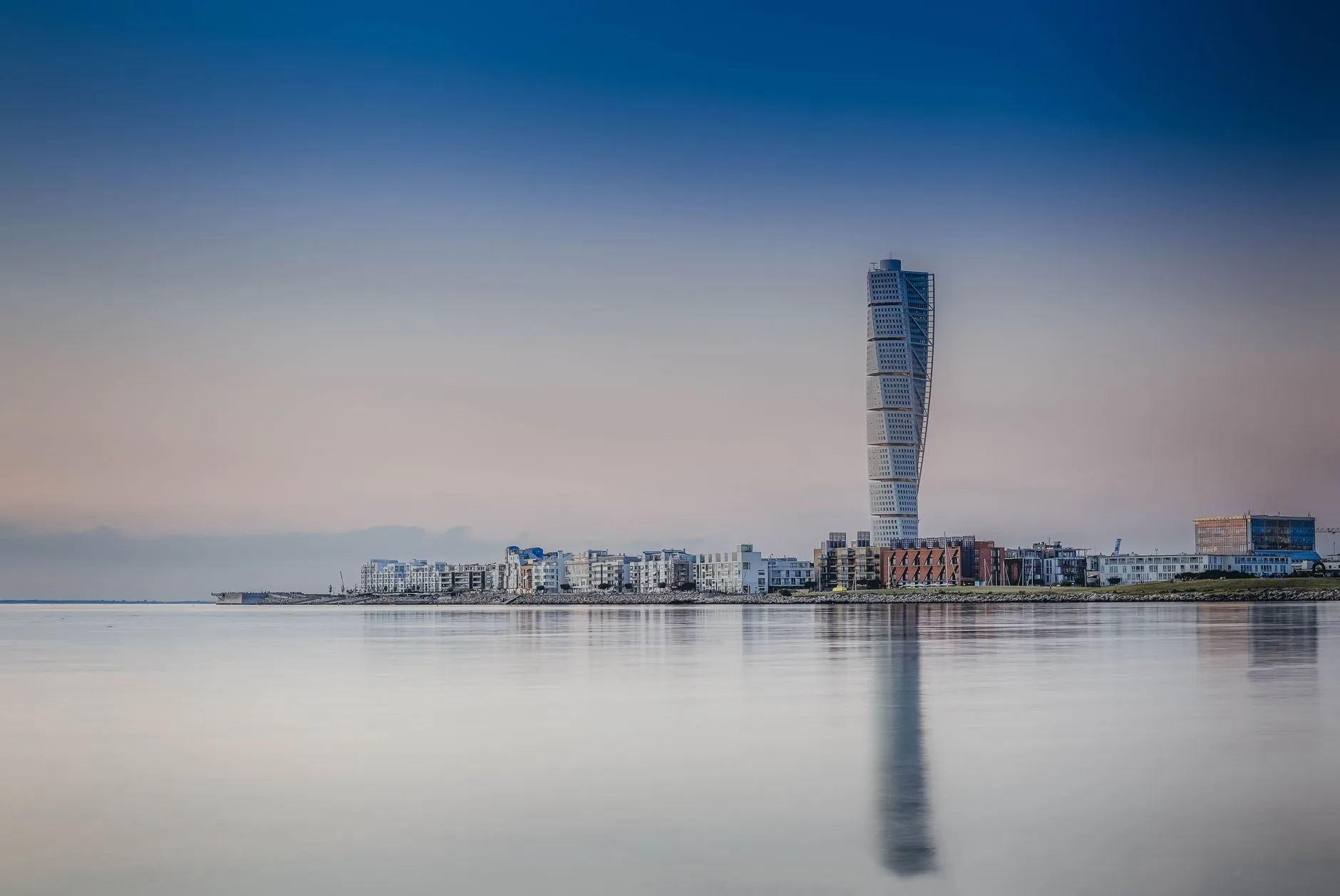
- Malmö itself. Gamla Staden and Lilla Torg, the Turning Torso on the Western Harbour, the beach at Ribersborg with its open-air cold bathhouse, and Malmöhus Castle. It is Sweden’s third city, it is young, and it is small enough to walk.
- Lund, a short train ride away. A Romanesque cathedral with an astronomical clock, one of Scandinavia’s oldest universities, and the open-air Kulturen museum. The best half-day in the region.
- Copenhagen, about 40 minutes from Malmö C by the same train. A different country for the price of a local train ticket, and the reason the Öresund region works at all.
- Ystad and the south coast. Wallander’s town — half-timbered streets, a Greyfriars abbey, and long empty beaches east to Sandhammaren. Ales stenar, a stone ship set on a cliff above the sea, is nearby and worth the walk up.
- Kivik and Österlen. The apple country and artists’ coast on Skåne’s east side: orchards, cider, fishing villages and a bronze-age cairn with carved slabs inside it.
- The castles. Skåne is thick with them — Glimmingehus, a remarkably intact medieval fortified house, is the one to pick.
- Falsterbo, on the peninsula south-west of the airport: sand, a lighthouse, and one of Europe’s great autumn bird-migration bottlenecks.
Practical odds and ends
- The coach runs roughly every two hours. Look up your departure; do not assume.
- 139 SEK adult, 129 SEK for 8–25s, free under 8 on flygbussarna, valid three months, non-refundable.
- 23 minutes Malmö C → Copenhagen Airport, four an hour. Know this number before you book anything.
- Carry your passport on the bridge, even inside Schengen.
- Old-style security here: 100 ml liquids, one litre bag, laptops out.
- No lounge, no fast track. Free Wi-Fi throughout.
- Kronor, not euros — and Danish kroner across the water, which are different again.
- Taxis are deregulated. Agree the price before the doors close.
- EES is live; ETIAS is not, and nobody can sell you one.
❓ Frequently Asked Questions
📊 2026 Summary Data Table
| Category | Detail |
|---|---|
| IATA / ICAO | MMX / ESMS |
| Official name | Malmö Airport (Malmö-Sturup until 2007) |
| Location | Municipality of Svedala, in open country south-east of central Malmö |
| Opened | 1 December 1972; terminal rebuilt 2006; 58 million+ passengers since opening |
| Operator | Swedavia AB (state-owned). ~1,100 staff across ~40 companies on site |
| Runway | 1 runway, 2,800 m |
| Terminal | One terminal, gates G1–G9A, rated by Swedavia for 3.5–4 million passengers a year |
| Annual traffic | 854,961 passengers in 2025 — about a fifth of terminal capacity |
| Destinations 2025 | 17 international, 1 domestic (airport’s own count) |
| Airlines | Ryanair (London Stansted · Warsaw Modlin · Zagreb) · Wizz Air (Belgrade · Podgorica) · Skåne Aviation (Stockholm Bromma, from 12 April 2026) · charter Ving (Gran Canaria, Tenerife, winter 2026/27). Swedavia also lists SAS, Sunclass, Jettime, AIS Airlines, Trade Air, GP Aviation; Aviator handles |
| Airport coach | Vy flygbussarna, Malmö C stop K ↔ terminal. 40–50 min, roughly every 115 min, timed to flights. 139 SEK adult / 129 SEK aged 8–25 / free 0–7 (max 4 per adult). Ticket valid 3 months, non-refundable |
| Local bus | Skånetrafiken 147, Svedala station ↔ airport, from 16 August 2026; change at Svedala Stortorget, 7-min walk from the station, 15–20 min connection. Zone-priced |
| Wizz transfer | Neptunbus to/from Copenhagen, 3–4 daily, Wizz flights only, book 3+ days ahead |
| Train alternative | Malmö C → Copenhagen Airport in 23 min, via Triangeln and Hyllie, typically :05 :20 :35 :50 past the hour (Öresundståg timetable valid to 12 Dec 2026) |
| Taxi | Rank outside the terminal; pre-booked pickup by domestic baggage claim. Deregulated pricing — read the yellow comparison-price sticker, agree a fixed price, keep the meter receipt |
| Parking | Pre-booked indoor weekend parking from SEK 149/day; parking customer service +46 (0)10 109 68 10, 24/7 |
| Lounge | None. No lounge on the 2026 terminal map or in Swedavia’s service listing. No fast track |
| Food & retail | Espresso House · WayCup Kiosk & Bistro Bar · Malmö Duty Free · WHSmith · FOREX. ATMs in the hall |
| Wi-Fi | Free across the whole airport |
| Security | Old regime: 100 ml containers in one 1-litre clear resealable bag, one bag per person; laptops and large electronics out. Only Arlanda T5 has the new scanners |
| Duty free | Within the EU: perfume, cosmetics and confectionery at duty-free prices; tobacco at town prices. Full duty-free only for end destinations outside the EU. 18 for tobacco, 20 for alcohol |
| Currency | Swedish krona (SEK). EU member, not eurozone. Denmark across the bridge uses Danish kroner. Near-cashless — card and phone everywhere |
| Border | Schengen. EES fully operational since 10 April 2026 (progressive start 12 Oct 2025) — biometrics and face capture replace passport stamps for non-EU travellers. ETIAS not in operation, no applications accepted, fee set at €20. ⚠️ ID checks on entry to Sweden across the Öresund Bridge — carry a passport |
| Contact | +46 (0)10-10 945 00 · [email protected] |