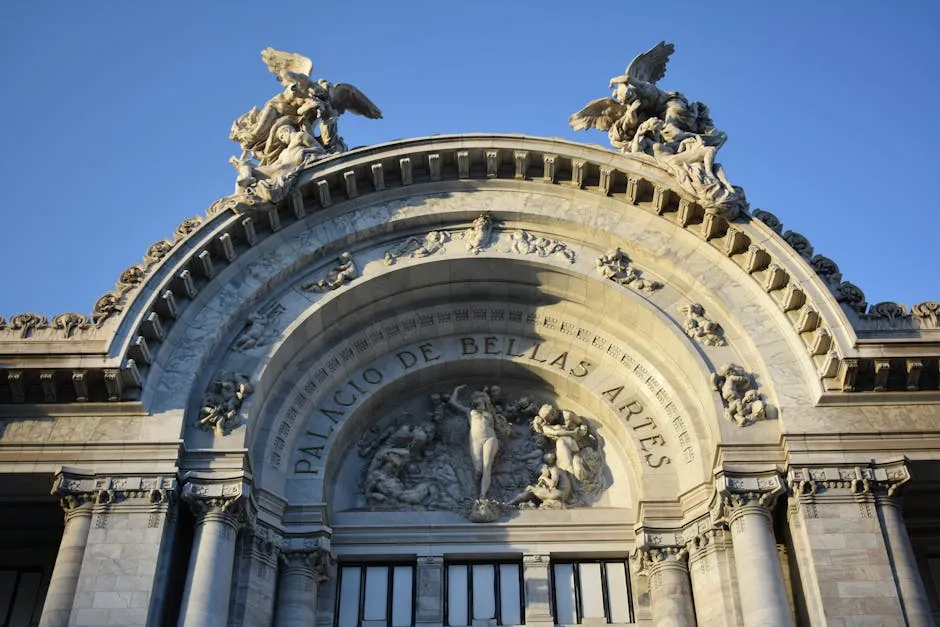
Mexico City Airport (MEX) — The Complete 2026 Guide
Benito Juárez is the busiest airport in Latin America, five kilometres from the city centre and permanently running at the edge of its capacity. Land in the right terminal, ignore the touts, and it is one of the most convenient big-city airports anywhere. Get any of that wrong and it will eat two hours of your trip.
Last verified: July 2026. Fares and terminal assignments in Mexico City change often — confirm the specifics on your ticket before you travel.
Quick reference
| Detail | What you need to know |
|---|---|
| Airport | Aeropuerto Internacional Benito Juárez (AICM), IATA MEX — busiest airport in Latin America, ~44.6 million passengers in 2025 |
| Location | ~5 km east of the Centro Histórico; altitude 2,230 m (7,320 ft) |
| Terminals | T1 — most airlines (Volaris, Viva Aerobus, United, American, Air Canada, Lufthansa, Turkish, Iberia, BA). T2 — Aeroméxico + Delta & SkyTeam. They are ~3 km apart |
| Second airport | AIFA (NLU), ~35 km north — a genuinely different airport. Check which one your ticket says |
| Into the city | Metrobús Line 4 MXN 30 · authorised taxi ~MXN 250–370 · 20–40 min to Roma/Condesa in normal traffic |
| Free Wi-Fi | Network Gratis_CDMX_Aeropuerto, unlimited |
| Watch out for | Landing at AIFA by mistake · the 3 km T1↔T2 gap · unofficial taxis · slot caps pushing some flights out of MEX |
First, the question that ruins trips: MEX or AIFA?
Mexico City has two international airports, and they are not interchangeable. MEX (Benito Juárez) is the old, central, chaotic one you probably picture. AIFA (Felipe Ángeles, code NLU) is a newer airport roughly 35 km north of the city at the former Santa Lucía air base, and a run of government slot caps and the forced move of cargo out of MEX have pushed a growing list of flights there — chiefly Viva Aerobus, some Volaris, Aeroméxico Connect, and the state carrier Mexicana.
The trap is simple and expensive: you book “Mexico City,” you assume MEX, and you land at AIFA with a hotel in Roma Norte and an hour-plus transfer ahead of you. There is finally a decent fix — the Tren Felipe Ángeles commuter rail opened on 26 April 2026 and links AIFA to Buenavista station in the centre — but there are also direct ETN/Turistar coaches (about 45 minutes, from roughly MXN 100) and private transfers (55–75 minutes, US$120-ish). None of it is a taxi you want to improvise at midnight.
Terminal 1 vs Terminal 2 — and the 3 km gap between them
MEX has two terminals and they do not share a building, a concourse, or an easy walk. The split is by airline, not by domestic-vs-international:
- Terminal 2 is Aeroméxico’s fortress — Aeroméxico, its Delta partner and SkyTeam. If you are flying Aeroméxico, you are in T2, full stop.
- Terminal 1 is everyone else — the domestic low-cost carriers (Volaris, Viva Aerobus, Magnicharters), the North Americans (United, American, Air Canada) and most of the long-haul Europeans (Lufthansa, Turkish, Iberia, British Airways).
Air France and KLM are the awkward exception — as SkyTeam members they logically belong in T2, but sources still list them inconsistently, so check the terminal printed on your specific ticket rather than trusting a general rule.
The two terminals sit about 3 km apart with no sensible landside walk between them. Your options to cross:
- Aerotrén — a free automated people-mover, airside, running roughly 05:00–23:00, about a five-minute ride. The catch that strands people: you need a valid onward boarding pass to board it. Connecting passengers with a ticket in hand are fine; anyone without one is not.
- Landside inter-terminal bus — runs 24 hours, costs MXN 16, and picks up from T1 Gate 6 and T2 Gate 4. This is the fallback if you do not have a boarding pass yet, or you have already exited to the arrivals hall.
Getting into the city
MEX is close — five kilometres from the Zócalo — but “close” and “quick” are different things in Mexico City traffic. Here is what each option actually costs and where it makes sense.
| Option | Price | Time to centre | Verdict |
|---|---|---|---|
| Metrobús Line 4 | MXN 30 (MI card, no cash) | 30–45 min | Best value with luggage — dedicated lane beats the traffic |
| Authorised taxi | ~MXN 250–370 (~US$13–20) | 20–40 min | The reliable door-to-door choice; buy the ticket inside |
| Uber / DiDi | Often cheaper than taxi | 20–40 min | Works, but pickup rules are in flux — see below |
| Metro Line 5 | MXN 5 (+ MXN 15 card) | Slow, changes | Skip it if you have a suitcase |
Metrobús Line 4 — the move if you have luggage
This is the one public-transport option worth using with a bag. Line 4 runs from both terminals into the Centro Histórico (San Lázaro, Hidalgo, Bellas Artes), it has its own dedicated lane so it glides past the jammed Circuito Interior, and it costs a flat MXN 30 from the airport. The one requirement: it is cashless. You need a Tarjeta de Movilidad Integrada (MI) card — buy the blank card and load it at the machines on the platform. Don’t believe any guide that tells you to just tap a credit card at the airport stations; bring the MI card.
Metro Line 5 — cheap, and a mistake with a suitcase
The Metro’s “Terminal Aérea” station sits beside Terminal 1 only and costs a token MXN 5 (plus MXN 15 for the reusable card). It is the cheapest way in and the wrong one for most arriving visitors: the trains are packed, there is nowhere to put a bag, pickpocketing is a real risk in the crush, and there is no station at T2 at all. Locals travelling light, fine. Tourists off a long-haul with checked bags, no.
Authorised taxis — buy the ticket inside
The safe, boring, correct choice. Inside the arrivals hall, after baggage claim, there are official taxi kiosks where you pay a fixed fare by destination zone — not a meter — and are matched to an assigned driver. Expect roughly MXN 250–370 into central neighbourhoods, and 20–40 minutes to Roma, Condesa or Polanco depending on traffic. Treat the pesos as approximate; the point is the fare is agreed before you move.
Uber and DiDi — legal, useful, and genuinely in flux
Rideshare at MEX has been a running battle for years — drop-offs allowed, pickups restricted — and in 2025–26 it got more complicated, not less. A court injunction reaffirmed the apps’ right to pick up, the airport opened a designated rideshare waiting area (a covered zone roughly an eight-minute walk out), and at the same time the airport announced enforcement crackdowns ahead of the 2026 World Cup. The honest answer: it works, it is often cheaper than the taxi, but where and whether you can be picked up shifts. Open the app on arrival, follow its pickup point, and keep the authorised taxi as your always-works fallback.
Immigration and entry
Good news first: the old paper FMM tourist form has been phased out for air arrivals at MEX. Visa-exempt visitors — US, Canada, UK, EU and most others — no longer fill anything in; the officer simply stamps your passport with the number of days you are permitted.
Here is the part that trips people up in 2026: the officer handwrites that number, and it is often well under the old automatic 180 days. If you are staying a month, or you need a specific window, look at the stamp before you walk away from the counter and query it there if the number is too low — fixing it afterwards is a bureaucratic ordeal. Immigration halls can also back up badly when several long-haul flights land together, so a tight onward connection is a gamble.
(No EES or ETIAS here — those are European systems and have nothing to do with entering Mexico.)
Airlines, connections and minimum times
MEX is Aeroméxico’s main hub and one of the great connecting points of Latin America — Aeroméxico alone reaches around 93 cities from here. It is also, notoriously, an airport running at its ceiling: the airspace was declared saturated years ago and hourly operations were cut to 43 in early 2024, nudged to 44 in 2025, with new slot rules from October 2025. All of which is why some flights keep getting squeezed toward AIFA — and why MEX, a 2026 FIFA World Cup host-city airport, feels perpetually full.
If you are connecting, mind the published minimums — and pad them, because this is not an airport that rewards optimism:
| Connection type | Airline minimum | What to actually allow |
|---|---|---|
| Domestic → Domestic | ~35 min | An hour is comfortable |
| Domestic → International | ~45 min | 90 min |
| International → Domestic | ~1h 20 | 2 hours (bags + re-check) |
| International → International | ~1 hour | 90 min+ |
| Anything crossing T1 ↔ T2 | — | Never under 60 min; 90+ is sane |
Lounges
MEX lounges are better than the terminals around them suggest, and the pick depends on which one you can get into:
- Aeroméxico Salón Premier (T2) — the flagship. The old lounges closed in early 2025 for a full rebuild and reopened, redesigned, in 2026 — a large, genuinely comfortable international lounge plus a domestic one. The obvious choice if you are flying Aeroméxico/SkyTeam.
- Amex Centurion Lounge (Terminal 2) — yes, MEX has one, and it is in T2, airside. Access is by eligible American Express Platinum/Business Platinum/Centurion cards only — there is no paid walk-in.
- Grand Lounge Elite (T1) — the standout for Priority Pass holders, and named Priority Pass’s North America Lounge of the Year; the best independent option on the T1 side.
- VIPort (T2) — open 24/7 with a three-hour cap, handy for overnight or oddly-timed flights.
Between them MEX has around five Priority Pass lounges, split across both terminals.
Food, SIM cards, ATMs and Wi-Fi
Food: most of what you see is generic chain fast food, but there is one real recommendation — El Fogoncito, a proper CDMX taquería with four branches in T1 and three in T2. Tacos al pastor and alambres that taste like the city rather than an airport. If you want a last decent Mexican meal before a long-haul, that is where to go. The better sit-down options otherwise are inside the airport hotels.
SIM / eSIM: the best network is Telcel; there are Telcel and Movistar shops on the upper floors of both terminals. An eSIM bought before you land is the least-hassle route if your phone supports it.
Money: use bank ATMs — Santander, BBVA, Banorte — rather than the casa de cambio exchange booths, whose rates are poor. When the ATM offers to bill you in your home currency, decline the “dynamic currency conversion” and choose pesos; it saves you a hidden markup every time.
Wi-Fi: free and unlimited on Gratis_CDMX_Aeropuerto. Luggage storage is available 24 hours in both terminals — near Gate E1 in T1 and Gates A45/A46 in T2.
Long layover or a red-eye? Where to sleep
MEX is well-served for horizontal time, and most of it is walkable from the gates:
- Hilton Mexico City Airport — inside Terminal 1 (Gate 8, level 3). The most convenient bed at the airport.
- Camino Real Aeropuerto — connected to T1 by a covered bridge; a solid, quieter option.
- Courtyard by Marriott — also bridged to T1.
- NH Collection Mexico City Airport T2 — built into the T2 building with direct lift access, and a free shuttle from T1.
- izZzleep sleep pods in T1 — rentable by the hour for a shower and a nap on a long layover, without committing to a full hotel night.
Safety, scams and the altitude
- The “porter” grab (T1): men in official-looking vests will take your bag and steer you to a taxi, then demand a large tip at the curb. They are not airport staff. A firm “no, gracias” and keep walking.
- Unofficial taxis: covered above — kiosk-booked authorised cabs only, never the driver who approaches you.
- Altitude: Mexico City sits at 2,230 m (7,320 ft), and you may feel it the first day — mild breathlessness, quicker dehydration, and alcohol hitting harder than usual. Go easy on the first-night mezcal.
- Tap water: as in the city, don’t drink it. Restaurants and lounges use purified water, but stick to bottled to be certain.
Frequently asked questions
Is my flight to MEX or AIFA?+
Check the airport code on your ticket. MEX is Benito Juárez, in the city; NLU is AIFA (Felipe Ángeles), about 35 km north. They are entirely separate airports — Viva Aerobus, some Volaris and Mexicana flights use AIFA, and landing there with a city hotel means an hour-plus transfer (now including the new Tren Felipe Ángeles rail to Buenavista).
How do I get between Terminal 1 and Terminal 2?+
Airside, the free Aerotrén people-mover connects them in about five minutes (05:00–23:00) — but you need a valid onward boarding pass to ride it. Otherwise, or landside, take the 24-hour inter-terminal bus (MXN 16) from T1 Gate 6 / T2 Gate 4. The terminals are ~3 km apart, so allow 45–60 minutes for any cross-terminal connection.
What’s the cheapest safe way into the city?+
Metrobús Line 4 at MXN 30 — it runs from both terminals into the Centro Histórico in its own dedicated lane, so it beats the traffic. It is cashless: buy and load a Tarjeta de Movilidad Integrada (MI) card at the platform machines. With heavy luggage, an authorised taxi (~MXN 250–370) is worth the extra.
Is Uber allowed at MEX?+
Yes, with caveats. Drop-offs have long been fine; pickups have been restricted and the rules are actively contested in 2026 — there’s now a designated rideshare pickup zone, but also periodic enforcement. Open the app on arrival for the current pickup point, and keep the fixed-fare authorised taxi as a reliable fallback.
Do I still need to fill out an FMM form?+
No — the paper FMM has been phased out for air arrivals at MEX. The immigration officer stamps your passport instead. Important: they now handwrite the number of days granted, often fewer than the old automatic 180. Check the stamp before leaving the counter.
Which lounge is best?+
If you fly Aeroméxico/SkyTeam, the newly rebuilt Salón Premier in T2. Amex cardholders have the Centurion Lounge in T2. Priority Pass holders should aim for Grand Lounge Elite in T1 (an award-winner) or VIPort in T2 if you need 24/7 access.
How much time should I leave for a connection?+
Airline minimums run from ~35 minutes (domestic-domestic) to ~1h20 (international-domestic), but MEX is congested — pad them. For anything crossing between T1 and T2, never plan under 60 minutes, and 90+ is sensible.
Will the altitude affect me at the airport?+
Possibly, mildly. At 2,230 m you may notice slight breathlessness, faster dehydration and stronger effects from alcohol in the first day or two. Drink water and pace yourself on arrival.
At a glance
| Codes | MEX / MMMX — Benito Juárez Intl (AICM) |
| Terminals | T1 (most airlines) · T2 (Aeroméxico/SkyTeam) · ~3 km apart, Aerotrén + bus |
| Other CDMX airport | AIFA / NLU, ~35 km north — check your ticket |
| Cheapest to centre | Metrobús Line 4, MXN 30 (MI card) |
| Easiest to centre | Authorised taxi, ~MXN 250–370, kiosk-booked |
| Immigration | No paper form; passport stamp — check the days written |
| Altitude | 2,230 m / 7,320 ft |
| Wi-Fi | Gratis_CDMX_Aeropuerto (free, unlimited) |
Before you fly
- 📊 Check what a good fare to Mexico City looks like — our price-check tool shows the typical deal range so you know a bargain when you see one.
- 🧳 Baggage checker — confirm your airline’s carry-on and checked allowance before you pack.
- 🌆 Mexico City city guide — where to stay, eat and what’s worth your time once you’re in town.
- 🌍 Mexico travel guide — best time to go, regions and how to get around.
🌍 Planning the trip? Read our Mexico travel guide — best time to go, where to stay, and how to get around.