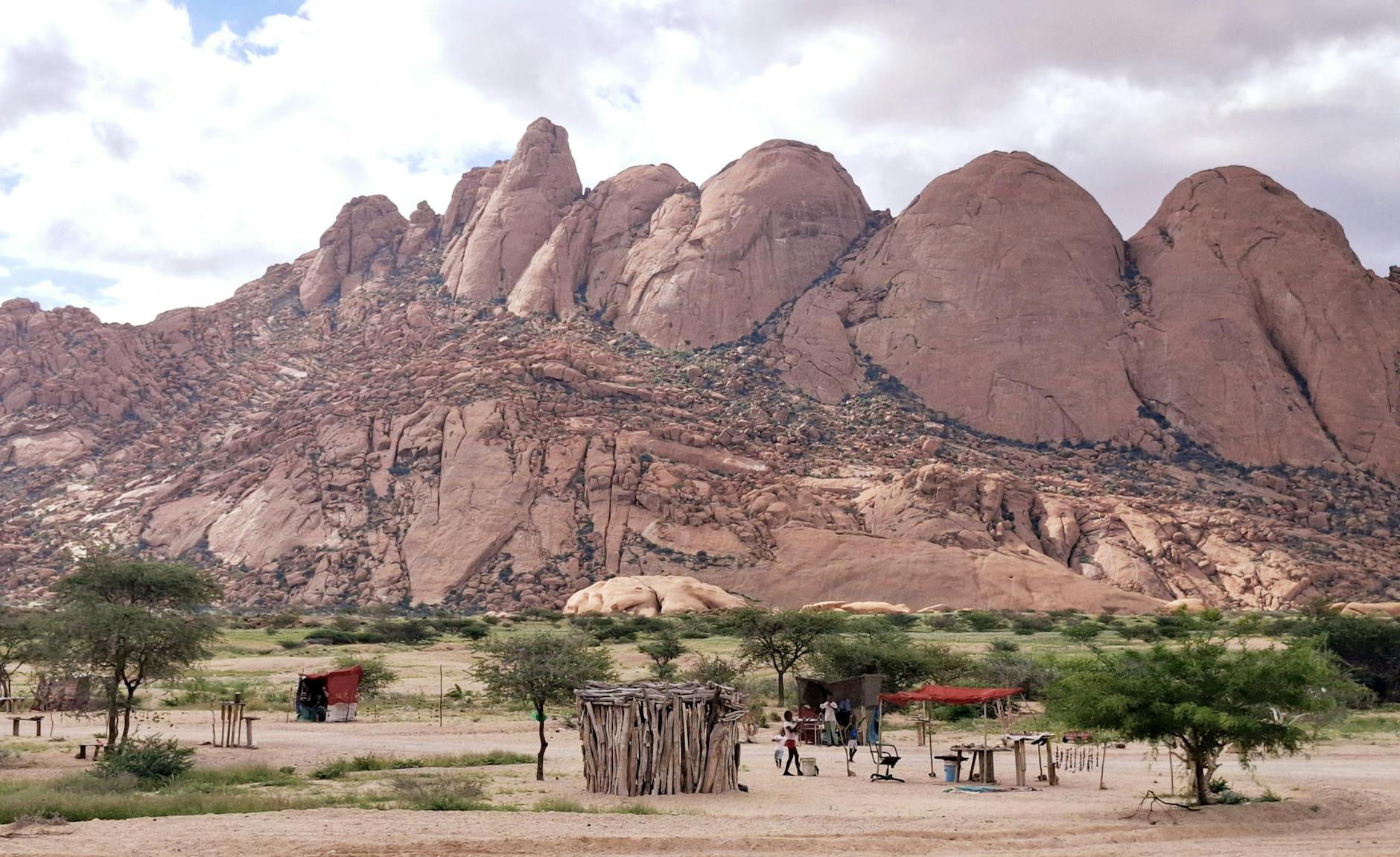
Windhoek Hosea Kutako Airport (WDH) — The Complete Master Guide 2026
Hosea Kutako International Airport sits an unusual 44 km east of central Windhoek on the B6 highway toward Gobabis — the longest airport-to-city run of any African capital. Single terminal, no rail link, 45-60 minutes by taxi or shuttle. The headline 2025-2026 reform: as of 1 April 2025, Namibia ended visa-free entry for 33 previously-exempt nationalities including the US, UK, Germany, France, Canada, and Australia. Those travellers now pay N$1,600 (~€80 / ~$90) for a visa on arrival, or N$1,200 in advance via the e-visa portal. NOT Schengen, no EES, no ETIAS, yellow fever only required for arrivals from a risk-zone country. Air Namibia has been liquidated since 11 February 2021; a new “Namibia Air” public-private national carrier is targeted for late 2026. The active map runs through Frankfurt (Eurowings Discover), Doha (Qatar), Addis (Ethiopian), Johannesburg (SAA + Airlink) and Zurich (Edelweiss, from 1 June 2026).
📍 44 km E of Windhoek
🚐 Shuttle ~60 min · NAD 150
🛂 Visa req’d since 1 Apr 2025
⚡ 2026 Quick Reference — Key Facts at a Glance
44 km · 45 min taxi, 60 min bus on the B6 east — the longest African capital-airport run
NAD 300-500 (~€15-25) — pre-agree fare; the meter is not the norm
NAD 150 (~€7-8) per person — multiple operators run scheduled shuttles to central Windhoek hotels
Namibian dollar (NAD), 1:1 with South African rand (ZAR) — both accepted everywhere; €1 ≈ NAD/ZAR 20 (May 2026)
NOT Schengen · NO EES · NO ETIAS — visa-on-arrival reform live since 1 April 2025
N$1,600 (~€80) at border / N$1,200 e-visa pre-paid — for the 33 previously-exempt Western nationalities
Paragon Premium / Executive / Oshoto — three airside lounges; Priority Pass accepted at all
Central Africa Time (UTC+2) year-round — no daylight saving since 2017
🏢 1. Single Terminal & the Post-Air-Namibia Map
Hosea Kutako International Airport — named for the chief of the Herero people who became a leader of the Namibian independence movement before his death in 1970 — sits in semi-arid Khomas Highland east of Windhoek and operates a single passenger terminal. Two operational realities shape the experience here: Air Namibia ceased operations on 11 February 2021 and was liquidated in March 2021, leaving Namibia without a national carrier; and the airport is unusually far from the city it serves (44 km / 27 mi) so transport planning is part of every WDH journey rather than an afterthought.
🛫 The Terminal & the Walk
Layout: single concourse, single security line, single airside food and lounge area. Check-in, immigration, security and gates flow front-to-back in 5-10 minutes total walking.
The remote-stand factor: a meaningful share of departures still uses apron buses to remote stands rather than jetbridges — the bus journey adds 5-10 minutes to the boarding clock.
⭐ The Post-Air-Namibia Carrier Map
Air Namibia ceased flying 11 February 2021 after the cabinet approved closure citing N$3 billion in losses; the airline was liquidated the following month. More than 600 jobs were lost.
The replacement plan: a new public-private national carrier — provisionally “Namibia Air” — is targeted for launch between June and December 2026, with around N$3 billion required over five years. Ethiopian Airlines is reportedly evaluating the partnership.
Operating airlines (May 2026)
- Eurowings Discover — Frankfurt, 6 weekly (since 10 December 2025). The Lufthansa Group’s mid-haul leisure brand carries the European map.
- Ethiopian Airlines — Addis Ababa, daily. The Pan-African connecting bank via ADD.
- Qatar Airways — Doha; the Gulf connection feeding Qatar’s global network.
- South African Airways & Airlink — Johannesburg, combined ~7 daily (since 10 December 2025). The dominant Southern African connection.
- Edelweiss Air — Zurich, 2 weekly from 1 June 2026. Swiss Air Lines’ leisure subsidiary, second European direct.
- TAAG Angola Airlines — Luanda, the West-Coast African connection.
- Proflight Zambia — Livingstone, 3 weekly from 3 March 2026; the gateway to Victoria Falls.
- FlyNamibia — Cape Town, Walvis Bay and selected regional routes; Namibia-based private operator.
No direct flights to North America, Asia, the UK or Australia. Connect via Frankfurt (Lufthansa Group), Doha (Qatar), Addis Ababa (Ethiopian) or Johannesburg (SAA → onward).
🛂 2. The 1 April 2025 Visa Reform & What It Costs
Namibia is not Schengen, not in the EU, not in any visa-waiver bloc that includes Western travellers. The dominant 2026 fact at WDH immigration is that the visa-free regime for 33 nationalities ended on 1 April 2025 — including the US, UK, Germany, France, Canada and Australia. Travellers from those countries now need to pay for a visa-on-arrival (N$1,600 / ~€80) or pre-apply via the e-visa portal (N$1,200, saving the N$400 border-application surcharge). At the same time, Namibia expanded visa-on-arrival eligibility to 36 additional small-state nationalities. There is no EES, no ETIAS, no yellow-fever requirement for arrivals from non-risk-zone countries.
Pre-Apply or Pay More at the Desk
e-Visa in advance: N$1,200 (~€60). Apply via eservices.mhaiss.gov.na at least 3-5 working days before travel. Visa on arrival: N$1,600 (~€80) — the same N$1,200 base fee plus a N$400 border-application surcharge added 2025. Both single-entry, 90 days.
Africa & SADC — Still Visa-Free
Most African Union nationals — including all SADC members (South Africa, Botswana, Zambia, Zimbabwe, Mozambique, Malawi, Angola, etc.) — remain visa-free for 90 days. The April 2025 reform did not touch African mobility into Namibia.
Namibian Dollar — Pegged 1:1 to Rand
Currency is the Namibian dollar (NAD), pegged 1:1 to the South African rand and part of the Common Monetary Area. South African rand circulates freely in Namibia at the same value; Namibian dollars are not accepted outside Namibia in return. €1 ≈ NAD/ZAR 20 (May 2026). Cards work across Windhoek (Visa, Mastercard); cash for tipping, small markets, fuel away from the towns.
Who needs what for short visits
| Passport | Visa needed? | Pre-apply e-Visa | Visa on arrival fee |
|---|---|---|---|
| EU (most) / UK / USA / Canada / Australia / NZ | Yes — since 1 April 2025 | N$1,200 (~€60) | N$1,600 (~€80) — N$400 border surcharge |
| Japan / South Korea / Singapore / Brazil / Mexico / Argentina | Yes — since 1 April 2025 | N$1,200 | N$1,600 |
| SADC: South Africa, Botswana, Zimbabwe, Zambia, Angola, Mozambique, Malawi, Lesotho, Eswatini | No — 90 days visa-free | n/a | n/a |
| Most other African Union members | No — 90 days visa-free | n/a | n/a |
| 36 expanded VoA-eligible (small states: Andorra, Bahamas, Maldives, Malta, Slovenia, Sweden, etc.) | Yes — visa on arrival eligible | N$1,200 | N$1,600 |
| Other nationalities (e.g. India, China, Russia) | Yes — embassy visa or e-visa | via embassy / e-portal | not VoA-eligible |
For Western travellers, pre-applying for the e-visa saves N$400 (~€20) per person plus 10-20 minutes at the border desk. On a family of four, that’s N$1,600 (~€80) saved — meaningful enough that pre-application is now the default sensible move. The e-portal accepts card payment in NAD or USD; bring a printed visa-grant PDF as backup.
🚐 3. The 44 km B6 Run: Shuttle, Taxi & the Hire-Car Default
There is no airport rail. The 44 km B6 highway between WDH and Windhoek runs through open semi-arid plain with a single straight tarmac road — fast in light traffic but vulnerable to occasional kudu and warthog crossings, particularly at dusk. The three sensible options are shuttle bus, taxi, and hire car. For onward safari travel — which is the reason most people are at WDH — the hire car booked through a Windhoek-based or international operator is by far the dominant mode, picked up at the airport and driven straight out without a Windhoek stop.
🚐 Shared Shuttle to Windhoek
- Multiple operators run scheduled shuttles to central Windhoek hotels — Hosea Kutako Express, Express Travel Services, several airport-affiliated minivans.
- Fare: NAD 150 (~€7-8) per person — most economical option for solo travellers.
- Journey time: ~60 minutes including hotel stops.
- Look for the booking desks landside in arrivals. Schedules adjust to incoming flight banks rather than running on a fixed timetable.
🚖 Airport Taxi (Pre-Agreed Fare)
- Taxis are available at the rank directly outside arrivals.
- Fare to central Windhoek: NAD 300-500 (~€15-25) for up to 4 passengers — agree before boarding; the meter is not standard practice.
- Journey time: 45 minutes in standard traffic.
- For groups of 3-4, the per-head cost beats the shuttle and the journey is faster.
🚗 Hire Car — The Default for Safari Travellers
- WDH is the standard pick-up point for self-drive safari itineraries — Avis, Budget, Europcar, Hertz, Asco, Africa Car Rental, plus several Namibian operators have desks landside.
- 4×4 (Hilux double-cab with rooftop tent and camping kit) is the safari default and books out months in advance for July-October peak.
- Sedans for Windhoek-only stays start at NAD 800/day (~€40); fully-equipped 4×4 from NAD 2,500-4,000/day (~€125-200).
- The route to Etosha: WDH → north via B1 to Otjiwarongo → Outjo → Anderson Gate / Andersson Gate. ~500 km, 6 hours.
- The route to Sossusvlei: WDH → west via C26 (4×4 advisable) or via Rehoboth and C19 (sedan-passable). ~360-400 km, 5 hours.
📱 Ride-Hailing — Limited at the Airport
- Uber operates in Windhoek but the WDH airport pickup is unreliable — drivers often refuse the 44 km out-of-town run or pricing surges past the taxi rate.
- LEFA, Wegofast — local Namibian ride-hailing apps used inside Windhoek city; airport coverage thin.
- Use the airport taxi rank or the shuttle for the WDH-Windhoek run; reserve ride-hailing for getting around the city.
🛋️ 4. Three Lounges: Paragon Premium, Executive, Oshoto
WDH has three airside lounges — unusually generous for a single-terminal capital airport. All three accept Priority Pass; the Paragon Premium Lounge in the international wing is the largest and runs 24/7, useful given Qatar’s overnight DOH departure pattern and the early-morning Eurowings/Ethiopian banks. The Executive and Oshoto lounges supplement during peak hours.
🛋️ Paragon Premium Lounge
Location: airside International Departures, after passport control.
Hours: 24/7 — the only WDH lounge open around the clock.
Maximum stay: 3 hours per visit. Children under 3 admitted free.
Programmes: Priority Pass, LoungeKey, DragonPass, pay-at-door. Free Wi-Fi, hot/cold snacks, beverages, newspapers, work seating.
✈️ Executive & Oshoto Lounges
Executive Lounge — airside, Priority Pass accepted, walk-in available. Standard regional business-lounge product.
Oshoto Lounge — Terminal 2 airside, Priority Pass accepted, walk-in available.
What’s actually inside: standard Southern African business-lounge product — hot/cold buffet with biltong, bobotie, beef stew, plus salads and bread; beer (Windhoek Lager, Hansa), wine, spirits; espresso; free Wi-Fi, work seating, a runway view of the single Hosea Kutako runway. Adequate for the 2-3 hour pre-flight wait on the Qatar 23:00 or Eurowings overnight; not Doha-grade.
🥩 5. Namibian Food: Kapana, Game Meat, Mahangu & Windhoek Lager
Namibian cooking is meat-heavy Southern African with strong German colonial overlay — game (oryx, kudu, springbok), beef, sausage (boerewors and German wurst), mealie-pap and millet (mahangu) porridge, and the country-defining Windhoek Lager. The WDH airside food court has the usual chain offering plus one local restaurant; the real Namibian eating happens at Joe’s Beerhouse, the Sky Bar, or — for the unfiltered version — the Single Quarters Market in Katutura township.
Kapana is thin-sliced beef seared over open coals, sold by weight, dipped into a chilli-salt-coriander spice mix, eaten with the fingers. The Single Quarters Market in Katutura is the spiritual home — NAD 50-100 (~€2.50-5) for a satisfying portion. The smoke alone is the experience.
Namibia’s game-meat tradition is unusually well-developed even by Southern African standards — almost all game is sourced from sustainable hunting permits on commercial conservancies. Oryx (gemsbok) carpaccio, kudu fillet, springbok medallions, ostrich. Joe’s Beerhouse and The Stellenbosch Wine Bar in Windhoek do the proper game plates at NAD 250-500 (~€12-25).
Pap (maize-meal porridge, similar to Italian polenta) and mahangu (pearl millet porridge, more nuanced flavour, traditional Owambo staple) are the everyday starches. Vetkoek — fried dough often stuffed with mince or jam — is the breakfast/snack street food. Available at any market food stall for NAD 10-30 (~€0.50-1.50).
Namibia was a German colony 1884-1915 and the German bakery and butcher culture remained. Schwarzwälder Kirschtorte, Apfelstrudel, weisswurst, käsekuchen all appear at Café Schneider and the older central-Windhoek confectioneries. Eishwein and Riesling from German-Namibian wine estates show up in better restaurants.
Duty-Free — What’s Worth Buying
🍺 Windhoek Lager & Tafel
Windhoek Lager is brewed under the German Reinheitsgebot purity law — Namibian Breweries holds to the 1516 rule. A six-pack of Windhoek or its sister Tafel Lager runs NAD 80-140 (~€4-7) at airside duty-free. The iconic Namibian export and a meaningful in-bag souvenir.
🥩 Biltong & Game Droëwors
Air-dried game biltong (kudu, oryx, springbok) and droëwors (dried sausage) from Hartlief Continental Meat Products or Joe’s. NAD 100-300 (~€5-15) per 200 g pack. Check your destination’s import rules — most EU and US destinations restrict meat-product entry.
💎 Tanzanite & Namibian Gemstones
Namibia is a meaningful source of tourmaline, aquamarine, amethyst, and rough diamonds. Airport jewellers stock the cut stones; serious buyers do the comparison shopping at the House of Gems on Stübel Street in central Windhoek. Get a certificate of authenticity for anything over €100.
🪵 Makalani Palm Carvings & Himba Crafts
The hard, ivory-like nut of the makalani palm is carved into small figurines — northern Namibian / Owambo tradition. Himba-style ochre dolls and basketry from the Kunene region. NAD 100-500 (~€5-25). The Namibia Craft Centre in Windhoek’s Old Breweries Complex has the best selection by far.
💡 6. Insider: Christuskirche, Independence Museum, Katutura
The Christuskirche on Robert Mugabe Avenue is Windhoek’s most photographed building — a German Lutheran church consecrated in 1910 during the colonial period, in a hybrid German-Gothic / Art Nouveau style. The interior stained glass was a gift from Kaiser Wilhelm II. It sits in the middle of a roundabout adjacent to the Alte Feste (1890 colonial fortress, now part of the National Museum complex) and the Independence Memorial Museum. Free to enter outside Sunday services.
The Independence Memorial Museum, opened in 2014 on the site of the old Reiterdenkmal colonial-era equestrian statue, is the country’s principal statement on the long anti-colonial struggle — from the 1904-1908 Herero and Nama genocide through the South West Africa mandate years to independence in 1990. Three floors of exhibits, archival photography, weapons, oral histories. Closes Mondays. Free to enter; the rooftop terrace gives the best skyline view of Windhoek.
Katutura (“we have no permanent dwelling place” in Otjiherero) is the township established under apartheid-era forced relocation in the late 1950s, now home to roughly 60% of Windhoek’s population. The Single Quarters Market on Independence Avenue (the southern stretch of Mandume Ndemufayo Avenue) is the unfiltered Namibian food experience — kapana cooks turning out beef strips over coals, fresh fruit and vegetable stalls, traditional medicine sellers. Go on a guided tour first time — companies like Katu-Tours run 2-3 hour walking tours for NAD 300-600 (~€15-30); going alone is fine in daylight but you’ll miss context without a guide.
Heroes’ Acre, about 10 km south of Windhoek on the B1, is the national war and heroes memorial — an obelisk on a hillside with terraced graves of liberation-struggle figures. It’s worth the half-hour detour if you have a hire car and an evening to fill, especially close to sunset. No entry fee; sign in at the gate. Functional rather than emotionally overwhelming as a visit — the architecture is North Korean-designed (yes, really — Mansudae Overseas Project, the same firm that built the African Renaissance Monument in Dakar), which is a curiosity worth noting in front of it.
Near the airport: there are a handful of B&Bs and guesthouses within 5-10 km of WDH (Auas Lodge area), useful for very early flights at NAD 800-1,500 (~€40-75). For 6+ hours overnight: head into Windhoek and stay at the Hilton Windhoek on Rev Michael Scott Street, the Avani Windhoek, the Olive Grove Guesthouse, or the Galton House (boutique, near the Independence Museum). NAD 1,500-3,500 (~€75-175). The 44 km drive each way is a real cost — only worth it for 8+ hour gaps.
MTC Namibia and Telecom Namibia (TN Mobile) are the two operators. SIMs at landside arrivals for NAD 30-100 (~€1.50-5), data bundles NAD 100-300 (~€5-15) for 10-25 GB. Bring your passport for the registration. 4G works across Windhoek and the major B-road corridor; outside the towns the network degrades to 2G or nothing — important for safari self-drives where offline maps are essential. The airport Wi-Fi is fine for landside transfers.
The 44 km airport-to-city distance changes the math here. Round-trip transit alone is 90 minutes minimum, more in dusk hours when wildlife crossings slow the B6. 4-hour layover: stay at the airport. The math doesn’t work. Use the Paragon Premium Lounge.
6-hour layover: shuttle to the city, see Christuskirche + the Independence Memorial Museum exterior + a quick lunch at Joe’s Beerhouse, shuttle back. Tight but possible.
8+ hour layover: taxi or hire car to Windhoek, the church, the museum (interior), Katutura Single Quarters Market for kapana, Heroes’ Acre on the way back. Always allow 90 minutes return-buffer for traffic + check-in + the apron-bus boarding shuffle. Do not attempt the layover move at night — kudu on the B6 at speed is a writeoff.
❓ Frequently Asked Questions
📊 2026 Summary Data Table
| Feature | Current Data (2026) |
|---|---|
| IATA / ICAO | WDH / FYWH |
| Official name | Hosea Kutako International Airport — for the Herero chief and independence-movement leader |
| Distance to Windhoek | 44 km east — taxi 45 min, shuttle 60 min — the longest African capital-airport run |
| Terminals | 1 — single passenger terminal |
| Currency / Border / EES | Namibian dollar (NAD, 1:1 pegged to ZAR) / Not Schengen / EES + ETIAS not applicable / Yellow fever only from risk-zone arrivals |
| Visa rule (since 1 Apr 2025) | 33 Western nationalities now require visa; e-Visa N$1,200 / VoA N$1,600 (90-day single entry) |
| Airport shuttle | NAD 150 (~€7-8) per person — multiple operators, schedules adjust to flight banks |
| Airport taxi | NAD 300-500 (~€15-25) for up to 4 passengers — agree fare before boarding |
| Hire car | Default for safari travellers — Avis/Budget/Europcar/Hertz/Asco at the terminal; 4×4 from NAD 2,500/day, books out Jul-Oct |
| Lounges | Paragon Premium (24/7), Executive, Oshoto — all Priority Pass + LoungeKey + DragonPass; walk-in pricing not published |
| Long-haul carriers | Eurowings Discover (FRA), Edelweiss (ZRH from 1 Jun 2026), Qatar (DOH), Ethiopian (ADD), SAA/Airlink (JNB), TAAG (LAD) |
| National carrier | Air Namibia liquidated 11 Feb 2021; new “Namibia Air” public-private carrier targeted Jun-Dec 2026 |
| Long-haul direct | None to North America, UK, Asia or Australia — connect via FRA, DOH, ADD, JNB |
| Time zone | Central Africa Time (UTC+2) year-round — Namibia abolished DST in 2017 |
| Etosha gateway | B1 north via Otjiwarongo / Outjo, ~500 km / 6 h to Anderson Gate |
| Sossusvlei gateway | C26 (4×4) or via Rehoboth + C19 (sedan), ~360-400 km / 5 h |
| Layover hooks | Christuskirche (1910); Independence Memorial Museum; Single Quarters Market kapana in Katutura; Heroes’ Acre 10 km south |
| Mobile | MTC Namibia + TN Mobile; NAD 30-100 SIM; 4G in Windhoek + B-road corridor, weak rural |