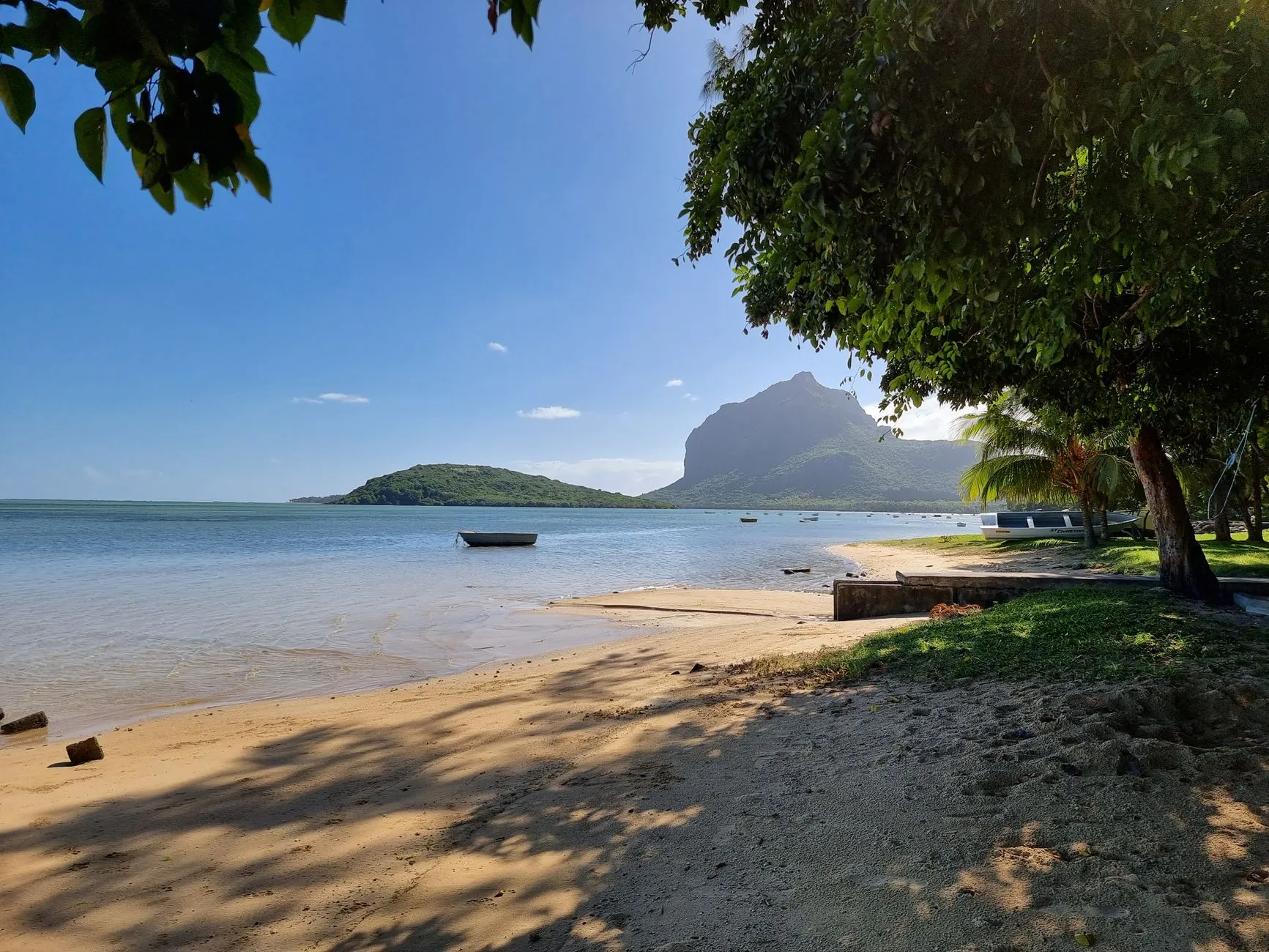
Mauritius — Complete Travel Guide 2026
Mauritius is two islands wearing the same name: the glossy one in the resort brochures, all infinity pools and butler service, and the real one a five-minute walk past the gate — sugar-cane plateaus, a capital that smells of cumin and diesel, dholl puri stalls and a volcanic interior most package tourists never see. The island is tiny (roughly an hour and a half end to end), so you can have both, but the single decision that shapes your whole trip isn’t which hotel — it’s which coast, because the wind, the sea and the vibe change completely as you go around it.
Quick Reference
Indian Ocean island nation, ~2,000 km off East Africa, east of Madagascar (Southern Hemisphere)
Sir Seewoosagur Ramgoolam International (MRU), in the southeast near Plaisance
Mauritian rupee (MUR) — roughly 48 to the US dollar, ~52 to the euro in 2026
English & French official; Mauritian Creole (Kreol) is the everyday tongue
Most visitors enter visa-free (UK 90 days, US 180 days/calendar year); free digital arrival form mandatory
May–November (dry Southern winter); October is the sweet spot. Cyclone risk Jan–March
Lagoons & reef, Le Morne UNESCO peninsula, Seven Coloured Earths, Creole-Indian-Chinese-French food, sega, luxury resorts
North (Grand Baie) for life & nightlife; West (Flic-en-Flac/Tamarin) for calm seas & sunsets; East (Belle Mare) for resorts & big lagoons; South for wild and quiet
Editor’s Note: Pick the Coast First, the Hotel Second
Everyone agonizes over the resort and ignores the thing that actually determines whether they have a good time: where on the island they land. Mauritius is ringed by reef, so the lagoon is calm almost everywhere — but the trade winds blow from the southeast, and that one fact reorganizes the island. The east and southeast get the breeze full in the face; the north and west sit in the wind shadow. In the Southern winter (May–September), when most Europeans escape the cold, that breeze on the east coast is constant and the sea is choppier, while the north and west stay sunny and still.
So the honest shorthand: want guaranteed calm and the easiest swimming? Go west or north. Want the biggest postcard lagoons and the most space, and don’t mind wind? Go east. Decide that before you look at a single room photo, and book a hire car so you’re not marooned at a remote resort eating €40 buffets every night. Get those two right and Mauritius rarely disappoints.
Should You Go? Who It’s For — and Who It Isn’t
Mauritius rewards a particular kind of traveller and quietly frustrates others. Be honest about which you are.
It’s brilliant for: honeymooners and couples (the resort scene here is genuinely world-class and the privacy is real); families who want a safe, malaria-free, English-and-French-speaking island with shallow warm lagoons; and independent travellers willing to hire a car, who’ll find a layered, multicultural country with great cheap food and proper mountains and forests behind the beaches.
Tip: Mauritius is malaria-free and one of the safest countries in the region — no jabs required for a standard trip, tap water officially potable in towns and resorts, and violent crime against tourists is rare. That makes it an unusually low-stress long-haul beach destination for families and first-time Indian Ocean travellers.
It frustrates: anyone expecting a cheap backpacker island. It isn’t Thailand — getting around without a car is slow, and resort prices are European. It also disappoints people who book a remote five-star, never leave it, and then complain the island “has no character” — the character is all outside the gate. And if you need wild nightlife beyond a handful of Grand Baie bars, look elsewhere; this is an early-to-bed island.
Getting There: MRU Airport & Transfers
You’ll land at Sir Seewoosagur Ramgoolam International (MRU) in the southeast, near Plaisance — a modern, single-terminal airport that handled the lion’s share of the island’s 1.4 million-plus 2025 arrivals. It’s well run and the queues move, especially if you’ve already done the arrival form (more on that below). Long-haul carriers (Air Mauritius, Emirates, British Airways, Air France, and a growing list of European and Indian airlines) feed it; don’t expect me to quote fares, but air access keeps improving, which is part of why prices have softened from the post-pandemic peak.
The catch is the airport’s location: it’s in the far southeast corner, so your transfer time depends entirely on which coast you chose. Reckon roughly 20–30 minutes to the south coast, ~45 minutes to the east (Belle Mare), an hour-plus to Flic-en-Flac and the west, and around an hour to Grand Baie in the north on a good run.
Tip: Pre-book a private transfer or have your hotel arrange one — there is no airport shuttle bus, and arriving jet-lagged to negotiate a taxi rank in the dark is a poor start. A private car to Grand Baie or Le Morne runs roughly Rs 3,000–3,500. If you’ve hired a car, it’s genuinely better to take a transfer on night one and pick the car up the next day in town than to start driving on the left, on unfamiliar roads, exhausted.
Which Coast? North, West, East, South Explained
Four coasts, four completely different holidays. Here’s the unsentimental version.
North — Grand Baie, Pereybère, Trou aux Biches: the lively one. This is where the island actually has a pulse after dark. Grand Baie is the closest thing to a resort town — bars, restaurants, dive shops, boat trips, a bit of bustle — with Pereybère’s small public beach and the long, photogenic curve of Trou aux Biches nearby. Sea is calm, sun is reliable even in winter, and you’re never far from somewhere to eat that isn’t your hotel. Downside: it’s the busiest, most built-up coast, and Grand Baie’s main beach is no one’s idea of pristine. Base here if you want life, not seclusion.
West — Flic-en-Flac, Tamarin, Le Morne: calm seas, the best sunsets, the most to do. The west sits in the wind shadow, so this is the calmest water year-round — the safe bet if you’re nervous about choppy seas or travelling with small kids. Flic-en-Flac has one of the island’s longest, best beaches; Tamarin is the laid-back surf-and-dolphin town; and Le Morne, down at the southwestern tip, is the postcard — a brooding basalt monolith over a turquoise lagoon, UNESCO-listed, and the island’s kitesurfing capital. Sunsets here are the real thing. It’s my default recommendation for a first trip.
East — Belle Mare, Trou d’Eau Douce, Île aux Cerfs: the big lagoons and the big resorts. The east has the widest, whitest beaches and the most spectacular pale-blue lagoons — Belle Mare in particular is stunning — and it’s where many of the grand five-star resorts cluster, spaced out with lots of room. The trade-off is the wind: from roughly May to October the east coast catches that southeast breeze and can be genuinely blustery and cooler, which is heaven if you kitesurf and a mild annoyance if you just want to lie still on a sunlounger. In the Southern summer (Nov–April) the same breeze is a welcome relief from the heat.
South — wild, cliffs, less developed: the one for explorers. The south is the island’s rugged, underbuilt edge — basalt cliffs, crashing surf at Gris Gris and the “weeping rock” of La Roche Qui Pleure near Souillac, sugar-cane tracks, the Bel Ombre estate and its forest trails, and a handful of high-end lodges rather than a strip of hotels. There’s far less swimmable lagoon here (the sea is dramatic, not gentle), so it suits nature-lovers and road-trippers more than beach-flop holidaymakers. Quietest, most “real,” least convenient.
Caution: Don’t split your stay across opposite coasts to “see it all” unless you really want to pack and re-check-in mid-trip. The island is small enough to day-trip anywhere from one base. Pick the coast that matches your priority — calm water, nightlife, big lagoon, or wilderness — and drive to the rest.
The Beaches & Lagoons
The reef is the whole point. A near-continuous coral barrier rings most of Mauritius, creating shallow, bath-warm, improbably blue lagoons between shore and breakers — the colour in the photos is not edited. The best swimming and snorkelling beaches are the calm-water classics: Trou aux Biches and Mont Choisy in the north, Flic-en-Flac and the Le Morne lagoon in the west, and Belle Mare/Palmar in the east when the wind allows.
A few honest notes. Many of the dreamiest beaches front private resorts — but all Mauritian beaches are public by law, so you can walk and swim on them; you just can’t use the resort’s loungers. Snorkelling straight off the beach is good in spots (the Blue Bay marine park in the southeast is the standout for coral and fish), better still on a boat trip out to the reef edge. And the lagoon’s shallowness means reef shoes are worth packing — there’s coral, urchins and the occasional stonefish underfoot in rocky patches.
Warning: The tropical sun here is fierce and the sea breeze masks how fast you burn — people get scorched snorkelling face-down for an hour without realizing. Use reef-safe high-SPF, reapply, and wear a rash vest. Equally, never stand on or touch the coral: it’s alive, it’s protected, and a stonefish or urchin spine will ruin your week.
Beyond the Beach: The Interior Is the Surprise
The biggest mistake visitors make is treating Mauritius as beach-only. The volcanic interior is genuinely worth a couple of days.
Black River Gorges National Park protects the island’s last native forest — deep green ravines, waterfalls, and most of Mauritius’s endemic birds and plants. There are real hiking trails and a string of viewpoints (the main one looks out over the gorges to the coast); go in the morning, bring water, and you’ll have proper wilderness 40 minutes from the beach.
Chamarel, up in the southwest highlands, is the day-trip everyone does and it earns it: the Seven Coloured Earths — undulating dunes of mineral sand striped in reds, ochres, violets and blues — plus the Chamarel Waterfall (the island’s highest single drop) and the Chamarel rum distillery for tastings. Go on a sunny morning when the colours pop; it’s busiest midday.
Le Morne Brabant isn’t just scenery — you can hike it. The UNESCO peninsula was a refuge for escaped slaves, and the climb (guided for the upper section) rewards you with one of the great Indian Ocean views. Tamarin Bay is the launch point for dolphin trips: resident pods of spinner dolphins gather in the bay most mornings, and early boats (out around dawn) catch them before the crowds. Port Louis, the capital, is gritty, busy and absolutely worth half a day — the Central Market for food and spices, the restored Caudan Waterfront, the Aapravasi Ghat (UNESCO immigration depot), and Chinatown.
Île aux Cerfs — the famous islet off the east coast — deserves a frank word.
Caution: Île aux Cerfs is beautiful and badly overcrowded. By mid-morning the catamarans dump hundreds of day-trippers, the beach gets packed, prices spike and the loos get grim. It’s worth doing — but only if you go on the earliest boat from Trou d’Eau Douce and leave before the afternoon swarm, or skip it for a quieter islet (Île aux Bénitiers off the west, on a dolphin-snorkel catamaran day, is the better outing for many).
When to Visit: Month by Month
Remember the Southern Hemisphere flip — the seasons are upside down from Europe and North America. There are two: a warm, humid summer (November–April) and a cooler, drier winter (May–October).
- May–September (Southern winter — peak): The best stretch for most people. Dry, sunny, coastal temperatures in the mid-20s°C, low humidity, almost no cyclone risk. The catch: the east and southeast coasts are at their windiest now, so winter travellers should lean north or west. October is the local favourite — warming up, still dry, calm, around 27°C, and statistically the lowest rain.
- November–December: Warming and lovely, before the heavy rains and crowds peak; a great shoulder window.
- January–March (Southern summer — cyclone season): Hot, humid, and the cyclone window. Direct hits are infrequent (roughly every few years), but tropical storms and heavy downpours are common, and a single system can wash out days. Hotel prices dip; gamble accordingly.
- April: Transition month — heat easing, generally pleasant, an underrated time to go.
Warning: If you travel January–March, take cyclone season seriously. Track forecasts, take travel insurance that covers weather disruption, and know that a Class III/IV cyclone warning shuts the island down — flights cancelled, shops shuttered, stay indoors. It rarely happens, but when it does it’s no joke.
What to Eat: The Best Cheap Food in the Indian Ocean
Mauritian food is the island’s secret weapon — a genuine fusion of Indian, Creole, Chinese and French traditions, and most of the best of it is street food costing pennies. Eat outside your hotel.
Start with dholl puri, the unofficial national dish: a soft flatbread of ground yellow split peas, folded around butter-bean curry, rougaille and chilli pickle, sold from carts for around Rs 25–50. Gateaux piments (split-pea-and-chilli fritters) are the classic breakfast snack. Rougaille is the Creole tomato-based sauce that carries everything from sausage to fish. Vindaye — a mustard-and-vinegar cousin of vindaloo, usually with fish or octopus — is the dish to seek out. Add mine frire and bol renversé (Chinese-Mauritian fried noodles and the “upside-down bowl”), biryani served on banana leaf, boulettes (dim-sum-style dumplings in broth), and alouda, the milky basil-seed drink.
The single best food experience is the Central Market in Port Louis on a weekday morning — go hungry, follow the locals, eat the dholl puri folded fresh off the griddle. Down on the coast, grab a number from the beach-shack vendors at Flic-en-Flac or Grand Baie. And the island runs on rum: tour Chamarel or Rhumerie de Chamarel and St Aubin estates, and try the local Phoenix beer.
Tip: The best meal you’ll eat in Mauritius probably costs under €5 from a cart, not €60 in a resort restaurant. A street snack runs Rs 25–50, a full local lunch at a roadside canteen Rs 150–250. If you only do one “foodie” thing, make it the Port Louis market, not a hotel buffet.
Getting Around: Hire a Car (and Mind the Left)
Public transport exists but it’s slow, so the honest answer for most visitors is: hire a car. Rates are reasonable — roughly €20–60/day depending on the car and season — and a car turns the whole island into day trips. The complications: Mauritians drive on the left (a hangover from British rule), roads are narrow and twisty inland, signage is patchy, and local driving is, let’s say, assertive. It’s very doable, but go slow your first day, use offline maps, and don’t drive at night in rural areas without streetlights.
The Metro Express light-rail tram is the modern flagship — a clean, cheap 26 km line with 19 stations running from Curepipe up through Rose Hill and Quatre Bornes into Port Louis, roughly 6 a.m.–7 p.m. It’s excellent if your route happens to follow it (commuting the central conurbation, or town-hopping the plateau) but — crucial for tourists — it does not reach the airport or the coastal resorts. An airport extension is talked about but not built. You’ll need an MECard to ride.
Buses cover the island for almost nothing (roughly Rs 17–47 a ride) and are an adventure, but they’re slow, crowded and stop running by evening — fine for the curious, frustrating if you’re on a schedule. Taxis are everywhere; agree the fare before you get in, as meters are rare. And as of 25 March 2026, Uber operates in Mauritius — a genuinely useful new option, though it dispatches licensed taxis rather than private cars, so prices aren’t as cheap as you might expect (an airport-to-resort run is still in the low thousands of rupees).
Caution: If you hire a car, take the excess-waiver insurance and photograph every existing scratch at pickup. Scrapes on narrow lanes are common, and disputes over damage are the most frequent rental complaint on the island.
Where to Stay: By Coast & Budget
The fundamental split is all-inclusive resort vs self-catering villa/B&B, and it maps onto coast and budget.
Resorts (half-board or all-inclusive): Mauritius does luxury resorts as well as anywhere on earth, concentrated on the east (Belle Mare/Palmar), the calm west (Flic-en-Flac, Le Morne, Wolmar), and the quiet south (Bel Ombre). All-inclusive makes most sense at the remote properties (east and south), where there’s little within walking distance and taxis to dinner add up fast — half-board can leave you stranded or overpaying for hotel drinks. Run the maths: even a bottle of water is marked up at a resort.
Self-catering & guesthouses: Far better value, especially for families, groups or longer stays — and far more interesting. Base in a town-adjacent spot (Grand Baie, Pereybère, Flic-en-Flac, Trou aux Biches) where you can walk to restaurants, markets and a supermarket, hire a car, and eat the real food. A villa or apartment with a kitchen plus cheap local meals out can undercut an all-inclusive dramatically.
Tip: Match the board to the location. Remote east/south resort → all-inclusive. Town-adjacent north/west base → self-catering, so you can exploit Mauritius’s brilliant cheap restaurants instead of being captive to a buffet. Booking a package well in advance is often cheaper than walk-up, given how European resort rates run.
Costs & Budget
Mauritius is not a budget beach destination, but it’s flexible — you can do it cheap or burn money fast.
- Budget (guesthouse, buses, street food, occasional car day): roughly €45–75 a day.
- Mid-range (3-star or villa, hire car, restaurant meals): roughly €110–185 a day.
- Luxury (five-star all-inclusive, private transfers, spa): €275+ a day, often far more.
The big variables are accommodation and how much you eat in resorts. Street food and local canteens are dirt cheap (Rs 25–250 a meal); resort and beachfront dining hits European prices (Rs 700–2,500 a head). Car hire, a market lunch, and a couple of excursions is where the independent traveller’s money actually goes — and it buys a far richer trip than another night behind the resort gate.
Practical Information
Entry & visa. Most nationalities enter visa-free for tourism — UK passport holders get 90 days, US citizens up to 180 days per calendar year, and EU citizens are similarly waved through (always confirm your own passport before booking). You’ll need an onward/return ticket and proof of funds/accommodation. The one mandatory step: the free Mauritius All-in-One digital travel form (immigration + customs + health in one), completed online at the official safemauritius.govmu.org within 72 hours of arrival — do it before you fly and you’ll breeze through. Beware copycat sites charging a “fee”; the official form is free.
Warning: Only use the official safemauritius.govmu.org for the arrival form. A swarm of third-party sites mimic it and charge for what the government provides free. There is no legitimate fee to enter Mauritius as a visa-free tourist.
Money. The currency is the Mauritian rupee (MUR), around 48 to the dollar and ~52 to the euro in 2026. Cards are widely accepted in resorts, towns and supermarkets; carry rupee cash for markets, buses, beach vendors and small canteens. ATMs are plentiful — withdraw in town, and watch your surroundings at machines.
Safety. Mauritius is genuinely safe — low violent crime, a dedicated Tourism Police, and trouble-free for the vast majority. The real risk is petty theft: bags from unattended beach spots and break-ins to self-catering villas. Lock up, don’t flash valuables, and use hotel safes. Emergency number is 999; English and French are both widely spoken.
Water, sun & reef. Tap water is officially treated to WHO standards and safe in towns and resorts, though it can taste strongly of chlorine and many visitors stick to bottled after heavy rain. Pack reef-safe sunscreen, a rash vest and reef shoes — the sun is brutal and the lagoon floor is sharp in places.
Connectivity. Buy a local My.t or Emtel tourist SIM/eSIM on arrival — data is cheap (a large package runs roughly Rs 700–1,300), coverage is good across the island, and it makes navigating, ride-hailing and bookings far easier than relying on patchy hotel Wi-Fi.
Tipping. Not obligatory but appreciated — around 10% for good restaurant service, a few rupees for porters and drivers. Resort service charges are sometimes already included, so check the bill.
Frequently Asked Questions
Cheapest Flights to Mauritius
We have tracked 5,888 fares to Mauritius from 164 cities. As of June 2026, here is what a good price looked like from each — the lowest fare we recorded, and a “great-deal” benchmark to judge a quote against. These are tracked observations, not live prices: by the time you read this they will have moved, so treat them as a yardstick, not a quote.
| From | Lowest fare we tracked | Great-deal benchmark |
|---|---|---|
| Mallorca (PMI) | €491 | €702 |
| Istanbul (SAW) | €510 | €729 |
| Iași (IAS) | €512 | €731 |
| Warsaw (WMI) | €526 | €752 |
| Alicante (ALC) | €527 | €753 |
| Gran Canaria (LPA) | €551 | €787 |
| Seville (SVQ) | €552 | €788 |
| Treviso (TSF) | €559 | €798 |
| Florence (FLR) | €586 | €837 |
| Constanța (CND) | €587 | €838 |
| Rome (FCO) | €603 | €877 |
| Thessaloniki (SKG) | €625 | €893 |
| Faro (FAO) | €646 | €923 |
| Varna (VAR) | €651 | €930 |
Recent deals we have posted to Mauritius:
- London to Mauritius from £630
- Barcelona to Mauritius from €546
- Amsterdam to Mauritius from €498
- Berlin to Mauritius from €539
- Berlin to Mauritius Island, Mauritius from €546
- Munich to Mauritius from €581
- Madrid to Mauritius from €557
- London to Mauritius from £439
- Rome to Mauritius from €505
- Amsterdam to Mauritius from €480
These are fares aifly tracked to this destination, not live quotes — they have changed since and several of the deals above may have expired. Browse current flight deals →