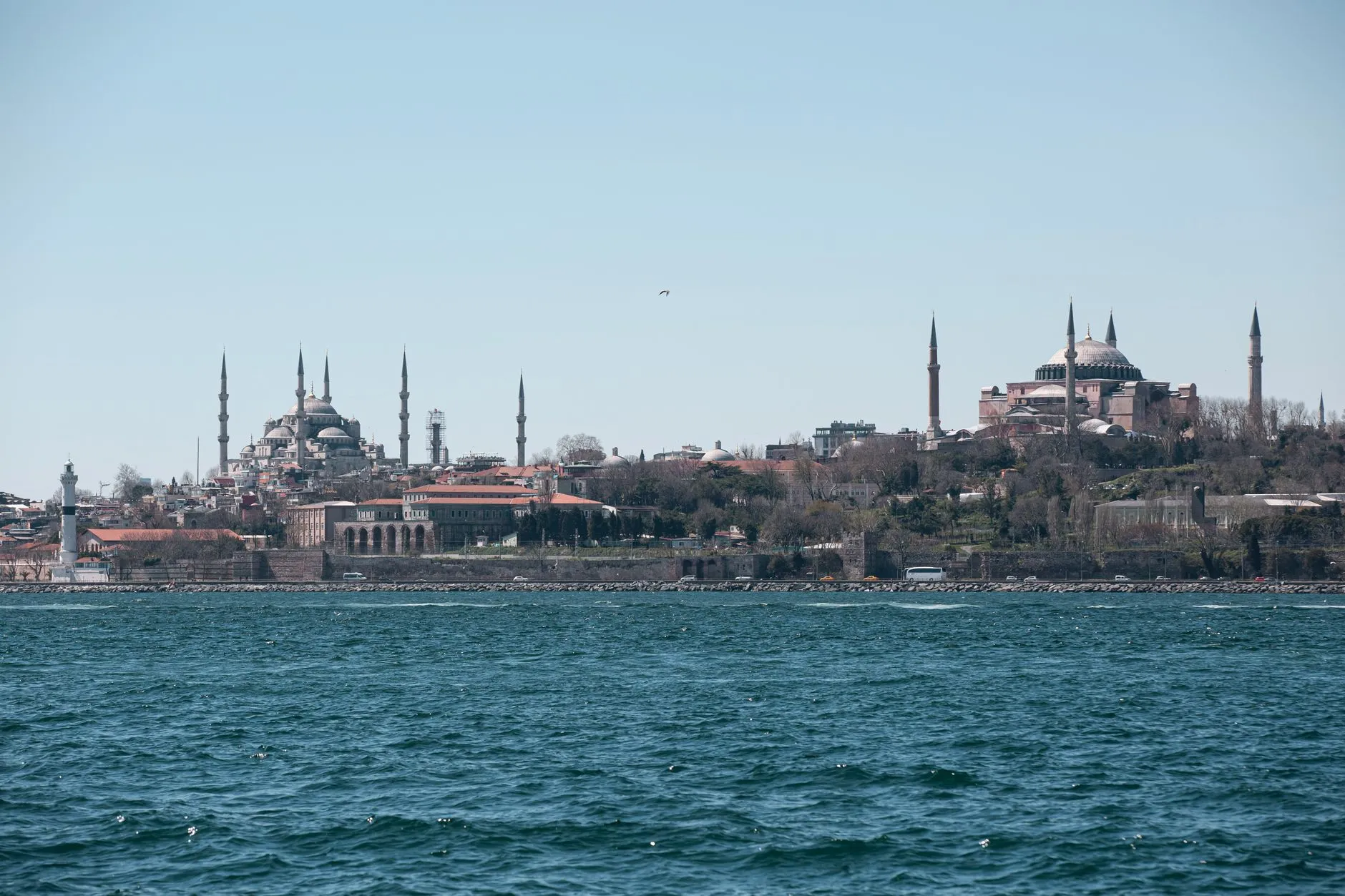
Türkiye (Turkey) — Complete Travel Guide 2026
Türkiye is the rare country that genuinely earns the cliché about where two continents meet — you can take a ferry from Europe to Asia in twenty minutes and still be inside the same city. But the headline sells it short. Beyond Istanbul’s imperial skyline you get Cappadocia’s surreal stone valleys and the photograph that launched a thousand bucket lists — a hundred balloons rising over fairy chimneys at dawn. You get Greco-Roman ruins better preserved than most of what survives in Greece, an unbroken turquoise coast, the world’s oldest temple, and food so deep and various that “kebab” turns out to be the least interesting thing on the menu. And right now, with the lira where it is, it’s all astonishing value for anyone holding euros. This is one of the world’s great all-rounders, and most Europeans only ever see the resort coast.
Quick Reference
Straddling Europe and Asia — Istanbul split across the Bosphorus, the vast Anatolian plateau inland, and coasts on the Aegean, Mediterranean and Black Sea
Istanbul (IST) — the giant new mega-hub and Turkish Airlines base; Istanbul Sabiha Gökçen (SAW) — the Asian-side low-cost hub and Pegasus base; İzmir (ADB) for the Aegean; Antalya (AYT) for the coast; Ankara (ESB) the capital; Kayseri (ASR) / Nevşehir (NAV) for Cappadocia
Turkish lira (TRY) — high-inflation, fast-moving; price in euros in your head, pay by card where you can, carry some cash
Turkish; English widely understood in tourism, less so in the interior
Visa-free for most Western tourists (UK, US, EU, Canada, Australia) for up to 90 days in any 180 — the old UK/Canada/Australia e-visa was scrapped; passport valid 6 months beyond entry
April–June and September–October are ideal everywhere; high summer for the coast (hot and dusty inland); Cappadocia year-round; Istanbul any time
Istanbul’s imperial skyline, Cappadocia’s fairy chimneys and dawn balloons, the best Greco-Roman ruins on earth, a turquoise coast, hammams, and one of the world’s great cuisines
Istanbul for the city; Göreme for Cappadocia; the Aegean (Selçuk/İzmir/Bodrum) for the ruins; the Antalya coast for beaches — most first-timers do Istanbul plus one or two of the others
Editor’s Note — far more than the all-inclusive coast
Ask the average northern European about a Turkey holiday and they’ll picture an all-inclusive in Antalya or Bodrum — wristband, buffet, sun-lounger, a week behind a hotel gate. That coast is real, it’s good, and aifly covers it properly in its own Turkish Riviera guide. But it is to Turkey roughly what the Costa del Sol is to Spain: a slice, and not the most interesting one. Treating the resort strip as “Turkey” is the single biggest mistake travellers make here.
The country that holds your sun-lounger also holds Hagia Sophia, the world’s oldest known temple at Göbekli Tepe, the best-preserved classical city anywhere (Ephesus), the cave-hotel valleys of Cappadocia, and the whirling dervishes of Konya. The ideal first trip isn’t a week on the beach — it’s a triangle: Istanbul + Cappadocia + one of either the Aegean ancient sites or the Mediterranean coast. Ten days does that comfortably; a week does it briskly. Skip the all-inclusive entirely on a first visit, or bolt a few coast days onto the end as a wind-down.
The second thing to get straight is money, because it’s both the best and the most confusing thing about Turkey in 2026. The lira has been gutted by years of high inflation — it was about 3 to the euro in 2015 and it’s now north of 50 — which means the country is wildly cheap for euro-holders right now, but also that lira prices are meaningless to memorise because they’re chasing inflation upward all year. The move is to think in euros, pay by card wherever possible (your bank does the conversion at a fair rate in real time), and treat any guidebook lira figure as already out of date. Get this right and Turkey delivers world-class travel at a fraction of European prices.
💡 Think in euros, pay by card. With inflation running around 30%+, lira prices shift through the year and printed figures go stale fast. Tap a card for most things — the live exchange rate beats memorising lira — and carry a modest cash float for markets, taxis and tips.
Should You Go? Who it’s for — and isn’t
Turkey is for the traveller who wants everything in one trip: a world city, jaw-dropping ancient sites, a genuinely surreal landscape, great food and warm sea, all at a price that embarrasses most of Europe. It’s superb for first-time long-haul-feeling travel that isn’t actually long-haul (three to four hours from most of Europe), for history and archaeology obsessives (the ruins are staggering and often half-empty), for photographers (Cappadocia at dawn is one of the planet’s great sights), for food lovers, and for families — Turks adore children, the infrastructure is excellent, and it’s cheap.
It’s also one of the best-value destinations within reach of Europe full stop. A superb sit-down meal for under €15, a cross-city ferry for the price of a coffee, a domestic flight that costs less than a taxi to your home airport.
Who it’s not quite for: anyone expecting a freewheeling alcohol-soaked party scene everywhere (Istanbul and the coast have real nightlife and drink flows in licensed places, but Turkey is a majority-Muslim country, alcohol is taxed heavily, and the interior is conservative). Solo women travellers do brilliantly here but should expect persistent low-level attention in some areas — manageable, normal, occasionally tiresome. And anyone who wants to “do Turkey” in a long weekend will be defeated by the distances: this is a big country, and trying to cram Istanbul, Cappadocia and the coast into five days means spending the trip in transit.
Getting There & Around — IST, SAW, cheap domestic flights, buses & high-speed rail
Istanbul Airport (IST), opened in 2018 on the European side, is one of the largest airports on earth and the engine of Turkish Airlines’ extraordinary network — the carrier flies to more countries than any other airline, which makes Istanbul a phenomenally well-connected place to start (and a tempting stopover hub on the way somewhere else). The M11 metro now links IST to the city, and the HAVAİST airport buses run everywhere; a taxi into central Istanbul is around €25–35 depending on traffic, which can be biblical.
Istanbul Sabiha Gökçen (SAW), over on the Asian side, is the low-cost hub and the home base of Pegasus (and its sibling AJet) — this is where most of the cheap European budget flights land. It’s further out and the rail link is still being finished, so factor a longer, pricier transfer into town. Which Istanbul airport you fly into matters: if you’re staying in the historic European core, IST is far more convenient; SAW makes sense if your fare is much cheaper or you’re heading straight on by domestic flight.
Once you’re in, domestic flights are the secret weapon. Turkey is huge — Istanbul to Cappadocia is a 10-hour drive — but Turkish Airlines, Pegasus, AJet and SunExpress crisscross the country with frequent, genuinely cheap flights. Istanbul to Kayseri or Nevşehir (for Cappadocia), to İzmir (for Ephesus) or to Antalya routinely costs €30–60 one-way booked ahead, and saves you a day each way. For a multi-stop itinerary, internal flights are almost always the right call over overland slogs.
Overland, the intercity buses are excellent — modern, comfortable, with snacks and Wi-Fi, run by competitive private firms (the obrt is online booking) on every route, and dirt cheap. The growing high-speed rail (YHT) network is the other good option: the Ankara–Konya and Ankara–Eskişehir–Istanbul lines are fast, comfortable and cheap, and the Ankara–Sivas line opened the east up. Trains are scenic and civilised but the network doesn’t yet reach the coast or Cappadocia directly, so flights still win for the classic triangle.
💡 Fly the long legs, don’t drive them. A €40 domestic hop saves you a full day versus the 10-hour Istanbul–Cappadocia drive. Book internal flights a couple of weeks out for the cheapest fares, and keep an eye on which Istanbul airport (IST vs SAW) your connection actually uses — they’re an hour-plus apart on opposite continents.
Istanbul — the headline
If you do nothing else in Turkey, do Istanbul, and give it at least three full days. No other city sits on two continents, and few have stacked Roman, Byzantine and Ottoman empires on top of one another with such density. The old city peninsula (Sultanahmet) holds the heavy hitters, all within walking distance of each other.
Hagia Sophia is the one. Built as the great church of Byzantium in 537, converted to a mosque, made a museum by Atatürk, and reconverted to a working mosque in 2020, it is 1,500 years of history under one impossible dome — and as of 2024 there’s a separate ticketed visitor route (around €25 for foreigners) and an upper gallery so tourists and worshippers don’t collide. Across the square, the Blue Mosque (Sultanahmet Mosque) answers it with six minarets and a cascade of blue İznik tiles; entry is free, modest dress required, closed to visitors at prayer times. A short walk away, Topkapı Palace — the seat of the Ottoman sultans for four centuries — sprawls over the headland with its harem, treasury, and Bosphorus-view courtyards (pay the extra for the harem, it’s the best part). Drop into the Basilica Cistern underneath the streets, a forest of columns and upside-down Medusa heads in lit water, and the Grand Bazaar — 4,000 shops under one roof, theatrically touristy but worth one wander — and the smaller, more atmospheric Spice Bazaar down by the water.
But Istanbul’s real magic is the Bosphorus and the fact that the city is genuinely bisected by it. Take a public ferry — not a tourist “cruise,” just the regular commuter boat — from Eminönü up the strait or across to the Asian side; for a couple of euros you get the whole skyline of domes and minarets sliding past, fishermen on the Galata Bridge, tea sellers working the deck. Cross to the Asian side (Kadıköy is the move — a buzzing, less touristy district of markets, bars and food) to feel the everyday city. And go up to Beyoğlu/Karaköy — Galata Tower, İstiklal Avenue, the rooftop bars and the rakı-and-meze taverns (meyhanes) — for the nightlife and the modern food scene, which is one of the most exciting in the region.
For the full deep dive — neighbourhoods, where to eat, the ferry routes, the hammams — see aifly’s dedicated Istanbul city guide. This section is the headline; that guide is the whole story.
💡 Buy the Hagia Sophia and Topkapı tickets online in advance. Sultanahmet’s queues are brutal in season. Pre-booked timed entry skips the worst of them, and an early-morning slot at Hagia Sophia (before the cruise groups) is worth setting an alarm for.
Cappadocia — fairy chimneys, cave hotels & the dawn balloons
Cappadocia is the trip’s other headline and arguably its most unforgettable single image. Millennia of volcanic ash, compacted into soft tuff and then eroded, have left a landscape that looks invented: valleys of tapering stone cones (the “fairy chimneys”), honeycombed cliffs, rose-coloured ravines, and whole towns carved into the rock. Early Christians dug churches and frescoed them in here; villagers tunnelled entire underground cities — Derinkuyu goes eight levels deep and could shelter thousands. Give it at least two nights, three if you can.
You base yourself in Göreme, the photogenic stone village at the centre of it, where the hotels are themselves the attraction: cave hotels carved into the rock, many with terraces angled at the dawn sky. Decent cave rooms run from around €60–90 a night, the swankier boutique ones €150 and well up. By day you walk or drive the valleys — the Göreme Open-Air Museum (a cluster of rock-cut Byzantine churches with surviving frescoes, ~€20 entry), the Rose and Red Valleys at sunset, Love Valley, Uçhisar’s castle-rock, the pottery town of Avanos, and a descent into Derinkuyu or Kaymaklı underground.
And then there’s the reason half the visitors come: the hot-air balloon at sunrise. This is the photograph — a hundred-plus balloons lifting off together in the pink dawn light over the chimneys, with you in one of the baskets. It is touristy, it is expensive, and it is also completely worth it. Expect roughly €150–250 per person for a standard ~one-hour flight (deluxe and VIP smaller-basket flights run higher, €250–400), including hotel pickup and the traditional landing toast. Flights only go in calm weather and sell out, so book ahead, build in a spare morning in case yours is weather-cancelled (a real risk, especially in winter), and pay for the flight you actually want rather than the cheapest crammed basket. Even if you skip the ride, get up for the dawn anyway and watch the launch from a Göreme terrace with a coffee — it’s free and almost as good.
⚠️ Don’t book the balloon for your only Cappadocia morning. Flights are weather-dependent and cancel often, sometimes several days running. Give yourself two or three possible mornings so a cancellation doesn’t cost you the experience — and book a reputable operator, not the cheapest 28-person basket.
The Aegean Coast & the Ancient Sites — Ephesus, Pamukkale, Bodrum
For ruins, the Aegean is the richest seam in the country, and Turkey’s classical sites genuinely outclass most of Greece’s — bigger, better preserved, and far less mobbed. Fly into İzmir (ADB), the relaxed, liberal Aegean city, and use it as a springboard.
Ephesus is the centrepiece and one of the best-preserved classical cities anywhere — you walk a marble main street past the colossal facade of the Library of Celsus, into a 25,000-seat theatre, past terraced Roman houses with their mosaics and frescoes intact (a separate ticket, and worth every cent). It’s near the small town of Selçuk, which makes the ideal low-key base; the entry runs around €40 and an early or late visit dodges both the cruise crowds and the heat. Nearby sit the ruins of the Temple of Artemis (one of the Seven Wonders, now a single re-erected column, but the site is free and atmospheric) and the hilltop Basilica of St John.
A couple of hours inland, Pamukkale is the other unmissable: a hillside of brilliant-white travertine terraces, calcite pools cascading down the slope like frozen snow, that you walk barefoot. Above it spreads Hierapolis, a vast Greco-Roman spa city with a magnificent theatre and a necropolis, plus the Antique Pool where you can swim among toppled marble columns. The combined site is around €30 — go at opening or for the last light, when the terraces glow.
The Aegean coast itself is gorgeous and faces the Greek islands across narrow straits. Bodrum is the stylish set’s resort — a Crusader castle, a marina full of gulets (wooden yachts), good restaurants and serious nightlife; Çeşme near İzmir is the breezy windsurf-and-beach favourite; and Pergamon (modern Bergama), with its dramatic clifftop acropolis and theatre, is the other great ruin of the region. From several of these towns you can ferry-hop to the Greek islands (Kos, Samos, Rhodes) as a day trip or onward leg.
The Mediterranean / Turquoise Coast — and where to go deeper
South of the Aegean, the coast curls east into the Turquoise Coast — pine-clad mountains dropping straight into improbably blue water, the long-distance Lycian Way hiking trail threading ancient ruins above the sea, and a string of beautiful spots: Ölüdeniz with its famous lagoon and paragliders, the laid-back diving-and-yachting town of Kaş, sunken Lycian cities you can snorkel over, and the gulet cruises that drift between hidden coves for a few days at a time. Antalya (AYT) is the gateway and the hub of the big all-inclusive resort belt that most package travellers know.
This is beach-holiday Turkey, and it’s genuinely lovely — but it’s also the part this whole-country guide deliberately doesn’t rehash, because aifly already covers it in depth. For the resorts, the best beaches, the Lycian Way, the gulet trips and the practicalities of basing yourself on the coast, see our full Turkish Riviera guide. On a first trip, think of the coast as the relaxing coda to the Istanbul–Cappadocia–ruins triangle rather than the main event.
Ankara & the Anatolian Heartland — Konya, the Hittites & the salt lake
Most visitors skip the interior, and that’s fine for a first trip — but the Anatolian plateau is where Turkey’s deepest history lives. Ankara, the modern capital Atatürk built in the steppe, isn’t a looker, but it has two genuinely important stops: the Museum of Anatolian Civilizations (an outstanding collection running from the Hittites back to the Neolithic — pair it mentally with Göbekli Tepe) and Anıtkabir, Atatürk’s monumental hilltop mausoleum, which tells you more about modern Turkey’s sense of itself than any other single site.
South of Ankara, Konya is the spiritual heart of the country — the city of Rumi (Mevlâna), the 13th-century Sufi poet, and the home of the whirling dervishes whose meditative spinning dance (the Sema) is a UNESCO-listed ritual. The Mevlâna Museum, built around Rumi’s tomb under its turquoise fluted dome, is a moving, deeply atmospheric place and a major pilgrimage site; Konya is conservative and devout, and visiting feels like a different, older Turkey. It’s an easy high-speed-rail hop from Ankara.
Between the cities lies the strange, beautiful Lake Tuz (Tuz Gölü) — a vast, shallow salt lake that dries to a blinding white crust in summer, second-largest in the country and one of the world’s saltiest, where in season you can walk out onto a cracked-white horizon. And scattered across the plateau are the Hittite and Phrygian remains — Hattusa, the ruined Bronze Age Hittite capital with its lion gates, is the standout for anyone serious about ancient history.
The East & the Unusual — Nemrut, Göbekli Tepe & the Black Sea
For the second-time visitor, or the genuinely adventurous, the rest of the country is wide open and far less travelled. Two sites alone justify the journey east.
Mount Nemrut is the surreal one: on a 2,100-metre summit, a 1st-century-BC king built himself a colossal tomb-sanctuary ringed by giant stone statues of gods — and at some point the heads toppled off, so you now climb to a windswept peak to find enormous severed stone heads scattered among the bodies, best seen at sunrise or sunset when the light turns them gold. It’s remote (usually reached via Adıyaman or Malatya) and unforgettable.
Göbekli Tepe, near Şanlıurfa in the southeast, rewrote human prehistory: it’s the world’s oldest known temple, monumental carved stone pillars erected by hunter-gatherers around 11,500 years ago — predating Stonehenge and the pyramids by millennia, and built before agriculture, which upended what archaeologists thought they knew about why people first built monuments. The on-site setup is now excellent, and Şanlıurfa itself is a fascinating, deeply traditional city. The wider southeast — Mardin’s golden hilltop old town, Diyarbakır’s basalt walls — is rich and rewarding for the curious traveller, and broadly fine to visit, but check current advice (see Practicalities below).
To the north, the Black Sea coast is a wholly different Turkey — green, misty, rainy, with tea plantations climbing the hills around Rize, hazelnut groves, wooden mountain villages, and the spectacular cliff-clinging Sümela Monastery above Trabzon. It’s lush, cool and culturally distinct, and almost no foreign tourists go — which is exactly the appeal for some.
⚠️ Avoid the Syrian-border strip. Western governments advise against travel to the immediate frontier areas with Syria (the southeasternmost provinces hard against the border) and to a couple of remote eastern spots. This is a thin band well away from every site named above — Göbekli Tepe, Mardin and the main southeast are normally visited fine — but check your government’s current advisory and don’t freelance toward the actual border.
Food — one of the world’s great cuisines
Turkish food is one of the world’s three or four genuinely great national cuisines, and treating it as “kebabs” is like calling French food “baguettes.” Yes, the kebabs are superb — the döner carved off the spit, the spicy Adana and the pistachio-flecked Antep varieties grilled over coals — but they’re the opening act.
The soul of a Turkish meal is meze: a spread of small cold and hot plates you graze across with bread and rakı (the anise spirit) — smoky aubergine, stuffed vine leaves, garlicky yogurt, fava purée, sea-fresh fish. The Turkish breakfast (kahvaltı) is a feast in its own right — cheeses, olives, tomatoes, cucumber, eggs, honey with clotted kaymak cream, jams, fresh bread, endless tea — easily lunch-sized and a national point of pride. From the bakery come pide (the boat-shaped Turkish “pizza”) and lahmacun (the thin spiced-lamb flatbread you roll up with lemon and parsley), both costing a euro or two. On the Aegean coast, look for the lighter olive-oil dishes (zeytinyağlılar) — vegetables cooked slowly in good oil and served cool, a whole cuisine of their own.
Then the sweets: baklava (the Gaziantep stuff, dense with pistachio and butter, is the real benchmark), milk puddings, and Turkish delight (lokum) sold in glistening towers. And the drinks define the rhythm of the day — endless tulip glasses of black çay (tea) offered everywhere as hospitality, thick Turkish coffee served with the grounds and a glass of water, fresh pomegranate juice from street carts, and ayran (salty drinking yogurt) with your kebab. Street food is everywhere and cheap: simit (the sesame bread ring), roast chestnuts, stuffed mussels (midye dolma), grilled corn, and the late-night kokoreç for the brave. A full restaurant dinner with drinks rarely tops €15–20 outside the most touristy Istanbul spots; a great street lunch is a couple of euros.
Costs & Money — why Turkey is a bargain right now
This is, bluntly, one of the cheapest world-class destinations you can reach from Europe in 2026, and the reason is the lira. Years of high inflation have collapsed the currency against the euro — from roughly 3 to the euro a decade ago to over 50 now — which means euro-holders have huge purchasing power. The catch is that inflation also pushes lira prices up through the year, so any printed figure goes stale; that’s why this guide quotes euros, which stay roughly stable for you.
A rough daily on-the-ground budget (excluding flights):
- Backpacker / budget: ~€30–45/day — hostels or simple guesthouses, street food and lokantas (cheap home-cooking canteens), buses and local transport.
- Mid-range: ~€60–110/day — comfortable boutique hotels or a cave hotel, restaurant meals, the odd guide or paid tour, the headline site tickets.
- Comfortable / treat-yourself: ~€130+/day — the smarter boutique stays, private guides, fine dining, the VIP balloon basket.
Sense of individual prices: a hearty lokanta lunch €4–7; a full restaurant dinner with drinks €12–20; a glass of çay well under €1; a cross-Bosphorus ferry a euro or two; a domestic flight €30–60; the big site tickets €20–40 (Hagia Sophia ~€25, Ephesus ~€40, Pamukkale ~€30); the Cappadocia balloon €150–250. Pay by card wherever you can — restaurants, hotels, shops, even many market stalls take contactless, and your bank’s live rate beats the airport bureaux. Keep a cash float for taxis, small markets, tips and rural areas. Tipping is expected modestly: round up or leave about 10% in restaurants, a little for hotel staff and guides.
💡 Use ATMs and cards, not the airport exchange desks. Withdraw lira from a bank ATM (avoid the standalone “Euronet”-type machines, which gouge on fees and rates) and pay by card where possible. Carry only as much cash as you’ll spend in a few days — the lira loses value too fast to hoard.
Practical Information
Entry & visa: most Western tourists — UK, EU, US, Canada, Australia — enter visa-free for up to 90 days in any 180-day period. The old e-visa that UK, Canadian and Australian citizens used to buy was scrapped, so those nationalities now simply get a stamp on arrival like EU and US travellers. Your passport must be valid for at least six months beyond your entry date. A few other nationalities still need an e-visa, bought in advance online at the official evisa.gov.tr — note that visa-on-arrival counters have been phased out, so if your nationality needs a visa, sort it before you fly. Always confirm your own passport’s terms before travelling.
Money: Turkish lira; high inflation; pay by card where possible, carry some cash; see the Costs section above.
The hammam: don’t leave without a Turkish bath. The historic Istanbul hammams (Çemberlitaş, Kılıç Ali Paşa and others date back centuries) offer the full ritual — the hot marble slab, the foam scrub-down with a coarse mitt, the wash and massage. Tourist hammams charge a premium (€40–70 for the full works) but the experience, in a 16th-century domed bathhouse, is part of the trip. Neighbourhood hammams are far cheaper and a window into local life.
Safety: Turkey’s tourist regions — Istanbul, Cappadocia, the Aegean and Mediterranean coasts, the main ancient sites — are broadly safe and heavily visited, with tens of millions of arrivals a year. The honest caveats are ordinary urban petty crime (pickpocketing in crowded Istanbul spots and bazaars, the occasional overcharging taxi), and the immediate Syrian-border zone in the far southeast, which Western governments advise against and which no normal itinerary goes near. Check your own government’s current advisory; as a rule, stick to the established regions and you’re on very solid ground.
The 2023 earthquake: the catastrophic February 2023 earthquakes struck a band of south-central/southeastern provinces (around Gaziantep, Kahramanmaraş, Hatay, Adıyaman). Reconstruction continues. The major tourist destinations — Istanbul, Cappadocia, the Aegean and the coast — were entirely unaffected and operate normally. If your route runs through the affected southeast (e.g. toward Nemrut or Göbekli Tepe via Adıyaman/Şanlıurfa), the sites themselves are open and visited, but expect ongoing rebuilding in some towns; check locally. Istanbul itself sits on a known fault and is overdue a major quake — a real long-term risk, not a reason to avoid visiting.
Connectivity: local SIMs (Turkcell, Vodafone, Türk Telekom) with generous data are easy to buy with your passport at the airport or in town, and far cheaper than roaming — though tourist SIMs cost more than locals’ and Turkey blocks foreign-registered phones after about 120 days. Wi-Fi is standard in hotels and cafés.
Ramadan & culture: Turkey is officially secular and the coast and big cities are liberal, but it’s a majority-Muslim country and the interior is conservative. During Ramadan (the Islamic lunar month, shifting earlier each year) the devout fast in daylight; tourist areas carry on largely as normal, but expect a quieter, more reflective mood inland and lively evenings after the fast breaks. For mosques, dress modestly — covered shoulders and knees, a scarf for women’s heads, shoes off — and avoid visiting at prayer times.
When to Go
Turkey runs several climates at once — a temperate northwest, a hot dry interior, a Mediterranean coast and a damp green Black Sea — so the “best time” depends on where you’re pointed.
April–June is the all-rounder’s prime window: warm, green, wildflowers on the Anatolian plateau, comfortable for Istanbul and Cappadocia and the ruins, and the coast warming up. September–October is its near-twin and arguably even better — the summer crowds thin, the sea stays swimmable into October, the interior cools to perfect sightseeing temperatures, and prices ease. These shoulder seasons are when to do the full triangle.
July–August is high summer: the coast is at its best for beaches and the sea its warmest, but Istanbul is humid and packed and the interior — Cappadocia, the ruins, the plateau — bakes at 35°C+ and gets dusty. It’s beach-holiday season, not ruin-trekking season. November–March is low season: Istanbul is atmospheric and uncrowded (and a city for any weather), Cappadocia is magical under occasional snow with the cheapest cave-hotel rates (though balloon flights cancel more often in winter), the coast shuts down, and the east gets genuinely cold. Cappadocia, notably, is a year-round destination — there’s no bad time to see those valleys.
Frequently Asked Questions
Cheapest Flights to Türkiye (Turkey)
We have tracked 11,517 fares to Türkiye (Turkey) from 178 cities. As of June 2026, here is what a good price looked like from each — the lowest fare we recorded, and a “great-deal” benchmark to judge a quote against. These are tracked observations, not live prices: by the time you read this they will have moved, so treat them as a yardstick, not a quote.
| From | Lowest fare we tracked | Great-deal benchmark |
|---|---|---|
| Iași (IAS) | €42 | €60 |
| Rome (FCO) | €46 | €66 |
| Milan (MXP) | €46 | €66 |
| Budapest (BUD) | €47 | €67 |
| Dusseldorf (DUS) | €51 | €73 |
| Sofia (SOF) | €52 | €75 |
| Heraklion (HER) | €53 | €76 |
| Bucharest (OTP) | €55 | €78 |
| Lyon (LYS) | €64 | €92 |
| Vienna (VIE) | €66 | €94 |
| Thessaloniki (SKG) | €66 | €95 |
| Treviso (TSF) | €69 | €98 |
| Barcelona (BCN) | €69 | €126 |
| Prague (PRG) | €72 | €103 |
Recent deals we have posted to Türkiye (Turkey):
- Boston to Istanbul, Turkey from $807
- Athens to Istanbul, Turkey from €80
- Athens to Istanbul, Turkey from €80
- Hanover to Istanbul, Turkey from €115
- Bordeaux to Istanbul, Turkey from €186
- Varna to Istanbul, Turkey from €200
- Zürich to Istanbul, Turkey from CHF 112
- Munich to Istanbul, Turkey from €141
- Varna to Istanbul, Turkey from €210
- Amsterdam to Istanbul, Turkey from €147
These are fares aifly tracked to this destination, not live quotes — they have changed since and several of the deals above may have expired. Browse current flight deals →