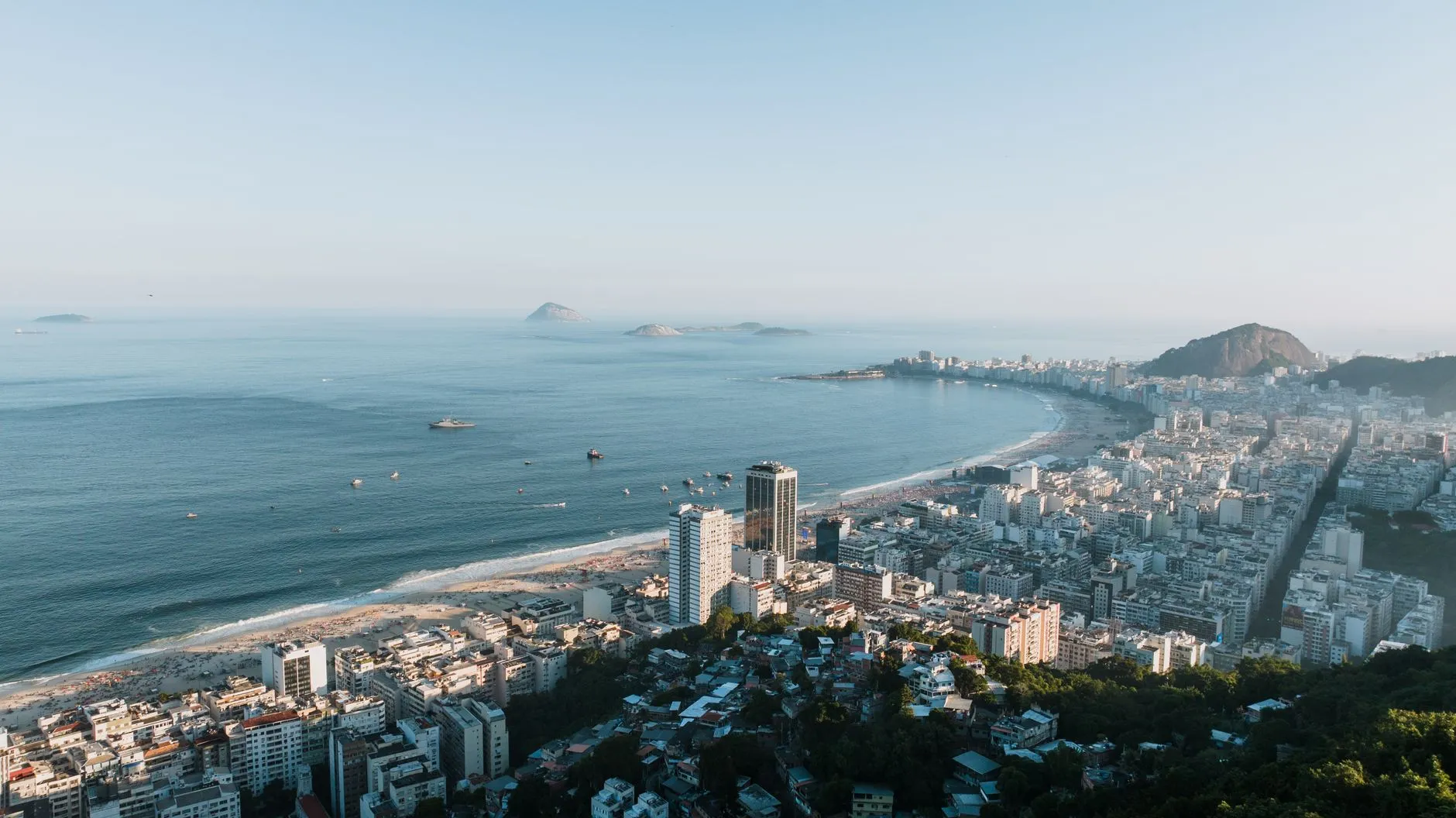
Brazil — Complete Travel Guide 2026
Brazil is not a country you visit; it’s a continent you sample. It’s bigger than the contiguous United States, and the cheap idea of “doing Brazil” in two weeks — Rio, the Amazon, Iguazu, a beach — means three days of actual travel and a lot of time in airport queues at Guarulhos. The smart move is to choose one Brazil and go deep: the Rio-and-Bahia Brazil of beaches and samba, or the wildlife Brazil of the Pantanal and the Amazon, or just the falls. Get that decision right and the country rewards you like almost nowhere else.
Quick Reference
Eastern & central South America — spans the Equator to the subtropics
GRU (São Paulo–Guarulhos), GIG (Rio de Janeiro–Galeão), SSA (Salvador), REC (Recife), FOR (Fortaleza)
Brazilian real (BRL); ~€1 ≈ R$5.9 in mid-2026
Portuguese (English is rare outside top hotels)
Visa-free for UK & EU tourists; e-Visa now required for US, Canada & Australia (US$80.90, online)
Wildlife: Jul–Oct (dry). Rio & the south: Dec–Mar (hot) or Apr–May/Sep–Nov (mild). Northeast: good year-round. Carnival: 13–17 Feb 2026
Rio, Carnival, Iguazu Falls, the Amazon, Pantanal jaguars, Afro-Brazilian Bahia, endless beaches
Pick a region: Rio + the Northeast, OR wildlife (Pantanal/Amazon), OR Iguazu — not all in one trip
Editor’s Note: You Cannot Do It All — and That’s the Whole Point
Here is the single most useful sentence in this guide: a flight from Rio to Manaus takes longer than London to Cairo, and Rio to the Pantanal jaguar zone is a full travel day with a connection. Brazil’s regions are separated by Amazon-sized distances, and the bus network — romantic in theory — will eat 30 hours getting you from Salvador to Rio. Domestic flights aren’t a luxury here; they’re the only sane way to cross the country, and you’ll take several.
So before you book anything, decide what your trip is:
- The classic first-timer: Rio de Janeiro + the Northeast beaches and Salvador. Sun, samba, Afro-Brazilian culture, the postcard. Add a 2-day hop to Iguazu if you must.
- The wildlife trip: the Pantanal for jaguars (the real prize) plus, optionally, the Amazon out of Manaus. This is a different country entirely — caimans and capybaras, not Copacabana.
- The falls-and-south option: Iguazu, then Florianópolis or the colonial coast, a calmer and cooler Brazil.
Try to staple all three together and you’ll spend your holiday watching the safety briefing. Pick one. Brazil isn’t going anywhere; come back for the others.
⚠️ The distance trap is the number-one mistake foreign visitors make. Rio–Salvador is a two-hour flight, not a drive. Manaus is in the middle of the rainforest with no roads in or out for most of the country. Build your itinerary around two, maybe three regions, connected by air — and accept that the rest is a future trip.
A note on timing the whole thing: this is the southern hemisphere, so seasons are flipped. December to March is hot, festive, expensive Brazilian summer (and Carnival). The wildlife reserves work on a dry season — July to October — which is winter here and the opposite of beach weather. The Northeast, blessedly, is warm and good almost year-round.
Should You Go? Who Brazil Is — and Isn’t — For
Go if you want a genuinely thrilling, sensory, slightly chaotic country with world-class nature and culture, and you’re happy to plan around distances, learn ten words of Portuguese, and stay street-smart in cities. The payoff — a jaguar swimming across a river at dawn, a trio elétrico in Salvador, sundown over Ipanema, the roar of Iguazu — is extraordinary.
Think twice if you want a relaxed, low-effort, English-everywhere holiday where everything is walkable and you never think about safety. Brazil rewards effort and punishes complacency. It’s also not a cheap-and-cheerful budget destination the way Southeast Asia is: long-haul flights from Europe aren’t trivial, and 2026 domestic airfares jumped after a big jet-fuel price hike.
It’s superb for: beach-and-culture travellers, wildlife and birding enthusiasts, photographers, divers, festival-goers, and anyone who’s “done” the obvious continents. Less ideal for: nervous first-time solo travellers wanting hand-holding, or families needing everything in one compact, easy package.
Getting There — Airports, Entry & the Visa Situation
From Europe you’ll almost certainly land at GRU (São Paulo–Guarulhos) or GIG (Rio–Galeão) — the two intercontinental gateways with direct links to Lisbon, Madrid, Paris, Frankfurt, London and more (TAP, LATAM, Iberia, Air France, Lufthansa and others serve them). For a Northeast-first trip, REC (Recife), FOR (Fortaleza) and SSA (Salvador) take a growing number of direct European and Lisbon-connecting flights — landing in the Northeast saves you a long domestic backtrack from the south.
GRU is the giant — Brazil’s busiest airport and the country’s main gateway — but it’s a sprawling, slow hub; give yourself generous connection time if you’re flying onward. GIG sits north of Rio; from there it’s a metered taxi or pre-booked transfer into the South Zone.
Entry rules (verify before you book — they changed recently):
- UK and EU passport holders: no visa needed for tourism. You can stay up to 90 days (extendable to 180 in a year). Passport valid for the duration of stay.
- US, Canadian and Australian passport holders: as of 10 April 2025, an e-Visa is mandatory for tourism. Apply online at the official portal (brazil.vfsevisa.com); the fee is US$80.90 per person, paid by card. Approval typically lands in 48–72 hours but can take up to ten business days in peak periods — so don’t leave it to the last minute. The visa is multiple-entry and valid 10 years for US citizens, 5 years for Canadians and Australians, with each stay capped at 90 days.
⚠️ If you hold a US, Canadian or Australian passport, the airline will not let you board without an approved e-Visa. Apply at the official government portal only — not the swarm of lookalike “visa service” sites that charge a fat markup. Save the approved PDF to your phone and print a copy.
A yellow-fever vaccination certificate is recommended (and sometimes required for onward travel to other countries) if you’re heading into the Amazon, the Pantanal or other rainforest/wetland areas — sort it well ahead, as it needs ten days to take effect.
Rio de Janeiro — Still the Greatest Opening Act
No city on earth has a setting like Rio: granite peaks plunging into the Atlantic, beaches threaded between mountains, the whole thing watched over by Christ the Redeemer with arms spread on Corcovado. Take the cog train up through the Tijuca forest early to beat the crowds and the haze, then do Sugarloaf (Pão de Açúcar) by cable car at sunset, when the city lights come up around Guanabara Bay. Those two are non-negotiable; everything else is texture.
The beaches are the city’s living room. Ipanema is the classier, safer, more local stretch (aim for the gay-friendly Farme de Amoedo end or the surfer’s Arpoador rock at the western tip for the best sunset applause); Copacabana is the grand, slightly faded crescent with the famous wave-pattern promenade; Leblon, just past Ipanema, is the moneyed, calm end. Santa Teresa, the hilltop bohemian quarter of cobbled lanes, old mansions and ateliers, is where to go for lunch and the bonde tram, with the tiled Escadaria Selarón steps nearby.
The honest favela context: Rio’s hillside favelas are real neighbourhoods, home to a huge slice of the city, and they are not a tourist attraction to wander into. Some are visited on legitimate community-led tours; don’t go independently, and treat “favela party” promoters with suspicion. The tourist South Zone — Ipanema, Leblon, Copacabana — is heavily policed and statistically improving (Ipanema and Leblon recorded zero homicides in early 2026), but it’s still a big city: see the safety section.
💡 Rio rewards mornings. Do Christ the Redeemer and Sugarloaf early, beach in the late afternoon, and keep your phone in your pocket on the sand. Carry only what you’d shrug off losing to the beach — a little cash, a cheap second phone if you have one, and your hotel’s address written down.
São Paulo — The Megacity for Food and Culture
São Paulo is not pretty, and it doesn’t pretend to be — 12 million people, a horizon of towers, traffic that defeats the optimistic. But it’s the cultural and gastronomic capital of South America, and a couple of days here before you fly out of GRU is well spent. This is where Brazil’s restaurant scene lives (some of the continent’s best tables), where the Japanese-Brazilian district of Liberdade, the Italian heritage of Bixiga, and a serious art and nightlife scene collide. Walk Avenida Paulista on a Sunday when it’s closed to cars, see the floating MASP museum, and eat your way through the Mercadão market (a mortadella sandwich, a pastel). Skip it entirely if your trip is beaches-and-wildlife; embrace it if you care about food.
The Northeast — Salvador, the Beaches & Fernando de Noronha
If Rio is the postcard, the Northeast (Nordeste) is the soul — and the best year-round weather in the country. This is Afro-Brazilian Brazil: the rhythms, the food, the candomblé faith, the African heritage carried through Bahia and beyond.
Salvador, Brazil’s first capital, is the cultural heart. The UNESCO-listed Pelourinho old town is a tumble of pastel colonial houses, baroque churches (the gold-drenched São Francisco) and the constant pulse of drums — go to a Olodum or Afro-bloco rehearsal and feel the floor move. Salvador also throws what many Brazilians consider the better Carnival (more on that below). Be street-smart in the historic centre, especially after dark.
From Salvador, the Bahia coast unspools: Morro de São Paulo (a car-free island of beaches reached by catamaran), Chapada Diamantina inland (see below), and the long ribbon of Northeast beach towns running up the coast — Pipa (cliffs, dolphins in the bay, a lively backpacker scene near Natal) and, further north in Ceará, Jericoacoara — “Jeri” — a former fishing village in a national park where the streets are sand, the sunsets are a daily ritual on the dune, and the wind makes it one of the planet’s great kitesurfing spots (the wind season peaks around July–October). Getting to Jeri is part of the deal: a flight to Fortaleza, then a transfer that ends in a 4×4 across the dunes.
Recife & Olinda: Recife is a working port city with canals; the real draw is neighbouring Olinda, a hilltop UNESCO town of brightly painted colonial houses, churches and artists’ studios that hosts a riotous, traditional frevo Carnival.
And then the jewel: Fernando de Noronha, a volcanic archipelago ~350 km off the Northeast coast, with the most beautiful beaches in Brazil — Baía do Sancho regularly tops “world’s best beach” lists — plus spinner dolphins, sea turtles and superb diving. It is fiercely protected, and it costs. You pay a progressive environmental preservation tax (TPA) that starts at R$105.79 per day and ramps up the longer you stay (a 7-day visit runs about R$672.85); on top of that the Marine National Park entry fee is R$384 for foreigners (valid ten days). Access is capped at roughly 11,000 visitors a month, flights are limited (mainly from Recife and Natal), and accommodation is pricey pousadas. It is worth every real — but plan and book it months ahead.
⚠️ Fernando de Noronha is not a spontaneous add-on. Flights are limited, beds are capped, and you’ll pay the daily preservation tax plus the park fee on arrival — budget several hundred euros in fees alone for a week, before flights and lodging. Pay the TPA online before you fly to skip the queue at the airport.
Iguazu Falls — The Brazilian Side
Forget Niagara. Iguazu (Iguaçu) is 275 cascades thundering over a 2.7-km horseshoe on the Brazil–Argentina border, wrapped in subtropical rainforest, and it is one of the genuine wonders of the planet. The two countries split the falls, and they offer different experiences: the Brazilian side gives you the grand, panoramic, jaw-on-the-floor view — you stand back and take in the whole sweep, including a drenching walkway that pushes right up to the base of the Devil’s Throat. The Argentine side (across the border) puts you inside the falls on hours of close-up catwalks. The Brazilian park is a half-day; if you have time and can manage the border crossing, do both, because they’re not the same show.
The Brazilian town, Foz do Iguaçu (airport: IGU), has the easier logistics, more hotels and good flight links from Rio and São Paulo. Next to the park entrance, the Parque das Aves bird park is a worthy add-on for its Atlantic Forest conservation work. Two nights in Foz is plenty.
The Amazon — Manaus & the Jungle Lodges
The Amazon is an idea as much as a place, and most visitors meet it from Manaus, a surprising metropolis (and free-trade zone) plonked in the middle of the rainforest, with a famous belle-époque opera house, the Teatro Amazonas. Just offshore is the Meeting of the Waters (Encontro das Águas), where the inky-black Rio Negro runs alongside the café-au-lait Rio Solimões for kilometres without mixing — a genuinely strange sight from a boat.
But Manaus is the gateway, not the destination. To actually see the Amazon you head out to a jungle lodge — typically a 2-to-4-night package with a native guide: canoe trips on flooded forest, dawn birding, night caiman-spotting, piranha fishing, a visit to a riverside community. The lodges range from rustic to genuinely comfortable; all-inclusive jungle packages run roughly €180–360 per person per day, and the good ones book out months ahead for the dry season.
A reality check that nobody tells you: the Amazon is about immersion, not big-mammal spectacle. The forest is dense, the wildlife is shy, and you’ll see far more birds, monkeys, pink river dolphins and insects than jaguars or anything cinematic. Go for the river, the scale, the silence, the sheer fact of being there — not a wildlife checklist. Best months: the dry season, roughly June to November, when trails are walkable, mosquitoes ease, and the rivers are at their photogenic.
The Pantanal — Brazil’s Real Wildlife Capital
Here’s the contrarian truth this guide exists to tell you: if you want to actually see wildlife — and especially jaguars — go to the Pantanal, not the Amazon. The Pantanal is the world’s largest tropical wetland, a flat, open mosaic of grassland, rivers and seasonal floodplain on Brazil’s western edge, and because it’s open country (not dense canopy), the animals are visible. It is the single best place on earth to see wild jaguars, and it’s not close.
The headline act is Porto Jofre, at the end of the dirt Transpantaneira road in the northern Pantanal, reached via the city of Cuiabá (airport: CGB). In the dry season you go out by boat on the Cuiabá and Piquiri rivers looking for jaguars hunting along the banks — and in peak months the sighting rate is genuinely over 80–90%. You’ll also see capybaras by the dozen, caimans in their thousands, giant otters, anteaters, hyacinth macaws and an absurd richness of birds. No other accessible place in the Americas comes close for big-cat encounters in the wild.
Timing is everything: the dry season, July to October (peaking July–August), is when the water shrinks, the wildlife concentrates, and the jaguars come out. Come in the wet season and the floodplain is under water, the road is impassable in places, and you’ve missed the point.
💡 The Pantanal beats the Amazon for wildlife sightings — full stop. If a once-in-a-lifetime jaguar at the river’s edge is your dream, fly to Cuiabá in the dry season and head down the Transpantaneira. The Amazon is for the river and the forest’s vastness; the Pantanal is for the animals.
⚠️ Don’t expect Pantanal magic in December–April. That’s the wet season — flooded, jaguar-light, and the wrong half of the year for it. The Pantanal works on the dry calendar (Jul–Oct), the opposite of the beach-season instinct.
Carnival — Rio vs Salvador
Carnival 2026 falls 13–17 February, climaxing on Fat Tuesday, 17 February (Ash Wednesday is the 18th), with pre-Carnival street parties building from mid-January. Where you spend it matters, because Brazil’s two great Carnivals are completely different beasts.
Rio’s Carnival is the televised spectacle: the Sambódromo, where the top samba schools parade in a competitive, jaw-dropping procession of floats and feathers across two nights. It’s stadium seating, ticketed, choreographed magnificence — plus a parallel universe of free street blocos all over the city. It’s the bucket-list version.
Salvador’s Carnival is the participatory one — and a lot of Brazilians will tell you it’s the better party. There’s no stadium; instead, giant sound trucks called trios elétricos roll through the streets carrying live bands (axé, samba-reggae), with hundreds of thousands of people dancing behind them for days. You’re in it, not watching it. It’s hotter, sweatier, more chaotic and more democratic. Rio is the show; Salvador is the experience. Either way, book accommodation half a year out and expect prices to triple.
When to Visit — Month by Month
Brazil’s “best time” depends entirely on which Brazil:
- December–March (southern summer): hottest, busiest, priciest. Beach high season; Rio and the south are at full tilt. Carnival (Feb 2026). Great for beaches, brutal for budgets and crowds; the Amazon and Pantanal are in their wet season — avoid for wildlife.
- April–May (autumn shoulder): lovely in Rio and the south — warm, mild, fewer crowds, lower prices. The wetlands start drying out by May.
- June–October (southern winter / dry season): the prime window for wildlife — the Amazon (Jun–Nov) and especially the Pantanal (Jul–Oct). Cooler and drier in the south; the Northeast stays warm. October is peak wind for Northeast kitesurfing.
- September–November (spring shoulder): another sweet spot for Rio and the cities — pleasant, uncrowded.
- The Northeast (Salvador, Recife, Fernando de Noronha, the beach towns) is reliably warm and good most of the year; its wettest stretch is roughly April–July, but the islands and beaches stay viable. This is your fallback whenever the rest of the country is in the “wrong” season.
The cruel scheduling fact: peak beach season (the festive Dec–Mar heat) is the worst time for the Pantanal and Amazon, and prime wildlife season (Jul–Oct) is cooler for the beach. You usually can’t optimise both in one trip — another reason to pick a region.
What to Eat & Drink
Brazilian food is regional, generous and underrated abroad. The essentials:
- Feijoada — the national dish: a deep, slow-cooked black-bean stew with cuts of pork and beef, served with rice, farofa (toasted cassava flour), collard greens and orange slices. Traditionally a heavy Saturday lunch — go in hungry and write off the afternoon.
- Churrasco — the Brazilian barbecue, at its full-throttle in a churrascaria rodízio where waiters carve endless skewers of grilled meat at your table until you surrender (flip the little card to red).
- Moqueca — a fragrant fish or prawn stew, gloriously different by region: in Bahia it’s rich with dendê palm oil and coconut milk; in Espírito Santo it’s lighter and tomato-based. The Bahian version may be the single best thing you eat in Brazil.
- Açaí — the Amazonian berry, served in the north as a savoury-ish bowl with fish and in the south as a frozen, sweetened smoothie bowl with granana and banana — energy in a cup.
- Pão de queijo — warm, chewy little cheese-bread balls; the perfect breakfast and the snack you’ll become addicted to.
- Petiscos & street food: coxinha (teardrop chicken croquettes), pastéis (fried pastry pockets), acarajé in Bahia (black-eyed-pea fritters fried in dendê and stuffed with prawns — buy from a baiana in white at a street stall).
- The caipirinha — the national cocktail: cachaça (sugarcane spirit), lime, sugar, ice. Lethal, perfect on a beach, and the bar against which your trip will be measured. Brazil’s craft beer and its coffee are both excellent too.
Getting Around — Domestic Flights Are Essential
Repeat after me: you will fly. The three domestic carriers — LATAM, GOL and Azul — between them cover the country, and the network radiates through São Paulo (GRU/Congonhas) with strong direct links between the big hubs (Rio, Salvador, Recife, Fortaleza, Manaus, Cuiabá, Foz do Iguaçu). The São Paulo–Rio shuttle is barely over an hour; Rio–Salvador about two; Rio–Manaus or Rio–Cuiabá are long-haul-feeling hauls with the distances to match.
A 2026 wrinkle: a steep jet-fuel price increase in April 2026 (around 54.8% to distributors) has pushed domestic airfares up, so book early and be flexible on dates — fares that were a steal a year ago are pricier now. Even so, flying is dramatically faster and often not much more expensive than the marathon bus alternatives.
Buses are excellent for shorter and overnight regional legs (comfortable leito sleeper coaches), and they’re the budget backbone of Northeast beach-hopping. But intercity Brazilian distances are continental — Salvador to Rio by bus is well over a day on the road. Use buses for hops within a region; fly between regions. In cities, Uber and 99 (the local ride app) are cheap, ubiquitous and the safest way to move around — use them rather than hailing on the street.
Where to Stay — by Region & Budget
- Rio: base in the South Zone — Ipanema or Leblon for safety and walkability (and the best beach), Copacabana for grandeur and value, Santa Teresa for boutique charm and views (but you’ll taxi everywhere). Avoid downtown/Centro for sleeping; it empties and feels edgy after dark.
- Salvador: the historic Pelourinho for atmosphere (choose your pousada carefully and mind the area at night), or the beachy Barra district for a safer, breezier base.
- The beach towns (Pipa, Jeri, Morro de São Paulo): lovely small pousadas dominate; book ahead in high season.
- Fernando de Noronha: pousadas only, capped and expensive — book months out.
- Amazon & Pantanal: you’re paying for all-inclusive lodges/packages (room, meals, guided excursions), not standalone hotels.
Budget-wise: hostels and simple pousadas from roughly €15–35 a night; comfortable mid-range hotels €50–120; the Amazon and Pantanal lodges price by the all-in package (often €180–360 per person per day), and Carnival and Noronha command big premiums.
Costs & Budget
Brazil sits in the middle — cheaper than Western Europe day-to-day, but with real costs in long flights, domestic air and the wildlife lodges. As a rough per-day guide (excluding international and domestic flights):
- Budget / backpacker: ~€45–60 a day — hostels, buses, street food and prato feito set lunches, a few caipirinhas.
- Mid-range: ~€90–140 a day — decent hotels, the odd domestic flight amortised, sit-down restaurants, tours.
- The wildlife splurge: the Pantanal and Amazon are paid in packages — a 4-night jaguar safari or jungle lodge stay can run €700–1,400+ per person all-in, and it’s the single biggest line item of a wildlife trip.
A two-week trip with a couple of internal flights and mid-range comfort typically lands around €1,800–3,200 per person on the ground, before your flights from Europe. Tap-and-go cards are widely accepted (Brazil is impressively cashless), but carry some cash for street food, beach vendors and small-town vendors.
Practical Information
Entry & visa: Visa-free for UK/EU tourists (90 days). US, Canadian and Australian citizens need the e-Visa (US$80.90, apply online at brazil.vfsevisa.com before you fly — see Getting There). Check yellow-fever requirements if you’re going into the Amazon or Pantanal.
Money: the Brazilian real (BRL), ~€1 ≈ R$5.9 in mid-2026. Cards (including contactless and the local PIX system) are accepted nearly everywhere; notify your bank, carry a backup card, and keep small cash for vendors. ATMs are common but withdraw inside banks/shopping centres rather than on the street, and watch for daily withdrawal limits.
Safety — the honest version: Brazil welcomed a record ~9.3 million international tourists in 2025, the overwhelming majority without incident — but it has real big-city crime, and complacency is the enemy. The risks for visitors are overwhelmingly property crime: phone and bag snatching (often by motorbike), beach “arrastão” sweep-robberies, and express-kidnapping/PIX scams. The rules that keep you safe:
- Where you stay and how you move matter more than any statistic. Sleep and spend time in the well-policed tourist zones (Rio’s Ipanema/Leblon/Copacabana; Salvador’s Barra/Pelourinho by day).
- Carry little: leave the good watch and jewellery at home, take a cheap “beach phone” or keep your phone pocketed and out of sight on the street and the sand.
- Use Uber/99, not street taxis or unfamiliar transport, especially at night.
- Never wander into a favela independently; don’t walk deserted streets after dark; don’t resist if robbed — hand it over.
- Be alert around ATMs, at Carnival crowds, and to drink-spiking in nightlife.
Handle the city with this baseline of caution and you’ll very likely have the same trouble-free trip the millions before you had. The nature regions (Pantanal, Amazon, the small beach towns, Iguazu, Noronha) feel markedly calmer than the big cities.
Water: stick to bottled or filtered water; tap water is generally not recommended for drinking for visitors.
Tipping: a 10% service charge (serviço) is usually added to restaurant bills — that’s the tip; rounding up is welcome but not obligatory. Tipping isn’t expected for taxis/Uber.
Connectivity: mobile coverage is good in cities and patchy-to-absent deep in the Amazon and Pantanal. A local or eSIM data plan is cheap and worth it; Wi-Fi is standard in hotels and most cafés.
Language: Portuguese, and English is genuinely limited outside top hotels and tour operators. Learn bom dia / obrigado(a) / por favor / quanto custa and lean on a translation app — Brazilians are warm and will meet your effort generously.
Frequently Asked Questions
Cheapest Flights to Brazil
We have tracked 5,318 fares to Brazil from 120 cities. As of June 2026, here is what a good price looked like from each — the lowest fare we recorded, and a “great-deal” benchmark to judge a quote against. These are tracked observations, not live prices: by the time you read this they will have moved, so treat them as a yardstick, not a quote.
| From | Lowest fare we tracked | Great-deal benchmark |
|---|---|---|
| Dublin (DUB) | €252 | €492 |
| Madrid (MAD) | €254 | €515 |
| Milan (MXP) | €322 | €583 |
| Marseille (MRS) | €330 | €601 |
| Milan (LIN) | €338 | €483 |
| Bologna (BLQ) | €340 | €485 |
| Rome (FCO) | €342 | €489 |
| Munich (MUC) | €345 | €580 |
| Venice (VCE) | €350 | €500 |
| Brussels (BRU) | €352 | €517 |
| Turin (TRN) | €352 | €503 |
| Naples (NAP) | €362 | €517 |
| Lisbon (LIS) | €366 | €523 |
| Nice (NCE) | €368 | €525 |
Recent deals we have posted to Brazil:
- Amsterdam to Fortaleza, Brazil from €559
- Rome to Fortaleza, Brazil from €486
- Brussels to Fortaleza, Brazil from €513
- Lisbon to Fortaleza, Brazil from €487
- Madrid to Fortaleza, Brazil from €507
- Milan to Fortaleza, Brazil from €476
- Amsterdam to Fortaleza, Brazil from €555
- Tampa to Sao Paulo, Brazil from $490
- Venice to São Paulo, Brazil from €558
- Toronto to Sao Paulo, Brazil from C$611
These are fares aifly tracked to this destination, not live quotes — they have changed since and several of the deals above may have expired. Browse current flight deals →