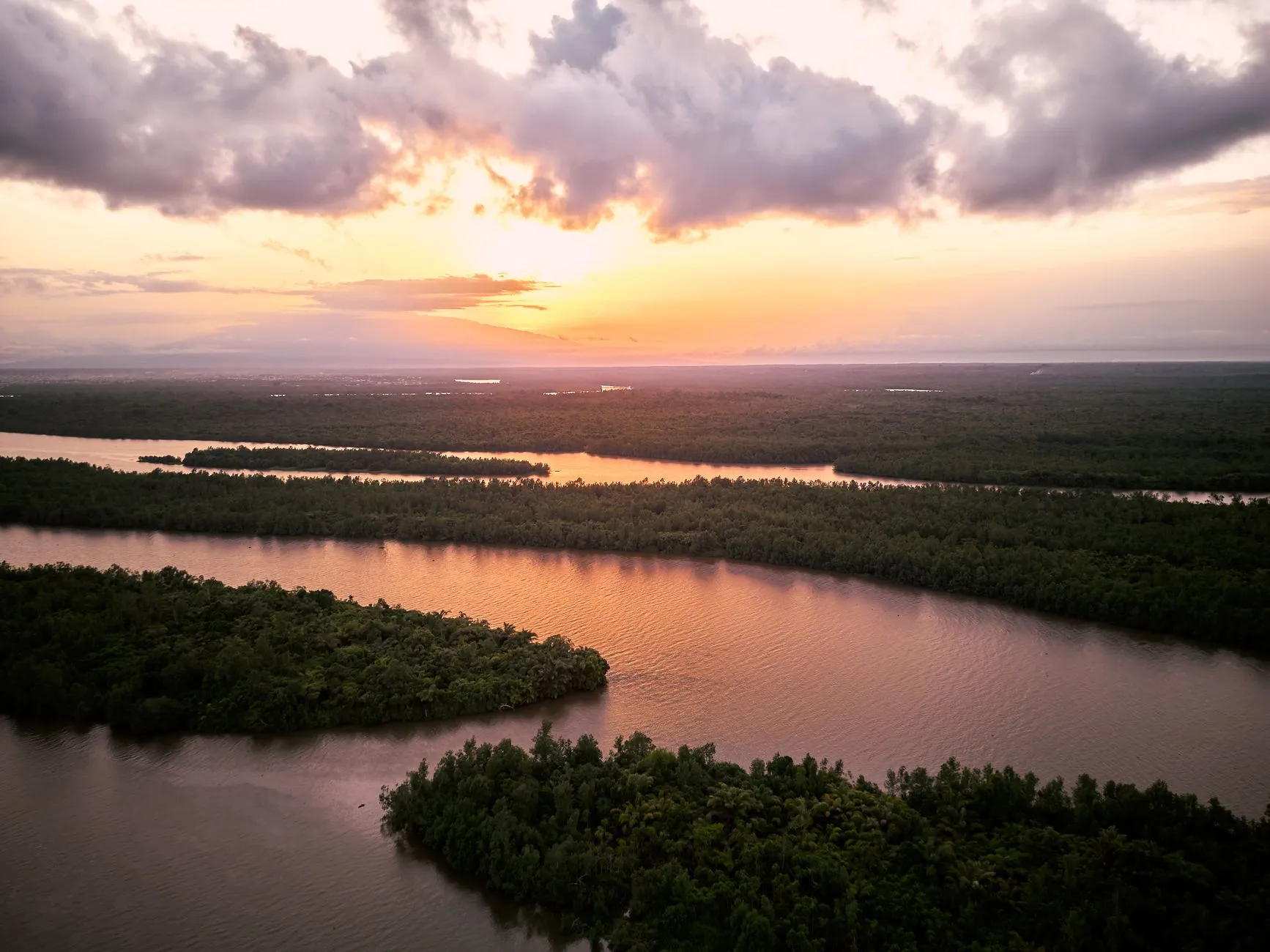
Cameroon — Complete Travel Guide 2026
Cameroon is the country that should be one of Africa’s great trips and, for now, is only half of one — because the regions that earned it the nickname “Africa in miniature” include exactly the ones that conflict has slammed shut. The honest version is this: come for the south and the littoral — Douala, Yaoundé, the black volcanic coast at Limbé, the golden beaches and ocean-fed waterfalls of Kribi, the green roof of Mount Cameroon — go prepared, francophone-comfortable and properly jabbed, and you will have one of the most rewarding, least-touristed weeks of your travelling life. Pretend the closed regions are an option and you’ll get yourself into real trouble.
Quick Reference
Central/West Africa, on the Gulf of Guinea; bordered by Nigeria, Chad, CAR, Congo, Gabon and Equatorial Guinea
Douala International (DLA) — the commercial gateway; Yaoundé Nsimalen International (NSI) — the capital
Central African CFA franc (XAF / FCFA), pegged to the euro at a fixed €1 = 655.957
French and English officially; ~250 local languages; Cameroonian Pidgin widely spoken
e-Visa required for almost all visitors (official portal: evisacam.cm); yellow-fever certificate mandatory
The long dry season, roughly mid-November to February; a shorter dry spell July–August
“Africa in miniature” — Mount Cameroon, volcanic black-sand beaches, the Lobé Falls into the sea, rainforest, ndolé, indomitable football
Douala for the coast and the mountain; Yaoundé for the centre; Kribi for the genuine beach week
Editor’s Note: “Africa in Miniature,” and the Cruel Asterisk
Every brochure calls Cameroon “Africa in miniature,” and for once the cliché is earned. Stand the country on a map and it really does fold the whole continent into one border: equatorial rainforest dripping in the south, sahel and desert edges in the far north, savanna in the middle, a 4,000-metre volcano on the coast, black-sand beaches and golden ones within a half-day of each other, and somewhere north of 250 ethnic groups and languages stacked on top. There is no other country in Africa where you can theoretically go from surf to summit to Sahara without leaving the same passport stamp.
That’s the brochure. Here’s the asterisk, and you need to read it before you read anything else: some of the most spectacular pieces of that miniature are off the table. The Anglophone North-West and South-West regions — rolling green highlands, Bamenda, grassfields, some of the prettiest country in West Africa — have been gripped since 2017 by a separatist conflict that governments now describe in flat “do not travel” language. The Far North, with its lunar Mandara mountains and Waza’s wildlife, sits under a constant Boko Haram threat. So the cruel maths of Cameroon is that the country’s range is its whole selling point, and a meaningful chunk of that range is, right now, closed by violence.
I won’t soften this and I won’t sensationalise it either. There are two Cameroons in 2026: a calm, hospitable, traveller-ready one in the south, centre and along the littoral, and a genuinely dangerous one in the Anglophone highlands and the far north. The skill of travelling here is knowing — precisely — which is which, and never letting curiosity drag you across the line.
What’s left when you subtract the no-go zones is still a tremendous trip. It just isn’t the full miniature. Adjust your expectations to the south-and-coast Cameroon that actually functions, and you’ll leave delighted. Arrive expecting to road-trip the whole map, and you’ll either be disappointed or reckless.
The Two Cameroons: The Security Map, Read Honestly
Get this section right and the rest of the guide is easy. Cameroon has ten administrative regions, and for a traveller they sort cleanly into “fine,” “use judgement,” and “absolutely not.”
Absolutely not — do not travel, full stop:
- The North-West region (Bamenda and the grassfields). This is the heart of the Anglophone crisis. Daily risk of gunfire, IEDs, kidnapping for ransom, roadblocks manned by armed groups, and “ghost town” lockdowns enforced by violence.
- The Far North region (Maroua, the Mandara mountains, Waza, the Lake Chad basin). Boko Haram and affiliated groups remain active, with suicide bombings, armed incursions and abductions. Foreign governments restrict even official travel here.
- The 20-kilometre band along the borders with Nigeria, Chad and the Central African Republic. Spillover, banditry and kidnapping.
Use judgement — and understand the nuance — the South-West:
The South-West region is where the map and the ground diverge, and you have to hold two facts at once. On paper, the South-West is lumped into the same “do not travel” advisories as the North-West: the U.S. lists it Do Not Travel; the UK’s FCDO advises against all travel to the South-West Region including the towns of Buea, Muyuka and Tiko. That matters because Buea is where you start the Mount Cameroon climb, and Limbé is on this region’s coast.
Read the advisories like a grown-up, not a tourist or a daredevil. The blunt government line covers the whole South-West. The lived reality is narrower: the coastal Fako corner — Limbé, the immediate Buea base, the mountain itself — has stayed comparatively calm, and a small, real tourism operation continues there. The interior of the South-West, and anything heading toward Bamenda, has not. Both things are true. Don’t let the calm of Limbé’s beach con you into thinking the whole region is fine.
The practical upshot for the South-West coast: the UK actually splits the difference, advising against all but essential travel (a notch softer) for Limbé and the 35 km of the N3 road that links it to the Littoral. So you can read Limbé and the Mount Cameroon base as a real, functioning, comparatively safe pocket — but it sits inside an advisory zone, which has consequences (your travel insurance may not cover an “advise against all travel” area; read the policy). Go with a reputable local operator, never move at night, never push inland, and check conditions the week you travel.
Fine — the traveller’s Cameroon:
- Littoral region — Douala and the coast.
- Centre region — Yaoundé and around.
- South region — Kribi, the Lobé Falls, Ebodjé, the southern rainforest and reserves (this is a different region from the South-West, and it is genuinely calm).
- West and parts of the East — generally calmer, though the East has its own remoteness and CAR-border caveats.
If you stay in the Littoral, Centre and South, treat the Limbé/Mount Cameroon pocket as an informed-choice add-on, and avoid the North-West, Far North and borderlands entirely, you’ve drawn the line correctly.
Should You Go? Who It’s For — and Who It Isn’t
Cameroon is not a beginner’s Africa trip, and it’s not pretending to be. There is almost no tourism infrastructure as a first-timer would recognise it — no hop-on safari circuit, very little English signage outside the Anglophone areas, roads that range from good to spine-rearranging, and a bureaucracy that requires patience and small bills. What it offers instead is the real thing: a country going about its own business, where you are a curiosity rather than a customer, where the welcome is warm and the markets and music are unforgettable, and where you will not meet another tour group for days.
Go if you’ve travelled in Africa or other rough-and-rewarding places before; you speak or can fake some French; you’re relaxed about delays, negotiation and roads; you want a coast, a volcano and a rainforest with the dial turned to “barely visited”; and you read security advice carefully and follow it.
Think hard if this is your first trip outside the resort bubble, you need everything booked and predictable, you don’t tolerate heat and humidity well, or you’re nervous about malaria country and rural clinics. None of those is disqualifying, but Cameroon will test all of them.
This is a destination that rewards competence, not bravado. The travellers who have a great time here are the ones who do their homework — visa sorted, jabs done, malaria pills started, French phrasebook, cash in the right denominations, a clear list of which regions are off — not the ones who turn up to “wing it.” Winging it in the North-West gets people kidnapped.
Visas & the Yellow Card: Entry, Verified
Cameroon requires a visa from nearly all visitors, and the good news is that the long-standing embassy hassle has finally been replaced by an online system. The e-Visa is now the standard route: you apply through the official government portal (evisacam.cm), upload your passport and supporting documents, and receive your authorisation by email. Short-stay visas cover tourism and business for stays of up to six months; there are long-stay and short transit options too.
A few things that will save you grief:
- Use the official portal. A swarm of look-alike third-party “Cameroon visa” sites will happily process your application and add a fat service fee on top of the actual visa cost. The genuine government site charges you the visa fee and nothing extra. If a site looks like a slick agency, it’s probably the wrong one.
- Your passport needs at least six months’ validity beyond your travel dates, with blank pages.
- Apply ahead. Even an “e-Visa” is not always instant; build in time, and don’t book non-refundable flights on the assumption it’ll clear overnight. Expedited tiers exist if you’ve left it late.
- Carry printed copies of the e-Visa approval and your hotel booking. Officials at Douala still like paper.
And then the non-negotiable health document:
The yellow-fever certificate is not optional and not a formality. Cameroon requires proof of yellow-fever vaccination for all travellers aged nine months and over, and the certificate is only valid from ten days after you’re jabbed. Leave the vaccine to the last week and you’ll be technically uncertified on arrival. They do check the little yellow booklet at Douala.
Get the yellow-fever shot well in advance, keep the WHO yellow card with your passport, and you’ll sail through. Turn up without it and you can be refused entry or vaccinated on the spot — neither is how you want to start.
Getting There & Around: Airports, Roads, Patience
Almost everyone flies into Douala International (DLA), the country’s commercial hub and busiest airport, on the Littoral coast. It’s the logical base for the coast and the mountain. The capital has its own gateway, Yaoundé Nsimalen International (NSI), useful if the centre is your focus. Connections are typically via Paris, Brussels, Istanbul, Casablanca, Addis Ababa or other African hubs; there’s no shortage of one-stop routings, and Douala is the better-served of the two.
Douala’s airport is functional rather than charming, and the arrivals hustle is real — fix your transport before you walk out. A shared taxi into central Douala (Akwa, Bonanjo) runs roughly 5,000–8,000 XAF (about €8–12); a pre-booked private transfer is more like 15,000–30,000 XAF (€23–46) for the comfort and the fixed price. Agree the fare before the doors close.
Then the roads. This is where Cameroon asks for patience:
- The Douala–Yaoundé axis (the A3, roughly 240 km) is the country’s main artery — paved, busy, and doable in around three to four hours by road, though it’s also notorious for accidents; drive it by day, with a sober driver, and don’t be the one in a hurry. There’s also a train between the two cities (Camrail), a slow but characterful alternative that spares you the highway.
- Douala to the coast and mountain is short and easy by Cameroonian standards: Buea is about 65 km (1.5 hours) and Limbé around 75 km. Kribi is roughly 150 km / 2.5–3 hours south, increasingly served by improved road.
- Everything else varies wildly. Some routes are smooth new tarmac; others dissolve into red-mud potholes in the rains. Distances on a map mean little; ask locally how long a leg actually takes this season.
Don’t self-drive unless you genuinely know what you’re doing. Hire a car with a driver — it’s affordable, it solves the language, the police checkpoints and the navigation in one move, and a good local driver is your single best safety asset. Budget on the order of €40–80 a day depending on the vehicle and distance.
For getting around towns, shared yellow taxis are the cheap workhorse (you flag one going your way and pay a small per-seat fare, often a few hundred francs); negotiate a “course” (private hire) if you want it to yourself. Internal flights between Douala and Yaoundé exist but are limited and prone to schedule wobble. Motorbike taxis (“bendskins”) are everywhere and quick — and exactly the sort of thing that ends a trip badly, so I’d skip them.
Douala: The Engine Room You’ll Land In
Let me be honest about Douala: nobody’s first reaction is love. It’s hot, humid, sprawling, loud, traffic-clogged and short on conventional “sights.” It’s the country’s economic heart and largest city — the port that moves Cameroon’s goods and a fair slice of land-locked Chad’s and the Central African Republic’s too — and it wears that workmanlike identity on its sleeve. Most guidebooks tell you to land and leave.
I’d give it an evening or two anyway, because Douala grows on you the moment you stop treating it as a checklist. The energy is the attraction. The Marché des Fleurs and the sprawling Marché Central are a sensory assault in the best way; the colonial-era core in Bonanjo and the quirky La Pagode are worth an hour. The Doual’art gallery and the city’s outdoor sculptures (the Njé Mali / “New Liberty” statue among them) give Douala a creative edge that surprises people. And the city eats superbly — this is where you’ll have your first plate of grilled fish and ndolé and understand the fuss.
Akwa and Bonanjo are the neighbourhoods to base in — that’s where the decent hotels, restaurants and nightlife cluster, and where you can walk a little in the evening. Douala’s after-dark scene is genuinely good; just take taxis door to door and don’t flash valuables.
Use Douala for what it is: the comfortable, well-connected launchpad. Sleep here, eat here, sort your driver and cash here, then point yourself at the mountain and the beaches.
Yaoundé: The Capital on Seven Hills
Yaoundé is Douala’s opposite number, and the better city to simply be in. Set inland in the Centre region across a cluster of green hills, it sits higher and cooler than the steaming port, and it carries itself with the calmer, leafier air of a capital. Ministries, embassies, universities and a more measured pace — Yaoundé is where Cameroon governs itself and, frankly, where a nervous first-timer will feel most at ease.
The things to do are low-key and rewarding. The Musée National in the former presidential palace is the best museum in the country and the right place to get your head around Cameroon’s bewildering ethnic mosaic. The Mvog-Betsi zoo and Mefou primate sanctuary outside town offer a realistic, conservation-minded look at gorillas, chimps and mandrills rescued from the bushmeat trade. The Monument de la Réunification is the landmark photo. And the surrounding hills — Mont Fébé, the views over the city — make for an easy afternoon.
Yaoundé is the gentler introduction. If Douala’s intensity rattles you, fly or train into the capital instead, find your feet among the hills for a day, and ease into the country from there.
It’s not a place you build a whole holiday around, but two unhurried days here, bookending the coast, balance the trip nicely — and the Mefou primate visit is one of the more genuinely moving things you can do in southern Cameroon.
Mount Cameroon: The Climb From Buea
This is the headline adventure, and it’s a real one. Mount Cameroon — Mongo ma Loba, “Mother of Mountains,” to the local Bakweri — is an active stratovolcano rising to 4,040 metres, the highest peak in West Africa and one of the few places on the continent where you can stand on a regularly-erupting summit. You climb it from Buea, the old German colonial hill station perched on its lower slopes, and the standard ascent is a tough two- to three-day guided trek that climbs through plantation, then rainforest, then a strange high world of grassland and bare black lava before topping out on the crater rim. The reward, on a clear morning, is the Gulf of Guinea spread out far below and the curve of the coast.
What makes this climb special is the compression: you start near sea level in tropical heat and finish in cold, wind-scoured volcanic desert, passing through about four climate zones in a couple of days. It’s strenuous — proper boots, layers, headtorch and a decent fitness base are not negotiable — but it needs no technical skill, just legs and lungs. Guides and porters are arranged in Buea; basic mountain huts (Fako Mountain Lodge and Mann’s Spring among them) serve the overnights.
Climbing here means engaging directly with the South-West advisory question, so do it with eyes open. Buea and the mountain have stayed comparatively calm, and reputable operators run climbs — but the region carries blunt government warnings, your insurance may not cover it, and the situation can shift. Go with an established Buea/Limbé guide, ask them frankly about current conditions, climb by day, and don’t wander the wider South-West. This is an informed adult choice, not a casual one.
A note on timing: you want the dry season. The mountain is regularly cloud-wrapped and the trail turns to greasy misery in the rains, so November–February gives you the best shot at a view and dry rock. There’s even an annual “Race of Hope,” a brutal foot race up and down the mountain in February, if you want to feel slow.
Limbé: Black Sand and a Working Coast
Drop down from Buea to the coast and you reach Limbé, and this is where Cameroon starts to look like a beach holiday — only stranger and better. Because Mount Cameroon’s lava reaches the sea here, Limbé’s beaches are black volcanic sand, dramatic against the green hills and the surf. Down Beach and the strands around town aren’t the postcard-golden sort; they’re moody, photogenic and very much alive, lined with fishermen and grilled-fish shacks.
The town has two genuinely worthwhile draws beyond the sand. The Limbe Botanic Garden, founded in the 1890s, is one of the oldest in Africa — a lush, faded, atmospheric expanse of tropical planting running down toward the sea. And the Limbe Wildlife Centre is a serious primate-rescue facility, home to gorillas, chimps, drills and mandrills confiscated from poachers, and the most reliable place in the country to see great apes up close while doing some good.
Limbé is the calmer face of the South-West coast and the easiest “beach” near Douala, but it sits in the same advisory region as the mountain — read the security section, base in town, and don’t drive the back-roads inland. The coastal strip works; the interior does not.
For sheer beach quality, though, Limbé is the appetiser. The main course is further south, in a region with no asterisk at all.
Kribi & the Lobé Falls: A Waterfall Into the Sea
If you do one straightforwardly lovely, unambiguously calm thing in Cameroon, make it Kribi. Down in the South region — note, the South region, not the troubled South-West — Kribi is the country’s proper beach town: long, palm-fringed, golden-sand beaches and warm Atlantic water, a string of seafood restaurants and unfussy hotels, and a holiday atmosphere that’s about as relaxed as Central Africa gets. After Douala’s intensity and the mountain’s effort, Kribi is the exhale.
And then there’s the thing that makes the trip: the Lobé Falls (Chutes de la Lobé), a few kilometres south of town. This is one of a tiny handful of places on Earth where a river tumbles directly into the ocean — the Lobé drops about 20 metres across a 100-metre-wide curtain of white water straight into the surf of the Gulf of Guinea. You can watch it from the beach, and local pirogue men will paddle you out for a closer look or upriver into the forest of the Batanga and Bagyeli communities. It is genuinely one of the most beautiful sights in West Africa, and almost nobody outside Cameroon has heard of it.
Kribi is the single safest, easiest, most rewarding stop in this guide — calm, accessible, and gorgeous. If your appetite for the rough edges of Cameroon is limited, build the trip around a few days here, with day-runs to the Lobé Falls and the fishing village of Londji, and treat Douala merely as the airport you flew into.
Eat the grilled prawns and poisson braisé at the beachfront shacks, watch the pirogues come in, and pay your respects to a waterfall that does something almost nowhere else does. Kribi alone justifies the visa.
The Rainforest & Realistic Wildlife
Inland and south of Kribi, Cameroon plunges into the Congo Basin rainforest, and this is where the “Africa in miniature” idea pays off in green. The country protects some serious wilderness here — Campo Ma’an National Park near the coast, the vast Dja Faunal Reserve (a UNESCO World Heritage site) deeper in, Lobéké and the other forests of the far southeast — home to forest elephants, lowland gorillas, chimpanzees, mandrills and the semi-nomadic Baka and Bagyeli forest communities who have lived in and from these forests for millennia.
Now the honest part, because this is where expectations need managing:
This is not East African safari. There are no open plains, no game-drive convoys, no guaranteed lion-at-dawn. Congo Basin wildlife is forest wildlife — dense, shy, hard-won. You’ll hear far more than you see, and a sighting is a reward for effort and patience, not a scheduled event. Come for the forest itself and the cultures within it, and treat any big-mammal encounter as a bonus.
Visiting the deep reserves takes time, a specialist operator, permits and a tolerance for genuinely rough logistics — these are expedition trips, not day excursions. For most travellers on a one- or two-week visit, the right dose of rainforest is the accessible edge: a guided forest walk near Kribi or Campo, a day with a Bagyeli community, the canopy and the birdsong, rather than a multi-day push into the Dja. If you want the full deep-forest experience, plan it properly, go in the dry season, and pick an operator with real conservation credentials.
What to Eat: The Best Table in Central Africa
Here’s an underrated truth: Cameroon has some of the best food in Africa, and almost nobody talks about it. The cooking draws on the whole “miniature” — coastal seafood, forest greens, savanna grains, French technique left over from colonial days — and it is generous, spicy and deeply satisfying.
The dishes to chase:
- Ndolé — the unofficial national dish and the one to try first. Bitterleaf greens stewed down with peanuts, smoked fish or beef and shrimp into a rich, slightly bitter, utterly addictive sauce, served with plantains or miondo (fermented cassava sticks).
- Poisson braisé — whole fish, butterflied, marinated and grilled over charcoal, served with fiery piment and fried plantains. On the Limbé and Kribi coasts it’s the meal you’ll order again and again.
- Brochettes / soya — skewered grilled meat, the perfect street snack with a cold beer.
- Eru — a forest-greens stew with waterleaf and garri, hearty and excellent.
- Poulet DG — “Director-General’s chicken,” a celebratory dish of fried chicken with plantains and vegetables, the name a wink at its being rich enough for a big boss.
- Beignets-haricots-bouillie — the classic street breakfast of fritters, beans and millet porridge.
Wash it down with locally brewed “33” Export or Castel (a beer runs around 700–1,000 XAF, roughly €1–1.50), palm wine if you’re feeling brave, or Cameroonian coffee — this is a coffee-growing country, and it shows.
The best eating is at the maquis and roadside “chop houses,” not the hotel restaurants. A heaped plate of ndolé or grilled fish at a local spot costs maybe 2,000–4,000 XAF (€3–6); a smart restaurant in Akwa runs 8,000–15,000 XAF (€12–23). Follow the crowds and the charcoal smoke and you won’t go wrong.
Money & What Things Actually Cost
Cameroon uses the Central African CFA franc (XAF, written FCFA), and there’s one fact about it that every traveller should internalise: it is pegged to the euro at a fixed rate of €1 = 655.957 XAF, and has been since the euro launched in 1999. That peg — guaranteed by the French Treasury and shared with five other Central African states — means no exchange-rate roulette: the franc doesn’t swing against the euro, inflation is low by regional standards, and your euros convert at a predictable, near-constant rate. Practically, 1,000 XAF is about €1.50, and 10,000 XAF about €15. Do that mental maths once and pricing becomes painless.
A few money realities:
- Cash is king. Cameroon runs on physical francs. Cards are accepted at upscale hotels and a handful of restaurants in Douala and Yaoundé, and almost nowhere else. ATMs in the big cities dispense XAF (bring a card that works and a backup); outside them, withdraw before you go.
- Carry small notes. Taxi drivers, market stalls and chop houses rarely have change for a 10,000-franc note. Break big bills at supermarkets and hotels and hoard your coins and small notes.
- Mobile money (MTN, Orange) is huge locally and worth setting up if you’re staying a while.
Rough daily costs, in euros:
- Budget guesthouse: €15–30 a night. Mid-range hotel (Douala/Kribi): €40–90. Comfortable/top-end: €100+.
- Local meal: €3–6. Restaurant dinner: €12–25. Beer: ~€1–1.50.
- Car with driver: €40–80/day. Douala airport taxi: €8–12 shared, €23–46 private.
- Mount Cameroon guided climb: budget on the order of €120–250 for a two- to three-day trek depending on group size and operator, plus park fees and porter tips — confirm the exact package locally.
Cameroon is not dirt-cheap by African standards — the euro peg keeps prices firm — but it’s excellent value for what you get, precisely because so few tourists are bidding things up. You’re paying local prices in a place with no tourist markup, which is its own quiet luxury.
When to Go
Cameroon’s calendar is run by rain, not temperature, and the difference between a great trip and a sodden one is timing. You want the dry season, and on the coast and in the south that means roughly mid-November through February — the longest, most reliable dry window, with the clearest skies, the most passable roads, and your best chance of an actual view from Mount Cameroon’s summit. There’s also a shorter dry spell in July–August in parts of the country, usable but less dependable.
What to avoid: the heart of the rains. The Cameroonian coast around Douala and the Mount Cameroon foothills is one of the wettest places on Earth — Debundscha, on the mountain’s seaward flank, is among the rainiest spots on the planet — and from roughly June to October the deluge can be relentless, the mountain stays cloud-wrapped, forest tracks turn to soup, and the humidity is punishing.
If your trip hinges on climbing the mountain or seeing the Lobé Falls at their cleanest, go in December or January. That’s the sweet spot: dry, relatively cooler, festive, and the one time the summit reliably clears. The shoulder weeks either side are a gamble.
One festival worth aligning with: the Ngondo, the water festival of the Sawa peoples around Douala, late in the year. Many of Cameroon’s most famous traditional festivals, though, happen in regions that are currently off-limits — another small heartbreak of the present moment.
Overrated, Skippable, and the Grown-Up Health & Safety Checklist
Overrated / what to skip. Let me save you some wasted days:
- Don’t build a trip around “doing the whole country.” The single most overrated idea about Cameroon is that you can road-trip its full range. Half the postcard regions are closed; chasing them is the one genuinely dangerous mistake you can make.
- Skip the motorbike taxis (“bendskins”). Quick and cheap, and also the most common way travellers get hurt here. Take a car.
- Don’t over-invest in Douala as a sight. Great base, superb place to eat, not a place to spend three days museum-hopping. Use it and move.
- Be realistic about deep-forest wildlife. The Dja and the far-southeast reserves are expedition-grade; don’t promise yourself a casual gorilla encounter. The accessible forest edges and the Limbé/Mefou sanctuaries deliver more, more reliably.
- Don’t try to “see it all in a week.” A focused loop — Douala, the mountain/Limbé pocket, Kribi and the Lobé Falls, a day or two in Yaoundé — beats a frantic dash.
The grown-up health & safety checklist. None of this is scary if you prepare; all of it bites if you don’t:
- Yellow fever vaccination is mandatory and checked — done at least 10 days before arrival, certificate with your passport.
- Malaria is everywhere in Cameroon, all year, at high risk. Take prophylaxis (atovaquone-proguanil / doxycycline / mefloquine per your doctor), use DEET, sleep under nets, and know the symptoms. This is the genuine health risk, far more than crime.
- Routine jabs up to date; consider typhoid, hepatitis A and B, rabies depending on your plans. Drink bottled or treated water only.
- Regions: North-West, Far North and the Nigeria/Chad/CAR border bands — do not go. South-West (Mount Cameroon/Limbé) — informed-choice pocket, reputable operator, daylight, coast only. Littoral, Centre, South — your comfortable core.
- Petty crime and scams exist in Douala and Yaoundé as in any big city. Keep valuables out of sight, agree fares first, use door-to-door taxis at night.
- Checkpoints are routine; carry your passport, e-Visa printout and yellow card, stay polite and patient, and let a local driver handle the conversation.
- Insurance: buy proper travel and medical cover with evacuation, and read the territorial exclusions — many policies void cover in “advise against all travel” zones, which affects the South-West.
The headline you should leave with: Cameroon’s danger is geographic and specific, not ambient and everywhere. Stay in the south, centre and littoral, treat the mountain/Limbé corner as a considered choice, never cross into the closed regions, take your malaria pills, and you are travelling in a warm, welcoming, wildly underrated country — not a war zone. The whole art is keeping those two things straight.
Frequently Asked Questions
Cheapest Flights to Cameroon
We have tracked 4,110 fares to Cameroon from 98 cities. As of June 2026, here is what a good price looked like from each — the lowest fare we recorded, and a “great-deal” benchmark to judge a quote against. These are tracked observations, not live prices: by the time you read this they will have moved, so treat them as a yardstick, not a quote.
| From | Lowest fare we tracked | Great-deal benchmark |
|---|---|---|
| Bordeaux (BOD) | €409 | €584 |
| Bologna (BLQ) | €414 | €592 |
| Bilbao (BIO) | €421 | €601 |
| Marseille (MRS) | €433 | €619 |
| Lyon (LYS) | €435 | €621 |
| Malaga (AGP) | €438 | €626 |
| Toulouse (TLS) | €442 | €631 |
| Brussels (BRU) | €448 | €640 |
| Sicily (CTA) | €449 | €641 |
| Nantes (NTE) | €453 | €647 |
| Madrid (MAD) | €454 | €648 |
| Paris (ORY) | €454 | €649 |
| Nice (NCE) | €471 | €673 |
| Turin (TRN) | €474 | €677 |
Recent deals we have posted to Cameroon:
- Bologna to Yaoundé, Cameroon from €566
- Paris to Douala, Cameroon from €526
- Nantes to Douala, Cameroon from €583
- Hanover to Douala, Cameroon from €619
- Bordeaux to Douala, Cameroon from €599
- Paris to Douala, Cameroon from €502
- Lyon to Douala, Cameroon from €574
- Marseille to Douala, Cameroon from €592
- Paris to Douala, Cameroon from €630
- Bilbao to Douala, Cameroon from €637
These are fares aifly tracked to this destination, not live quotes — they have changed since and several of the deals above may have expired. Browse current flight deals →