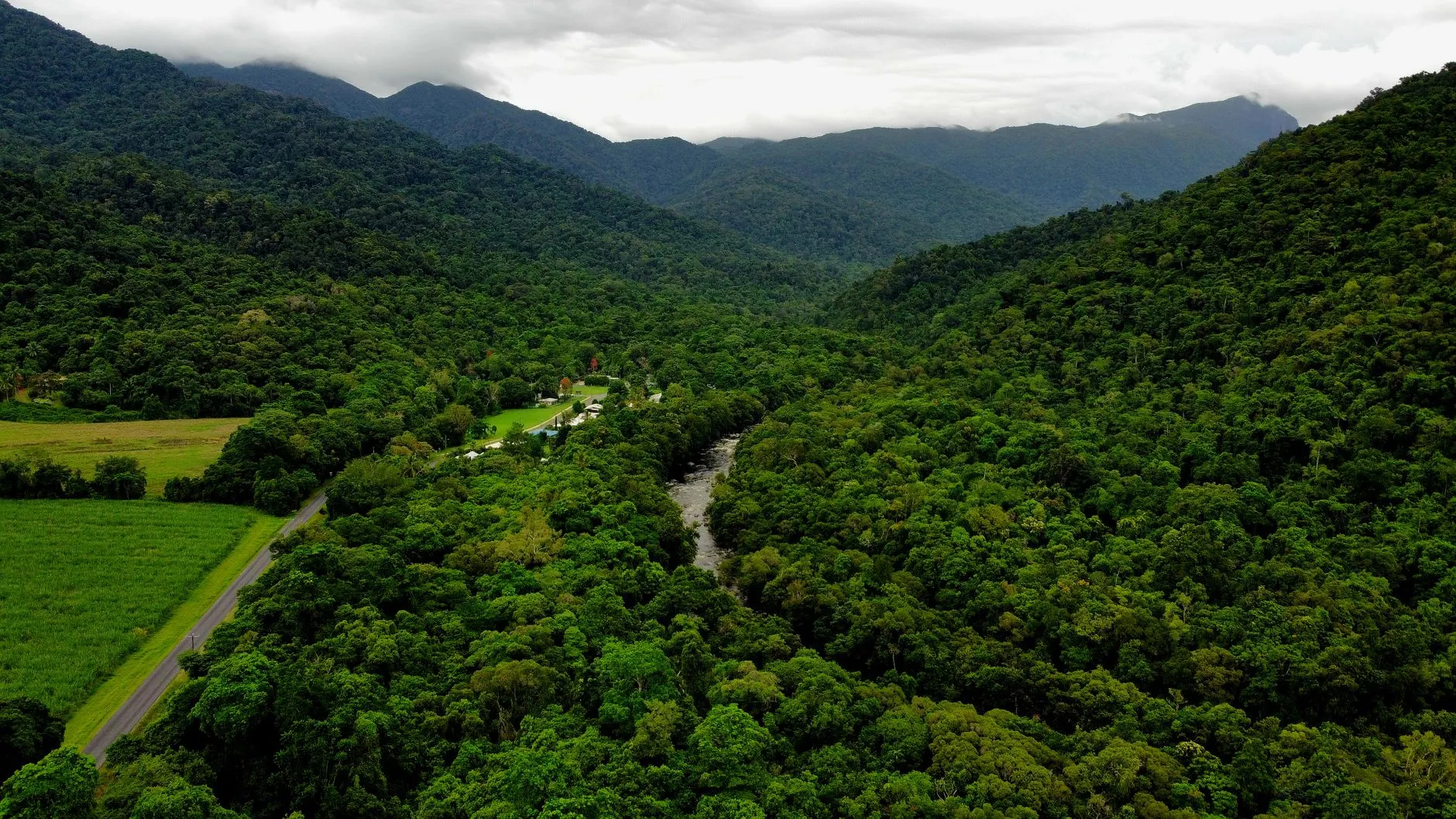
Gabon — Complete Travel Guide 2026
Gabon is one of the last truly wild places left on the planet — a country nearly 90% covered in rainforest that has made conservation its national identity, where forest elephants walk a deserted Atlantic beach and gorillas move through forest almost no human has logged. It is also expensive, logistically punishing and not remotely a casual trip. Come if you are a committed, well-funded wildlife traveller who wants something the postcard-safari circuit can’t give you. Come for the wrong reasons and you’ll spend a fortune to be uncomfortable, confused and rained on.
Quick Reference
Central Africa, on the Atlantic equator; sits astride the equator between Cameroon, Equatorial Guinea and the Republic of Congo
Léon Mba International, Libreville (LBV); Port-Gentil (POG) for the southern parks
Central African CFA franc (XAF), pegged to the euro at a fixed €1 = 655.957
French (official and essential); around 40 Bantu languages, Fang the most widely spoken
e-Visa via the official portal, paid on arrival at Libreville; yellow-fever certificate mandatory
The long dry season, roughly June–September — mandrills, whales and passable roads all at once
Forest elephants on wild Atlantic beaches (Loango), mandrill super-troops (Lopé), and protecting ~11% of the country in 13 national parks
Libreville to arrive and arrange; the parks themselves — Loango above all — for everything that matters
Editor’s Note: The Last Great Rainforest, and What It Costs
Let me be blunt before we go any further, because Gabon punishes wishful thinking. This is not Kenya. There is no well-oiled tourism machine, no string of mid-range lodges competing for your business, no app to book a sunrise game drive. Gabon receives a rounding error of the visitors that East and Southern Africa pull in every year, and that is precisely the point — and precisely the problem.
I have come to think of Gabon as Africa’s most honest wilderness. It doesn’t perform for you. The forest is dense and the animals are genuinely wild, which means they are genuinely hard to see; you can spend three days tracking lowland gorillas through chest-high vegetation and dripping heat and be rewarded with ninety seconds and a thumping heart. When the reward comes — a bull elephant ambling out of the treeline onto an empty beach with the surf behind him — it is one of the great sights in the natural world, and you will likely have it entirely to yourself. That trade, scarcity of comfort for scarcity of crowds, is the whole bargain of this country.
Gabon is a place you earn. Nothing here is handed to you on a silver platter, least of all the wildlife. If that sentence excites you, read on. If it irritates you, book Tanzania.
And it is dear. Gabon runs on oil money, and oil economies make terrible budget destinations — imported goods, a strong euro-pegged currency, and parks so remote you frequently have to charter a small plane or boat just to reach the lodge. A serious multi-day safari starts around €1,100–1,400 per person and climbs steeply from there. I won’t sugar-coat that. What I will tell you is that for the right traveller, Gabon delivers something money increasingly cannot buy anywhere else: genuine, uncrowded, untamed wilderness, in a country that decided — almost alone on the continent — that its forests were worth more standing than felled.
Should You Go? Who Gabon Is For — and Who Isn’t
Let’s sort this out plainly, because nothing wastes money faster than the wrong traveller in the wrong country.
Gabon is for you if: you are a serious wildlife or wilderness traveller; you’ve already done the easy safaris and want something rawer; you have a real budget (think €4,000–8,000+ per person for a proper two-week trip including international flights); you can handle heat, humidity, insects, long transfers and the occasional washed-out plan with good humour; and you speak at least functional French or are travelling with an operator who does. Birders, primatologists-at-heart, photographers chasing a shot nobody else has, and people who simply want to stand somewhere almost no tourists go — this is your country.
Gabon is not for you if: you want value-for-money beach time (the Atlantic here is for elephants and turtles, not sunbathing); you need reliable comfort and predictable logistics; you’re nervous travelling somewhere with thin infrastructure and a recent coup in its rear-view mirror; you don’t have the budget and are hoping to “rough it” cheaply (you can’t — the cheap option is mostly an expensive option that’s also uncomfortable); or you’re squeezing it into ten days. Gabon rewards time, money and patience, in that order. Short of any one and you’ll come away underwhelmed.
There is a smaller third category worth naming: the transit traveller. Some people pass through Libreville for work — oil, timber, NGOs, conservation. If that’s you, Pongara’s beaches and turtles are a genuinely good two- or three-day add-on without committing to the full fly-in circus. More on that below.
The Conservation Story: A Country That Bet on Forest
You cannot understand Gabon as a destination without understanding the single decision that defines it. In 2002, the government did something almost no resource-rich nation has ever done voluntarily: it carved 13 national parks out of its territory in one stroke, protecting roughly 11% of the country. For a place whose economy floats on oil and timber, choosing to lock up that much forest was a genuine gamble.
The numbers behind it are staggering. Gabon is somewhere around 88–90% forested — one of the most heavily forested countries on Earth — and that forest is the western edge of the great Congo Basin, the planet’s second lung after the Amazon. It holds an estimated majority of the world’s remaining critically endangered forest elephants, alongside western lowland gorillas, chimpanzees, mandrills, leopards and a list of birds that makes specialists weep with joy. Crucially, the forest is mostly intact and continuous, which is why the animals here behave like wild animals rather than habituated park residents.
For the traveller, the conservation story isn’t an abstraction — it’s the entire product. The parks are the reason to come, and the relative thinness of facilities is the flip side of a country that prioritised protection over development. Some parks (Loango, Lopé, Ivindo, Pongara) have functioning tourism. Most of the other nine are, for practical purposes, the domain of researchers and rangers, not visitors. Don’t arrive expecting all 13 to be open for business; the headline figure is a national achievement, not a tourism menu.
The Political Picture: After the Bongos
Here is the part travellers worry about, so let’s handle it like adults. In August 2023, the military removed President Ali Bongo in a coup that ended 56 years of dynastic Bongo rule — the country had been governed by one family since 1967. General Brice Oligui Nguema took charge of a transition, and in April 2025 he won a presidential election with around 90% of the vote, was inaugurated in May 2025, and his party went on to take a commanding majority in parliament. By 2026 he is the elected, entrenched president serving a seven-year term.
What does that mean for you, on the ground, in 2026? Honestly: very little. The 2023 coup was notably calm — markedly bloodless by the grim standards of the genre — and the transition that followed has been one of the more orderly on the continent, even if outside observers debate how genuinely democratic it was. The country is stable for visitors. The capital functions, the parks operate, the lodges take bookings.
The coup was real and the politics are real, but for a wildlife traveller in 2026 the relevant fact is mundane: it’s calm, it’s functioning, and your trip will be shaped by weather and logistics, not unrest.
That said, this is still a Level 2 “exercise increased caution” country in the eyes of the US, Canadian, Australian and UK governments — the same tier as plenty of perfectly visitable places. The caveat is petty and occasionally violent urban crime in Libreville and Port-Gentil (robbery, break-ins), not political danger. Read your own government’s current advisory before you book, keep an eye on it as elections and reshuffles come and go, and don’t wander Libreville’s beaches alone after dark. That’s the whole of it.
Visas & Entry: The e-Visa, Yellow Fever, and the Fine Print
This is where careful preparation pays off, because Gabon’s entry rules have a specific shape that trips people up.
The e-Visa. Most visitors now use Gabon’s electronic visa, applied for in advance through the official government portal (evisa.dgdi.ga). The clever — and slightly confusing — part is that it’s effectively an authorisation you secure online and then pay for and collect on arrival: you submit your passport details, travel dates and supporting documents online, wait roughly three business days for approval, and then pay the fee and have the visa sticker issued when you land at Léon Mba International Airport in Libreville. As of 2026 a single-entry visa of one to three months costs €70 (45,000 XAF) plus a €15 file-processing fee; a six-month multiple-entry visa runs €185 (120,000 XAF) plus the €15 fee. The e-Visa is valid only for arrival by air at Libreville — not at land borders, not at other airports.
Apply early, print everything, and don’t assume a land crossing will work. The e-Visa is an air-arrival-at-Libreville instrument. Coming overland from Cameroon or Congo is a different, harder, embassy-visa game.
A critical caveat for US passport holders. In December 2025 Gabon announced it would suspend visa issuance to US citizens, in reciprocity for parallel US restrictions. If you hold a US passport, treat the e-Visa as not currently available to you and check the status with a Gabonese embassy before you plan anything — this is a live, moving situation and exactly the kind of thing to verify the week you book, not from any guide.
Yellow fever is non-negotiable. Gabon requires a valid yellow-fever vaccination certificate from every traveller aged nine months and older, full stop. It’s checked on arrival, and without it you can be denied entry. Get vaccinated at least ten days before travel so the certificate is valid, and carry the yellow card with your passport — not in your checked bag.
Beyond that: a passport with at least six months’ validity, proof of onward travel and accommodation, and the supporting documents the e-Visa portal lists. Reputable lodges and operators will hold your hand through this; if you’re booking a fly-in safari, your operator should confirm exactly what the immigration officers will want to see.
Getting There & Around: The Fly-In Reality
Understand this early and your whole trip makes sense: Gabon is a fly-in country. The forest that makes it special also makes overland travel slow, seasonal and often impossible. Roads outside the few paved corridors turn to red mud in the rains, and the distances are real. The lodges that matter are reached by light aircraft, boat, or a combination — and that’s reflected in the price.
Getting in. Almost everyone flies into Léon Mba International Airport (LBV) in Libreville. Connections typically route through Paris, Casablanca, Addis Ababa, Istanbul or Lomé, depending on the carrier. There’s no direct service from North America. Build a buffer night in Libreville on arrival — you’ll want it for the visa formalities, a shower, and to make any onward domestic connection without panic.
Getting around to the parks. This is the crux. The two anchor experiences split neatly:
- Loango (the beach-elephant park, in the south) is typically reached via Port-Gentil (POG), Gabon’s oil capital, with a short hop from Libreville and then a transfer by boat, 4×4, light aircraft or helicopter to the lodge depending on which camp and which season. Some operators fly you directly in. It is the most logistically involved of the headline parks, and the most expensive to reach.
- Lopé, gloriously, is the exception that proves the rule: it sits on the Trans-Gabon railway (the Transgabonais), so you can ride the train inland from the Libreville area to Lopé station — a genuinely characterful, scenery-rich way in, and far cheaper than chartering a plane. The train is also famously subject to delays, so don’t connect it tightly to an international flight.
The single best piece of Gabon planning advice: let a specialist operator stitch the internal logistics together. The flights, boats, transfers and park permits interlock in ways that are miserable to arrange solo and disastrous to get wrong.
Self-driving and public transport exist but are for the adventurous and French-fluent only. Shared “taxis-brousse” (bush taxis) link the towns, the paved N1 connects parts of the country, and a 4×4 with a driver-guide is the realistic way to do an overland-flavoured trip. But know that an independent overland circuit is a serious expedition, not a holiday — and in the wet season, frequently a non-starter.
Libreville: The Gateway You’ll Pass Through
Let me set expectations honestly: Libreville is a place you transit, not a place you travel to. It’s a humid, sprawling, oil-money capital strung along the Atlantic estuary — expensive, functional, occasionally handsome along the Boulevard du Bord de Mer, and not a destination in its own right. Spend a day, not a week.
That day is worth using well, though. The seafront promenade is pleasant in the cooler hours; the church of Saint-Michel de Nkembo, with its carved wooden pillars depicting biblical scenes by local artists, is a genuine highlight and refreshingly un-touristy. The Musée National des Arts et Traditions (when open) gives useful context on Gabon’s masks and Fang and Punu cultures before you head into the bush. The Marché du Mont-Bouët is the big, chaotic city market — go with a local, keep your valuables close, and treat it as texture rather than a shopping trip.
Eat well while you can — Libreville’s better restaurants do excellent grilled fish and Gabonese-French cooking, and it’ll be the last reliably varied food before lodge menus take over. Draw cash here too: ATMs are scarce-to-nonexistent in the parks, and you’ll want XAF in hand for tips and incidentals.
Loango National Park: Where the Rainforest Meets the Sea
If Gabon has a single, unanswerable reason to come, it is Loango. This is the park that put the country on the map of serious wildlife travellers, and it earns every word of the hype: roughly 1,550 km² where lowland rainforest, lagoon, savanna and a long wild Atlantic coastline collide, producing scenes that exist almost nowhere else on Earth.
The headline act is the beach elephants. Forest elephants here follow rivers and forest trails right down to the shore and amble along the sand with the surf breaking behind them — a juxtaposition so strange and so beautiful that photographs of it look faked. Add buffalo and red river hogs on the beach, hippos that have been filmed surfing in the breakers, and you have the most distinctive coastline on the continent. Offshore, from roughly July to October, humpback whales breed and calve close enough to see from the beach or a boat.
Loango is the one. If you do only one thing in Gabon, track elephants on the beach here. It is, flatly, one of the great wildlife experiences left in the world — and you’ll likely share it with no one.
Inland, Loango offers some of the most accessible western lowland gorilla trekking in Central Africa, plus forest elephants, chimpanzees and an extraordinary bird list along the lagoons. Habituated-gorilla visits are limited, permitted and physically demanding — humid, dense, no guarantees — but the encounters are profound precisely because the animals are so wild.
The reality check: Loango is the least accessible and most expensive of the headline parks, reached via Port-Gentil and onward by boat, 4×4, light plane or helicopter. A handful of lodges and satellite camps (the main operator runs four) cover the park, and you’ll typically commit to a minimum of three nights — sensible, because the magic here comes to those who wait. Budget seriously: this is the centrepiece, and it’s priced like one.
Lopé: Mandrill Super-Troops and the Edge of the Savanna
Lopé is the connoisseur’s park, and my personal favourite for sheer spectacle when the timing is right. A UNESCO World Heritage Site covering some 4,910 km², it sits where the central rainforest gives way to ancient savanna — a mosaic landscape of gallery forest, grassland and rolling hills that feels completely different from Loango’s coastal jungle, and is far easier (and cheaper) to reach thanks to that train line.
The reason to come is the mandrills. Lopé is the world’s premier place to witness mandrill “super-troops” — aggregations that can number from a few hundred to well over a thousand individuals, the largest gatherings of non-human primates on the planet. During the mating season, roughly July to August, these troops concentrate near the research station and monitoring trails, and to be near one is to feel an entire forest moving — a churning, shrieking, hundreds-strong river of the most flamboyantly coloured mammals on Earth. There is genuinely nothing else like it.
Beyond the mandrills, Lopé delivers forest elephants and buffalo emerging from forest onto grassland (much easier viewing than deep jungle), good birding, and a deep human story — the area holds significant rock-art and archaeological sites that earned part of its World Heritage status. The savanna edges make for some of the most photogenic, open wildlife-watching in the country. If Loango is the emotional climax, Lopé is the most reliably rewarding park for the effort and money invested.
Ivindo & Kongou Falls: The Hardest, Wildest Corner
For travellers who measure a trip by how far off the map it takes them, Ivindo is the prize — and the hardest-won. Another UNESCO site, in the country’s dense northeast, Ivindo is a tangle of primary rainforest, legendary rivers and thundering waterfalls, the most famous of which is Kongou Falls — a vast, wide cataract often called one of the most spectacular in Africa, where the Ivindo River shatters across a kilometre of rock and forest. Djidji and Mingouli falls add to the roll-call.
Ivindo is also home to forest clearings (“baïs”) where, with patience and luck, you can watch forest elephants, gorillas and sitatunga come to drink and feed — the Congo Basin equivalent of a savanna waterhole, but far rarer and far more atmospheric.
I’ll be straight: Ivindo is the least developed of the four for tourism, access is involved and seasonal, and a visit needs careful arrangement through a specialist. Don’t tack it on lightly. But for the right person, standing alone at the foot of Kongou Falls deep in the Congo Basin is the kind of memory that reorders your sense of what wild means.
Pongara: Beaches, Leatherbacks, and an Easy Win
Pongara is Gabon’s most underrated card, and the one I steer time-pressed or budget-conscious travellers toward. It sits just across the Komo estuary from Libreville — a short boat ride from the capital — which makes it by far the most accessible of the worthwhile parks, and a brilliant two-or-three-night add-on that doesn’t require the full fly-in commitment.
The park protects a long, wild Atlantic coastline backed by mangroves and forest. Elephants and buffalo wander the beaches here too (a gentler, more reachable version of the Loango scene), but Pongara’s signature is the sea turtles: from roughly November to January, the beaches host one of the most important nesting sites in the world for leatherback turtles, the largest turtle on the planet, alongside other species. Watching a leatherback haul herself up the sand under starlight to lay is a quietly overwhelming thing.
Short on time or budget? Pongara is the smart play. A boat from Libreville, a couple of nights, beach elephants and — in season — nesting leatherbacks. It’s the closest Gabon comes to an “easy” wild experience, and it’s still wilder than most of the continent’s flagship parks.
There’s a small clutch of eco-lodges, good birding in the mangroves, and the bonus of being able to do it without chartering an aircraft. If your Gabon is a long weekend bolted onto a work trip, this is the answer.
Money & Costs: Let’s Talk Honestly About the Bill
I keep returning to cost because it is, genuinely, the deciding factor for most people — and the single thing first-time visitors most underestimate.
Gabon uses the Central African CFA franc (XAF), which is pegged to the euro at a fixed, guaranteed rate of €1 = 655.957 XAF. That peg is a real convenience: prices convert cleanly and predictably, with no exchange-rate anxiety, and euros are widely understood. The catch is what the peg can’t fix — Gabon is simply an expensive country. It’s an oil economy reliant on imports, with a strong currency and tiny tourist volumes, which means no economies of scale to soften the prices.
What that looks like in practice:
- A serious multi-day safari package typically starts around €1,100–1,400 per person and rises sharply for the remote fly-in camps; Loango in particular is a four-figure-per-day proposition once charters and full board are factored in.
- A realistic two-week wildlife trip, all in with international flights, lands many travellers in the €4,000–8,000+ per person range — sometimes well above.
- Even mundane costs sting: a city taxi ride, a restaurant meal, a hotel night in Libreville all cost more than you’d expect for the region.
Budget for Gabon the way you’d budget for the Galápagos or Antarctica, not the way you’d budget for a classic East African safari. It is a premium, low-volume, high-logistics destination, and pretending otherwise is how trips blow up.
Practicalities: carry cash. ATMs are concentrated in Libreville and Port-Gentil and effectively absent in the parks; cards are accepted at upmarket hotels and some lodges but far from universally. Draw a healthy buffer of XAF before you leave the capital, keep euros as backup, and budget for tips (guides and trackers earn them and deserve them). Lodge rates are usually quoted in euros and frequently all-inclusive — clarify exactly what’s covered (park fees, permits, charters, drinks) before you pay, because the add-ons are where Gabon budgets quietly explode.
When to Go: Dry Season, Mandrills, and Whales
Gabon straddles the equator, so it doesn’t have a hot-and-cold calendar so much as a wet-and-dry one — and getting the timing right transforms the trip.
The country runs through two rainy seasons and two drier ones, but the window that matters is the long dry season, roughly June to September. This is the sweet spot for three converging reasons: the roads and trails are at their most passable, wildlife is easier to find and reach, and — crucially — the two great seasonal spectacles overlap. Mandrill mating season at Lopé peaks in July–August, when the super-troops gather; and humpback whales are offshore from July to October, breeding and calving along the coast and around Loango. Hit late July to early September and you can, in a single well-planned trip, stand near a thousand mandrills and watch whales breach off a beach where elephants walk. That’s the dream itinerary, and it’s a real one.
If you can only go once and can choose your dates, go in July or August. Mandrills, whales, drier trails and the best access all line up. Everything else is a compromise on that.
The rains (broadly October–December and again February–May, with a short drier break around December–January) bring lush forest, fewer visitors and lower wildlife visibility in the dense bush — and tougher logistics, as forest airstrips and roads can go out. There’s one notable exception: turtle nesting at Pongara runs roughly November to January, smack in a wetter window, so a turtle-focused trip deliberately bucks the dry-season rule. Pick your season around what you most want to see, not around a generic “best time.”
What’s Overrated — and What to Skip
A guide that only tells you what to see is a brochure. Here’s where I save you money and disappointment.
Skip the idea of Gabon as a beach holiday. The coastline is magnificent and wild, but it’s for elephants, turtles and whales — not for swimming and sunbathing. The water can be rough, the currents real, and the empty beaches are empty for ecological reasons, not resort ones. Come for the wildlife on the sand, not for sand-and-cocktails. If beach lounging is the goal, you’re in the wrong country entirely.
Don’t over-invest in Libreville. I’ve said it already, but it bears repeating because some itineraries pad two or three days into the capital. One is plenty. The city is a logistics base, not an attraction; every extra day there is a day stolen from the parks that are the entire reason to come.
The classic Gabon mistake is spreading yourself across too many parks in too little time. Two parks done deeply beats four parks glimpsed. Pick Loango plus one other, give each three or four nights, and resist the urge to collect.
Be realistic about gorilla “guarantees.” No reputable operator promises a gorilla sighting, and any that does is overselling. Habituation is partial, the forest is dense, and tracking can fail. Go because the possibility and the effort are extraordinary, not because you’ve been promised a tick on a list — and don’t let a single missed trek sour you on a country that’s giving you something rarer than certainty.
Don’t chase all 13 parks. The “13 national parks” figure is a conservation triumph, not a travel itinerary. Nine of them are essentially research-and-ranger territory with no real tourist infrastructure. Trying to access the obscure ones is a route to expensive frustration. Stick to the four that work — Loango, Lopé, Ivindo, Pongara — and go deep.
Food, Health & Staying Safe
Food. Gabonese cooking is hearty, forest-and-river-fed, and worth engaging with rather than enduring. The staples are excellent freshwater and ocean fish, smoked and grilled meats, plantain, cassava (manioc) in various forms, and rich, nutty sauces — nyembwe (chicken in a thick palm-nut sauce) is the dish to seek out, and poulet nyembwe is something close to a national plate. Libreville does this well in its restaurants; in the lodges, expect competent French-inflected full-board menus rather than a culinary tour. Bottled water is the rule, and you’ll be glad of the cold beer (Régab is the local lager, and it’s genuinely good after a day in the forest).
Health. Two non-negotiables and one strong recommendation. The non-negotiables: a yellow-fever certificate, mandatory for entry (covered above), and malaria precautions — Gabon is a high-risk malaria zone year-round, so take prophylaxis as your travel-medicine doctor advises, cover up at dawn and dusk, and use repellent and nets without fail. The strong recommendation: get a proper travel-health consultation well in advance for the usual suite (hepatitis, typhoid, tetanus, rabies considerations for remote forest travel) and carry a sensible medical kit, because you will at times be hours or a flight from a clinic. Heat and humidity are relentless near the equator — hydrate hard and pace yourself.
Treat the health prep as seriously as the wildlife. Yellow fever certificate, malaria pills, comprehensive travel insurance that explicitly covers remote-area medical evacuation. In Gabon, “we’ll sort it there” is not a plan.
Safety. The wildlife and wilderness are the real risks here, and they’re managed by going with competent guides — respect the briefings, keep your distance from elephants and hippos (both far more dangerous than they look), and never freelance in the forest. On the human side, Gabon is calm and politically stable for visitors in 2026, but Libreville and Port-Gentil have ordinary urban crime — opportunistic robbery, break-ins, the occasional more serious incident. The rules are the usual ones: don’t flash valuables, don’t walk alone on city beaches or isolated areas after dark, use arranged transport at night, and keep copies of your documents. Check your government’s current travel advice before and during your trip; it’s Level 2 “increased caution,” not “stay away.” And French matters more here than almost anywhere on a typical traveller’s map — outside the lodges, little English is spoken, so come with some French or come with a guide who has it. That single piece of preparation will change your whole experience.
Frequently Asked Questions
Cheapest Flights to Gabon
We have tracked 249 fares to Gabon from 34 cities. As of June 2026, here is what a good price looked like from each — the lowest fare we recorded, and a “great-deal” benchmark to judge a quote against. These are tracked observations, not live prices: by the time you read this they will have moved, so treat them as a yardstick, not a quote.
| From | Lowest fare we tracked | Great-deal benchmark |
|---|---|---|
| Marseille (MRS) | €526 | €751 |
| Warsaw (WAW) | €535 | €764 |
| Madrid (MAD) | €536 | €765 |
| Nantes (NTE) | €607 | €867 |
| Naples (NAP) | €613 | €876 |
| Rome (FCO) | €631 | €901 |
| Alicante (ALC) | €636 | €909 |
| Milan (MXP) | €639 | €913 |
| Nice (NCE) | €668 | €954 |
| Stuttgart (STR) | €671 | €958 |
| Lille (LIL) | €673 | €961 |
| Munich (MUC) | €681 | €973 |
These are fares aifly tracked to this destination, not live quotes — they have changed since and several of the deals above may have expired. Browse current flight deals →