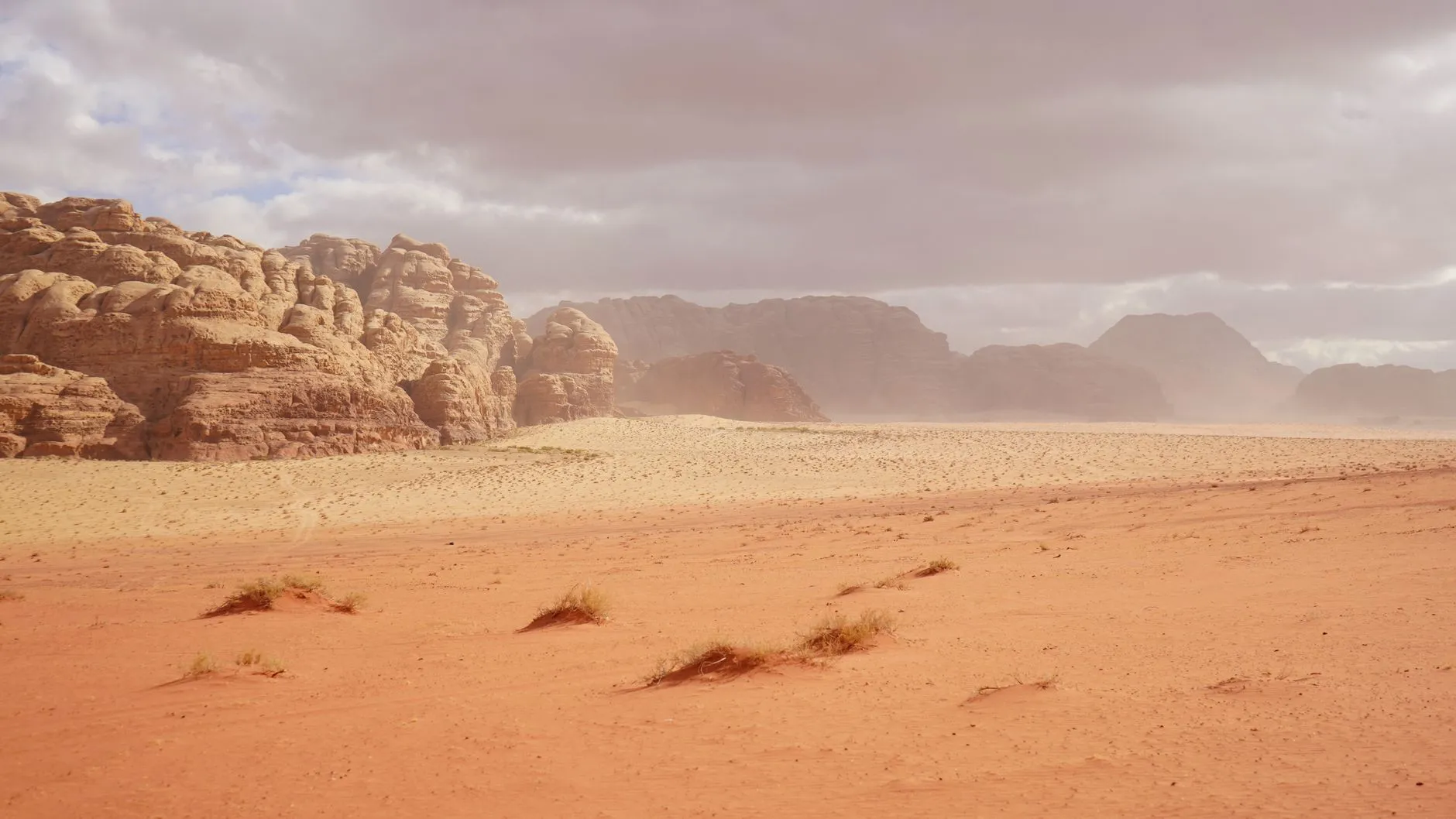
Jordan — Complete Travel Guide 2026
Jordan packs more into a small country than almost anywhere on Earth: you can walk through a 2,000-year-old rock city in the morning, sleep under more stars than you’ve ever seen in a Martian desert that night, and float in the lowest water on the planet two days later. It’s compact, the roads are good, the people are genuinely warm, and the single best ticket — the Jordan Pass — quietly pays for itself the moment you decide to see Petra. The honest catch in 2026 isn’t Jordan itself; it’s the volatile region around it, which is worth checking before you book.
Quick Reference
Western Asia / the Levant; bordered by Saudi Arabia, Iraq, Syria, Israel, the West Bank, and a short Red Sea coast
Amman — Queen Alia International (AMM), the main gateway; Aqaba — King Hussein International (AQJ), the Red Sea / southern entry
Jordanian dinar (JOD); ≈ €1.23 to 1 JOD in mid-2026
Arabic; English widely spoken in tourism
Jordan Pass (waives the visa fee if bought before arrival + 3-night stay) or visa-on-arrival / e-visa, 40 JOD (≈ €49)
March–May and September–November; avoid June–August inland heat
Petra, Wadi Rum, the Dead Sea, Roman Jerash, Bedouin hospitality
Amman (north) + Wadi Musa for Petra + a Wadi Rum camp; Aqaba to end on the Red Sea
Editor’s Note — read this first
Three decisions shape your whole trip, and getting them right up front saves you money and regret.
One: buy the Jordan Pass before you fly. It bundles your tourist-visa fee waiver with entry to Petra and roughly 40 other sites. It is not a “nice extra” — for almost every traveller doing the classic route it is simply cheaper than buying a visa and a Petra ticket separately. More on the exact math below, but treat it as non-negotiable.
Two: give Petra two days, not a half-day. Petra is not a single photo of the Treasury. It’s a vast valley of tombs, temples, a Roman street, and a monastery up 800 steps. People who “do Petra” in four hours see the entrance and leave exhausted, having missed the best of it. The Pass’s two- and three-day tiers exist for exactly this reason.
Three: pick your route and your pace. The classic loop runs Amman → Jerash → Dead Sea → Dana → Petra → Wadi Rum → Aqaba, and it works beautifully over 7–9 days. Five days is enough for the headline trio (Petra, Wadi Rum, Dead Sea) if you move efficiently. Trying to cram it into three is a mistake; you’ll spend the trip in a car.
Don’t treat Petra as a half-day stop. It’s the single most common Jordan regret. Build in two full days, sleep in Wadi Musa the night before, and be at the gate when it opens.
Should You Go? Who it’s for — and the honest safety question
Jordan is for travellers who want substance over a beach: ancient history, dramatic desert, real culture, and a country small enough to see properly without exhausting transfers. It rewards walkers (Petra, Dana, the Jordan Trail), photographers, history obsessives, and anyone who’s wanted to sleep in the desert since they were a kid. It’s an easy first step into the Arab world — tourism infrastructure is solid, English gets you a long way, and Jordanian hospitality is not a marketing line; you will be offered tea by strangers.
It’s a weaker fit if you want nightlife, a pure flop-and-drop beach holiday, or guaranteed wall-to-wall sun in winter (the inland highlands get genuinely cold, and it can snow).
Now the question everyone asks: is it safe? Two truths, and you need both.
The durable truth: Jordan itself — its institutions, its people, and the entire tourist circuit of Petra, Wadi Rum, the Dead Sea, Amman and Jerash — is stable, secure and welcoming. Tourism is a pillar of the economy and a national priority; these sites are among the most protected places in the country. Jordanians are famously hospitable, and solo and women travellers consistently report feeling safe.
The honest caveat: Jordan sits in a turbulent neighbourhood, and the region has been volatile in 2026. The concern is spillover — occasional short-notice airspace disruptions and elevated government travel advisories driven by tensions across the wider Middle East, not by anything happening at the tombs of Petra. During flare-ups, some carriers have paused Amman service and advisory levels have risen.
Check your own government’s current travel advisory and your airline’s operating status before you book — and again before you fly. Conditions in the region have shifted quickly in 2026. This is about timing your trip, not about Jordan being unwelcoming.
Most years, none of this applies and Jordan is one of the most rewarding, relaxed trips in the region. In a tense window, it’s a judgement call worth making with current information rather than a years-old guidebook.
Getting There — AMM vs AQJ, and the Jordan Pass
Two airports matter. Queen Alia International (AMM), about 35 km south of Amman, is the main gateway and where most European flights land — and it’s the right choice if you’re doing the full north-to-south route starting with Amman, Jerash and the Dead Sea. King Hussein International (AQJ) at Aqaba on the Red Sea is the southern door: land here and you’re minutes from Wadi Rum and Petra, perfect for an “open-jaw” trip (fly into one, out of the other) that skips the backtracking.
The smartest itinerary for many is into AMM, out of AQJ (or the reverse): you travel the country in one direction and never repeat a road.
The Jordan Pass — your entry document and best value. Buy it online before you arrive. It does two things: it waives the 40 JOD (≈ €49) tourist-visa fee and covers Petra plus 40+ sites including Wadi Rum, Jerash and Kerak Castle. Three tiers, differing only by how many days at Petra:
- Jordan Wanderer — 1 day at Petra — 70 JOD (≈ €86)
- Jordan Explorer — 2 consecutive days at Petra — 75 JOD (≈ €92)
- Jordan Expert — 3 consecutive days at Petra — 80 JOD (≈ €98)
Here’s the math that makes it a no-brainer. A standalone tourist visa is 40 JOD and a one-day Petra ticket (for overnight visitors) is 50 JOD — that’s 90 JOD of value before you’ve seen a single other site. The Wanderer tier costs 70 JOD. You save money on day one and get Jerash, Wadi Rum’s entry fee and dozens of castles thrown in. Get the Explorer (2 Petra days) unless you’re truly rushing — the extra ~€6 buys you the second day Petra deserves.
The Jordan Pass only waives the visa fee if you buy it before arrival AND stay at least 3 nights (4 days). Buy it after you land, or leave early, and you’ll be charged the 40 JOD visa anyway. For a country this rich, three nights is a comically low bar — but read the rule.
Two exceptions worth knowing: if you’re only visiting Aqaba and entering at AQJ, the Aqaba Special Economic Zone (ASEZ) has its own relaxed/free visa rules. And if your trip is shorter than three nights, the Pass loses its visa benefit — do the sums. Passport must be valid for six months with two blank pages. Visa-on-arrival and e-visa (both 40 JOD) exist as fallbacks for most Western nationalities, but they’re rarely the right choice if you’re seeing Petra.
The Route — character and honest drive times
The classic loop, north to south, with realistic driving:
Amman — your arrival base and a genuinely interesting city in its own right (see below). Spend a night or two.
Jerash — ~50 minutes north of Amman, an easy half-day. One of the best-preserved Roman provincial cities anywhere: a colonnaded main street, the oval forum, theatres, Hadrian’s Arch. Do it as a day trip from Amman and come back the same evening.
Dead Sea — about an hour from Amman, dropping to 430 m below sea level. Float, smear on the black mineral mud, and stay at the resort strip if you want a relaxed night. One night is plenty.
Dana Biosphere Reserve — Jordan’s largest reserve, a dramatic plunge of canyons and ridgelines off the King’s Highway. A worthwhile overnight for hikers and anyone who wants quiet between the big-ticket sites.
Petra (Wadi Musa) — the town of Wadi Musa is the base; the site is at its edge. This is your two-day centrepiece. From Amman it’s ~230 km / 3–3.5 hours on the fast Desert Highway, or a longer, far more scenic day on the King’s Highway via Madaba, Mount Nebo, Kerak and Dana.
Wadi Rum — ~1.5–2 hours south of Petra. The Mars-like desert: sleep at a Bedouin camp, ride out by jeep, watch the stars. One or two nights.
Aqaba — ~1.5–2 hours from Wadi Rum (and ~2 hours from Petra), Jordan’s Red Sea town and a relaxed place to end with a dive or a beach day before flying out of AQJ.
The King’s Highway vs the Desert Highway is a real choice. The Desert Highway (Highway 15) is fast and dull — pure transit. The King’s Highway is slow, winding and one of the great scenic drives, threading Madaba, Mount Nebo, the Dana canyons and Crusader castles. Take the King’s Highway one direction (ideally Amman→Petra) and the fast road the other.
Amman, Jerash, Madaba & Mount Nebo — the north
Amman is more rewarding than its reputation suggests. The Citadel (Jabal al-Qala’a) crowns the highest hill with Roman, Byzantine and Umayyad ruins and a sweeping view over the city’s pale, stacked houses. Below it, the restored Roman Theatre still seats thousands. The real pleasure, though, is the food and the downtown (Al-Balad) — falafel and hummus joints that have run for generations, the smell of warm knafeh, and a coffee culture that doesn’t rush you. Use Amman as a base for a day or two and a launchpad north and west.
Jerash, ~50 minutes north, is the north’s headline act: one of the best-preserved Roman provincial cities anywhere, a member of the ancient Decapolis. Walk the colonnaded Cardo, the oval forum ringed with columns, Hadrian’s Arch, two theatres and the Temple of Artemis. It’s vast and atmospheric and easily a half-day from Amman.
On the way south toward Petra (especially via the King’s Highway), two short, worthwhile stops: Madaba, the “city of mosaics,” home to the famous 6th-century mosaic map of the Holy Land on a church floor; and Mount Nebo nearby, where — by tradition — Moses looked out over the Promised Land. On a clear day the view stretches across the Jordan Valley to Jericho and beyond. Neither needs more than an hour or two, and they break up the drive perfectly.
Petra — doing it right
Petra earns the hype, but only if you walk it properly. Enter through the Siq, a 1.2 km slot canyon between sheer rock walls that opens — theatrically, suddenly — onto Al-Khazneh, the Treasury, the rose-carved facade you’ve seen a thousand times. It’s better in person, and best in early-morning light before the crowds and the midday glare.
That’s the beginning, not the end. Beyond the Treasury the valley unfolds for kilometres: the Street of Facades, the Roman theatre carved into the rock, the Royal Tombs. The two efforts that separate a real Petra visit from a tourist photo:
- The Monastery (Ad-Deir) — about 800 rock-cut steps up, 45–60 minutes of climbing, to a facade even bigger than the Treasury and a fraction of the crowds. Do it in the cooler afternoon.
- The High Place of Sacrifice — a stiff climb to a clifftop altar with the best panorama over the whole basin. Or the Al-Khubtha trail for the famous look-down view of the Treasury from above.
This is why two days is the right answer. Day one: Siq, Treasury, the main valley, the Monastery. Day two: the high trails, the corners everyone skips, and a second, calmer pass through the centre.
Petra by Night is the candlelit walk through the Siq to the Treasury, lit by hundreds of candles, with a show projected onto the facade (reworked in recent years with projection mapping). It runs a few nights a week and is not covered by the Jordan Pass — it’s a separate ticket bought on-site at the visitor centre. Schedule and price have varied recently and the program is sometimes demand-dependent, so confirm both at the visitor centre when you arrive rather than trusting a fixed timetable. Worth it on a clear, calm night; underwhelming if it’s crowded or windy.
Wear real shoes and carry more water than you think. Petra is hours of walking on uneven rock with serious climbs, and there’s almost no shade. In summer the valley becomes an oven — start at opening, and treat the midday hours as rest time.
Wadi Rum — the desert and the Bedouin camps
Wadi Rum is the trip’s emotional high point for a lot of people: vast red sand, towering sandstone monoliths, silence, and a night sky with no light pollution for hundreds of kilometres. It’s been the stand-in for Mars in more films than you can count, and it earns it.
You don’t drive your own car deep into the protected area — you go with the local Bedouin who run the camps and tours. The standard experience is a half- or full-day jeep tour out across the dunes (rock arches, Lawrence of Arabia sites, sunset on a high dune), a camel ride if you want one, and a night at a Bedouin camp. Camps range from simple goat-hair tents to the now-famous “bubble” domes with transparent ceilings for stargazing; book ahead in spring and autumn.
Costs are reasonable and usually all-in: camp accommodation with dinner and breakfast commonly runs around 25–50 JOD per person per night (≈ €31–62) depending on group size and comfort, with jeep tours on top or bundled. The Wadi Rum entry fee (about 5 JOD) is included in the Jordan Pass. Dinner is often zarb — meat and vegetables slow-cooked in an underground sand pit — eaten communally as the stars come out. Spend one night minimum; two if you want a slower morning.
Don’t book the cheapest camp blind on price alone. Standards vary wildly. Read recent reviews, confirm exactly what the jeep tour includes and how long it runs, and check that dinner and breakfast are part of the rate — a “bargain” that’s just a tent and a thin tour costs more in disappointment.
The Dead Sea & Aqaba
The Dead Sea is a genuinely strange, must-do experience: water so salty (and so far below sea level — the lowest point on Earth’s land surface) that you can’t sink. You don’t swim so much as bob, reading a newspaper for the cliché photo. Slather on the mineral-rich black mud, rinse, and feel your skin afterwards. The eastern (Jordanian) shore has a resort strip plus public/tourist beaches, with new waterfront, promenade and corniche development opening through 2026. One night is enough.
Do not shave the day before, and keep the water out of your eyes and mouth. The salt finds every cut and stings ferociously; an eyeful is genuinely painful. No diving, no splashing — float gently, rinse in the freshwater showers, and don’t stay in too long.
Aqaba, on the Red Sea, is Jordan’s beach-and-dive town and a relaxed way to finish. The diving and snorkelling are excellent — coral reefs and clear warm water right off the shore — and it’s a different mood from the rest of the country: palm-lined, easygoing, sea breeze. Crucially for winter travellers, Aqaba and the Dead Sea stay warm when the highlands are cold, which reshuffles the seasonal calculus (below).
Dana, the King’s Highway & the Jordan Trail
For travellers who want to slow down and walk, central Jordan delivers. The Dana Biosphere Reserve is the country’s largest, a staircase of climate zones tumbling from cool highland ridges down toward the desert — superb for hiking and one of the best birdwatching spots in the region. Stay overnight at the reserve’s eco-lodge or village guesthouses and hike the canyons; it’s the antidote to the headline crowds and a natural break between the Dead Sea and Petra.
The King’s Highway that strings these places together is itself a reason to come: an ancient road past Madaba, Mount Nebo, the Crusader castles of Kerak and Shobak, and the Dana canyons. It’s slower than the Desert Highway but incomparably more beautiful — the right choice for at least one leg of the trip.
The truly ambitious can tackle stretches of the Jordan Trail, a long-distance footpath running the length of the country from the north to the Red Sea, including a celebrated multi-day approach into Petra on foot. You don’t need to walk the whole thing — even a day or two on a section is a different, quieter way to see the land.
When to Visit — month by month
The headline: spring (March–May) and autumn (September–November) are the sweet spots — warm days, cool-but-bearable nights, ideal for Petra, Wadi Rum and hiking.
- March — spring begins; wildflowers, green valleys, fewer crowds, mild days. A lovely, underrated month.
- April — arguably the best all-rounder: warm sun, Wadi Rum out of its winter chill, summer’s furnace not yet arrived.
- May — beautiful inland, but the Dead Sea and Aqaba are already pushing into the mid-30s °C. Great for the north, getting hot in the south.
- June–August — high summer. Inland it tops 40 °C; Petra and Wadi Rum become a heat-management exercise. Doable if you start at dawn and rest at midday, but not the easy choice. Wadi Rum nights stay pleasant.
- September — the heat eases; prime time returns with warm days and cooler nights.
- October — widely the best single month: warm-not-hot, clear skies, perfect for everything.
- November — cooler, with some rain risk late in the month, but still excellent and quieter.
- December–February — winter. The highlands (Amman, Petra) are cold, can be wet, and occasionally snowy; pack a real jacket. But this is the clever season for the Dead Sea and Aqaba, which stay warm and sunny while the rest of the region shivers — and crowds and prices drop.
Don’t underestimate desert and highland nights. Wadi Rum and Petra can be warm by day and genuinely cold after dark, even in shoulder season. Bring layers — a Mediterranean-beach packing list will leave you shivering at the camp.
What to Eat
Jordanian food is one of the trip’s quiet pleasures — generous, mezze-driven, and built for sharing.
- Mansaf — the national dish and a point of pride: lamb slow-cooked in jameed (a tangy fermented dried yogurt) over rice or bulgur, topped with almonds and pine nuts, eaten with flatbread. Traditionally shared from a communal platter. Order it once, properly, ideally where locals eat.
- Mezze — the spread that starts most meals: hummus, baba ganoush, tabbouleh, fattoush, labneh, warm bread, olives, and small grilled things. Easy to make a whole feast of it.
- Falafel & hummus — the breakfast and street-food backbone, cheap and excellent; a few dinars buys a proper plate.
- Maqluba — “upside-down”: spiced rice layered with chicken or lamb and vegetables (eggplant, cauliflower, potato), flipped onto the plate at the table.
- Zarb — the Bedouin desert barbecue of Wadi Rum: meat and vegetables cooked for hours in an underground sand oven, smoky and tender. Eat it at the camp.
- Knafeh — the dessert to seek out: shredded pastry over melted cheese, soaked in sweet syrup, served warm. Nablus-style is the gold standard; Amman’s downtown spots do it well.
Wash it down with sweet mint tea and cardamom coffee, both offered constantly and graciously refused at your peril.
Getting Around — the honest options
Rental car / self-drive — the best balance of freedom and value for most travellers. Roads are good, signage is reasonable, and it’s the only way to do the King’s Highway properly and stop where you like. Reckon on ~25–30 JOD (≈ €31–37) of fuel for the main south-bound run; Petra visitor-centre parking is currently free. Driving is assertive in Amman but fine on the highways. Get an automatic if city driving worries you.
JETT bus — the official intercity coach line: comfortable, air-conditioned, reliable, and cheap. There’s a useful daily Amman–Petra service (roughly a morning departure, afternoon return, around 10 JOD / ≈ €12 each way) and an Amman–Aqaba route. Great if you’re on a budget and following the main spine, but it ties you to fixed times and doesn’t reach the scenic detours.
Private driver — the no-stress, no-driving option: door-to-door, flexible, and the driver becomes a guide. Costs far more than the bus (a private Amman–Petra transfer can run 70–100 JOD / ≈ €86–123 per car), but split between a few people it’s reasonable, and it’s the easiest way to do the King’s Highway with stops without renting.
The pragmatic answer: self-drive if you’re comfortable behind the wheel and want the King’s Highway; JETT if you’re budget-focused and sticking to the highlights; a private driver for the scenic route without the stress, especially in a group.
Where to Stay — by area and budget
Match your beds to the route rather than booking one base.
- Petra / Wadi Musa — sleep here the night before your Petra day so you’re at the gate at opening. Everything from hostels and family guesthouses to mid-range hotels and a few high-end options near the entrance. Budget doubles are easy to find; pay up only for a short walk to the gate.
- Wadi Rum — the accommodation is the experience. Bedouin camps span simple goat-hair tents (all-in with dinner/breakfast from ~25 JOD pp) up to “bubble” domes for stargazing at a premium. Book ahead in spring/autumn.
- Dead Sea — a strip of full-service resorts with private beaches and pools (the relaxed splurge), plus public/tourist beaches for day-trippers who’d rather not pay resort rates. One night is enough.
- Amman — base in West Amman (Abdoun, Sweifieh) for modern comfort and restaurants, or downtown (Al-Balad) for character, cheaper stays, and walking distance to the citadel, Roman theatre and the knafeh shops. Budget hostels and dorms are plentiful.
Costs & Budget
Jordan is not a dirt-cheap backpacker country — the dinar is strong (≈ €1.23) and Petra and the camps add up — but it’s far from extravagant if you plan.
Rough per-person daily figures, excluding flights and the Jordan Pass:
- Budget — ~30–50 JOD/day (≈ €37–61): hostels/guesthouses, street food and local restaurants, JETT buses, shared tours.
- Mid-range — ~125 JOD/day (≈ €154): comfortable hotels, a mix of restaurants, a rental car or some private transfers, a nicer Wadi Rum camp.
- Luxury — ~280+ JOD/day (≈ €345+): top resorts, private driver-guide, bubble domes and fine dining.
The big fixed costs to budget once: the Jordan Pass (70–80 JOD / ≈ €86–98), your Wadi Rum camp + tour (often €40–80+ all-in), a Dead Sea resort night if you want one, and your transport mode. Meals are where Jordan stays affordable — street falafel for a couple of dinars, a sit-down local meal for 4–15 JOD (≈ €5–18). Carry cash for camps, small restaurants and tipping; cards work in hotels and larger venues.
Practical Information
Entry & the Jordan Pass — covered in full above. The short version: buy the Jordan Pass online before arrival, stay 3+ nights, and your visa is waived and Petra is included. Otherwise it’s a 40 JOD (≈ €49) visa-on-arrival or e-visa. Passport valid six months, two blank pages.
Money — currency is the Jordanian dinar (JOD), pegged and strong; budget in it but think in euros at ~€1.23 to the dinar. ATMs are common in towns; carry cash for Bedouin camps, rural restaurants, small shops and tips. Notify your bank you’re travelling.
Safety — see “Should You Go?” above. Day-to-day Jordan is safe, low-crime and exceptionally welcoming; the live variable in 2026 is regional, not domestic. Check your government’s current advisory and your airline’s status before booking and before flying.
Water — don’t drink the tap water; stick to bottled or filtered, and bring a refillable bottle (many camps and hotels refill). Carry far more water than feels necessary at Petra and in Wadi Rum.
Tipping — modest tipping is expected and appreciated: round up at restaurants or add ~10%, tip drivers and camp staff a few dinars, and a small note for helpful gestures. It’s a real part of how the tourism economy works here.
Dress & cultural respect — Jordan is moderate and used to tourists, but it’s a conservative society. Cover shoulders and knees at religious sites and away from resorts; women may want a scarf for mosques. Modest, practical clothing also makes desert and ruin days more comfortable. Friday is the holy day; some businesses close. A little Arabic — shukran (thank you), salam — goes a long way.
Connectivity — buy a local SIM (Zain, Orange, Umniah) at the airport or in town for cheap, reliable data; coverage is good across the tourist circuit, patchier deep in Wadi Rum (part of the appeal). Wi-Fi is standard in hotels.
Frequently Asked Questions
Cheapest Flights to Jordan
We have tracked 1,203 fares to Jordan from 76 cities. As of June 2026, here is what a good price looked like from each — the lowest fare we recorded, and a “great-deal” benchmark to judge a quote against. These are tracked observations, not live prices: by the time you read this they will have moved, so treat them as a yardstick, not a quote.
| From | Lowest fare we tracked | Great-deal benchmark |
|---|---|---|
| Pisa (PSA) | €22 | €32 |
| Rome Ciampino (CIA) | €29 | €41 |
| Bologna (BLQ) | €29 | €42 |
| Bucharest (OTP) | €33 | €47 |
| Budapest (BUD) | €40 | €57 |
| Prague (PRG) | €40 | €58 |
| Poznan (POZ) | €42 | €60 |
| Krakow (KRK) | €45 | €64 |
| Vienna (VIE) | €46 | €65 |
| Marseille (MRS) | €46 | €66 |
| Charleroi (CRL) | €76 | €108 |
| Madrid (MAD) | €92 | €131 |
| Naples (NAP) | €99 | €141 |
| Venice (VCE) | €116 | €166 |
Recent deals we have posted to Jordan:
- Sofia to Amman, Jordan from €42
- Poznań to Amman, Jordan from €60
- Kraków to Amman, Jordan from €59
- Bucharest to Amman, Jordan from €46
- Bologna to Amman, Jordan from €42
- Vienna to Amman, Jordan from €62
- Prague to Amman, Jordan from Kč1420
- Prague to Amman from €53
- Bucharest to Amman from €46
- Cheap Flights Istanbul to Amman 2026 — From 300 EUR
These are fares aifly tracked to this destination, not live quotes — they have changed since and several of the deals above may have expired. Browse current flight deals →