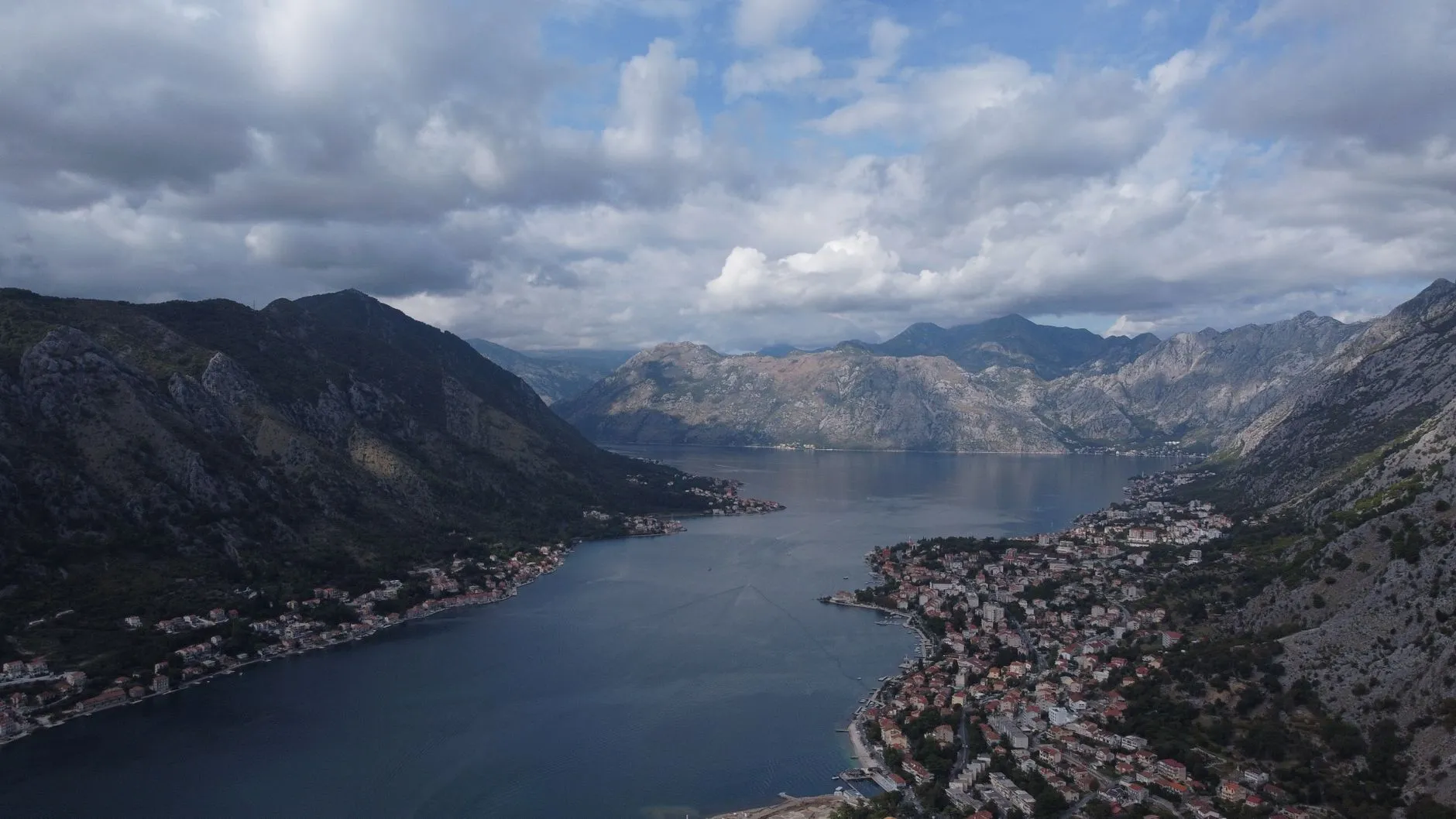
Montenegro — Complete Travel Guide 2026
Montenegro is the size of Connecticut and yet you can stand on a mountaintop at 1,657 m where the kings are buried, see the fjord-like Bay of Kotor far below, and be swimming in the Adriatic ninety minutes later. That compactness is the whole pitch — and the trap, because in July the same two-lane coastal road that makes it all reachable turns into a creeping line of rental cars and cruise-day day-trippers. Come in June or September, base smart, and it’s one of the best-value dramatic coastlines in Europe; come in mid-August unprepared and you’ll spend your holiday hunting for a parking space.
Quick Reference
Western Balkans, on the Adriatic coast between Croatia and Albania
Tivat (TIV) — on the coast, 10 km from Kotor; Podgorica (TGD) — the capital, inland
Euro (€) — adopted unilaterally; Montenegro is NOT in the EU or the eurozone
Montenegrin (Slavic, Latin & Cyrillic); English widely spoken in tourist areas
Visa-free 90 days for UK/EU/US/CA/AU/NZ; register within 24 hours (hotels usually handle it)
Late May–June and September (coast); July–August for the mountains, but the coast bakes and jams
The Bay of Kotor “fjord”, walled Kotor, Sveti Stefan, Durmitor & the Tara Canyon
Kotor or Perast for the bay; Budva for beaches & nightlife; Žabljak for the north
Editor’s Note: The One Decision That Shapes Your Trip
Montenegro has three different countries inside it, and which one you center on changes everything.
There’s the Bay of Kotor — the serpentine inlet that everyone calls a fjord (it isn’t one geologically, but it looks the part), ringed by Venetian stone towns and black mountains rising straight out of the water. There’s the open coast — Budva’s beach-resort sprawl, the Sveti Stefan postcard, and the long sandy beaches running south to the Albanian border. And there’s the north — Durmitor’s high plateau, glacial lakes, and the Tara Canyon, which is genuinely a different climate, culture, and pace.
Most first-timers try to do all three and base in Budva because it’s central and has the most rooms. That’s the mediocre choice. Budva’s old town is small and its newer half is concrete; you’ll spend more time in traffic than you’d like.
My honest steer: base in or near Kotor (or, better, Perast) for the bay’s atmosphere, do the beaches as day trips or a few nights in Budva/Petrovac, and treat Durmitor as its own 2–3 night chapter — it’s a 2.5–3 hour drive from the coast and deserves more than a rushed day tour. If you only have four or five days, pick the coast OR the mountains; trying to cram both leaves you driving instead of being anywhere.
Should You Go? Who It’s For — and Who It Isn’t
Montenegro rewards a particular kind of traveler. If you like dramatic scenery you can reach on your own steam, will happily hire a car and drive hairpin roads, and you care more about a stone-town aperitivo and a swim off a pier than about a manicured resort beach, you’ll love it.
It’s also genuinely good for active travelers (hiking Lovćen and Durmitor, kayaking the bay, rafting the Tara), for road-trippers who want a loop with constant variety, and for couples and photographers chasing the bay-and-mountains views.
Who should think twice: anyone expecting wide, flat, sandy beaches with easy parking and gentle prices — the Bay of Kotor has almost no sand (you swim off stone piers and pebble coves), and the genuinely sandy beaches are all the way south near Ulcinj. Anyone who won’t drive will find public transport workable on the coast but slow and limiting for the mountains. And anyone who thinks “Balkans = cheap” should reset expectations: Montenegro’s coast in summer is meaningfully pricier than Albania, North Macedonia, or inland Serbia — closer to Croatia than to its neighbours.
Reality check: Montenegro markets itself as a bargain, and off the coast in shoulder season it can be. But a beachfront restaurant dinner in Budva in August, or a marina lunch in Porto Montenegro, will cost what it would in Italy. Budget for the coast, save on the interior.
Getting There: TIV vs TGD
Montenegro has two airports and the choice matters.
Tivat (TIV) sits right on the coast, 3 km from Tivat town and under 10 km from Kotor. It’s small, seasonal (busy with summer charters and easyJet/Wizz/Ryanair-type routes), and fast to clear — and it drops you straight into the bay. For a coast or bay holiday, this is almost always the airport you want. From TIV it’s roughly 15–20 minutes to Kotor (traffic permitting), 30–40 to Budva.
Podgorica (TGD) is the capital’s airport, inland, with more year-round and legacy-carrier flights. It’s better positioned for Durmitor and the north (and for Lake Skadar and the south), and a more sensible entry if your trip leans interior. From Podgorica it’s about 1.5–2 hours over the mountains to Kotor, or a similar run up to Žabljak.
A third option worth knowing: Dubrovnik (DBV) in Croatia is often cheaper and better-connected, and it’s only about 1.5–2 hours to Kotor — but you cross the Croatia–Montenegro border, which can back up badly in summer, and many rental companies charge extra (or forbid) cross-border drop-off. Verify cross-border rules before booking.
Don’t book a Dubrovnik-airport rental car assuming you can drive it into Montenegro. Some companies prohibit it, others charge a hefty cross-border fee plus mandatory insurance. Confirm in writing first, and budget time for the summer border queue.
Skip airport taxis if you can — agree the fare or use a pre-booked transfer; meter discipline is loose. Better still, pick up a hire car at the airport.
The Bay of Kotor: The Headline Act
This is why most people come. The bay is a deep, twisting inlet ringed by mountains, with a string of old Venetian and Austro-Hungarian towns along the shore. You can drive the whole rim in a couple of hours, but the highlights cluster at the inner end.
Kotor itself is the star: a UNESCO-listed walled old town of marble lanes, churches, and squares wedged between the water and a sheer cliff, with city walls that climb the mountain behind it — about 1,350 steps up to the San Giovanni (St John) fortress, with the bay unfolding beneath you. It’s the signature Kotor experience, and it’s a real workout: 45–60 minutes up, almost no shade, worn slippery limestone. Entry to the paid section runs around €8–15 depending on the source and season (free very early or after the gate closes for the evening).
Climb the walls at 7–8 a.m. or after 6 p.m. — never at midday in summer. The white rock reflects heat like an oven, there’s no shade, and the steps get dangerously slick on the descent. Carry at least 1.5 litres of water per person, wear proper shoes, and you’ll also beat the cruise crowds who hit the trail from 8 a.m.
Perast, a few minutes’ drive up the bay, is the quieter, prettier alternative — a single elegant baroque waterfront of stone palazzi, no real traffic, and the best view of the two islets offshore. From its quay, small boats run out to Our Lady of the Rocks (Gospa od Škrpjela), a man-made islet with a blue-domed church, for about €5–10 return. If you can afford to base anywhere in Montenegro, Perast is the romantic’s choice.
For the big view, drive the old Kotor–Lovćen serpentine — 25 tight hairpins climbing the cliff straight out of town, each bend opening a wider panorama of the bay. It’s spectacular and not for nervous drivers. The newer, easier alternative is the Kotor–Lovćen cable car (opened 2023), which glides you up from near the bay; round-trip tickets run roughly €15 in low season to €22 in peak July–August, cheaper booked online.
Cruise-ship days turn Kotor’s old town into a crush. On a heavy day, thousands of passengers pour in for a few midday hours. Check a cruise schedule before you plan your Kotor day, do the old town early or late, and remember: once the last ship leaves around 6 p.m., the town empties and becomes magical. Staying overnight is the cheat code.
The Beaches & the Riviera
The open coast south of the bay is where Montenegro does sun-and-sand — with caveats.
Budva is the engine: the country’s busiest resort, with a walled old town (small but genuinely atmospheric), a long string of beaches, and the loudest nightlife in the country. Its town beaches (Slovenska, Mogren) are pebbly and packed in season; the bars and clubs run late. It’s the place to base if beach access and going out matter more than charm, and it has the deepest stock of cheaper guesthouses.
A short drive south is the Sveti Stefan postcard — the fortified islet covered in terracotta-roofed stone houses, joined to the shore by a sandy causeway. For five years it sat empty: the Aman Sveti Stefan resort that occupies the island closed in 2021 in a dispute over public beach access. The big 2026 news is that it reopens — Villa Miločer from late May and the island itself from 1 July 2026 — under a new deal that opens Sveti Stefan and King’s beaches to locals while keeping Queen’s Beach for guests. For everyone else, the island is still the same icon it always was: you photograph it from the road above (the classic shot) rather than walk onto it, unless you’re an Aman guest.
Further south, the crowds thin and the value improves. Petrovac is a smaller, more relaxed resort with red-sand-and-pebble coves (Lučice is the pretty one). And right down by the Albanian border, the coast finally turns properly sandy: Velika Plaža (“Long Beach”) near Ulcinj runs about 12 km of fine dark volcanic sand — shallow, family-friendly, and, thanks to reliable thermal winds, one of the Adriatic’s main kitesurfing spots. At the very tip, the bohemian river-island of Ada Bojana has a famous clothing-optional (FKK) beach and an end-of-the-road feel.
The Bay of Kotor is not where you go for a beach holiday. Inside the bay you swim off stone piers and small pebble coves — lovely for a dip, not for spreading a towel on sand. If sand is the point of your trip, head to Petrovac or all the way south to Velika Plaža. Bring water shoes for the pebble beaches everywhere else.
The Mountains: Lovćen & Durmitor
Half of Montenegro is vertical, and the interior is where the country gets its name (“black mountain”). Two areas stand out.
Lovćen National Park rises directly behind the bay. At its summit (1,657 m) is the Njegoš Mausoleum — the resting place of Petar II Petrović-Njegoš, Montenegro’s poet-prince-bishop, reached by a final 461-step staircase. Inside, a 28-ton statue sits under a vault lined with hundreds of thousands of gold-plated tiles; outside, the viewing platform looks out over an astonishing sweep of the country. Park entry is about €3, the mausoleum another ~€8. You can pair Lovćen with Cetinje, the old royal capital below it — a compact, faded-grand town of 19th-century embassy buildings, the National and Njegoš museums, and the Cetinje Monastery. It’s an easy, rewarding half-day and a complete change of register from the coast.
The bigger mountain experience is the north. Durmitor National Park, around the town of Žabljak (at 1,456 m, the highest town in the Balkans), is alpine: pine forest, 18 glacial lakes, peaks over 2,500 m, and serious hiking. The set-piece is the Black Lake (Crno jezero), a 20-minute walk from Žabljak, ringed by an easy 3.6 km loop trail — rowboats are about €10/hour in season.
And then the Tara Canyon — at up to 1,300 m deep and 82 km long, the deepest river canyon in Europe and second deepest in the world after the Grand Canyon. The classic photo is the Đurđevića Tara Bridge, a graceful 1937 concrete arch spanning the gorge, with a zipline running across it. The headline activity is rafting the Tara: the season runs roughly April–October (best May–September), with half-day trips around €70 and full-day trips around €150 including transfer and gear. Spring brings the biggest water and the most thrilling rapids; high summer is gentler and family-friendly.
Durmitor is a summer destination. Žabljak sits high; the rafting and hiking season is essentially May to October, and outside that the north can be snowbound. Don’t plan an April or late-October mountain trip expecting full operations — and even in summer, pack a fleece, because evenings up there are cold while the coast is sweltering.
When to Visit: Month by Month
The coast and the mountains run on opposite clocks, which is the single most important timing fact about Montenegro.
June is the sweet spot for the coast: warm (high-20s°C), long days, the sea warm enough to swim, and the crowds and heat not yet at full force. The walls climb is bearable in the early morning. Prices are climbing but not peaked.
July–August is peak everything: hot (low-to-mid 30s°C on the coast), the beaches and old towns packed, accommodation 20–40% above shoulder rates, and the coastal road snarled. It’s also, paradoxically, the best window for the mountains — Durmitor and Lovćen are fully open, warm, and gorgeous. If you must come in high summer, weight your trip toward the north.
September is, for many, the best month overall on the coast: still warm (mid-20s°C), the sea at its warmest after the long summer, the cruise and beach crowds thinning, and prices easing. Late September the mountain season starts to wind down.
May and October are lovely shoulder edges — quiet, green, cheaper — but the sea is cooler and some seasonal businesses (especially mountain rafting/hut operations and beach concessions) are ramping up or shutting down. November–April is essentially off-season on the coast (mild, wet, very quiet) and snow country up north — good for a cheap, atmospheric Kotor city break, not for swimming.
What to Eat & Drink
Montenegrin food splits cleanly between coast and mountains, and the mountain produce is the local pride.
From the village of Njeguši on the slopes of Lovćen comes the country’s signature pairing: Njeguški pršut, air-dried, lightly smoked ham cured in the back-and-forth of sea and mountain air, and Njeguški sir, a tangy semi-hard mountain cheese. A platter of the two, with olives and bread, is the classic Montenegrin starter (around €12–20 for two) and the thing to seek out — ideally bought direct in Njeguši itself on the drive up to Lovćen.
On the coast, eat fresh Adriatic fish and seafood — grilled whole fish, buzara-style mussels (in white wine, garlic, and parsley), squid, octopus salad. It’s priced by the kilo and isn’t cheap at the good places, but it’s the real reason to eat by the water. Inland and everywhere, the Balkan grill rules: ćevapi (little grilled minced-meat sausages, usually in lepinja flatbread, ~€4–6 from a kiosk) and pljeskavica (a meat patty). In the mountains, look for kačamak and cicvara — hearty cornmeal-and-cheese comfort dishes.
For wine, drink local: Vranac, the indigenous full-bodied red (blackberry and plum, a mineral edge from the limestone), pours at virtually every restaurant for €3–5 a glass; the white Krstač is the crisp coastal partner for fish. The country’s giant Plantaže winery makes most of it, but small producers around Lake Skadar are worth seeking. The local firewater is rakija (grape or plum) — offered freely, drunk in small measures.
Getting Around: Hire a Car
The honest answer for Montenegro is: rent a car. The country’s appeal is the variety packed into short distances, and a car is what unlocks it — the Lovćen serpentine, Njeguši, the drive to Durmitor, beach-hopping south. Roads are paved and generally good, but the coastal and mountain routes are narrow, winding, tunnelled, and patrolled by speed cameras; drive defensively, especially on the bay’s tight cliff sections.
The single best local trick is the Kamenari–Lepetane ferry across the narrowest neck of the bay. Boats run 24 hours, every 15 minutes (or when full), the crossing takes about 10 minutes, and it cuts roughly 30 km of slow, twisting road off the drive between the outer bay (Herceg Novi side) and Tivat/Budva. It’s cheap and a genuine time-saver — use it.
If you don’t drive, buses are decent on the coast: frequent intercity links connect Budva, Kotor, Tivat, Petrovac, Bar, and Ulcinj (and Podgorica), and they’re inexpensive. They’re slower and far less flexible for the mountains — getting to Žabljak without a car means a long, infrequent bus or an organized day tour (which rushes Durmitor into a single exhausting day). Taxis are fine for short hops; agree the fare or insist on the meter.
Allow serious buffer time on the coastal road in July and August. The two-lane road around the bay and through Budva clogs badly in the afternoons and at weekends, and the approach into Kotor is a known bottleneck. What’s a 40-minute drive in June can take twice that in peak August. Drive early, and use the ferry shortcut.
Where to Stay: By Area & Budget
Kotor old town — atmospheric stone apartments inside the walls; magical once the day-trippers leave, but can be noisy from bars and you’ll pay a premium for the address. Good for a couple of nights of bay immersion.
Perast — the romantic splurge: a handful of small hotels and apartments on the baroque waterfront, calm and beautiful, with the bay’s best view. Limited rooms, books up early.
Dobrota / Muo (around the bay near Kotor) — quieter waterside stays a few minutes from the old town, often better value than inside the walls, with piers to swim off. A sensible base for drivers.
Budva & Bečići — the widest choice and the cheapest guesthouses, plus the beaches and nightlife; trade charm for convenience. Expect August apartment prices around €80–150/night for two (a fraction of that off-season).
Tivat / Porto Montenegro — the polished, expensive end: the superyacht marina, designer hotels (The Chedi at Luštica Bay, SIRO Boka Place), and a manicured promenade. For a luxe coast base it’s excellent; for value it isn’t.
Žabljak (Durmitor) — simple mountain lodges, guesthouses, and cabins; book ahead in July–August. This is your north base for the lakes, hiking, and the Tara.
Costs & Budget
Montenegro is mid-priced for Europe and pricier than its Balkan neighbours, with a sharp coast/interior and season/shoulder split.
On the coast in summer, a frugal traveler can manage on roughly €60–90 per person per day (a modest guesthouse, mostly self-catering and street food, one cheap restaurant meal, buses); a comfortable mid-range day with a sit-down dinner and some activities runs more like €120–180; and the marinas and luxury hotels go far above that. Concrete anchors: a bakery breakfast €2–3; ćevapi €4–6; a casual restaurant dinner with a drink €12–20; an upscale Kotor or marina dinner €25–40+; a glass of Vranac €3–5; the cable car €15–22; the Tara rafting day ~€150. Car hire is reasonable (book ahead for summer), fuel is at European levels, and the ferry and most beach access are cheap.
The savings are in timing and place: travel in June or September, base a few minutes outside the old towns, eat where locals do rather than on the waterfront, and lean on the cheaper, better-value interior. Off-season, Montenegro genuinely is a bargain; in mid-August on the Budva waterfront, it isn’t.
Practical Information
Entry & border. UK, EU, US, Canadian, Australian, and New Zealand citizens enter visa-free for up to 90 days (US citizens: 90 days within any 180); carry a passport valid for your stay (a few months’ validity is the safe rule — verify against your nationality). Note the country is on track for EU membership (targeting 2028, negotiations well advanced), but that changes nothing for a 2026 visitor’s entry.
Registration (the “white card”). Every foreign visitor must be registered with the authorities within 24 hours of arrival and pay the small daily tourist tax. Hotels and licensed accommodation do this for you automatically — but if you stay in a private apartment or with friends, you (or your host) must register it yourself. Keep the confirmation receipt; failing to register can mean fines (reportedly €60–600) on departure. In practice, for most travelers in hotels and booked apartments, it’s handled — just confirm with your host.
Currency. Montenegro uses the euro (€) — adopted unilaterally, despite being neither an EU member nor in the eurozone (it’s one of only two such territories, with Kosovo). Cards are widely accepted in towns and hotels, but carry cash for small cafés, markets, beach kiosks, ferry fares, parking, and the interior, where cards are less reliable. ATMs are common on the coast.
Safety. Montenegro is a safe country for travelers, with low violent crime. The real hazards are road-related — narrow mountain and coastal roads, aggressive overtaking, and summer traffic — so drive carefully. Petty theft is rare but normal beach-and-crowd precautions apply.
Water & health. Tap water is generally safe to drink in towns and cities, though many travelers prefer bottled on the coast in peak season; it’s fine in the mountains. No special vaccinations needed. Pharmacies are well stocked.
Connectivity. Mobile coverage is good on the coast and around the main towns and patchier in deep mountain valleys. Montenegro is outside the EU, so EU “roam-like-at-home” does not apply — check your roaming rates or buy a local SIM/eSIM if you’ll use a lot of data.
Frequently Asked Questions
Cheapest Flights to Montenegro
We have tracked 287 fares to Montenegro from 34 cities. As of June 2026, here is what a good price looked like from each — the lowest fare we recorded, and a “great-deal” benchmark to judge a quote against. These are tracked observations, not live prices: by the time you read this they will have moved, so treat them as a yardstick, not a quote.
| From | Lowest fare we tracked | Great-deal benchmark |
|---|---|---|
| Bergamo (BGY) | €19 | €27 |
| Bratislava (BTS) | €27 | €39 |
| Gdansk (GDN) | €31 | €44 |
| Hamburg (HAM) | €48 | €69 |
| Vilnius (VNO) | €71 | €101 |
| Munich (MUC) | €90 | €129 |
| Krakow (KRK) | €99 | €142 |
| Riga (RIX) | €111 | €158 |
| Bucharest (OTP) | €113 | €161 |
| Milan (MXP) | €113 | €161 |
| Nice (NCE) | €113 | €162 |
| Katowice (KTW) | €115 | €164 |
| Zurich (ZRH) | €118 | €168 |
| Tallinn (TLL) | €144 | €206 |
Recent deals we have posted to Montenegro:
- Hamburg to Podgorica, Montenegro from €69
- Bratislava to Podgorica, Montenegro from €37
- Barcelona to Tivat, Montenegro from €54
These are fares aifly tracked to this destination, not live quotes — they have changed since and several of the deals above may have expired. Browse current flight deals →