Panama — Complete Travel Guide 2026
Panama is a country most travellers only transit. They land at Tocumen, connect onward to Bogotá or Buenos Aires, and never learn that the same little isthmus holds an engineering wonder of the world, an indigenous-governed archipelago of 350-odd palm-dot islands, a Caribbean party scene, cloud-forest farms growing the most expensive coffee on earth, and two coastlines you can touch in one afternoon. Come for the canal day-trip if you must — but give it a week, break out of the capital, and you’ll find one of the most varied, easiest-to-travel countries in the Americas hiding behind a layover.
Quick Reference
Central America — the S-shaped isthmus that stitches North and South America together, with the Caribbean on one shoulder and the Pacific on the other
Panama City Tocumen (PTY), Copa’s “Hub of the Americas”; tiny Albrook / Marcos A. Gelabert (PAC) for domestic flights
The Panamanian balboa, pegged 1:1 to the US dollar — but the cash in your hand is literally the US dollar; Panama mints only coins of its own
Spanish (official); English widely spoken in tourism, banking and Panama City business
Visa-free for most Western tourists — commonly 90 to 180 days; passport valid 3 months beyond entry; onward ticket and ~€460 proof of funds occasionally checked
Dry season mid-December to mid-April (the “summer”); the green/wet season May–November is cheaper, lush and not a washout; Caribbean and Pacific sides have different rhythms
The canal between two oceans, the San Blas islands, the world’s most expensive coffee, a real skyline, rainforest-to-reef compactness
Panama City for the canal and connections; San Blas, Bocas del Toro or Boquete for the actual magic — most do the city plus one or two of those
Editor’s Note — the layover trap
Here’s the hard truth: most people “do” Panama in about four hours. They’re on a Copa connection, they take a quick canal tour from the airport hotel, eat a ceviche, and fly out convinced they’ve seen it. They’ve seen the least interesting 5% of the country.
And the second hard truth: Panama City itself is the least magical part of Panama. It’s genuinely impressive — a glass-and-steel skyline like a slice of Miami grafted onto the tropics, a clean metro, good restaurants, real wealth — but it’s a business city, a banking-and-shipping hub with a slightly soulless edge. Casco Viejo, the restored colonial quarter, is the one part with real charm, and even that has been polished to a sheen. If your whole trip is the city, you’ll leave thinking Panama is fine but forgettable.
The real Panama is elsewhere, and it’s spectacular. It’s the San Blas islands, where the Guna people run their own near-autonomous nation of sandbars and you sleep in a thatched hut with a bucket-flush toilet because that’s the point. It’s Bocas del Toro, the laid-back Caribbean archipelago where the day’s biggest decision is which overwater bar to fall off. It’s Boquete in the western highlands, where the air turns cool and farms grow Geisha coffee that auctions for thirty thousand dollars a kilo. It’s Coiba, a former prison island turned Pacific dive paradise. None of that comes to your airport hotel.
The trick is to use Panama City for what it’s good at — the canal, the connections, a night of comfort and excellent food — then leave. A domestic flight, a 4×4, a water taxi. The country opens up the moment you do.
⚠️ Don’t let Copa’s brilliant connectivity become a trap. The thing that makes Panama so easy to reach — every flight in the Americas seems to route through Tocumen — is exactly why so many people see nothing. Build in at least three or four nights beyond the city. Copa’s free 15-day stopover isn’t a layover, it’s a holiday.
Should You Go? Who it’s for — and isn’t
Panama is for the traveller who wants maximum variety in minimum distance. In one compact, easy country you can watch a 300-metre ship rise through a lock, snorkel a reef, hike a cloud forest, drink world-record coffee at the farm, and lie on a Caribbean sandbar — never more than a few hours between them. It’s superb for first-time Central America travellers (English is common, the dollar is the currency, the infrastructure works), for nature-and-adventure people (rainforest, two oceans, world-class diving, birding that rivals Costa Rica with a fraction of the crowds), for island-hoppers (San Blas and Bocas are both bucket-list), and for Copa stopover travellers turning a connection into a free second destination. It’s also quietly good for remote workers and would-be expats — a large foreign community in Boquete and the city, and no currency friction.
Who it’s not for: anyone expecting it to be dirt cheap. Panama prices in US dollars — it’s the most expensive country in Central America, pricier than Guatemala, Nicaragua or even Costa Rica. It’s also not for travellers who want everything paved and polished: San Blas and Bocas are gloriously rough around the edges, and if “no hot water and a bucket-flush toilet on a Caribbean island” sounds like a dealbreaker rather than an adventure, set your expectations. And it is emphatically not for anyone with romantic ideas about hiking the Darién Gap — more on that hard no below.
Getting There — PTY, the Hub of the Americas & entry
Tocumen International (PTY), just east of Panama City, is one of the best-connected airports in the Western Hemisphere, almost entirely down to one airline. Copa Airlines runs it as the “Hub of the Americas,” a spoke-and-hub machine flying around 89 destinations across 32 countries, with direct service from 17 US gateways and connections to virtually every major city in North, Central and South America and the Caribbean. From the US or Canada, Copa (or its partners) gets you there cheaply and directly; from Europe you’ll typically connect via Madrid, Amsterdam, Frankfurt or the US.
The killer feature is the Panama Stopover: Copa lets you break a connecting journey in Panama for up to 15 days at no extra airfare (it was 7 days until recently). Flying Copa between North and South America, you can bolt on a genuine Panama holiday for the price of the ticket you were already buying. Take it.
For getting around by air, the second airport matters: Albrook (PAC), the small domestic field in the city, is where you catch Air Panama flights to Bocas del Toro, David (for Boquete) and other regional strips. Don’t confuse the two — Tocumen is the big international one in the east; Albrook is the little domestic one by the bus terminal.
Entry: most Western tourists — UK, EU, US, Canada, Australia, New Zealand — enter visa-free, typically for 90 to 180 days depending on nationality (Panama’s 2026 rules, broadened under Executive Decree 196, are among the most generous in the region). Passport valid at least three months beyond entry. Panama can technically ask for proof of onward travel and funds (around €460 / US$500); rarely enforced, but budget travellers on one-way tickets should be ready. You get a stamp on arrival — no advance visa, no e-visa for ordinary tourism. Confirm your own allowance, but for the big Western markets it’s a non-event.
💡 PTY ≠ PAC. Your international flight lands at Tocumen; your domestic flight to Bocas or David leaves from Albrook on the other side of town (40–60 minutes apart in traffic). Give a tight domestic connection real buffer — and note Albrook sits beside the national bus terminal, handy if you’d rather go overland.
Getting Around — domestic flights, the metro, buses & 4×4
Panama is small and the transport is better than most of Central America, but each region has its own access ritual.
Domestic flights (Air Panama, out of Albrook) are the fast way west and to the islands — Panama City to Bocas del Toro is about an hour in the air versus a full day overland, and to David (gateway to Boquete) similar. Not dirt cheap (roughly €90–150 one-way) with tight turboprop luggage limits, but for Bocas especially, flying saves you a brutal travel day.
The Panama City Metro is genuinely excellent — clean, fast, air-conditioned, a rarity in Central America. Lines 1 and 2 run today for a fare well under a euro; Line 3, a monorail to West Panama, is in testing through 2026 with its first phase due in 2027. The metro plus Uber (cheaper and safer than street taxis) covers almost everything in the capital.
Long-distance buses leave the Albrook terminal for the whole country — frigidly air-conditioned coaches to David (for Boquete, ~6–7 hours), Almirante (for the Bocas water taxi) and the Costa Rica border. Cheap and reliable; bring a fleece for the AC.
San Blas is its own thing: no road to the islands, only a road to the Caribbean coast through Guna territory, so the standard way in is a shared 4×4 from Panama City, about 2.5–3 hours over the mountains, then a motorboat to your island — usually booked as a package with the cabin. Bocas runs on water taxis — a 30–45 minute boat from Almirante to Bocas Town on Isla Colón, then more boats between islands; the boat is the bus.
💡 Use Uber in Panama City, fly to Bocas, bus to Boquete. Uber is the city no-brainer (metered, no haggling). For Bocas, the one-hour flight beats the all-day overland slog. For Boquete, the bus to David is cheap and easy — or fly to David and shuttle up the hill.
The Panama Canal — watching ships climb a hill
This is the reason the country exists in its modern form, and seeing a ship transit in person is one of those rare engineering spectacles that lives up to the billing. The canal lifts ocean-going vessels 26 metres up to Gatún Lake and lowers them on the other side, using nothing but gravity-fed fresh water and a century-old set of locks — and since 2016 a second, vastly larger set.
There are two ways to see it. Miraflores, on the Pacific side just outside the city, is the classic visitor centre — a multi-storey museum, a terrace right over the original 1914 locks, and a screen showing what’s coming through. Open daily 8am–5pm; non-resident admission around €18 (US$20). Time your visit for the transit windows (roughly mornings and mid-afternoon) so you actually see a ship rise in the chamber rather than an empty lock.
The bigger story is the expansion. In June 2016 Panama opened two enormous new lock complexes — Cocolí on the Pacific side and Agua Clara on the Atlantic — built for the “Neopanamax” giants too large for the original locks, with rolling gates and water-saving basins that recycle much of the water each transit (crucial as dry-season droughts threaten lake levels). Agua Clara (near Colón) has its own grandstand visitor centre over the new locks and lake. To see the modern canal — the 366-metre container behemoths — go to the expansion locks, not just Miraflores.
For the committed, you can transit the canal yourself on a tourist boat — full ocean-to-ocean crossings run occasionally (a long day), while partial transits through one set of locks are offered most weekends and are the practical choice. Standing on deck as the lock walls rise around you beats the viewing terrace.
💡 Pair the canal with the rainforest. Soberanía National Park and the famous Pipeline Road birding trail sit right beside the canal, half an hour from downtown. Watch a Panamax transit at Miraflores in the morning and be looking at toucans and howler monkeys in primary rainforest by lunch — that compactness is Panama’s whole pitch.
Panama City — skyline, Casco Viejo & the ruins
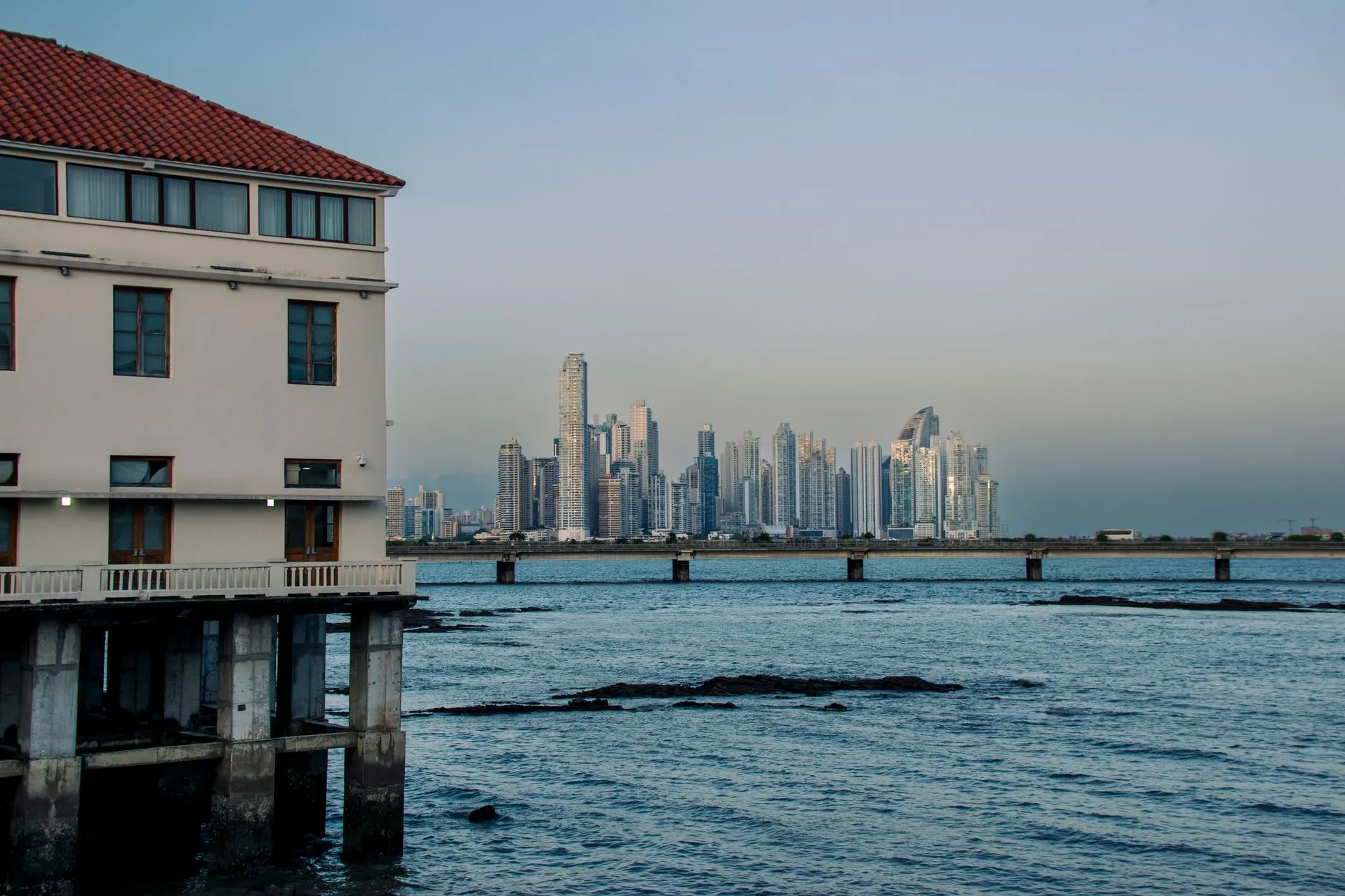
The capital is a study in contrasts; give it a day or two rather than rushing through. The skyline along the bay is the most dramatic in Central America — a forest of glass towers (including the corkscrew-shaped F&F Tower) announcing Panama’s banking-hub wealth. The Cinta Costera, a waterfront promenade looping along the bay, is the place to walk it at dusk with the towers lighting up behind you.
The heart of any visit is Casco Viejo (the old quarter, also San Felipe) — the restored 17th-century colonial town, UNESCO-listed, of crumbling-then-gentrified Spanish and French facades, leafy plazas, boutique hotels and a rooftop-bar scene that’s become the city’s social engine. At golden hour, find a rooftop (Tántalo and CasaCasco are the famous ones) for a cocktail with the skyline glittering across the water, then eat — Casco has the city’s best restaurants, from ceviche counters to tasting menus. Polished and a little theme-parky in places, but genuinely lovely and the only part of the city with real soul.
Out east lie the ruins of Panamá Viejo — the original city, founded 1519, sacked and burned by the pirate Henry Morgan in 1671 (which is why the Spanish rebuilt at Casco). Now a UNESCO site of evocative stone shells and a climbable tower; atmospheric rather than spectacular, but a proper dose of history.
The colourful Biomuseo on the Amador Causeway — a Frank Gehry design, his only building in Latin America — tells how the isthmus rose from the sea and reshaped the planet’s biology. The causeway itself, built on canal spoil and linking islets to the mainland, is the city’s favourite spot to cycle, eat seafood, and watch ships queue for the canal at sunset.
💡 Stay in Casco Viejo, not the banking district. The towers are impressive to look at and dull to stay in. Casco puts you in the prettiest, most walkable, best-fed part of the city, with the rooftop bars and the colonial atmosphere on your doorstep. It’s pricier per night — but it’s the difference between sleeping in the city and sleeping in an office park.
San Blas / Guna Yala — the islands that aren’t a resort
If you do one thing beyond the city, make it this. The San Blas archipelago — officially Guna Yala — is a string of around 350 islands along Panama’s Caribbean coast, the vast majority uninhabited specks of white sand and a few leaning palms. It’s governed not by Panama but by the Guna (Kuna) people, one of the most successfully autonomous indigenous nations in the Americas, who run the territory on their own terms, charge their own entry fees, and have deliberately kept large-scale tourism and foreign-owned resorts out.
That last part is the whole point. There are no luxury resorts here, and there never will be. You sleep in a basic thatched or wooden cabin, often right on a tiny island, with shared bathrooms, cold water, bucket-flush toilets, intermittent solar power, and meals (a lot of fresh fish, rice, coconut) included because there’s nowhere else to eat. It is rustic by design, and it is paradise: bathwater-warm turquoise sea, sandbars you can wade between, sea-star shallows, and nights so dark the Milky Way looks fake.
How you visit: the standard route is a package — a shared 4×4 from Panama City over the mountains (2.5–3 hours), then a boat to your island, with one to three nights in a Guna-run cabin, meals and island-hopping included. Reckon €100–160 per person per night all-in for the basic cabin; sailing catamarans cost more. On top you pay the Guna Yala entry fee (around €21 / US$23) plus small per-island landing fees. It is strictly cash-only — no ATMs anywhere, so bring every dollar you’ll need, including extra for the Guna women’s famous hand-stitched mola textiles.
Go in with the right attitude: this is the Guna’s home and their rules apply. Ask before photographing people, and understand that “no hot shower” is not a flaw — it’s why San Blas still looks like this when the rest of the Caribbean has been paved with infinity pools.
⚠️ Cash, and only cash — every dollar, up front. There are no ATMs, card machines or banks anywhere in Guna Yala. You pay for the whole stay, the entry fees, the boat, the molas and your beers in US dollars brought with you. Run out and there’s no fix. Bring more than you think you need and keep it dry.
Bocas del Toro — the Caribbean party archipelago
On the country’s western Caribbean coast, near the Costa Rica border, Bocas del Toro is San Blas’s opposite number: a developed, backpacker-and-expat island archipelago built for fun. Bocas Town on Isla Colón is the hub — a ramshackle, colourful Caribbean town of stilt houses, overwater bars, hostels and dive shops, with a famously easy, anything-goes vibe. It’s where you base, drink, and book your boats.
From there you island-hop: Isla Bastimentos for the lovely Red Frog and Wizard beaches and the Bastimentos Marine National Park (Panama’s first, protecting reef, mangrove and the Zapatilla Cays); Isla Carenero for chilled beach bars; surf breaks scattered across the islands for beginners and barrel-chasers alike. The diving here is the easy, warm, beginner-friendly Caribbean — gentle reefs, good for first dives, rather than the big-pelagic drama of the Pacific.
Bocas is genuinely fun and beautiful, but be honest about what it is: a scene — busier, more developed and more party-oriented than San Blas, with the litter and over-tourism that come with that on the main island. The magic is on the quieter outer islands; the town is for logistics and nightlife. The perfect counterweight to San Blas’s austerity — do both.
Boquete & the Highlands (Chiriquí) — cool air & record-breaking coffee
Climb west into the Chiriquí highlands and Panama changes entirely. Boquete, a small town in a green river valley on the slopes of Volcán Barú (around 1,200m), sits high enough that the air turns cool — a relief after the coastal heat, and exactly why it has drawn a large community of (mostly American) retirees and remote workers. Flowery, friendly and a little gringo-ified, but a genuinely lovely base for the outdoors.
The headline is coffee, and Boquete grows the most coveted in the world. This is the home of Geisha (Gesha) — the variety that, since Hacienda La Esmeralda’s competition-shattering lots in 2004, redrew the entire specialty-coffee map. In 2025 an Esmeralda Geisha lot set a world auction record at over $30,000 per kilogram, making it, gram for gram, more valuable than gold. Tour the farms (Esmeralda, Kotowa, Finca Lerida), watch the bean-to-cup process, and taste cups that elsewhere cost a small fortune.
The outdoors delivers too. Volcán Barú is Panama’s highest point at 3,475m, and the brutal pre-dawn hike (or 4×4 trip) to the summit offers the rare chance to see both oceans at once on a clear morning. The cloud forests are prime territory for the resplendent quetzal (best January–May), and the Lost Waterfalls and Pipeline trails, hot springs and white-water rafting fill out an active few days.
💡 Book a Geisha cupping, not just a farm walk. Plenty of tours show you the drying patios and call it a day. The thing worth doing in Boquete is actually tasting — a cupping or pour-over flight where you drink world-record coffee at the source for a fraction of what a single cup costs in a London or Tokyo café.
The Pacific Beaches, Pearl Islands & Coiba
Panama’s Pacific side is the surfers’ and divers’ coast. Closest to the city, the Coronado and Pacific-beach strip (Playa Blanca, San Carlos) is the capital’s weekend escape — easy, developed, family-friendly sand a short drive away, if not the country’s most beautiful. Further west, Santa Catalina is the surf town: a low-key, end-of-the-road village with serious, consistent waves — and the launch point for Coiba.
Coiba National Park is the Pacific jewel. A former penal-colony island (which, grimly, kept it pristine for decades while prisoners deterred development), it’s now a UNESCO-listed marine park with the big-animal diving the Caribbean can’t match: white-tip and reef sharks, schooling fish, rays, turtles, the occasional whale shark or humpback in season. Galápagos-adjacent diving without the Galápagos price; day trips and liveaboards run from Santa Catalina.
Off the city in the Gulf of Panama, the Pearl Islands (Las Perlas) are a quick flight or ferry away — Isla Contadora the easy day-trip-or-overnight with calm beaches, the wilder isles for those with more time. The gulf doubles as humpback-whale territory from roughly July to October, when the giants come to calve.
Food & Coffee — sancocho, ceviche & the world’s best beans
Panamanian food is honest, hearty and seafood-forward rather than fiery or fussy — and the country’s great culinary flex is its coffee, not its cooking. The national soul-dish is sancocho, a restorative chicken-and-root-vegetable stew thick with culantro and yam-like ñame — the Panamanian hangover cure and Sunday comfort food. Everywhere you’ll find ceviche (the city’s Mercado de Mariscos does it cheap and excellent — a tub of corvina for a couple of euros), patacones (twice-fried green plantain, the universal side), fried breakfast staples like hojaldres and carimañolas, and on the coasts grilled fish off the boat. Bocas adds Caribbean flavours — coconut rice, rondón seafood stew. The cheap everyday option is the fonda plate: rice, beans, a protein, plantain, for a few euros.
But the thing to take seriously is the coffee. Beyond the stratospheric Geisha auction lots, Boquete and Chiriquí produce superb, accessible specialty coffee, and Panama City’s third-wave cafés (Bajareque, Café Unido) let you drink it properly without trekking to the farm. Order a Geisha pour-over at least once — even the “affordable” version is a revelation.
Beyond coffee: the lagers Balboa, Atlas and Panama are cheap and cold; seco (a sugarcane spirit) is the national hooch. Tap water in Panama City and most of the country is safe to drink (rare in the region); Bocas and remote areas are the exception, where bottled is wiser.
Costs & Money — the dollar tax
Set expectations correctly: Panama is the most expensive country in Central America, and the reason is right there in your wallet. It adopted the US dollar as legal tender over a century ago — the balboa exists only as coins (matching US coins exactly), and every note you’ll handle is a US dollar bill. That makes Panama wonderfully frictionless for North Americans, but prices float higher than peso-and-quetzal neighbours. Note for European readers: we quote figures here in euros for clarity, but the cash you’ll actually spend is the US dollar — withdraw and carry dollars.
Rough daily on-the-ground budgets (excluding flights):
- Backpacker / budget: ~€35–50/day — hostel dorms, fonda meals, buses and the metro. Possible but tighter than elsewhere in Central America.
- Mid-range: ~€80–140/day — comfortable hotels or a Casco apartment, restaurant meals, domestic flights, paid tours.
- Comfortable: €150+/day, more on the islands, where fixed-cost San Blas and Bocas packages push everything up.
Individual prices: a counter ceviche or fonda plate, €2–5; a good Casco Viejo dinner, €25–40 a head; a rooftop cocktail, €8–12; the Miraflores canal ticket, ~€18; a domestic flight to Bocas or David, ~€90–150 one-way; a two-night San Blas package, ~€200–320 per person all-in; a Bocas dorm, €12–20. ATMs are everywhere in the city and main towns (dollars, typically €4–5 fee); restaurants often add 10% service, else tip 10%. And the iron rule — San Blas is cash-only with no ATMs, so stock up before you go.
Practical Information — safety, the Darién, SIMs & seasons
Safety: Panama is one of the safer countries in the region. The tourist zones — Panama City’s main districts, Casco Viejo, the canal, Boquete, the islands — are broadly safe with normal big-city caution. Petty theft happens in crowded spots and at night; a few neighbourhoods (parts of El Chorrillo, Curundú, Colón city) are best avoided, and Casco’s fringes can be sketchy after dark. Use Uber rather than unmarked street cabs at night, don’t flash valuables, and you’ll be fine. As of 2026 most Western governments rate Panama at “exercise normal/increased caution,” the only serious carve-out being the Darién.
The Darién Gap is a hard no. The roadless, lawless rainforest straddling the Panama–Colombia border — the famous break in the Pan-American Highway — is not a place tourists go, ever. For years it funnelled a vast northbound migration; in 2024 over 300,000 people crossed. By 2025–26 those numbers collapsed by 98–99% as US and Panamanian policy slammed the route shut, but it remains controlled by smuggling and armed groups, riddled with hazards, and off-limits on every Western advisory. There is no “adventure trek” version. Stick to eastern Panama’s organised eco-lodges well short of the gap, and treat the Darién frontier as closed.
Connectivity: local SIMs (+Móvil, Tigo, Digicel) are cheap and easy to buy at the airport or in town with your passport, with generous data — far better than roaming. eSIMs work well too. Wi-Fi is standard in city hotels and most island lodges (slower or solar-dependent in San Blas).
Hassle: Panama is low-pressure by Latin American standards — the main annoyances are tour-desk upselling and the odd overcharging taxi, both solved by booking ahead and using Uber.
Seasons: the dry season (mid-December to mid-April) is the postcard window — blue skies, peak crowds and prices, best for the islands and highlands. The green/wet season (May to November) brings short afternoon downpours, lush rainforest, lower prices, thinner crowds and humpback whales (roughly July–October) in the Pacific. The Caribbean side (San Blas, Bocas) can see rain year-round, so there’s no perfect month for everything — pick your priority. Panama uses US-style 110V plugs (Europeans need an adapter) and runs on Eastern Time.
When to Go — month by month
Mid-December to mid-April (dry season): the prime window — reliably sunny, the San Blas and Bocas seas at their calmest, the Boquete highlands crisp. Also peak season, so book islands and coffee tours ahead and expect the highest prices, especially around the holidays and the city’s Carnival in February.
May to early August (early green season): the rains return as short afternoon storms, prices ease, crowds thin, the landscape turns vivid. Mornings are often clear enough for everything; you just plan around the shower. Humpback-whale season begins in the Pacific. Excellent value.
Late August to November (peak green season): the wettest stretch — the cheapest, quietest time, best for budget travellers and whale-watchers who don’t mind getting damp. The Caribbean islands can be hit-or-miss. November brings a flurry of independence holidays.
Year-round caveat: the Caribbean and Pacific coasts run on different weather clocks, and the highlands have their own cool micro-climate, so no single month is perfect everywhere. Decide what matters most — calm island seas (dry season), green and cheap (wet season), or whales (Jul–Oct) — and build around it.
Frequently Asked Questions
Cheapest Flights to Panama
We have tracked 1,308 fares to Panama from 84 cities. As of June 2026, here is what a good price looked like from each — the lowest fare we recorded, and a “great-deal” benchmark to judge a quote against. These are tracked observations, not live prices: by the time you read this they will have moved, so treat them as a yardstick, not a quote.
| From | Lowest fare we tracked | Great-deal benchmark |
|---|---|---|
| Dusseldorf (DUS) | €381 | €544 |
| Frankfurt (FRA) | €401 | €573 |
| Milan (LIN) | €441 | €630 |
| Venice (VCE) | €449 | €641 |
| Porto (OPO) | €462 | €660 |
| Zurich (ZRH) | €469 | €671 |
| Sicily (CTA) | €477 | €682 |
| Mallorca (PMI) | €478 | €683 |
| Amsterdam (AMS) | €484 | €692 |
| Toulouse (TLS) | €486 | €695 |
| Azores (PDL) | €500 | €715 |
| Nuremberg (NUE) | €512 | €731 |
| Hanover (HAJ) | €526 | €752 |
| Bremen (BRE) | €528 | €754 |
Recent deals we have posted to Panama:
- Vienna to Panama City, Panama from €726
- Milan to Panama City, Panama from €617
- Rome to Panama City, Panama from €627
- Bari to Panama from €661
These are fares aifly tracked to this destination, not live quotes — they have changed since and several of the deals above may have expired. Browse current flight deals →