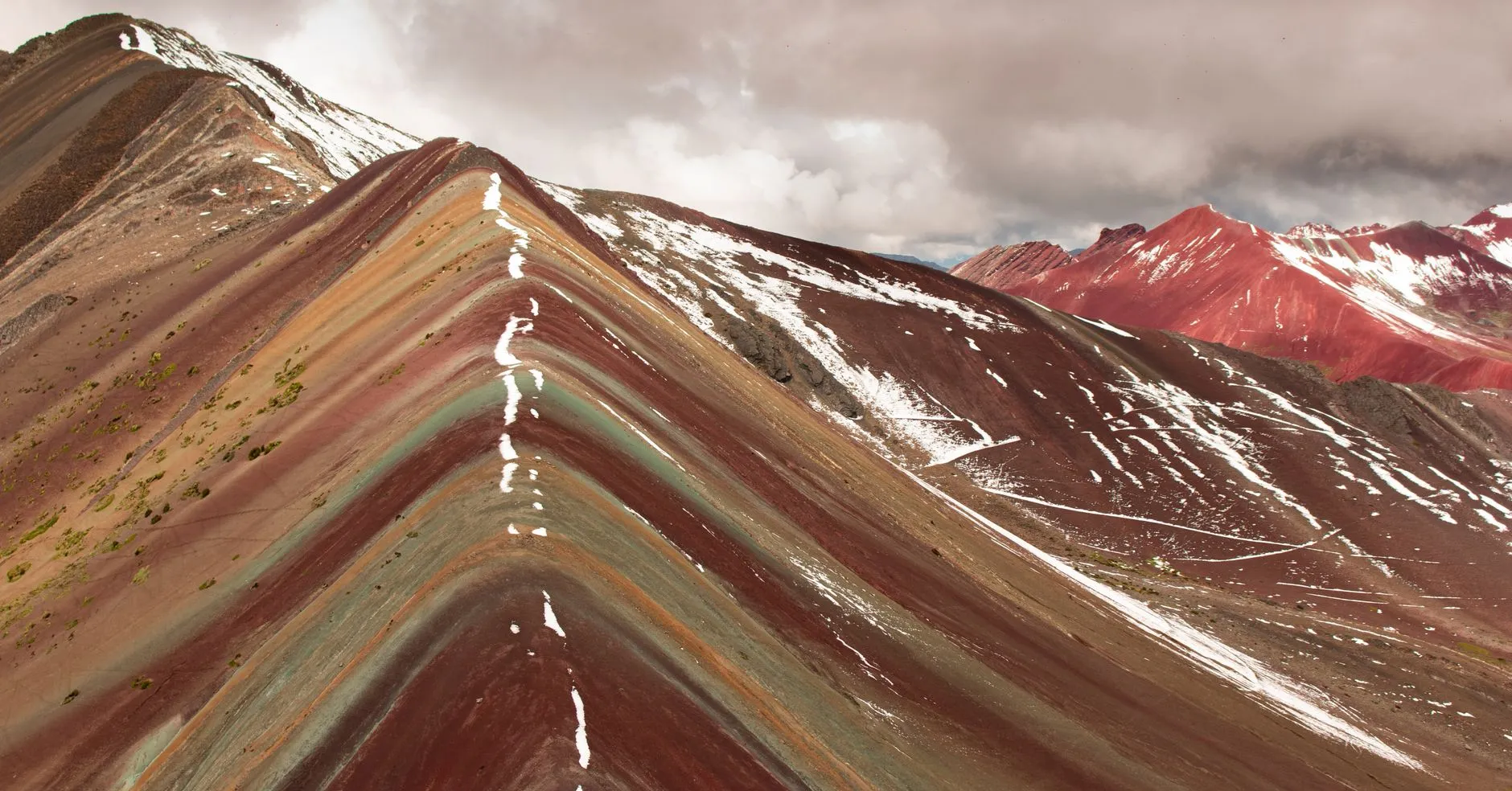
Peru — Complete Travel Guide 2026
Everyone comes for Machu Picchu, and it earns every word of the hype — but treating Peru as a four-day dash to a ruin and out is the single most common mistake travellers make here, and the one most likely to leave you green-faced with altitude sickness in a Cusco hotel room. Peru is the old heart of the Inca empire, the most thrilling food destination on earth right now, a stack of Andean cultures still speaking Quechua, a desert coast of dunes and ancient lines scratched into the earth, and a slab of the Amazon the size of a small country. The headline sight is one of the great places on the planet — the mistake is thinking it’s the whole trip.
Quick Reference
Western South America, on the Pacific coast — three worlds in one country: a thin desert coast, the high spine of the Andes, and the Amazon basin behind it
Lima Jorge Chávez (LIM) — the main hub, with a brand-new 2025 terminal; Cusco / Alejandro Velasco Astete (CUZ), the gateway to Machu Picchu; Arequipa (AQP)
Peruvian sol (PEN); ≈ 4.0 soles to the euro in 2026
Spanish (official); Quechua and Aymara widely spoken in the Andes; English in tourism, patchy elsewhere
Visa-free for most Western tourists (UK, EU, US, Canada, Australia) — typically 90 days, up to 183 at the officer’s discretion; a fully digital entry record (the TAM), no paper card
May–September is the Andean dry season — best for Machu Picchu and trekking; the coast and the Amazon run on different clocks
Machu Picchu and the Inca empire, the world’s most exciting food scene, the Andes, the Sacred Valley, the Nazca Lines, Lake Titicaca and the Amazon
Cusco for the Inca heartland; Lima for the coast and the food; Arequipa for the south — most do Lima + Cusco, and the good trips add a third
Editor’s Note — slow down or suffer
Here is the trip almost everyone tries to book the first time: fly into Lima, connect straight to Cusco, do Machu Picchu the next morning, fly home four days later. It looks efficient on a spreadsheet, but it does two bad things at once. First, it skips Peru — Cusco and the Sacred Valley aren’t a transit lounge for the ruin, they’re half the reason to come, and Lima’s food alone is worth a couple of days. Second, and more seriously, it’s a recipe for soroche — altitude sickness. Cusco sits at 3,400 metres; Lima is at sea level. Flying from one to the other and immediately charging uphill is how people end up vomiting instead of sightseeing.
The fix is also the better trip: build in acclimatisation. Drop straight down into the Sacred Valley (Ollantaytambo and Urubamba sit several hundred metres lower than Cusco and are a far kinder place to sleep your first nights), visit Machu Picchu — itself only ~2,400 m, lower than Cusco — once you’ve adjusted, and save high Cusco and the even-higher south (Puno is 3,800 m) for the back half. Slow Peru isn’t just more pleasant; it’s the version where you actually feel well enough to enjoy it.
And know before you book: Machu Picchu is no longer a turn-up-and-wander site. Since 2024 it runs on timed entry, fixed circuits and hard daily caps, tightened again for 2026. You buy a specific circuit, for a specific hour, and walk a one-way route. Plan it; don’t wing it.
⚠️ Altitude is the real risk, not crime. The thing most likely to ruin your trip isn’t a pickpocket — it’s flying straight to 3,400 m Cusco and immediately overdoing it. Sleep low (the Sacred Valley) your first nights, take it slow on day one, hydrate. This single decision changes everything.
Should You Go? Who it’s for — and isn’t
Peru is for the traveller who wants a genuinely epic landscape-and-history trip and will put a bit of effort in. It’s superb for hikers and trekkers (the Inca Trail and its alternatives are world-class, and you don’t have to be an athlete), for history nerds (the Inca capital and the bones of one of the great pre-Columbian civilisations), for food obsessives (Lima is arguably the best eating city on the continent), and for anyone who wants the Andes, Amazon and Pacific desert in one trip.
It’s also for the value traveller. Outside the Machu Picchu corridor — the one genuinely expensive part of Peru — your money goes a long way: a great Andean lunch for a few euros, comfortable mid-range hotels, cheap good buses.
Who it’s not for: anyone who can’t or won’t deal with high altitude. With a heart or lung condition, talk to a doctor first — Cusco, Puno and the Colca rim are seriously high, with no avoiding it on a classic route. It’s not a lie-on-a-beach destination (the coast is cold-water desert, not the Caribbean), and not a wing-it trip in peak season — Machu Picchu tickets, Inca Trail permits and Cusco trains all need booking months ahead. And Peru rewards patience: Cusco flights get cancelled for weather, and protests occasionally close roads.
Getting There & Around — LIM, the domestic hop & the long roads
Almost everyone arrives through Lima Jorge Chávez (LIM), and as of mid-2025 it’s a far better experience. A brand-new terminal — about three times the size of the old one, built for some 40 million passengers a year — opened on 1 June 2025, finally giving South America’s Pacific side a proper modern hub, with direct flights from Madrid, Amsterdam, Paris and other European cities plus the dense web of US and Latin American connections.
From Lima, the way to Cusco is to fly — a ~1 hour 20 minute hop served all day by LATAM, Sky and JetSMART, with reasonable round-trips if you book ahead. The alternative, the bus, is a spectacular but punishing ~20-hour haul over the Andes; do it only if the journey is the point. Useful domestic flights run all over: Lima to Arequipa, Juliaca (for Titicaca), Puerto Maldonado (southern Amazon) and Iquitos (the northern Amazon, with no road in — you fly or take a multi-day riverboat).
On the ground, long-distance buses are Peru’s backbone, and the good ones are genuinely good. Cruz del Sur and Oltursa run comfortable, safe, reclining-seat overnight services between the major cities for a fraction of European prices — far better than the country’s reputation suggests. Around Cusco and the Sacred Valley, colectivos (shared minivans) and taxis are cheap and everywhere.
The one leg that isn’t a road at all is the last to Machu Picchu: there’s no road to Aguas Calientes (the town below the ruin) — you take the train. And the honest advice across the whole country: don’t drive yourself. Andean roads are slow, high and demanding, mountain weather turns fast, and self-driving buys stress without saving time. Fly the long legs, bus the medium ones, let someone else take the wheel.
💡 Book the Lima–Cusco flight for late morning, not dawn. Cusco’s airport is hemmed in by mountains and notorious for weather delays, which cluster early. A mid-morning departure has a better shot of leaving on time — and never schedule your international flight home the same day as your Cusco–Lima flight. Leave a full buffer night in Lima.
Machu Picchu — how to actually do it
This is the reason most people come, and the planning has changed enough that you need to understand the new rules before booking anything else. Get it wrong and you can arrive with the wrong ticket, at the wrong hour, and be turned away.
The ticket system (2024–26). Machu Picchu now runs on timed entry, fixed one-way circuits, and hard daily caps. There are three main circuit families, split for 2026 into ten colour-coded sub-routes, and you choose your exact circuit and entry hour when you buy; slots run hourly (roughly 6:00 to 16:00). Each ticket admits you to one circuit only — no freelancing between them, no backtracking — so pick the route with the views you came for. The classic postcard panorama (from the upper terraces, looking down over the citadel with Huayna Picchu behind) is on the “Circuit 2” / Llaqta family; the lower circuits skip that high vantage. Daily numbers are capped at around 5,600 in high season (which includes 19 June–2 November plus a few peak holidays) and about 4,500 the rest of the year. In peak months — June to August above all — popular slots sell out, so book your dated ticket well ahead.
The cost. A standard foreign-adult entry runs around 163 soles (~€40) after the 2026 fee bump. Add a mountain — Huayna Picchu (the steep peak behind the ruin, with a famously vertiginous climb) or Machu Picchu Mountain (higher, longer, quieter) — and it’s around 200 soles (~€50); both have tiny daily quotas and sell out earliest.
Getting there. From Cusco or the Sacred Valley you take the train to Aguas Calientes (Machu Picchu Pueblo), the town in the gorge below. Most travellers board at Ollantaytambo (a ~1.5-hour ride) rather than near Cusco itself, which adds hours and cost. Two operators run it — PeruRail and Inca Rail — and it’s the single priciest thing in Peru: even budget classes (PeruRail Expedition, Inca Rail Voyager) start around €75–95 round-trip from Ollantaytambo, the glass-roof Vistadome / 360° classes run €130–170, the luxury Hiram Bingham €450–550. From Aguas Calientes the shuttle bus climbs the switchbacks (~€24 round-trip for foreigners) or you walk the steep hour-plus. Add entry, train and bus and a single person’s day commonly lands around €140–200 all-in, before any guide — the splurge of the trip.
The Inca Trail and the alternatives. The classic 4-day Inca Trail is permit-controlled — only 500 permits a day (porters and guides included, so far fewer trekkers), selling out four to six months ahead for the May–September window; for 2026 the permit no longer bundles your citadel entry, so you book the trail permit and a Machu Picchu ticket separately for the same date. The trail is closed every February for maintenance. If permits are gone — or you want fewer rules and arguably better scenery — the Salkantay trek (5 days, over a 4,600 m pass beneath a glaciated peak, no permit cap) is the great alternative, with Lares and Choquequirao as other options. You needn’t trek at all; the train does the job for most.
Sunrise reality check. The dreamy “Machu Picchu at sunrise” is oversold. In the dry season the site is often socked in with cloud at first light, clearing only mid-morning; in the wet season dawn can be a grey wall. A mid-morning slot is frequently the better light and the more reliable one — don’t kill yourself for 6 a.m. assuming it’s magic hour.
⚠️ Buy your dated entry ticket before the train — and before flights, in peak season. Machu Picchu’s daily cap and the train’s limited seats are the two bottlenecks of the trip. For June–August, lock the entry ticket and the Ollantaytambo train first; everything else flexes around them.
Cusco & the Sacred Valley — the Inca heartland
People rush through Cusco on the way to Machu Picchu, and it’s a mistake — this is one of the most rewarding cities in the Americas. Cusco (3,400 m) was the Inca capital, and the conquistadors built their colonial city directly on top of it, so you walk streets where flawless Inca stonework (mortarless, earthquake-proof, joints you can’t slip a knife into) carries Spanish churches on its shoulders. The Plaza de Armas, the cathedral, the Qorikancha (the Inca Temple of the Sun, with the Santo Domingo convent grafted onto its perfect walls), the bohemian San Blas quarter and the San Pedro market — give it two full days, and use them to acclimatise gently rather than power-walking the hills.
Just above the city, Sacsayhuamán is the jaw-dropper — colossal zigzag ramparts of stones the size of trucks, fitted with impossible precision, the scale still not fully explained. An easy walk or short taxi from the centre, best in late light.
The Sacred Valley below — the Río Urubamba corridor between Cusco and the Machu Picchu line — is where you should sleep your first nights: it’s lower (kinder on your lungs) and wonderful in its own right. Ollantaytambo is the standout — a living Inca town with the original grid of streets and water channels still in use, crowned by a steep terraced fortress-temple, and the most logical place to catch the Machu Picchu train. Pisac has a sprawling hilltop ruin above a famous market town; Chinchero is a high weaving village with a colonial church on Inca foundations; and Maras–Moray is the surreal pair — Moray’s concentric circular terraces (an Inca microclimate lab) and the Salineras de Maras, thousands of pre-Inca salt pans cascading down a hillside, still worked by hand. A couple of unhurried days, and the connective tissue of the Cusco trip rather than a detour.
💡 Buy the Boleto Turístico if you’re doing the valley. The Cusco tourist ticket bundles Sacsayhuamán, Pisac, Ollantaytambo, Moray, Chinchero and a clutch of museums into one pass (~€33 full, ~€18 partial). Hit more than two or three and it pays for itself — several have no individual ticket anyway.
Lima — the coast and the kitchen
Lima gets dismissed as a place to connect through, and that’s been wrong for years. The sprawling, grey, fog-bound coastal capital is the best place to eat in South America, with multiple restaurants on the world’s-best lists, and deserves a couple of days at the start or end of your trip.
Base yourself in Miraflores — the modern, safe, walkable cliff-top district above the Pacific, with the Malecón park, paragliders over the sea, and most of the good hotels and restaurants — or in arty, romantic Barranco next door, the bohemian quarter of muralled streets, the Bridge of Sighs, bars, galleries and some of the city’s best small kitchens. The colonial centre (a UNESCO zone around the Plaza Mayor, cathedral and catacomb-lined San Francisco monastery) is a half-day of grand Spanish architecture, and the Larco Museum — pre-Columbian gold, ceramics and textiles in a lovely old mansion — is world-class, the best in the country.
But you come to Lima to eat, and it’s worth structuring a couple of days around it: ceviche at a cevichería, the food markets of Surquillo, a tasting menu at one of the temples of modern Peruvian cooking. It’s the rare city where the food alone justifies the stop.
For the full breakdown of where to stay, eat and wander, see our full Lima city guide — this is the headline; that’s the deep dive.
The South — Arequipa, Colca & Lake Titicaca
The southern circuit is the trip’s quieter triumph, and the natural second act after Cusco. Arequipa is Peru’s beautiful second city — the “White City,” built of pale volcanic sillar stone, ringed by three snow-capped volcanoes (El Misti the perfect cone above town), with a stunning arcaded Plaza de Armas and the extraordinary Santa Catalina Monastery, a walled city-within-the-city of ochre and cobalt lanes where cloistered nuns lived for centuries. At ~2,300 m it’s gentler than Cusco and a lovely place to slow down — and its food (the picantería tradition, rocoto relleno, river-shrimp chowder) is among Peru’s best.
From Arequipa, the Colca Canyon is the headline excursion — one of the world’s deepest canyons, twice the depth of the Grand Canyon, with terraced villages along its rim and, at the Cruz del Cóndor viewpoint, near-guaranteed morning sightings of Andean condors at eye level. Typically a 2-day/1-night tour from Arequipa (~€40–70 basic shared); the early start for the condors is worth it.
Further on, Lake Titicaca — the highest navigable lake in the world, at 3,800 m straddling the Bolivian border — is reached from the lakeside town of Puno. The draw is on the water: the Uros floating islands, hand-built from totora reeds and home to communities who live on the lake itself, and the more authentic islands of Taquile and Amantaní, where you can homestay with weaving families under a ferocious blanket of stars. Puno itself is bleak and very high — acclimatise before you come, not here — but the lake is unlike anywhere else.
Nazca, Paracas & the desert coast
South of Lima, the Pan-American Highway runs down a strip of stark coastal desert hiding three of Peru’s odder pleasures — an easy add-on if you’re travelling overland between Lima and Arequipa rather than flying.
The Nazca Lines are the famous mystery: enormous geoglyphs — a hummingbird, a monkey, a spider, a “spaceman” — scored into the desert floor two thousand years ago, so large they only resolve from the air. See them on a small-plane overflight from Nazca’s airfield (~€80–110 for a ~30-minute flight; bring motion-sickness tablets, the banking is rough); a roadside tower catches a couple of figures if you’d rather stay grounded.
Nearby, Huacachina is a genuine palm-fringed oasis lagoon set in towering dunes outside the wine town of Ica — a postcard come to life, and the base for dune-buggy and sandboarding runs that hurl you up and down at sunset. Touristy, and a blast.
On the coast at Paracas, boat tours to the Ballestas Islands (“the poor man’s Galápagos”) deliver sea lions, Humboldt penguins and clouds of seabirds around dramatic rock arches, plus the candelabra geoglyph on a coastal hillside. None of it is Machu Picchu, but it’s a fun, cheap, sunny counterpoint to all that high-altitude stone.
The Amazon — Iquitos vs Tambopata
Roughly 60% of Peru is Amazon rainforest, and getting into it is one of the great things you can do here — but be honest first: it’s a commitment, not a side-trip. A real jungle experience means a flight, a boat transfer, a lodge with no road access, several humid days of dawn wildlife walks and night-time caiman spotting, and a real chunk of budget. Done as an afterthought it disappoints; given three or four days it’s unforgettable.
There are two doorways. Puerto Maldonado, in the south, is the easy one — a short flight from Cusco, gateway to the Tambopata National Reserve, with lodges from rustic to plush a boat-ride up the river, macaw clay licks, oxbow lakes and giant otters. It slots neatly onto the end of a Cusco trip and is the sensible first-timer choice.
Iquitos, in the north, is the wilder, deeper option — the largest city on earth unreachable by road (you fly in, or take a multi-day riverboat down the Amazon proper), launchpad for the vast Pacaya-Samiria National Reserve, pink river dolphins and serious upriver expeditions, in a faded rubber-boom city with a frontier feel. A bigger logistical lift, but the closest most travellers get to the deep Amazon.
💡 For most itineraries, do the Amazon from Puerto Maldonado. A short hop from Cusco, no extra long-haul, three nights at a Tambopata lodge — real rainforest, macaws and otters without rebuilding your whole trip around it. Save Iquitos for a dedicated Amazon journey, not a tack-on.
The Food — arguably the world’s best
If you take one thing from this guide that isn’t Machu Picchu, take this: Peru is one of the great food destinations on the planet right now, and eating well here is a core reason to come, not a luxury add-on. The cooking draws on an absurd larder — thousands of native potato varieties and dozens of corns, the Pacific’s richest cold-current fishing grounds, Andean and Amazonian ingredients found nowhere else — and fuses Spanish, Indigenous, African, Chinese (chifa) and Japanese (nikkei) influences into something its own.
The dish to eat first is ceviche — raw fish cured in fresh lime juice with chilli, red onion and coriander, served with sweet potato and giant corn, bright and electric. It’s a lunch dish (eaten when the fish is freshest, not at night) and the national glory. Lomo saltado — beef stir-fried with onions, tomatoes, soy and chips, the perfect chifa fusion — is the comfort champion. Round it out with ají de gallina (creamy chilli chicken), anticuchos (skewered char-grilled beef heart from a street cart — far better than it sounds), causa (chilled potato terrine), rocoto relleno in Arequipa, and the Andean staples cuy (roast guinea pig) and alpaca steak.
Then there’s the fine-dining scene. Lima is home to several of the world’s most celebrated restaurants — Central (an ascent through Peru’s ecosystems by altitude, repeatedly ranked the best on earth) and its sibling Maido (the temple of nikkei cooking) chief among them — and a tasting menu runs roughly €150–250 a head, a fraction of the equivalent in Europe or the US and one of the best fine-dining values anywhere; book months ahead. The national spirit is pisco, best in a pisco sour — and the lurid-yellow bubblegum soda Inca Kola is a rite of passage. Even at street level — a few euros for a market menú, a bag of chicha morada — eating here is a pleasure and a bargain.
Costs & Money
Outside the Machu Picchu corridor, Peru is excellent mid-range value; inside it, it’s the priciest stretch in South America — plan the budget around that split.
The currency is the sol (PEN), roughly 4 to the euro in 2026. ATMs are everywhere in cities and tourist towns (watch per-withdrawal fees — BCP and Interbank are fairer). Carry cash for markets, taxis, colectivos and small towns; cards work in mid-range-and-up restaurants and hotels in the cities, but the further off the trail you go the more cash-only it gets. US dollars are widely accepted but at a poor rate — change to soles.
A rough daily on-the-ground budget (excluding flights, and treating Machu Picchu as a separate one-off):
- Backpacker / budget: ~€30–45/day — hostels (a Cusco dorm ~€10–15), set-menu lunches, buses and colectivos, the odd cheap tour.
- Mid-range: ~€60–110/day — comfortable hotels or boutique stays, restaurant meals, guided day-trips, transport.
- Comfortable: €130+/day — better hotels, private guiding, nicer train classes and tours.
And the big one: Machu Picchu is a separate budget line — entry-plus-train-plus-bus commonly lands around €140–200 per person for the day, more with a mountain add-on, premium train or guide. The Inca Trail or Salkantay treks run roughly €500–800 with a reputable operator. Tipping is expected: round up taxis, ~10% in better restaurants, and tip trekking guides and porters meaningfully — it’s a real part of their pay (budget €50–80 per trekker for the crew).
💡 The Machu Picchu day is your one unavoidable splurge — own it. Everywhere else you can travel cheaply and eat brilliantly for a few euros. The ruin, train and bus are simply expensive, with little room to economise beyond the budget train class and boarding at Ollantaytambo. Don’t let sticker shock there blow up the rest of your (very affordable) trip.
Practical Information
Altitude — read this twice. The defining practicality of a Peru trip. Cusco is 3,400 m, Puno 3,800 m, the Colca rim and several passes higher still. Soroche (altitude sickness) — headache, nausea, breathlessness, poor sleep — is common and unpredictable, and fitness doesn’t protect you. The defences: ascend gradually (sleep low in the Sacred Valley before high Cusco; do the south after Cusco, not first), take it very easy on day one, drink lots of water, go easy on alcohol, and lean on local remedies — coca tea (mate de coca) genuinely helps, and acetazolamide (Diamox) taken preventively works well (ask your doctor first). If symptoms turn severe — confusion, breathlessness at rest — descend. It’s the one health issue here both very likely and easily managed with a sensible plan.
Entry & the digital migration card. Most Western tourists (UK, EU, US, Canada, Australia) enter visa-free, typically for 90 days, extendable in some cases to a maximum of 183 days at the officer’s discretion — confirm the number you were given. Peru has moved to a fully digital entry record, the TAM (Tarjeta Andina de Migración): no more paper card to keep and surrender — your entry is logged automatically when your passport is scanned, and you can pull up the record online if a hotel or the tax-free hotel-VAT process needs it. Passport valid six months beyond entry.
Safety. The tourist circuit — Cusco, the Sacred Valley, Machu Picchu, Arequipa, Puno, Lima’s Miraflores/Barranco — is well-trodden and broadly fine with normal precautions. The cautions are about petty, opportunistic crime: in Lima especially, use only booked or app-based taxis (Uber, Cabify, or one your hotel calls — never flag one on the street), don’t flash phones, cameras or jewellery, keep bags zipped and in front in crowds and on buses, and be alert at night and in central districts away from Miraflores. Peru has seen a real rise in urban crime and extortion lately, concentrated in poorer areas a tourist needn’t enter.
Politics & disruption. Peru’s national politics are chronically unstable — a string of presidents in recent years, and the 2026 general election (first round in April, runoff in June) came with the usual protests. The practical takeaway is narrow: political flashpoints occasionally trigger road blockades, transport strikes and protests that briefly disrupt routes (the Cusco–Machu Picchu corridor has been hit before). It rarely targets tourists but can strand an itinerary for a day or two. Build in buffer time, watch your government’s advisory in the run-up, and keep a flexible plan B.
Water & health. Don’t drink the tap water — bottled or properly filtered only, and watch ice and salads in budget spots. Stomach upsets are the commonest traveller’s ailment, and altitude and rich food compound them, so ease in. Yellow-fever vaccination is recommended (sometimes asked for) for the Amazon lowlands.
Connectivity. Cheap local SIMs (Claro, Movistar, Entel, Bitel) with generous data are easy to buy at the airport with your passport — far better than roaming. Coverage is good in cities and the tourist corridor, patchy in the deep Andes and jungle; hotel Wi-Fi is standard.
When to Go
Peru runs three climates at once, and they don’t agree — so pick your season around what you actually want to do.
May–September (the Andean dry season) is the prime window for the headline trip — Machu Picchu, the Inca Trail, Cusco, the Sacred Valley, Colca and Titicaca. Clear skies, sunny days, cold nights, the best trekking and the most reliable mountain views. It’s also peak: June–August is busiest and priciest, tickets and permits sell out months ahead, and you’ll share the big sights. June brings Cusco’s huge Inti Raymi sun festival (24 June) — spectacular, but book far ahead.
The shoulders — April–May and September–October — are arguably the sweet spot: the Andes are still mostly dry, crowds and prices ease, and the early shoulder is greener. October is a particularly good all-round month.
November–March (the Andean wet season) brings rain to the highlands — afternoon downpours, mud, cloudier Machu Picchu mornings, and the Inca Trail closes entirely in February for maintenance. It’s low season: fewer people, lower prices, a lush green valley, but you trade reliable weather for it. Note the inversions: this is the warm, clear season on the desert coast (Lima’s dreary garúa fog lifts roughly December–April, the only time the capital gets real sun), and the Amazon is hot and humid year-round — the wet “high water” season (roughly December–May) is better for boat access, drier months better for jungle walks and riverbank wildlife.
Frequently Asked Questions
Cheapest Flights to Peru
We have tracked 281 fares to Peru from 22 cities. As of June 2026, here is what a good price looked like from each — the lowest fare we recorded, and a “great-deal” benchmark to judge a quote against. These are tracked observations, not live prices: by the time you read this they will have moved, so treat them as a yardstick, not a quote.
| From | Lowest fare we tracked | Great-deal benchmark |
|---|---|---|
| Barcelona (BCN) | €440 | €628 |
| Dublin (DUB) | €458 | €655 |
| Athens (ATH) | €582 | €832 |
| Paris (CDG) | €594 | €848 |
Recent deals we have posted to Peru:
- Miami to Lima, Peru from $271
- Dublin to Lima, Peru from €774
- Milan to Lima, Peru from €600
- Austin to Lima, Peru from $439
- Riga to Lima, Peru from €690
- Madrid to Lima, Peru from €682
These are fares aifly tracked to this destination, not live quotes — they have changed since and several of the deals above may have expired. Browse current flight deals →