Sri Lanka — Complete Travel Guide 2026
Sri Lanka packs more variety into a teardrop the size of Ireland than countries ten times its size: you can watch a leopard at dawn, climb a 5th-century rock fortress by lunch, and drink hand-picked tea at 1,900 metres by sunset — all within a few hours’ drive. The catch is the two monsoons that hit opposite coasts at opposite times, so the single most important planning decision is which coast, which month — get that wrong and you’ll spend your beach week watching rain hammer the sea. This is a slow-travel, move-around country, best done with a driver-guide and an itinerary that follows the dry weather.
Quick Reference
Island in the Indian Ocean, off the southern tip of India
Bandaranaike International (CMB), ~35 km north of Colombo
Sri Lankan rupee (LKR / Rs)
Sinhala & Tamil; English widely spoken in tourism
ETA required, but FREE for 40 nationalities (incl. UK, US, EU, AU, NZ, Canada) from 25 May 2026 — 30 days, two entries; ~€45 for others. Pre-apply online.
Dec–Mar for the south & west coast + hills; May–Sep for the east coast (Arugam Bay, Trincomalee)
Tea-country trains, Sigiriya, leopards & elephants, surf, Galle Fort, rice & curry
Move around — south coast + Galle, hill country (Kandy/Ella), and the Cultural Triangle each deserve 3–4 nights
Editor’s Note: The One Decision That Shapes Everything
Forget choosing a single base. Sri Lanka rewards motion — the magic is in the transitions (beach to tea estate to ancient capital), and the distances are short enough that you can string three completely different worlds into ten days. The real decision is timing, because the island runs two monsoons that soak opposite sides on opposite schedules.
If you’re here December through March, you’re a south-and-west-coast traveller: Mirissa, Galle, the hill country, the Cultural Triangle — all dry, all glorious. If you’re here May through September, flip the map: the southwest is wet, so you head east to Arugam Bay and Trincomalee, where the sun is out and the surf is firing. Most first-timers come in the December–March window, and this guide leans that way, but the genius of Sri Lanka is that somewhere is always in season.
Caution: Do not book a south-coast beach week in June or July assuming “Sri Lanka in summer.” The southwest monsoon makes Mirissa and Unawatuna grey, choppy, and often closed for whale-watching. In summer the east coast is your beach — flying into a wet coast is the most common, most avoidable trip-killer.
Should You Go? Who It’s For — And Who It Isn’t
Sri Lanka is for travellers who want range and don’t mind earning it. If your idea of a good trip is a single resort and a sun lounger for ten days, this isn’t it — you’ll spend hours on winding roads, the sea on the south coast has currents, and the “beach” is one chapter of a much bigger story. Come here if you want to do things: climb, safari, ride trains, eat fiercely spiced food, and watch the landscape change every two hours.
It’s a superb first Asia trip — manageable size, lots of English, genuinely warm hospitality, and excellent value after the economic recovery. It’s a dream for wildlife people, surfers, train romantics, tea nerds, and anyone who likes their history standing 200 metres tall in the jungle. It’s less ideal if you want guaranteed flop-and-drop beach reliability (the Maldives is next door for that) or if road travel makes you carsick — the hill roads are spectacular but they are switchbacks.
Families do well here, especially mid-trip on the calmer beaches (Tangalle, Mirissa’s bay), and it’s broadly safe and easy for solo travellers and women, with the usual sensible precautions.
Getting There: CMB Airport & the Transfer Reality
Almost everyone arrives at Bandaranaike International Airport (CMB) near Negombo, about 35 km north of Colombo — not in Colombo itself, which surprises people. Flights connect via the Gulf hubs (Emirates, Qatar, Etihad), via India, Singapore, and the Middle East; there’s no need to obsess over Colombo as a base because most itineraries leave the airport and never look back. (Don’t fixate on specific fares — they swing wildly by season and route.)
The transfer is where you make your first call. The airport is on the new expressway network, so:
- Pre-booked private transfer: the easy default. Airport to a Colombo hotel runs roughly €14–€28; airport straight down to Galle or Mirissa (a 2.5–3 hour run on the Southern Expressway) is roughly €50–€85 depending on vehicle. Many travellers skip Colombo entirely and have their driver-guide meet them at arrivals and start the whole trip.
- PickMe / Uber from the airport: both operate, with marked pickup points outside the terminal. A car into Colombo is around LKR 3,000–4,000, far cheaper than the fixed-price airport taxi desk (which can be LKR 5,000+). Have a local SIM/eSIM ready so you can book on the spot.
- Airport taxi desk: convenient, pricier, fixed-rate. Fine if you land late and just want a bed.
Tip: Grab a Sri Lankan eSIM (Dialog or Mobitel) before you leave the airport, or buy a SIM at the arrivals counters. PickMe and Uber, Google Maps, and the train booking sites all assume you’re online — and the airport’s the easiest place to sort it.
If you’re staying near the airport your first night, Negombo (10 minutes away) is the smart move over battling Colombo traffic — a relaxed fishing-town beach strip that’s a soft landing after a long-haul flight.
The Regions: An Honest Map
Picture the island in five travel-zones, each with a distinct personality:
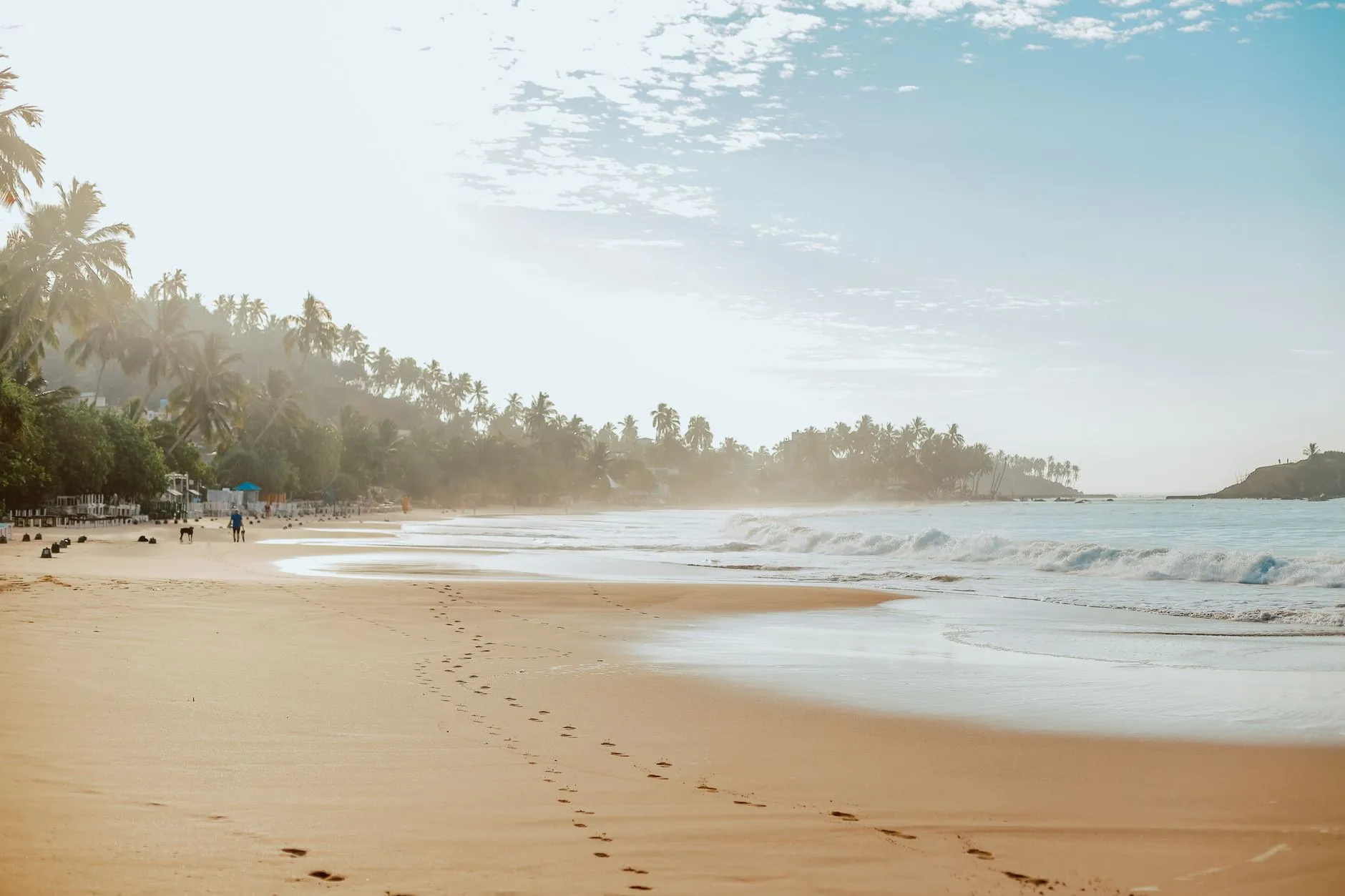
- South & West Coast — the beach belt. Surf towns, whale-watching, palm-fringed bays, and the colonial jewel of Galle Fort. Dry Dec–Mar. This is where most people spend their beach days.
- The Hill Country — the cool, green, tea-terraced interior. Kandy and its sacred Temple of the Tooth, Nuwara Eliya’s misty estates, Ella’s backpacker buzz, and the famous mountain train. Bring a jumper; nights are genuinely cold up here.
- The Cultural Triangle — the historic heartland. Sigiriya’s Lion Rock, Dambulla’s cave temples, the ruined ancient capitals of Anuradhapura and Polonnaruwa. Hot, dry, flat, archaeological.
- Wildlife Parks — Yala (leopards, crowds), Udawalawe (elephants, calmer), Wilpattu, plus Mirissa for blue whales offshore. National parks sit mostly in the dry southeast.
- The East Coast — the contrarian’s beach. Arugam Bay surf, Trincomalee’s white sand, Batticaloa. The reason to come May–Sep when the south is washed out.
A classic ten-day loop strings three of these together: south coast + Galle → hill country (Kandy/Ella) → Cultural Triangle → out. Trying to do all five in under two weeks turns the trip into a transport marathon. Pick three and go deep.
The Beaches
The south coast is a string of towns each with a different vibe, all within an hour or so of each other — so you can base in one and day-trip the rest.
- Mirissa — the all-rounder. A photogenic palm-curved bay, the launch point for blue-whale watching (Nov–Apr), beachfront bars, and just enough buzz without being a rave. Best base for many.
- Weligama — the learn-to-surf beach. Long, shallow, forgiving beach break, surf schools every 50 metres, and the iconic stilt fishermen nearby. If you’ve never stood on a board, start here.
- Unawatuna — the convenient, touristy one. A small sheltered bay close to Galle, good for swimming and snorkelling (and shipwreck dives), but the main strip is developed and gets packed in high season.
- Hikkaduwa — livelier and younger, with reef snorkelling, surf, and a party edge. Faded a little but still fun.
- Tangalle — the quiet escape. Long, wild, golden stretches that feel a world away from Mirissa’s crowds despite being a short drive east. Some beaches have strong currents — swim where locals do.
- Bentota — the resort coast, closer to Colombo, with calmer water, watersports on the lagoon, and the more polished hotels. Good for families and first-or-last nights.
Warning: South-coast beaches can have powerful rip currents and shore-dump waves, especially outside the main swimming bays. Drownings happen every season. There are few lifeguards — ask your guesthouse where it’s safe to swim, never assume a beautiful empty beach is a safe one.
The Hill Country & the Famous Train
This is the Sri Lanka of postcards: emerald tea terraces, waterfalls, colonial hill stations, and air cool enough for a fire at night. The route climbs from Kandy — the cultural capital, home to the Temple of the Sacred Tooth Relic (Sri Dalada Maligawa), the most revered Buddhist site in the country; aim for an evening puja ceremony — up through Nuwara Eliya, a faintly surreal “Little England” of mock-Tudor bungalows, a racecourse, and working tea estates you can tour, to Ella, the laid-back hiker’s hub with Little Adam’s Peak, the photogenic Nine Arch Bridge, and waterfall walks.
The legendary Kandy-to-Ella train — routinely called one of the world’s most scenic rail journeys — needs a 2026 reality check.
Caution: As of mid-2026 the full Kandy–Ella line is NOT running end-to-end. Cyclone Ditwah (late Nov 2025) caused ~$1bn of railway damage — 159 landslides, 95 washouts, and structural damage to the Black Bridge (Kalu Palama) at Peradeniya, the gateway into the central hills. The Colombo–Kandy main line and the upper hill stretch were still affected for much of 2026. Confirm the current operating segment before you build a plan around it.
The good news: the most beautiful stretch — Nanu Oya to Ella/Badulla — reopened on 20 June 2026, after months of a stub service. So the journey through the highest, greenest, most tea-terraced section is rideable again. The practical workaround if the Kandy–Nanu Oya link is still down: have your driver-guide take you up to Nanu Oya (the railhead for Nuwara Eliya), and catch the train from there to Ella — you get the iconic ride, and your luggage rides on in the car to meet you. Full restoration of the entire Kandy–Ella line isn’t expected before early 2027.
Practical train tips that don’t change: book 2nd-class reserved (assigned seats, openable windows, overhead fans — the sweet spot) online via Sri Lanka Railways, which opens reservations 30 days ahead; it sells out fast in peak season. Sit on the right heading up toward Nanu Oya, the left from Nanu Oya to Ella. And it’s slow — the full run is a 6–7 hour crawl — which is the entire point.
The Cultural Triangle
The dry, flat heartland north of the hills holds the island’s ancient heavyweights, and three or four days here is plenty.
- Sigiriya (Lion Rock) — the unmissable one. A 5th-century palace-fortress on top of a 200-metre rock monolith, reached by a vertiginous staircase past 1,500-year-old frescoes and the giant lion’s-paw gateway. Entry is roughly €28–€32 for non-SAARC foreigners. Climb at opening (5 am gates) to beat both the heat and the crowds.
- Pidurangala Rock — the budget alternative right next door (~LKR 1,000), with the better view: it looks straight across at Sigiriya. Many do both, or skip Sigiriya’s fee for this.
- Dambulla Cave Temples — five caves of golden Buddhas and painted ceilings under a rock overhang, ~€9. A worthwhile hour, often paired with Sigiriya.
- Polonnaruwa — the more compact, better-preserved ancient capital (~€28), brilliant to explore by bicycle in the early morning. The serene rock-carved Buddhas at Gal Vihara are the highlight.
- Anuradhapura — the older, vaster, more sacred capital (~€28), with the Sri Maha Bodhi (a tree grown from a cutting of the Buddha’s own Bodhi tree) and giant white dagobas. Spiritually weightier, more spread out — best with a guide to make sense of it.
Tip: Sigiriya, the caves, and the ruined capitals are blazing hot by 9 am with almost no shade. Start at dawn, carry far more water than you think, and wear a hat. The frescoes-and-mirror-wall route up Sigiriya is also a genuine climb — not for anyone with serious vertigo or mobility issues.
Wildlife & Safari
Sri Lanka is one of the best big-game destinations in Asia, and the choice of park matters more than most people realise.
Yala has the headline — one of the world’s highest leopard densities (Block 1 especially) — but it’s a victim of its own fame. On a busy morning the park can see hundreds of jeeps, and a leopard sighting triggers a stampede of vehicles jostling for position. It can feel less like wilderness and more like a traffic jam with binoculars.
Udawalawe is the smarter pick for most. Around 500–700 elephants make sightings close to guaranteed, the landscape is open and easy for viewing, and there are dramatically fewer jeeps — a calmer, wilder-feeling experience. You won’t reliably see leopards (they’re here but shy), but for elephants in the wild it’s unbeatable. A popular combo is an early Udawalawe morning then on to Yala the next day.
Avoid: insisting your driver chase a radioed-in leopard sighting at Yala. The off-road scrum stresses the animals and ruins the moment for everyone. A good ethical jeep operator keeps distance, doesn’t crowd, and won’t bait or block wildlife — ask before you book, and reward the ones who behave.
Don’t miss the marine safari either: Mirissa runs blue-whale and sperm-whale watching offshore from roughly November to April — the world’s largest animal, a short boat ride out. Pick a responsible operator that limits boat numbers and keeps a respectful distance; the cheapest tours often don’t. And for elephants generally, see them wild in a park, not at the staged “orphanages” and bathing shows, several of which have poor welfare records.
When to Visit: Month by Month
The whole calendar hinges on the two monsoons:
- Southwest (Yala) monsoon, ~May–September: wets the south coast, west coast, and hill country.
- Northeast (Maha) monsoon, ~November–February: wets the east coast, the north, and (more mildly) the Cultural Triangle.
Translated into a trip:
- December–March — peak season for the south & west coast, Galle, the hills, and the Cultural Triangle. Sunniest, busiest, priciest. The classic window.
- April — shoulder month; often lovely island-wide before the southwest monsoon arrives. Hot. Sinhala/Tamil New Year (mid-April) is a big, festive deal.
- May–September — flip to the east: Arugam Bay surf season, Trincomalee beaches, dry and sunny while the southwest gets soaked. The Cultural Triangle is doable but hot.
- October–November — inter-monsoon transition, the wettest, least predictable spell island-wide; some operators wind down. Cheapest, but a gamble.
The takeaway: there is no bad time to visit Sri Lanka — only a bad time to visit the wrong coast. Match your dates to the dry side and you’re golden.
What to Eat
Sri Lankan food is its own thing — spicier, more coconut-driven, and more distinct from “Indian” than visitors expect — and it’s some of the best value eating on the planet, with a proper local meal often €1–€3.
- Rice & curry — the national lunch and dinner: a mound of rice ringed by five to a dozen little curries (dhal, jackfruit, beetroot, fish, chicken), plus sambols and papadums. No two versions are alike. Eat it at a local “hotel” (which means a café here), not a tourist restaurant, for the real spread.
- Hoppers (appa) — bowl-shaped, crispy-edged pancakes of fermented rice-flour-and-coconut batter. The egg hopper (one cracked into the centre) is the classic breakfast. String hoppers are steamed rice-noodle nests eaten with curry.
- Kottu roti — the sound of Sri Lankan evenings: shredded godhamba flatbread chopped and stir-fried on a hot griddle with egg, veg, and meat, to a hypnotic metallic clack-clack. Street-food comfort food.
- Pol sambol & lunu miris — fiery grated-coconut and chilli-onion relishes that go with everything. Dhal (parippu) is the gentle, creamy staple.
- Ceylon tea — non-negotiable. Sri Lanka is one of the world’s great tea producers; drink it everywhere, tour an estate in the hills, and try it the local way — strong, milky, sweet. Plain, ginger, and milk versions all common.
- Short eats & seafood — bakery snacks (fish buns, cutlets, vegetable rotti) for a few rupees; and on the coast, superb fresh fish, prawns, and crab (Sri Lankan/Jaffna crab curry is a highlight).
Tip: “Spicy” here is not a marketing word. Tourist places dial it down; a real rice & curry can be genuinely fierce. Ask for “less spicy” if you’re unsure, keep a curd-and-treacle dessert handy to cool down, and always have a pol sambol on the side.
Getting Around
This is the make-or-break logistics question, and there are four real options:
- Private driver-guide — the standard, and the right call for most. For roughly €45–€85 a day (sedan €50–€70; SUV/van more) you get a car, a driver who knows the roads and the sights, doubles as a fixer and translator, and you set the pace. You typically cover the driver’s fuel and accommodation (cheap, often arranged by the hotel). For a 1–2 week loop covering coast, hills, and the Cultural Triangle, it’s transformative — the roads are slow and signage is patchy, and a good guide turns transit time into part of the trip. Vet for English and reviews, agree the itinerary and daily rate up front.
- Trains — slow, cheap, and scenic, the hill-country line above all (mind the 2026 cyclone disruptions noted earlier). The Colombo–Galle coastal line is a lovely, easy ride. Great for the experience on key stretches; impractical as your only transport.
- Tuk-tuks — perfect for short hops and town-hopping. Use the PickMe app (the local leader) or Uber to get a metered, fair price and skip the haggle.
Warning: A street-hailed tuk-tuk will almost always quote a tourist price, and many “meters” are conveniently broken. For anything beyond a tiny hop, book through PickMe or Uber so the fare is set by the app — you’ll often pay a third of the cab-stand quote. Agree the price before you get in if you must hail one.
- Intercity buses — dirt cheap, everywhere, and an adventure, but cramped and white-knuckle on mountain roads. Fine for the budget-minded and the adaptable; most travellers use them only occasionally.
Self-driving is possible (you need a temporary local permit) but rarely worth it — chaotic traffic, and a driver-guide costs little more than a rental car here.
Where to Stay — By Area & Budget
Sri Lanka’s lodging punches above its price, and the type of place varies beautifully by region. Rough nightly bands (2026): budget guesthouses & homestays €9–€28, mid-range boutique hotels & villas €28–€55 (and up), luxury resorts & tea-estate bungalows €95–€280+.
- South coast (Mirissa, Weligama, Unawatuna, Tangalle): beach guesthouses and surf hostels at the budget end; gorgeous small boutique villas and a few high-end beach resorts above. Tangalle skews quieter and more upscale; Weligama and Hikkaduwa are surf-hostel central.
- Galle Fort: restored Dutch-colonial townhouses turned boutique hotels and villas inside the ramparts — atmospheric and a notch pricier; cheaper guesthouses sit just outside the walls.
- Hill Country (Kandy, Nuwara Eliya, Ella): colonial-era tea-planter bungalows and estate hotels are the splurge of the trip; Ella has a deep bench of friendly guesthouses with valley views; Nuwara Eliya does faded-grand hill-station hotels.
- Cultural Triangle (Sigiriya, Dambulla, Habarana): eco-lodges and jungle resorts near the rock, plus simple guesthouses in Sigiriya village. A scenic place to spend a little more.
- East coast (Arugam Bay, Trincomalee): laid-back surf cabanas and beach guesthouses (Arugam Bay) and quiet beach resorts (Trinco/Nilaveli), best value and best weather May–Sep.
Book the hill-country and Galle Fort places ahead in peak season; elsewhere you can often arrive and choose.
Costs & Budget
Sri Lanka is genuinely excellent value in 2026. After the 2022 economic crisis, the rupee stabilised and tourism roared back — the country broke its all-time arrivals record in 2025 (over 2.3 million visitors, beating the 2018 peak) — and while local prices have normalised upward from the crisis lows, it remains a cheap destination by any measure.
Realistic daily budgets, excluding international flights:
- Backpacker: ~€23–€37/day — dorms or basic guesthouses, local food, trains and PickMe tuk-tuks, occasional safari.
- Mid-range: ~€45–€85/day — comfortable boutique stays, a private driver-guide shared between two, sit-down restaurants, park entries.
- Comfortable/luxury: €140–€370+/day — tea-estate bungalows, top resorts, private everything.
The two costs that surprise people are national-park safaris (jeep + guide + park fees can run €45–€85+ for a half-day at Yala) and site entry fees (Sigiriya, the ancient cities ~€28 each), which add up fast across the Cultural Triangle. Food, local transport, and accommodation are where Sri Lanka stays cheap.
Tip: Carry cash. ATMs are common in towns but charge fees and sometimes run dry, and small guesthouses, tuk-tuks, food stalls, and park-gate fees are often cash-only. Withdraw a decent amount in cities, keep it in rupees, and don’t rely on cards outside hotels and bigger restaurants.
Practical Information
- Entry / visa: Sri Lanka requires an ETA (Electronic Travel Authorization), applied for online before you fly. As of 25 May 2026, the ETA is free for nationals of 40 countries — including the UK, US, all EU members, Australia, New Zealand, Canada, India, China, Japan, and the Gulf states — for a 30-day stay with two entries. Other nationalities pay around €45. Crucially, free does not mean automatic — you still must apply for the ETA before arrival. Use the official eta.gov.lk site; ignore the many look-alike agent sites that add fees. Passport valid 6 months, onward/return ticket advisable.
- Money: Sri Lankan rupee (LKR). Carry cash for daily spending; cards work at hotels and bigger restaurants. US dollars are accepted at some upscale places but you’ll get worse value — pay in rupees.
- Connectivity: cheap, fast local SIM/eSIM (Dialog, Mobitel) at the airport; coverage is good in populated areas. Essential for PickMe/Uber and train bookings.
- Health & water: don’t drink the tap water — stick to sealed bottled or filtered water (carry a refillable filter bottle to cut plastic). Standard travel vaccinations; mosquito precautions in the lowlands. Eat at busy, high-turnover places.
- Safety: broadly safe and welcoming, including for solo and women travellers, with normal caution. The main real risks are road safety (long, winding drives — a careful driver matters) and ocean rip currents. Petty scams (tuk-tuk overcharging, gem-shop and “free temple guide” hustles) are the usual annoyances, not dangers.
- Tipping & etiquette: tipping isn’t obligatory but is appreciated — round up tuk-tuk and restaurant bills, and ~€5–€9/day for a driver-guide is normal. Dress modestly at temples (shoulders and knees covered, shoes and hats off), and never turn your back to pose with a Buddha statue — it’s deeply offensive and has gotten tourists arrested.
Caution: Disrespecting Buddhist imagery is taken very seriously and is a criminal matter in Sri Lanka. Don’t get a Buddha tattoo on display, don’t pose with your back to statues, and cover up at religious sites. Travellers have been detained and deported for getting this wrong.
Frequently Asked Questions
Cheapest Flights to Sri Lanka
We have tracked 6,024 fares to Sri Lanka from 156 cities. As of June 2026, here is what a good price looked like from each — the lowest fare we recorded, and a “great-deal” benchmark to judge a quote against. These are tracked observations, not live prices: by the time you read this they will have moved, so treat them as a yardstick, not a quote.
| From | Lowest fare we tracked | Great-deal benchmark |
|---|---|---|
| Yerevan (EVN) | €358 | €511 |
| Baku (GYD) | €419 | €598 |
| Palermo (PMO) | €499 | €713 |
| Konya (KYA) | €524 | €748 |
| Kastamonu (KFS) | €550 | €786 |
| Zonguldak (ONQ) | €592 | €845 |
Recent deals we have posted to Sri Lanka:
- London to Colombo, Sri Lanka from £660
- Málaga to Colombo, Sri Lanka from €432
- Vienna to Colombo, Sri Lanka from €461
- Málaga to Colombo, Sri Lanka from €446
- Athens to Colombo, Sri Lanka from €533
- Vienna to Colombo, Sri Lanka from €552
- Amsterdam to Colombo, Sri Lanka from €562
- Zürich to Colombo, Sri Lanka from CHF 546
- London to Colombo, Sri Lanka from £472
- Munich to Colombo, Sri Lanka from €502
These are fares aifly tracked to this destination, not live quotes — they have changed since and several of the deals above may have expired. Browse current flight deals →