Togo — Complete Travel Guide 2026
Togo is the thin country most travellers can’t place on a map, and that anonymity is its gift: in a single unhurried week you can stand on a Lomé beach with grilled barracuda and a cold Awooyo in hand, wander the most extraordinary market in West Africa, climb into green coffee hills that smell of woodsmoke and roasting beans, and end up among the UNESCO-listed mud fortresses of the Batammariba — all without rushing, all in one francophone, low-key, genuinely welcoming sliver of land. It is, quietly, one of the easiest introductions to West Africa there is.
Quick Reference
West Africa, on the Gulf of Guinea — a narrow strip wedged between Ghana (west) and Benin (east), with Burkina Faso to the north. Roughly 56 km of coastline widening into a 600 km north-south ribbon.
Lomé–Tokoin / Gnassingbé Eyadéma International (LFW), on the western edge of the capital.
West African CFA franc (XOF), euro-pegged at a fixed €1 = 655.957 CFA.
French (official). Ewe and Mina in the south, Kabiyè in the north; English is rare.
e-Visa, applied for online in advance (sni.gouv.tg) — no more visa-on-arrival. A yellow-fever certificate is mandatory.
November to February — cool, dry, low humidity.
Vodun (voodoo) heartland, the Akodessawa fetish market, Koutammakou’s UNESCO mud tower-houses, easy Atlantic beaches, coffee-and-cocoa hills.
Lomé for the coast and culture; Kpalimé for the green hills; Kara as the launchpad for Koutammakou.
Editor’s Note: The Ribbon Country
Look at Togo on a map and you’ll laugh — it’s a ribbon, a 56-kilometre frontage on the Atlantic that stretches inland like a stripe of paint, 600 kilometres from the surf to the Sahel-edged north. You could, in theory, drive its full length in a long, jarring day. Nobody should, but you could, and that fact is the whole argument for the place.
Because Togo’s narrowness is its travel logic. Most West African countries demand commitment — vast distances, internal flights, weeks of planning. Togo asks for a week and a willingness to bounce around on a bus. The whole country lines up along a single road, the N1, like beads on a string. Lomé at the bottom. The Plateaux and Kpalimé a couple of hours up. Atakpamé, Sokodé, Kara in the middle belt. Koutammakou and the far north at the top. You never have to backtrack, never have to fly internally, never have to agonise over an itinerary. You just go up the ribbon and come back down it.
I’ve come to think of Togo as the country you visit before the big West African trips, not after — the one that teaches you how the region works while staying small enough to forgive your mistakes. The French is non-negotiable and the heat is real and the roads upcountry will rattle your fillings loose, but the texture of the place — the easy beach capital, the textile-trader matriarchs, the living faith of Vodun, the tower-houses that look like nothing else on earth — is dense out of all proportion to its size.
Think of Togo not as a destination but as a transect: one road, bottom to top, beach to Sahel, in a week. It’s the rare country you can genuinely see in seven days without cheating.
Should You Go? Who Togo Is For — And Who It Isn’t
Let me be straight, because Togo is not for everyone and the brochures won’t tell you.
Togo is for you if you’re the curious, independent kind of traveller who reads the menu in French, doesn’t need a beach club, and gets a charge out of places that haven’t been sanded smooth for tourism. If you want culture you can touch — markets, shrines, weaving, wrestling, mud architecture — rather than a checklist of monuments. If you’ve done a bit of the developing world and know that “it’s complicated” is part of the appeal. If you want West Africa without the bureaucratic friction and sheer scale of Nigeria or the DRC.
Togo is not for you if you need polish, predictability, and a concierge. There are no resorts to speak of, no wildlife safari to rival East Africa (the parks exist but are thin), no nightlife scene beyond Lomé, and almost no English. The infrastructure is patchy. Upcountry, hotels are basic and power can flicker. If your idea of a good trip is one where nothing surprises you, this is the wrong ribbon of land.
And there’s the geography of caution to be honest about. The south and centre — Lomé, the coast, Kpalimé, the Plateaux, the road up to Kara and the Koutammakou heartland — are calm, friendly, and rewarding. The far north, the Savanes region hard against the Burkina Faso border, is a different story entirely, carrying genuine do-not-travel advisories because of jihadist spillover from the Sahel. More on that below, plainly, because it shapes how far up the ribbon you can responsibly go.
If you need everything to work on the first try, Togo will frustrate you. If you treat friction as part of the story, it’s one of the most rewarding small trips in Africa.
The Visa & Entry Realities
Here’s what changed and what trips people up: Togo no longer issues visas on arrival. The old habit of turning up at Lomé and paying at the desk is gone. As of 2026 most non-ECOWAS travellers must obtain an e-Visa online before they fly — and airlines will check for it before they let you board.
You apply through the official government portal, sni.gouv.tg. You’ll upload your passport bio page, your yellow-fever certificate (yes, they ask for it at the visa stage), and a return or onward ticket, then pay by card. Reckon on roughly €35–40 for a standard tourist e-Visa, available as single-entry (15 or 30 days) or multiple-entry valid up to 90 days within a year. Approval usually lands by email within about 72 hours, but don’t cut it fine — apply at least a week out, and ignore the swarm of lookalike third-party “visa service” sites that charge a fat markup for the same thing. Use the official portal.
Two hard requirements that strand the unprepared:
- Yellow fever is mandatory. You need a valid International Certificate of Vaccination (the “yellow card”), and it can be checked both at the visa stage and on arrival. Get the jab at least ten days before travel so the certificate is valid. This is not optional and not negotiable.
- Passport valid six months beyond entry, with a blank page for the stamp.
ECOWAS nationals (the West African bloc) enter visa-free, which is why the region flows so freely through Lomé. Everyone else: do the e-Visa, carry the yellow card, and keep a printout of both. Phones die; printouts don’t.
The single most common Togo mistake is assuming you can still get a visa on arrival. You can’t. Sort the e-Visa and the yellow-fever certificate before you leave home, or you won’t board.
Getting There & Around
The surprise of Togo begins before you land. Lomé’s airport (LFW) is a genuine regional hub — far busier and better-connected than a country this size has any right to be. The reason is ASKY Airlines, the pan-African carrier headquartered here in partnership with Ethiopian Airlines (which holds a stake and runs Lomé as a second West African hub). ASKY accounts for the overwhelming majority of traffic and threads Lomé into a web of West and Central African capitals — Abidjan, Accra, Dakar, Bamako, Cotonou, Douala, Brazzaville and beyond — while Ethiopian connects you onward to Addis Ababa and the world.
What this means practically: getting to Togo is often easier than getting to its bigger neighbours, and Lomé makes a clever springboard for a wider regional loop. From Europe, the usual routings are via Addis Ababa (Ethiopian), Casablanca (Royal Air Maroc), Paris (Air France), Istanbul (Turkish), Brussels, or Lisbon. The terminal is modern and manageable.
On the ground, it’s a different rhythm. The N1 highway is the country’s spine, running dead straight up the ribbon from Lomé through Atakpamé, Sokodé and Kara toward the north. It’s paved, but “paved” upcountry means stretches of smooth tarmac punctuated by axle-swallowing potholes and roadwork, and progress is slow — Lomé to Kara, around 420 km, is a solid six to seven hours by the time you’ve cleared the speed bumps that throttle every town. Big air-conditioned coaches run the route from Lomé and are the comfortable way to cover distance; shared bush taxis and minibuses (cheaper, more chaotic, packed tight) fill in everywhere else.
Within towns, the king of transport is the zemidjan — the moto-taxi, a guy on a motorbike who’ll take you anywhere for pocket change (a hop across Lomé runs roughly €0.50–1.50). They’re everywhere, they’re fast, they don’t carry spare helmets, and they are how the country actually moves. Agree the fare before you climb on, hold your bag in front, and accept that this is part of the deal. For longer or more comfortable hops, negotiate a private taxi or hire a car with a driver — self-driving is possible but the combination of unlit roads, livestock, and improvised rules makes a local driver the smarter spend.
Lomé’s airport punches absurdly above its weight thanks to ASKY and Ethiopian — use it. A Togo trip can double as the gateway to a wider West African loop without ever flying through Europe twice.
Lomé: The Capital That Forgets to Be Stressful
Most West African capitals come at you hard. Lomé doesn’t. It’s a low, sprawling, sea-fronted city that has somehow kept a slow pulse, and after a day there I always wonder why more people don’t simply come for the beaches and the food and leave it at that.
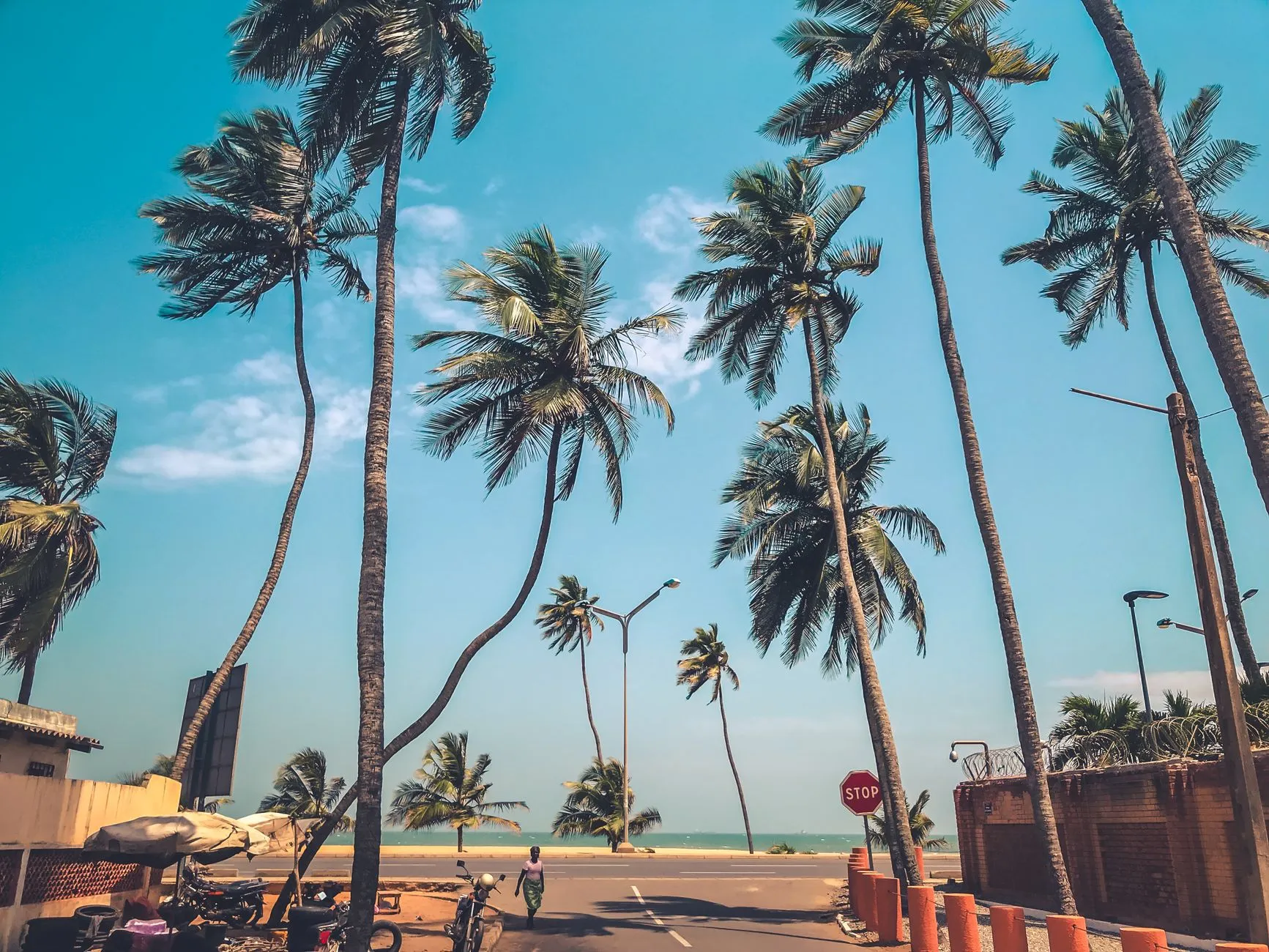
The coast road runs the length of the city, a long palm-lined boulevard with the Atlantic crashing on one side. The beaches east of the centre are wide and golden, and while the ocean here has a serious undertow — swim with respect and local advice, this is not a gentle lagoon — the real pleasure is the line of beach bars and grills where the day ends over charcoal fish and cold beer as the light goes pink. It is one of the great underrated sundowner scenes on the continent.
Inland, the city’s beating heart is the Grand Marché, a multi-storey riot of commerce where you can buy anything from enamel pots to fetish charms to bolts of glorious wax-print cloth. The cloth is the story here: Lomé built a fortune on textiles, and the legendary traders who ran it — the “Nana Benz,” formidable women who grew so wealthy on the wax-print trade that they were chauffeured in Mercedes — are a real piece of Togolese history, not folklore. Their successors still hold court. Go for the colour and the negotiation; the women who run those stalls have forgotten more about bargaining than you’ll ever learn.
Don’t miss the small pleasures: the elegant decay of the old German and French colonial buildings (Togo was German Togoland until 1914, a fact written all over the architecture and the place names), the Monument de l’Indépendance, and the easy detail that Ghana is right there — the border, and Accra-bound traffic, is a stone’s throw west of the city. Lomé sits in the corner of its own country, which is part of why it feels so connected.
Akodessawa: The World’s Largest Fetish Market
Then there’s the place that makes Togo unforgettable, and it deserves to be approached with care.
Akodessawa Marché des Féticheurs, in Lomé’s Bè district, is the largest fetish market in the world — the supply depot for traditional Vodun (voodoo) practice across West Africa. What confronts you is unflinching: tables and tables of dried animal parts, skulls, hides, herbs, carved figures, and powders, the raw materials of a faith that healers and priests come from across the region to buy. It is, on first sight, a shock.
But understand what you’re looking at. Vodun is a living religion — one of the world’s oldest, native to this corner of the Gulf of Guinea, with millions of adherents and a coherent cosmology of deities, ancestors and intermediaries. The market is not a freak show; it’s a pharmacy and a place of worship rolled into one. The animal materials are used in ritual and traditional medicine, the way an apothecary’s shelves are used elsewhere. Treat it as you would a temple supply store, because that’s what it is.
Practically: you’ll be expected to take a guide and pay a fee, and there’s usually a charge to photograph — agree it up front. A good guide will walk you through the logic of the place and, if you’re interested, arrange a short consultation with a féticheur (priest), who may perform a blessing and offer you a carved talisman. Go in with respect and genuine curiosity rather than ghoulish appetite, don’t snap photos of people without consent, and you’ll come away with something far better than a creepy anecdote — a glimpse into a belief system that quietly shapes daily life across the whole region.
Akodessawa rewards the respectful and punishes the smug. Come as you would to a place of worship — because to the people buying here, it is one.
Lake Togo & Togoville: Where Vodun Lives
A short run east of Lomé, the coastal lagoon opens into Lake Togo, a calm sheet of water that’s the antidote to the city’s bustle and the spiritual centre of the country’s Vodun tradition. You cross by pirogue — a poled dugout canoe — from the lakeside village of Agbodrafo to Togoville on the far shore, and the slow glide over flat water is half the pleasure.
Togoville is a place of genuine weight. It gave the whole country its name, it was where Germany signed the 1884 treaty that made Togoland a protectorate, and it remains a deeply important Vodun centre, dense with shrines and sacred sites. Take a local guide; the shrines are not for casual wandering, and the courtesy of being shown around by someone who belongs there transforms the visit. There’s a curious overlay of Catholicism too — a cathedral and a Marian apparition site sit alongside the Vodun shrines, the kind of layered faith you find all over this coast.
This is the place to slow down and let the spiritual texture of southern Togo register without the intensity of the fetish market — quieter, gentler, lived-in.
Kpalimé and the Green Plateaux
Two hours northwest of Lomé the land tilts up and turns, improbably, green. The Plateaux region around Kpalimé is Togo’s lush, cool, cultivated heart — hills of coffee and cocoa, forest tracks, waterfalls and butterflies — and it’s where I’d send anyone who thinks West Africa is all dust and heat.
Kpalimé itself is a relaxed market town, long a centre for artisans — woodcarvers, batik-makers, weavers — and an easy base. Around it, the green opens up. Mount Agou, at 986 metres the highest point in Togo, is a walkable climb through villages and terraced farms with views over the Ghanaian border on a clear day. The Cascade de Womé and the Kpimé falls are accessible (the latter best after rain, frankly underwhelming in the dry months — manage expectations). The Klouto/Kloto forest is the place for guided walks among butterflies and birds, ideally with one of the local naturalist guides who know which trails are worth your morning.
What makes the Plateaux special isn’t any single sight — it’s the cumulative pleasure of cool air, woodsmoke, roadside coffee and cocoa drying on mats, and the slower, friendlier upcountry pace. Two or three nights here is the easiest, most rewarding stretch of the whole ribbon.
The Plateaux around Kpalimé are the antidote to every preconception about West Africa — cool, green, planted with coffee and cocoa, and gentle enough to walk for days.
Koutammakou: The Tower-Houses of the Batammariba
At the far end of the worthwhile north, beyond Kara, lies the thing that puts Togo on the UNESCO map and, for many travellers, justifies the entire trip: Koutammakou, the Land of the Batammariba.
This is a cultural landscape unlike anywhere else. The Batammariba people build takienta (plural sikien) — fortified, sculptural mud tower-houses that rise out of the earth like small castles, two storeys of rammed clay with conical thatched granaries, internal staircases, and a layout that encodes the family’s social and spiritual structure. They’re not a museum exhibit; they’re lived-in homes, made by hand from the ground they stand on, and the landscape of farmland and forest around them is part of the listing. In neighbouring Benin the same people and architecture are known as Tata Somba — and in a rare piece of regional cooperation, the World Heritage site is being managed transnationally across the border.
You visit around Nadoba, reached via the town of Kandé off the N1. The right way to do it is with a local guide and the courtesy of village fees — you’re walking into people’s homes, and a small payment and a respectful manner are the price of admission to one of the most remarkable vernacular architectures on earth. Spend time, don’t rush the photos, and let someone explain how the houses work, because the genius is in the function as much as the form.
A note of honesty on access: Koutammakou sits in the northern half of the country, and the security picture in the north can shift. The Nadoba/Kandé heartland has long been the standard tourist route and remains the headline reason to head up the ribbon — but the far north beyond it carries serious advisories, and you should check current guidance and local advice before committing to the journey. When it’s open and calm, it is unmissable. When the advisories tighten, defer to them.
Kara, the Kabyé North & the Far-North Caveat
Kara, the main northern city and Togo’s effective second capital, is the gateway to all of this — a workmanlike town in the homeland of the Kabyé people, with a useful clutch of hotels and the best base for Koutammakou. Time your visit for July and you may catch Evala, the Kabyé initiation wrestling festival, a fierce, ceremonial coming-of-age contest that’s one of the great cultural spectacles of the country.
North of Kara the land dries toward the Sahel, and here the honest map gets serious.
The Savanes region — the far-northern strip hard against the Burkina Faso border, around Dapaong — is under a state of emergency and carries do-not-travel advisories from the US, UK, Canada and others. The cause is real: spillover of Sahelian jihadist violence, with armed groups (JNIM, the al-Qaeda affiliate, among them) having carried out dozens of attacks and kidnappings in the region since 2021. Foreigners need special government authorisation to travel in the Savanes at all. In specifics: the US flags areas north of Kandé as Do Not Travel; the UK FCDO advises against all travel within 30 km of the Burkina border (with a narrow exception for Dapaong and the N1 leading to it) and against all-but-essential travel to the rest of the Savanes; Canada warns off the 30 km border zone.
This is not alarmism and it’s not a reason to skip Togo — it’s a line on the map. The south, the coast, the Plateaux, the centre, Kara and the Koutammakou heartland are calm and rewarding. The far north is not, for now, somewhere you go. Treat the upper end of the ribbon as the part you watch advisories on, and plan your trip below the line.
The security story is geographic, not national: calm south and centre, genuine danger in the far-northern Savanes near Burkina Faso. Don’t let the headlines scare you off Togo — and don’t let the rest of the country fool you into ignoring the Savanes warnings.
What to Eat
Togolese food is honest, starchy, sauce-driven and seriously good once you stop looking for it in restaurants and start eating where the country eats — at roadside stalls, in market chop-bars, and at the beach grills.
The staple is pâte (called akumè in Ewe) — a smooth dough of maize or cassava flour — eaten with your hands and dragged through a sauce. The sauces are where the cooking lives: sauce d’arachide (rich peanut sauce), gboma dessi (a deep spinach-and-meat stew), adémè (a slippery jute-leaf sauce), tomato-and-fish stews, and fiery pepper relishes. Fufu — pounded yam, springy and elastic — turns up more in the centre and north. Djenkoumè, a tomato-stained maize dish, often comes with grilled chicken.
On the coast, eat fish. Lomé’s beach grills do whole grilled tilapia, barracuda and dorade with a squeeze of lime, raw onion, hot sauce and a mound of fried plantain or aloko, and it is one of the great cheap pleasures of the trip — a generous plate for €5–10. Koklo mémé (chilli-grilled chicken) and skewered brochettes are the street-corner standbys; a hearty market plate runs €1–3.
To drink: the local lagers — Awooyo, Pils, Flag — are cheap (around €1–1.50 for a big bottle) and cold, which is all you ask in this heat. The braver should try sodabi, a potent distilled palm liquor with real cultural weight (it shows up in Vodun ritual), and tchoukoutou, the cloudy millet beer of the north, drunk from calabashes in the centre and north. For the teetotal, bissap (hibiscus) and ginger drinks are everywhere.
Skip the hotel restaurants and eat at the beach grills and market stalls. Togo’s food is a street-and-sand cuisine; the moment you formalise it, it loses its soul.
Money & Costs
Togo runs on the West African CFA franc (XOF), and the single most reassuring fact about money here is the euro peg: the CFA is fixed to the euro at €1 = 655.957 CFA, and it does not move. That stability makes budgeting simple — prices in CFA convert cleanly to euros, and there’s none of the currency roulette you get elsewhere.
But it remains a cash economy, and you should plan around that. Cards are accepted at top-end hotels in Lomé and almost nowhere else. ATMs (Ecobank, Orabank and the like) work in Lomé and the bigger towns and dispense CFA, but they can be temperamental and they thin out fast upcountry — draw a solid cushion of cash in Lomé before heading north, because Kpalimé and Kara are not places to be caught short. Euros are the easiest currency to bring and exchange. Mobile money (the local T-Money / Mixx / Moov wallets) is ubiquitous for locals but fiddly for short-term visitors.
Costs are low. Beyond the meals and transport already noted, a clean mid-range hotel room in Lomé runs €40–80; the few proper international-standard hotels (the Sarakawa, the 2 Février tower, an Onomo) push past €100; basic upcountry guesthouses can be €15–30. A long-distance coach the length of the country is €12–18. Guides, village fees and the fetish-market entry are modest but real — carry small notes, because nobody ever has change, and a fistful of 500s and 1,000s is the most useful thing in your pocket.
When to Go
Togo’s weather splits in a way worth understanding, because the south and north don’t keep the same calendar.
The headline answer is November to February: the long dry season, when the air is at its least sticky, the roads are firmest, Koutammakou is most accessible, and Lomé’s coast is at its most pleasant. December and January are the sweet spot — warm days, cooler nights, manageable humidity. This is when to come.
The nuance is that the south has two dry periods. The main one runs roughly November to March; then there’s a curious short dry break in August (the petite saison sèche), a window of cooler, drier weather sandwiched between the south’s two rainy spells — a genuinely viable, less obvious time to visit the coast and the Plateaux. The big rains in the south come in two pushes (around April–July and again in September–October), turning unpaved tracks to mud and the green hills emphatically greener.
The north keeps it simpler: one long dry season (roughly October to April) and one wet season (May to September). One northern factor to plan around is the Harmattan, the dry, dusty wind that blows down off the Sahara from about December to February, hazing the skies and dropping the nights pleasantly cool — atmospheric, occasionally throat-drying, and worth knowing about if crisp photographs of the tower-houses are your goal.
Heat is the constant. This is the tropics near the equator; even in the “cool” season, midday is hot and the humidity on the coast is a wet blanket. Plan for it.
Overrated / What to Skip
A guide that only enthuses is useless, so here’s where I’d save you time and disappointment.
The waterfalls, in the dry season. Kpimé and Womé are lovely after rain and frankly thin trickles in February and March, when most people visit. If you’re chasing dramatic cascades in the dry months, lower your expectations or skip them — the forest walks and the coffee-and-cocoa landscape around Kpalimé are the real reason to be in the Plateaux, not the falls.
Wildlife parks. Togo has national parks — Fazao-Malfakassa, Kéran — but if you’ve come hoping for a Serengeti-style safari you’ll be let down; the wildlife is sparse and the infrastructure thin. Come to Togo for culture, landscape and people, not big game. If safari is the goal, this is the wrong country.
The rushed day-trip mentality. Plenty of visitors try to “do” Togo as a tacked-on side of a Benin trip and give it a day and a half in Lomé. That’s a shame. The country’s whole pitch is the unhurried transect up the ribbon; a day in the capital tells you almost nothing.
Beach swimming without local advice. The Atlantic here has a vicious undertow and there are no lifeguards to speak of. The beaches are for walking, eating and sundowners; swimming is at your own real risk, and locals will tell you where (and whether) it’s sane to go in. Believe them.
And one thing not to skip that people wrongly do: the fetish market, dismissed by squeamish travellers as macabre tourism. Handled with respect, it’s the single most illuminating thing in the south. Go.
The honest hierarchy: Koutammakou, the Plateaux, the fetish market and the Lomé beach-grill scene are worth real time. The waterfalls and the wildlife parks are not why you came.
Health & Safety: The Honest Picture
Togo is a low-violent-crime destination for visitors in the south and centre — but it’s a tropical, developing country and you should arrive prepared, not paranoid.
Health first. Malaria is present year-round across the country; take prophylaxis (talk to a travel clinic well before you go), sleep under nets, and use repellent — this is the single most important precaution you’ll take. Yellow fever vaccination is mandatory (and required for entry), so that’s handled if you’ve done your visa properly. Make sure routine jabs are current and consider typhoid and hepatitis A. Tap water is not for drinking — stick to bottled or treated water, and be sensible with street food (eat it hot and fresh, which is most of the joy anyway). Medical facilities are limited outside Lomé; travel insurance with evacuation cover is not optional for the upcountry legs.
Everyday safety. In Lomé, the usual urban common sense applies — watch for opportunistic pickpocketing in the Grand Marché and on crowded transport, don’t flash phones and cash, and take registered taxis or arranged drivers at night rather than wandering. Petty theft, not violence, is the realistic risk. Beach areas are best not walked alone after dark. Police checkpoints on the roads are routine; keep your passport and yellow card accessible and be polite. Photographing official buildings, the airport and anything military is a bad idea.
The regional split, restated because it matters. The south, coast, Plateaux, centre, Kara and the Koutammakou heartland are calm and welcoming. The far-northern Savanes region near the Burkina Faso border is under a state of emergency and carries do-not-travel advisories for terrorism and kidnapping; foreigners need special authorisation even to enter it. Plan your trip to stay south of that line, check your government’s current advisory before you go, and you’ll find Togo not just safe enough but one of the most genuinely relaxed countries in the region to travel.
Do the boring health admin — malaria pills, yellow fever, insurance, bottled water — and respect the far-north advisory line. Get those right and Togo is an easy, warm, low-stress country to move around.
Frequently Asked Questions
Cheapest Flights to Togo
We have tracked 79 fares to Togo from 21 cities. As of June 2026, here is what a good price looked like from each — the lowest fare we recorded, and a “great-deal” benchmark to judge a quote against. These are tracked observations, not live prices: by the time you read this they will have moved, so treat them as a yardstick, not a quote.
| From | Lowest fare we tracked | Great-deal benchmark |
|---|---|---|
| Warsaw (WAW) | €402 | €575 |
| Hamburg (HAM) | €457 | €653 |
| Paris (CDG) | €487 | €696 |
Recent deals we have posted to Togo:
- Frankfurt to Lomé, Togo from €551
- Warsaw to Lomé, Togo from €575
- Lyon to Lomé, Togo from €489
- Brussels to Lomé, Togo from €507
- Nantes to Lomé, Togo from €461
These are fares aifly tracked to this destination, not live quotes — they have changed since and several of the deals above may have expired. Browse current flight deals →