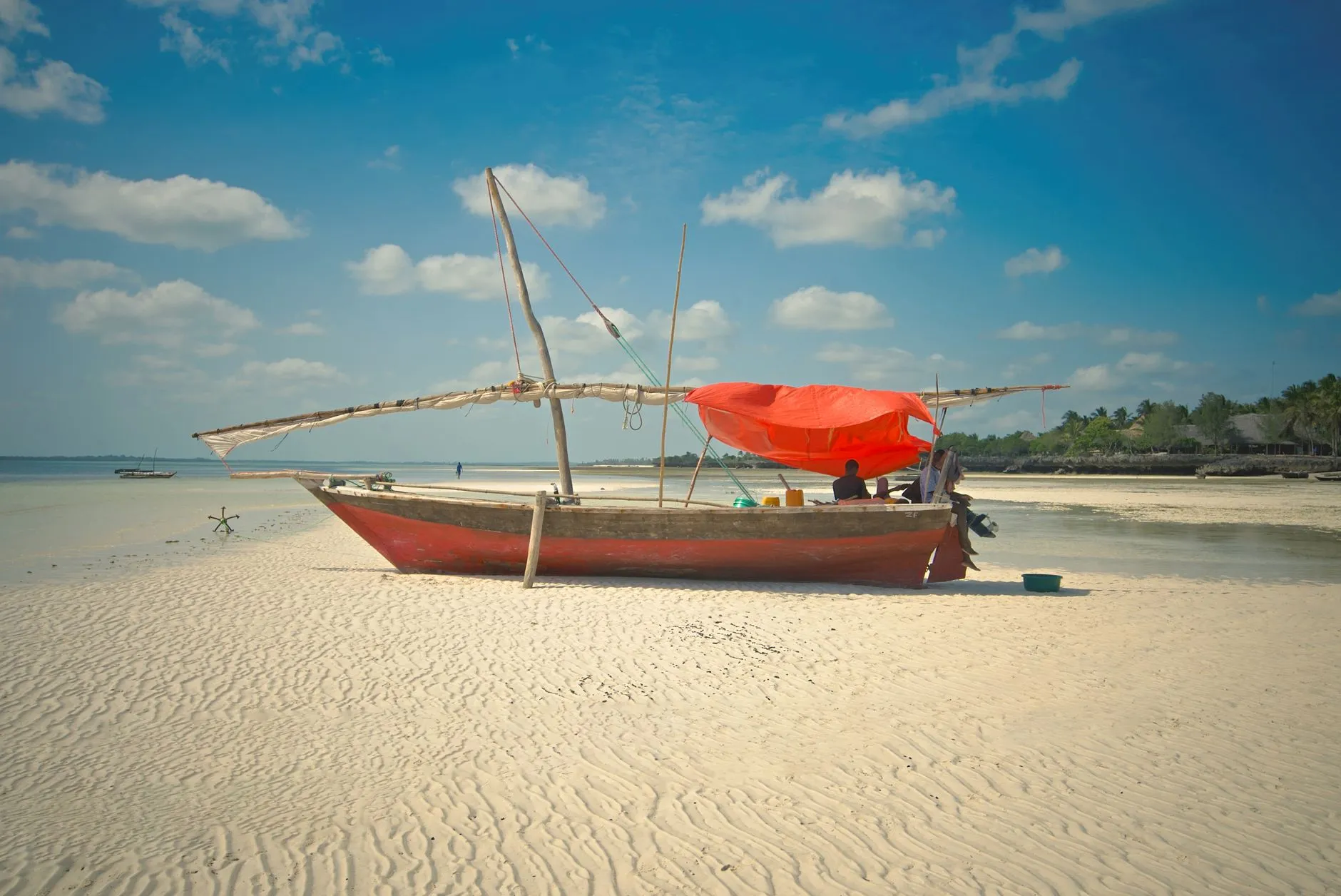
Zanzibar — Complete Travel Guide 2026
Zanzibar is two trips stitched together: a culture trip in Stone Town — a sweat-soaked Omani-Swahili maze of carved doors, call-to-prayer and grilled-octopus smoke — and a beach trip out on the coast, where the single decision that makes or breaks your holiday is one almost no brochure mentions: which coast you pick, because of the tides. Get the coast wrong and you’ll spend half your days staring at a kilometre of exposed reef where the sea used to be. Get it right and it’s one of the best-value warm-water islands on earth.
Quick Reference
Indian Ocean archipelago ~35 km off mainland Tanzania, East Africa (the main island is Unguja)
Abeid Amani Karume International (ZNZ), just south of Stone Town
Tanzanian shilling (TZS) — roughly 2,600 to the US dollar in 2026; US dollars widely accepted
Swahili (Kiswahili) everywhere; English understood in tourism; Arabic in religious life
Tanzania e-visa (~€45 US citizens €95 multiple-entry) + mandatory Zanzibar travel insurance (~€40) — both required to enter
June–October (long dry, cooler, big kite wind) & late Dec–Feb (short dry, hot, calmer). Avoid the long rains, mid-March–May
Stone Town’s UNESCO labyrinth, spice farms, white-sand beaches, Swahili-Omani-Muslim culture, Mnemba snorkelling, Freddie Mercury
North (Nungwi/Kendwa) to swim all day; East (Paje/Jambiani) for kitesurf & low-key; Stone Town for history & food
Editor’s Note: The Tide Decides Everything
Here is the thing the glossy photos never tell you, and the single most useful sentence in this guide: on Zanzibar’s east coast, at low tide the ocean walks out on you. In villages like Paje and Jambiani the water can retreat the better part of a kilometre, leaving a moonscape of seagrass, starfish and seaweed-farming plots where, two hours earlier, you were swimming. It is beautiful — and you cannot swim in it. Twice a day, every day, on a schedule the moon sets, not your holiday plans.
The north coast around Nungwi and Kendwa is the exception: a steeper drop-off means the horizontal tide swing is small, so you can wade in and swim at basically any hour, any day. That one geographical fact is why Nungwi and Kendwa are the busiest, liveliest and most expensive beaches on the island — you’re paying a premium for water that’s always there.
So decide this before you look at a single room photo. Want to swim whenever you like, with sunset bars and a buzz? North coast. Want long empty sand, kitesurfing, lower prices and don’t mind planning your swims around a tide chart? East coast. Want history and food over beach? Stone Town, then move out for the second half. Many people do Stone Town plus one coast; the wisest split a week between Stone Town and a beach, and pick the coast on purpose.
Plan around the tide chart, not your wake-up time. On the east coast, screenshot a Zanzibar tide table for your dates before you fly. A “beach day” at Paje from 11am–3pm during a daytime low tide means no swimming and a long, hot walk to the water — while the same hours at Nungwi are perfect. This is the number-one source of disappointed Zanzibar reviews.
Should You Go? Who It’s For — and Who It Isn’t
Zanzibar rewards a particular traveller and quietly frustrates others. Be honest about which you are.
It’s brilliant for: culture-and-beach travellers who want more than a swim-up bar — Stone Town gives you a genuine, layered, lived-in old city most beach destinations can’t match. Kitesurfers (Paje is one of the planet’s great kite spots). Couples and honeymooners pairing it with a Tanzania safari or Kilimanjaro climb — the “bush and beach” combo is the classic, and Zanzibar is the obvious decompression after the savannah. And value hunters: away from the luxury north, your dollar stretches a long way for warm Indian Ocean and white sand.
Tip: Zanzibar is the natural beach finish to a mainland safari. Fly the short hop from Arusha/Kilimanjaro (JRO) or Dar es Salaam to ZNZ after the Serengeti and let the island do the unwinding. If that’s your plan, do the safari first while you’re sharp and energetic, and the beach second.
It frustrates: anyone expecting Maldives-grade do-nothing perfection — Zanzibar is a real, busy, developing island, not a sanitised resort bubble; seaweed farms, fishing villages, hawkers and power cuts are part of the texture. People who won’t respect a conservative Muslim culture (more on dress below). And anyone who books a remote east-coast resort, ignores the tides, and then complains the sea “disappeared.” It also isn’t a party-island free-for-all — alcohol is available in tourist areas but this is a 95%-plus Muslim society; keep the bikini-and-beer energy on the resort beach, not in the village.
Getting There: ZNZ Airport, Transfers & the Admin
Almost everyone flies into Abeid Amani Karume International (ZNZ), a few kilometres south of Stone Town. A newer international terminal has eased what used to be a notoriously chaotic arrival, but expect queues in peak season — and expect to do three things on landing: clear immigration with your visa, show your mandatory Zanzibar travel insurance, and collect your bags in a hall that can get crowded. A smaller number of safari travellers fly in from the mainland (Arusha/JRO, Dar es Salaam) on the short domestic hop. I won’t quote air fares — but know that European demand (Italy, France, Poland and the UK lead) keeps both charter and scheduled routes busy, especially in the dry season.
Transfers from ZNZ. There is no train and no public bus to the airport, and the local dala-dala minibuses don’t serve it — so it’s a taxi or a pre-arranged transfer. A prepaid taxi desk in arrivals sells fixed-rate vouchers; reckon roughly €14–€19 into Stone Town, €32–€37 to Kendwa/Nungwi in the north, and €45–€55 across to the far east coast (Paje/Jambiani), as the island is bigger than it looks — the north and east are an hour-plus drive. Most hotels and tour operators will arrange a transfer for a similar or slightly higher fixed price, and on a jet-lagged arrival that’s the stress-free move.
Don’t arrive without the two pieces of paper. You need (1) a Tanzania visa or e-visa grant notice and (2) proof of the mandatory Zanzibar inbound travel insurance. Both are checked on arrival, and the insurance in particular trips people up — your own travel-insurance policy from home does not substitute for it. Buy the Zanzibar policy online before you fly (details under Practical Information) so you’re not fumbling at the desk after a long flight.
The ferry from Dar es Salaam is the budget/scenic alternative if you’re coming via the mainland. Fast catamarans (Azam Marine’s “Kilimanjaro” ferries are the main operator) cross from Dar to Stone Town in about 1 hour 20 minutes, with economy around €32 and first/business class around €37–€45 for foreigners (you pay a foreigner rate; carry your passport). Book a daytime sailing, ignore the touts swarming the Dar terminal, and only buy from the official desk or a reputable site. From Dar’s airport to the ferry port is a ~20-minute, ~€14 taxi.
Which Coast? North vs East vs Stone Town
This is the decision. Here’s the honest character of each, tides included.
The North — Nungwi & Kendwa (swim all day, liveliest). The headline coast. Kendwa is the single best swimmable beach on the island at any tide — broad, soft white sand, calm turquoise water that stays put, and famous sunsets (and the long-running full-moon parties). Nungwi, around the northern tip, is busier and more developed — dhow-builders, dive shops, rooftop bars, a wide spread of hotels from backpacker to five-star. This is where you go if you want to swim on impulse, have a drink at sunset, and not think about a tide chart. The trade-off: it’s the most touristy and most expensive part of Zanzibar, and Nungwi in particular can feel crowded and hustly in peak season.
The East — Paje, Jambiani, Bwejuu (kite, calm, value, but tide-bound). Long, dreamlike ribbons of white sand backed by palms and low-key bungalows. Paje is the kitesurf capital — when the wind’s up (June–Sept and Dec–Feb), the lagoon is a carnival of kites and the village has a young, barefoot, international-traveller energy. Jambiani just south is quieter, more village-life and authentic; Bwejuu north of Paje is sleepier still. The catch is the tide: this whole coast sits behind a shallow reef lagoon, so at low tide the water retreats far out and swimming stops — you’ll see the seaweed farmers (mostly women) out working their underwater plots. At high tide it’s gorgeous swimming. You trade guaranteed swims for lower prices, more soul, and the best wind.
The Southeast — Michamvi. The quiet wildcard. The Michamvi peninsula curls round so that its western side faces the sunset (rare on this generally east-facing coast) — Michamvi Pingwe and the famous Rock Restaurant sit here. It’s calmer, more upmarket-secluded, and a good “I want the east-coast look but with a sunset and fewer crowds” choice.
Stone Town (history & food, not beach). Not a beach base — the town beach is functional, not for lounging — but the cultural heart of any trip. Base here for two nights at the start or end to do the old city properly, then move to the coast. Many people regret skipping it.
Stone Town: The Old City
A UNESCO World Heritage maze of coral-stone buildings, the historic heart of the Swahili coast and the old Omani sultanate — and a genuinely atmospheric place to get lost. Spend a half-day on a walking tour and a half-day wandering yourself.
The carved doors are the signature: hundreds of them, heavy teak slabs studded with brass spikes (an Indian flourish, originally to stop war-elephants — never mind that Zanzibar has no elephants) and carved with lotus, fish, chains and Quranic script. Learn to read them and the whole town opens up. The House of Wonders (Beit-al-Ajaib), the Old Fort, and the seafront palaces anchor the skyline.
The slave-trade history is handled soberly, and should be by you too. Stone Town was one of the last great slave markets in the world. On the site stands the Anglican Christ Church Cathedral, built in 1874 over the market; its altar marks the spot of the whipping post. Beside it the memorial — figures of enslaved people sunk in a pit, in original chains — and the preserved underground holding chambers are a gut-punch. Visit. Take the guided context. This is not a photo-op; it’s the most important thing in the city.
The food. Stone Town’s great nightly ritual is the Forodhani Gardens night market on the seafront: stalls under strings of bulbs grilling skewers of seafood, octopus, lobster and the local “Zanzibar pizza” (a folded, fried dough pocket, savoury or sweet), with sugarcane juice pressed to order. It’s touristy and a little theatrical now, but still fun — go for the atmosphere and a couple of skewers, eat your serious meal elsewhere.
At Forodhani, be smart about the seafood. Eat where it’s grilling hot and busy, watch the “free-then-charged” plate trick (confirm prices before they pile your plate), and skip anything sitting lukewarm. For a properly good cheap Zanzibari meal, locals point you to spots like Lukmaan in town rather than the market itself.
The Freddie Mercury connection is real but oversold: the Queen frontman was born Farrokh Bulsara in Stone Town in 1946 and left as a boy. There’s a small Freddie Mercury Museum in a building tied to his family; it’s a modest, slightly thin stop — fine for fans, skippable otherwise. The town itself is the attraction.
The Beaches & the Tides (the part to actually plan)
To restate the one rule that governs your beach time:
- North (Kendwa, Nungwi): small tidal range, deep water close in → swim at any tide, any time of day. Premium prices reflect it.
- East (Paje, Jambiani, Bwejuu) & much of the southeast: large tidal range over a shallow reef lagoon → swim only around high tide; at low tide the sea is far out and you’re walking on reef flats among seaweed plots. Lower prices, big skies, best kite wind.
- The seaweed farms aren’t a flaw — they’re the culture. That low-tide expanse of staked plots is a women-led export industry (seaweed for cosmetics and food thickeners). Walking out at low tide to see it, ideally with a local guide, is one of the east coast’s quiet highlights.
Practically: if you’re a swim-every-day, sunset-cocktail person, base north. If you’re a kiter, a long-walk-and-a-book person, or budget-minded, base east and simply check the tide chart each morning — plan your swims and snorkel trips for the high-water windows, and your walks, village visits and lazing for the lows.
Sea urchins and reef shoes. On the east-coast reef flats (and entering the water over rock anywhere), wear reef shoes — urchins and sharp coral are real. A cheap pair from any village shop saves a painful end to your trip.
Beyond the Beach: Spice Farms, Jozani, Mnemba & Dolphins
Zanzibar earns the “Spice Island” name, and the inland excursions are genuinely worth a day or two off the sand.
Spice farms. A spice-tour is the classic half-day: a guide walks you through a working plantation, crushing leaves and bark under your nose — cloves (Zanzibar’s historic cash crop), cinnamon, nutmeg, cardamom, vanilla, black pepper, lemongrass — usually ending with a fruit tasting and a chance to buy fresh spices far cheaper and fresher than at home. Touristy, yes; also genuinely interesting and very photogenic. A small tip for the “spice boys” who weave you palm-frond hats and trinkets is expected.
Jozani Forest (Jozani-Chwaka Bay National Park), in the island’s centre, is the only place to see the endemic, endangered Zanzibar red colobus monkey — habituated troops that let you get remarkably close along the boardwalks, plus a mangrove walkway. A short, easy, rewarding stop, usually paired with a beach transfer on the way to/from the east coast.
Mnemba Atoll, off the northeast corner, is the island’s premier snorkelling and diving — a protected marine reserve of coral gardens and clouds of fish, with turtles and the occasional dolphin. Crucial detail: Mnemba island itself is private (the &Beyond luxury lodge); day-trippers snorkel the atoll around it, not the island. Shared boat trips run from roughly €37 per person; private/full-day trips with marine-park fees and transfers run nearer €140–€190. Go early before the wind and the crowds build.
Dolphins at Kizimkazi — and the ethics. The southern village of Kizimkazi has resident bottlenose and humpback dolphins, and “swim with dolphins” tours are heavily sold. Be careful here. The bad operators chase the pods with boats and dump tourists on top of them — stressful for the animals and a poor experience. If you go, choose a genuinely ethical operator (look for ones that train skippers, keep distance, limit boats, and don’t guarantee a swim), and accept that watching from the boat is kinder than swimming. Honestly, for marine life, Mnemba snorkelling is the better and more reliable day out.
The dolphin tour is the one excursion to choose with your conscience. Cheap Kizimkazi trips often mean boats racing to herd dolphins for a money shot. If an operator promises you’ll definitely swim with them, that’s the red flag — it means they’ll chase. Pick a certified ethical tour or skip it and snorkel Mnemba instead.
When to Visit: Month by Month
Zanzibar has two dry seasons and two rainy ones, and the wind matters as much as the rain.
- June–October — the long dry season (the safe bet). Cooler, drier, sunny, low humidity, and the Kusi (southeast) trade wind blows steadily — 15–25 knots, peaking July–August. This is peak kitesurf season at Paje (for confident riders) and the most reliable beach weather; it’s also the classic post-safari window. Busiest and priciest, but for good reason.
- December–February — the short dry season (hot & calm). Hot and humid, generally sunny between brief showers, with the gentler Kaskazi (northeast) wind (12–20 knots) — lighter, warmer kiting that suits beginners. Peak Christmas/New Year is the most expensive fortnight of the year.
- Mid-March to May — the long rains (avoid). The genuine low season. April is the wettest month by far, with daily heavy afternoon thunderstorms, choppy seas, weak unreliable wind, and many places closing or running skeleton service. Cheap, but you risk washout — only worth it for serious bargain-hunters who don’t mind gambling.
- November — the short rains (shoulder). Shorter, less intense showers; an underrated shoulder with lower prices and decent weather between bursts.
Tip: June and late-March/November shoulders are the value sweet spots — you can catch real Kusi/early wind and good sun with 20–30% off peak prices and far fewer people. If your dates are flexible, target these over the July–August and Christmas crush.
What to Eat
Zanzibari food is Swahili cooking turbocharged by the spice trade — coconut, lime, cardamom, clove and chilli on the freshest Indian Ocean seafood. Eat local and you’ll eat brilliantly and cheaply.
- Pweza wa nazi — octopus simmered in coconut curry with lime, garlic, cardamom and cinnamon. The single most distinctly Zanzibari dish; the ocean and the spice farm on one plate. Order it everywhere.
- Urojo (Zanzibar mix) — the island’s beloved street soup: a tangy mango-and-tamarind broth loaded with crispy bhajia fritters, potato, cassava, chickpeas, chutneys and a coconut drizzle. Sour, spicy, crunchy, addictive — the local lunch.
- Forodhani street food — grilled seafood skewers, lobster and crab, sugarcane juice, and “Zanzibar pizza” (a fried, folded dough pocket — try a savoury beef-and-egg one and a Nutella-banana one).
- Biryani, pilau, mishkaki (marinated meat skewers), and fresh coconut-rice with whole grilled fish reflect the Omani-Indian-African mix.
- Buy spices to take home on your spice tour — cloves, vanilla, cinnamon — fresher and cheaper than anywhere.
A serious local meal in Stone Town costs a few dollars; a resort seafood dinner runs €14–€28. Alcohol is sold in tourist hotels, bars and beach resorts but isn’t part of local Muslim life — keep it to those settings.
Getting Around
- Private transfers / taxis (the default). Pre-booked private transfers and taxis are how most visitors move between the airport, Stone Town and the beaches. Negotiate or confirm the fixed fare before you get in — meters don’t exist. Cross-island runs (north to east, say) are an hour-plus.
- Day-tour vehicles. Most excursions (spice farm, Jozani, Mnemba, Stone Town) include hotel pickup, which solves transport on those days.
- Dala-dala (local minibuses). The cheap, authentic, slow local option — converted trucks and minibuses crammed with people, cargo and the occasional chicken, running fixed village routes for pennies. A fun cultural experience for the adventurous and budget-minded; not practical with luggage, on a schedule, or to the airport (they don’t serve it). Great for a short hop between beach villages.
- Scooters/bikes. Rentable in beach areas; roads are rough and police checks/”fines” for foreigners are common, so weigh it up. You technically need a Zanzibar permit.
Agree every taxi price before you move. There are no meters and no Uber across most of the island. A friendly “how much to X?” and a confirmed number up front avoids the awkward inflated-fare argument at the other end. Your hotel will tell you the fair rate for any run.
Where to Stay: by Coast & Budget
Match the base to the tide rule above, then to your budget.
- North (Kendwa/Nungwi) — swim-all-day, social. The widest range: backpacker hostels and dive-shop guesthouses in Nungwi from ~€28 mid-range beach hotels at €110–€190 and a strong cluster of luxury/all-inclusive resorts on Kendwa’s swimmable sand from €230+. Best for first-timers, families wanting reliable swimming, and anyone who values sunset bars.
- East (Paje/Jambiani/Bwejuu) — value, kite, character. The best prices and the most soul: vibrant kite-hostels and bungalows from €19–€37 eco-chic boutique bungalows at €85–€140 and a handful of design hotels above that. Paje for the kite-and-young-traveller scene, Jambiani for village calm. Just remember the tide.
- Southeast (Michamvi) — secluded & upmarket. Quieter boutique and luxury hideaways with the rare sunset-facing aspect. Good for couples wanting privacy.
- Stone Town — atmospheric old-city stays. Restored Omani merchant houses turned boutique hotels with rooftop terraces and four-poster beds, plus budget guesthouses. Two nights here is the move, not a week.
Expect a nightly infrastructure/tourism tax of about €2–€5 per person, often collected at check-in on top of the room rate.
Costs & Budget
Zanzibar spans backpacker to barefoot-luxury. Rough daily, per person, excluding international flights:
- Budget: ~€37–€85/day — east-coast hostels/guesthouses, local food, dala-dalas, a couple of group excursions.
- Mid-range: ~€110–€230/day — a nice beach bungalow or boutique hotel, mix of local and resort meals, private transfers, several tours.
- Luxury: €280–€550+/day — five-star resorts, all-inclusive or private villas, private boats; the &Beyond Mnemba bracket runs into the thousands per night.
Budget separately for the unavoidable government fees: Tanzania visa (~€45 or €95 for US citizens), the mandatory Zanzibar insurance (~€40), and the per-night infrastructure tax. A typical 5-day independent trip lands somewhere between ~€420 (savvy budget) and €2325+ (high-end), before flights. Bring US dollars (newer notes, 2009 or later) as a backstop — they’re accepted widely — but pay in shillings where you can for better local prices.
Practical Information
Entry — visa + the mandatory insurance. Most nationalities need a Tanzania visa. Apply online for the e-visa at the official immigration portal in advance (visa.immigration.go.tz) — the standard tourist visa is about €45, but US citizens must buy the €95 multiple-entry visa (12 months validity, 90 days per stay). You can still get a visa on arrival at ZNZ, but the online e-visa with its emailed “grant notice” is smoother. Separately and crucially, every foreign visitor to Zanzibar must buy the mandatory inbound travel insurance from the Zanzibar Insurance Corporation — ~€40 per adult (about €20 for minors, under-3s free), valid up to ~92 days, covering emergency medical and evacuation. Buy it before you fly at the official site (visitzanzibar.go.tz); it is checked on arrival and your home policy does not count. A passport valid 6+ months is required.
The Zanzibar insurance is genuinely mandatory and separate from your own. This is the single most-missed Zanzibar requirement. You buy a specific ~€40 ZIC policy online, get a confirmation, and show it at immigration — in addition to whatever travel insurance you already hold. No policy, no entry. Do it the week before you fly.
Health. Zanzibar is malaria territory — take antimalarials (consult your doctor), use repellent and cover up at dusk. A yellow-fever certificate is required only if you’re arriving from a country with yellow-fever risk (most of sub-Saharan Africa, parts of South America) — not for travellers coming directly from Europe or North America — but carry your yellow card if you’ve routed through an endemic country, as it’s occasionally checked on the Zanzibar leg. Standard travel jabs (hep A, typhoid, tetanus) are sensible.
Currency & money. The Tanzanian shilling (TZS), around 2,600 to the US dollar in 2026. US dollars are widely accepted for tours, hotels and bigger purchases (use clean, post-2009 notes); shillings are better for street food, dala-dalas and markets. ATMs exist in Stone Town and the bigger beach hubs but can be unreliable — carry cash. Cards are accepted at upmarket hotels, often with a surcharge.
Modest dress outside the resort beach — this matters. Zanzibar is over 95% Muslim. On the resort/hotel beach, swimwear is fine. Everywhere else — Stone Town, villages, markets, the Forodhani area — cover up: shoulders and knees for everyone; for women, a loose top and skirt/trousers below the knee; a light scarf is handy. Walking through a village in a bikini or shirtless reads as disrespectful. During Ramadan, dress more conservatively still and be discreet about eating, drinking and smoking in public daylight hours.
Safety. Zanzibar is among East Africa’s safer destinations and violent crime against tourists is rare. The realistic risks are petty theft (don’t flash valuables; mind phones and bags in Stone Town’s crowds), and tide/current swimming accidents (heed local advice). Walk Stone Town’s alleys freely by day and early evening, but take a taxi for longer moves after dark. Solo women travel here regularly; dress modestly and the hassle stays low-level. As a Muslim society, public drunkenness and PDA are frowned on off the resort beach.
Water. Don’t drink the tap water. Use sealed bottled water (or a filter bottle), brush teeth with it, and skip ice in non-tourist spots. Most resorts provide bottled water.
Tipping. Expected and appreciated: round up or ~5–10% in restaurants, a few dollars a day for hotel staff and guides, a small tip for spice-tour helpers and drivers. Tips genuinely matter to local incomes here.
Connectivity. Buy a local SIM/eSIM (Vodacom, Airtel, Halotel) on arrival — cheap, with decent data in towns and beach areas; coverage thins in the deep interior. Power is intermittent in places — pack a power bank. Sockets are UK-style three-pin (Type G).
Frequently Asked Questions
Cheapest Flights to Zanzibar
We have tracked 1,218 fares to Zanzibar from 82 cities. As of June 2026, here is what a good price looked like from each — the lowest fare we recorded, and a “great-deal” benchmark to judge a quote against. These are tracked observations, not live prices: by the time you read this they will have moved, so treat them as a yardstick, not a quote.
| From | Lowest fare we tracked | Great-deal benchmark |
|---|---|---|
| Bari (BRI) | €489 | €699 |
| Paris (CDG) | €497 | €710 |
| Istanbul (SAW) | €526 | €751 |
| Yerevan (EVN) | €564 | €805 |
Recent deals we have posted to Zanzibar:
- Berlin to Zanzibar, Tanzania from €500
- Amsterdam to Zanzibar, Tanzania from €500
- Amsterdam to Zanzibar, Tanzania from €483
- Istanbul to Zanzibar, Tanzania from €395
- Brussels to Zanzibar, Tanzania from €385
- Rome to Zanzibar, Tanzania from €381
- Lisbon to Zanzibar, Tanzania from €371
- Madrid to Zanzibar, Tanzania from €369
- Barcelona to Zanzibar, Tanzania from €369
- Amsterdam to Zanzibar, Tanzania from €366
These are fares aifly tracked to this destination, not live quotes — they have changed since and several of the deals above may have expired. Browse current flight deals →