Abuja Nnamdi Azikiwe Airport (ABV) — The Complete Guide 2026
ABV operates two distinct terminal buildings within the same complex. They are not connected by an airbridge or internal corridor — the walk between them is approximately 5–10 minu
Nnamdi Azikiwe International Airport (ABV) is the primary gateway to Nigeria’s federal capital and the political nerve centre of West Africa. Located 30 kilometres southwest of Abuja’s Central Business District, ABV serves government officials, business travellers, international diplomats, and a rapidly growing regional tourism sector. Following the 2024–2025 modernisation programme, the airport now houses one of Africa’s most efficient international terminal buildings and a significantly improved ground transportation network — including the relaunch of the long-awaited Abuja Light Rail Blue Line. This is the complete, authoritative guide to navigating ABV in 2026.
Quick Facts — ABV 2026
IATA Code: ABV
Full Name: Nnamdi Azikiwe International Airport
Location: Lugbe, FCT Abuja — 30km southwest of the Central Business District
Operator: Federal Airports Authority of Nigeria (FAAN)
Terminal Structure: Two primary terminals — International (Terminal C) and Domestic (Terminal B)
Primary Currency: Nigerian Naira (₦ / NGN)
Health Entry Requirement: Yellow Fever vaccination (Digital QR / e-Yellow Card mandatory)
Official WiFi: FAAN Free WiFi (limited — see below)
Security Technology: Biometric facial recognition (International Terminal)
Terminal Architecture: International vs. Domestic
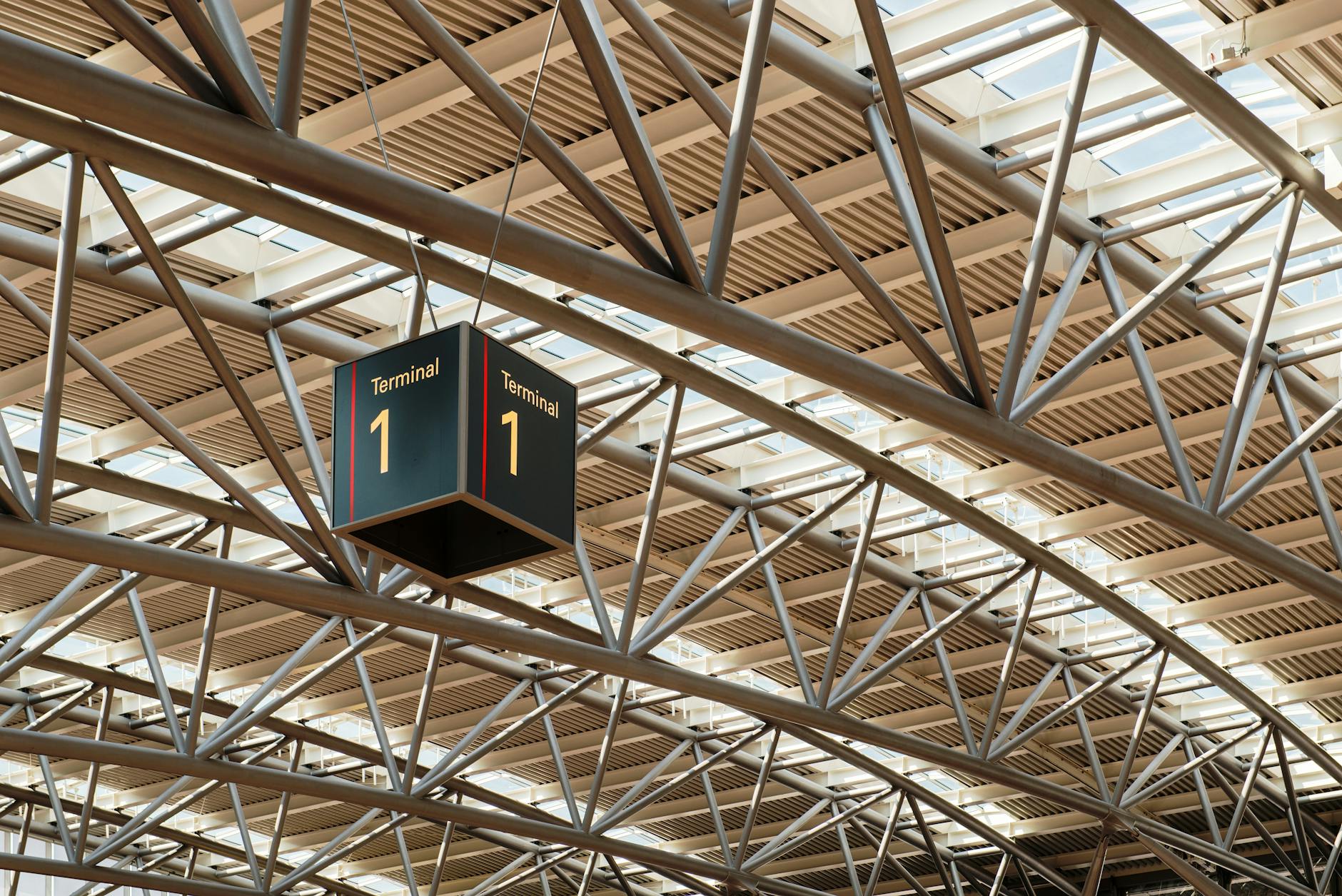
ABV operates two distinct terminal buildings within the same complex. They are not connected by an airbridge or internal corridor — the walk between them is approximately 5–10 minutes on foot, so passengers connecting between international and domestic flights must clear immigration, collect luggage (if checked), and re-check in at the domestic terminal. Allow a minimum of 90 minutes for any such connection.
Terminal C — The New International Terminal
Terminal C is the jewel of the post-2024 modernisation. Built by CCECC (China Civil Engineering Construction Corporation) and comprehensively upgraded over the past two years, it is a glass-and-steel structure that competes with mid-sized European hub airports in terms of passenger flow efficiency and air conditioning. Airlines operating from Terminal C include:
- British Airways — daily London Heathrow (LHR)
- Lufthansa — Frankfurt (FRA) connections
- Air France — Paris Charles de Gaulle (CDG)
- Turkish Airlines — Istanbul (IST), widely used as a connection hub for West Africa
- Qatar Airways — Doha (DOH), popular for connections to Asia and Australia
- Emirates — Dubai (DXB)
- Ethiopian Airlines — Addis Ababa (ADD), the dominant intra-Africa connector
- Air Peace — International routes (London Gatwick, Dubai)
Terminal C amenities include centralised air conditioning throughout the building, duty-free walkthrough retail zones, international-standard prayer rooms (both airside and landside), a business centre, and dedicated immigration lanes for biometric passport holders.
Terminal B — The Domestic Terminal
Terminal B handles Nigeria’s enormous internal flight network, which is one of the busiest domestic aviation markets on the African continent. The terminal is substantially busier and more congested than Terminal C, reflecting the volume of Abuja–Lagos, Abuja–Port Harcourt, and Abuja–Kano traffic that moves through it daily.
Airlines operating from Terminal B include:
- Air Peace — the dominant domestic carrier by fleet size
- Ibom Air — consistently rated Nigeria’s highest-quality domestic airline for punctuality and cabin experience
- United Nigeria Airlines
- Arik Air
- Green Africa
Critical tip for domestic passengers: Security queues at Terminal B are unpredictable and can be severe. The early morning Lagos bank (departures between 07:00 and 09:00) is the single most congested period at ABV. Always allow a minimum 60-minute buffer specifically for the security process during this window. A 07:00 departure means arriving at Terminal B no later than 05:30.
Getting to Abuja City Centre: 2026 Transport Guide
The ground transportation picture at ABV improved substantially in late 2024 with the relaunch of the Abuja Light Rail Blue Line. In 2026, travellers have four realistic options depending on budget, time sensitivity, and party size.
The Abuja Light Rail — Blue Line (Recommended for Speed)
The Abuja Light Rail Blue Line is the standout transport development for 2026. After years of delayed launches and technical issues, the rail system relaunched in late 2024 and is now operational as a genuine alternative to road-based transport — the only transport option in Abuja that is genuinely immune to the airport road’s notorious traffic congestion.
| Detail | 2026 Status |
|---|---|
| Route | Airport Station ↔ Abuja Metro Station (Central Business District, near Wuse) |
| Fare (single) | ₦2,500 – ₦4,000 (varies with fuel and power subsidy adjustments) |
| Frequency | Every 45–60 minutes |
| Journey time | ~35 minutes (unaffected by road traffic) |
| Station location | Directly opposite the International Terminal (Terminal C) |
The Light Rail is the recommended choice for solo travellers or those with carry-on only. It eliminates the primary stress of ABV arrivals — the unpredictable Expressway — and delivers you to the Central Business District reliably within 35 minutes. Buy your ticket at the station kiosk; keep small-denomination Naira to hand as the kiosks can have POS connectivity issues (see cash advice below).
Uber, Bolt, and InDriver (Best for Comfort and Flexibility)
All three major rideshare platforms are fully operational in Abuja in 2026 and widely used by international travellers and residents alike. This is generally the recommended choice for passengers travelling with checked luggage, those heading to hotels outside the immediate CBD, or groups of two or more.
- 2026 Fare range: ₦15,000 – ₦25,000 depending on destination (Wuse II, Maitama, Garki)
- Pickup Zone: There is a designated app-based pickup zone within the airport complex. Security restrictions prevent drivers from stopping at the immediate terminal kerb — follow in-app directions to the designated zone. This is a 3–5 minute walk from the terminal exit.
- Surge pricing: Applies during the BA and Lufthansa/Air France evening arrival banks (typically 19:00–22:00). Consider booking 5–10 minutes before landing if you have in-flight Wi-Fi.
- InDriver operates on a negotiated fare model and can sometimes produce lower prices than Uber/Bolt in low-demand periods.
Official Airport Taxis
The official airport taxi service operates green-coloured cabs, which are registered with FAAN and stationed in the designated taxi zone outside arrivals. The process requires either negotiating a fare directly with the driver or using the official taxi counter inside arrivals to get a printed fare ticket.
- 2026 Fare to central Abuja: ₦20,000 – ₦30,000
- Important: Confirm whether the fare includes the airport exit toll before getting in the vehicle. Disputes at the toll gate are common when this is not agreed in advance.
- Avoid any driver who approaches you landside before you reach the official taxi zone — these are unsanctioned operators and fares are not regulated.
Hotel Shuttles
Most four and five-star hotels in Maitama, Wuse II, and Asokoro offer pre-booked airport transfers. For night arrivals or first-time visitors, a pre-arranged hotel shuttle is the most straightforward and safest option. Book via your hotel’s concierge or website before departure.
Entry Requirements and Security: 2026 Protocols
Nigeria has significantly digitised its entry process. In 2026, the direction of travel is clearly towards paperless entry, but experienced travellers know to carry physical backups of every document. The following requirements apply to all international arrivals at ABV.
Yellow Fever Vaccination — Non-Negotiable
A valid Yellow Fever vaccination certificate is a mandatory entry requirement for Nigeria. In 2026, the majority of travellers present the e-Yellow Card — a digital certificate with a QR code that health officials scan before you reach the immigration hall. Physical yellow booklets are still accepted. Health checks occur at a dedicated desk immediately after disembarking, before the immigration queue. If you cannot present a valid certificate (digital or physical), you will be held at the health station and may be offered on-arrival vaccination at your own cost and risk of significant delays.
Biometric M-Passport Kiosks
ABV’s International Terminal has implemented automated biometric “M-Passport” kiosks for arriving passengers. Travellers holding biometric visas or Nigerian biometric passports can use the automated lanes to bypass the manual immigration desk queue, which can exceed 60 minutes during peak arrivals — particularly the BA evening flight from London Heathrow and the Lufthansa Frankfurt arrival, both of which typically disembark large volumes of passengers simultaneously.
To use the automated kiosk: scan your biometric passport at the machine, complete the facial recognition scan, and proceed to baggage reclaim. Staff are stationed at the kiosks to assist first-time users.
Pre-Arrival Registration (Nigeria Immigration Service)
All visitors arriving in Nigeria are encouraged to pre-register their travel details via the Nigeria Immigration Service portal before departure. While not always strictly enforced, pre-registration speeds up the visa-on-arrival process and reduces manual form completion at the immigration desk. Travellers on diplomatic or government missions should confirm any special entry procedures with the relevant Nigerian mission in their country.
Currency Declaration
Arriving passengers carrying more than the equivalent of $10,000 USD in cash (in any currency combination) must declare it to Customs using the standard declaration form. In 2026, enforcement of this requirement is active. Failure to declare results in immediate seizure of the undeclared amount and significant administrative fines. Business travellers carrying large amounts of foreign currency for trade or investment purposes should carry documentation supporting the purpose of the funds.
Prohibited Items — Power Bank Rules
Security at ABV enforces lithium battery rules with exceptional strictness compared to many European airports. Power banks must be placed in carry-on luggage only. If a power bank is found in checked baggage during the security scan, the bag will be opened and the device removed and confiscated — without negotiation and without notice. This applies to all power banks regardless of capacity. Place your power bank in your hand luggage before checking in.
Executive Lounges: 2026 Access and Status
ABV’s lounge infrastructure has seen meaningful upgrades in catering quality and — critically — Wi-Fi reliability over the past 18 months. For any journey involving a long international connection, lounge access at ABV is particularly valuable given the limited seating and inconsistent air conditioning in the general departures area.
SDS Lounge — International Terminal (Premier Choice)
- Access: Priority Pass, DragonPass, or walk-in payment
- Walk-in rate: ₦80,000 per person (2026 pricing)
- Facilities: Strong, reliable air conditioning; hot Nigerian and continental buffet; dedicated shower suites; stable Wi-Fi; charging stations throughout
- Best for: Independent travellers and business passengers on any carrier — the SDS Lounge is the primary independent lounge option at ABV’s international terminal and the recommended choice for Priority Pass holders
Skye Lounge — Airside International
- Access: Primarily for business class passengers on European carriers (BA, Lufthansa, Air France)
- Facilities: Hot and cold food service, bar, Wi-Fi
- Note: Access for non-business-class Priority Pass holders is subject to capacity and may be restricted during peak European departure banks
Ibom Air Lounge — Domestic Terminal
- Access: Ibom Air business class passengers
- Context: A boutique lounge experience that reflects Ibom Air’s positioning as Nigeria’s premium domestic carrier. If you are routing domestically and want a comfortable pre-flight experience, booking Ibom Air’s business class specifically for the lounge access is a consideration on the Lagos–Abuja sector
Facilities and Amenities at ABV
Wi-Fi
FAAN Free WiFi is available throughout Terminal C. In practice it operates on a freemium model: passengers receive 30–60 minutes of free access after registering with a phone number. After the free period, connectivity becomes unreliable or drops entirely. For any work requiring consistent internet access — email, video calls, large file transfers — the official recommendation is to purchase a local SIM card (see below). FAAN has stated its intention to upgrade the Wi-Fi infrastructure; at time of writing in April 2026, the free tier remains limited for extended use.
SIM Cards — Arrivals Hall
Official MTN, Airtel, and Glo kiosks are located in the arrivals hall, immediately after exiting customs. All three networks offer data-heavy traveller SIM packages. Biometric registration is required by Nigerian law: you will need your passport, and the registration process takes approximately 15 minutes. MTN and Airtel offer the broadest 4G LTE coverage in Abuja and on the airport expressway. Purchasing a local SIM is strongly recommended for any stay of more than 24 hours — data rates are significantly cheaper than roaming and the coverage in Abuja is generally excellent.
Currency Exchange and ATMs
Bureau de change kiosks are available both landside and airside at Terminal C. Rates are typically worse than interbank rates; the most competitive exchange rates in Abuja are found at licensed bureau de change operators in Wuse II and Maitama, not at the airport. ATMs (dispensing Naira) are located in the arrivals area and are the recommended option for obtaining local currency at a fair rate, provided your bank does not charge excessive foreign transaction fees. International cards (Visa, Mastercard) are accepted at most ATMs at ABV.
Cash and POS Reality
Nigeria’s Central Bank has actively promoted a cashless payment policy, and contactless/card payments are more common in Abuja than in many other Nigerian cities. However, airport POS terminals suffer from network downtime with meaningful frequency — particularly during periods of high passenger volume when the terminal network is under load. Always carry at least ₦20,000 in physical Naira cash for small tips, porter services, toll payments, and emergency transit. Do not arrive at ABV with zero local currency and rely entirely on card payments.
Prayer Rooms
Dedicated prayer rooms are available both airside and landside in Terminal C, reflecting ABV’s role as a federal facility serving a primarily Muslim federal capital. Separate rooms are provided for male and female passengers. The facilities are well-maintained and signposted in both English and Arabic.
Duty-Free and Retail
Terminal C’s duty-free zone is a walkthrough format similar to European airports, covering perfume, spirits, electronics, and Nigerian luxury goods. Prices are denominated in both Naira and US Dollars. Major international spirits brands are typically cheaper airside than in the city; Nigerian craft items and fashion labels offer unique gifts not available elsewhere.
Practical Insider Tips for ABV 2026
- Check-in early for European carriers. British Airways and Qatar Airways international check-in counters at ABV often open 4 hours before departure. Given the frequency of secondary security screening at the gate for these flights, arriving 3.5 hours before departure is advised — not a conservative suggestion but a practical necessity for avoiding last-minute stress.
- Power bank in carry-on. Always. ABV security removes power banks from checked bags without warning. This is one of the most consistent and enforced rules at the airport.
- The Light Rail is the professional’s choice. For solo travellers with manageable luggage, the Blue Line eliminates the airport expressway entirely and delivers you to the CBD in 35 minutes. The fare (₦2,500–₦4,000) is the cheapest transport option by a wide margin.
- Dress business casual. Abuja is one of West Africa’s most cosmopolitan cities, but the airport is a federal facility with conservative cultural norms consistent with the FCT’s government character. Business casual attire consistently results in more efficient processing at customs and security — it is a practical observation, not a moral judgment.
- Pre-book your ride before landing. If using Uber or Bolt, queue your booking while the plane is taxiing if you have connectivity. This reduces waiting time at the app-based pickup zone and avoids the post-landing surge in demand when multiple international flights land within the same 30-minute window.
- Night arrivals — use verified transport. The airport road is well-patrolled and has improved street lighting following the 2024–2025 infrastructure upgrades. The security risk is not the road itself but unsolicited “freelance” taxi drivers inside and immediately outside the arrivals hall. After 22:00, use a pre-booked hotel shuttle or a verified Uber/Bolt booking only.
- Keep the airport exit toll in mind. Official taxis quote fares that sometimes exclude the exit toll. Agree a toll-inclusive fare before getting in the vehicle to avoid disputes at the gate.
- Yellow Fever QR code: screenshot it. Nigerian health officials use handheld scanners to read the QR code on e-Yellow Cards. If your phone battery dies or you have no data, a screenshot of the QR code in your camera roll is sufficient. Health check delays at ABV are almost always caused by passengers who did not prepare their certificate in advance.
Frequently Asked Questions
Is there free WiFi at Abuja Airport?
Yes. FAAN Free WiFi covers Terminal C and provides 30–60 minutes of free access after registering with a phone number. After this period, the free tier becomes unreliable or disconnects. For consistent internet access during a long layover, purchase an MTN or Airtel data SIM from the kiosks in the arrivals hall. Biometric registration (passport required) takes about 15 minutes.
Can I get a SIM card at ABV?
Yes. Official MTN, Airtel, and Glo kiosks are located in the arrivals hall immediately after customs. You will need your passport for biometric SIM registration. The process takes approximately 15 minutes. MTN and Airtel offer the strongest 4G LTE coverage in Abuja and on the expressway. Data plans are significantly cheaper than international roaming and cover all hotels, restaurants, and business districts in the city.
How far is Abuja Airport from the city centre?
The airport is approximately 30km southwest of the Central Business District, and roughly 40km from upscale areas like Maitama and Asokoro. In normal traffic conditions, the drive takes 45 minutes. During peak hours (07:30–09:30 and 17:00–20:00) or on days when government convoys are moving, the expressway can back up severely and journeys of 90 minutes or more are not uncommon. Check Google Maps or Waze immediately before departure from your hotel and build in significant buffer time for outbound journeys to the airport.
Is it safe to arrive at ABV after dark?
Yes. The airport road is patrolled and well-lit following the 2024 infrastructure programme. The airport building itself is under FAAN and DSS security throughout the night. The precaution required is specific: do not use unsolicited taxi drivers who approach you inside or immediately outside the arrivals building, particularly after 22:00. Use a pre-booked hotel shuttle or book a verified Uber/Bolt while still inside the terminal building before exiting.
What is the Light Rail fare and where does it go?
The Abuja Light Rail Blue Line runs between the Airport Station (directly opposite Terminal C) and Abuja Metro Station in the Central Business District near Wuse. The single fare is ₦2,500–₦4,000 in 2026, subject to adjustment based on fuel and power subsidy policy. Trains run every 45–60 minutes and the journey takes approximately 35 minutes — entirely unaffected by road traffic. It is the recommended option for solo travellers and those with cabin baggage only.
What are the lounge options at ABV?
The SDS Lounge in the International Terminal is the primary choice for independent travellers, accessible on Priority Pass, DragonPass, or with a walk-in fee of ₦80,000. It offers hot Nigerian and continental food, shower suites, air conditioning, and stable Wi-Fi. The Skye Lounge is airside and primarily serves business class passengers on European carriers. The Ibom Air Lounge at the Domestic Terminal is available to Ibom Air business class passengers.
What are the Yellow Fever requirements for entering Nigeria?
A valid Yellow Fever vaccination certificate is a mandatory entry requirement for all international arrivals in Nigeria, with no exceptions. In 2026, the e-Yellow Card (digital QR code certificate) is the standard format. Health officials check it at a dedicated station before you reach immigration. Screenshot your QR code before travel as a backup. Without a valid certificate you will face significant delays and potential on-arrival vaccination requirements.
Do I need to declare cash at Nigerian Customs?
Yes. Any amount exceeding $10,000 USD (or its equivalent in any currency) must be declared on the customs form. In 2026, this rule is actively enforced. Undeclared amounts above the threshold are subject to immediate seizure and substantial fines. If carrying large amounts for legitimate business purposes, carry supporting documentation.
Which rideshare apps work at ABV?
Uber, Bolt, and InDriver are all operational at ABV in 2026. Each app has a designated pickup zone within the airport complex — follow in-app instructions as drivers cannot stop at the terminal kerb. Fare ranges: ₦15,000–₦25,000 to central Abuja (Wuse II, Maitama, Garki). Surge pricing applies during peak evening arrival banks. InDriver allows fare negotiation and can produce lower prices in off-peak periods.
Are there power outlets and charging points at ABV?
Charging points are available in the SDS Lounge (most reliable) and in some gate seating areas in Terminal C. Availability in the general departures area is limited relative to the volume of passengers. If you have a long wait, the lounge is the most reliable place to charge devices. A power bank in your carry-on (never checked luggage) is the recommended backup.
What is the connection time required between international and domestic flights at ABV?
The International Terminal (C) and Domestic Terminal (B) are separate buildings approximately 5–10 minutes apart on foot. A self-connecting passenger arriving internationally and departing domestically must clear immigration, collect checked luggage from reclaim, re-enter the domestic terminal, and check in again. Allow a minimum of 90 minutes for this process in normal conditions. During peak periods or with long immigration queues, allow 120 minutes. Do not book connecting itineraries with less than this buffer unless you have carry-on luggage only and are confident of fast immigration processing via the biometric kiosks.
2026 Summary Reference
| Feature | 2026 Data |
|---|---|
| IATA Code | ABV |
| Primary Currency | Nigerian Naira (₦ / NGN) |
| Light Rail Single Fare | ₦2,500 – ₦4,000 |
| Rideshare to CBD | ₦15,000 – ₦25,000 |
| Official Taxi to CBD | ₦20,000 – ₦30,000 |
| SDS Lounge Walk-in | ₦80,000 |
| Security Technology | Biometric facial recognition (International Terminal) |
| Health Entry Requirement | Yellow Fever vaccination (e-Yellow Card / QR code) |
| Official WiFi | FAAN Free WiFi — 30-60 min free tier |
| Currency Declaration Threshold | $10,000 USD equivalent |
| Terminal-to-Terminal Walk | 5–10 minutes |
| Domestic Security Buffer | 60 minutes minimum (morning Lagos bank) |