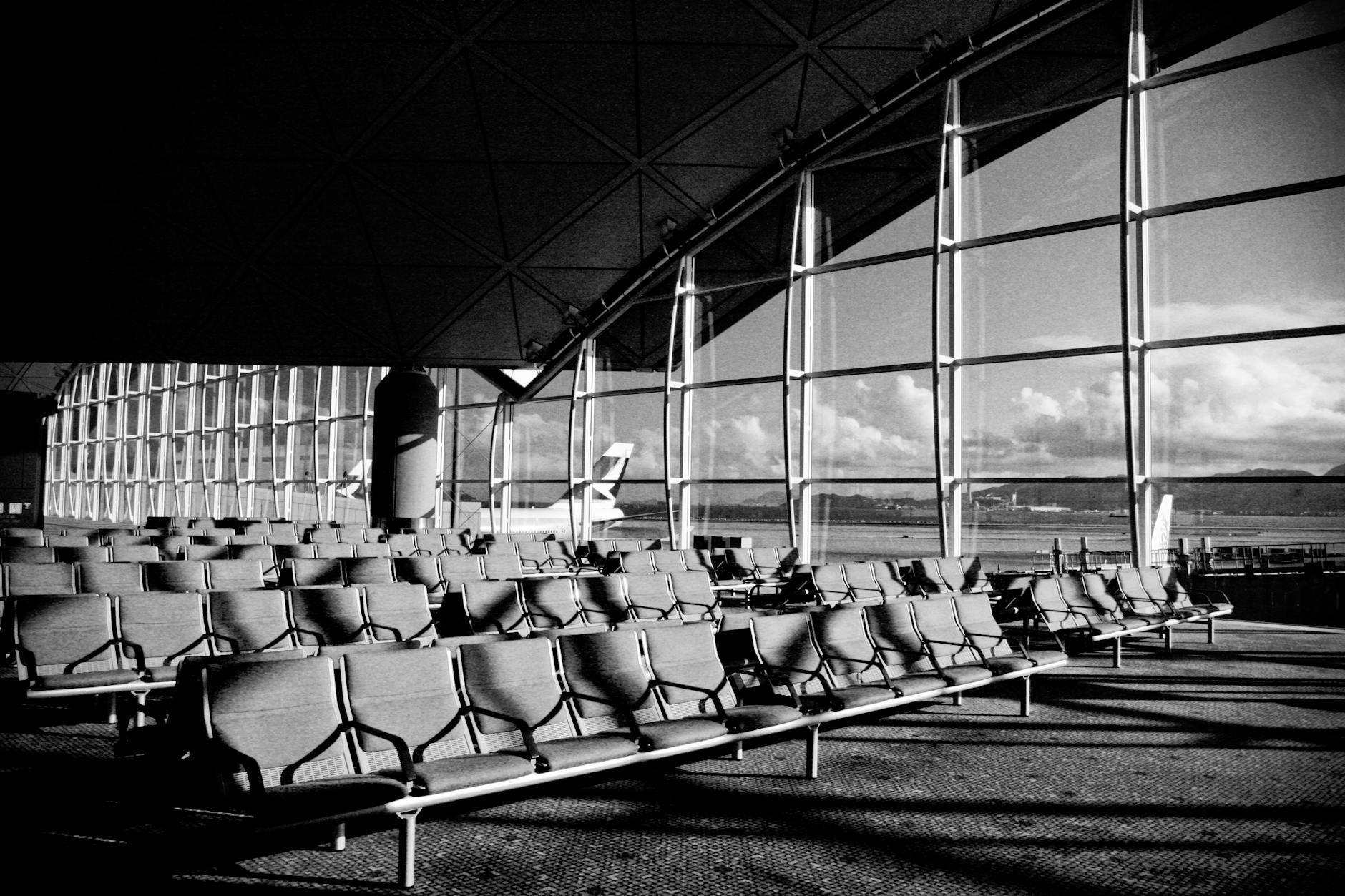
Hong Kong International Airport (HKG) is one of the greatest engineering and operational achievements in the history of civil aviation. Built on an artificial island reclaimed from the sea at Chek Lap Kok, it has, since its 1998 opening, grown from a bold vision into the world’s busiest cargo hub and consistently one of the top three airports in the world by passenger service quality. In 2026, HKG has entered its most consequential era yet: the full operationalization of the Three-Runway System (3RS), the reopening of a completely reimagined Terminal 2, and the maturation of its “Smartway” biometric ecosystem that is redefining what seamless air travel means.
Serving as the global fortress for Cathay Pacific (oneworld) and a critical regional hub for Hong Kong Airlines and Greater Bay Airlines, HKG handles over 75 million passengers annually. It is the critical gateway to one of the world’s most dynamic economic regions — the Greater Bay Area, encompassing Hong Kong, Macau, and nine cities of Guangdong Province, including Shenzhen, Guangzhou, and Zhuhai. This guide provides the comprehensive, professional-grade intelligence required to navigate HKG at the 10/10 level that this world-class facility deserves.
🏢 1. Terminal Architecture: The 2026 Three-Hub Reality
Understanding HKG’s physical layout is the foundation of a successful transit. In 2026, the airport operates across three distinct but interconnected “processing hubs,” all connected by automated people movers and elevated walkways.
Terminal 1 (T1): The Global Operations Centre
Terminal 1 remains the nerve center of HKG. It is a colossal structure — one of the largest airport buildings in the world — processing the majority of HKG’s passenger volume. All Cathay Pacific operations, including its celebrated First and Business Class lounges, are anchored here.
- Airlines (T1 Core): Cathay Pacific (Hub), British Airways, Qantas, American Airlines, Japan Airlines, Finnair, and most Star Alliance and SkyTeam carriers.
- The T1 Satellite Concourse: Connected to the main T1 building via the iconic Sky Bridge (see Section 2), the Satellite handles overflow gates for peak-hour operations and select international departures.
- The Sky Bridge (2026 Landmark): This is the single most remarkable infrastructure feature at HKG in 2026. The 200-meter-long, fully enclosed glass bridge connects T1 to the T1 Satellite Concourse at a height of 28 meters above the active aircraft taxiway. It features glass-floor viewing panels, allowing travelers to look directly down at aircraft taxiing beneath them. It is not merely functional; it is a destination in itself.
Terminal 2 (T2): The Smart Check-In & Retail Pavilion
The most significant operational change in 2026 is the complete transformation and reopening of Terminal 2. T2 is no longer a standalone departure terminal. It has been rebuilt as a “Smart Processing Hub” — a high-tech check-in and retail destination that feeds into the main gate complex.
- Function: Passengers checking in for flights across all major airlines can now use T2’s expanded, ultra-modern check-in counters and automated bag-drop systems. After check-in and bag drop, you board the free, fully automated people mover (APM) that whisks you directly to the T1 gates or the Midfield Concourse — no re-screening required if you are already processed.
- Retail: T2 houses the most expansive retail zone at HKG, including a dedicated “Hong Kong Flavours” food hall on the upper level featuring local cha chaan teng (Hong Kong tea café) concepts and a revamped duty-free promenade.
- Logic: The redesign distributes the check-in load, eliminating the notorious queuing bottlenecks in the T1 check-in hall during peak morning and afternoon waves.
The Midfield Concourse (MFC): Long-Haul Luxury
The Midfield Concourse is HKG’s most premium airside zone. Reached via a short automated people mover (APM) ride from T1 (approximately 2 minutes), the MFC is home to the longest range and heaviest aircraft that visit HKG.
- Airlines (MFC): Emirates (A380), Singapore Airlines (A380/B777), Lufthansa, Air France, Qatar Airways, and select United Airlines widebody operations.
- Lounges: The MFC hosts the flagship Plaza Premium Lounge (independent travelers’ top choice), the Cathay Pacific First Class Lounge “The Pier,” and multiple carrier-specific lounges.
- Dining (2026 Expansion): The MFC dining scene has expanded significantly. Look for the Tim Ho Wan dim sum outlet (Michelin-starred, casual format) and a dedicated Cantonese roast meats counter for pre-flight meals.
🛫 2. The Three-Runway System (3RS): What It Means for Travelers
For decades, HKG operated on two runways, creating tarmac congestion that was a persistent source of delays. In 2026, the Three-Runway System is fully operational, and the impact for travelers is measurable and significant.
- Flight Frequency: The 3RS allows HKG to handle approximately 102 aircraft movements per hour, up from 68 under the two-runway system. This means more departure slots are available, reducing the “holding pattern” delays that plagued early morning bank departures.
- Tarmac Time: The average gate-to-takeoff time has decreased by an estimated 12 minutes during peak hours, as the third runway absorbs arrivals that previously had to queue for landing clearance.
- Noise Distribution: The 3RS uses a more sophisticated runway rotation schedule that distributes noise impact across the Lantau coastline. Travelers in window seats will notice a wider variety of departure headings, offering new views of the Pearl River Delta.
🤖 3. Smartway: The Biometric Future is Now
HKG’s “Smartway” program is the most comprehensive biometric integration of any airport in the world in 2026. It is not a pilot program — it is the operational standard.
Flight Token: Your Face as Your Boarding Pass
The centerpiece of Smartway is the “Flight Token” system. Here is how it works in practice:
- Enrolment: During online check-in (Cathay Pacific, HK Express, and 14 partner airlines), you upload a facial image or use your existing digital passport photo.
- From Curb to Gate: Your enrolled face becomes your single credential for the entire journey through the airport. At bag drop kiosks, security checkpoints, lounge access gates, the aerobridges, and the boarding gate camera — you simply look at the camera. The system verifies your identity and proceeds. No physical boarding pass. No physical passport presentation at each touchpoint.
- Privacy: The biometric data is stored in a temporary, encrypted “token” that is deleted automatically upon aircraft departure.
- Compatibility: In 2026, Flight Token is compatible with all e-Passport holders from over 60 countries. For non-e-Passport holders, a semi-digital path using a QR code handles most touchpoints.
Autonomous Operations
- Autonomous Patrol Robots: HKG deploys a fleet of autonomous security robots throughout both terminals and the MFC. They move on scheduled routes, provide real-time surveillance, and can issue verbal instructions and alert human security staff. In 2026, they have become a recognizable and reassuring part of the airport’s security fabric.
- Mobile Library Bots: A more whimsical innovation: small autonomous robots circulate through the gate areas of T1 and the MFC delivering magazines, newspapers, and snacks on demand via a QR-code ordering system. They are a genuine 10/10 passenger satisfaction feature during long waits.
- 5G Coverage: HKG is a 100% 5G-covered campus. This is not merely a marketing claim — the practical result is near-instant app load times, seamless 4K video streaming, and reliable high-speed uploads throughout every part of the landside and airside environment.
🚆 4. Transport: Reaching Hong Kong Station, Kowloon & Beyond
The “Pro” Choice: Airport Express (AEL)
The Airport Express is among the finest airport rail connections in the world. In terms of speed, comfort, and the ancillary services it provides, it is the unambiguous 10/10 choice for any traveler with luggage heading to the urban core.
- Route: HKG Airport → Tsing Yi → Kowloon → Hong Kong (Central).
- 2026 Price: HKD 115 for a single adult journey to Hong Kong Station (Central). HKD 105 to Kowloon Station.
- Journey Time: 24 minutes to Hong Kong Station (Central).
- Frequency: Every 10 minutes during daytime hours; every 10–12 minutes at night.
- Payment: Octopus Card, Tourist Octopus (see below), contactless credit/debit card, Apple Pay, Google Pay. The full range of digital payment options is available at the turnstiles.
The “In-Town Check-In” System: A World-Class Benefit
This is one of the most significant traveler benefits at any airport globally, and it is unique to HKG. It is mandatory to understand this system:
- The Service: If you are departing HKG on Cathay Pacific or one of over a dozen partner airlines, you can check in your bags and receive your boarding pass at either Hong Kong Station (in Central, underneath IFC) or Kowloon Station (connected to the Elements mall).
- The Benefit: You then board the Airport Express — with your boarding pass — and travel to the airport without any luggage. When you arrive at HKG, you proceed directly through security (using your boarding pass and Flight Token) to your gate. You skip the check-in hall and the bag-drop queue entirely.
- Timing: In-Town Check-In is available from 06:00 to 00:00. You must check in at least one hour before your scheduled departure.
- Verdict: If your hotel is near Hong Kong or Kowloon Station, this service transforms your departure day. You can have a leisurely dim sum breakfast, check in your bags, and arrive at the airport a mere 45 minutes before boarding with zero stress.
The Tourist Octopus
- What it is: A pre-loaded, visitor-specific Octopus Card available as a physical card or as a digital wallet on iPhone (via Apple Wallet) and Android (via Google Wallet/HK Octopus app).
- 2026 Update: The “Tourist Octopus” on iPhone and Android allows travelers to skip the physical kiosk at the airport entirely. You can activate and top up the card on your phone before you even land.
- Coverage: Valid on the Airport Express, MTR, buses, trams, ferries, and most convenience stores (7-Eleven, Circle K).
Bus Services (Budget Alternative)
- Route A11: Airport → North Lantau → Tsing Yi → Cheung Sha Wan → Central. 2026 Price: HKD 48.
- Route A21: Airport → Kowloon → Tsim Sha Tsui → Jordan. 2026 Price: HKD 39.50.
- Advantage: Significantly cheaper than the Airport Express; ideal for solo travelers with a single carry-on bag and no time pressure. Journey time to Central: approximately 70–90 minutes.
- Payment: Octopus Card or exact cash fare. Drivers do not provide change.
Taxi Services
- Urban Taxis (Red): Serve Kowloon and Hong Kong Island. Fare to Central: approximately HKD 380–450 plus a tunnel toll surcharge of HKD 75.
- Lantau Taxis (Blue): Only serve areas within Lantau Island (including Tung Chung and Disneyland). They cannot cross into the urban areas.
- 2026 Tip: Uber operates in HKG and is increasingly popular as it allows cashless payment and an English-language interface. However, prices can surge significantly during the post-midnight international arrival banks.
🌉 5. The Greater Bay Area: HKG as a Regional Gateway
One of HKG’s most unique and underappreciated features is its role as a seamless transit hub not just for air travel, but for the entire Greater Bay Area — a megacluster of 86 million people.
SkyPier: Sea & Land Connections
- Location: The SkyPier is a dedicated ferry and bus terminal within the HKG restricted area (post-security zone). You can transfer between a flight and an outbound ferry without ever clearing Hong Kong immigration.
- Ferry Destinations: Regular ferry services run to Macau’s Outer Harbour and Taipa Ferry Terminal, Guangzhou Nansha Port, Zhongshan, and Zhuhai. Journey time to Macau: approximately 60 minutes.
- Bus Connections: Dedicated bonded bus services run from SkyPier to the Hong Kong-Zhuhai-Macau Bridge (HZMB) bus terminus. This is the fastest and most seamless way to reach Macau or Zhuhai from HKG without clearing immigration.
HZMB Integration: The Macau Express
The Hong Kong-Zhuhai-Macau Bridge (HZMB) is the world’s longest sea-crossing bridge at 55km. For travelers transiting through HKG, the bonded bus service from SkyPier to the HZMB HK Port is a game-changer.
- The Process: After clearing HKG arrival immigration (or in the bonded zone for transit passengers), take the designated bonded bus to the HZMB bus terminal. Cross the bridge (approximately 45 minutes). Clear Macau or Zhuhai immigration at the far end.
- 2026 Price: Approximately HKD 65–80 for the bus crossing (excluding the Macau immigration formalities).
- Verdict: For anyone attending events, conferences, or casino visits in Macau, this multi-modal journey from flight-to-Macau can be completed in as little as 2.5 hours from wheels-down at HKG — faster than many domestic connections in larger countries.
🛋️ 6. Premium Lounges: The 2026 Hierarchy
HKG has one of the highest concentrations of premium lounge experiences of any airport on earth. For the discerning traveler, the choice of lounge is as important as the choice of seat.
Cathay Pacific “The Pier” First Class Lounge (MFC)
Universally acclaimed as one of the greatest airport lounges in the world. “The Pier” is not merely a lounge — it is a full-service luxury hotel terminal. Features include individual daybeds with privacy screens, dedicated shower rooms with Aesop amenities, an à la carte dining room rivaling a Michelin one-star, and a premium bar with rare Hong Kong craft spirits.
- Access: Cathay Pacific First Class only.
Cathay Pacific “The Bridge” Business Class Lounge (T1)
- Access: Cathay Pacific Business Class and oneworld Emerald/Sapphire members.
- Features: Noodle bar, extensive hot buffet, shower suites, and excellent runway views from the upper level.
Plaza Premium Lounge (T1 & MFC)
- Access: Priority Pass, LoungeKey, Dragonpass, or HKD 640 walk-in (2026 rate).
- Features: The gold standard for independent travelers. Multiple locations at HKG, with the MFC location being the most spacious. Features a full hot buffet, extensive dim sum selection, shower suites, private sleeping rooms (at an additional charge), and a children’s play zone.
Chase Sapphire Lounge by The Club (Terminal 1)
- Access: Chase Sapphire Reserve cardholders (primary) and Priority Pass select members.
- 2026 Status: A major new premium entrant for 2026. The Chase Sapphire Lounge at HKG is designed around a Hong Kong culinary theme, with locally inspired cocktails, a chef-driven menu, and a design aesthetic drawing on HKG’s iconic neon-and-harbour visual language. It has quickly become the most design-forward lounge at the airport.
Air France/KLM SkyTeam Lounge (T1)
- Access: SkyTeam Elite Plus members and Business Class passengers of SkyTeam carriers.
- Features: An excellent selection of French wines, a well-regarded hot buffet, and a quiet atmosphere.
🍜 7. Culinary Excellence: Michelin at Altitude
HKG sets the global benchmark for in-airport dining. The airport’s commitment to Michelin-quality food at accessible price points is a genuine competitive differentiator.
- Ho Hung Kee (T1 Airside): A Michelin-starred institution in the world of wonton noodle soup. The airport outlet brings this legendary bowl to travelers. Order the shrimp wonton noodles in a clear, delicate broth. Do not leave Hong Kong without it.
- Dooton Roast Goose (MFC): Cantonese roast goose is one of the great culinary traditions of Hong Kong. Dooton’s airport outlet offers a genuinely authentic version — crispy skin, luxurious flesh, and a perfectly balanced soy-ginger dipping sauce.
- Tim Ho Wan (MFC): The world’s most accessible Michelin-starred restaurant. Their baked BBQ pork buns (char siu bao) are an essential HKG culinary experience.
- Crystal Jade (T1): For a full sit-down meal: Shanghai xiao long bao (soup dumplings) and wok-fried noodles. A reliable premium option for longer layovers.
- PRESS ROOM (T1): An all-day dining brasserie concept for travelers who want a Western-style meal with excellent coffee in a relaxed environment.
💡 8. Insider “Editor” Tips for 2026
- 100+ Water Stations: HKG has installed over 100 water dispensing stations throughout both terminals and the MFC. Uniquely, these stations offer both chilled water and hot water — meaning you can make instant noodles, brew tea, or fill a hot water bottle at no cost. This is a 10/10 feature that most travelers completely miss.
- Free Shower Facilities: Located in the Terminal 1 Arrivals Hall on Level 5, HKG offers free, clean, 24-hour public shower facilities. This is a genuine gift for long-haul arrivals who do not have lounge access. Towels are provided for a nominal fee at the desk.
- 5G “Download Zone”: If you have large files, app updates, or content to download before a long flight, HKG’s 100% 5G coverage means a 1GB file can be downloaded in approximately 8 seconds on a capable device. Do your downloads here rather than on a slow in-flight WiFi system.
- The “Roof Garden”: On the departures level of T1, there is a quiet rooftop garden area with views of the aircraft stands. It is known to only a fraction of travelers and offers a genuinely peaceful alternative to the busy gate areas during a long layover.
- Tung Chung Shortcut: If your hotel is in Tung Chung (adjacent to the airport), you can walk to the MTR Tung Chung station in approximately 8 minutes and pay a standard MTR fare (HKD 5.90) to reach Tung Chung Town Centre. This is far cheaper than a taxi for the same journey.
- Currency Exchange: The best rates are at the “authorized money changers” in the arrivals hall — specifically those near Exits A and B of Terminal 1. Avoid the bank counters at the immediate arrivals gate, which offer rates 3–5% worse than the market.
❓ Frequently Asked Questions (FAQ)
How does the In-Town Check-In service work and which airlines participate?
In-Town Check-In allows you to check your bags and collect your boarding pass at either Hong Kong Station (Central) or Kowloon Station, connected to the Airport Express. The service operates from 06:00 to 00:00, and you must check in at least 60 minutes before departure. Cathay Pacific, Hong Kong Airlines, Air China, and over a dozen partner airlines participate. After check-in, you travel to HKG with only your carry-on and proceed directly to security on arrival — bypassing the terminal check-in hall entirely.
What is the quickest way to get from HKG to Macau?
The fastest option is the bonded SkyPier ferry service (approximately 60 minutes to Macau Taipa Ferry Terminal), which operates from within the HKG restricted area — meaning transit passengers do not need to clear Hong Kong immigration. Alternatively, the bonded bus to the HZMB (Hong Kong-Zhuhai-Macau Bridge) crossing takes approximately 45 minutes and is slightly cheaper. Both services connect to Macau without a Hong Kong entry stamp, making them ideal for passengers transferring at HKG.
Is there baggage storage at Hong Kong Airport?
Yes. Left luggage and baggage storage services are available in the Arrivals Hall of Terminal 1 (Level 5). In 2026, rates start at approximately HKD 100 per bag per 24 hours. A “Baggage Services” desk also offers packing, wrapping, and courier forwarding services. For extended storage, you can also use the baggage service at Hong Kong or Kowloon In-Town Check-In counters, which allow bag storage for connecting travelers on long layovers.
What is the Sky Bridge at HKG?
The Sky Bridge is a 200-meter-long enclosed glass walkway connecting Terminal 1 to the T1 Satellite Concourse. It is suspended 28 meters above the active taxiway, allowing aircraft to pass underneath. Glass-floor panels allow travelers to look directly down at aircraft on the ground. It is both an operational connector and one of the most spectacular walking experiences at any airport in the world.
How early should I arrive for a flight at HKG?
For international long-haul flights from T1 or the MFC, 3 hours is the recommended standard. If you use In-Town Check-In, you can comfortably manage with 1.5–2 hours at the airport. For Cathay Pacific flights using the Flight Token biometric system, the security process is extremely fast, often under 5 minutes from queue entry to airside.
Does the Airport Express accept contactless credit cards?
Yes. In 2026, all AEL turnstiles support contactless Visa, Mastercard, and Amex, as well as Apple Pay and Google Pay. The Tourist Octopus on iPhone/Android is also accepted. You no longer need to purchase a physical Octopus Card unless you prefer one.
Are there free showers at HKG for non-lounge passengers?
Yes. Free public shower facilities are located in the Terminal 1 Arrivals Hall on Level 5. They are open 24 hours and are maintained to an excellent standard. Towels are available for a small charge at the service desk. These showers are one of HKG’s best-kept secrets for long-haul arrivals.
📈 2026 Summary Data Table
| Feature | Current Data (2026) |
|---|---|
| IATA Code | HKG |
| Primary Currency | Hong Kong Dollar (HKD) |
| Airport Express (Central) | HKD 115 (Contactless / Octopus) |
| Bus A11 to Central | HKD 48 |
| Taxi to Central | ~HKD 420 (incl. tunnel toll) |
| Plaza Premium Walk-in | HKD 640 |
| Biometric System | Flight Token (Face = Boarding Pass) |
| 3RS Runways | 3 Fully Operational (102 movements/hr) |
| Ferry to Macau | ~60 mins (SkyPier, no HK immigration) |
| Sky Bridge Height | 28m (200m long, glass floor panels) |
| 5G Coverage | 100% campus coverage |
| Water Stations | 100+ (chilled & hot water, free) |
| Official WiFi | “HKAirport Free WiFi” (Unlimited) |
This guide is maintained by the aifly.one Autonomous Intelligence Team. Verified for April 2026 travelers.