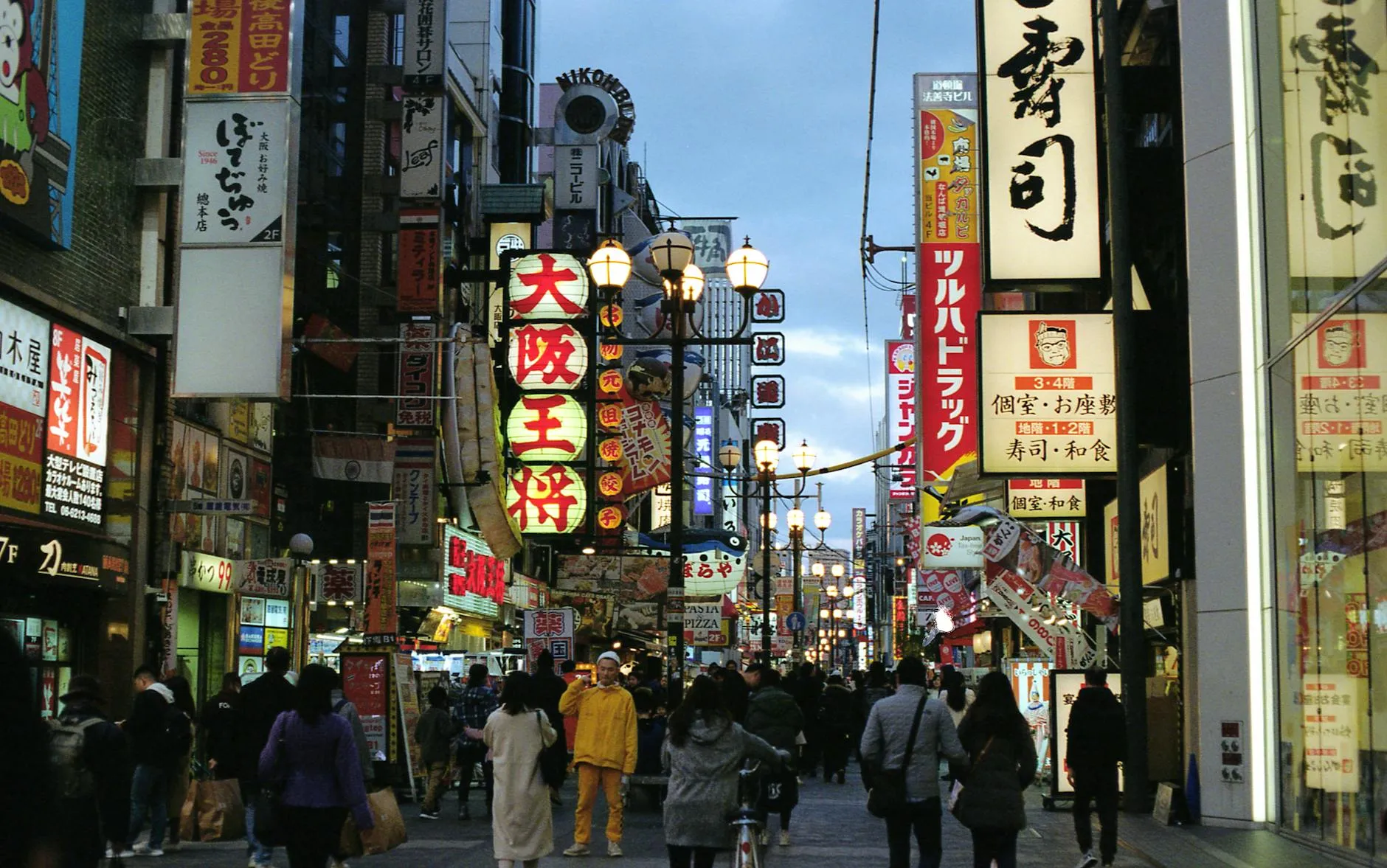
There is no nonstop flight from New York to Osaka, so every itinerary connects once — most often through Tokyo, sometimes through another Asian or North American hub. It is a long haul, but the route is well served: Japan’s two big carriers link New York to Osaka daily via Tokyo. This guide sets out the honest routing, a fair dollar fare, and how to keep the cost down.
Route: New York (JFK / EWR) → Osaka Kansai International (KIX)
Distance: approximately 10,900 km (6,770 miles) great-circle
Non-stop flight time: no nonstop — expect 16–20 hours total with one connection
Direct flights: No. Nobody flies New York–Osaka nonstop. The best routings connect once, most commonly via Tokyo (Haneda or Narita) on ANA or Japan Airlines.
Fares from New York to Osaka (USD)
Fares to Osaka rise around Japan’s peak travel windows — the spring cherry-blossom season (late March to April), the summer holidays, and the autumn foliage in November — and dip in the quieter winter weeks. Because there is no nonstop, prices reflect a one-stop routing; connecting through Tokyo usually gives the lowest average fare. The table below shows when the route is busiest. We no longer print per-month fare estimates here, because they were never measured.
| Month | Demand |
|---|---|
| January | low-medium |
| February | low |
| March | high (blossom season) |
| April | very high (blossom peak) |
| May | high |
| June | medium |
| July | high (summer holidays) |
| August | high (summer holidays) |
| September | medium (good value) |
| October | high (autumn travel) |
| November | high (foliage) |
| December | medium-high (holidays) |
As a reference, a genuinely good one-stop economy return to Osaka tends to land around $800–$900, with typical fares closer to $1,100–$1,300. September and quiet winter weeks are your best shot at a lower price; anything under about $950 is worth booking quickly.
Airlines on this route
There are no nonstop carriers to name. Every option connects once, and the cheapest almost always route through Tokyo.
One-stop, via Tokyo (about 16–19 hours total):
- ANA (All Nippon Airways) — nonstop New York to Tokyo (Haneda or Narita), then a short domestic hop to Osaka; frequent, well-timed connections and often the best-value premium option.
- Japan Airlines (JAL) — the same idea, New York to Tokyo then onward to Osaka; the most-booked routing on this pairing with strong daily frequency.
- United — nonstop Newark to Tokyo, connecting onward with its partner; convenient if Newark is your closer airport.
One-stop, via other hubs (sometimes cheaper, about 17–20 hours total):
- Cathay Pacific via Hong Kong and Korean Air via Seoul — well-run one-stop routings that can undercut the Tokyo options, especially outside peak season.
- Air Canada via Toronto or Vancouver — another connection worth comparing when the direct-to-Tokyo fares are high.
Book the whole trip on one ticket so a delayed transpacific leg does not strand you at the connecting airport, and check whether the final leg into Osaka lands at Kansai (KIX) or nearby Itami (ITM).
When to book & how to save
- Book 2–4 months ahead — and earlier for the spring blossom and autumn foliage peaks, when fares to Japan climb fast.
- Target September and quiet winter weeks for the lowest fares; avoid late March–April and the November foliage season if price is your priority.
- Connect through Tokyo. It is the most frequent and usually the cheapest routing; compare Haneda and Narita connections for the smoothest transfer.
- Consider a Hong Kong or Seoul connection if the Tokyo fares spike — they can be cheaper off-peak, just with a slightly longer total journey.
- Check both New York airports and the arrival airport: United flies from Newark, ANA and JAL from JFK, and your final leg may serve Kansai (KIX) or Itami (ITM).
Arriving in Osaka
Most international connections arrive at Kansai International Airport (KIX), built on a man-made island in Osaka Bay about 50 km southwest of the city. The fastest way in is the Nankai Rapi:t or JR Haruka express train, reaching central Osaka in around 40–70 minutes for roughly $8–$12; the airport limousine bus is a similar price. A taxi is far more expensive (well over $130). Japan uses the yen, so pick up a rechargeable IC card (ICOCA) on arrival for easy travel on trains and buses. Note that some domestic connections use the closer Itami (ITM) airport instead.
Frequently asked questions
How long is the flight from New York to Osaka?
There is no nonstop, so plan on 16 to 20 hours in total including one connection. Routing via Tokyo on ANA or JAL is usually the quickest, at around 16–19 hours door to door depending on your layover; connections through Hong Kong or Seoul run a little longer.
Are there direct flights from New York to Osaka?
No. No airline flies New York to Osaka nonstop. The best options connect once, most often via Tokyo (Haneda or Narita) on ANA or Japan Airlines, then a short domestic hop to Osaka on a single through-ticket.
How much does it cost to fly from New York to Osaka?
A typical economy return runs about $1,000–$1,500 depending on the season. Good one-stop deals dip to around $800–$900, while the spring blossom and autumn foliage peaks push fares to the top of that range and beyond.
What is the cheapest month to fly from New York to Osaka?
September and the quiet winter weeks (outside the New Year holiday) are usually the cheapest months to fly. Avoid late March–April cherry-blossom season and the November foliage weeks, which are the priciest times to fly.
Which airlines fly from New York to Osaka?
No carrier flies it nonstop. For one-stop trips, ANA and Japan Airlines connect via Tokyo, United via Tokyo from Newark, and Cathay Pacific (Hong Kong), Korean Air (Seoul) and Air Canada (Toronto/Vancouver) offer alternative connections.
Which airport do I fly into in Osaka?
Most international itineraries arrive at Kansai International Airport (KIX), on an island in Osaka Bay about 50 km from the city, linked by fast express trains. Some domestic connecting flights instead use the closer Itami (ITM) airport, so check your ticket before arranging transport.
How far in advance should I book New York to Osaka flights?
Book 2 to 4 months ahead for the best fares, and earlier still for spring and autumn, when demand for Japan surges and prices climb quickly. Booking the whole one-stop itinerary on one ticket also protects your connection if the long leg runs late.
Is it cheaper to fly on weekdays?
Often, yes. Midweek departures (Tuesday to Thursday) tend to be cheaper than weekend flights on this route, and shifting your dates by a day or two can save a meaningful amount on a long-haul return. Comparing Tokyo connections against Hong Kong or Seoul is another good way to trim the fare.
Route and schedule details from current airline schedules; last reviewed July 2026. Indicative economy returns — always check the live fare before booking.