Riga — The Complete City Guide 2026
I have covered the Baltics for two decades, and Riga remains the most “architecturally schizophrenic” capital in Europe. Most visitors stay in the “Medieval Loop”: th…
By a 20-Year Travel Editor | Last Verified: March 21, 2026
- Why Riga? An Editor’s Note
- Top Attractions in Riga
- Riga’s Best Neighbourhoods
- Where to Stay — By Budget
- The “Black Balsam” Protocol
- Where to Eat
- Getting Around (The Rail Baltica Era)
- The Editor’s “Golden Hour” Hacks
- Safety & Practical Information
- Frequently Asked Questions
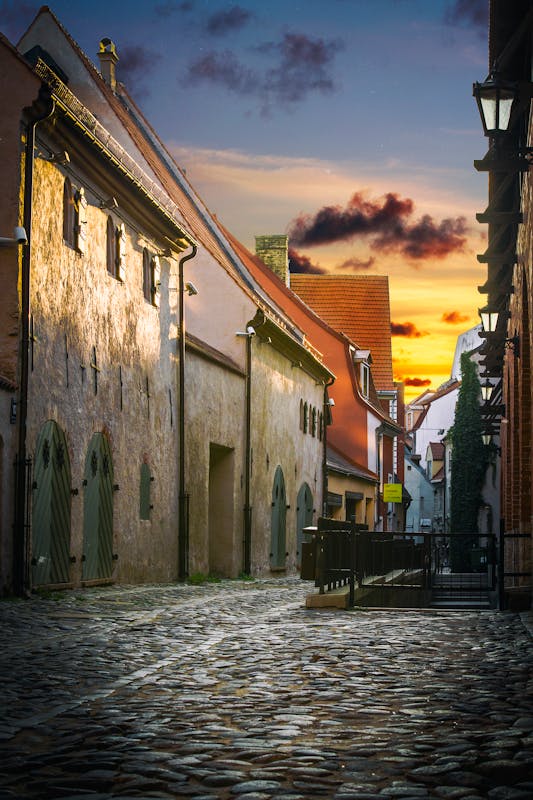
I have covered the Baltics for two decades, and Riga remains the most “architecturally schizophrenic” capital in Europe. Most visitors stay in the “Medieval Loop”: they walk the cobblestones of Vecrīga (Old Town), buy a wooden spoon they’ll never use, drink a shot of Black Balsam that makes them grimace, and leave thinking Riga is just a small, chilly Hanseatic outpost.
The gap is this: Riga is not a medieval village; it is a sprawling Fin-de-Siècle metropolis. It holds the highest concentration of Art Nouveau (Jugendstil) architecture in the world—a fever dream of stone gargoyles and blue tiles. The real Riga is found in the massive Zeppelin hangars of the Central Market, the wooden houses of Āgenskalns where the 19th century still breathes, and the “Quiet Centre” where the Baltic bourgeoisie drinks €5 flat whites. This guide is for the traveller who wants the “Paris of the North” without the cruise-ship crowds.
The Central Market (Rīgas Centrāltirgus) — The “Zeppelin” Walk
Housed in five massive hangars used by the German military for Zeppelins in WWI. It is one of Europe’s largest and most sensory-overloading markets.
- Price: Free.
- Editor’s Tip: Do not just walk the main aisles. Head to the Fermented Vegetable section in the back of the vegetable hangar. Watching the “Sauerkraut Ladies” weigh out buckets of kimchi-style cabbage and pickled garlic is the most authentic sight in the city. Grab a smoked chicken leg or a slab of Lāči rye bread for a €5 lunch.
Alberta Iela & The Art Nouveau District
Over 40% of central Riga is Art Nouveau. Alberta Street is the epicentre—a street where every building was designed by Mikhail Eisenstein (the father of the famous film director).
- Price: Free to walk; ~€9 for the Art Nouveau Museum.
Editor’s Tip: The Art Nouveau Museum at Alberta iela 12 is worth it for the spiral staircase alone—it is the most photographed staircase in the Baltics. Go at 10:00 AM to catch the morning light hitting the “Screaming Faces” on the facades opposite.
Museum of the Occupation of Latvia — The “Dark Heart”
Essential for understanding why Latvians feel the way they do about their eastern neighbour. It covers the Nazi and Soviet occupations from 1940 to 1991.
- Price: ~€10 (Suggested donation/ticket).
- Book: okupacijasmuzejs.lv
Editor’s Tip: Visit the “Corner House” (KGB Building) on Brīvības iela separately. It is the former Stasi-style headquarters where the cells remain exactly as they were left in 1991. It is haunting, cold, and provides the “Dublin Gaol” level of emotional weight.
The National Library (Castle of Light)
A glass-and-steel mountain on the left bank of the Daugava.
- Price: Free.
Editor’s Tip: Take the lift to the 11th floor (registration at the front desk is required but free). It offers the best panoramic view of the Old Town’s “Hundred Spires” across the river. It is warmer and cheaper than climbing St. Peter’s Church tower.
- The Quiet Centre (Klusais centrs): The Art Nouveau heart. Posh, embassy-lined streets, and the best high-end dining.
- Āgenskalns (Left Bank): The 2026 “it” neighbourhood. 19th-century wooden architecture and the newly renovated Āgenskalns Market—a hipster food hall that rivals anything in London or Berlin.
- Tallinas Kvartāls: An old industrial depot turned into a “Street Art” and nightlife hub. Very gritty, very cool, and where the youth of Riga actually hang out on Friday nights.
- Vecrīga (Old Town): Beautiful but hollow. Go for the architecture, stay for one drink, but never eat dinner here. It is 90% tourist traps.
- Budget (€25–€50): Tree House Hostel. Right in the Old Town but quiet, vegetarian-focused, and exceptionally clean.
- Mid-Range (€110–€180): Grand Poet Hotel (near the Freedom Monument) or Hestia Hotel Jugend. Both are in Art Nouveau buildings and offer that “Imperial” feel for a fraction of Western European prices.
- Splurge (€300+): Grand Hotel Kempinski Riga. Overlooking the National Opera. It is the peak of Baltic luxury.
- Where NOT to Stay: Directly on Kaļķu iela in the Old Town—the stag party noise in summer is relentless.
- The Drink: Riga Black Balsam is a 45% herbal liqueur. It tastes like alcoholic cough syrup mixed with dirt.
- The Rule: Never drink it as a straight shot your first time. Order it mixed with hot blackcurrant juice or in a “Black & Coffee.”
- The Local Secret: Try the “Cherry” version—it is significantly more palatable for the uninitiated.
- The “National” Institution: LIDO (Vērmanītis or Leisure Centre). It is a cafeteria-style chain, but don’t let that fool you. It is high-quality, authentic Latvian food. Order the fried potatoes, the meatballs, and a glass of Kvass (fermented rye bread drink). ~€12 for a feast.
- The “New Baltic” Peak: Max Cekot Kitchen or Barents. These are Michelin-standard (Riga finally got its first Michelin star in 2023). Barents focuses on “Cold Water” seafood and is spectacular.
- The Market Meal: Go to Agenskalna Tirgus on a Sunday. Eat at Mārtiņa Barkāna’s pizza stall or grab local dumplings (Pelmeņi).
- The Bread: Latvian Rye Bread (Rupjmaize) is the best in the world. Look for the brand Lāči—it’s baked in wood-fired ovens.
- Mobilly App: This is the only app you need. It handles train tickets, bus tickets, and parking. Download it before you arrive.
- The Rail Baltica Construction: As of 2026, the area around the Central Station is a massive construction site. Allow an extra 15 minutes to find your platform for trains to Jūrmala.
- Trams: The Number 11 Tram is the “scenic route.” It takes you from the centre to Mežaparks (Forest Park), passing through the city’s most beautiful residential areas.
- Bolt: Like in Prague and Lisbon, Bolt is the dominant ride-share. It is incredibly cheap and reliable in Riga.
- The “Stalin’s Birthday Cake” View: The Latvian Academy of Sciences is a socialist-classicist skyscraper. For €6, you can go to the 17th-floor terrace. At sunset, the view of the Central Market hangars and the TV Tower is the most “Cinematic Soviet” view in Europe.
- The “Kalnciems” Saturday: Every Saturday morning, the Kalnciems Quarter hosts a craft market in its wooden courtyard. It is the best place to buy amber that isn’t a tourist souvenir and eat local honey.
- The “Andrejsala” Sunset: Walk to the old port area of Andrejsala in summer. It’s filled with pop-up bars on the water. It is the only place where the sunset feels like a festival every night.
- The Scams: In the Old Town, avoid any “Gentlemen’s Clubs” or bars where “friendly local girls” invite you for a drink. You will be charged €500 for a bottle of cheap sparkling wine and security will bar the door until you pay. Stick to the pubs in this guide.
- The Language: Most people under 40 speak perfect English. However, Latvia has a sensitive history with the Russian language. Always start in English. If you speak Russian as a tourist, be aware of the political context; it is better to ask “Do you speak English/Russian?” first.
- Digital Tipping: Tipping is not mandatory, but 10% is becoming standard in cafes. In 2026, most card machines will offer you a % tip option before you tap.
- Is Riga expensive? No. It remains one of the most affordable capitals in Europe. A beer is €4–€5; a lunch deal (Pusdienu piedāvājums) is ~€7.
- Is the tap water safe? Yes, but it has a high mineral content and can taste slightly metallic in the Old Town. Most locals use filters.
- How many days? Two days for the city centre. Three if you include a day trip to the beach at Jūrmala (30 mins by train) or the “Switzerland of Latvia” in Sigulda.
- Is it cold? In March 2026, expect 2°C to 8°C. The wind off the Baltic Sea is “wet” and cuts through wool. Bring a windproof shell.
Final Editor’s Tip: If you have only 2 hours, walk from the Freedom Monument, through the Bastejkalns Park canals, and into the Quiet Centre. You will see the transition from 19th-century independence to 21st-century Baltic cool in exactly 2,000 steps. Ultrathink.