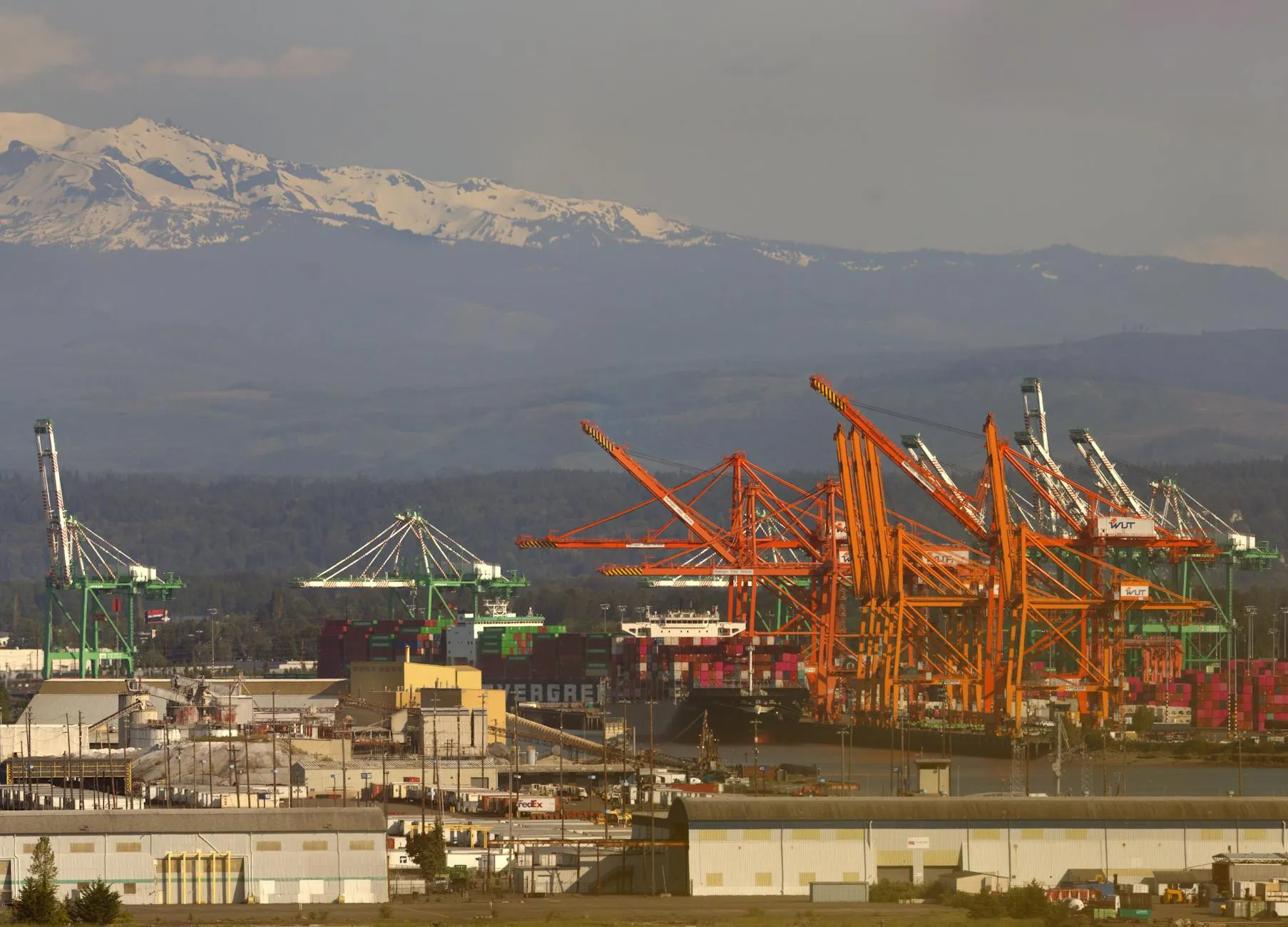
Seattle-Tacoma (SEA) — The Complete 2026 Airport Guide
Two things make SEA easy to like and one makes it hard. Easy: it is a single terminal, so you never guess which building, and the light rail into downtown Seattle is a genuine $3, 40-minute ride — one of the best airport-to-city trains in North America. Hard: SEA now moves 52 million people through a footprint built for far fewer, so the security line at 6 a.m. can be brutal. Get the train and the timing right and it is a smooth airport.
Last verified: July 2026. Transit fares, gate and lounge locations, and US entry rules change often — confirm the specifics on your ticket and at official signage before you travel.
Quick reference
| Detail | What you need to know |
|---|---|
| Airport | Seattle-Tacoma International Airport, IATA SEA — the Pacific Northwest’s main gateway; 52.6 million passengers in 2024, a record, and running well over its comfortable capacity |
| Layout | One passenger terminal with concourses A, B, C and D, plus two detached satellites — the North Satellite (N gates) and South Satellite (S gates) — reached only by an underground automated train |
| Into Seattle | Link light rail, 1 Line — $3, about 38–40 min to downtown (Westlake), station by the parking garage · taxi/rideshare ~$45–60, 20–40 min in traffic |
| Airlines | Alaska Airlines’ home hub (it dominates SEA), with Delta pushing hard on international — new A350 transpacific flying to Seoul, Tokyo, Taipei and Shanghai |
| Arriving from abroad | Customs in the International Arrivals Facility (IAF, opened 2022); foreign visitors need ESTA or a visa; Global Entry, APC kiosks and Mobile Passport Control speed the queue |
| Watch out for | The morning security crunch (5–9 a.m.) · the train ride to the satellites eating your connection time · the last light rail around midnight |
One terminal, two satellites, and the train that links them
SEA is refreshingly simple on paper: a single passenger terminal. There is no “Terminal 1 vs Terminal 2” to get wrong. Off the main terminal run four concourses — A and B at the south end, C and D at the north end — and you can walk between all of them airside once you are through security.
The catch is the two satellite terminals that float out beyond the concourses: the South Satellite (S gates, the traditional home of long-haul international departures) and the North Satellite (N gates, largely Alaska). You cannot walk to either one. They are connected to the main terminal only by the SEA Underground — the automated people-mover that many locals still call the Satellite Transit System (STS). It is free, runs every two to four minutes, and each hop takes about two minutes. It opened in 1973 and is one of the oldest airport trains in the world, but it does the job.
Practically, that means you check your gate letter and whether it is a satellite. An S or N gate is a train ride from the shops, restaurants and most lounges clustered in the main terminal — build in ten minutes for the trip and any wait, more if you are pushing a stroller or a wheelchair.
Arriving from abroad: the IAF and the skybridge
If you are flying into Seattle from overseas, you land into the airport’s newest and best piece of infrastructure. The International Arrivals Facility (IAF) opened in 2022 after years of construction, and it replaced a cramped old customs hall that could not cope.
The headline feature is the aerial walkway: a soaring glass skybridge 780 feet long and 85 feet above the taxilane below — billed as the longest walkway of its kind over an active aircraft taxiway anywhere in the world. Passengers arriving at the South Satellite cross this bridge, up over the top of Concourse A, into the new 450,000-square-foot Grand Hall where passport control and baggage claim sit. It is a genuinely impressive first impression of the city — planes taxiing underneath you as you walk in.
The IAF also nearly doubled the international gates (from 12 to 20) and more than doubled arrivals processing capacity to around 2,600 passengers an hour. In plain terms: international arrivals move a lot faster than they used to, though a bank of three wide-bodies landing together can still fill the hall.
Getting into Seattle — take the light rail
This is where SEA quietly beats most big US airports. The Link light rail 1 Line has a station right at the airport, and it is cheap, fast and immune to the I-5 traffic that snarls every taxi. For a solo traveller or a couple heading downtown, it is almost always the right call.
| Option | Price | Time to downtown | Verdict |
|---|---|---|---|
| Link light rail (1 Line) | $3 adult (~€2.80) | ~38–40 min to Westlake | Cheapest and most reliable — no traffic. The default |
| Taxi | ~$45–60 (~€42–56) metered | 20–40 min, traffic-dependent | Worth it for groups, heavy bags or late arrivals |
| Uber / Lyft | ~$35–60 (~€33–56), surges | 20–40 min | Fine off-peak; can spike badly at rush hour |
The light rail, in detail
The 1 Line runs from the airport’s own SEA/Airport Station north through downtown Seattle and on to the University District, Northgate and — since the Lynnwood Link extension opened on 30 August 2024 — all the way up into Snohomish County. It costs a flat $3 for adults to downtown, takes about 38–40 minutes to the Westlake stop in the heart of the city, and trains run roughly every 8–10 minutes from around 5 a.m. until midnight. Pay by tapping a credit/debit card or an ORCA card at the platform, or buy from the machines or the Transit GO app. Seattle’s second line, the 2 Line to the Eastside (Bellevue and Redmond), also opened in 2024 — for those suburbs you ride the 1 Line and change downtown.
Finding the station is the only fiddly part. From baggage claim, follow the signs up to the fourth floor and across the skybridge into the parking garage, then keep walking to the far side where the station sits. It is a covered walk of five to ten minutes with your bags — allow for it, especially with a stroller.
US entry for foreign visitors
SEA is a US port of entry, so if you are arriving from abroad on a foreign passport, the American rules apply — sort the paperwork before you fly.
- ESTA or a visa. Citizens of Visa Waiver Program countries (the UK, most of the EU, Australia, New Zealand, Japan and more) need an approved ESTA before boarding — apply online at the official esta.cbp.dhs.gov, not a lookalike reseller, and do it days ahead, not at the gate. The ESTA fee rose in 2025, so confirm the current amount on the official site. Everyone else needs the appropriate US visa.
- Automated Passport Control (APC) and Mobile Passport Control (MPC). The IAF is fitted with self-service kiosks, and the free MPC app (for US and Canadian citizens and some other eligible travellers) lets you submit your declaration on your phone and skip the paper form — often the fastest lane for those who qualify.
- Global Entry. If you have it, use it: SEA is one of the first US airports rolling out a touchless, camera-based Global Entry lane where facial recognition clears you as you walk toward the officer — no kiosk stop. Enrollment on Arrival is also offered here, letting conditionally approved applicants finish the interview on landing.
- No US preclearance here. Unlike some Canadian and Irish airports, SEA has no US pre-clearance for departures — arriving passengers clear immigration on landing in the IAF, so budget time if you have an onward domestic connection.
Security: the peak crunch and SEA Spot Saver
Here is the honest part. SEA is one of the most crowded airports in the country relative to its size — it handled a record 52.6 million passengers in 2024 and saw its busiest day ever that August at roughly 198,000 people in a single day, all through a terminal that was not designed for those numbers. The pinch point is security.
More than a third of the airport’s daily passengers arrive before 9 a.m., so the 5–9 a.m. window is the worst, with secondary peaks in the afternoon and again late evening. The airport targets under 20 minutes at the checkpoints and often hits it — but at the morning peak, waits of 30 to 60 minutes are entirely possible. Do not cut it fine on an early flight.
Two tools help. SEA Spot Saver is a free virtual-queue system (no membership, no fee) that lets you reserve a checkpoint time slot and skip much of the standby line; it runs daily from 4 a.m. to 10 p.m. TSA PreCheck and CLEAR both operate here too and are worth it if you fly often. If you have none of those, the single best move is simply to arrive early for a morning departure.
Airlines: Alaska’s home, Delta’s international bet
SEA is unmistakably Alaska Airlines’ home hub — it is headquartered in the area and runs the biggest operation here, so if you are on Alaska you will find the most gates, the most staff and the shortest walk. Its flights cluster around the morning and evening banks, which is part of why those peaks are so intense.
The story to know for 2026 is Delta’s international push. Delta has invested heavily in Seattle as a transpacific gateway, moving its long-haul Asia flying onto newer Airbus A350s and adding capacity to Seoul, Tokyo, Taipei and Shanghai, with a pilot base in the works. For travellers that means more nonstop choices to Asia out of SEA — and a livelier competitive market on those routes than you would expect from a mid-sized city.
Lounges
Because this is Alaska’s fortress, the Alaska Lounge network is the strongest option:
- Alaska Lounge — Concourse C, on the mezzanine by gate C16, steps from the C-concourse train stop. This is the main one, and a much larger two-level flagship is due to replace it in 2027.
- Alaska Lounge — Concourse D, just past Security Checkpoint 4.
- Alaska Lounge — North Satellite (N gates), on the mezzanine above gates N13–N18.
Alaska Lounge members and eligible First Class/partner passengers get in, and day passes are sold when there is space. Delta Sky Clubs serve Delta’s premium and SkyMiles elite flyers (in the A/B concourse area). Coverage for Priority Pass and card-lounge programs at SEA is thinner than at some hubs, so check your lounge app for what is currently open before you count on it rather than trusting an old listing.
Connections and timing
The single-terminal design makes SEA easier to connect through than a multi-building airport — once you are airside you can reach every concourse without re-clearing security. The variable is the satellite train: a connection that stays in the main concourses (A–D) is a walk, but one that starts or ends at the North or South Satellite adds a train ride and a wait.
For a domestic-to-domestic connection, give yourself a comfortable hour or more; if either flight is at a satellite, lean toward 90 minutes. An international arrival with an onward domestic flight is the one to respect — you must clear immigration in the IAF, collect and re-check your bag, and pass security again, so treat two to three hours as sensible and check the connection time your airline actually ticketed. When in doubt, ask the carrier; a tight cross-satellite hop is the one that catches people.
Frequently asked questions
How do I get from SEA airport to downtown Seattle, and how much?+
Take the Link light rail 1 Line. It is a flat $3 for adults and about 38–40 minutes to the Westlake stop downtown, with trains every 8–10 minutes from roughly 5 a.m. to midnight. The station is by the parking garage — from baggage claim, go up to the fourth floor and cross the skybridge into the garage, then walk to the far side. A taxi or Uber runs about $45–60 and 20–40 minutes depending on traffic.
Does SEA have more than one terminal?+
No — SEA has a single passenger terminal, which makes it simpler than most big airports. Off the main terminal are four concourses (A, B, C and D) that you can walk between airside, plus two detached satellite terminals, the North Satellite (N gates) and South Satellite (S gates), reached only by the free underground automated train.
What is the SEA Underground / Satellite Transit System?+
It is SEA’s automated people-mover — an underground train, formerly called the Satellite Transit System (STS), that links the main terminal to the North and South Satellites. It is free, runs every two to four minutes, and each hop takes about two minutes. If your gate is an N or S gate, you have to ride it, so allow about ten minutes for the trip and any wait.
Where do international flights arrive at SEA?+
In the International Arrivals Facility (IAF), which opened in 2022. Passengers landing at the South Satellite walk across a dramatic 780-foot aerial skybridge, over the top of Concourse A, into a 450,000-square-foot Grand Hall for passport control and baggage. It nearly doubled the airport’s international gates and processing capacity, so arrivals are far quicker than under the old hall.
Do I need an ESTA to fly into Seattle?+
If you are from a Visa Waiver Program country (the UK, most of the EU, Australia, New Zealand, Japan and others) you need an approved ESTA before you board — apply on the official esta.cbp.dhs.gov several days ahead, not at the gate, and confirm the current fee there since it changed in 2025. Travellers from non-waiver countries need a US visa. Global Entry, APC kiosks and the free Mobile Passport Control app can all speed up the customs queue for those who qualify.
How early should I arrive at SEA?+
Earlier than you think, especially in the morning. More than a third of SEA’s daily passengers arrive before 9 a.m., so the 5–9 a.m. security crunch is the worst of the day — allow two hours for a domestic flight and closer to three for an international one. The free SEA Spot Saver virtual-queue system (daily 4 a.m.–10 p.m.), TSA PreCheck and CLEAR all help you skip part of the line.
What is SEA Spot Saver?+
SEA Spot Saver is a free virtual-queue tool — no membership or fee — that lets you reserve a time slot at the security checkpoint and bypass much of the standard line. It runs daily from 4 a.m. to 10 p.m. and is one of the easiest ways to beat SEA’s morning crush if you do not have PreCheck or CLEAR.
Which airlines are biggest at SEA?+
Alaska Airlines calls SEA home and runs the largest operation, so it has the most gates and the shortest walks. Delta has invested heavily in Seattle as a transpacific gateway, flying new Airbus A350s nonstop to Seoul, Tokyo, Taipei and Shanghai, which gives the airport an unusually strong slate of Asia routes for its size.
At a glance
| Codes | SEA / KSEA — Seattle-Tacoma International Airport |
| Layout | One terminal · concourses A, B, C, D · North & South Satellites via the SEA Underground train |
| Passengers | 52.6 million in 2024 (record); running over comfortable capacity |
| Into downtown | Link light rail 1 Line — $3, ~38–40 min to Westlake, station by the parking garage |
| Taxi / rideshare | ~$45–60; Uber/Lyft pick up on the 3rd floor of the garage, taxis at ground level |
| International arrivals | IAF (2022) with the 780-ft skybridge; ESTA/visa required for foreign visitors |
| Home airline | Alaska Airlines; Delta the big international carrier (A350 transpacific) |
| Security tip | Worst 5–9 a.m.; use the free SEA Spot Saver virtual queue (4 a.m.–10 p.m.) |
Before you fly
- 📊 Check what a good fare to Seattle looks like — our price-check tool shows the typical deal range so you know a bargain when you see one.
- 🧳 Baggage checker — confirm your airline’s carry-on and checked allowance before you pack.
🎫 Planning the trip? Use our price-check tool to see whether the fare you have been quoted to Seattle is actually a good deal.
More deals you might like
 Niš Constantine the Great Airport (INI) Airport Guide 2026 — Free Buses, Cheap Taxis, Real Dinars
 Norwich Airport (NWI) Airport Guide 2026 — The Airport Where Helicopters Outnumber Planes
 Stornoway Airport (SYY) Airport Guide 2026 — Four Miles, Four International Passengers
 Kerry Airport (KIR) Airport Guide 2026 — One Runway, Two Peninsulas