Vienna International Airport (VIE) — The Complete Guide 2026
Vienna Airport’s landside and airside footprint is larger and more complex than first-time visitors typically expect. The campus consists of three distinct terminal buildings
Vienna International Airport (VIE) is Austria’s largest and most strategically significant international gateway — a meticulously organised, architecturally striking hub where Central European efficiency, genuine Austrian hospitality, and continuously expanding infrastructure converge. Operated by Flughafen Wien AG and located in Schwechat, just 18km south-east of Vienna’s first district, VIE handled over 30 million passengers in 2024 and is on course to surpass pre-pandemic records through 2026 as the Southern Extension of Terminal 3 enters full operation. The primary home base of Austrian Airlines (OS) and a key hub for Lauda Europe, Ryanair’s Austrian subsidiary, and an increasing roster of Gulf and Asian flag carriers, VIE punches well above its weight for a mid-sized European airport. This guide covers every aspect of navigating Vienna Airport in 2026 — from the newly expanded terminal footprint and Smart Check-in zones to the three distinct rail services into the city, insider tips on the best lounges, free Alpine drinking water fountains, and everything Baltic travellers need to know about VIE as their most efficient European transfer hub.
IATA: VIE
City: Vienna, Austria
Full name: Vienna International Airport (Flughafen Wien-Schwechat)
Location: Schwechat, 18km south-east of Vienna city centre
Primary carrier: Austrian Airlines (OS / AUA)
Terminals: Terminal 1, Terminal 2 (boutique hub), Terminal 3 + Southern Extension (2026)
Annual passengers: ~30+ million
Terminal Layout and the 2026 Southern Extension
Vienna Airport’s landside and airside footprint is larger and more complex than first-time visitors typically expect. The campus consists of three distinct terminal buildings — T1, T2, and T3 — connected by covered walkways and an internal transit system, all feeding into a shared airside pier network. In 2026, the completion of the Terminal 3 Southern Extension has fundamentally restructured the airport’s capacity, passenger flow, and commercial offering.
Terminal 1 — Long-Haul and Premium International
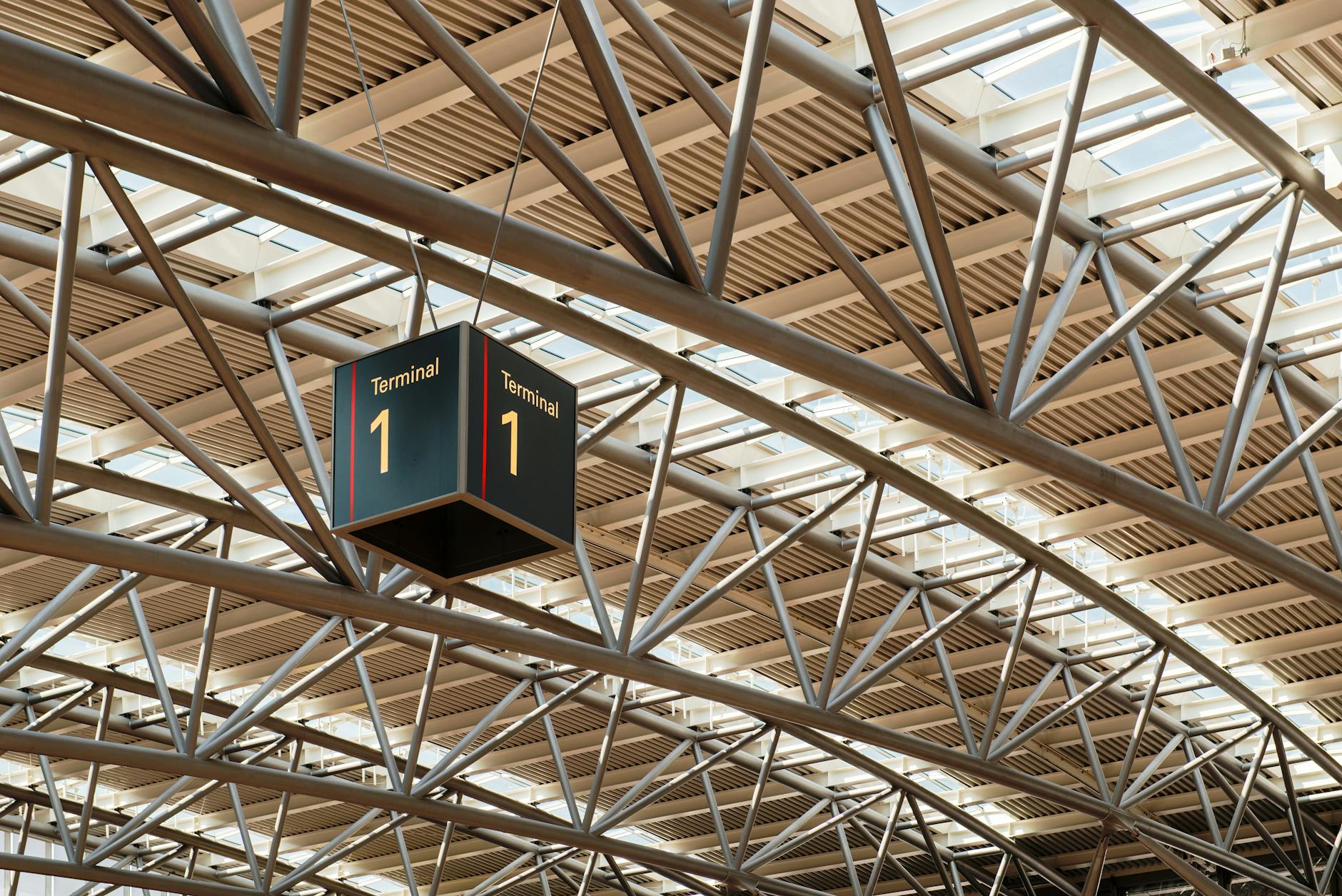
Terminal 1 is the original heart of VIE and continues to handle the majority of Austrian Airlines’ long-haul operations, including all non-stop services to North America, Asia, and Africa, as well as a significant portion of intercontinental transfer traffic. Check-in rows are arranged along a wide central hall, with dedicated Business Class counters for Austrian and Lufthansa Group partners clearly signed in the northern section. Security for T1 departures feeds directly into the main airside pier, from which jet bridges connect to wide-body stands. T1 is also home to the Vienna Lounge — VIE’s flagship third-party lounge — described in detail below.
Terminal 2 — Boutique Security and Premium Fast-Track Hub (Fully Operational 2026)
Terminal 2 at VIE has undergone a significant transformation and is now fully operational in 2026 as a boutique security and baggage processing hub. Rather than functioning as a conventional mass-transit terminal, T2 has been repositioned as a faster, quieter alternative entry point primarily serving specialised carriers and providing a genuine fast-track experience for premium passengers. The terminal’s streamlined security lane configuration means queue times here are consistently shorter than at T1 or T3 during peak periods — a fact that experienced VIE regulars exploit by checking in online, dropping bags at T2’s dedicated premium counters, and proceeding airside via T2 before walking through to their gate in the main pier. If you hold Business Class status with Austrian, Lufthansa Group, or a Star Alliance carrier, T2’s premium lane is almost always the fastest option at VIE regardless of your departure gate’s physical location.
Terminal 3 — Mass Transit Hub and the 2026 Southern Extension
Terminal 3 is the airport’s primary passenger volume hub, handling the bulk of European short-haul traffic, low-cost carrier operations (Ryanair, Wizz Air, easyJet), and a large portion of Austrian Airlines’ feeder network from regional Central and Eastern European cities. In 2026, the 70,000m² Southern Extension of Terminal 3 represents the most significant single addition to Vienna Airport’s infrastructure in over a decade — and it changes the practical experience of transiting through VIE in several meaningful ways.
The T3 Southern Extension — What Changed in 2026
The Southern Extension adds 70,000 square metres of new terminal space to the T3 footprint, structured around three primary improvements:
Centralised Security Screening Area: The extension houses a completely new, purpose-built centralised security screening zone that consolidates what were previously dispersed checkpoint lanes into a single high-throughput facility. The new design incorporates CT-based baggage scanning (no need to remove laptops or liquids from bags), automated tray retrieval systems, and dedicated fast-track lanes. For passengers arriving during peak morning and afternoon departure banks, the new centralised checkpoint represents a marked improvement in throughput speed compared to the legacy T3 lanes it replaces.
The Retail Marketplace: The airside commercial zone in the Southern Extension is anchored by a curated “Marketplace” concept — a substantial retail floor featuring premium Austrian brands alongside international luxury and travel essentials. This is not a standard airport duty-free corridor. The Marketplace is designed around the kind of regional identity that Vienna, and Austria more broadly, genuinely warrants: Viennese coffee roasters, Austrian wines and spirits (Grüner Veltliner and Zweigelt prominently featured), Riedel crystal, Gmundner Keramik ceramics, and Manner wafers alongside the expected international fragrance and cosmetics retailers. For passengers with layover time at VIE, the Southern Extension Marketplace is a genuinely interesting commercial environment rather than a generic duty-free run.
Increased Jet Bridge Capacity for Wide-Body Aircraft: The extension adds a meaningful number of new contact stands equipped with jet bridges capable of handling wide-body aircraft including the Boeing 787, Airbus A330/A350, and A380 configurations. This directly addresses one of VIE’s historic constraints — the airport has long managed a higher proportion of remote-stand wide-body operations than comparable European hubs, which added bus transfer time for long-haul passengers. The new stands allow Austrian Airlines and visiting carriers (Emirates, Etihad, Singapore Airlines, ANA, and others) to operate directly to-gate, reducing transfer connection stress for passengers on tight minimum connection times.
Check-in, Security, and Smart Check-in Zones
Vienna Airport has invested heavily in digitising and streamlining the check-in and security experience in 2026, with Austrian Airlines and Lufthansa Group passengers being the primary beneficiaries of the new Smart Check-in infrastructure.
Smart Check-in Zones — Austrian Airlines and Lufthansa Group
The Smart Check-in zones represent VIE’s most visible 2026 technology deployment. Positioned in dedicated sections of T1 and T3, these zones replace traditional staffed check-in desks as the default option for Austrian Airlines and Lufthansa Group passengers. The workflow is fully biometric and self-service:
- Biometric Identity Verification: Passengers scan their passport or national ID at a kiosk. The system cross-references the booking, verifies identity biometrically via a facial scan, and issues a digital boarding pass to the airline’s app in seconds — no paper required at any subsequent stage.
- Self-Service Bag Drop: Checked luggage is handled at dedicated automated bag-drop units where the passenger scans their boarding pass, places the bag on the belt, and the system prints and attaches the tag automatically. The bag is transferred to the baggage handling system without staff intervention. For passengers with carry-on only, the Smart Check-in zone can be cleared in under two minutes from arrival.
- Reduced Peak Stress: Because biometric processing and bag-drop are decoupled from each other, the Smart Check-in zones avoid the bottleneck of traditional queue-to-counter workflows. During the peak 06:00–09:00 morning bank, Smart Check-in passengers consistently clear the zone in significantly less time than traditional desk queues.
Passengers travelling with airlines outside the Lufthansa Group (including Ryanair, Wizz Air, Emirates, and others) continue to use standard check-in rows, though self-service kiosk options are expanding across the terminal for boarding pass issuance.
Security Lanes and Timing
Security configuration varies by terminal:
- T1 Security: Multiple standard lanes plus dedicated fast-track for Business Class and Star Alliance Gold card holders. Peak congestion: 05:30–09:00 and 16:00–19:00. The dedicated Austrian Lounge access lane (for Lounge members) bypasses the standard queue.
- T2 Security (Fast-Track Boutique Hub): The fastest route through security at VIE during peak periods for eligible passengers. Consistently lower queue times than T1 and T3 due to lower passenger volume by design.
- T3 Southern Extension Central Security: The new CT-based centralised checkpoint for T3 departures. No need to remove laptops or liquids. High throughput by design. Recommended arrival time: 90 minutes before departure for standard passengers, 60 minutes with Smart Check-in and carry-on only.
Getting to and from the City: Three Rail Options Compared
Vienna Airport is exceptionally well-connected to the city by rail — arguably better than most comparable European airports — with three distinct services serving different needs, budgets, and destination preferences. Understanding the differences between the Railjet, the S-Bahn S7, and the City Airport Train (CAT) will save you time, money, and confusion.
Option 1: ÖBB Railjet — Fastest to Vienna Hauptbahnhof (15 Minutes)
Best for: Passengers heading to Vienna Central Station (Hauptbahnhof), onward rail connections across Austria, or accommodation in the 10th and surrounding districts.
Journey time: 15 minutes direct to Wien Hauptbahnhof — the fastest rail option to the city centre.
Fare: 4.60 EUR one-way (standard ticket, 2026 pricing). The Railjet fare from VIE to Wien Hbf operates as a standard ÖBB regional ticket — no premium supplement required.
Frequency: Approximately every 30 minutes throughout the day, with increased frequency during peak hours.
Practicalities: The Railjet is a high-speed intercity train — not a suburban commuter service — which means it is fast, spacious, and suitable for luggage. Trains depart from the dedicated airport rail platform directly beneath the terminal, accessible via escalators and lifts from the arrivals hall. The direct connection to Wien Hauptbahnhof is particularly valuable for passengers arriving from Asia, the Middle East, or Africa who need to connect onward to Salzburg, Innsbruck, Graz, or international services into Germany.
Tickets: Purchase at ÖBB ticket machines on the platform level (Apple Pay, Google Pay, and contactless credit cards all accepted — see Contactless Payment section below), via the ÖBB app, or at the staffed ÖBB ticket desk in the arrivals hall.
Option 2: S-Bahn S7 — Best Budget Option to Wien Mitte (25 Minutes)
Best for: Budget-conscious travellers, passengers staying in the 1st–4th districts, and anyone needing the Wien Mitte/Landstraße U-Bahn interchange for onward travel across the city.
Journey time: 25 minutes to Wien Mitte/Landstraße station.
Fare: 4.60 EUR one-way (2026 pricing, same fare as Railjet). The S7 and Railjet share the same airport-to-city ticket pricing under the current VOR (Verkehrsverbund Ostregion) zone structure.
Frequency: Every 30 minutes, alternating with the CAT on the same rail corridor.
Practicalities: The S7 is a regional commuter train. It makes more stops than the Railjet and is busier during rush hour, but its terminus at Wien Mitte places passengers directly at the U3/U4 U-Bahn interchange — the most versatile transfer point in the city for reaching the 1st district, Stephansplatz, the Ringstrasse, Mariahilfer Strasse, and most central hotel clusters. For the same price as the premium Railjet, the S7’s Wien Mitte terminus is often the more useful final destination.
Option 3: City Airport Train (CAT) — Premium Non-Stop with In-Town Check-in
Best for: Business travellers, passengers with early morning or late evening flights, and anyone who wants to check their luggage in at the city centre station before arriving at the airport.
Journey time: 16 minutes non-stop to Wien Mitte/Landstraße (CAT terminal).
Fare: 16.00 EUR single / 28.00 EUR return (2026 pricing). The CAT carries a significant premium over the S7 for roughly the same journey time — what you are paying for is the dedicated, non-stop service, the guarantee of a seat, the luggage space, and crucially, the In-Town Check-in facility.
In-Town Check-in at Landstraße CAT Terminal: This is the CAT’s defining feature and the reason business travellers pay the premium. At the dedicated CAT terminal at Wien Mitte/Landstraße station in the city centre, Austrian Airlines (and select partner carriers) passengers can check their bags and receive their boarding passes up to 75 minutes before departure — without going to the airport first. Checked bags are transferred directly to the aircraft. This means you can check out of your Vienna hotel, walk to the CAT terminal, drop your luggage, and arrive airside at VIE with only hand luggage — bypassing all check-in queues entirely. For early morning departures, this effectively eliminates one of the most stressful elements of airport transit.
CAT Practicalities: The CAT runs from approximately 05:36 (first departure from city) through to 23:36. The dedicated CAT waiting area at Wien Mitte is comfortable and clean. Note that the CAT does NOT accept standard VOR zone tickets or the Vienna City travelcard — it is a dedicated service with its own ticketing. Purchase at CAT machines (contactless payment supported) or online at cityairporttrain.com. The return ticket at 28.00 EUR offers modest savings and is worthwhile if you are certain of using the return leg.
Contactless Payment at All Rail Ticket Machines (2026)
While the VOR (Vienna Transport Authority) network still issues physical tickets and relies on apps for digital passes, all rail platform ticket machines serving Vienna Airport in 2026 support Apple Pay, Google Pay, Samsung Pay, and contactless credit/debit card payment for instant purchase. This applies to S7 and Railjet ÖBB machines on the airport platform level and at Wien Mitte. There is no longer any need to carry coins or queue for staffed desks for standard rail tickets. The CAT machines have also supported contactless payment since 2023. For non-EU visitors who arrive without euro cash and wish to avoid ATM fees, contactless card payment at the rail machines is the recommended approach.
Bus Options from VIE
Vienna Airport Lines (VAL) operates direct coach services to Vienna City Centre (Morzinplatz/Schwedenplatz), the Westbahnhof, and Donauzentrum shopping centre. Coaches depart approximately every 20–30 minutes and the fare is typically lower than CAT but higher than S7. Journey times vary significantly with Vienna city traffic (40–60+ minutes during peak hours), making rail the preferred option for all but the most specific destination needs. Austrian Postbus and private transfer operators also serve the airport for connections to Lower Austria, Burgenland, and the Slovak capital Bratislava (~1 hour by coach).
Taxi, Ride-Hail, and Private Transfer
Official taxis from VIE to the Vienna city centre operate at a fixed rate of 36 EUR (2026 standard fare to any destination within the Gürtel). This flat rate applies to licensed airport taxis regardless of traffic and is clearly posted at the official taxi rank outside arrivals. Bolt and Uber operate at VIE but wait times can vary; Bolt tends to offer marginally lower pricing on most routes. Private transfer services (booked in advance) are widely available and recommended for groups of 3+ or passengers with significant luggage — the per-person cost approaches the taxi flat rate and the convenience is meaningfully better.
Lounges at Vienna Airport
VIE’s lounge provision has improved substantially in recent years. Passengers have access to airline-operated facilities (Austrian Business Lounge), third-party commercial lounges, and a newly upgraded offering in T3 following the Southern Extension opening.
Vienna Lounge (Terminal 1) — 2026 Flagship Third-Party Lounge
The Vienna Lounge in Terminal 1 is VIE’s flagship third-party lounge for 2026 — the best independent lounge option at the airport by a significant margin, and one that genuinely reflects the quality and cultural identity of Vienna itself.
Walk-in rate: 55.00 EUR per person (2026 pricing). Access is also included for holders of Priority Pass, Lounge Club, LoungeKey, and DragonPass memberships.
What distinguishes the Vienna Lounge from a generic airport facility is its outdoor terrace with direct tarmac views — a rare feature at any European airport lounge and a genuine pleasure for aviation enthusiasts and anyone who appreciates the spectacle of wide-body aircraft manoeuvring at close range. The terrace is open seasonally (typically April–October) and overlooks the T1 apron, offering unobstructed sightlines to Austrian Airlines long-haul aircraft, Emirates A380 operations, and the general mix of VIE traffic.
Inside, the Vienna Lounge houses a dedicated Austrian art gallery — a rotating exhibition of contemporary and classical Austrian artworks that gives the space a distinctly non-generic character. This is not token airport decoration; the gallery is curated with evident care and changes regularly, making it a worthwhile stop even for non-lounge-regulars. The food and beverage offering includes a self-serve buffet of Austrian regional dishes (Liptauer cheese spread, Viennese cold cuts, pastries), a staffed coffee bar serving genuine Viennese Melange and Kleiner Brauner, and a full bar including Austrian wines. Seating is generous with armchairs, work desks, and semi-private nooks. Wi-Fi is fast and password is displayed on entry. Showers are available on request at the reception desk.
Sky Lounge (Terminal 3)
The Sky Lounge in Terminal 3 is the second major third-party option at VIE, positioned to serve the high volume of departures from T3 including the full low-cost carrier roster (many of which are now served by T3’s Southern Extension gates).
Walk-in rate: 55.00 EUR per person (2026 pricing). Also accessible via Priority Pass, Lounge Club, and LoungeKey.
The Sky Lounge is a solid, well-maintained facility. Food and beverage is a standard self-serve buffet; the coffee offering is reliable. It lacks the outdoor terrace and art gallery that distinguish the Vienna Lounge in T1, but for T3 departures it represents a meaningfully better pre-flight environment than the terminal’s general seating areas, particularly during peak periods when gate areas become crowded. Shower facilities are available. Dedicated work zone with power sockets and USB charging at every seat.
Austrian Airlines Business Lounge
The Austrian Airlines Business Lounge is the premium benchmark at VIE. Accessible to Austrian and Lufthansa Group Business Class passengers and Star Alliance Gold card holders, the Austrian lounge features the airline’s signature food concept — the Flying Kitchen — which operates as a staffed à la carte service during peak hours rather than a conventional buffet. Austrian wines by the glass, a Viennese pastry selection, and a well-stocked bar. The lounge occupies prime airside real estate in T1 with views of the apron. Shower suites available for long-haul passengers. The dedicated fast-track lane from T2 into the lounge is the fastest route through VIE security for Business Class passengers, as noted above.
Luggage Storage
Left-luggage facilities are available landside at Terminal 3, operated by Nau Uhren & Schmuck and affiliated services. Standard operating hours are approximately 04:00–24:00 daily, covering all departure banks including the early morning SWISS-equivalent bank of Austrian departures.
- Standard suitcase (24 hours): 10.00 EUR
- Oversized items — skis, bicycles, surfboards (24 hours): 14.00 EUR
For passengers with day-use layovers in Vienna — arriving in the morning and departing in the evening — the luggage storage facility enables a full day of city exploration without the logistical burden of bags. The 10.00 EUR 24-hour rate compares favourably with equivalent services at CDG and AMS. Lockers for smaller items (carry-on size) are available in additional areas of the terminal at lower per-hour rates.
Free Drinking Water — Alpine Spring Quality Throughout the Terminal
This is a Vienna Airport feature that deserves explicit mention because it is genuinely exceptional and widely underutilised by first-time visitors. Free drinking water fountains are distributed throughout all VIE terminals, both landside and airside. The water is sourced from Alpine springs and distributed via Vienna’s municipal water system — the same supply that feeds the city’s famous street fountains (Wiener Hochquellenwasserleitungen). The quality is objectively outstanding: cold, clean, mineral-balanced, and consistently rated among the best tap water of any major European city.
Bring an empty refillable bottle and fill it at any terminal fountain before and after security. Austrian security does not require you to empty a refillable bottle — filled bottles from airport fountains are permitted through security checkpoints. Given that bottled water in VIE’s airside retail runs to 3–4 EUR per 500ml, a single refillable bottle saves a meaningful amount on any journey. The water quality is unambiguously 10/10 — not an exaggeration but a fair reflection of what Vienna’s water infrastructure delivers. If you forget your bottle, the airport’s coffee shops will refill a cup gratis on request.
Baltic Connections at VIE — The Most Efficient European Transfer Hub for Baltic Travellers
Vienna International Airport occupies a uniquely advantageous position in the European flight network for travellers from the three Baltic states — Estonia, Latvia, and Lithuania. Austrian Airlines operates direct services from Riga (RIX), Vilnius (VNO), and Tallinn (TLL) to Vienna year-round, and VIE’s position as a hub at the geographical crossroads of Central, Southern, and Eastern Europe makes it arguably the single most efficient transfer point for Baltic passengers heading to a wide range of onward destinations.
Direct Austrian Airlines Services from the Baltics
- Riga (RIX) → Vienna (VIE): Year-round direct service. Flight time approximately 2 hours 10 minutes.
- Vilnius (VNO) → Vienna (VIE): Year-round direct service. Flight time approximately 2 hours.
- Tallinn (TLL) → Vienna (VIE): Year-round direct service. Flight time approximately 2 hours 20 minutes.
Why VIE is the Best Baltic Transfer Hub for These Routes
Baltic travellers heading to the Balkans, Italy, or the Middle East will find that VIE outperforms alternative transfer hubs (Frankfurt, Amsterdam, London) on a combination of connection time, frequency, and geographic efficiency:
- Balkans (Belgrade, Zagreb, Sarajevo, Skopje, Tirana): Austrian Airlines operates the most comprehensive network of any European carrier to the Western Balkans out of VIE. Connecting times from Baltic arrivals are typically 60–90 minutes, well within IATA minimum connection times at VIE.
- Italy (Rome, Milan, Venice, Naples, Catania): Austrian and Lufthansa Group partner Lufthansa Italia serve multiple Italian destinations from VIE at competitive connection frequencies. A Baltic → Vienna → Rome itinerary on Austrian/Lufthansa Group is often faster city-to-city than routing via a Western European hub.
- Middle East (Dubai, Abu Dhabi, Doha, Tel Aviv, Amman, Beirut): VIE is served by Emirates (A380), Etihad, Qatar Airways, flydubai, and Austrian’s own widebody services. Connecting from a Baltic city to VIE and onward to the Gulf or Levant on a single-ticket itinerary offers strong punctuality records and minimum connection times that the airport reliably meets.
- North Africa (Cairo, Casablanca, Tunis): Austrian serves all three directly, making VIE a natural transfer point for Baltic travellers visiting North Africa that lacks obvious alternatives at Western hubs.
For Baltic passengers, the practical implication is straightforward: when comparing VIE against Frankfurt or Amsterdam as a connecting hub for travel to Southern Europe, the Balkans, or the Gulf, check the VIE routing first. The combination of Austrian Airlines’ network depth in these specific regions, VIE’s compact and manageable terminal layout (minimum connection time for Schengen-to-Schengen is 35 minutes; Schengen-to-non-Schengen is 50 minutes), and the airport’s historically strong on-time performance makes it frequently the fastest and least stressful option.
Dining and Retail at VIE
Airside Dining (T1 and T3)
Vienna Airport’s airside food and beverage offering reflects the city’s coffee culture more than most European airports manage. Aida, the iconic Viennese confectionery chain with its distinctive pastel-pink branding, operates a full café in T1 airside — serving Melange, Einspänner, and an extensive Mehlspeisen pastry selection. For travellers who have not yet experienced an Aida in the city, the airport branch is an authentic introduction. Café Landtmann and Café Schwarzenberg equivalents are represented via licensed concessions. Julius Meinl coffee, Vienna’s most prominent roaster, is served at multiple points throughout the airside commercial zones.
For hot food, Joseph Brot offers excellent Austrian bread-based snacks and sandwiches. VAPIANO and a range of international quick-service options round out the hot food choice. Meal prices at VIE run approximately 15–25 EUR for a sit-down meal, 8–14 EUR for quick service — high by Central European standards but competitive for a major European hub airport.
The T3 Southern Extension Marketplace — Austrian Premium Retail
As described in the terminal section above, the Southern Extension’s Marketplace is the standout retail addition in 2026. Key Austrian brands and product categories represented include:
- Manner: Austria’s most beloved confectionery brand, famous for its Neapolitan wafers since 1890. The Manner shop in the Marketplace is the most comprehensive retail selection outside the flagship Stephansplatz store in Vienna.
- Riedel: The Kufstein-founded crystal glass manufacturer whose wine glasses have become an international benchmark. A strong range of Riedel’s standard and Performance series is stocked.
- Gmundner Keramik: Austria’s oldest continuously operating ceramics manufacturer, producing hand-painted stoneware from the Salzkammergut since 1492. Genuinely unique and portable Austrian craft gifts.
- Austrian Wine Selection: Grüner Veltliner and Zweigelt from Wachau, Kamptal, and Burgenland DAC regions stocked in depth — with regional origin labelling far more detailed than a standard airport wine shop. Ideal for informed wine purchasers or gifts.
- Austrian Spirits: Stroh rum, Zotter chocolate liqueurs, and a selection of Austrian Gin (Monkey 47 and locally produced Vienna Dry Gin among others) are featured.
International luxury (perfumes, cosmetics, electronics) and travel essentials are also well-represented in the Marketplace alongside the Austrian specialist offerings.
Facilities and Practicalities
Currency and ATMs
Austria uses the Euro (EUR). ATMs are available both landside and airside throughout all terminals. Airport ATMs are operated by Euronet and affiliated providers — their dynamic currency conversion (DCC) should be declined in favour of your home currency. For fee-conscious travellers, withdrawing euros at a city bank before departure is advisable. Alternatively, Revolut, Wise, and N26 cards avoid ATM conversion fees entirely and are widely accepted throughout VIE’s retail and food venues (contactless card payment is accepted everywhere in 2026).
Wi-Fi
Free, unlimited Wi-Fi is available throughout VIE terminals under the network name “FLughafen Wien Free WiFi” (sic, as displayed). No registration or time limit — connect and use immediately. Speed is adequate for video calls, streaming, and remote working without VPN, though connection consistency varies during peak passenger volumes near gate areas.
Medical Facilities
An airport medical centre (Ärztezentrum Flughafen Wien) operates landside in the arrivals area, offering GP-level consultations, vaccinations, and travel medicine advice. Hours are typically 06:00–22:00 on operating days. For dental emergencies, the Cleveland Clinic Zurich model has not yet been replicated at VIE, but a dental practice operates in Schwechat town centre (10 minutes by taxi) for non-emergency care.
Airport Hotels
NH Hotel Vienna Airport: The closest on-campus hotel, connected directly to the terminal via covered walkway. Rates vary but typically run 120–200 EUR per night for a standard room in 2026. Recommended for early morning departures (OS first bank begins around 06:00). No shuttle required — rooms to check-in in under 10 minutes. The hotel includes a restaurant, bar, fitness room, and conference facilities.
Wyndham Vienna Airport Hotel: Slightly further from the terminal but offering larger rooms and typically better rates for longer stays. Free shuttle to terminal (5 minutes). Standard rooms run 100–170 EUR per night.
For budget accommodation, the town of Schwechat offers several B&B and pension options within 5–10 minutes of the terminal by taxi.
Children and Accessibility
VIE is comprehensively accessible: all terminals are step-free throughout, with lifts at all levels. Changing facilities are in all major toilet blocks. A dedicated play zone for children under 12 operates airside in T3. Stroller (pushchair) loan is available at the information desk. Assistance for passengers with reduced mobility (PRM service) is coordinated through the central VIE PRM desk, reachable on arrival or via pre-booking through your airline.
Insider Tips for VIE in 2026
- Alpine water is free and excellent: Fill your bottle at any fountain. 10/10 water quality, everywhere in the terminal, completely free. Don’t pay 3.50 EUR for a 500ml bottle airside.
- Use T2’s fast-track if eligible: Star Alliance Gold holders and Business Class passengers on any Star Alliance carrier: T2 security is consistently faster than T1 or T3 during the 06:00–09:00 peak. Check in via Smart Check-in kiosk, drop bag at T2 premium counter, clear security in minutes.
- CAT In-Town Check-in for early flights: If you’re flying Austrian before 08:00, checking your bags in the city at Landstraße the evening before (last In-Town Check-in desk closes 21:30) and arriving with carry-on only is the most stress-free possible start to an early departure.
- The Vienna Lounge terrace: In summer, the outdoor tarmac terrace in T1 is one of the finest airside experiences in Austria. Even if you’re on a budget carrier and paying the 55 EUR walk-in rate, the combination of an Aida pastry, a glass of Grüner Veltliner, and a wide-body Austrian longhaul boarding makes it worth considering once.
- T3 Southern Extension early doors: The new centralised security zone in the extension opens at 04:00 for the first bank of departures. Unlike the legacy T3 lanes, CT scanning means no tray-unpacking. If your T3 flight departs before 08:00, this is noticeably faster than the old process.
- Railjet versus S7 decision rule: If your hotel is near Hauptbahnhof (10th district, Belvedere area, Meidling), take the Railjet. If your hotel is in the 1st–3rd district or you need U3/U4 access, take the S7 to Wien Mitte. Same price. Different final stop.
- Manner in the Marketplace: The T3 Southern Extension Manner shop is the best place to buy Manner wafers to take home — the range is significantly wider than any city supermarket, and the packaging includes collector editions not available elsewhere.
- Bratislava connection: If you are transiting through VIE with several hours to spare, Slovak Lines coaches run directly from VIE to Bratislava’s city centre in approximately 60–75 minutes. With Slovak capital one-day access possible from Vienna Airport without needing to enter Vienna at all, it is an unusual but genuinely viable option for travellers with a half-day layover.
FAQ — Vienna Airport 2026
How long does the Railjet take from Vienna Airport to the city centre?
The ÖBB Railjet takes 15 minutes from Vienna Airport to Wien Hauptbahnhof (Vienna Central Station). It is the fastest rail option available and operates approximately every 30 minutes. The fare is 4.60 EUR one-way (2026 pricing). Purchase at ÖBB machines on the airport platform level or via the ÖBB app — contactless card and mobile pay accepted.
What is the difference between the Railjet, S7, and CAT?
Three rail options serve Vienna Airport, each with distinct characteristics:
- Railjet (ÖBB): Fastest (15 min), terminates at Wien Hauptbahnhof. Fare: 4.60 EUR. Best for passengers heading to the Belvedere, Meidling, or onward rail connections.
- S-Bahn S7: Slower (25 min), terminates at Wien Mitte/Landstraße — the best U-Bahn interchange for the 1st district and city centre. Fare: 4.60 EUR. Best value for central Vienna destinations.
- CAT (City Airport Train): Premium non-stop service (16 min) to Wien Mitte. Fare: 16.00 EUR single / 28.00 EUR return. Unique feature: In-Town Check-in at Landstraße station — drop bags in the city, arrive airside with carry-on only. Best for business travellers and early morning departures.
What is the CAT In-Town Check-in and how does it work?
The City Airport Train’s Landstraße terminal in Vienna city centre includes a full airline check-in facility for Austrian Airlines (and select partner carriers). You arrive at the CAT terminal in the city, check your bags and receive your boarding pass up to 75 minutes before departure, then board the CAT to the airport with carry-on only. Your checked bags go directly to the aircraft hold — you never interact with airport check-in queues. The CAT terminal at Landstraße typically opens at 05:30 and the last In-Town Check-in closes around 21:30 depending on carrier.
What is the Terminal 3 Southern Extension and what’s new there in 2026?
The T3 Southern Extension is a newly opened 70,000m² addition to Vienna Airport’s Terminal 3. It features: a centralised CT-based security screening zone (no need to remove laptops or liquids), a “Marketplace” retail zone with premium Austrian brands (Manner, Riedel, Gmundner Keramik, Austrian wines), and new jet bridge-equipped contact stands for wide-body aircraft — eliminating many of the bus transfers previously required for long-haul passengers using T3-area gates.
How do I access the new T3 Southern Extension areas?
The Southern Extension is physically connected to the existing Terminal 3 airside corridor. After passing through the new centralised security checkpoint (the recommended entry point for all T3 departures in 2026), the Marketplace retail zone and extension gate areas are accessible via the main T3 airside walkway. Signage throughout T3 directs passengers to the extension. No additional pass or document is required — the extension is fully integrated into the standard T3 airside zone. From landside, follow signs to T3 check-in and proceed to the new centralised security checkpoint to enter the extension.
Which lounge should I use at Vienna Airport?
For T1 departures: the Vienna Lounge (T1) is the flagship third-party choice — 55 EUR walk-in (Priority Pass/Lounge Club accepted), outdoor tarmac terrace, Austrian art gallery, Viennese coffee bar and regional food. For T3 departures: the Sky Lounge (T3) is the best third-party option — 55 EUR walk-in, standard buffet and bar, no terrace. Austrian Airlines Business Class passengers and Star Alliance Gold holders: the Austrian Business Lounge is the premium standard at VIE with à la carte Flying Kitchen service.
Is it worth paying for the CAT vs taking the S7?
The S7 and Railjet cost 4.60 EUR and take 25 and 15 minutes respectively. The CAT costs 16.00 EUR (single) and takes 16 minutes — one minute faster than the Railjet to Wien Mitte, not faster than the Railjet to Hauptbahnhof. The premium is only worth paying if you plan to use the CAT’s In-Town Check-in feature (check bags in the city, travel light to the airport) or if you specifically need a guaranteed seat and dedicated luggage space on the first available departure. For budget-conscious travellers: take the S7 (same fare as Railjet) to Wien Mitte and transfer to the U-Bahn.
How far is Vienna Airport from the city centre, and what is the taxi flat rate?
Vienna Airport is 18km south-east of Vienna’s city centre (1st district). The official airport taxi flat rate to any destination within the Viennese Gürtel (the inner ring road) is 36 EUR (2026 pricing) — fixed regardless of traffic. Journey time is typically 20–35 minutes depending on traffic. Bolt and Uber are also available from VIE and frequently undercut the taxi flat rate on off-peak journeys.
Can I check in at the airport if I’m a Baltic traveller on Austrian Airlines?
Yes. Austrian Airlines operates direct services from Riga (RIX), Vilnius (VNO), and Tallinn (TLL) to Vienna (VIE). For these routes, standard Austrian check-in is available at VIE in T1 (staffed desks), via Smart Check-in biometric kiosks and self-service bag drop (for Austrian/Lufthansa Group passengers), or via In-Town Check-in at the CAT terminal in Vienna city centre before your return flight. Baltic passengers connecting at VIE to long-haul destinations or Balkan routes will find minimum connection times of 35–50 minutes achievable at VIE — always check your airline’s MCT for the specific routing, but VIE is consistently one of the more reliable European hubs for tight connections.
Is the drinking water at Vienna Airport safe and good quality?
Yes — and it is exceptionally good. Vienna’s water supply comes from Alpine spring sources (Hochquellenwasserleitungen) and is widely regarded as among the finest tap water in Europe. The same supply feeds all VIE terminal fountains, both landside and airside. Bring a refillable bottle. The quality is genuinely 10/10 — cold, clean, and noticeably better than most bottled alternatives sold in the terminal at 3–4 EUR per bottle.
Data updated: 2026-04