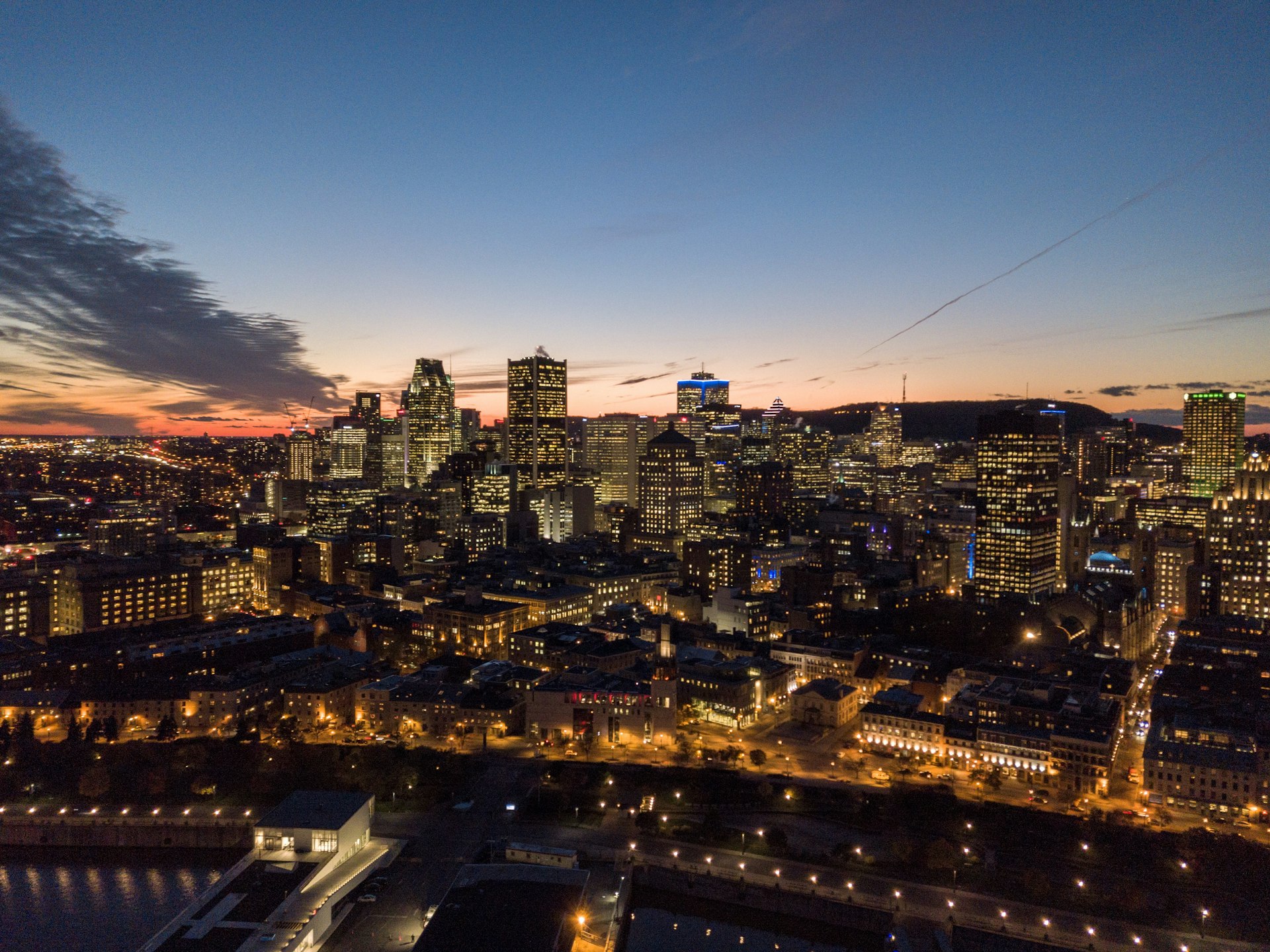
Montreal — The Complete City Guide 2026
North America’s most European city. Where poutine meets fine dining, bagels spark religious wars, and -25°C winters breed underground cities. A guide to Quebec’s French-speaking metropolis.
$80–150 CAD/day budget
French + English
-15°C winter / 25°C summer
Last verified: April 2026. Prices, hours, and tips checked. Montreal changes with the seasons — verify before you go.
In This Guide
Getting There & Around
Top Sights
Food & Drink
Experiences
Planning
Why Montreal? An Editor’s Note
Montreal occupies an impossible space: a French-speaking metropolis in anglophone North America, a winter city that throws the continent’s best summer festivals, a place where smoked meat delis and Michelin-starred restaurants coexist on the same block. The tourist version — Old Montreal cobblestones, Notre-Dame Basilica, maybe a poutine — barely scratches the surface.
The real Montreal lives in the Plateau’s spiral staircases and back-alley cafés, in Mile End’s bagel shops that fire wood ovens 24 hours a day, in the underground city that lets locals survive -30°C without seeing daylight. It’s a city where speaking French earns you genuine warmth (even badly), where last call is 3am, and where the cultural programming rivals cities three times its size.
This guide closes the gap between the postcard version and the city that Montrealers actually live in. It tells you what to skip, when to go, and why the bagel debate matters more than you think.
Getting There — YUL Airport
Montreal-Trudeau International Airport (YUL) is the city’s main gateway, located 20 km west of downtown. It handles all international and most domestic flights.
747 Express Bus (The Correct Choice)
The dedicated airport bus runs 24/7 between YUL and downtown Montreal (Berri-UQAM station and several downtown stops).
- Time: 45-70 minutes depending on traffic
- Cost: $11.75 CAD (includes 24-hour unlimited transit)
- Frequency: Every 10-15 minutes peak, 30-60 minutes overnight
- Tickets: Exact change, credit card, or OPUS card
Pro Tip: The $11.75 Ticket Is Brilliant
The 747 fare includes 24 hours of unlimited metro and bus travel. Land in the evening, take the 747 downtown, then use the same ticket all next day. No need to buy a separate day pass.
Taxi & Rideshare
Fixed taxi fare: $41.75 to downtown (flat rate, no tipping expected but appreciated). Uber and Lyft operate but often cost more than the fixed taxi rate. For downtown destinations, the taxi is usually the better deal.
REM Light Rail (Opening 2027)
The new automated light rail system will eventually connect YUL to downtown in 25 minutes for ~$10. As of April 2026, the airport branch is still under construction. Target opening: mid-2027.
Top 12 Attractions
| Attraction | Price (CAD) | Highlights |
|---|---|---|
| Notre-Dame Basilica | $18 / $26 with guide | Gothic Revival masterpiece, AURA light show $35 |
| Mount Royal | Free | City views, Beaver Lake, Frederick Law Olmsted design |
| Old Montreal | Free | Cobblestones, Place Jacques-Cartier, Old Port |
| Montreal Museum of Fine Arts | $24 / free under 30 | 80,000+ works, free permanent collection |
| Jean-Talon Market | Free | Quebec’s largest farmers market, local cheese & maple |
| Biodome | $25.75 | 4 ecosystems under one roof, penguins |
| Botanical Garden | $23.25 | 75 hectares, Chinese & Japanese gardens |
| Pointe-à-Callière Museum | $27 | Underground archaeological site, city’s birthplace |
| St. Joseph’s Oratory | Free / $5 dome | Largest church in Canada, 300 steps |
| McCord Stewart Museum | $22 / free Wednesdays 5-9pm | Canadian history, Indigenous collections |
| Olympic Stadium Tower | $26 | Leaning tower, city panorama |
| Atwater Market | Free | Year-round market, local producers, maple products |
2026 Update: Space for Life Pass
The Biodome, Botanical Garden, Insectarium, and Planetarium offer a combined pass for $70 (valid 30 days, one visit each). If you’re doing two or more, the pass saves money.
Old Montreal (Vieux-Montréal)
The postcard neighbourhood — 17th-century stone buildings, gaslit streets, horse-drawn carriages. Yes, it’s touristy. Yes, you should still go. The architecture is legitimately beautiful, and beneath the souvenir shops lies actual history.
What to Do
- Notre-Dame Basilica: The interior is genuinely stunning — carved wood, gold leaf, and that famous blue ceiling with gold stars. The AURA light show ($35, evenings) is worth it if you enjoy immersive experiences.
- Place Jacques-Cartier: The main square. Restaurants are overpriced; better for people-watching than eating.
- Old Port: Walk along the waterfront. In summer, rent pedal boats or take a jet boat ride. In winter, ice skate at the Bonsecours Basin ($13).
- Rue Saint-Paul: The prettiest street. Better for browsing art galleries than buying souvenirs.
- Pointe-à-Callière: Museum built over the actual archaeological site where Montreal was founded in 1642. Underground tunnels, genuine artifacts, worth the $27.
Consider Skipping: Old Montreal Restaurants
Most restaurants facing Place Jacques-Cartier charge tourist prices for mediocre food. Walk two blocks in any direction for better value, or eat elsewhere and just stroll Old Montreal for the architecture.
Mount Royal
The mountain that gave Montreal its name. Designed by Frederick Law Olmsted (of Central Park fame), it’s the city’s backyard — a 200-hectare park where Montrealers hike, ski, and gather for tam-tam drum circles every summer Sunday.
The Essentials
- Kondiaronk Belvedere: The main viewpoint overlooking downtown. Stunning at sunset. A 30-minute walk from the monument at Peel/Parc Avenue, or drive up (parking $3.50/hour).
- Beaver Lake (Lac des Castors): Paddleboats in summer ($18/30min), ice skating in winter (free with your own skates, $9 rental).
- Cross: The illuminated cross at the summit is visible across the city. A 20-minute walk beyond the belvedere.
- Tam-Tams: Every Sunday from May-September, drummers gather at the Sir George-Étienne Cartier Monument. Thousands attend. Bring a picnic.
Pro Tip: The Peel Street Stairs
Start at the Sir George-Étienne Cartier Monument (metro Peel or Mont-Royal) and walk up. The stairs route is steeper but faster (20 min) and more scenic than the serpentine road. Pack water.
Montreal Food
Montreal punches absurdly above its weight for food. The city has more restaurants per capita than any in North America, a Michelin guide (since 2023), and a street food culture that goes far beyond poutine.
The Holy Trinity: Poutine, Smoked Meat, Bagels
These three define Montreal’s food identity. Each has zealots, debates, and “correct” answers.
The Poutine Guide
Fries. Cheese curds. Gravy. Three ingredients, infinite arguments. True poutine requires fresh cheese curds that squeak when you bite them — rubbery or melted curds are wrong. The gravy should be rich, slightly peppery, and definitely not KFC-style.
Where to Eat Poutine
- La Banquise (24/7): The legendary late-night spot. 30+ variations including vegetarian and vegan options. Classic poutine $9.75, specialty versions $13-17. Expect lines after midnight.
- Poutineville: Build-your-own approach. Pick your fries, cheese, gravy, and toppings. Good for customization.
- Chez Claudette: Old-school diner, been serving poutine since the 1970s. No frills, perfect execution. Cash only.
- Au Pied de Cochon: The infamous foie gras poutine ($32). Martin Picard’s temple of excess.
Skip This: Poutine Chains
Smoke’s Poutinerie and similar chains exist across Canada. The curds aren’t fresh, the gravy is industrial, and the whole thing misses the point. If you only have one poutine in Montreal, don’t waste it on a chain.
Montreal Smoked Meat
Brisket cured in spices, smoked, then steamed. Served on rye with mustard (never mayo). Similar to New York pastrami but spiced differently — Montreal’s version uses more coriander and black pepper, less sugar.
The Classics
- Schwartz’s Deli (since 1928): The original. Tiny, crowded, cash only, shared tables. The sandwich is $12.95 — get it medium-fat (ask for “medium” — that’s the cut, not the size). Line up; it moves fast. 3895 St-Laurent.
- Lester’s: The main competitor. Less crowded, same quality according to some locals who don’t want to stand in line.
- Main Deli: Directly across from Schwartz’s. Locals debate which is better; both are excellent.
- Snowdon Deli: Outside the tourist zone. Old-school atmosphere, massive sandwiches.
Pro Tip: Schwartz’s Secret
Order a full sandwich and a small plate of smoked meat on the side. The side plate comes with extra fatty pieces that are the best part. Total cost: ~$20. Worth it.
The Bagel Wars
Montreal bagels are smaller, denser, and sweeter than New York bagels. They’re hand-rolled, boiled in honey water, and baked in wood-fired ovens. They do not exist to be a vehicle for cream cheese — they’re meant to be eaten fresh, plain or with butter.
Fairmount vs. St-Viateur
The two legendary shops are three blocks apart in Mile End. Both have been baking since the 1950s. Both fire their ovens 24/7. Both have fierce loyalists.
- Fairmount Bagel (since 1919): Slightly sweeter, slightly denser. The original. 24/7. $1.25/bagel or $9/dozen.
- St-Viateur Bagel (since 1957): Slightly lighter, slightly less sweet. Purists often prefer this one. Also 24/7. Same price.
The correct answer: Try both. Buy a dozen of each at 2am (the freshest time), eat them warm on the walk home. You’ll develop your own preference.
Montreal vs. New York Bagels
They’re different products. New York bagels are bigger, breadier, designed for sandwiches. Montreal bagels are denser, sweeter, meant to be eaten fresh. Comparing them is like comparing croissants to baguettes — both are bread, neither is wrong.
Michelin & Fine Dining
The Michelin Guide arrived in Montreal in 2023, confirming what locals already knew: this city has serious restaurants.
Starred Restaurants (2026)
- Monarque (1★): French brasserie in Old Montreal. Oysters, tartare, rotisserie chicken. $80-120/person.
- Mastard (1★): Tasting menu focused on Quebec ingredients. $165-195.
- Le Mousso (1★): Creative tasting menu, constantly evolving. $145-180.
- Toqué! (1★): The establishment fine-dining room. Normand Laprise’s flagship. $150-200.
Bib Gourmand & Worth the Trip
- Joe Beef: The legendary restaurant that put Montreal on the global food map. No stars (they don’t seek them) but one of Canada’s most important restaurants. Reservations essential.
- Liverpool House: Joe Beef’s sister restaurant. Same DNA, same quality, slightly easier reservations.
- Mon Lapin: Natural wine and inventive small plates. One of the city’s best.
- Elena: Pizza and pasta in Saint-Henri. Wood-fired, excellent ingredients.
Neighborhoods
The Plateau Mont-Royal
The quintessential Montreal neighborhood. Colorful row houses with external spiral staircases, tree-lined streets, indie boutiques, sidewalk cafés. This is where you’ll want to live after visiting.
- Boulevard Saint-Laurent: The Main. Divides east (French) from west (English). Restaurants, bars, live music.
- Avenue Mont-Royal: Shopping street. Vintage stores, bookshops, terraces.
- Parc La Fontaine: The Plateau’s backyard. Outdoor theatre in summer, ice skating in winter.
Mile End
The creative heart of Montreal. Bagel shops, record stores, indie cafés, tech startups, and Hasidic Jewish communities coexisting on the same blocks. This is where Montreal’s culture actually happens.
- Must-visit: Fairmount Bagel, St-Viateur Bagel, Café Olimpico, Drawn & Quarterly bookstore.
- Vibe: Brooklyn-adjacent but more affordable and less self-conscious.
Griffintown
Former industrial area, now Montreal’s fastest-changing neighborhood. Condo towers, new restaurants, and the excellent Atwater Market.
Jean-Talon Market Area (Little Italy)
North of the Plateau. The market itself is the largest outdoor market in North America. Surrounding streets have excellent Italian restaurants, specialty food shops, and a more local feel than downtown.
Downtown
Office towers, shopping, the underground city. Functional rather than charming. Stay here if you want chain hotels and easy metro access.
When to Visit
Summer (June–August)
Peak season. Festival season. Terrasse season. The city comes alive — every restaurant spills onto the sidewalk, parks fill with picnickers, and the cultural calendar explodes. Temperatures: 20-30°C. Book ahead for Jazz Fest and Grand Prix weekends.
Fall (September–October)
Shoulder season perfection. Crowds thin, colors peak (late September), and you can still eat outside. Some festivals continue. Temperatures: 10-20°C.
Winter (November–March)
This is where Montreal separates tourists from converts. Temperatures regularly hit -20°C, sometimes -35°C with windchill. But the city doesn’t stop — it goes underground. If you embrace it (skating, cross-country skiing, festival Igloofest), winter Montreal is magical. If you fight it, you’ll be miserable.
Spring (April–May)
Muddy, grey, and unpredictable. Not ideal. April can swing from snow to 20°C within a week. Late May improves.
Pro Tip: The Best Time
Late June through mid-July. Jazz Festival is on, terrasses are open, the weather is perfect, and the city hasn’t hit August heat yet. Book 3-4 months ahead for hotels during Jazz Fest (usually late June/early July).
Festivals
Montreal has more festivals per capita than any city in North America. Summer is essentially one continuous celebration.
Major Festivals 2026
- Montreal International Jazz Festival (June 25 – July 6): The world’s largest jazz festival. 3,000+ artists, 650+ concerts, most of them free. Outdoor stages take over downtown.
- Just for Laughs (July 14–31): The world’s largest comedy festival. English and French programming. Big names and emerging artists.
- Osheaga (August 7–9): Major music festival on Île Sainte-Hélène. Headliners, camping vibes, 135,000+ attendees. Book months ahead.
- Montreal Grand Prix (June 12–14): Formula 1 comes to Circuit Gilles-Villeneuve. The city transforms; hotel prices triple.
- Igloofest (January–February): Outdoor electronic music festival in winter. Embrace the -20°C, dance to stay warm. Cult following.
- Nuit Blanche (February 29): All-night art, music, and culture. Free metro service until 3am.
Winter Survival
Montreal winters are serious. -15°C is normal. -25°C happens regularly. -35°C with windchill will occur. The city functions anyway.
The Underground City (RÉSO)
33 km of underground tunnels connecting metro stations, shopping centers, offices, hotels, and universities. You can walk from Gare Centrale to Place des Arts without going outside. It’s not beautiful, but it’s functional.
What to Pack (Winter)
- Essential: Down jacket, waterproof boots with grip, warm hat covering ears, insulated gloves, layers.
- Underestimated: Windproof layer. Wind makes -15°C feel like -30°C.
- Not needed: Heavy fashion. Montrealers dress for survival, not style, November through March.
⚠️ Frostbite Warning
At -25°C with wind, exposed skin can get frostbitten in 10-15 minutes. Cover your face. If your phone warns about extreme cold, listen to it. The metro is your friend.
Getting Around
Metro
Four lines, 68 stations, runs 5:30am-1am (later on weekends). Clean, efficient, and the best way to move around the city. Single fare $3.75. Day pass $11.75. 3-day pass $22.25. Get an OPUS card ($7) for reusable fare loading.
BIXI Bike Share
8,000+ bikes, 700+ stations. Perfect for the Plateau and Mile End. Day pass $6 (45-min trips), month pass $19. The city has excellent bike lanes. Electric bikes available at premium.
Walking
The Plateau, Mile End, and Old Montreal are best explored on foot. Downtown is walkable but spread out. Use the metro for longer distances.
REM (When Complete)
The new automated light rail is partially open. South Shore branch operational. Airport branch expected 2027. Will transform getting around when complete.
Where to Stay
Budget ($80–150 CAD)
- HI Montreal Hostel: Downtown, clean, social. Dorms from $45, privates from $120.
- M Montreal: Design hostel in Quartier des Spectacles. Dorms from $50.
- Airbnb in the Plateau: Best value for character. Studios from $80-120.
Mid-Range ($150–300 CAD)
- Hotel 10: Downtown, stylish, rooftop terrace. From $180.
- Le Petit Hotel: Old Montreal boutique. From $200.
- Hotel Nelligan: Old Montreal, exposed brick, excellent location. From $250.
Luxury ($300+ CAD)
- Ritz-Carlton Montreal: The grande dame. From $450.
- Four Seasons Montreal: Opened 2019. From $500.
- Hotel William Gray: Old Montreal, rooftop pool, design-forward. From $350.
Language Tips
Montreal is officially French-speaking. Most service workers are bilingual, but starting in French earns genuine warmth.
Essential Phrases
- Bonjour: Hello (always say this first)
- Merci: Thank you
- S’il vous plaît: Please
- L’addition, s’il vous plaît: The bill, please
- Parlez-vous anglais?: Do you speak English? (after your bonjour)
Pro Tip: The Bonjour Rule
Always greet with “Bonjour” first. Even if you immediately follow with English, starting in French is a sign of respect. Jumping straight into English can come across as rude or presumptuous.
Day Trips
Quebec City (2.5 hours)
The only walled city in North America north of Mexico. Château Frontenac, Plains of Abraham, cobblestone streets. More European than Montreal, and worth the trip.
- Getting there: Orléans Express bus $60-80 return, or VIA Rail $80-130 return. Driving: 250 km via A-20.
- Best for: History lovers, couples, anyone who wants more French culture.
Laurentians (1–1.5 hours)
Ski hills, lakes, and maple syrup country. Mont-Tremblant is the flagship resort — excellent skiing in winter, hiking and golf in summer.
Eastern Townships (1.5 hours)
Rolling hills, vineyards, covered bridges. More pastoral than the Laurentians. Good for wine touring (yes, Quebec makes wine) and small-town charm.
Ottawa (2 hours)
Canada’s capital. Parliament Hill, museums (National Gallery is excellent), and the ByWard Market. Easy train or bus connection.
Budget Breakdown
Budget Traveler: $80–120 CAD/day
- Hostel dorm: $40-50
- Bagels & coffee: $8
- Smoked meat sandwich lunch: $15
- Poutine dinner: $15
- Metro day pass: $11.75
- One museum: $20-25
Mid-Range: $200–350 CAD/day
- Boutique hotel: $180-250
- Café breakfast: $15-20
- Casual lunch: $25-35
- Nice dinner: $60-80
- Drinks/activities: $30-50
Luxury: $500+ CAD/day
- Luxury hotel: $400+
- Tasting menu dinner: $150-200
- Private tours, premium experiences
Museums & Galleries
Montreal punches above its weight in museums — a legacy of Expo 67 and the city’s role as Canada’s cultural capital before Toronto’s rise. Most museums are clustered downtown or in the Quartier des Spectacles.
Montreal Museum of Fine Arts (MMFA)
Canada’s most-visited museum spans five pavilions connected by underground tunnels. The collection covers 5,000 years — from ancient Egyptian artifacts to Quebec contemporary art. The Decorative Arts pavilion (Pavillon Liliane et David M. Stewart) has stunning Art Nouveau and Art Deco pieces.
Price: $24 adult / free under 21 (permanent collection free Wednesday evenings). Hours: Tue-Sun 10am-5pm (Wed until 9pm). Book: mbam.qc.ca
Pointe-à-Callière Museum
Built over the actual archaeological site where Montreal was founded in 1642, this museum lets you walk through excavated ruins — indigenous settlements, French colonial foundations, Victorian sewers. The multimedia show in the crypt is genuinely moving.
Price: $27 adult / $15 student. Hours: Tue-Sun 10am-5pm (summer daily). Book: pacmusee.qc.ca
Montreal Museum of Contemporary Art (MAC)
Reopened in 2024 after a major renovation, the MAC is now in a striking new building on Place des Festivals. Focuses on Quebec and Canadian contemporary art with international programming. The rooftop terrace has downtown views.
Price: $18 adult / free under 18. Hours: Tue-Sun 10am-6pm (Thu until 9pm). Book: macm.org
McCord Stewart Museum
Montreal’s history museum — Indigenous cultures, 18th-century New France, Victorian Montreal, and social history through to today. The fashion and textile collection is world-class. Recent exhibitions have tackled reconciliation and urban development with nuance.
Price: $22 adult / free under 18. Hours: Wed-Mon 10am-6pm. Book: musee-mccord-stewart.ca
Biodome
Five ecosystems under one roof — tropical rainforest, Laurentian forest, St. Lawrence marine, Gulf of St. Lawrence, and Sub-Antarctic islands. Built in the former Olympic velodrome, it’s essentially a zoo/aquarium/botanical garden hybrid. Great for kids but fascinating for adults too.
Price: $25.75 adult / $12.75 child. Hours: Daily 9am-5pm (summer until 6pm). Book: espacepourlavie.ca/biodome
Tip: The Space for Life passport ($75 adult) covers Biodome, Botanical Garden, Insectarium, and Planetarium — excellent value if visiting more than two.
Montreal Planetarium
State-of-the-art planetarium with two domed theaters showing immersive space shows. “Continuum” explores cosmic time; “From the Earth to the Stars” covers astronomy basics. The building itself (Cardin Ramirez Julien architects) is worth seeing.
Price: $22.50 adult / $11.25 child. Book: espacepourlavie.ca/planetarium
Centre des Sciences de Montréal
Interactive science center in the Old Port — hands-on exhibits, IMAX theater, and rotating science exhibitions. Geared toward families but the adults-only evening events (science + cocktails) are fun.
Price: $19 adult / IMAX extra $13. Hours: Daily 10am-5pm. Book: centredessciencesdemontreal.com
Pro Tip: Free Museum Days
Many Montreal museums offer free or reduced admission at specific times. MMFA permanent collection is always free. MAC is free the first Sunday of each month. McCord Stewart has free admission Wednesday evenings 5-9pm. Check individual websites for current offers.
Coffee Culture
Montreal’s coffee scene has exploded in the last decade. The city now rivals Portland and Melbourne for specialty roasters, third-wave cafes, and serious barista culture. Unlike Toronto’s corporate-dominated coffee landscape, Montreal favors independent shops with character.
Third-Wave Roasters
Dispatch Coffee: Montreal’s flagship specialty roaster. The Saint-Henri roastery-cafe is the mothership — exposed brick, skylights, excellent pour-overs. Their beans are available citywide, but the source is worth visiting. dispatchcoffee.ca. Multiple locations.
Café Névé: Third-wave pioneer in the Plateau. Serious about extraction, friendly about explaining it. The space is small but the espresso is perfect. 151 Rue Rachel Est.
Pikolo Espresso Bar: Downtown’s answer to specialty coffee — tiny storefront, exceptional quality, convenient for the business crowd. 3418 Parc Ave.
Tommy Café: Design-forward space in Old Montreal. The matcha lattes and cold brew draw crowds, but the espresso program is solid. Good for laptop work. 200 Notre-Dame St W. tommycafe.ca
Café Olimpico: Not third-wave but legendary. This Mile End institution has served espresso since 1970. The regulars, the Italian nonnas, the soccer on TV — it’s Montreal at its most authentic. Cash only. 124 Saint-Viateur Ouest.
Work-Friendly Cafes
Crew Collective & Café: Inside a restored 1920s bank building — soaring ceilings, chandeliers, and serious coffee. Perfect for laptop work. 360 Saint-Jacques St. crewcollectivecafe.com
Anticafé: Pay-by-the-hour model (first hour $6, then $2/hour) with unlimited coffee, tea, and snacks. Great for extended work sessions. Multiple locations.
Humble Lion: Spacious Plateau cafe with power outlets everywhere. Good pastries, reliable WiFi. 904 Sherbrooke E.
Craft Beer & Cocktails
Quebec has the most dynamic craft beer scene in Canada — over 250 microbreweries in the province, with Montreal as the epicenter. The cocktail scene has similarly matured, with speakeasies and serious bartending culture rivaling New York.
Craft Breweries
Dieu du Ciel!: Montreal’s most famous brewpub. The Péché Mortel (imperial coffee stout) is legendary. The Mile End taproom has 15+ house beers on tap, from wild ales to hop bombs. No reservations; expect a wait on weekends. 29 Laurier Ouest. dieuduciel.com
Vices & Versa: Not a brewery but Montreal’s best beer bar — 40 Quebec craft taps, rotating constantly. The staff know every brew. 6631 Saint-Laurent.
Benelux: Brewpub with a huge terrace on Sherbrooke. House beers plus guest taps. Good for groups. 245 Sherbrooke Ouest. brasseriebenelux.com
Isle de Garde: Quebec-proud brewery focusing on traditional European styles — saisons, grisettes, lagers. The Villeray taproom is cozy. 1039 Beaubien Est. isledegarde.com
Avant-Garde: Experimental brewery pushing boundaries — wild fermentation, foraged ingredients, barrel aging. Not for beginners but exciting for beer geeks. 5635 Laurendeau.
Cocktail Bars
Bar Le Lab: Montreal’s cocktail pioneer — molecular techniques, seasonal menus, and bartenders who’ve trained the next generation. Two locations: Old Montreal (original) and Mile End. barlelab.com
Atwater Cocktail Club: Speakeasy vibes in Saint-Henri. Ring the bell, descend the stairs, and find one of Montreal’s best cocktail programs. Reservations recommended. 512 Atwater.
Coldroom: Unmarked door in Chinatown, exceptional cocktails in a dim, intimate space. The bartenders improvise based on your preferences. 4580 Saint-Laurent.
El Pequeño: Mexican-inspired bar with an outstanding mezcal selection. Small plates and tacos pair with agave-forward cocktails. 2015 Rue Drummond.
Dominion Square Tavern: Historic tavern (1920s) with a serious cocktail program in an ornate room. Classic drinks done perfectly. 1243 Metcalfe St.
Quebec Alcohol Laws
Legal drinking age in Quebec is 18 (vs 19 in Ontario). Alcohol is sold at SAQ (Société des alcools du Québec) government stores, with beer and wine also available at grocery stores and dépanneurs (corner stores). Bar last call is typically 3am. saq.com
Outdoor Montreal
Montreal has more green space per capita than any other major Canadian city. The mountain, the canal, the river — nature is never far, even in the urban core.
Mount Royal Park
Frederick Law Olmsted (Central Park designer) created this 200-hectare urban park in 1876. The summit lookout (Kondiaronk Belvedere) offers the classic Montreal skyline view. In winter, the park has groomed cross-country ski trails and a skating pond (Beaver Lake).
Access: Walk up from Avenue du Parc (steep but rewarding), or take bus 11 from Mont-Royal metro. Info: lemontroyal.qc.ca
Lachine Canal
This 14.5km historic canal has been transformed into Montreal’s best recreational corridor. Rent bikes at the Old Port and ride to Atwater Market (one-way 8km), or continue to Lachine for canal-side picnics. In summer, the canal is busy with kayakers and stand-up paddleboarders.
Bike rental: Multiple options at Old Port. Info: Parks Canada – Lachine Canal
Jean-Drapeau Park
Two islands in the St. Lawrence — Île Sainte-Hélène (Expo 67 legacy, La Ronde amusement park, Biosphere museum) and Île Notre-Dame (beach, casino, F1 circuit). The Circuit Gilles Villeneuve is open to cyclists and runners when not hosting races.
Access: Metro Jean-Drapeau (yellow line) or ferry from Old Port. Info: parcjeandrapeau.com
Montreal Botanical Garden
One of the world’s largest botanical gardens — 75 hectares, 22,000 plant species, 10 exhibition greenhouses. The Chinese and Japanese gardens are exceptional. In October, the “Gardens of Light” lantern festival transforms the space.
Price: $22.25 adult / $11 child. Hours: Daily 9am-6pm (summer until 9pm). Book: espacepourlavie.ca/botanical-garden
Old Port (Vieux-Port)
The 2.5km waterfront promenade is Montreal’s gathering place. In summer: zip-lining, pedal boats, beach volleyball. In winter: outdoor skating (one of the largest rinks in Canada). Year-round: strolling, people-watching, waterfront cafes.
Info: oldportofmontreal.com
Montreal with Kids
Montreal is one of Canada’s best cities for families. The bilingual environment, abundance of outdoor space, excellent museums, and relaxed attitude toward children make it easy to travel with kids.
Top Family Attractions
Biodome: Five ecosystems, hundreds of species, immersive environments. Kids can watch penguins being fed, explore a tropical rainforest, and learn about St. Lawrence marine life. Half-day activity. espacepourlavie.ca/biodome
La Ronde: Quebec’s largest amusement park, owned by Six Flags. Roller coasters for older kids, gentler rides for younger ones. On Île Sainte-Hélène, easily accessible by metro. Season: May-October. laronde.com
Centre des Sciences: Interactive science exhibits, IMAX theater, special exhibitions that change regularly. Great for rainy days. Old Port location. centredessciencesdemontreal.com
Insectarium: Recently renovated insect museum — part of the Space for Life complex. Kids fascinated by bugs will love it; squeamish adults less so. The butterfly dome is magical. espacepourlavie.ca/insectarium
Free & Cheap Activities
- Mount Royal: Let kids run wild in Olmsted’s urban forest. The Beaver Lake (Lac aux Castors) has paddle boats in summer and skating in winter.
- Old Port: Wide promenades for running around, waterfront views, and the free-to-explore Clock Tower pier.
- Parc La Fontaine: The Plateau’s central park has playgrounds, duck ponds, and an outdoor theater with free summer shows.
- Atwater Market: Kids enjoy watching the bustle and sampling free fruit and cheese samples.
Family-Friendly Restaurants
Montreal restaurants are generally kid-welcoming. Poutine is universally loved by children (who knew fries, cheese, and gravy would be a hit?). Bagel shops, Chinatown dim sum, and pizza are reliable options.
Recommendations: La Banquise (poutine all day), Beauty’s (classic brunch), Dinette Triple Crown (southern comfort food), Hà (Vietnamese with good kids’ options).
Romantic Montreal
Montreal has European romance in a North American context — candlelit restaurants, cobblestone streets, boutique hotels, and a culture that values long meals and late nights.
Romantic Experiences
Old Montreal at night: The cobblestones, gas lamps, and 17th-century architecture are made for couples. Walk along Rue Saint-Paul, stop for cocktails at a rooftop bar, and end with dinner at one of the intimate restaurants.
Mount Royal sunset: Hike or drive to Kondiaronk Belvedere for sunset over the city. Bring wine and cheese (legal in parks in Quebec) and watch the city lights emerge.
Winter carriage ride: Calèche rides through Old Montreal are touristy but genuinely romantic in winter, with blankets, snow, and hot chocolate after. Book via alechemtl.ca
Bota Bota spa: Floating spa in the Old Port — hot tubs, saunas, and massage on a converted ferry boat. Winter is best when steam rises into the cold air. botabota.ca
Romantic Restaurants
Restaurant Bonaparte: French fine dining in an 18th-century building in Old Montreal. White tablecloths, impeccable service, classic cuisine. 443 Saint-François-Xavier. bonapartemontreal.com
Toqué!: Montreal’s flagship fine-dining room. Normand Laprise’s seasonal Quebec cuisine in an elegant space. Splurge-worthy. 900 Place Jean-Paul-Riopelle. restaurant-toque.com
Joe Beef: Legendary for a reason — carnivore heaven in a cozy Little Burgundy space. Not conventionally romantic but deeply delicious. Reserve far ahead. 2491 Notre-Dame Ouest. joebeef.ca
Maison Publique: Intimate British-inspired cooking from Derek Dammann. The snug room and seasonal menu create the perfect date night. 4720 Marquette. maisonpublique.com
Romantic Stays
Hotel Nelligan: Boutique hotel in Old Montreal — exposed brick, heritage details, rooftop terrace. 106 Saint-Paul Ouest. hotelnelligan.com
Le Mount Stephen: Renaissance Revival mansion converted to luxury hotel. Stunning interiors, excellent restaurant. 1440 Drummond. lemountstephen.com
Hôtel William Gray: Sleek contemporary design in a heritage building. Rooftop pool with Old Montreal views. 421 Rue Saint-Vincent. hotelwilliamgray.com
Hidden Montreal
Beyond the obvious attractions lie corners of Montreal that most tourists never find — underground cities, secret bars, abandoned spaces, and local haunts.
Underground City (RÉSO)
Montreal’s underground pedestrian network spans 33km — the largest in the world. It connects metro stations, shopping malls, offices, and hotels. In winter, you can walk from the train station to major attractions without stepping outside. Enter at any downtown metro station and explore.
Best access points: Place Ville Marie, Complexe Desjardins, Eaton Centre. Map: mtl.org/explore/maps
Secret Bars
Big in Japan (back room): The main bar is excellent; the hidden whisky bar behind the secret door is legendary. Ask for “the other room.” 4175 Saint-Laurent.
Le 4e Mur: Speakeasy accessed through a barber shop. Reservations required via Instagram DM. 115 Avenue des Pins Est.
Coldroom: Ring the unmarked doorbell in Chinatown. No sign, no website, just exceptional cocktails. 4580 Saint-Laurent.
Off-Beat Experiences
Street Art Walking Tour: Montreal has one of North America’s most vibrant street art scenes. The Plateau and Saint-Laurent are outdoor galleries. Self-guided routes at mtl.org or join a guided tour.
Mile End Hassidic Walk: Mile End is home to a significant Hasidic Jewish community. Walking Hutchison and surrounding streets on Saturday morning (Shabbat) offers a glimpse of this insular world. Be respectful — no photos of people.
Silo No. 5: The abandoned grain elevators in the Old Port are a brutalist landmark. You can’t enter (legally), but the exterior is photogenic. Urban explorers know more.
Gibeau Orange Julep: A giant orange-shaped roadside restaurant serving the original Orange Julep since 1966. Pure Quebec kitsch. 7700 Décarie. orangejulep.com
Shopping
Shopping Districts
Rue Sainte-Catherine: Montreal’s main shopping artery — department stores (La Baie, Simons), international brands, and the underground mall network. Busy and commercial.
Mile End: Independent boutiques, vintage shops, local designers. Bernard and Saint-Viateur streets have the best finds.
Plateau Mont-Royal: Saint-Denis for Quebec designers; Saint-Laurent for edgier shops. Good for unique clothing and homewares.
Old Montreal: Tourist-oriented but includes quality Quebec artisan shops, galleries, and design stores among the souvenirs.
What to Buy
Quebec Food Products: Maple syrup (at Jean-Talon Market or Marché des Saveurs), cheese from Quebec fromageries, cider from Montérégie orchards. marchespublics-mtl.com
Fashion: Quebec designers include Frank & Oak (sustainable basics), Maison Marie Saint Pierre (high fashion), m0851 (leather goods), and Matt & Nat (vegan bags).
Design: Montreal is a UNESCO City of Design. Look for local furniture, ceramics, and homewares at shops like Zone, Arthur Quentin, and Rooney.
Books: Montreal’s indie bookstores include The Word (used English), Librairie Drawn & Quarterly (comics/graphic novels), and S.W. Chicken (anarchist literature).
LGBTQ+ Montreal
Montreal has one of North America’s most established and visible LGBTQ+ communities. The Village (Le Village gai) is the heart, but queer culture spreads across the city — especially in the Plateau and Mile End.
The Village
Centered on Sainte-Catherine Est between Berri and Papineau, the Village is Canada’s largest gayborhood. Rainbow crosswalks, drag shows, bars, saunas, and community organizations line the street. It’s most vibrant in summer, especially during Pride (August).
Key spots: Cabaret Mado (drag shows), Unity (dance club), Le Stud (leather/bear bar), Aigle Noir (historic cruising bar). Plenty of cafes and restaurants cater to the community.
Fierté Montreal (Pride)
Montreal Pride (early August) is one of the largest in the world. The parade down René-Lévesque is massive, but the week-long festival includes concerts, community events, and parties across the city. fiertemtl.com
Beyond the Village
Queer culture extends citywide. Le Cagibi (Mile End) and Café Pamplemousse (Plateau) are queer-friendly third spaces. Rad Freak (annual queer punk festival), Slut Island (feminist festival), and the Blue Metropolis literary festival all have strong LGBTQ+ programming.
Public Transport In-Depth
Montreal’s STM (Société de transport de Montréal) operates the metro (subway) and bus network. It’s clean, safe, and covers the urban core well. The REM (Réseau express métropolitain) light metro opened in 2023, connecting the airport and South Shore.
Metro System
Four lines (Green, Orange, Blue, Yellow), 68 stations. Runs 5:30am to 1am (1:30am weekends). The rubber-tired trains are quiet; the stations are works of art — each designed by a different architect.
Notable stations: Champ-de-Mars (stained glass), Namur (curved concrete), Place-des-Arts (murals), Peel (geometric tiles).
Fares & Passes
| Ticket Type | Price (2026) | Notes |
|---|---|---|
| Single fare | $3.75 | Valid 120 min with transfers |
| 2-trip ticket | $7.00 | Best for short stays |
| 10-trip ticket | $32.50 | $3.25 per trip |
| Weekend pass | $15.25 | Unlimited Fri 6pm – Sun midnight |
| Weekly pass | $30.00 | Mon-Sun unlimited |
| Monthly pass | $97.00 | Calendar month |
Buy tickets: Metro stations (machines accept credit/debit), some dépanneurs. The STM website has trip planning and real-time info.
REM (Light Metro)
The new automated light metro connects downtown (Gare Centrale) to the airport (YUL) in 25 minutes, and to the South Shore (Brossard). The airport fare is a flat $10.75 — cheaper than taxi and faster than the old bus. rem.info
BIXI Bike Share
North America’s first major bike share (launched 2009). 10,000+ bikes, 800+ stations citywide. The network includes e-bikes for hills. Day pass $7 (45 min trips); monthly $20.
Pro Tip: Opus Card
If staying more than a few days, get an Opus card ($7) and load it with trips or passes. It works on metro, bus, and REM. Cards are available at metro stations. Keep it — they’re reloadable for future visits.
Safety & Practical Information
Safety
Montreal is one of the safest major cities in North America. Violent crime is rare, especially against tourists. Standard big-city awareness applies — watch your belongings in crowded areas, avoid deserted streets late at night, and trust your instincts.
Areas to be aware of: Parts of the Village late at night can feel sketchy but aren’t dangerous. The area around Berri-UQAM metro has visible homelessness. Neither requires special precautions beyond common sense.
Weather Preparedness
Winter (Dec-Mar): Temperatures regularly hit -20°C (-4°F) with wind chill. Dress in layers: base layer, insulating layer, windproof outer layer. Waterproof boots with grip are essential. The underground city becomes your friend.
Summer (Jun-Aug): Hot and humid, 25-35°C (77-95°F). Air conditioning is standard in restaurants and hotels. Drink water. Sunscreen is necessary.
Tipping
Tipping culture is the same as the US: 15-20% at restaurants (before tax), $1-2 per drink at bars, 15% for taxis. Some restaurants add automatic gratuity for large groups.
Tax
Quebec has a combined 14.975% sales tax (5% federal GST + 9.975% Quebec QST). Prices displayed are usually before tax. Unlike Europe, you can’t claim tax refunds as a tourist.
Phones & Data
Canadian carriers (Bell, Rogers, Telus) offer tourist SIM plans, but they’re expensive. If your home plan includes North America roaming, use it. Free WiFi is available at most cafes and public spaces.
Emergency Numbers
- Emergency (police, fire, ambulance): 911
- Non-emergency police: 514-280-2222
- Info-Santé (health advice): 811
- Tourism Montreal: mtl.org
Architecture & Design
Montreal’s architecture tells the story of the city — French colonial foundations, British industrial might, religious grandeur, Expo 67 modernism, and contemporary ambition. The mix is distinctly Montreal, found nowhere else in North America.
Heritage Architecture
Old Montreal: The 17th-19th century core preserves Montreal’s origins. Notable buildings include the Sulpician Seminary (1685, oldest building in Montreal), Notre-Dame Basilica (1829, Gothic Revival masterpiece), and the Bonsecours Market (1847, neoclassical dome).
Religious Heritage: Montreal was once called “the city of a hundred bell towers.” Saint Joseph’s Oratory (1924-67, Renaissance dome) is the largest church in Canada. Notre-Dame de Bon-Secours Chapel dates to 1771. Many churches have been converted to condos, libraries, or event spaces.
Victorian Industrial: The Lachine Canal district preserves 19th-century industrial architecture — brick warehouses now housing lofts, galleries, and brewpubs. The Silo No. 5 grain elevator (1906) is a brutalist landmark.
Modern & Contemporary
Expo 67 Legacy: The 1967 World’s Fair left architectural gems. Habitat 67 (Moshe Safdie’s stacked concrete housing) remains futuristic. The Biosphere (Buckminster Fuller’s geodesic dome) is now an environmental museum. The Montreal Casino occupies the French and Quebec pavilions.
Underground City: The RÉSO represents a uniquely Montreal approach to urban design — 33km of climate-controlled pedestrian tunnels connecting metro, malls, hotels, and offices. Place Ville Marie (1962, I.M. Pei) anchors the system.
Contemporary: The Quartier des Spectacles showcases 21st-century design. The MAC (Montreal Museum of Contemporary Art, renovated 2024), Maison symphonique (2011, acoustically perfect concert hall), and Place des Festivals (urban plaza with interactive fountains) define the district.
Architecture Tours
Heritage Montreal: The non-profit offers walking tours covering Art Deco downtown, Victorian Plateau, and industrial heritage. Most tours $15-20. heritagemontreal.org
Architektura: Specialized architecture tours led by practicing architects. More in-depth than heritage tours. guidatour.qc.ca
Live Music & Performing Arts
Montreal’s performing arts scene punches far above its weight class. The city produces world-class circus, contemporary dance, and experimental theater while hosting jazz and comedy festivals that draw international attention.
Concert Venues
Maison symphonique: Home of the OSM (Orchestre symphonique de Montréal), this 2,100-seat hall has exceptional acoustics. Classical programming plus occasional crossover events. osm.ca
MTELUS (formerly Métropolis): The city’s premier mid-size rock/pop venue (2,300 capacity). Art Deco theater with great sightlines. 59 Sainte-Catherine Est. mtelus.com
La Tulipe: Intimate venue (500 capacity) for indie, folk, and emerging artists. Former cinema in the Plateau. 4530 Papineau. latulipe.ca
Casa del Popolo / Sala Rossa: Twin Mile End venues that anchor the indie scene. Casa (downstairs, small) and Sala (upstairs, medium) host local and touring underground acts. 4848 Saint-Laurent.
Centre Bell: The hockey arena (21,000 capacity) hosts major tours — arena rock, pop superstars, occasional special events. centrebell.ca
Jazz & Blues
Upstairs Jazz Bar: Montreal’s premier jazz club — intimate room, serious booking, excellent cocktails. Two sets nightly. 1254 Mackay. upstairsjazz.com
Dièse Onze: Jazz club in the Plateau with a relaxed vibe. Local and touring acts. Reservations recommended for headliners. 4115 Saint-Denis. dieseonze.com
Theater & Dance
Place des Arts: Montreal’s performing arts complex houses five halls — Salle Wilfrid-Pelletier (opera, ballet), Théâtre Jean-Duceppe (French theater), and others. The Grands Ballets Canadiens and Opéra de Montréal perform here. placedesarts.com
Centaur Theatre: Montreal’s leading English-language theater, housed in the Old Stock Exchange building in Old Montreal. Canadian and international plays. centaurtheatre.com
Usine C: Contemporary dance and experimental theater in a converted factory space. Cutting-edge programming. 1345 Lalonde. usine-c.com
Circus
TOHU: The circus arts complex in Saint-Michel is home to Cirque Éloize (Montreal’s other circus) and hosts touring circus companies. The building itself is an architectural landmark (LEED Platinum certification). tohu.ca
Cirque du Soleil: Montreal’s world-famous circus was founded here in 1984. The company headquarters are in the city, though most shows tour globally. Check cirquedusoleil.com/calendar for local performances.
Health & Wellness
Montreal takes wellness seriously — yoga studios, Nordic spas, fitness culture, and access to nature all contribute to a healthy lifestyle despite the harsh winters.
Spas & Thermal Baths
Bota Bota: Spa on a converted ferry boat in the Old Port. Hot/cold circuit, massages, city skyline views from the rooftop hot tubs. Winter is magical when steam rises into cold air. From $70. botabota.ca
Scandinave Spa Vieux-Montréal: Nordic-style spa with hot baths, cold plunge, saunas, and relaxation areas. Silent policy creates meditative atmosphere. From $80. scandinave.com/montreal
Strom Spa Nordique (Île des Sœurs): Outdoor thermal circuit on Nuns’ Island with river views. Larger facility than downtown options. Infinity pools, Finnish saunas. From $65. stromspa.com/montreal
Yoga & Fitness
Moksha Yoga: Hot yoga chain with Montreal roots — multiple locations across the city. Heated studios, community focus. mokshayoga.ca
Wanderlust: Yoga, meditation, and wellness center downtown. Classes, workshops, teacher training. 1044 Clark. wanderlustyogastudio.com
Public Pools: Montreal has excellent public pools. Schubert Baths (outdoor Art Deco pool) and YMCA locations offer day passes.
Healthcare for Visitors
Canada has universal healthcare, but it doesn’t cover visitors. Travel insurance is essential. Walk-in clinics (CLSC) handle non-emergencies. Pharmacies (Jean Coutu, Pharmaprix) are widespread and pharmacists can advise on minor ailments. Hospital emergency rooms work but expect long waits for non-urgent issues.
FAQ
Do I need to speak French?
No, but basic French helps enormously. Start with “Bonjour” and most servers will happily switch to English. Mile End and downtown are very bilingual; the east end and outer neighborhoods less so.
Is Montreal safe?
Very safe by North American standards. Normal urban precautions apply. The metro is safe even late at night.
How cold does it really get?
-20°C to -35°C (with windchill) is normal in January/February. The city is built for it — dress properly and you’ll be fine.
Schwartz’s vs. Main Deli — which smoked meat is better?
Both are excellent. Schwartz’s has more history and longer lines. Main has the same quality without the wait. Try both if you can.
Fairmount vs. St-Viateur — which bagel?
Fairmount is slightly sweeter and denser; St-Viateur slightly lighter. Both are wood-fired, hand-rolled, and correct. Try both at 2am.
Is tipping expected?
Yes. 15-20% at restaurants, bars, and for taxis. Same as the rest of North America.
Do I need a car?
No. The metro and BIXI cover the central areas well. Only rent a car for day trips to the Laurentians or Eastern Townships.
What’s the drinking age?
18 in Quebec (vs. 19 in Ontario and 21 in the US). Last call is 3am.