Seville — The Complete City Guide 2026
Seville is the city that invented tapas, perfected flamenco, and turned orange trees into street furniture. It is the hottest major city in Europe, the spiritual capital of Andalucía, and a place where the line between sacred and secular dissolves every spring during Semana Santa and Feria de Abril. Most visitors see the cathedral, the Alcázar, and a flamenco show. The ones who stay longer discover a city of hidden courtyards, rooftop bars overlooking a skyline that hasn’t changed in centuries, tapas bars where a cold caña costs €1.20, and a riverside neighbourhood called Triana where the locals will tell you they don’t even live in Seville — they live in Triana.
Last verified: April 2026. Every price, opening hour, and booking link in this guide has been checked against official sources. Seville does not currently charge a tourist tax. Semana Santa 2026: 29 March–5 April. Feria de Abril 2026: 21–26 April (alumbrao 20 April). Verify at the listed URLs before travelling.
Why Seville? An Editor’s Note
I first visited Seville in 2011, arriving on a cheap Ryanair flight from Dublin in late October, expecting nothing more than decent weather and a few churros. Instead I found a city that altered my understanding of what European cities could be. The light was different — golden, almost liquid, bouncing off ochre walls and marble floors in ways that made every courtyard look like a painting. The food was different — not the heavy stews of northern Spain but quick, sharp, cold things: gazpacho, salmorejo, fried baby squid, paper-thin ham draped over warm toast. The pace was different — nobody ate dinner before 22:00, entire families with small children filled the streets at midnight, and the idea of rushing anywhere seemed genuinely foreign.
Seville is a city of two personalities. During the day, especially in summer, it bakes under temperatures that regularly hit 45°C and the streets empty for the afternoon siesta. From around 14:00 to 17:00, shutters close, shops lock up, and the only sound is the splash of water in hidden courtyards. Then, as the sun drops, the city wakes. Bars drag tables onto pavements. Guitarists set up in doorways. The scent of orange blossom — from the 40,000+ bitter orange trees lining every street — mixes with frying olive oil. By 21:00, Seville is more alive than most European capitals are at noon.
The two great annual events define the city’s rhythm. Semana Santa (Holy Week, 29 March–5 April 2026) is among the most intense religious celebrations in the Western world: 60+ brotherhoods carrying pasos (floats) through the streets in candlelit processions that begin in the afternoon and continue until dawn. Two weeks later, the mood flips completely for Feria de Abril (21–26 April 2026) — six days of flamenco dancing, sherry, horse parades, and a tent city that makes Oktoberfest look restrained. Visit during either and you will understand why Sevillanos believe their city is the centre of the world.
This guide covers everything: the monuments, the tapas bars, the flamenco, the neighbourhoods that tourists skip, and the day trips that Sevillanos themselves take. For other Spanish cities, see our Madrid guide, Barcelona guide, and Palma de Mallorca guide. For a similar Mediterranean vibe, try Lisbon or Naples.
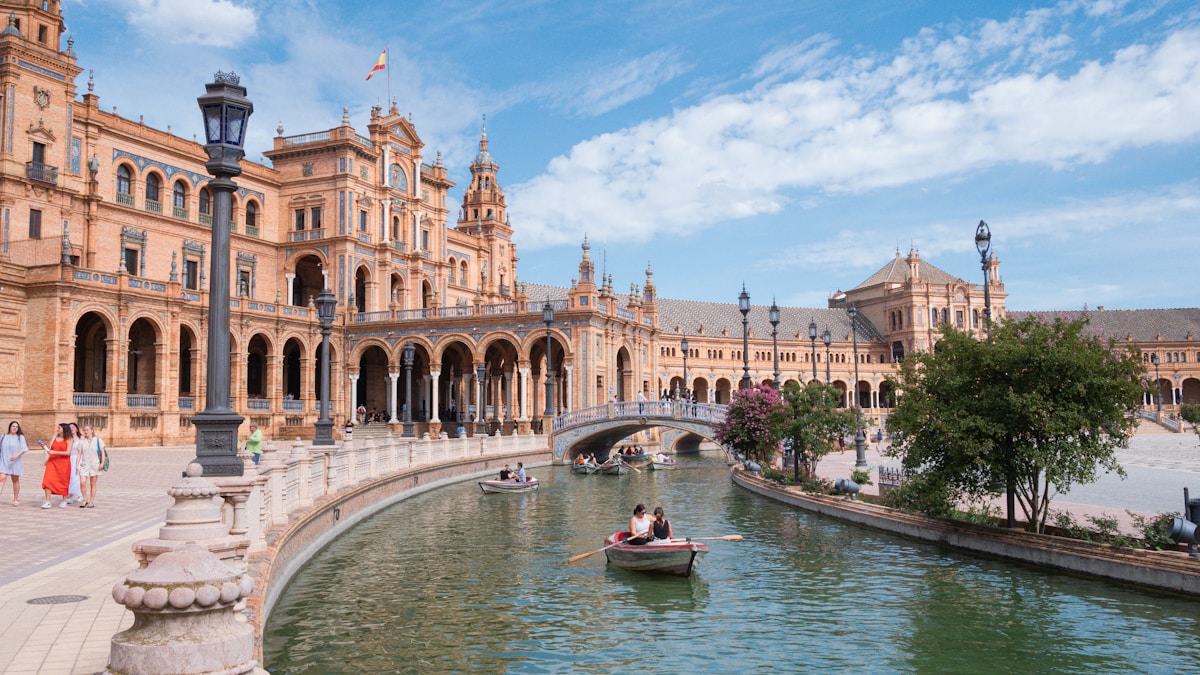
Table of Contents
- Top Attractions in Seville
- Flamenco — Where to See the Real Thing
- Tapas — Seville’s Edible Religion
- Food & Drink Beyond Tapas
- Seville’s Neighbourhoods
- Where to Stay — By Budget & Style
- Getting Around Seville
- Best Time to Visit
- Day Trips from Seville
- Semana Santa & Feria de Abril 2026
- Seville with Kids
- Safety & Practical Information
- Rooftop Bars & Sunset Spots
- Free Things to Do in Seville
- Hidden Gems & Insider Tips
- 2026 Travel Notes & Changes
- Frequently Asked Questions
Top Attractions in Seville
1. Real Alcázar — 1,000 Years of Royal Luxury
The Real Alcázar is not one palace but many, layered over a thousand years of continuous use. The original fortress was built by the Abbadid Moors in the 10th century. After Ferdinand III conquered Seville in 1248, subsequent Christian kings didn’t demolish it — they expanded it, hiring Moorish craftsmen to build new wings in the Mudéjar style. The result is a mind-bending collision of Islamic geometry, Gothic arches, Renaissance gardens, and Baroque additions, all wrapped around courtyards of orange trees and pools that reflect the filigreed ceilings above.
The undisputed highlight is the Palacio de Pedro I (1364), widely considered the finest example of Mudéjar architecture in existence. Pedro the Cruel — or Pedro the Just, depending on which side you were on — brought craftsmen from Granada’s Alhambra and Toledo to create a palace that rivals the Nasrid palaces themselves. The Salón de Embajadores (Hall of Ambassadors), with its gilded dome of interlocking wooden stars, is genuinely jaw-dropping. The gardens behind the palace — terraced, tiled, fragrant with jasmine and orange blossom — extend for 7 hectares and include the vaulted Baths of Doña María de Padilla (the underground rainwater cistern). Game of Thrones fans will recognise the gardens as the Water Gardens of Dorne.
Price: €15.50 general (online, timed entry) / €7.75 students (17–25) and seniors 65+ / Free under 16 (must book). Cuarto Real Alto (upper royal apartments, still used by the King): €6 supplement, guided only. Hours: Apr–Sep: 09:30–19:00 (last entry 18:00). Oct–Mar: 09:30–17:00 (last entry 16:00). Free entry: Mon 18:00–19:00 (Apr–Sep) / Mon 16:00–17:00 (Oct–Mar) — limited tickets, book online. Book: alcazarsevilla.org
2. Seville Cathedral & Giralda Tower — The Largest Gothic Building on Earth
Seville Cathedral is, by volume, the largest Gothic church in the world and the third-largest church of any kind (after St. Peter’s in Rome and Our Lady of Aparecida in Brazil). It was built between 1401 and 1506 on the site of the city’s Great Mosque — and the builders’ stated ambition was to construct a church so vast that future generations would think them mad. They succeeded. The interior is 126 metres long and 83 metres wide, with a central nave 42 metres high. It holds the world’s largest altarpiece (the retablo mayor, 20 metres tall, depicting 45 scenes from the life of Christ carved in gilded wood over 80 years) and the ornate tomb of Christopher Columbus, whose remains were returned from Cuba in 1898.
The Giralda — the cathedral’s bell tower — was originally the minaret of the Almohad mosque, built in 1198. It is the most recognisable silhouette in Seville. The climb to the top (35 ramps, not steps — originally designed so the muezzin could ride a horse up) rewards you with the best panoramic view in the city: the cathedral’s flying buttresses below, the Alcázar gardens beyond, the river, and the plains of Andalucía stretching to the horizon.
Price: €20 online / €21 at ticket office (includes Giralda climb) / €7 students (to 25) and seniors 65+ / Free under 13 (with adult). Rooftop tour (cubiertas): €20 online — walking on the cathedral roof between the flying buttresses, extraordinary. Hours: Mon 11:00–15:30, Tue–Sat 11:00–17:00, Sun 14:30–18:00 (hours vary seasonally — check catedraldesevilla.es). Free entry: Sundays 16:30–18:00 (online reservation required, limited capacity).
3. Plaza de España — Seville’s Grandest Stage
Plaza de España is a vast semicircular plaza built for the 1929 Ibero-American Exposition — a world’s fair that Seville hosted during the Primo de Rivera dictatorship. Designed by Aníbal González, it is 170 metres in diameter, ringed by a canal crossed by four ornate bridges (representing Spain’s four ancient kingdoms), and lined with 48 tiled alcoves, each depicting a Spanish province in hand-painted azulejo ceramics. The building itself is a sweeping arc of brick, marble, and ceramic in a style that mixes Renaissance Revival, Baroque, and Moorish elements. It is absurdly photogenic and entirely free to visit.
The plaza has served as a film location for Star Wars (Episode II — the planet Naboo), Lawrence of Arabia, and The Dictator. On weekends, local flamenco dancers and guitarists perform informally on the bridges and under the arcades. You can rent a rowing boat on the canal for €6 per 35 minutes.
Price: €4 for tourists (introduced February 2026 — Spain’s first public plaza to charge admission). Free for Seville residents with ID. Access controlled 08:00–22:00 via eight verification stations. Rowing boats: €6/35 min. Hours: 08:00–22:00 (controlled access); lit at night. Best time: Early morning (08:00) for photos without crowds, or sunset for the golden light on the brick. Address: Avenida de Isabel la Católica, Parque de María Luisa.
4. Metropol Parasol (Las Setas) — The World’s Largest Wooden Structure
Metropol Parasol — universally known as Las Setas (“The Mushrooms”) — is a massive wooden-lattice structure designed by German architect Jürgen Mayer that sprawls across the Plaza de la Encarnación. Completed in 2011, it is the world’s largest wooden structure: 150 metres long, 70 metres wide, and 26 metres tall. The design was controversial when built (it cost €100 million, four times the original budget) but has become one of Seville’s most iconic landmarks.
The structure has multiple levels: an archaeological museum in the basement (Antiquarium, with Roman and Moorish ruins discovered during construction), a central market on the ground floor, and a rooftop walkway with a mirador offering 360-degree views of the city. The rooftop walkway winds through the mushroom-shaped canopy, with the Giralda and the rest of the skyline visible in every direction.
Price: Mirador (rooftop): €15 (includes a drink at the rooftop bar). Antiquarium: €2.50, free on Mondays. Hours: Mirador: Sun–Thu 09:30–23:30, Fri–Sat 09:30–00:30. Address: Plaza de la Encarnación.
5. Torre del Oro — Watchtower on the Guadalquivir
The Torre del Oro (“Tower of Gold”) is a 13th-century Almohad watchtower on the banks of the Guadalquivir, originally part of the city’s defensive walls. The name likely comes from the golden tiles that once covered its surface, reflecting sunlight across the river. It now houses a small maritime museum documenting Seville’s history as Spain’s gateway to the Americas — for two centuries, every ship returning from the New World with gold, silver, and goods was required to dock here.
Price: €3 / €1.50 students and seniors / Free on Mondays. Hours: Mon–Fri 09:30–18:45, Sat–Sun 10:30–18:45. Address: Paseo de Cristóbal Colón.
6. Casa de Pilatos — Seville’s Most Beautiful Palace
Casa de Pilatos is a 15th–16th-century aristocratic palace that combines Mudéjar, Gothic, and Italian Renaissance styles in a way that many visitors find even more beautiful than the Alcázar — and it has a fraction of the crowds. Built by the Dukes of Medinaceli (who still own it), it was named “Pilate’s House” because its design was supposedly inspired by the Duke’s pilgrimage to Jerusalem in 1519. Whether that’s true or not, the result is extraordinary: a central patio with Carrara marble columns, walls of impossibly intricate azulejo tilework, Roman antiquities scattered through the rooms, and a lush garden courtyard.
Price: Ground floor only: €12 / Ground + upper floors (guided): €14. Hours: Nov–Mar: 09:00–18:00 / Apr–Oct: 09:00–19:00. Address: Plaza de Pilatos, 1.
7. Archivo de Indias — Records of an Empire
The Archivo General de Indias, housed in a 16th-century former merchant’s exchange (La Lonja), holds 43,000 documents and 80 million pages covering three centuries of Spanish colonial history. This is where Columbus’s letters, Magellan’s logs, and the administrative records of the entire Spanish Empire in the Americas are preserved. The building itself is a masterpiece of Herreran Renaissance architecture — severe, symmetrical, and grand. Together with the Cathedral and Alcázar, it forms Seville’s UNESCO World Heritage triangle.
Price: FREE. Hours: Tue–Sat 09:30–17:00, Sun and holidays 10:00–14:00. Closed Mondays. Address: Avenida de la Constitución, 3.
8. Parque de María Luisa & Plaza de América
Seville’s main park was originally part of the grounds of the Palacio de San Telmo, donated to the city in 1893 and redesigned by French landscape architect Forestier for the 1929 Exposition. It is 34 hectares of shaded paths, tiled fountains, duck ponds, and hidden plazas, bordered by the Guadalquivir on one side and Plaza de España on the other. At its heart is the Plaza de América, flanked by three pavilions: the Museo Arqueológico (Roman and Moorish artefacts, €1.50, free for EU citizens), the Museo de Artes y Costumbres Populares (Andalusian folk traditions, €1.50, free for EU), and the Royal Pavilion.
Price: Park free. Museums: €1.50 each (free for EU citizens). Hours: Park 08:00–22:00 (summer) / 08:00–20:00 (winter). Getting there: Walk from Plaza de España or Prado de San Sebastián tram stop.
9. Triana — The Soul of Seville
Triana is Seville’s most charismatic neighbourhood, and it considers itself a separate entity entirely. Across the Guadalquivir from the old town, connected by the Isabel II bridge (Puente de Triana), this former Gitano (Roma) quarter is where flamenco was born, where the best ceramics in Andalucía are made, and where the tapas bars have a rougher, more authentic edge than the tourist-facing ones across the river.
The waterfront along Calle Betis is Seville’s social spine — a row of bars and restaurants looking back across the river at the Torre del Oro and the old city skyline. Behind the waterfront, narrow streets are lined with ceramic workshops (Triana has been producing azulejo tiles since the Moors), traditional bars, and the Mercado de Triana — a modern food market built on the site of the Inquisition’s old castle.
Getting there: Walk across Puente de Triana from the old town (5 min). Key streets: Calle Betis (riverside), Calle San Jacinto (tapas), Calle Alfareria (ceramics), Calle Castilla (local life).
10. Hospital de los Venerables — Baroque Gem & Velázquez Centre
This 17th-century former hospital for elderly priests in the heart of the Santa Cruz quarter is now home to the Centro Velázquez, run by the Focus-Abengoa Foundation. The building itself is a Baroque masterpiece: a frescoed church, a tiled courtyard with a sunken fountain, and intimate exhibition rooms. The collection includes works by Velázquez (including the recently restored Santa Rufina), Murillo, Zurbarán, and other masters of Seville’s 17th-century Golden Age.
Price: €8 general / €4 reduced. Hours: Fri–Sun 10:00–14:00 only. Closed Mon–Thu. Free on Mondays via BIC ticket reservation on the website. Address: Plaza de los Venerables, 8.
11. Palacio de las Dueñas — The Duchess’s Private Palace
Palacio de las Dueñas, owned by the House of Alba (one of Spain’s oldest noble families), opened to the public in 2016 after the death of the 18th Duchess of Alba. It is a 15th-century palace combining Gothic, Mudéjar, and Renaissance elements, filled with the family’s private art collection: letters from Empress Eugénie, paintings by Sorolla and Romero de Torres, Flemish tapestries, and Roman mosaics. The poet Antonio Machado was born here in 1875 (his family rented rooms in the palace).
Price: €12 general / €10 online / €8 reduced (students, seniors). Hours: Apr–Sep 10:00–20:00 / Oct–Mar 10:00–18:00. Address: Calle Dueñas, 13.
12. Isla de la Cartuja — From Monastery to Modern Art
The island between two arms of the Guadalquivir was the site of Expo ’92, and it has been reinventing itself ever since. The highlight is the Centro Andaluz de Arte Contemporáneo (CAAC), housed in the stunning 15th-century Monasterio de la Cartuja — the monastery where Columbus planned his voyages and where his body rested for 27 years. The combination of ancient cloisters and cutting-edge contemporary art (free admission) is extraordinary.
Price: CAAC: FREE. Hours: Tue–Sat 11:00–21:00, Sun 10:00–15:30. Closed Mondays. Getting there: Walk or cycle across the Alamillo Bridge from the Macarena side.
| Attraction | Price | Free Entry | Time Needed |
|---|---|---|---|
| Real Alcázar | €15.50 | Mon evening (book online) | 2–3 hours |
| Cathedral & Giralda | €20 | Sun 16:30–18:00 (book online) | 1.5–2 hours |
| Plaza de España | €4 | Free for Seville residents | 1 hour |
| Las Setas (mirador) | €15 | — | 45 min |
| Torre del Oro | €3 | Mondays | 30 min |
| Casa de Pilatos | €12–€14 | — | 1–1.5 hours |
| Archivo de Indias | Free | Always | 45 min |
| Hospital de los Venerables | €8 | Mon (BIC reservation) | 1 hour |
| Museo de Bellas Artes | €1.50 (free EU) | Always free for EU citizens | 1–2 hours |
| Palacio de las Dueñas | €12 | — | 1 hour |
| CAAC (La Cartuja) | Free | Always | 1–2 hours |
Flamenco — Where to See the Real Thing
Seville is the spiritual home of flamenco — not its only home (Cádiz, Jerez, and Granada all claim a share), but the city where flamenco’s three pillars (cante/singing, toque/guitar, baile/dance) come together with the greatest intensity and the deepest roots. The key to seeing authentic flamenco in Seville is knowing where to look: avoid the large dinner-show spectacles marketed at cruise-ship passengers and seek out the intimate tablaos (flamenco venues) and peñas (flamenco clubs) where the performers outnumber the tourists.
Top Flamenco Venues
| Venue | Neighbourhood | Price | Style |
|---|---|---|---|
| Casa de la Memoria | Santa Cruz | €22–€26 | Intimate tablao in 15th-c. courtyard. 80 seats, no microphones. Pure. |
| Casa del Flamenco | Santa Cruz | €24 | Converted Jewish synagogue, acoustically perfect. Nightly at 19:00 & 20:30. |
| Museo del Baile Flamenco | Centre | €28 (museum + show) | Cristina Hoyos’s museum. Show in courtyard. More polished, still excellent. |
| T de Triana | Triana | €25 | In the barrio where flamenco was born. Raw, emotional, guitarist-led. |
| La Carboneria | Santa Cruz | Free (buy drinks) | Former coal yard. Two rooms, spontaneous performances. Drink minimum. |
| Peña Flamenca Torres Macarena | Macarena | €10–€15 | Local peña (club). Mostly Sevillanos in the audience. Deeply authentic. |
| Casa Anselma | Triana | Free (buy drinks) | No sign, opens ~midnight. Spontaneous cante & palmas. No photos. |
Tapas — Seville’s Edible Religion
Seville is the birthplace of tapas. The word itself may come from the Spanish tapar (“to cover”) — a slice of bread or ham placed over a glass to keep the flies out. Whether that origin story is true or not, Seville’s relationship with tapas is deeper and more ritualistic than any other city in Spain. Sevillanos don’t “go out for tapas” — they tapear: moving from bar to bar, standing at zinc counters, ordering one or two small plates at each stop, a cold caña (small draft beer) in hand, before moving on. The route is the meal. Sitting down at a single restaurant and ordering a full meal is something tourists do.
Important: Unlike Granada, Seville does NOT give free tapas with drinks (with rare exceptions). Individual tapas cost €2–4, media raciones (half portions) €6–10, and raciones (full plates to share) €10–16. A caña of beer is €1.20–€1.80. A typical evening of 4–5 bars, 2 tapas and a drink per stop, costs around €25–35 per person.
Essential Seville Dishes
- Salmorejo — Thick cold soup of tomato, bread, olive oil, and garlic, served with diced jamón and hard-boiled egg. Thicker and richer than gazpacho. The quintessential Seville dish.
- Espinacas con garbanzos — Spinach stewed with chickpeas, cumin, and garlic. A Moorish-era recipe that every bar in Seville serves. Cheap, filling, vegetarian, and surprisingly addictive.
- Pescado frito (pescaíto frito) — Lightly battered and fried small fish — boquerones (anchovies), puntillitas (baby squid), cazón (dogfish) — served in paper cones. Seville’s street food.
- Carrillada — Slow-braised pork or beef cheeks, falling apart after hours in red wine or Pedro Ximénez sherry. One of the best meat dishes in Spain.
- Solomillo al whisky — Pork tenderloin medallions in a whisky-garlic-lemon sauce. A Seville invention found nowhere else. Don’t question the whisky. Just eat it.
- Serranito — A Seville sandwich: grilled pork loin, jamón serrano, green pepper, and tomato in a crusty roll. The ultimate late-night food.
- Pringa — Shredded slow-cooked pork, chorizo, and morcilla (blood sausage), served on bread. Originally from the puchero (stew) leftovers.
- Cola de toro — Oxtail braised in wine and vegetables. Rich, gelatinous, deeply flavourful. Seasonal — best in cooler months.
- Huevos a la flamenca — Eggs baked in a terracotta dish with tomato sauce, chorizo, jamón, and vegetables. Named after the bright colours, like a flamenco dress.
- Torrijas — Seville’s answer to French toast, soaked in honey and wine. Traditional during Semana Santa but increasingly available year-round.
Tapas Bar Recommendations by Area
Santa Cruz / Centre: Bodega Santa Cruz (Calle Rodrigo Caro — no-frills, standing room, €2 montaditos); Bar Europa (Plaza del Pan — locals’ favourite for quick tapas since 1929); Duo Tapas (creative, modern, excellent value).
Triana: Bar La Primera del Puente (at the foot of the Triana bridge — tortilla, croquetas); Casa Ricardo (Calle Castilla — traditional, zero tourists); Mercado de Triana (food stalls inside the market building on Calle San Jorge).
Alameda: Duo Tapas (excellent modern tapas); Eslava (Plaza de San Lorenzo — award-winning creative tapas, queue early); La Cantina (Calle San Eloy — vermouth and conservas).
Macarena: Taberna Coloniales San Pedro (huge portions, cheap); El Rinconillo (Calle Gerona — Seville’s oldest bar, founded 1670, espinacas con garbanzos the best in the city).
Food & Drink Beyond Tapas
Sherry — Andalucía’s Great Underrated Wine
Seville sits in the middle of the Sherry Triangle (Jerez–El Puerto de Santa María–Sanlúcar de Barrameda), and sherry is the city’s default drink in a way that wine is for the French or beer for the Germans. Understanding the basics transforms the bar experience:
- Fino — Bone-dry, pale, almond-scented. Served ice-cold. The everyday sherry of Seville. Order it at any tapas bar. €1.50–€2.50 per glass.
- Manzanilla — A fino from Sanlúcar de Barrameda, with a salty, chamomile character from the sea air. Lighter than fino. Perfect with seafood.
- Amontillado — Aged fino that has lost its flor (yeast layer), gaining amber colour and nutty depth. The connoisseur’s sherry.
- Oloroso — Dark, rich, full-bodied. Aged oxidatively without flor. Powerful with stews and game.
- Pedro Ximénez (PX) — Syrup-thick, dark as molasses, intensely sweet. Made from sun-dried grapes. Pour over vanilla ice cream for dessert.
- Rebujito — Manzanilla mixed with lemonade and ice. Seville’s Feria drink. Dangerously refreshing in 40°C heat.
Best sherry bars: Bodegas Santa Cruz (Santa Cruz — barrel-aged fino from the wall); Bodega Dos de Mayo (Plaza de la Gavidia — local institution); Casa Morales (Calle García de Vinuesa — founded 1850, barrels on the wall, fino on tap).
Markets
- Mercado de Triana — On Calle San Jorge, built on the ruins of the Inquisition castle. Mix of traditional stalls (fish, vegetables, olives) and modern food counters. Best for: fresh tuna, olives, Triana atmosphere.
- Mercado Lonja del Barranco — Riverside food hall in a 19th-century iron market (designed by the same engineer as the Eiffel Tower). More upscale, with craft beer, cocktails, and gourmet stalls. Tourist-friendly but good quality.
- Mercado de Feria — The locals’ market in Macarena. No tourists, just Sevillanos buying their daily fish and vegetables. Best for: authenticity, cheapest produce in the city.
Breakfast Culture
Sevillanos eat breakfast at the bar, not at home. The standard order is a tostada con tomate (toasted bread rubbed with fresh tomato and drizzled with olive oil) and a café con leche (€3–4 total). Variations include tostada con manteca colorá (lard tinted with paprika — better than it sounds), tostada con zurrapa (shredded pork spread), or a mollete (a soft, round bread from Antequera, split and filled). The best breakfast bars are the ones where construction workers eat at 07:00.
Seville’s Neighbourhoods
Santa Cruz
The old Jewish quarter, and the postcard image of Seville: narrow lanes barely wide enough for two people, whitewashed walls draped with bougainvillea, wrought-iron balconies, hidden plazas with orange trees and ceramic-tiled fountains. This is where the Cathedral, Alcázar, and most tourist attractions are concentrated. Beautiful but crowded during the day. Best for: Sightseeing, flamenco (Casa de la Memoria, Casa del Flamenco), evening strolls. Watch out for: Tourist-trap restaurants on Plaza del Triunfo and Calle Mateos Gago — walk two blocks deeper for better food at half the price.
Triana
Across the river. Working-class soul, ceramic workshops, flamenco roots, the best tapas bars. Triana was historically home to Seville’s Gitano community, sailors, bullfighters, and potters. Today it retains a village-within-a-city identity. Best for: Tapas (Calle San Jacinto, Calle Castilla), ceramics shopping, riverside sunset drinks (Calle Betis), Mercado de Triana. Stay here if: You want authentic Seville without the tourist density of Santa Cruz.
Alameda de Hércules
Seville’s trendiest neighbourhood. The Alameda is a long tree-lined boulevard flanked by bars, restaurants, vintage shops, and independent galleries. Once seedy, now gentrified (though it retains an edge). This is where young Sevillanos go out — late-night bars, craft cocktails, weekend markets. Best for: Nightlife, alternative culture, brunch, LGBTQ+ scene. Key spots: Eslava (tapas), Duo Tapas, Sunday flea market at the southern end.
Macarena
Named after the Basilica de la Macarena (home to Seville’s most venerated Virgin — La Esperanza Macarena, whose Semana Santa procession draws hundreds of thousands). This northern neighbourhood is residential, local, and home to Seville’s best budget tapas. The medieval city walls are best preserved here. Best for: Budget tapas (El Rinconillo, Coloniales), Basilica de la Macarena, authentic local life. Stay here if: You want low prices and don’t mind a 15-minute walk to the centre.
El Arenal
Between Santa Cruz and the river. This was the old port district during Seville’s Golden Age — the area where cargo from the Americas was unloaded. Today it’s home to the bullring (Plaza de Toros de la Maestranza, Spain’s most prestigious), the Torre del Oro, and the opera house (Teatro de la Maestranza). Best for: Riverside walks, bullfighting museum, upscale dining. Key spot: Calle García de Vinuesa (Casa Morales, tapas).
Nervión
Seville’s modern commercial district, east of the old town. Home to the Estadio Ramón Sánchez-Pizjuán (Sevilla FC) and the Nervión Plaza shopping centre. Not a tourist area, but useful for: football matches (Sevilla FC or Real Betis at Estadio Benito Villamarín), shopping, and accommodation that’s cheaper than the centre.
Where to Stay — By Budget & Style
| Area | Budget | Best For | Avg. Double Room |
|---|---|---|---|
| Santa Cruz | €€€ | First-timers, sightseeing | €120–€200 |
| Triana | €€ | Authenticity, tapas, flamenco roots | €80–€140 |
| Alameda | €€ | Nightlife, young travellers, brunch | €70–€130 |
| Macarena | € | Budget, local life | €50–€90 |
| El Arenal | €€€ | Riverside, upscale | €100–€180 |
| Nervión | € | Football, shopping, airport proximity | €45–€80 |
Getting Around Seville
From the Airport
EA Airport Bus: €6.85 single, runs every 15–30 minutes from 04:30 to 00:30. Route: Airport → Santa Justa station → Prado de San Sebastián (city centre). Journey time: 35–50 minutes.
Taxi: Fixed rate by zone. Mon–Fri 07:00–21:00: €24.98. Mon–Fri 21:00–07:00 + weekends/holidays: €27.84. During Semana Santa & Feria: €34.79. Journey time: 15–25 minutes. Uber, Bolt, and Cabify also operate at the airport (€20–€30).
No metro to the airport — Seville’s single metro line doesn’t reach SVQ airport.
City Transport
- Walking: Seville’s historic centre is compact. Cathedral to Plaza de España: 10 min. Cathedral to Triana: 15 min. You can see most attractions on foot.
- TUSSAM buses: €1.40 single / €0.69 with rechargeable card (€1.50 deposit). Day pass: €5. 3-day pass: €10.
- MetroCentro tram: Single line through the centre (San Bernardo → Plaza Nueva). Same tickets as TUSSAM. Useful but limited route.
- Metro: 1 line (Ciudad Expo → Olivar de Quintos). €1.40 single. Not very useful for tourists — doesn’t reach the old town or airport.
- Sevici bikes: Public bike-sharing. €2.59/day pass, first 30 minutes free per trip. 260+ stations across the city. Seville has 180 km of cycle lanes — one of the best cycling cities in Europe. Flat terrain + wide bike lanes = ideal for cycling.
Best Time to Visit
| Season | Temp | Crowds | Verdict |
|---|---|---|---|
| March–April | 18–26°C | High (Semana Santa & Feria) | ⭐ Best for: Festivals, pleasant weather. Book far ahead. |
| May–June | 26–36°C | Moderate | ⭐ Best overall: Warm but bearable, long evenings, lower prices post-Feria. |
| July–August | 36–45°C | Low (locals flee) | ⚠️ Dangerously hot. 45°C+ common. Only visit if you embrace siesta culture. |
| September–October | 25–33°C | Moderate | ⭐ Excellent: Heat easing, locals return, good prices, harvest season. |
| November–February | 10–18°C | Low | Mild winter, occasional rain. Great for budget travellers. Orange harvest. |
Day Trips from Seville
1. Córdoba & the Mezquita
Córdoba’s Mezquita-Cathedral is one of the most extraordinary buildings on Earth: a forest of 856 red-and-white striped horseshoe arches built in the 8th century as the Great Mosque of Córdoba, with a Renaissance cathedral incongruously inserted into its centre in the 16th century. The old town (Juderia) is a UNESCO World Heritage site of whitewashed courtyards and flower-draped alleys.
Getting there: AVE high-speed train, 45 minutes, from €12 each way (book on renfe.com). Also ALSA bus, 2 hours, from €12. Mezquita price: €13 / Free Mon–Sat 08:30–09:30 (limited, arrive early).
2. Ronda — City on the Cliff
Ronda is built on a dramatic gorge (El Tajo) that splits the city in two, connected by the Puente Nuevo — an 18th-century stone bridge spanning a 120-metre chasm with a river at the bottom. Hemingway set part of For Whom the Bell Tolls here. The town has Spain’s oldest bullring (1785), Moorish baths, and views that make your knees weak.
Getting there: Train: 2.5–3 hours via Bobadilla junction, from €15. Bus (DAMAS): 2 hours, from €14. Car: 1.5 hours (A-376, scenic). Puente Nuevo: Free (the bridge is a public road). Bullring museum: €10.
3. Cádiz — Europe’s Oldest City
Cádiz claims to be the oldest continuously inhabited city in Western Europe, founded by the Phoenicians around 1100 BC. It occupies a narrow peninsula jutting into the Atlantic, surrounded by water on three sides — giving it a light, breezy, salt-air character completely different from inland Seville. The old town is a maze of narrow streets, Baroque churches, and hidden plazas. The beach (Playa de la Victoria) is one of the best urban beaches in Spain.
Getting there: Train: 1 hour 40 minutes, from €13. Frequent departures from Seville Santa Justa. Cathedral: €7. Torre Tavira (camera obscura): €8.
4. Jerez de la Frontera — Sherry, Horses & Flamenco
Jerez is the sherry capital of the world, home to the major bodegas (González Byass/Tío Pepe, Lustau, Sandeman), the Royal Andalusian School of Equestrian Art (where Carthusian horses perform dressage to classical music), and a deep flamenco tradition. It’s only 1 hour from Seville and perfect for a half or full day.
Getting there: Train: 1 hour, from €8. Bodega tour: Tío Pepe/González Byass: €20–€30 (with tasting). Lustau: €18. Equestrian show: Tue & Thu at 12:00, from €27. Book: realescuela.org
5. Carmona — Hilltop Time Capsule
Carmona is a beautifully preserved hilltop town 35 km east of Seville, with Roman, Moorish, and Christian layers visible in its gates, churches, and fortress. The Parador (luxury state hotel) occupies a 14th-century Moorish palace on the cliff edge, with views across the Guadalquivir plain. The Roman Necropolis (2nd century BC) has rock-cut tombs with original frescoes.
Getting there: Bus M-124 from Prado de San Sebastián, 45 min, €3. Roman Necropolis: €1.50 (free for EU citizens). Alcázar: Free.
6. Itálica — Roman Amphitheatre & Game of Thrones
Itálica, in Santiponce (8 km northwest of Seville), was the birthplace of the Roman emperors Trajan and Hadrian and home to one of the largest amphitheatres in the Roman Empire (25,000 capacity). The mosaic floors of the patrician houses are remarkably preserved. Game of Thrones filmed the “Dragonpit” scenes (Season 7 finale) in the amphitheatre.
Getting there: Bus M-170A from Plaza de Armas, 25 min, €1.65. Price: €1.50 (free for EU citizens). Hours: Tue–Sun. Closed Mondays.
7. Doñana National Park — Wetlands & Wildlife
Doñana is one of Europe’s most important wetland reserves — a UNESCO World Heritage site of marshes, dunes, and pine forests at the mouth of the Guadalquivir. Home to the critically endangered Iberian lynx, flamingos, wild boar, deer, and over 300 bird species. Access is by guided 4×4 tour only (the park interior is restricted).
Getting there: Guided tours depart from El Rocío (1.5 hours from Seville by car). Tour price: €30–€35 per person (4 hours). Book: donanareservas.com. Best season: Spring (March–May) for flamingos and nesting birds.
Semana Santa & Feria de Abril 2026
Semana Santa (Holy Week) — 29 March–5 April 2026
Semana Santa in Seville is not a tourist event with a religious theme — it is a deeply felt religious experience that the city opens to visitors. Over 60 hermandades (brotherhoods) carry monumental pasos (floats) through the streets: life-size wooden sculptures of Christ’s Passion and weeping Virgins adorned with candles, silver, and flowers, carried on the shoulders of costaleros (bearers) hidden beneath the float. The processions begin in the afternoon and continue through the night, with the most important (Madrugada — the early hours of Good Friday) starting at midnight and not finishing until dawn.
The emotional intensity is extraordinary. When the Virgen de la Macarena emerges from her basilica at midnight, the crowd falls silent, someone sings a saeta (an improvised flamenco lament from a balcony), and thousands of people weep openly. It is, regardless of your faith, one of the most powerful public rituals in Europe.
Key processions: La Macarena (early Friday), El Gran Poder (early Friday), La Esperanza de Triana (early Friday), El Cachorro (Triana, Good Friday). Where to watch: Anywhere on the official route (Carrera Oficial: Plaza de la Campana to Cathedral), or in the home neighbourhoods as brotherhoods depart and return. Cost: Free (standing). Grandstand seats on Carrera Oficial: €40–€200. Tip: Book accommodation 6 months ahead.
Feria de Abril (April Fair) — 21–26 April 2026
Two weeks after Semana Santa, Seville flips from sacred to profane. The Feria de Abril is a six-day festival held at the Real de la Feria (a huge fairground in the Los Remedios district) where over 1,000 casetas (canvas tents/marquees) are erected, each belonging to a family, business, or social club. Inside, people eat, drink rebujito (manzanilla and lemonade), and dance sevillanas (the local folk dance) in flamenco outfits.
The opening night — the alumbrao (20 April 2026, midnight) — sees the massive gateway illuminated with thousands of lights. During the day, Sevillanos in traditional dress ride horses and horse-drawn carriages through the fairground. At night, the casetas come alive with flamenco, sherry, and dancing until dawn.
Can tourists enter? Most casetas are private (by invitation), but public casetas (casetas públicas) exist and are open to everyone. You can also walk the fairground freely, enjoy the amusement rides, watch the horse parades, and absorb the atmosphere. Tip: If you know anyone from Seville — even vaguely — ask for a caseta invitation. Sevillanos are generous hosts. Cost: Entry to the fairground is free. Food and drink inside casetas: normal bar prices. What to wear: Smart. Women in traditional traje de flamenca (flamenco dress), men in suit or smart casual. Do not wear shorts or trainers — you will feel painfully out of place.
Seville with Kids
- Isla Mágica — Theme park on Isla de la Cartuja, themed around Spanish exploration of the Americas. Water rides, roller coasters, shows. Day ticket: €25–33 (online discount). Open March–November. The Agua Mágica waterpark section opens in summer.
- Acuario de Sevilla — Modern aquarium by the river, near Puente de las Delicias. 35 tanks, 7,000 marine creatures, including sharks, rays, and a freshwater Guadalquivir exhibit. €17 adult / €12 child (4–14). Under 4 free.
- Plaza de América pigeons — Hundreds of doves in María Luisa Park. Children love them. Free.
- Rowing boats on Plaza de España canal — €6/35 min. Kids steer, parents relax.
- Horse-drawn carriage ride — From €45/45 min. Pick up at the cathedral or park entrance. Corny but kids love it.
- Guadalquivir river cruise — 1-hour boat trip from Torre del Oro, from €18. Audio commentary, views of all riverside monuments.
- Trampolín & CaixaForum — CaixaForum Sevilla (free entry, interactive science exhibitions for children) on Calle López Pintado near Torre Sevilla.
Safety & Practical Information
Seville is generally very safe, including at night. The main risk is pickpocketing in tourist-heavy areas: Cathedral/Alcázar queues, Plaza de España, and crowded tapas streets. Use common sense: front pockets, no valuables in back pockets, be aware of your surroundings in crowded metro/tram stations.
- Emergency: 112 (pan-European)
- Tourist police: Policía Nacional at Avenida de la Constitución
- Tipping: Not expected in bars/tapas. In restaurants, rounding up or 5–10% is appreciated but not obligatory. Never tip at the counter.
- Siesta: Many shops close 14:00–17:00 (or 14:30–17:30). Museums generally stay open. Supermarkets and shopping centres stay open. Restaurants close between lunch (14:00–16:00) and dinner (20:30+).
- Tap water: Safe to drink throughout Seville. Public drinking fountains exist in parks and plazas. In summer, always carry a bottle.
- Electrical: Standard European (Type C/F), 230V.
- Language: Spanish (Castilian). Many in the tourist sector speak English, but learning basic Spanish (por favor, gracias, una caña por favor) goes a long way.
- Meal times: Lunch 14:00–16:00, dinner 21:00–23:00. Restaurants that open at 19:00 are catering to tourists.
Rooftop Bars & Sunset Spots
Seville’s skyline is best seen from above, and the city has embraced rooftop culture in recent years. Here are the best viewpoints:
- Hotel EME — Terraza — Rooftop bar directly opposite the Cathedral. The Giralda is so close you could almost touch it. Cocktails €10–15. Go at sunset.
- Hotel Doña María — La Terraza — Another Cathedral-view rooftop. Pool for hotel guests; bar open to public. Slightly less crowded than EME.
- Las Setas mirador — 360-degree views from the wooden canopy. €15 includes a drink.
- Giralda tower — The classic viewpoint. 35 ramps, no steps. Included with Cathedral ticket (€12).
- Hotel Alcázar — Rooftop — View over the Alcázar walls and gardens. Less known, often quieter.
- Calle Betis (Triana waterfront) — Not a rooftop, but the classic Seville sunset: the old city skyline reflected in the Guadalquivir from the Triana bank. Free. Best bars: Terraza Lounge Triana, La Otra Orilla.
Free Things to Do in Seville
- Museo de Bellas Artes — Free for EU citizens (Spain’s second most important art gallery after the Prado). €1.50 for others. Murillo, Zurbarán, El Greco. Housed in a 17th-century convent. Tue–Sat 09:00–21:00, Sun 09:00–15:00.
- Parque de María Luisa — 34 hectares of shaded gardens. Free.
- Archivo de Indias — Free. Columbus’s letters, Magellan’s logs.
- CAAC (Centro Andaluz de Arte Contemporáneo) — Free. Contemporary art in a 15th-century monastery.
- Real Alcázar — Free Monday evenings (book online, limited).
- Cathedral — Free Sundays 16:30–18:00 (online reservation required).
- Torre del Oro — Free Mondays.
- Hospital de los Venerables — Free Mondays (BIC ticket reservation on website).
- Antiquarium (Las Setas) — Free Mondays.
- Museo Arqueológico & Museo de Artes y Costumbres — Free for EU citizens; €1.50 for others.
- Walking Triana’s ceramic streets — Calle Alfareria, Calle Antillanos. Workshops with painted tiles visible from the street.
- Barrio Santa Cruz evening walk — The old Jewish quarter at twilight, when the streets are golden and the jasmine scents the air.
- Sunset from Calle Betis — The iconic Seville view. Completely free.
- Basilica de la Macarena — Free. See the Virgen de la Esperanza Macarena, Seville’s most beloved religious image.
- River walk from Torre del Oro to Triana — One of the most pleasant walks in the city. Free.
Hidden Gems & Insider Tips
- Palacio de la Condesa de Lebrija — A 15th-century palace with the best Roman mosaic collection in Spain (from Itálica), practically unknown to tourists. Ground floor €8, full palace €12. Calle Cuna, 8.
- Church of San Luis de los Franceses — An 18th-century Baroque church with a dome so richly painted it rivals Rome. Free. Often empty. Calle San Luis.
- Azulejo tile workshops in Triana — Cerámica Santa Ana (Calle San Jorge) and Cerámica Triana (Calle Alfareria) still produce hand-painted azulejo tiles using Moorish techniques. You can watch artisans work and buy directly. Prices from €5 for a single tile to €200+ for panels.
- Mercado de Feria — The locals’ morning market in Macarena. No tourists, no food halls, just Sevillanos buying fish and arguing about olive oil.
- Calle Sierpes at 08:00 — Seville’s main shopping street is beautiful in early morning light, completely empty, with shop owners hosing down the marble pavement.
- Alamillo Park — On the north side of Isla de la Cartuja. 47 hectares of olive, orange, and carob trees. Sevillanos picnic here on weekends. No tourists ever.
- Casa de la Ciencia — Free science museum in a beautiful 1929 Exposition pavilion on Avenida María Luisa. Good for families.
- Bitter orange harvest (January–February) — Seville’s 40,000+ orange trees are harvested every winter, and the fruit is exported to make British marmalade (most Seville marmalade is made in Dundee, Scotland). The scent of orange blossom in spring (March–April) is intoxicating.
2026 Travel Notes & Changes
- No tourist tax: Andalucía has not introduced a regional tourist tax as of 2026. Some discussion at the municipal level (Seville, Málaga, Granada) but nothing implemented yet.
- Semana Santa 2026: 29 March–5 April. The Madrugada (early Friday, 3–4 April) is the peak.
- Feria de Abril 2026: 21–26 April. Alumbrao at midnight on 20 April.
- Bienal de Flamenco 2026: September 9–October 3. The XXIV edition of the world’s most important flamenco festival: 72 shows, 52 new productions, 22 world premieres across 11 venues. If you love flamenco, this is the trip. Book at labienal.com.
- Noche en Blanco 2026: October 3. Over 100 venues (museums, monuments, galleries) stay open late with free entry and special programming.
- Plaza de España paid entry: Since February 2026, tourists pay €4 (free for Seville residents). Controversial but funds €1.9M annual restoration.
- Heat records: Seville saw record temperatures in 2023–2025 (30 days above 40°C in summer 2025 alone, first 40°C in May). Summer heat waves are becoming more frequent and severe. The city now names heat waves (starting with “Zoe” in 2022) and operates a formal heat alert system with refugios climáticos (air-conditioned public buildings).
- Metro expansion: Line 3 construction continues but is not expected to open before 2028. Expect occasional disruption near Prado de San Sebastián.
- Low Emission Zone (ZBE): Seville’s ZBE restricts the most polluting vehicles in the centre. If renting a car, ensure it has a DGT environmental sticker (B, C, ECO, or 0). Cars without stickers face fines.
- CaixaForum Sevilla: Opened 2017 in Torre Sevilla. Free entry. Rotating exhibitions plus permanent interactive science galleries. A strong new addition to the cultural scene.
- Cycling infrastructure: Seville continues to expand its bike lane network (now 180+ km). Sevici stations are being upgraded with electric bikes in select locations.
Frequently Asked Questions
How many days do I need in Seville?
Three full days is the sweet spot: Day 1 for the Alcázar, Cathedral, and Santa Cruz; Day 2 for Triana, Plaza de España, and the park; Day 3 for Las Setas, Macarena, Casa de Pilatos, and a day trip. Four or five days allow you to add Córdoba, Ronda, or Cádiz as day trips and explore the neighbourhoods more deeply.
Is Seville safe?
Very safe, including at night. Pickpocketing in tourist areas is the main risk. Use normal precautions. The heat in summer is a more serious safety concern than crime — take it seriously.
Do I get free tapas with drinks in Seville?
No. Unlike Granada, Seville charges for tapas. Individual tapas cost €2–4. Some old-school bars may give a small olive or crisp with your drink, but don’t expect a full tapa. The trade-off is that Seville’s tapas are generally better and more varied than anywhere else in Spain.
When is the best time to visit?
Late May or early October for the best balance of weather, crowds, and prices. March–April if you want Semana Santa or Feria (book months ahead). Avoid July–August unless you can handle 45°C.
Can I visit during Semana Santa or Feria without advance planning?
Technically yes, but accommodation triples in price and sells out months ahead. Both events are free to watch from the streets. Book 3–6 months in advance for reasonable hotels. If you arrive without a booking, expect to pay premium rates for whatever’s left.
Is Seville walkable?
Extremely. The entire historic centre is pedestrian-friendly and compact. Cathedral to Triana: 15 minutes. Cathedral to Plaza de España: 10 minutes. Consider cycling (Sevici, €2.59/day) in summer to reduce time in the sun.
What’s the difference between Semana Santa and Feria de Abril?
Semana Santa (Holy Week) is solemn, religious, and deeply emotional — processions of religious floats, candlelight, silence, and saetas. Feria de Abril (two weeks later) is a secular explosion of flamenco, sherry, horses, and dancing until dawn. They are polar opposites, and experiencing both in the same trip is unforgettable.
Is there a tourist tax?
No. As of 2026, Andalucía has no regional tourist tax. There has been discussion about introducing one in Seville, Málaga, and Granada, but nothing has been implemented.
Looking for cheap flights to Seville?
Check the latest deals on AiFly or search directly on Skyscanner.
Guide written by AiFly’s travel editors. Last verified April 2026. Prices and hours change — always check official websites before visiting.
Explore more: Madrid · Barcelona · Lisbon · Palma de Mallorca · Naples · Rome · Athens · Paris · Tenerife · Munich