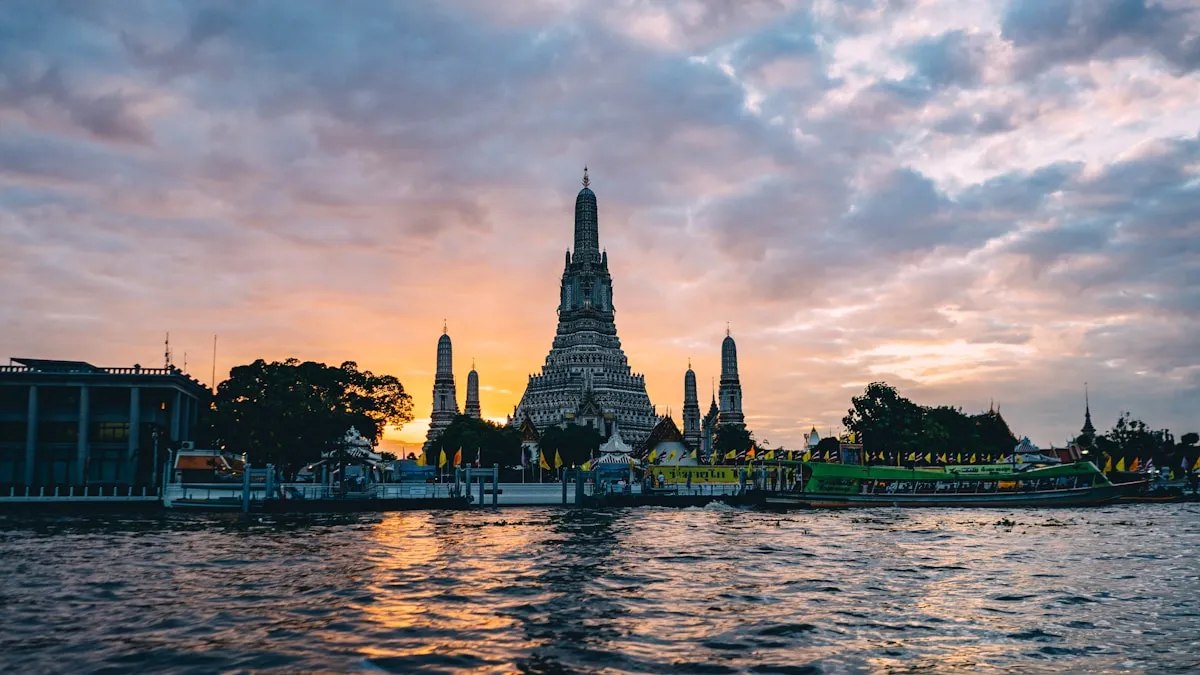
Bangkok is a city that assaults every sense simultaneously and makes you grateful for each one. The air smells of charcoal smoke, jasmine garlands, and diesel. The temples glow gold in the morning light. The street food sizzles at 3am. The traffic is a symphony of horns and tuk-tuks. And somehow, between the chaos and the concrete, you find moments of extraordinary calm: a monk sweeping a temple courtyard at dawn, a canal boat gliding through a quiet neighbourhood of wooden houses, a plate of pad krapao so perfectly balanced it makes you close your eyes. Bangkok is one of the world’s great cities not despite its chaos but because of it.
Last verified: April 2026. Every price, opening hour, and booking link in this guide has been checked against official sources. All prices are in Thai baht (THB); €1 ≈ THB 38 / $1 ≈ THB 35 at time of writing. Thailand offers visa-free entry for eligible nationalities (30 days per entry from 15 September 2026). Verify at the listed URLs before travelling.
Why Bangkok? An Editor’s Note
I first came to Bangkok in 2011, on a red-eye from London, bleary and jet-lagged. The taxi from Suvarnabhumi took two hours in traffic (it was 5pm on a Friday, which I would later learn is when Bangkok’s arteries fully clog). I checked into a guesthouse on Khao San Road, walked outside, and was immediately confronted with the most overwhelming sensory experience of my life: a street of neon signs, fried scorpions, massage parlours, monks in orange robes, backpackers with Chang beer, and a woman selling the best pad thai I have ever eaten from a cart the size of a piano. I was hooked before the jet lag wore off.
Fifteen years and over twenty visits later, Bangkok has changed enormously — but its essence has not. The BTS Skytrain now connects gleaming malls and rooftop bars that rival anything in Singapore or Hong Kong. The food scene has exploded: Bangkok has more Michelin stars than most European capitals, and the street vendors who earned those stars still serve from carts on the pavement. The old city’s temples still blaze gold in the morning sun. The khlongs (canals) still thread through quiet neighbourhoods on the Thonburi side. And the energy — that relentless, sweaty, exhilarating, infuriating energy — is still unlike anywhere else on Earth.
Bangkok is the gateway to Southeast Asia, but it deserves far more than a layover. Three days is the minimum. Five is better. A week lets you begin to understand why so many people come for a visit and stay for a life. This guide covers everything: the temples, the food, the neighbourhoods, the canal culture, and the day trips. For other Southeast Asian cities, see our Singapore guide, Tokyo guide, or Bali guide.
Table of Contents
- Top Attractions in Bangkok
- Bangkok Street Food — The World’s Greatest Food City
- Temple Guide & Etiquette
- Rooftop Bars & Nightlife
- Bangkok’s Neighbourhoods
- Markets & Shopping
- Canal Culture — The Venice of the East
- Thai Massage & Wellness
- Where to Stay — By Budget & Style
- Getting Around Bangkok
- Best Time to Visit & Weather
- Day Trips from Bangkok
- Bangkok with Kids
- Budget Tips & Money
- Safety, Scams & Practical Information
- Hidden Gems & Insider Tips
- 2026 Travel Notes & Changes
- Frequently Asked Questions
Top Attractions in Bangkok
1. Grand Palace & Wat Phra Kaew (Temple of the Emerald Buddha)
The Grand Palace is Bangkok’s single most important attraction — and nothing else comes close. Built in 1782 when King Rama I moved the capital across the river from Thonburi, the Grand Palace complex is a dazzling 218,000 m² of gilded spires, mosaic-encrusted chedis, guardian demons (yaksha), mythical half-bird kinnari figures, and the holiest temple in Thailand: Wat Phra Kaew, home to the Emerald Buddha. The Emerald Buddha is a 66 cm jade statue carved in the 15th century, dressed in gold robes that the King changes three times a year with the seasons. It is the palladium of the Thai kingdom — the most sacred object in the country.
The palace complex is overwhelming: every surface is decorated, every roofline is a cascade of gold and glass mosaic, and the murals of the Ramakien (the Thai Ramayana) that line the cloister walls are 178 panels of narrative art that would take days to study properly. This is not a place you “see” in an hour. Budget at least 2–3 hours, ideally on a weekday morning.
Price: THB 500 (about €13 / $14) — includes Wat Phra Kaew, the Palace grounds, and entry to the Queen Sirikit Museum of Textiles. Hours: Daily 08:30–15:30 (last entry 15:30, grounds close 16:30). Dress code: Strictly enforced — shoulders and knees must be covered. No sleeveless shirts, shorts, flip-flops, or see-through clothing. Free sarongs available to borrow at the entrance if needed. Getting there: Chao Phraya Express Boat to Tha Chang pier (N9), or MRT to Sanam Chai.
2. Wat Pho — The Reclining Buddha & Birthplace of Thai Massage
Wat Pho (Wat Phra Chetuphon) is Bangkok’s oldest and largest temple complex, and it houses the astonishing Reclining Buddha: a 46-metre-long, 15-metre-high gilded statue depicting the Buddha entering nirvana. The sheer scale hits you when you walk through the door — the figure fills the entire hall, and the mother-of-pearl inlay on the soles of the feet (depicting the 108 auspicious characteristics of the true Buddha) is a work of art in itself.
But Wat Pho is much more than the Reclining Buddha. The complex contains over 1,000 Buddha images, 91 chedis (stupas), and the oldest public university in Thailand. It is also the birthplace of traditional Thai massage — the temple’s massage school is the most respected in the country, and stone plaques around the grounds illustrate pressure points and healing techniques. You can get a proper Thai massage on the temple grounds, administered by students and graduates of the Wat Pho school.
Price: THB 300 (about €8 / $8.50). Hours: Daily 08:00–18:30. Thai massage on-site: THB 360/30 min or THB 420/60 min. Getting there: Walk from Grand Palace (5 min south) or MRT Sanam Chai. Dress code: Shoulders and knees covered (sarongs available).
3. Wat Arun — The Temple of Dawn
Wat Arun is Bangkok’s most photogenic temple: a 70-metre central prang (tower) encrusted with coloured porcelain and seashells, rising from the west bank of the Chao Phraya River. It was named for Aruna, the Hindu god of dawn, because King Taksin arrived here at sunrise after escaping the fall of Ayutthaya in 1767. The temple is stunning from across the river (the classic postcard view from the east bank), but you can also climb partway up the prang on steep, narrow stairs for panoramic river views.
Price: THB 200 (about €5.25 / $5.70). Hours: Daily 08:00–18:00. Getting there: Cross-river ferry from Tha Tien pier (THB 5, next to Wat Pho) or walk across the Phra Pinklao bridge. Best time: Late afternoon when the porcelain catches the golden light — despite the name, sunset views of Wat Arun are better from the east bank.
4. Chinatown (Yaowarat) — Bangkok’s Greatest Food Street
Bangkok’s Chinatown, centred on Yaowarat Road, is one of the oldest and largest Chinatowns in the world — and it is the undisputed capital of Bangkok street food. The neighbourhood was established in the 1780s when Chinese merchants were relocated to make way for the Grand Palace. Two and a half centuries later, the neon-lit strip of gold shops, herbalists, market stalls, and street food vendors is one of the most exhilarating eating experiences on Earth.
At night, Yaowarat transforms. The pavements become one continuous open-air kitchen: charcoal grills smoke with satay and seafood, woks flash with pad thai and stir-fried crab, and vendors ladle out the best shark-fin alternatives, bird’s nest soups, and roast duck you’ll find anywhere. The sensory overload is total — and that’s exactly the point.
Price: Free to walk. Street food dishes from THB 50–200. Best time: After dark (18:00–23:00) when the food stalls are in full swing. Getting there: MRT Wat Mangkon (the station that transformed Chinatown access). Must-try: Roast duck on rice, oyster omelette, mango sticky rice, ba-mii (egg noodles with roast pork), and the seafood restaurants on Soi Phadung Dao (known as “Soi Texas”).
5. Chatuchak Weekend Market — The World’s Largest Outdoor Market
Chatuchak (JJ Market) is staggering in scale: over 15,000 stalls spread across 35 acres, divided into 27 sections covering everything from vintage clothing and handmade ceramics to antique furniture, Thai silk, street art, plants, pets, and some of the best street food in the city. Over 200,000 people visit every weekend. It is overwhelming, disorienting, and absolutely essential.
Hours: Saturday & Sunday 09:00–18:00 (some sections from Friday evening). Price: Free entry. Getting there: BTS Mo Chit or MRT Chatuchak Park (exit directly into the market). Tip: Grab the free JJ Market map at the information booth, or download the Chatuchak Guide app. Sections 2–4 for antiques, 5–6 for clothing, 17–19 for ceramics and home goods, 23–27 for art.
6. Jim Thompson House — Thai Silk & a Disappearance Mystery
Jim Thompson was an American architect, OSS agent, and entrepreneur who almost single-handedly revived the Thai silk industry after World War II. His house — actually six traditional teak Thai houses reassembled on a lush khlong-side garden in the Pathum Wan area — is one of the finest examples of Thai domestic architecture in Bangkok. It houses his collection of Southeast Asian art: Buddha images, Khmer sculpture, Ming porcelain, and Thai paintings. In 1967, Thompson vanished without a trace while on holiday in the Cameron Highlands of Malaysia. He has never been found.
Price: THB 250 adults / THB 100 students (guided tour only, in English every 20 min). Hours: Daily 10:00–18:00 (last tour 17:00). Getting there: BTS National Stadium (exit 1, 5-min walk). Address: 6 Soi Kasemsan 2, Rama I Road.
7. Wat Saket (Golden Mount) — Bangkok’s 360-Degree Panorama
Wat Saket is a temple built on an artificial hill (the only hill in flat-as-a-pancake Bangkok), crowned by a golden chedi that holds a relic of the Buddha. You climb 344 steps through a spiralling path shaded by trees and hung with bells to reach the summit, where the views over the old city — temple spires, the Grand Palace, the river, and the sprawl stretching to the horizon — are the best panoramic views in historic Bangkok.
Price: THB 100 (about €2.60). Hours: Daily 07:30–19:00. Getting there: Walk from Khao San Road (15 min) or take the khlong boat to Phan Fa Lilat pier.
8. Lumpini Park — Bangkok’s Green Lung
Lumpini Park is Bangkok’s oldest and largest public park: 57 hectares of lakes, lawns, paths, and mature trees in the middle of the Silom/Sathorn business district. It is Bangkok’s Central Park — the place where the city’s layers converge: morning tai chi groups, joggers, families with picnics, office workers on lunch break, and enormous monitor lizards (some over a metre long) sunning themselves on the lakeside. The lizards are harmless and completely untroubled by humans.
Price: FREE. Hours: Daily 04:30–21:00. Getting there: MRT Lumpini or MRT Si Lom / BTS Sala Daeng.
9. Wat Traimit — The Solid Gold Buddha
Wat Traimit houses the Golden Buddha: a 5.5-tonne, 3-metre-tall statue of solid gold, the largest of its kind in the world. For centuries it was covered in plaster to hide it from invaders. In 1955, when the statue was being moved, the plaster cracked and revealed the gold beneath. The museum on the lower floors tells the story of the discovery and of Bangkok’s Chinese community.
Price: THB 100 (Golden Buddha hall) / THB 100 museum. Hours: Daily 08:00–17:00. Getting there: MRT Hua Lamphong (walking distance) or MRT Wat Mangkon. At the edge of Chinatown.
10. ICONSIAM — Bangkok’s Riverside Mega-Mall
ICONSIAM, opened in 2018 on the Chao Phraya River, is Thailand’s most ambitious shopping complex: 750,000 m² of luxury brands, restaurants, an indoor floating market (SookSiam, recreating Thai street food and crafts from all 77 provinces), a multimedia water fountain show, and a riverside terrace with views of the city skyline. It is absurdly grand — and the SookSiam floor is a genuinely good way to sample regional Thai food you wouldn’t find elsewhere in Bangkok.
Price: Free entry. SookSiam food from THB 30–150. Hours: Daily 10:00–22:00. Getting there: Free shuttle boat from BTS Saphan Taksin or Gold Line monorail to ICONSIAM station.
11. Wat Benchamabophit (The Marble Temple) — Bangkok’s Most Beautiful Wat
Wat Benchamabophit is the quiet masterpiece of Bangkok’s temples: built in 1899 from Italian Carrara marble (the only temple in Thailand with a marble exterior), with stained-glass windows instead of traditional murals, and a cloister of 52 Buddha images from across Asia. It is less visited than the Grand Palace or Wat Pho, but many consider it the most aesthetically beautiful temple in Bangkok.
Price: THB 100. Hours: Daily 06:00–18:00. Getting there: Taxi or bus (no direct rail link — about 10 min from Victory Monument BTS by taxi).
12. Khao San Road — The Backpacker Strip, Reimagined
Khao San Road has been the beating heart of Southeast Asian backpacker culture since the 1980s. It is loud, chaotic, slightly absurd, and either irresistible or intolerable depending on your temperament. In 2026, Khao San has evolved: it’s still a neon-lit party street with bucket cocktails and scorpion vendors, but it has also grown up a little — the side streets (Soi Rambuttri, Phra Athit Road) now have proper cocktail bars, excellent cheap Thai food, and guesthouses that have graduated from grim to comfortable. It remains the best place in Bangkok for people-watching after 21:00.
Price: Free to walk. Beers from THB 60, street food from THB 40, bucket cocktails from THB 150. Best time: After 20:00 for the full experience. Getting there: Chao Phraya Express Boat to Phra Athit pier (N13) or taxi/tuk-tuk.
| Attraction | Price (THB) | Price (€ approx.) | Time Needed |
|---|---|---|---|
| Grand Palace & Wat Phra Kaew | THB 500 | €13 | 2–3 hours |
| Wat Pho (Reclining Buddha) | THB 300 | €8 | 1–2 hours |
| Wat Arun | THB 200 | €5.25 | 45–90 min |
| Chinatown (Yaowarat) | Free | Free | 2–3 hours |
| Chatuchak Market | Free | Free | 3–5 hours |
| Jim Thompson House | THB 250 | €6.60 | 1–1.5 hours |
| Wat Saket (Golden Mount) | THB 100 | €2.60 | 1 hour |
| Lumpini Park | Free | Free | 1–2 hours |
| Wat Traimit (Golden Buddha) | THB 100 | €2.60 | 30–60 min |
| ICONSIAM | Free | Free | 2–3 hours |
| Wat Benchamabophit | THB 100 | €2.60 | 1 hour |
| Khao San Road | Free | Free | 1–3 hours |
Bangkok Street Food — The World’s Greatest Food City
Bangkok is, by any reasonable measure, the greatest street food city on Earth. No other city offers this combination: volume (tens of thousands of vendors), quality (Michelin-starred cart operators), variety (every region of Thai cuisine plus Chinese, Malay, Indian, and Isan), and price (a world-class meal for under €2). The street food is not an add-on to Bangkok — it is Bangkok. Many Thais eat most of their meals from vendors, and the quality reflects that: these are not novelty tourist stands but the national food system operating at its peak.
Essential Bangkok Dishes
- Pad thai — Stir-fried rice noodles with tamarind, fish sauce, dried shrimp, tofu, bean sprouts, and peanuts. The iconic Bangkok street dish. THB 50–100. Best from a specialist vendor, not a generic tourist cart.
- Pad krapao moo sap (holy basil stir-fry) — Minced pork (or chicken) stir-fried with holy basil, chillies, garlic, and fish sauce, served over rice with a fried egg on top. Thailand’s everyday lunch. THB 50–80. The dish that defines Thai comfort food.
- Som tam (green papaya salad) — Shredded green papaya pounded in a mortar with chillies, lime, fish sauce, dried shrimp, tomato, and peanuts. THB 40–80. Comes in many styles — Isan-style with fermented crab is the most pungent.
- Khao man gai (chicken rice) — Poached chicken on rice cooked in chicken fat, with a ginger-chilli dipping sauce. THB 50–80. Bangkok’s Hainanese-Thai comfort dish. Vendor quality varies wildly — follow the queues.
- Tom yum goong — Hot-and-sour shrimp soup with lemongrass, galangal, kaffir lime, chillies, and mushrooms. THB 80–200 depending on the shrimp. The soup that needs no introduction.
- Mango sticky rice (khao niao mamuang) — Sweet glutinous rice with fresh mango slices and coconut cream. THB 80–150. The perfect Thai dessert. Best from March to May when the mangoes are at their peak.
- Boat noodles (kuay teow reua) — Tiny bowls of intensely flavoured pork or beef noodle soup, originally sold from boats on the khlongs. THB 15–25 per bowl (you eat 3–5). The best are at Victory Monument.
- Satay — Skewers of marinated meat grilled over charcoal and served with peanut dipping sauce. THB 10–20 per skewer. The charcoal smoke wafting from a satay vendor is the smell of Bangkok.
- Roti — Thai-Muslim flatbread, fried crispy and served with condensed milk, banana, or Nutella (or savoury with curry). THB 30–60. The late-night street food essential.
- Thai iced tea (cha yen) — Strong black tea with condensed milk and evaporated milk, poured over ice. THB 25–45. Aggressively sweet and completely addictive.
Best Street Food Areas
- Yaowarat (Chinatown) — The ultimate after-dark food street. Grilled seafood, roast duck, ba-mii noodles, mango sticky rice. Peak action: 18:00–23:00. MRT Wat Mangkon.
- Victory Monument — Bangkok’s best boat noodles and a massive hawker cluster. Less touristy. BTS Victory Monument.
- Silom Soi 10 — A daytime food alley packed with office-worker lunch stalls. Superb som tam, pad thai, and khao man gai. MRT Si Lom or BTS Chong Nonsi.
- Bang Rak / Charoen Krung — Bangkok’s original creative quarter. Mix of heritage shop-houses, galleries, and old-school street food. MRT Sam Yan or walk from Silom.
- Or Tor Kor Market (next to Chatuchak) — Thailand’s finest fresh market. Pristine produce, cooked food stalls, and the best selection of tropical fruit in Bangkok. Open daily.
- Ari neighbourhood — A residential area with a growing café and food scene. Less tourist traffic, better prices. BTS Ari.
Jay Fai — The Michelin-Starred Street Cook
Jay Fai (Raan Jay Fai) is the most famous street food vendor in the world: a 70-something-year-old woman in ski goggles cooking over two blazing charcoal woks in a shophouse on Maha Chai Road. She has held a Michelin star since 2018 — the only Bangkok street food vendor to receive one. Her signature dishes are the crab omelette (THB 1,000–1,200) and the drunken noodles (THB 600–800), both cooked with extraordinary intensity over extreme heat.
Queue: Infamously long. Arrive by 14:00 for dinner service (opens ~15:00–16:00, closes when ingredients run out). Reservations sometimes available via line app — check jayfeibangkok on Instagram for current instructions. Budget: THB 1,500–3,000 per person. Cash only — no cards accepted.
Bangkok’s Michelin Scene (2026)
Bangkok’s fine dining scene is among Asia’s strongest:
- Sorn (3 Michelin stars) — Southern Thai cuisine at its most refined, and Bangkok’s joint-highest-rated restaurant. Tasting menu from THB 5,800. Book well ahead.
- Sühring (3 Michelin stars) — German-born twin chefs Thomas and Mathias Sühring serve modern European cuisine with Thai ingredients in a beautiful garden villa. Tasting menu from THB 6,900.
- Le Du (1 Michelin star) — Chef Thitid “Ton” Tassanakajohn’s modern Thai cuisine using rare Thai ingredients. Currently ranked in Asia’s 50 Best Restaurants. Tasting menu from THB 4,200.
- Gaggan Anand (1 Michelin star) — Progressive Indian cuisine by the legendary Gaggan Anand. 25-course tasting menu from THB 8,900. Book months ahead.
- Nusara (1 Michelin star) — Chef Thitid “Ton”’s other restaurant, Thai cuisine with storytelling. Tasting from THB 5,500.
- Jay Fai (1 Michelin star) — The legendary street cook. Cash only. See above.
- R-Haan, Potong, Table 38, and over 30 other starred restaurants — Bangkok has more Michelin stars than Berlin.
Temple Guide & Etiquette
Bangkok has over 400 active Buddhist temples (wat). You will visit at least three — and the etiquette matters. Thai temples are not museums; they are living places of worship. Showing respect is important and appreciated. Promoted to three stars in the 2026 Michelin Guide Thailand — the only German restaurant in Asia at three stars.
Temple Etiquette Rules
- Dress code: Cover shoulders and knees. No sleeveless tops, short skirts/shorts, or see-through clothing. This applies to everyone. Many temples offer free sarong loans or sell cheap cover-ups (THB 100–200).
- Shoes: Remove shoes before entering any temple building (bot, viharn, or ubosot). Look for the pile of shoes at the door.
- Feet: Never point your feet at a Buddha image or a monk. When sitting in a temple, tuck your feet behind you.
- Monks: Women must never touch a monk or hand anything directly to one. Place the item down for the monk to pick up. Men should also keep a respectful distance.
- Photography: Permitted in most outdoor areas. Ask before photographing inside temple halls. Never take selfies with your back to a Buddha image.
- Head: The head is considered sacred in Thai culture. Never touch anyone’s head, including children’s.
- Quiet: Keep voices low inside temple buildings. This is a place of prayer.
Best Lesser-Known Temples
- Wat Suthat — Houses the largest remaining Sukhothai-period bronze Buddha in Thailand (8 metres). The murals inside are among the finest in the country. THB 100. Near the Giant Swing.
- Wat Ratchanatdaram (Loha Prasat) — The “Metal Castle”: a 37-spired iron structure, the only surviving example of its kind in the world. Walk to the top for views over the Golden Mount. Free. Behind Democracy Monument.
- Wat Paknam Bhasicharoen — Home to a 69-metre-tall golden Buddha statue (one of the tallest in Thailand, completed 2021) and a stunning psychedelic green glass ceiling inside the meditation hall. MRT Bang Phai. Free. Instagram-famous but still less crowded than the big three.
Rooftop Bars & Nightlife
Bangkok invented the Asian rooftop bar and still does it better than anywhere else. The combination of warm nights, dramatic skylines, and Thai hospitality creates a cocktail scene unlike any other city.
The Essential Rooftop Bars
- Sky Bar at Lebua (Silom) — The one from The Hangover Part II. Open-air bar on the 63rd floor of the Lebua State Tower. The city stretches below you in every direction. Cocktails from THB 650. Dress code: smart casual (no shorts, sandals, or sleeveless for men). Arrive at 17:30 for sunset without a queue. Sky-high prices, sky-high views.
- Vertigo & Moon Bar (Sathorn) — On the 61st floor of the Banyan Tree Hotel. An open-air bar with no glass walls — just the city below and the sky above. More intimate than Sky Bar and slightly less touristy. Cocktails from THB 550. Smart casual dress code.
- Octave Rooftop Bar (Sukhumvit) — On the 45th–49th floors of the Marriott Sukhumvit. Multiple levels with different views and vibes. Better value than Sky Bar (cocktails from THB 400) and a 360-degree panorama. Popular 2-for-1 happy hour 17:00–19:00.
- Cielo (Sukhumvit) — Newer rooftop on Sky Walk Condominium. Trendy, less touristy, excellent cocktails. From THB 350.
Nightlife Districts
- Thonglor (Sukhumvit Soi 55) — Bangkok’s most fashionable nightlife area. Cocktail bars, izakayas, live music, and late-night restaurants. Popular with young Thais and expats. BTS Thong Lo.
- Ekkamai (Sukhumvit Soi 63) — Thonglor’s slightly edgier sibling. More live music, craft beer, and independent bars. BTS Ekkamai.
- Chinatown Soi Nana — Not to be confused with Nana on Sukhumvit. This is the old Chinatown’s creative drinking scene: Tep Bar (Thai-inspired cocktails, live traditional music), Ba Hao (Chinese-Thai cocktails in a heritage shophouse). The best cocktail destination in Bangkok for atmosphere.
- Khao San Road — Backpacker party street. Cheap, loud, fun if you’re in the mood. Best after 22:00.
Alcohol hours: Legally sold 11:00–14:00 and 17:00–24:00 (midnight). Bars and clubs typically close at 00:00–02:00 depending on area and license. RCA (Royal City Avenue) stays latest.
Bangkok’s Neighbourhoods
Rattanakosin (Old City)
The historic heart of Bangkok: the Grand Palace, Wat Pho, Wat Phra Kaew, Khao San Road, the Golden Mount. This is where the city began in 1782. Mostly flat, walkable, and best explored in the early morning before the heat. Connected by the Chao Phraya Express Boat and MRT Sanam Chai.
Best for: Temples, history, Khao San Road nightlife, canal boat rides.
Chinatown (Yaowarat)
Bangkok’s most intense neighbourhood: gold shops, traditional Chinese medicine, herb markets by day; the world’s best street food strip by night. Connected by MRT Wat Mangkon.
Best for: Street food, night photography, Tep Bar, Wat Traimit.
Silom & Sathorn
Bangkok’s business and financial district by day, a major nightlife area after dark. Sky Bar, Vertigo, and Lumpini Park are here. Silom Road has the famous Patpong Night Market (bargain clothes and watches, plus the infamous go-go bar strip). The area is well-connected by BTS (Sala Daeng, Chong Nonsi, Saphan Taksin) and MRT (Si Lom, Lumpini).
Best for: Rooftop bars, Lumpini Park, business hotels, Silom street food.
Sukhumvit
Bangkok’s longest road and its main expat/tourist corridor. Stretches from Nana through Asok, Phrom Phong, Thonglor, and Ekkamai. Each soi (side street) has its own character: Soi 11 for backpacker bars, Soi 38 for (former) street food, Soi 55 (Thonglor) for fashionable nightlife, Soi 63 (Ekkamai) for craft beer. Well-connected by BTS Sukhumvit Line.
Best for: Nightlife, restaurants, shopping malls, mid-range to luxury hotels.
Thonburi (West Bank)
The original capital of Thailand (before Bangkok), across the river. Thonburi is where you find the “real” Bangkok that existed before the skyscrapers: quiet khlongs (canals) lined with wooden houses, Wat Arun, local markets, and a pace of life that feels decades removed from the east bank. Accessible by river ferry or bridge.
Best for: Canal boat tours, Wat Arun, authentic neighbourhoods, escape from the tourist trail.
Ari
A quiet residential neighbourhood that has become Bangkok’s emerging hipster district: cafés, brunch spots, independent boutiques, and a weekend walking street market. Popular with young Thai professionals and creatives. BTS Ari. Much less touristy than Sukhumvit or Silom.
Best for: Cafés, local dining, weekend markets, residential Bangkok vibe.
Markets & Shopping
| Market/Mall | Type | When | Getting There |
|---|---|---|---|
| Chatuchak Weekend Market | Everything (15,000 stalls) | Sat–Sun 09:00–18:00 | BTS Mo Chit / MRT Chatuchak |
| Or Tor Kor Market | Fresh produce & food | Daily 07:00–18:00 | Next to Chatuchak |
| ICONSIAM (SookSiam) | Luxury mall + indoor market | Daily 10:00–22:00 | Free shuttle from BTS Saphan Taksin |
| Asiatique Night Market | Riverside night market | Daily 17:00–24:00 | Free shuttle from BTS Saphan Taksin |
| Siam Paragon / CentralWorld | Luxury/mid-range malls | Daily 10:00–22:00 | BTS Siam / BTS Chit Lom |
| MBK Center | Budget electronics & fashion | Daily 10:00–22:00 | BTS National Stadium |
| Pratunam | Wholesale fashion | Daily (Platinum Fashion Mall) | Walk from BTS Chit Lom |
| Khlong Lat Mayom Floating Market | Authentic local floating market | Sat–Sun 09:00–16:00 | Taxi from BTS Bang Wa |
Canal Culture — The Venice of the East
Before roads and cars, Bangkok was a city of water. The khlongs (canals) were the streets, and life happened on and around the water. Most of the canals on the Bangkok side have been filled in and paved over, but on the Thonburi side (west bank), the canal network survives: narrow waterways lined with wooden houses, temple grounds, orchid farms, and communities that still live as their grandparents did. A canal boat tour on the Thonburi khlongs is one of the most underrated experiences in Bangkok.
Canal Boats & Tours
- Khlong Saen Saep boat — A commuter canal boat that runs east–west through the city from the Golden Mount area to Asok/Pratunam (THB 10–25 per trip). Fast, cheap, and an authentic Bangkok transport experience. Watch your clothes — the water splashes and is not clean. Transfer at Pratunam pier between west and east lines.
- Chao Phraya Express Boat — The river bus that runs north–south along the Chao Phraya River, stopping at key piers from Sathorn (near BTS Saphan Taksin) to Nonthaburi. THB 15–30 per trip. The orange flag line is the tourist-friendly all-stops service. The cheapest river sightseeing in Bangkok.
- Long-tail boat canal tours (Thonburi) — Hire a long-tail boat from most major piers (Tha Tien, Tha Chang) for a 1–2 hour tour through the Thonburi khlongs. THB 1,000–2,000 per boat (fits 4–6 people). You glide through narrow canals past wooden houses, temples, and an orchid farm. This is the Bangkok that existed before the roads.
Thai Massage & Wellness
Thai massage originated in temples and has been practised for over 500 years. In Bangkok, you can get a traditional Thai massage on almost every street — from pavement-level shops in tourist areas to the legendary Wat Pho massage school to five-star hotel spas. The quality ranges from life-changing to brutal, so choose carefully.
Massage Prices (2026)
| Type | Street/Basic | Mid-Range Spa | Luxury Spa |
|---|---|---|---|
| Thai massage (1 hour) | THB 300–500 | THB 600–1,200 | THB 2,500–5,000+ |
| Oil massage (1 hour) | THB 400–600 | THB 800–1,500 | THB 3,000–6,000+ |
| Foot massage (1 hour) | THB 250–400 | THB 500–900 | THB 1,500–3,000 |
| Wat Pho massage | THB 360/30 min — THB 420/60 min (foot massage: THB 420/60 min) | ||
Where to Stay — By Budget & Style
| Area | Style | Budget (per night) | Best For |
|---|---|---|---|
| Khao San / Old City | Hostels, budget guesthouses | THB 300–1,500 | Temples, backpacker scene, canal access |
| Silom / Sathorn | Business hotels, rooftop bars | THB 1,500–6,000 | Rooftop bars, Lumpini Park, nightlife |
| Sukhumvit (Nana–Asok) | Full range | THB 800–5,000 | Transport hub, restaurants, malls |
| Thonglor / Ekkamai | Boutique, trendy | THB 1,500–4,000 | Nightlife, local dining, cafes |
| Riverside | Luxury heritage | THB 4,000–15,000+ | River views, Mandarin Oriental, ICONSIAM |
| Chinatown | Boutique, heritage | THB 1,000–3,500 | Street food, heritage, Tep Bar |
| Ari | Local, residential | THB 800–2,500 | Cafés, authentic vibe, quiet |
Getting Around Bangkok
Bangkok’s traffic is infamous. The city’s road network is permanently gridlocked during rush hours (07:00–10:00 and 16:00–20:00). The solution: use the excellent rail network, the river/canal boats, and walk where possible. Only take taxis and tuk-tuks for short off-peak trips.
Rail Transport
- BTS Skytrain: Two elevated lines (Sukhumvit and Silom) covering the modern city. Single trips THB 17–62. Rabbit card: THB 200 (THB 100 deposit + THB 100 credit); 1-day pass THB 150. Available at station offices. Fast, air-conditioned, and the backbone of tourist Bangkok. Hours: 05:15–24:00.
- MRT (Metro): Blue Line (circular, covers Chinatown, Hua Lamphong, Chatuchak) and Purple Line (northern suburbs). Single trips THB 17–70. Separate stored-value card from BTS. Hours: 06:00–24:00.
- Airport Rail Link: Suvarnabhumi to Phaya Thai (BTS connection). THB 15–45. Journey: 30 min. Fast and cheap. Runs 05:30–24:00.
Other Transport
- Grab (ride-hailing): Bangkok’s Uber equivalent. Metered, air-conditioned, no scams. Typical cross-city ride THB 100–300. Download the app before you arrive.
- Taxi: Metered taxis are cheap (flag fall THB 35, about THB 100–200 for most trips). Always insist on the meter (“meter, khrap/ka”). Refuse any taxi that won’t use it.
- Tuk-tuk: Iconic but a tourist trap for transport (drivers overcharge and may detour through gem shops). Budget THB 100–200 for a short trip. Agree the price before getting in. Good for the experience once; use Grab for everything else.
- Chao Phraya Express Boat: THB 15–30. Stops at key piers near temples, malls, and hotels. The cheapest way to travel north–south along the river.
- Khlong Saen Saep boat: THB 10–25. East–west canal commuter boat. Fast but wet.
- Motorbike taxi: THB 25–60 for short distances. The fastest way through traffic — and the most terrifying. Wear the vest/helmet they provide.
Airport Transfers
- Suvarnabhumi Airport (BKK): Airport Rail Link to Phaya Thai: THB 45, 30 min. Metered taxi: THB 250–400 + THB 50 airport surcharge + tolls (THB 25–75). Total taxi: THB 350–500, 30–60 min depending on traffic.
- Don Mueang Airport (DMK): Bus A1 to BTS Mo Chit: THB 30, 30 min. Taxi: THB 200–400 + THB 50 surcharge. No rail link yet (planned for future).
Best Time to Visit & Weather
Bangkok is hot year-round. There is no cold season. The question is whether it’s hot, hot and wet, or hot and insanely hot.
| Season | Months | Temperature | Rainfall | Best For |
|---|---|---|---|---|
| Cool season | Nov–Feb | 25–32°C | Low | Best overall — “cool” (still hot), dry, least humid |
| Hot season | Mar–May | 30–40°C | Rising | Songkran (Apr), mango season, brutal heat |
| Rainy season | Jun–Oct | 27–35°C | Heavy (daily storms) | Cheapest hotels, fewer crowds, lush gardens |
Songkran 2026: April 13–15 (Thai New Year water festival). The entire city becomes a water fight. Exhilarating, chaotic, and unmissable if you don’t mind getting completely soaked. Khao San Road and Silom Road are the main battlegrounds.
Loy Krathong 2026: November 14–15 (full moon). Floating lanterns and lotus-shaped krathongs (offerings) on waterways. Magical. Best viewed at Chao Phraya River piers or Lumpini Park lake.
Day Trips from Bangkok
1. Ayutthaya — Thailand’s Ancient Capital
Ayutthaya was the capital of the Kingdom of Siam from 1351 to 1767, when it was sacked by the Burmese. The UNESCO-listed ruins — brick stupas, headless Buddha statues, crumbling palaces — are atmospheric and moving. The famous Buddha head in the tree roots at Wat Mahathat is one of the most photographed images in Thailand.
Getting there: Train from Bangkok’s Hua Lamphong or Bang Sue Grand Station (1.5–2 hours, THB 20–345 depending on class). Minivan from Victory Monument (1.5 hours, THB 60–70). Historical Park entry: THB 50 per temple or THB 220 for a 6-temple pass. Tip: Rent a bicycle (THB 50/day) at the train station — the temples are spread out and cycling is the best way to explore.
2. Floating Markets
Bangkok’s floating markets are iconic — but the most famous one (Damnoen Saduak) is almost entirely a tourist show. For an authentic experience:
- Amphawa Floating Market (1.5 hours from Bangkok) — A weekend evening market (Fri–Sun 16:00–21:00) popular with Thais. Seafood grilled on boats, firefly boat tours at night. The best floating market near Bangkok.
- Khlong Lat Mayom (30 min from Bangkok) — A local weekend market with excellent food and no tour buses. See shopping section above.
- Damnoen Saduak (1.5 hours) — The most famous, the most crowded, and the most touristy. Go if you must, but arrive before 08:00 to beat the tour groups.
3. Kanchanaburi & the Bridge on the River Kwai
Kanchanaburi (2.5–3 hours west of Bangkok) is home to the infamous Bridge on the River Kwai, the WWII Death Railway, and the Hellfire Pass memorial. Beyond the war history, the province has stunning natural scenery: the turquoise Erawan Waterfall (7 tiers, swimmable, THB 300 entry) is one of the most beautiful waterfalls in Southeast Asia.
Getting there: Van from Southern Bus Terminal (2.5 hours, THB 120). Train from Thonburi station (3 hours, THB 100).
4. Maeklong Railway Market
The Maeklong Railway Market (Talat Rom Hup, “umbrella pull-down market”) is built directly on active railway tracks. Eight times a day, a train rolls through the market and vendors calmly retract their awnings, pull their produce off the tracks, wait for the train to pass within centimetres of the stalls, and set up again in seconds. It is one of the most surreal sights in Thailand.
Getting there: Van from Victory Monument (1.5 hours, THB 80). Often combined with Amphawa Floating Market on the same day trip. Train times: Trains arrive at 06:20, 08:30, 09:00, 11:10, 11:30, 14:30, 15:30, 17:40 (check locally as times vary).
Bangkok with Kids
- Safari World — Drive-through safari park + marine park. Popular with Thai families. 45 min from the city centre. From THB 900 online.
- SEA LIFE Bangkok Ocean World (Siam Paragon basement) — One of Asia’s largest aquariums. THB 590 adults / THB 490 children. BTS Siam.
- Kidzania (Siam Paragon) — Interactive role-play city for kids. THB 600–1,200.
- Lumpini Park — Monitor lizards, swan boats, and wide open space. Free.
- ICONSIAM SookSiam — Kids love the indoor floating market and food stalls.
- Dream World — Amusement park 45 min from the city. From THB 600. Rollercoasters and water rides.
- Canal boat tours — Long-tail boats through Thonburi khlongs are exciting for kids (the speed, the water, the wooden houses).
Budget Tips & Money
- Street food is your best friend. Three street food meals a day: THB 200–400 (€5–10). Restaurant equivalent: THB 1,500+ (€40+). The street food is often better.
- Use the BTS/MRT + boats. A day of rail/boat transport costs THB 100–200. A day of taxis/tuk-tuks: THB 500–1,000+.
- Bargain at markets. Start at 60–70% of asking price. Never bargain aggressively — smile and be friendly. Never bargain in 7-Eleven or malls.
- Drink from 7-Eleven. Water (THB 7), beer (THB 40–60), Thai iced tea (THB 20–35). Bars charge 3–5x.
- Free temples. Many temples are free (Wat Benchamabophit, Wat Ratchanatdaram). Even the paid ones are cheap (THB 100–500).
- ATMs: Thai ATMs charge a THB 220 fee per withdrawal for foreign cards. Withdraw maximum amounts to minimise fees, or use a travel card with no ATM charges.
- Exchange: Best rates at Super Rich or Vasu Exchange (downtown), not at the airport. The airport rate is significantly worse.
Daily Budget Estimates (2026)
| Level | Per Day (THB) | Per Day (€) | Includes |
|---|---|---|---|
| Backpacker | THB 1,000–1,500 | €26–40 | Hostel, street food, BTS/MRT, 1–2 temples |
| Mid-range | THB 3,000–5,000 | €80–130 | 3-star hotel, mix of street food & restaurants, activities |
| Comfort | THB 7,000–12,000 | €185–315 | 4-star hotel, restaurants, rooftop bars, spa, taxi |
| Luxury | THB 15,000+ | €395+ | 5-star riverside, fine dining, private tours |
Safety, Scams & Practical Information
Common Scams (and How to Avoid Them)
- “Grand Palace is closed today” — The #1 tourist scam in Bangkok. A well-dressed person near the Grand Palace tells you it’s closed for a “royal ceremony” and offers to take you to a “special” temple or gem shop instead. The Grand Palace is open every day. Walk straight to the gate and ignore everyone outside.
- Tuk-tuk gem shop detour — A tuk-tuk driver offers a “tour” for THB 20–50 (impossibly cheap). He takes you to a gem shop and/or tailor where you’re pressured to buy overpriced goods. The driver gets a commission. Never accept a cheap tuk-tuk tour.
- Taxi meter refusal — Especially at tourist areas and airports. If a taxi won’t use the meter, walk away and flag another. Or use Grab.
- Jet-ski scam (Phuket/Pattaya) — Not a Bangkok issue, but worth knowing: scammers claim you damaged the jet-ski and demand cash. Avoid jet-ski rental outside reputable operators.
Practical Information
- Currency: Thai baht (THB). €1 ≈ THB 38 / $1 ≈ THB 35 (April 2026).
- Visa: Eligible nationalities get 30 days visa-free per entry from 15 September 2026 (cut back from 60 days). Check before travel.
- Language: Thai. English is spoken in tourist areas, hotels, and by younger Thais. Learn sawadee khrap/ka (hello) and khop khun khrap/ka (thank you).
- Electricity: 220V, Type A/B/C plugs (mixed — most sockets accept both flat and round pins). Bring a universal adapter.
- SIM card: Buy a tourist SIM at the airport (AIS, DTAC, or TrueMove). THB 299–599 for 7–15 days with generous data. Much cheaper than roaming.
- Safety: Bangkok is generally very safe for tourists. Petty theft (bag snatching from motorbikes) occurs but is rare. Use common sense. The biggest physical danger is traffic — cross roads very carefully.
- Royal family: Thailand’s lèse-majesté laws are strictly enforced. Never disrespect the King, Queen, or royal family in any way. This includes stepping on Thai money (it bears the King’s image).
- Drugs: Thailand has severe drug penalties (up to death for trafficking). Cannabis was briefly decriminalised in 2022 but was re-criminalised in June 2025 — recreational use is now illegal, with penalties of up to one year imprisonment and/or THB 20,000 fine. Cannabis shops have closed. Medical use requires a prescription. Do not consume or purchase cannabis in Thailand.
Hidden Gems & Insider Tips
- Talat Noi — A tiny waterfront neighbourhood between Chinatown and the river, full of street art, crumbling shophouses, small galleries, and hidden cafés. Walk from MRT Hua Lamphong toward the river. Zero tourists, maximum atmosphere.
- Wat Paknam Bhasicharoen — The 69-metre golden Buddha and the psychedelic green glass ceiling in the meditation hall are Instagram-famous but still mostly visited by Thais. MRT Bang Phai. Free.
- Soi Nana (Chinatown) — Not the Nana on Sukhumvit. This is a narrow Chinatown alley reborn as Bangkok’s most atmospheric cocktail street: Tep Bar (Thai cocktails, live traditional music), Ba Hao (Chinese-Thai), Teens of Thailand (gin bar in a heritage shophouse).
- Bangkok Art Biennale — Held every two years (even years, including 2026), with installations across temples, malls, and public spaces. A fascinating intersection of contemporary art and Thai culture.
- Pak Khlong Talat (Flower Market) — Bangkok’s biggest flower market, best visited at 03:00–05:00 when deliveries arrive. A sensory explosion of jasmine, orchids, lotus, and marigolds. Open 24 hours but the action is before dawn.
- Sampeng Lane (Soi Wanit 1) — A 1.5 km alley through the heart of Chinatown selling everything wholesale: fabric, jewellery, toys, snacks, kitchen tools. Overwhelming, fascinating, and the best bargain hunting in Bangkok.
- Cycle through Bang Krachao — Known as Bangkok’s “Green Lung,” this bend in the river south of the city is a car-free island of gardens, orchards, and elevated walkways through mangroves. Rent a bike (THB 50) after the ferry crossing from Klong Toei Pier. The most surreal juxtaposition in Bangkok: tropical jungle surrounded by skyscrapers.
- Charoen Krung Creative District — Bangkok’s oldest road, now the centre of the city’s contemporary art scene. Warehouse 30, Bangkok CityCity Gallery, and independent studios sit alongside century-old Chinese shophouses. Walk from MRT Hua Lamphong south along the road.
2026 Travel Notes & Changes
- Visa-free period cut to 30 days per entry for eligible nationalities from 15 September 2026 (down from 60). Published in the Royal Gazette on 31 August 2026; anyone already in Thailand, or entering before 15 September, keeps the stay stamped in their passport.
- MRT Blue Line now circular — The full loop connecting Hua Lamphong, Chinatown (Wat Mangkon), Sanam Chai (near Grand Palace), and the north of the city is fully operational. This transformed temple access.
- BTS/MRT still use separate cards. Despite years of promises, there is no unified transit card yet. Buy single-journey tokens or get both a Rabbit card and MRT card if staying 3+ days.
- Cannabis re-criminalised (June 2025). Recreational cannabis use is now illegal in Thailand. Penalties include up to one year imprisonment. Cannabis shops have closed. Medical use only with a Thai prescription. Do not buy or consume cannabis.
- One Bangkok (opened October 2024) — Thailand’s largest mixed-use development, a 104-rai mega-complex near Lumpini Park with luxury retail, hotels (Aman, Capella), offices, and green spaces. Now Bangkok’s newest landmark.
- Dusit Central Park (opened September 2025) — The former Dusit Thani Hotel site transformed into a mixed-use district with a park, luxury retail, and the rebuilt Dusit Thani hotel. Central Bangkok’s newest green space.
- SAT-1 terminal at Suvarnabhumi (opened March 2025) — New satellite terminal connected via automated people mover, adding 15 million passenger capacity. Expect longer transfer times if your gate is in SAT-1.
- Digital Arrival Card mandatory since May 2025. All visitors must complete the Digital Arrival Card online before arrival (replaces the paper TM.6 form). Submit at tdac.immigration.go.th within 72 hours of your flight.
- Alcohol afternoon ban lifted (December 2025). The old rule banning alcohol sales 14:00–17:00 has been abolished. Alcohol is now sold all day (11:00–24:00 convenience stores, restaurants unrestricted).
- ICONSIAM remains Bangkok’s most impressive mall. The Gold Line monorail provides direct access.
- Songkran 2026: April 13–15. Plan around it — the city essentially shuts down for a water fight. Either embrace it fully or avoid Bangkok entirely during these dates.
- Loy Krathong 2026: November 14–15 (full moon of the 12th Thai lunar month).
- Bangkok Art Biennale 2026: Expected October–February (even-year cycle). Contemporary art installations across the city.
- Airport Rail Link to Suvarnabhumi remains the best airport transfer. The planned high-speed rail link to Don Mueang is still under construction.
Frequently Asked Questions
Answers based on verified 2026 information.
How many days do I need in Bangkok?
Three days minimum: Day 1 for the Grand Palace, Wat Pho, Wat Arun (temple triangle). Day 2 for Chatuchak Market (if weekend) or Chinatown + ICONSIAM. Day 3 for Lumpini Park, Jim Thompson House, rooftop bar at sunset. Five days lets you add day trips and deeper neighbourhood exploration.
Is Bangkok safe?
Very safe for tourists. Violent crime against visitors is extremely rare. The main risks are petty scams (Grand Palace “closed,” tuk-tuk detours) and traffic. Use common sense, keep valuables secure, and use metered taxis or Grab.
Is the street food safe to eat?
Yes, with basic precautions: eat at busy stalls (high turnover = fresh food), choose stalls where you can see the cooking, and avoid pre-cut fruit from slow-moving vendors. Millions of Thais eat street food daily. Stay hydrated and carry hand sanitiser.
How do I get from the airport to the city?
Suvarnabhumi: Airport Rail Link to Phaya Thai (THB 45, 30 min) then BTS. Or metered taxi (THB 350–500, 30–60 min). Don Mueang: Bus A1 to BTS Mo Chit (THB 30) or taxi (THB 200–400). Always use the official taxi queue and insist on the meter.
What should I wear to temples?
Cover shoulders and knees. Long trousers or a below-the-knee skirt, and a top with sleeves. No flip-flops at the Grand Palace. Bring a scarf or sarong to wrap up quickly. Free cover-ups available at the Grand Palace gate.
Is Bangkok expensive?
No — it’s one of the best-value major cities in the world. A backpacker can live well on €25–40/day. Mid-range comfort runs €80–130/day. Even luxury is affordable by European standards.
What is Songkran?
Thai New Year (April 13–15): a nationwide water festival where everyone — adults, children, monks, tourists — throws water at everyone else. It’s exhilarating, exhausting, and the most fun you can have getting soaked. Khao San Road and Silom Road are the main battlegrounds.
Do I need a visa?
Eligible nationalities get 30 days visa-free per entry from 15 September 2026, cut back from 60 days. Check the Thai MFA website for your nationality. Proof of onward travel may be requested.
🌍 See the bigger picture: our Thailand travel guide covers regions, when to go, and getting around.
Cheapest Flights to Bangkok
We track flight deals to Bangkok from 15 cities worldwide. Here are the best recent fares:
- Stockholm to Bangkok from €380
- Oslo to Bangkok from €383
- London to Bangkok from £399
- Brussels to Bangkok from €401
- Milan to Bangkok from €413
- Budapest to Bangkok from €433
- Prague to Bangkok from €443
- Vienna to Bangkok from €447
- Amsterdam to Bangkok from €450
- Venice to Bangkok from €460
- Paris to Bangkok from €470
- Athens to Bangkok from €471
- Düsseldorf to Bangkok from €506
- Valencia to Bangkok from €529
- Helsinki to Bangkok from €530
Prices are based on recent deals and may no longer be available. Browse all flight deals