Salalah International Airport (SLL) — Airport Guide 2026
Etihad’s first-ever Abu Dhabi–Salalah service launched on 21 May 2026, which tells you everything about what kind of airport this is for most of the year: quiet enough that one of the Gulf’s major carriers only now decided it was worth the slot.
Quick Reference
SLL / OOSA
~5.5 km northeast of central Salalah, Ar Rubat Street, Dhofar Governorate, Oman
Single terminal, opened June 2015 (inaugurated November 2015), 65,000 m²
One, 4,000 m asphalt — wide-body capable
~1.37 million (2019); pre-pandemic peak ~1.49 million (2017)
Omani rial (OMR / RO) — 1 OMR = 2.6008 USD (pegged since 1986); 1 rial = 1,000 baisa
~2.60 USD / ~2.22 EUR per rial
Visa-free up to 14 days for 100+ nationalities; e-visa otherwise from OMR 5 via evisa.rop.gov.om
Fixed published tariff, slip issued at the taxi office: OMR 7 one way to the city centre, OMR 10 one way to the beach-resort hotels
Otaxi (Yango) app — ~OMR 3 reported airport to the Hilton; no Uber or Careem
Al Khareef by Oman Air (24h, Priority Pass, ~USD 60 walk-in); Majan Lounge (opposite gate 1B, 24h, not on Priority Pass, ~USD 40 walk-in)
Khareef monsoon ~21 Jun–21 Sep; Salalah Tourism Festival 15 Jul–31 Aug 2026
Nine on the airport’s Sep 2026 roster: Oman Air, SalamAir, flydubai, Air Arabia, Qatar Airways, flynas, Etihad, Air India Express, Jazeera Airways
Etihad Abu Dhabi–Salalah from 21 May 2026
🏢 Terminal Layout & Arrival Reality
The current building opened in June 2015 — the first service was an Oman Air flight from Muscat — and was officially inaugurated that November. It replaced a 1970s airfield on the same site; the old terminal no longer handles passengers. At 65,000 m², it was designed for about two million passengers a year with structural headroom for six million as Dhofar tourism grows, which means the building is simultaneously over-built for a slow Tuesday in January and occasionally stretched during the Khareef window.
The layout is genuinely straightforward. Ground floor: arrivals, check-in counters, airline offices, currency-exchange bureaux, car-rental desks. First floor: passport control and security, then airside — departure lounge, gates, Duty Free, food counters and both lounges. There are no separate domestic and international terminals; a Muscat shuttle and a Dubai flight leave from the same concourse. The airport’s own roster for September 2026 lists nine scheduled airlines serving nine destinations — Muscat, Doha, Abu Dhabi, Jeddah, Riyadh, Kuwait, Dubai, Sharjah and Kerala — plus a handful of European charter operators that fly in for the Khareef.
⏱️ Buffer time: two modes
Outside Khareef, the airport is sleepy and 90 minutes before a regional departure is ample. During Khareef (realistically mid-July through late August) the building transforms — Gulf families arriving in volume, check-in queues that bear no resemblance to the off-season experience. Arrive 2.5–3 hours ahead for any international flight in those weeks. The airport is only 5.5 km from the city, so the drive isn’t the variable — the queue inside is.
SLL is a spoke, not a hub. Most international itineraries connect through Muscat (MCT), Dubai, Abu Dhabi, Doha or Sharjah. If you’re self-connecting on a separate ticket through Muscat, you collect bags and re-check — allow two hours minimum at MCT, more in summer.
The annual passenger figures (1.37 million in 2019, peak 1.49 million in 2017) hide a sharp seasonal concentration. Against a two-million design capacity the terminal has room on the annual average; what fills up in August is the check-in hall and the security queue, not the building. The Port of Salalah and its free-trade zone — one of the busier transshipment ports in the region — run alongside the tourism economy but don’t affect anything you experience inside the terminal.
🛂 Border, Visa & Entry
Eligibility. Oman grants visa-free entry of up to 14 days to citizens of more than 100 nationalities: most of Europe, the UK, the US, Canada, Australia, New Zealand, Japan, much of East Asia, and all GCC nationals (Bahrain, Kuwait, Qatar, Saudi Arabia, UAE — who need no visa at all). The 14 days cannot be extended and cannot convert to any residence status.
The conditions are real and checked at the counter: passport valid at least six months, confirmed onward or return ticket, hotel booking, travel health insurance, proof of funds.
E-visa for everyone else. If your nationality isn’t on the free list, or you need longer than 14 days, the Royal Oman Police portal (evisa.rop.gov.om) is where to apply — not a visa-on-arrival counter, because there isn’t one. The 2026 tiers: 10-day single entry at OMR 5 (~USD 13); 30-day single entry at OMR 20 (~USD 52); 30-day multiple entry at OMR 50 (~USD 130). Processing typically runs 24–72 hours, occasionally up to five days. Apply before you fly.
A second route exists for some African, Asian and Latin American nationalities: visa-free entry if you already hold a valid visa or residence permit from the US, UK, Canada, an EU member state, Australia or Japan. Confirm your specific case against the portal before booking.
Currency. The Omani rial (OMR, locally “RO”) is pegged at 1 OMR = 2.6008 USD — a rate unchanged since 1986 (before that it was 2.895, from 1973 until the one re-pegging). In May 2026 that puts a rial at roughly 2.60 USD / 2.22 EUR. There is no parallel rate.
💡 The subdivision that catches people out
One rial = 1,000 baisa, not 100. A price of OMR 0.500 is 500 baisa — half a rial — and the two-decimal habit from dollars or euros will mislead you. Notes in circulation: 100 baisa, 200 baisa, and 1, 5, 10, 20 and 50 rial. Keep small notes; a 20-rial note for a OMR 2 taxi fare is awkward and you may not receive clean change from a kiosk.
Health and special items. No vaccination is mandatory to enter Oman. A yellow fever certificate is required only if arriving from — or transiting more than 12 hours through — a country with yellow fever transmission risk. Arrivals from Europe, the Gulf and the Americas are unaffected. Routine travel vaccinations are between you and your own doctor.
⚠️ Drones require a permit obtained before you enter the country
Both residents and visitors must register with Oman’s Civil Aviation Authority. Since 2025, tourists can buy a temporary one-month licence (~USD 70) through the CAA’s “FlySerb” platform, but it must be obtained at least 15 days before your flight and before you enter Oman. Arriving at Salalah with a drone and no permit means it goes in a box until you leave.
🚕 Getting Into the City
There is no rail and no metro, but there is a public bus: the airport has a designated stand for Mwasalat buses running to and from the city, available roughly every 30 minutes (subject to change). The airport is 5.5 km from the city centre, so even the least efficient option is a short ride — beyond the bus, your choice is taxi, ride-hailing or rental car.
🟠 Airport Taxi
Orange-and-white taxis wait at the arrivals forecourt. The taxi management office is outside the arrivals building on the eastern side of level 1: walk to it, state your destination, and the office confirms the fare and hands you a slip with your travel details. The fare is a published fixed tariff by zone, not a negotiation, and there are no meters. Salalah city centre, Al Haffa, Al Saada, Aindad and Al Dahreez are OMR 7.000 one way / OMR 10.000 return; the Hilton, Crowne Plaza, Anantara and Kempinski strip is OMR 10.000 one way / OMR 13.000 return; Al Mughsail is OMR 15.000 one way / OMR 22.000 return. Budget for the printed rate, and note that OMR 10 is the return fare to the city, not the one way.
📱 Otaxi (Yango)
Uber and Careem do not operate in Salalah. What works is Otaxi, the Yango app: one rider reported a fare of OMR 3 from the airport to the Hilton, well under the official taxi tariff. Coverage is thinner than a major city, and cars can be slow to appear in the monsoon crush, but for a fixed in-app price without haggling it’s worth checking first. Download and register before you land; a local SIM helps.
🏨 Hotel Shuttles & Pre-Booked Transfers
Many Salalah hotels — the resort properties along the beach strip in particular — offer airport pickups; arrange it when you book. Independent pre-booked private transfers run roughly OMR 12–28 per car depending on vehicle and distance: more expensive than a taxi, but a fixed price and a name board waiting at 2 a.m. is sometimes worth the premium.
🚗 Rental Car
This is the right call if you plan to actually see Dhofar. The headline sights — Mughsail, Wadi Darbat, the mountain viewpoints — are spread over 40 km in each direction and badly served by any other transport. The rental desks are on the arrivals floor; international and local agencies both operate. Roads are good, signage is bilingual, and driving is on the right.
⚠️ Khareef driving conditions
Monsoon mist on the mountain roads — the Jabal up to Job’s Tomb, the Mughsail cliff road — cuts visibility hard. Surfaces are wet, Gulf-holiday traffic clogs the popular spots, and the standard local driving style does not account for any of this. Drive well below what the road seems to allow.
Comparison. Solo arrival heading to a city hotel: the Mwasalat bus if the 30-minute headway suits you, Otaxi at ~OMR 3 if a car shows, airport taxi at the fixed OMR 7 city tariff as the reliable fallback, pre-booked transfer at OMR 12+ for certainty. Planning to explore Dhofar: take the rental car from the arrivals desk and save the taxi entirely.
🛋️ Lounges
Two lounges, both airside on the departures level, but only the Oman Air lounge is on the Priority Pass network. There is no Emirates, Qatar or other airline-branded flagship lounge — this isn’t a hub, so don’t carry Muscat expectations south.
🛋️ Al Khareef Lounge by Oman Air — 24h, Priority Pass, ~USD 60 walk-in
Named for the monsoon season that defines the airport’s calendar. Open around the clock, which is useful given the late-night Gulf-shuttle schedules. Access for Oman Air premium-cabin and elite-status passengers, and for Priority Pass members. The consistently better-reviewed of the two for a proper sit-down: comfortable seating, a decent hot-and-cold buffet, serviceable bar selection. Walk-in at ~USD 60 is steep for a regional-airport lounge — only worth it on a long wait or a very early flight.
💺 Majan Lounge — opposite gate 1B, 24 hours, ~USD 40 walk-in
The airport lists it opposite departure gate 1B, open 24 hours daily, with a smoking room, massage chairs, a kids area, a business centre and a buffet. It is not on the Priority Pass network — Priority Pass lists only the Al Khareef Lounge at SLL — so a lounge card will not get you in here. Walk-in at ~USD 40 is cheaper than the Oman Air lounge.
If you hold Priority Pass, the Al Khareef Lounge is the only one your card covers; Majan is a paid walk-in. If you hold neither status nor a lounge card, at USD 40–60 the walk-in prices are high for what is, in the end, a regional departures lounge with a modest catering operation. The landside cafés are adequate for a short wait.
🍽️ Food Before You Fly
Airside dining at SLL is functional: a handful of cafés and fast-food counters, coffee, sandwiches, a few hot options. Prices carry the standard airport markup — something that would run under OMR 1.5 in town will sit closer to OMR 3 airside. If you have an hour before you need to clear security, eat in Salalah instead.
What to eat in Salalah if you have the time. The cooking here leans south-Arabian with East African and Indian-Ocean trade influence — a combination that doesn’t get much coverage outside Oman. Shuwa is the showpiece: meat (usually goat) marinated in spice paste, wrapped and slow-cooked underground for up to a day or two, traditionally reserved for Eid and large occasions. You’ll find versions in town restaurants rather than at the airport. Mashuai is spit-roasted kingfish served over rice — a coastal Dhofari staple that reflects the fishing harbours a short drive away. Everyday meals run to majboos and kabsa (spiced rice with meat), grilled fish and fresh flatbread. Salalah’s coastline gets enough monsoon moisture to support coconut palms and banana plantations; roadside stalls sell fresh coconut water and local bananas, cheap.
Where to eat in town. The restaurants around Al Haffa souq and the city centre are the right call for local Dhofari and Omani food at normal prices — look for the places full of Omani families rather than the ones with laminated photo menus. A full local meal runs a few rial per head. Al Baleed Resort Salalah by Anantara has restaurants if you want a view with your meal, at resort prices.
Duty-Free and what to actually buy. The one thing genuinely worth acquiring in Dhofar is frankincense — this is its historic source, and the resin (luban) graded here is among the best in the world. The right place to buy it is Al Haffa souq in town, not the airport Duty Free: better grade at lower prices, plus the clay burners (mabkhara) to use it with, and live grading demonstrations during the Salalah Tourism Festival. Top-grade silver hojari resin commands real money; everyday grades are cheap. The other regional buys are local mountain honey (genuinely prized and genuinely expensive), dates and bukhoor (scented wood chips). The airport Duty Free stocks frankincense, perfume, dates and the standard tobacco and liquor allowance — fine for a last-minute purchase, but the souq is the better source if you have an afternoon.
💡 Salalah & Dhofar: The Honest Day-Trip Guide
Salalah draws Gulf tourists almost entirely on the strength of one meteorological anomaly. For roughly three months — late June into September — the Indian Ocean monsoon, the Khareef, drags grey mist and steady drizzle up onto the Dhofar mountains while the rest of the Gulf sits at 45–50°C. The hills go green, seasonal waterfalls run, and several hundred thousand Gulf visitors fly in specifically to look at clouds and cool air. The rest of the year, Salalah is a quiet regional city serving Oman’s second economy — the frankincense trade’s old capital and a major transshipment port — and it’s a different experience entirely.
Almost everything worth seeing requires a car. Distances are from central Salalah.
🏛️ Al Baleed Archaeological Park & Museum of the Frankincense Land — ~4.5 km / ~10 min
Medieval port-city ruins on a lagoon at the eastern edge of modern Salalah, part of the UNESCO “Land of Frankincense” World Heritage listing. The on-site museum is the single best explanation of why this coast mattered for two millennia — the maritime trade that connected Dhofar to India, East Africa and the Mediterranean. The only major sight close enough to be viable on a short layover.
🛒 Al Haffa Souq — ~3–4 km, in town
The frankincense and incense market. Also where you buy mabkhara burners, bukhoor and dates. Walkable from city-centre hotels; busier in the evenings.
🌊 Mughsail Beach & blowholes — ~40 km west / ~40 min
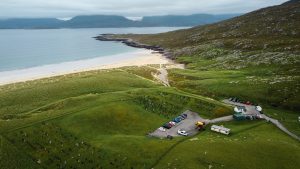
A long white-sand bay backed by cliffs; the Marneef Cave area has natural blowholes that fire seawater through holes in the rock when the swell is running — most dramatic during and just after Khareef. The cliff road west of Mughsail toward the Yemen border region is one of Oman’s better coastal drives. Half-day from the city.
⚠️ Yemen border region — stay within the established tourist areas
The Mughsail cliff road is worth doing. The land border with Yemen to the west is not. That border region carries active travel-advisory warnings; don’t drive toward the frontier.
🌿 Wadi Darbat — ~40 min northeast via the Ittin road
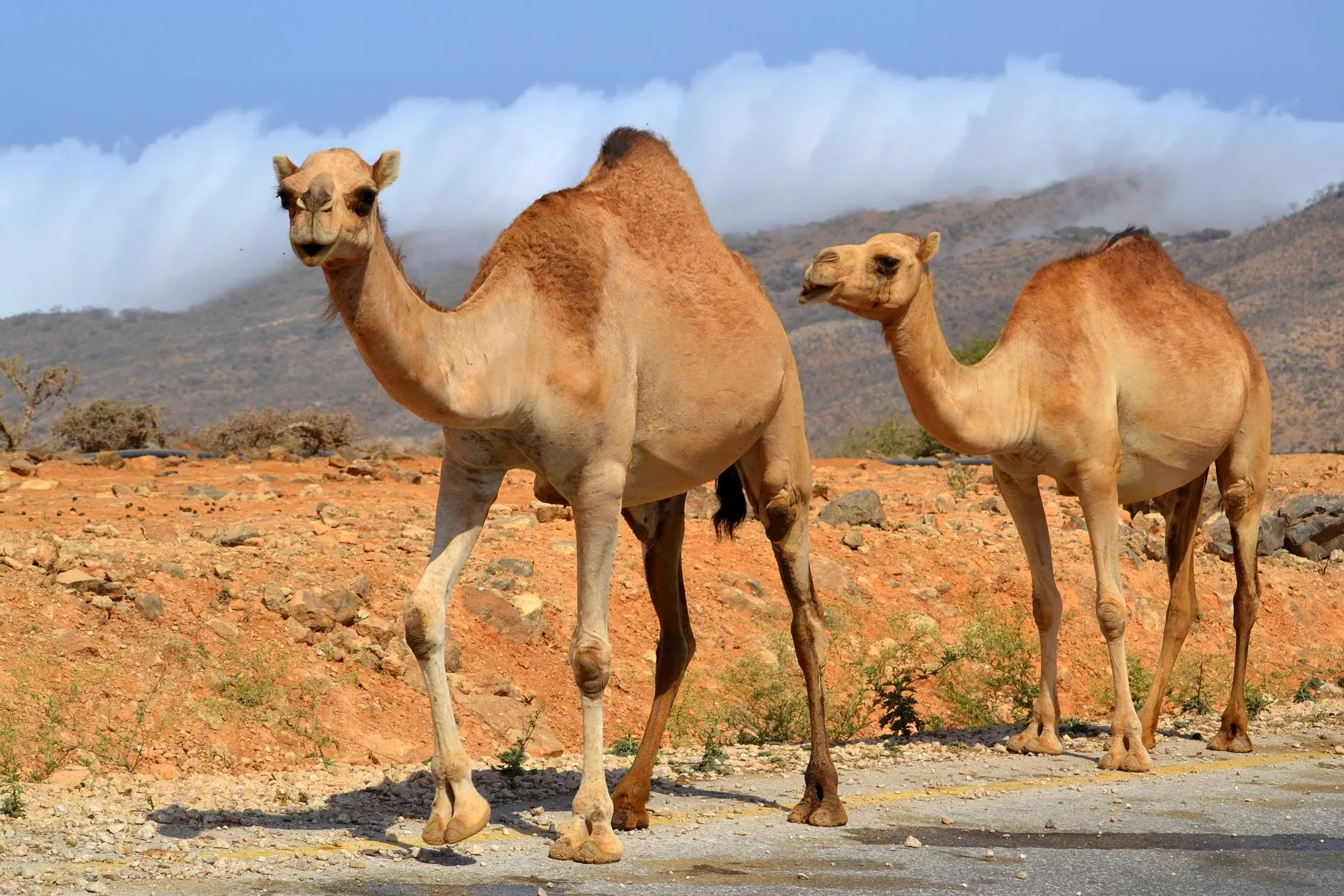
The Khareef headline sight: during and just after the monsoon, the wadi runs with waterfalls and fills green pools; short boat trips operate and camels graze among the greenery. Outside Khareef it’s a dry valley. The water is seasonal — plan this for late July through September if the falls are the reason you’re going.
⛰️ Tomb of Job (Nabi Ayub) — ~27–30 km / ~30 min, Ittin mountains
A pilgrimage site associated by tradition with the Prophet Job, set in the green hills above the coastal plain with long views toward the sea. Particularly atmospheric in the Khareef mist. Modest dress required; it’s an active religious site, not a viewpoint.
🏰 Taqah & Taqah Castle — ~33 km east / ~30 min
A coastal fishing town with a restored 19th-century fort open to visitors, good beaches, and a natural pairing with Wadi Darbat on an eastern day-loop.
🎪 Salalah Tourism Festival — 15 July to 31 August 2026
A heritage and family event running through the heart of Khareef: Dhofari music and traditional stick-and-sword dances, a frankincense and handicraft market with live resin demonstrations, food pavilions cooking local dishes, a funfair and heritage displays. It pulls large domestic and Gulf crowds, which is why hotels fill and prices climb in those weeks. Worth seeing if you’re already there for the monsoon; not a reason to make the trip on its own.
⏱️ Layover maths — be honest about what fits
🧮 Usable time formula
Total layover, minus ~30 min to clear immigration on arrival, minus ~90 min to be airside before an international departure (allow more in Khareef), minus the round-trip drive time. What’s left is what you actually have.
- 4–5 hours: Al Baleed (~10 min each way) is the only major sight that fits comfortably — clear immigration, taxi in, an hour at the ruins and museum, taxi back. Tight but workable.
- 6+ hours: Mughsail (40 min each way) becomes feasible, or Al Haffa souq combined with Al Baleed.
- Wadi Darbat, Job’s Tomb, the eastern loop: Not layover propositions. These require a half to full day, a car, and ideally an overnight. Don’t attempt them between flights.
If the layover is under four hours, or you arrive late at night, stay airside. The drive-in doesn’t pay back the immigration and re-security overhead.
🔧 Practical Notes
📡 SIM and Connectivity
The terminal has free Wi-Fi; fine for messaging, patchier for heavy use. For a local number, the two networks are Omantel and Ooredoo. Tourist packs as of 2026: Omantel’s Tourist Pack at OMR 5 for 10 days (2 GB plus local and international minutes, free WhatsApp); Ooredoo’s tourist tiers from ~OMR 5 (10 days, several GB) up to OMR 20 for a 20-day unlimited-data pack. You’ll need your passport to register the SIM — it’s a legal requirement. Buy at a network booth or authorised dealer. Coverage is strong in Salalah city and along the main roads; it thins out in the mountains and remote wadis.
💰 Money
ATMs at the airport and across town dispense rial and are reliable. Cards work in hotels, malls and larger restaurants; the souq, small cafés, taxis and roadside stalls run on cash. Keep small notes (1 and 5 rial) and remember the 1,000-baisa subdivision when reading prices.
🌊 Safety & Hazards
Oman has low violent and petty crime by regional standards; Salalah is quieter than Muscat. The real hazards are environmental: wet, misty mountain roads in Khareef; strong sea currents at some beaches (the open Indian Ocean swell is serious — heed local warnings before entering the water); and flash-flood risk in wadis during heavy monsoon rain.
🕌 Etiquette
Tipping isn’t mandatory: 5–10% in a sit-down restaurant where no service charge is added is appreciated, and rounding up for taxi drivers and tour guides is normal. Oman is conservative and religious; dress modestly away from resort pools — shoulders and knees covered, more so at religious sites like Job’s Tomb. Ramadan and prayer times affect shop and restaurant opening hours. Salalah is more traditional than Muscat.
💧 Water
Municipal tap water is treated and officially declared safe. The standard traveller practice is to drink bottled water (cheap and available everywhere), primarily to avoid mineral and pipe-delivery variability. Carry water on any day-trip; both the Khareef humidity and the dry-season heat warrant staying hydrated.
❓ FAQ
📊 At a Glance — SLL 2026
| Feature | Detail (2026) |
|---|---|
| Airport | Salalah International (SLL / OOSA) |
| Location | ~5.5 km northeast of Salalah, Dhofar Governorate; Ar Rubat Street |
| Terminal | Single terminal, opened 2015, 65,000 m², designed for ~2M pax (expandable to 6M) |
| Runway | One, 4,000 m, asphalt |
| Passengers | ~1.37M (2019); peak ~1.49M (2017) |
| Currency | Omani rial (OMR/RO), pegged 1 OMR = 2.6008 USD since 1986; 1 rial = 1,000 baisa |
| Notes in circulation | 100 & 200 baisa; 1, 5, 10, 20, 50 rial |
| Entry | Visa-free 14 days for 100+ nationalities; e-visa from OMR 5 (10-day) via evisa.rop.gov.om |
| Yellow fever | Required only if arriving from a transmission-risk country |
| Drones | CAA permit mandatory; tourist 1-month licence ~USD 70 via FlySerb platform, 15 days ahead |
| Airport taxi | Fixed published tariff, slip at the taxi office: OMR 7 one way to the city, OMR 10 to the resort strip |
| Rideshare | Otaxi (Yango) — ~OMR 3 reported airport to Hilton; no Uber or Careem |
| Pre-booked transfer | ~OMR 12–28 per car; many hotels offer pickups |
| Public bus | Mwasalat buses from a designated airport stand, roughly every 30 min |
| Rental car | Desks on arrivals floor; recommended for Dhofar day-trips |
| Lounges | Al Khareef by Oman Air (24h, Priority Pass, ~USD 60 walk-in); Majan Lounge (opposite gate 1B, 24h, not on Priority Pass, ~USD 40 walk-in) |
| Scheduled carriers | Nine on the airport’s Sep 2026 roster: Oman Air, SalamAir, flydubai, Air Arabia, Qatar Airways, flynas, Etihad, Air India Express, Jazeera Airways |
| New for 2026 | Etihad first-ever Abu Dhabi–Salalah from 21 May 2026 |
| Peak season | Khareef ~21 Jun–21 Sep; Salalah Tourism Festival 15 Jul–31 Aug 2026 |
| Al Baleed | UNESCO archaeological park + Frankincense Land museum, ~4.5 km / ~10 min from city |
| Mughsail Beach | ~40 km west / ~40 min; blowholes, cliff road |
| Wadi Darbat | ~40 min NE; seasonal Khareef waterfalls and pools |
| Job’s Tomb (Nabi Ayub) | ~27–30 km / ~30 min, Ittin mountains |
| Taqah Castle | ~33 km east / ~30 min; restored 19th-century fort |
| Tap water | Treated and officially safe; most visitors drink bottled |
| Tipping | 5–10% in restaurants where no service charge; discretionary for taxis and guides |