Asturias Airport (OVD) Airport Guide 2026 — Three Cities, One €9 Bus
Asturias Airport carries the code OVD, for Oviedo, and Aena puts it 47 km from Oviedo, 40 km from Gijón and 15 km from Avilés. That is the single most important thing to know before you book: the airport is not near any of the three cities it serves, and there is no railway station. What there is instead is one genuinely good bus — €9 to Oviedo or Gijón, €4.50 to Avilés, bank card accepted on board. Aena counted 2,051,342 passengers in 2025 through one terminal served by eight airlines and 27 destinations, of which Volotea alone flies 22. Spain is Schengen and the euro. Asturias is green Spain: mountains, cider and a coast that faces north.
Last verified: September 2026.
⚡ 2026 Quick Reference — Key Facts at a Glance
15 km to Avilés · 40 km to Gijón · 47 km to Oviedo (Aena). No rail link — Aena’s own “getting there” menu offers car, bus and taxi, and nothing else
Airport ↔ Avilés ↔ Gijón ↔ Oviedo, operated by Alsa, fares set by the regional transport consortium. €9 single from Oviedo or Gijón, €4.50 from Avilés or Castrillón, payable by bank card on board. Departures roughly hourly from the airport between 06:00 and 00:00 (Aena)
Aena states departure times may be held up to 15 minutes if an arriving flight is showing on the information panel when the bus is due to leave
€0.71/km daytime, minimum €4.34 · €0.85/km nights, weekends and holidays, minimum €5.21 (Decree 50/2026 of 13 July). Intercity journeys are contracted as closed-loop routes unless you agree otherwise — see section 3
Euro (€) — Spain is in the eurozone
OVD / LEAS — one terminal in the municipality of Castrillón, opened 1968. 2,051,342 passengers, 15,783 operations and 6.6 tonnes of cargo in 2025 (Aena)
8 airlines, 27 destinations — and Volotea operates 22 of them. Only two destinations are outside Schengen
One: the Picos de Europa VIP Lounge, floor 0 in the boarding area, 05:00–23:00 winter and summer, three-hour maximum stay. There is also an Aena Fast Lane, open 04:45–02:00
Schengen. EES fully operational since 10 April 2026 — biometrics on first entry
Not in operation. No applications are being collected and no launch date is published. The fee is fixed at €20
🏢 1. One Terminal, 27 Destinations, and a Code That Lies
Start with the geography, because it is the whole story.
Aena’s own introduction reads: “Asturias Airport is located in the town of Castrillón, 15 km from Avilés, 40 km from Gijón and 47 km from Oviedo.” Locally almost everyone calls the place Ranón, after a neighbouring village; Aena’s own history page places the site at Santiago del Monte, in the municipality of Castrillón, on the coast at an altitude of 126 metres. And the IATA code is OVD, for Oviedo, the regional capital — which is the furthest of the three cities it serves.
There is no single “city centre” here to be near. Asturias is a polycentric region of roughly a million people spread across three cities that ring the airport, and the airport was put in the middle of them. That is a rational decision that makes every individual journey longer than you expect. Budget 45 to 50 minutes to Oviedo or Gijón and about 25 minutes to Avilés, and do not treat this as a city airport.
The building, and how it got here
Commercial aviation in Asturias started in 1952, when Aviaco flew a Bristol 170 to Madrid from the military aerodrome at La Morgal near Oviedo. That field closed to commercial traffic in June 1963 and the region had no scheduled flights at all for five years. The present airport was announced open to national and international traffic on 11 June 1968, with a first — passenger-free — Iberia Fokker F.27 rotation from Madrid four days later. The whole thing cost barely 150 million pesetas, and the terminal was 2,600 square metres.
It has been rebuilt in stages since: the apron doubled in 1982, the terminal grew to 8,700 m² in 1994, and in 2003 Aena added a rapid-exit taxiway, brought ILS CAT II/III into service and extended the terminal with three boarding corridors. In 2012 came another 1,770 m² of terminal, a new baggage reclaim hall and — the detail that matters for section 2 — a new passport control post for international flights. The runway was resurfaced and re-lit with LEDs in 2021.
The CAT II/III instrument landing system is not a vanity item on this coast. Asturias gets Atlantic weather and sea fog, and the difference between a diversion to Santander and an on-time arrival is often exactly that equipment.
In 2025 the airport handled 2,051,342 passengers, 15,783 aircraft movements and 6.6 tonnes of cargo — Aena’s own numbers, and that cargo figure tells you freight is not a business here.
The honest criticism is commercial rather than structural. Aena’s directory lists six retail and catering units in the whole terminal: Aelia Duty Free, Relay, Exploring the World, Lavazza, La Pausa Restaurante and the Mahou Sport Bar. That is the entire offer. If your flight is delayed by three hours you will run out of airport well before you run out of time. Bring a book.
Who flies here, and the Volotea question
Aena’s live listing shows 8 airlines and 27 destinations, and the concentration is extreme:
- Volotea operates 22 of the 27, and Asturias is a base for it — Alicante, Barcelona, Brussels, Castellón, Fuerteventura, Gran Canaria, Granada, Ibiza, Jerez, Lanzarote, Lisbon, Madrid, Málaga, Menorca, Milan Bergamo, Porto, Palma, Paris Orly, Rome Fiumicino, Seville, Tenerife Sur and Valencia.
- Vueling — Barcelona, London Gatwick, Palma, Tenerife Norte.
- Iberia and Air Europa — Madrid.
- Binter Canarias — Gran Canaria and Tenerife Norte.
- KLM — Amsterdam. Lufthansa — Frankfurt. Aer Lingus — Dublin.
Two consequences. First, if you are connecting long-haul, your realistic options are Madrid with Iberia or Air Europa, Amsterdam with KLM, or Frankfurt with Lufthansa — and Madrid is the one with schedule depth. Second, a route map that is four-fifths one low-cost carrier is a volatile route map: Volotea adds and drops seasonal routes every year, so check the actual schedule for your dates rather than trusting a destination list. The aifly price-check tool is a quick way to see what is really flying and at what price.
Every carrier here except the flag airlines sells bags separately, and Volotea’s cabin rules are stricter than most people assume. Check before the gate: Volotea, Vueling, Iberia, Air Europa, Binter Canarias, KLM, Lufthansa and Aer Lingus — or compare them in the aifly baggage checker.
🛂 2. Schengen and the Euro — and the Two Routes That Aren’t
Spain is a Schengen member and a eurozone member. Those are two separate memberships and both are in your favour here: no internal border check when you arrive from another Schengen country, and euros out of the cash machine with no conversion.
Here is what makes Asturias unusual. Of the airport’s 27 destinations, exactly two sit outside Schengen: London Gatwick with Vueling and Dublin with Aer Lingus. Ireland is in the European Union but not in Schengen — it operates the Common Travel Area with the UK instead — so a Dublin flight is an external-border movement even though it is an EU flight. Everything else, from Amsterdam to Tenerife, is internal Schengen and nobody looks at your passport at all.
Practically, that means the passport post Aena installed in 2012 serves a couple of departures a day. On most days the border operation here is invisible. On the days the Gatwick and Dublin flights fall close together, a terminal built for domestic Spanish traffic gets a queue it was not designed for. If you are on either route, add twenty minutes.
EES, and what it costs you in time
The EU Entry/Exit System has been fully operational since 10 April 2026 — the European Commission’s Smart Borders page states it in those words. It replaced passport stamping at every Schengen external border. If you hold a non-EU passport, crossing now means registering your travel document, a facial image and fingerprints, together with the date and place of entry and exit.
The first crossing is the slow one: biometric enrolment takes a couple of minutes per person, and with a family that adds up. Later crossings are faster, because the system already holds your biometrics and only has to verify them. At a small airport with limited kiosk capacity this matters more than it does at Madrid — on a full Gatwick departure the enrolment queue is a real thing.
EES does not apply to EU, EEA and Swiss citizens, or to holders of a residence permit or long-stay visa for a Schengen state. So Irish passengers on the Dublin route are not enrolled; British passengers on the Gatwick route are.
ETIAS: status, not a date
ETIAS is not in operation. No applications for travel authorisations are being collected, and no launch date is published; the European Commission’s position is that the start will be announced several months ahead of go-live. When it does start the fee is €20, fixed by Commission Delegated Regulation (EU) 2025/1411, with applicants under 18 or over 70 and family members of EU citizens exercising free movement exempt from the fee — though still required to hold an authorisation.
Two things follow. First, do not go looking for it: you cannot apply, and nothing on your itinerary requires it today. Second, anybody selling you an ETIAS right now is selling you nothing. There is no valid authorisation to buy at any price, from any website, and paid “ETIAS application services” advertising a €7 or a €50 fee are equally worthless.
| Passport | Visa for a short stay? | EES applies? | ETIAS when it launches? |
|---|---|---|---|
| Spanish / EU / EEA / Swiss | No — freedom of movement | No | No |
| Irish | No — EU citizen | No | No |
| UK | No — 90 days in any 180 | Yes | Yes |
| USA / Canada / Australia / NZ / Japan | No — 90 days in any 180 | Yes | Yes |
| Third countries with a visa requirement | Schengen visa required | Yes — linked to the visa | Covered by the visa |
Money
Spain is in the eurozone, so there is no conversion and no bureau-de-change decision to make. Card acceptance across Asturias is excellent, including in small-town sidrerías and rural cafés, and contactless is universal. Two habits still pay: use a bank’s own ATM rather than a standalone machine in a tourist area, and always decline dynamic currency conversion — if a terminal offers to charge you in your home currency, say no and take euros.
Carry €20 or so in cash for village bakeries, the odd mountain refuge, and parking machines in the Picos.
🚌 3. The €9 Bus Is the Whole Answer
There is no train to Asturias Airport. There is one bus service, it is good, and it is the only thing most visitors need.
| Option | Time | Price | Notes |
|---|---|---|---|
| Bus to Oviedo | ~45–50 min | €9 single | Alsa. Bank card accepted on board |
| Bus to Gijón | ~50 min | €9 single | Same service; also stops at Piedras Blancas and Salinas |
| Bus to Avilés / Castrillón | ~25 min | €4.50 single | Half the price because it is a third of the distance |
| CONECTA card | — | Zone fares from €0.45; never more than €30 in a calendar month across all Asturias public transport | No supplement on the airport service. Personalised — realistically for residents and long stays |
| Taxi | 25–50 min | €0.71/km day, €0.85/km night/weekend/holiday; minimums €4.34 / €5.21 | Rank at the terminal. Read the closed-loop warning below |
| Car hire | — | Varies | Desks in the terminal. The right choice if the Picos are on your list |
How the bus actually works
The operator named on Aena’s own access page is Alsa, and the service links the airport with Avilés, Gijón and Oviedo, with intermediate stops at Piedras Blancas and Salinas on the Avilés and Gijón runs. Fares are set by the Consorcio de Transportes de Asturias, the regional transport consortium, which is why they are the same whichever operator’s bus turns up.
Aena states departures from the airport run approximately every hour between 06:00 and midnight, and adds a genuinely useful detail: those times may be held for up to 15 minutes if information about an arriving flight is showing on the information panel when the bus is due to leave. In other words, the bus waits for late arrivals — within reason. Aena also tells you to confirm exact times with Alsa, which is the right advice, because an hourly service is one you can miss by five minutes.
The fare, from the Consorcio’s own published FAQ: €9 per trip from Oviedo or Gijón, €4.50 per trip from Avilés or Castrillón, and the single ticket can be paid with a bank card on board. That last point removes the usual airport-bus anxiety about exact change, and it is not universal in Spain.
The CONECTA card, and why it probably is not for you
Asturias has an unusually generous transport card. CONECTA charges by the number of zones you cross — from €0.45 for one zone up to €4.34 for eight — and then applies a hard ceiling: once your travel in a calendar month reaches €30, every further journey that month is free, on any number of zones. If you spend less than €30 you pay only what you used; there is no monthly minimum. It works on every urban and interurban bus in the Principality and on the whole RENFE/FEVE rail network, and it carries no supplement on the airport service, so a €9 airport run counts towards that cap. The card itself costs €2, deducted from your first top-up, and €5 to replace.
The catch is that it is personalised: issued in your name against your ID, non-transferable, and using someone else’s is a finable offence. That makes it excellent for a resident or a month-long stay and impractical for a three-day trip. Large families get 20% or 50% off, with the ceiling falling to €24 or €15.
One important exclusion, which catches walkers: the card is not valid on the Lagos de Covadonga shuttle, the single Consorcio service left out because it is sold as a daily tourist ticket. Nor is it valid on interprovincial coaches run under state authority, even where they stop inside Asturias.
About that taxi
There is a rank at the terminal, but read the official tariff before you use it. Asturias intercity taxi fares are set by decree — currently Decree 50/2026 of 13 July — at €0.71 per kilometre daytime with a €4.34 minimum and €18.29 per hour of waiting, and €0.85 per kilometre at the night and holiday rate with a €5.21 minimum and €21.96 an hour waiting. The night rate runs 22:00 to 07:00 on weekdays, from 15:00 on Saturdays, and for the full 24 hours from midnight on Sundays and public holidays — which covers most flights people actually book. At those rates, a 47 km run to Oviedo is a lot of metered distance before anything else is added.
And there is a clause worth knowing. Aena publishes the terms in full, and they state that intercity services are contracted on a full-car basis and that journeys are understood to be closed-loop routes back to the point of departure, via the shortest route, unless expressly agreed otherwise. Read that plainly: you can be charged for the driver’s return leg. Agree the total in advance, in writing on your phone if you need to. The listed fares are maximums and can be reduced by agreement, and every vehicle carries a complaints book.
Local radio-taxi numbers, from Aena: Castrillón (+34) 985 502 121 · Soto del Barco (+34) 985 586 363 · Pravia (+34) 985 820 808 · Gozón (+34) 985 883 333.
Against a €9 bus that takes cards and waits for delayed flights, the taxi is a poor deal unless you are three people with luggage at 02:00. Which brings us to the real recommendation: if the mountains are on your itinerary, hire a car at the airport. Not to reach the city — the bus does that better — but because the Picos de Europa without a car is a logistical exercise you do not want.
🛋️ 4. One Lounge, Six Shops, and a Three-Hour Rule
Asturias has exactly one lounge: the Picos de Europa VIP Lounge, on the terminal’s ground floor (floor 0) in the boarding area, past security. Aena lists it as open 05:00 to 23:00 in winter and 05:00 to 23:00 in summer — the same hours all year, which covers effectively the whole operating day. Telephone (+34) 985 127 493.
Access is free to holders of business-class tickets and club cards with associated airlines; everyone else pays at the door, in cash or by card, and Aena also sells passes through its own channels, valid three months from purchase. One rule catches people out: the maximum scheduled stay is three hours immediately before your scheduled departure time. Turn up four hours early and you will be turned away for the first hour. Inside there is a reception service, catering, Wi-Fi, work areas, press and magazines, television, flight information, step-free access, and animals are permitted.
Fast Lane is sold separately: a QR-based priority channel to the security checkpoint, open 04:45 to 02:00, valid three months from purchase, and included for business-fare and associated-loyalty passengers on some airlines — confirm with your carrier rather than buying it twice. Note that it skips the queue, not the screening, and it does not exempt you from your airline’s check-in deadlines. Buy it only through official Aena channels.
Free Wi-Fi is the Airport Free Wifi Aena network. You get 15 minutes of free internet to confirm your email address, after which access has no time limit — better than most European airports, which cut you off at an hour.
Is the lounge worth paying for? Usually not. Asturias is a small, calm terminal where the walk from security to gate is a couple of minutes and the seating is adequate. The case for it is a summer Saturday when two Volotea departures and the Gatwick flight overlap, or an early Madrid connection when you want breakfast sitting down before the bar fills. Otherwise the Mahou Sport Bar does the job.
🍽️ 5. Cider, Cabrales, and Why You Should Not Eat at the Airport
Airport catering here is two counters and a restaurant. It is fine. It is also unnecessary, because you are landing in one of the best eating regions in Spain and the bus takes 45 minutes.
Cider is the point. Sidra is less a drink in Asturias than a social operating system, and UNESCO inscribed “Asturian cider culture” on the Representative List of the Intangible Cultural Heritage of Humanity in 2024 — the whole complex of orchards, native apple varieties, presses, cider houses and the serving ritual. That ritual is the escanciado: the pourer holds the bottle overhead and the glass at hip height and pours a thin stream from a height so the cider aerates on impact. You get a culín, a couple of fingers in the bottom of a wide glass, and you drink it immediately, while it is still alive. Then you tip the last drop on the floor. That is not littering; it is rinsing the glass, which is shared.
Do not order a pint of cider. Do not sip it. Do not ask for it cold and fizzy — Asturian natural cider is still, cloudy and slightly sour, and it is meant to be.
The other three things to eat:
- Fabada asturiana — white beans stewed with chorizo, morcilla and pork. It is enormous. Order it at lunch, not dinner, and cancel your plans for the afternoon.
- Cabrales — a blue cheese ripened in limestone caves in the Picos de Europa and protected by its own Denominación de Origen. It is aggressive in a way that supermarket blue cheese is not. Try it before you commit to a whole wedge.
- Arroz con leche — Asturian rice pudding, torched to a caramel crust. Every sidrería has it and it is always good.
What to buy, and where
Aelia Duty Free at the airport carries the standard range. Skip it. The things worth carrying home from Asturias are a bottle of DOP Sidra de Asturias, a vacuum-packed piece of Cabrales, and fabes — the dried beans themselves, which cost little and travel perfectly.
All three go in checked baggage: cider is a liquid and the cheese will not thank you in a cabin bag. If you are flying Volotea or Vueling on a hand-baggage-only fare, that is a decision to make before you shop — the baggage checker will tell you what your ticket actually includes.
💡 6. Insider: Which City, and the Mountains Behind Them
The airport sits between three cities and most visitors have to pick one. They are genuinely different.
Oviedo is the capital and the cultural one: a compact, prosperous, walkable old town, and the reason Asturias has a UNESCO World Heritage listing. The Monuments of Oviedo and the Kingdom of the Asturias were inscribed in 1985 and extended in 1998, and they preserve something rare — a pre-Romanesque architecture invented in a small Christian kingdom in the 9th century, before the Romanesque existed. Santa María del Naranco, built for King Ramiro I in the 840s as a royal hall and later used as a church, is the one to see: two storeys, open arcaded galleries at both ends, and a sophistication that looks two centuries out of place. San Miguel de Lillo is next door. Both sit on a hillside a short taxi ride above the city.
Gijón is the biggest city, on the sea, with a working port, a beach in the middle of town and the old fishermen’s quarter of Cimadevilla on the headland. It is the better base if you want a city with a coastline attached, and the livelier place to eat at night.
Avilés is closest at 15 km, has a handsome arcaded old town most people skip, and is where to stay if you have an early flight.
The mountains are the reason to come
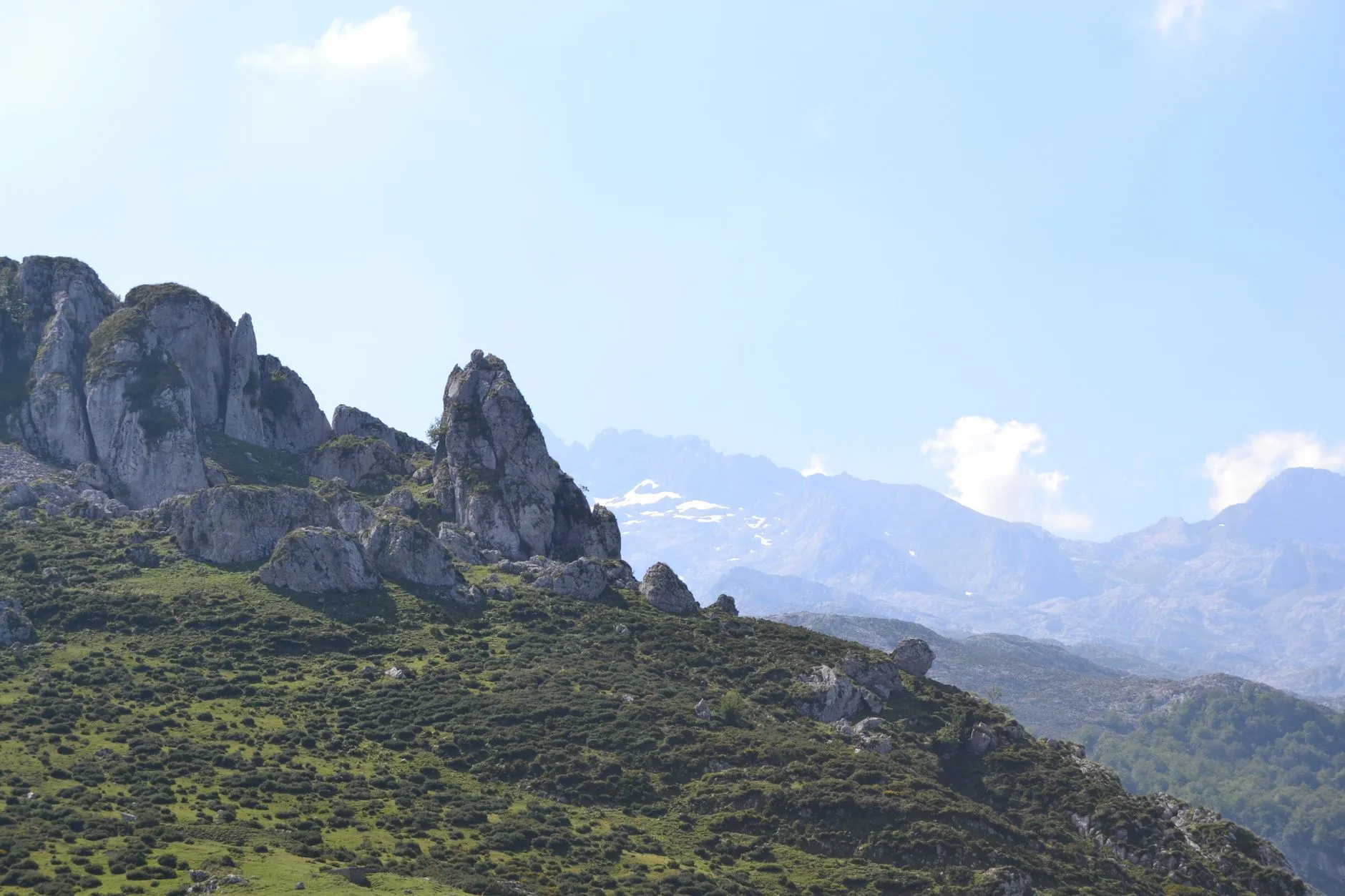
The Picos de Europa are the point of Asturias, and they start roughly 60 to 100 km south-east of the airport depending on which valley you enter. This was Spain’s first national park, created in 1918 as the Montaña de Covadonga National Park around the Lagos de Covadonga, and later expanded into the modern Picos de Europa park spanning Asturias, Cantabria and Castilla y León.
The single best day out is the Ruta del Cares, a path cut into the wall of the Cares gorge between Poncebos in Asturias and Caín in León — roughly 11 km each way. It is a there-and-back walk unless you arrange transport at the far end, so most people do part of it and turn round. It is exposed, spectacular, and busy in August.
Two practical notes. The Lagos de Covadonga road is closed to private cars in peak periods and served by a shuttle instead — and that shuttle is the one Consorcio service the CONECTA card explicitly does not cover, because it is sold as a daily tourist ticket. And the weather up there is Atlantic, not Mediterranean: it rains, including in July.
When to go
Asturias is called España verde because it is green, and it is green because it rains. June and September are the sweet spot — long days and the Picos passable without August’s crowds. Winter is mild at sea level and genuinely alpine forty kilometres inland.
If you can move your dates, aim at a Sunday lunch in a sidrería, which is the most Asturian thing available to a visitor. Book it. Then take the €9 bus back.
The honest verdict on this airport
OVD is a small, calm, competently run terminal with one lounge, six shops, no rail link and a code that names the city it is furthest from. Eight airlines, twenty-seven destinations, and four-fifths of them flown by Volotea, which means the route map you find next spring may not be the one you found this autumn.
None of that matters much, because the €9 bus solves the airport’s only real problem, and everything worth coming for — the pre-Romanesque churches, the cider houses, the Cares gorge, the Cabrales caves — is between 15 and 100 km inland. Fly here for Asturias. Do not fly here expecting a hub.
❓ Frequently Asked Questions
📊 2026 Summary Data Table
| Category | Detail |
|---|---|
| Airport | Asturias Airport, operated by Aena; locally called “Ranón” |
| IATA / ICAO | OVD / LEAS |
| Location | Santiago del Monte, municipality of Castrillón, on the coast at 126 m altitude |
| Distances | Avilés 15 km · Gijón 40 km · Oviedo 47 km (Aena). No rail link |
| Opened | 11 June 1968, after La Morgal near Oviedo closed to commercial traffic in 1963 |
| Terminal | One terminal, three boarding corridors (2003), new baggage hall and international passport post (2012), runway resurfaced and LED-lit (2021) |
| Approach | ILS CAT II/III since 2003 — which matters on a coast that gets sea fog |
| Passengers 2025 | 2,051,342, with 15,783 operations and 6.6 tonnes of cargo (Aena) |
| Airlines / destinations | 8 airlines, 27 destinations (Aena). Volotea flies 22 of them |
| The other seven | Vueling (Barcelona, London Gatwick, Palma, Tenerife Norte) · Iberia and Air Europa (Madrid) · Binter Canarias (Gran Canaria, Tenerife Norte) · KLM (Amsterdam) · Lufthansa (Frankfurt) · Aer Lingus (Dublin) |
| Connecting options | Madrid (Iberia / Air Europa), Amsterdam (KLM), Frankfurt (Lufthansa) |
| Non-Schengen routes | Only two: London Gatwick and Dublin |
| Bus | Alsa, airport ↔ Avilés ↔ Gijón ↔ Oviedo, also stopping at Piedras Blancas and Salinas. €9 from Oviedo/Gijón, €4.50 from Avilés/Castrillón, card accepted on board |
| Bus frequency | Roughly hourly from the airport, 06:00–00:00 (Aena); departures may be held up to 15 minutes for an arriving flight |
| Transport card | CONECTA — zone fares €0.45–€4.34, capped at €30 in a calendar month across all Asturias transport, no airport supplement. €2 to issue, personalised, ID required. Not valid on the Lagos de Covadonga shuttle |
| Taxi tariff | €0.71/km day (min €4.34, waiting €18.29/h) · €0.85/km night, weekend and holiday (min €5.21, waiting €21.96/h), Decree 50/2026 of 13 July. Night rate 22:00–07:00 weekdays, from 15:00 Saturdays, all day Sundays and holidays. Closed-loop clause applies — agree the total first |
| Lounge | Picos de Europa VIP Lounge, floor 0 in the boarding area, 05:00–23:00 year-round, three-hour maximum stay, (+34) 985 127 493 |
| Fast Lane | Aena priority security access, 04:45–02:00, valid 3 months from purchase, free on some business fares. Buy only through official Aena channels |
| Wi-Fi | Airport Free Wifi Aena — 15 minutes to verify your email, then no time limit |
| Retail / catering | Six units: Aelia Duty Free · Relay · Exploring the World · Lavazza · La Pausa Restaurante · Mahou Sport Bar |
| Currency / border | Euro (€), Spain in the eurozone · Schengen · EES fully operational since 10 April 2026 · ETIAS not in operation, no applications collected, no date published, fee set at €20 |
| Region | Oviedo’s pre-Romanesque UNESCO monuments (1985, extended 1998) — Santa María del Naranco, San Miguel de Lillo · Gijón and Cimadevilla · Picos de Europa, Spain’s first national park (1918) · the Ruta del Cares · Asturian cider culture, UNESCO intangible heritage, 2024 · Cabrales DO · fabada |