Sibiu International Airport (SBZ) Airport Guide 2026 — Three Kilometres From Everything
Sibiu’s airport sits 3 km from the city centre on its own technical data sheet, which is close enough that the taxi meter barely gets started and the whole airport-transfer problem more or less evaporates. It handled 694,805 passengers in 2025, its best year since 2019, on a single 22,400 m² terminal and a 2,630-metre runway. Wizz Air flies almost everything scheduled; Austrian Airlines runs Vienna. Romania has been a full Schengen member since 1 January 2025 but it is not in the eurozone — you will be spending Romanian lei. This is the front door to Transylvania’s best-preserved medieval city and to the Făgăraș mountains behind it.
Last verified: September 2026.
⚡ 2026 Quick Reference — Key Facts at a Glance
Tursib line 21, “Aeroport – Gară”, from the Aeroport 1 stop out on Șoseaua Alba Iulia. 20 minutes to the railway station, 13 minutes to Casa Armatei at the edge of the old town. 17 departures Mon–Fri, 05:15 to 23:20; 9 on Saturday and Sunday. 3.50 lei (≈ €0.67)
Line 11 only, from the covered Aeroport Terminal stop built into the airport building — and it runs just 9 times a day Mon–Fri and 4 times at weekends. It is a factory shuttle that happens to call here. Do not plan a flight around it
Rank immediately outside arrivals, left-hand side. Sibiu City Hall caps the distance tariff at 4.50 lei/km including VAT (Local Council Decision 321/2022). No taxi waiting? The information desk orders one free
Romanian leu (RON) — Romania is in the EU and in Schengen but not in the eurozone. ECB reference rate, 4 September 2026: €1 = 5.2530 RON. Check the current rate before you convert
Two Euronet ATMs (24/7) and one BCR multifunction machine, all in the public area. Euronet machines are the independent kind — see section 2 before you use one
SBZ / LRSB — Aeroportul Internațional Sibiu, Șoseaua Alba Iulia 73. 300 ha site, 22,400 m² terminal, runway 2,630 × 45 m east–west, ILS CAT II, 15 aircraft stands, altitude 443 m
Wizz Air (Dortmund, Karlsruhe/Baden-Baden, London Luton, Madrid, Memmingen, Nürnberg, Rome — the airport also keeps a Milan Bergamo page) and Austrian Airlines (Vienna). Plus a summer charter programme
One Business Lounge, 250 m², 55 seats, in the Schengen departures zone. Priority Pass and LoungeKey, or €30 by card. Open daily from the first flight to the last
Duty free, a gift shop, a Relay and vending machines. No restaurant. The one café is landside, in the check-in hall
Schengen since 1 January 2025. EES fully operational since 10 April 2026. The terminal has a separate non-Schengen departures zone — Luton, Larnaca, Antalya, Hurghada and Monastir all use it
Not in operation. The Commission states no applications are being collected. The fee is set at €20
🏢 1. One Terminal, Two Departure Zones, and a Runway That Fits
Sibiu is a single-terminal airport of the kind where you can see the security queue from the front door, and that is the whole appeal. The airport’s own infrastructure sheet gives the shape of it: a 300-hectare site, a 22,400 m² passenger terminal, ICAO reference code 4C, and runway 09/27 at 2,630 metres by 45, oriented east–west, with CAT II lighting and ILS CAT II and 15 stands for category B, C and D aircraft. Stated capacity is one aircraft every three minutes; the field sits at 443 metres, which is worth knowing in January. It is a runway sized precisely for the narrowbodies that actually fly here and no more.
Check-in is in front of the main terminal entrance on the departures side, and the airport recommends arriving at least two hours before an international departure. The information desk sits in the public area near check-in, staffed 24/7 (+40 372 055 861), with announcements in Romanian and English.
The structural quirk to know before you arrive is that Sibiu has two separate departure zones — Schengen and non-Schengen, and the split decides whether you can reach the lounge and whether there is anything to eat. Section 4 covers that.
The traffic
From the airport’s own published statistics, total passengers in traffic:
| Year | Passengers | Year | Passengers |
|---|---|---|---|
| 2017 | 496,406 | 2022 | 621,514 |
| 2018 | 662,468 | 2023 | 550,397 |
| 2019 | 729,160 | 2024 | 573,918 |
| 2020 | 226,451 | 2025 | 694,805 |
| 2021 | 280,644 |
Sibiu’s peak year is still 2019, not 2025: last year’s 694,805 is the best result since the pandemic but sits about 34,000 short of the old high-water mark, so anyone calling this a record airport is wrong. The dip in 2023 and the two years of recovery since mark it as a route-network airport rather than a catchment one — when a carrier trims a schedule here, the numbers move immediately.
Aircraft movements in 2025 totalled 7,733, of which 5,904 were commercial — roughly sixteen a day, eight in and eight out. This is not an airport with another flight in an hour if you miss yours.
Who flies here
The airport’s own 2026 route pages give the scheduled network:
- Wizz Air — Dortmund, Karlsruhe/Baden-Baden, London Luton, Madrid, Memmingen, Nürnberg and Rome. The airport also keeps a live destination page for Milan Bergamo, so check the board rather than assuming a fixed list.
- Austrian Airlines — Vienna. This is the connecting route: a Star Alliance hub with a global network, flown by a Lufthansa Group carrier. If Wizz does not go where you are going, this is how you get there.
One caution. The same airport page that lists those routes also claims the network reaches “14 international destinations”, and its own printed list does not add up to fourteen. Trust the list and the departures board, not the headline count.
The summer 2026 holiday programme is charter-operated. The airport’s page announces eight destinations with 17 weekly frequencies, then prints a table of six:
| Destination | Season | Days |
|---|---|---|
| Antalya (Turkey) | May – September 2026 | Mon, Tue, Fri, Sat |
| Hurghada (Egypt) | April – October 2026 | Tue, Thu |
| Heraklion, Crete (Greece) | June – September 2026 | Tue, Wed |
| Larnaca (Cyprus) | June – September 2026 | Sunday |
| Monastir (Tunisia) | June – September 2026 | Tuesday |
| Palma de Mallorca (Spain) | June – September 2026 | Friday |
These are package flights: you buy them from a Romanian tour operator or a Sibiu travel agency, both of which the airport lists, rather than from a comparison site.
Baggage is where the fare on almost every route here stops being the fare. Check the allowance before you book: Wizz Air and Austrian Airlines publish very different rules, and you can compare them side by side with the aifly baggage fee checker. Price the fare itself with the aifly flight price checker.
🛂 2. Schengen Since 2025, EES Live, and Why Your Money Is Not the Euro
Two facts, and they are not the same fact.
Romania is a full Schengen member. The European Commission’s own Schengen page records Bulgaria and Romania as “the last countries to join on 1 January 2025”, bringing the area to 29 countries — 25 EU member states and 4 non-EU (Iceland, Norway, Switzerland and Liechtenstein). Fly in from Vienna, Rome, Madrid, Dortmund, Nürnberg, Memmingen or Karlsruhe and you walk off the aircraft and out. There is no passport desk on those routes.
Romania is not in the eurozone. The currency is the Romanian leu (RON), plural lei. At the ECB reference rate of 4 September 2026, €1 was worth 5.2530 RON. The leu is managed against the euro and moves slowly, so that figure is a good working number — but check it before you convert anything you care about. It is also what makes a 3.50-lei bus ticket about 67 euro cents.
Where the border still bites at Sibiu
Sibiu’s terminal has a non-Schengen departures zone with its own duty-free shop and vending machine, and it exists because a real slice of this airport’s traffic still crosses an external border:
- London Luton — the UK is outside both the EU and Schengen.
- Larnaca — and this is the one that catches people. Cyprus is in the EU but not in Schengen. The Commission’s arithmetic gives it away: 27 EU states, 25 of them in Schengen. Cyprus and Ireland are the two that are not.
- Antalya, Hurghada and Monastir — Turkey, Egypt and Tunisia, all external.
Everything else — Vienna, Rome, Milan, Madrid, Dortmund, Nürnberg, Memmingen, Karlsruhe, Heraklion, Palma — is internal Schengen and involves no border formality whatsoever.
EES: what it is and who it applies to
The EU Entry/Exit System became fully operational on 10 April 2026. The Commission’s own wording: “As of 10 April 2026, the EES replaces the stamping of passports allowing the automatic detection of overstayers.” It went live progressively from 12 October 2025 and reached full operation on that April date.
What it records: your name, travel-document data, biometric data — fingerprints and a captured facial image — and the date and place of each entry and exit. It also records refusals of entry. First crossing takes the biometrics; later ones are a faster check against the record you already have.
Who it applies to: non-EU nationals on short stays. EU citizens are not registered. That matters at Sibiu, because the overwhelming majority of passengers on the Antalya, Hurghada and Monastir charters are Romanian — EU, and invisible to EES. The route where EES genuinely adds time is the London Luton service. Arriving from Luton on a non-EU passport for the first time since April, allow extra minutes at the desk.
ETIAS
ETIAS is not in operation. The European Commission states, in these words, that it “is currently not in operation and no applications for travel authorisations are collected at this point”, and that the EU “will inform about the specific date for the start of ETIAS several months prior to its launch.” The fee has been set at €20, up from the €7 originally proposed. There is nothing to apply for and nothing to pay, and nobody can sell you a valid Romanian ETIAS today — any website offering to is selling a form it cannot file. Schengen visa rules are unchanged: if you needed one before, you need one now and it is valid for Romania; if you are visa-exempt, you are visa-exempt here for 90 days in any 180.
Money: three specific ways to lose some at this airport
The airport’s public area has two Euronet ATMs, available 24/7, plus one BCR multifunction machine whose full function list — including euro and dollar exchange — is restricted to holders of a physical BCR card. That is the entire cash infrastructure. Three rules:
- Euronet machines are independent operators, not a Romanian bank’s own. They charge their own withdrawal fee and push dynamic currency conversion hard. If you can wait until town, a BCR, BRD, Banca Transilvania or ING machine will usually cost you less.
- Always refuse dynamic currency conversion. Any terminal or ATM offering to bill you “in your own currency” is quoting a rate it chose. Choose lei, every time.
- Carry a little cash in lei. Cards work almost everywhere in Sibiu, including the contactless readers on Tursib buses — but the ticket machine at the airport’s own bus stop takes cash in lei only. Twenty lei covers it.
🚌 3. Bus 21, Not Bus 11 — the Counter-Intuitive Answer
Sibiu has a genuine curiosity: the bus that stops at the terminal door is almost useless, and the bus that stops out on the main road is the one you want. Get this the wrong way round and you will stand in a covered shelter watching nothing arrive.
The two stops, and why line 11 is a trap
AEROPORT TERMINAL is built into the airport building on the arrivals side — Tursib calls it integrated and covered, so you can wait with bags in bad weather. It is served by line 11 and nothing else. AEROPORT 1 / AEROPORT 2 sit out on Șoseaua Alba Iulia, which the airport describes as “in the proximity of the airport, on the main route of the Tursib lines”, and between them take lines 11, 21, 24, 112, 116, 117, 118, 217 and 510.
Line 11 runs Cartierul Primăverii – AUMOVIO: a shift bus to the industrial park past the airport that calls at the terminal on the way. Tursib’s timetable for the Aeroport Terminal stop, towards the city, shows exactly nine departures Monday to Friday — 08:39, 09:10, 09:56, 10:41, 11:13, 12:01, 13:30, 18:20, 21:38 — and four at weekends: 11:55, 14:35, 15:55, 18:35. Nothing before 08:39 on a weekday, and nothing at all between 13:30 and 18:20. If your flight lands at 15:00 on a Wednesday, the covered stop at the door will not help you.
Line 21 is the answer
Line 21 is signed “Aeroport – Gară” and runs between the airport and Sibiu’s main railway station via Piața Unirii. From the Aeroport 1 stop it has 17 departures Monday to Friday, from 05:15 through to 23:20, and nine on Saturday and Sunday. The journey times are unusually clean, because the published timetable is identical run to run: 13 minutes to Casa Armatei, the stop at the edge of the historic centre that most visitors want, and 20 minutes to the railway station — every service from the 05:15 to the 23:20 booked at exactly twenty.
Both for 3.50 lei, about 67 euro cents. It is the single best thing about arriving here.
Tickets, and the one place a card will not work
Tursib’s published fares:
- 3.50 lei — internal single, valid 60 minutes within one town.
- 7 lei — one-day pass, unlimited.
- 24 lei — seven-day pass, unlimited. If you are here for a week, this is the right answer.
- 12 lei / 21 lei return — the Păltiniș mountain route (line 22), which is priced separately.
Buy from the ticket machine in the waiting area at the airport terminal stop — cash in lei only — from the contactless readers on board with a bank card, in the SibiuBus app, or at Tursib agencies and street machines. Validate every time you board: yellow machines take QR codes and Tursib cards, orange machines take paper tickets.
Taxis, cars and parking
The taxi rank is immediately outside the terminal on the left-hand side of arrivals. Sibiu City Hall caps the maximum distance tariff at 4.50 lei per kilometre including VAT, under Local Council Decision 321/2022, in force since 1 September 2022. Use only metered cars displaying their licence and tariff, and keep the receipt. If no taxi is waiting, the information desk orders one at no charge. No flat fare to the centre is published and we are not going to invent one; at the capped rate the distance element of a 3 km ride works out around 13.50 lei, roughly €2.60, before the meter’s boarding charge.
Car hire desks are in arrivals: Enterprise, Europcar, PriceCarz, Rental Car Center, RENTZZ and Sixt, all listing 24/7 reservations. If your trip involves the mountains — and it should — this is not optional, because no bus goes there.
Parking: over 300 spaces, barcode-ticket system. The airport’s published tariff:
| Duration | Price |
|---|---|
| First 10 minutes | Free |
| 10 minutes – 2 hours | 15 lei |
| 3 – 6 hours | 30 lei |
| 7 – 24 hours | 50 lei |
| 2 days | 100 lei |
| 3 – 7 days | 180 lei |
| 8 days | 230 lei |
| 9 – 15 days | 350 lei |
| Over 15 days | 350 lei + 15 lei/day |
A week is 180 lei, about €34. Note the airport’s own unusually blunt warning: it does not guard the car park or provide video surveillance of vehicles — the cameras cover passenger flows only — and it accepts no liability for damage or theft. Leave nothing visible. Access moved on 8 February 2024 to the roundabout on Șoseaua Alba Iulia at the junction with Strada Europa Unită, worth knowing if your satnav is old.
| Option | Destination | Price | Time |
|---|---|---|---|
| Tursib line 21 (from Aeroport 1) | Railway station (Gară) | 3.50 lei (≈ €0.67) | 20 min · 17/day Mon–Fri, 05:15–23:20 |
| Tursib line 21 (from Aeroport 1) | Casa Armatei, edge of the old town | 3.50 lei | 13 min |
| Tursib line 11 (from Aeroport Terminal) | Towards the city | 3.50 lei | 9 departures Mon–Fri, 4 at weekends. Avoid |
| Taxi | City centre | Distance tariff capped at 4.50 lei/km incl. VAT; no published flat fare | A few minutes |
| Car hire | Anywhere | Enterprise · Europcar · PriceCarz · Rental Car Center · RENTZZ · Sixt, arrivals, 24/7 | Essential for the mountains |
| Parking | On site | 10 min free · 7–24 h 50 lei · 3–7 days 180 lei | 300+ spaces, unguarded |
🛋️ 4. One Lounge, €30, and the Zone Problem
Sibiu has one Business Lounge, opened with Lagardère Travel Retail. It is 250 m² with 55 seats, and it opens daily, from the first flight to the last — no fixed hours, no advance booking, which is a better arrangement than most regional airports manage. Inside: a relaxation area, high-speed internet, flight information, charging points, and a food offer of speciality coffee, tea, hot and cold drinks, snacks, sandwiches, salads and desserts.
Access is by Priority Pass or LoungeKey card, or by paying €30 by card at the door. Thirty euros is a lot for a 250 m² room at a regional airport; on a Priority Pass you already hold, it is free and it is the only comfortable seating in the building.
Here is the catch. The airport places the Business Lounge in the Schengen departures zone. If you are flying to London Luton, Larnaca, Antalya, Hurghada or Monastir, you clear into the non-Schengen departures zone, where the airport’s own retail table lists exactly two things: a Best Value duty-free shop and a 24/7 Relay vending machine. Before you plan an airside meal or a lounge visit on one of those flights, ask at the information desk — on the face of the airport’s own documentation, you cannot get there.
Wi-Fi is free throughout the terminal. On left luggage, the airport’s passenger pages cover baggage and lost baggage but list no left-luggage office; ask the information desk rather than assuming.
🍽️ 5. Eleven Units, No Restaurant, and What to Eat in Sibiu Instead
The complete commercial offer at Sibiu, from the airport’s own table, is eleven units — and once you split them across three zones, the picture gets thin fast:
| Zone | Units |
|---|---|
| Public arrivals | Hub Convenience (flight hours) · Crew Shop (10:00–18:00) · Relay drinks & snacks vending (24/7, card only) |
| Public check-in area | Café point (flight hours) |
| Public departures flow | Relay (flight hours) |
| Schengen departures | Best Value Duty Free · Art & Craft · Relay · Relay vending (24/7, card only) |
| Non-Schengen departures | Best Value Duty Free · Relay vending (24/7, card only) |
There is no restaurant anywhere in this airport. The one café — Café point — is landside in the check-in hall, before security; everything airside is a shop, a newsagent or a vending machine. Defensible for sixteen commercial movements a day, still worth knowing before a 06:00 departure. Eat in the city, twenty minutes and 3.50 lei away.
What to eat, and what to take home
- Ciorbă de burtă — sour tripe soup with cream, a whole hot chilli and a smashed garlic clove on the side. If tripe is a bridge too far, ciorbă de fasole cu afumătură, sour bean soup with smoked pork, does the same job.
- Sarmale — cabbage rolls of pork and rice slow-cooked with smoked meat, served with mămăligă and sour cream. The dish to judge a kitchen by.
- Bulz — polenta baked with sheep’s cheese and usually a fried egg. It is what the shepherds of Mărginimea Sibiului actually eat.
- Brânză de burduf and telemea — the sheep cheeses of the villages immediately south of the city. Buy them in the Cibin market hall, not at the airport.
- Papanași — fried doughnuts with sour cream and sour-cherry jam, plate-sized and not shareable whatever the menu implies.
- Salam de Sibiu — the dry-cured, mould-ripened winter salami that carries the city’s name. Every Romanian supermarket sells it, at a fraction of duty-free prices.
- Țuică and palincă — plum spirit, the second roughly twice the strength.
Sibiu was European Capital of Culture in 2007, jointly with Luxembourg and the first city in South-Eastern Europe to hold the title, and Michelin’s Green Guide gives it three stars — its maximum, and the highest rating it has awarded any city in Romania.
💡 6. Insider: The Squares, the Bridge That Collapses If You Lie, and the Mountains Behind
Why the city is shaped like this
Sibiu was colonised after the middle of the 12th century by Saxon settlers from the Rhine–Moselle lands and first appears in the documents in 1191 as Cibinium. From 1366 it was Hermannstadt; since 1919, Sibiu. It was the capital of Transylvania from 1692 to 1791 and again from 1850 to 1867, and it is, on the city’s own reckoning, the largest medieval urban ensemble in Romania — four successive defensive precincts, of which long stretches of the third and fourth still stand as walls and towers you can walk beside. That is why an airport serving under 700,000 passengers a year sits three kilometres from a first-rank historic centre.
The two squares and the bridge
Piața Mare — the Grand Square — is the ceremonial one: the Brukenthal Palace on one side, the 18th-century Roman Catholic Holy Trinity church, and the Council Tower, which guarded the gate into the second precinct and which the city dates to a first documentary mention in 1324.
Piața Mică — the Lesser Square — is the one you will actually enjoy: lower, tighter, arcaded, and split in two by the Bridge of Lies. The city’s own account has it as a pedestrian bridge sitting on a gate bridge of the second fortification wall, linking the Upper Town to the Lower Town, its originally vaulted passage running through a cluster of buildings demolished in 1851. It is also, on the city’s list of firsts, Romania’s first cast-iron bridge. The legend says it collapses if you stand on it and lie. It has not yet.
Above both, the Evangelical (Lutheran) Cathedral was raised in the 14th century on the site of a 12th-century Romanesque church, and its seven-storey tower stands at 73.34 metres — the tallest in Transylvania. Climb it.
The museums, with prices
The Brukenthal National Museum was Romania’s first. Baron Samuel von Brukenthal, Governor of Transylvania 1777–1787, built the palace and brought his collections; it opened to the public in 1817. Current admission, from the museum’s own tariff list:
| Site | Adult | Student / Euro 26 |
|---|---|---|
| Brukenthal Palace (European + National Art Galleries) | 50 lei | 12.50 lei |
| History Museum — Casa Altemberger | 36 lei | 9 lei |
| Natural History Museum | 20 lei | 5 lei |
| Museum of Pharmacy History | 16 lei | 4 lei |
| Museum of Contemporary Art | 15 lei | 3.75 lei |
| “August von Spiess” Hunting Museum | 12 lei | 3 lei |
| Combined ticket, valid 48 hours | 120 lei | 30 lei |
Fifty lei is about €9.50. The museum estimates an hour and a half per site, so the 120-lei combined ticket only pays if you are doing four or more.
The other one is the ASTRA Museum of Traditional Folk Civilisation, an open-air museum in the Dumbrava forest which the museum puts about 6 km from the centre on the Rășinari and Păltiniș road. Operating since 1963, it covers 96 hectares with an exhibition circuit 10 kilometres long: full-size vernacular buildings moved here from across Romania, two restaurants inside heritage buildings, a lake. Tursib line 13 runs there from the railway station, or take the cycle path from the Municipal Stadium through the Sub Arini park. Give it half a day. Next door, Sibiu Zoo was Romania’s first, founded in the same forest in 1929.
The mountains, which are the real reason to fly here
South of Sibiu the ground goes up hard. Mărginimea Sibiului — the belt of shepherd villages along the northern foot of the Cindrel range — is on the city’s own “Around Sibiu” list and is the most rewarding half-day drive from the airport: working sheepfolds, wooden gates, and food that has nothing to do with a restaurant menu.
Păltiniș is 32 km north-west of the city, founded in 1894 by the Transylvanian Carpathian Society, and is both Romania’s first mountain resort and its highest — the city’s own pages give 1,440 m on one and 1,442 m on another, so call it a shade over 1,440. Tursib route 22 runs there from the Gară stop: 12 lei one way, 21 lei return, with bicycles carried for 11 lei and, in winter, ski and snowboard gear at no extra charge.
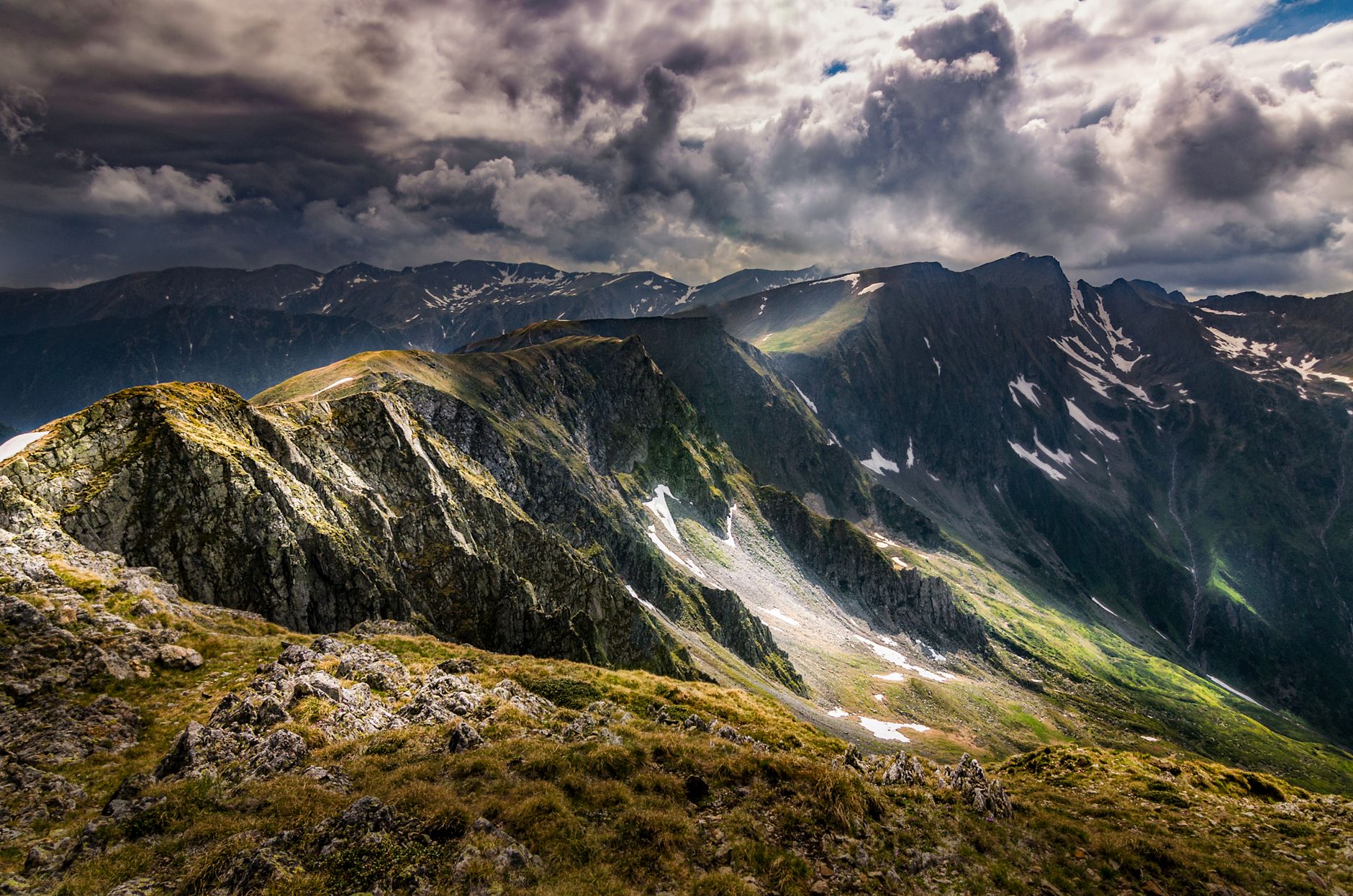
Further east stand the Făgăraș, the highest range in the Romanian Carpathians, and the Transfăgărășan (national road DN7C) that crosses them. Two honest things about it. There is no public transport — no Tursib route goes near it, and the answer is a hire car from the arrivals hall. And the high section is closed by snow for a large part of the year, with the national roads administration announcing its opening and closing dates annually, so check the current status before you build a trip around it: a Transfăgărășan plan in April or October is a coin toss.
The countryside east of the city carries the Saxon fortified churches, which Sibiu’s tourism office lists under “Around Sibiu”. Seven of those villages are inscribed on the UNESCO World Heritage List as “Villages with Fortified Churches in Transylvania” — an extension of the original inscription of Biertan and its fortified church — for a settlement pattern and family-farmstead layout preserved since the late Middle Ages, dominated by churches fortified between the 13th and 16th centuries. Ask the Tourist Information Centre at Str. Samuel Brukenthal 2 on the Grand Square which are open on the day you want to go: Monday–Friday 09:00–17:00, Saturday–Sunday 09:00–13:00.
The honest verdict on this airport
Sibiu is a small, competent, unspectacular airport that gets one big thing right by geography rather than design: it is three kilometres from a city worth flying to. Twenty minutes and 3.50 lei to the railway station is excellent value; nine buses a day at the covered stop by the door is a trap; no restaurant airside is a real gap; and a lounge stranded in the Schengen zone is a problem if you are flying to Luton.
Come for the squares, the walls, ASTRA and the mountains behind them. Take line 21, not line 11. Carry twenty lei in cash for the ticket machine. And book the car if you want the Făgăraș, because nothing else will get you there.
❓ Frequently Asked Questions
📊 2026 Summary Data Table
| Category | Detail |
|---|---|
| IATA / ICAO | SBZ / LRSB |
| Official name | Aeroportul Internațional Sibiu — Sibiu International Airport, Șoseaua Alba Iulia 73, 550052 Sibiu |
| Location | 3 km from the city centre on the airport’s own infrastructure data sheet; its tourism page describes the airport as 5 km from the old town and ten minutes away. Altitude 443 m |
| Passengers | 694,805 in 2025 · 573,918 (2024) · 550,397 (2023) · 621,514 (2022) · 729,160 (2019, still the peak) |
| Aircraft movements | 7,733 in 2025, of which 5,904 commercial — roughly 16 commercial movements a day |
| Site & terminal | 300 ha site · 22,400 m² terminal · ICAO reference code 4C · 15 stands (cat B/C/D) · three taxiways (E, W, N) |
| Runway | 09/27, 2,630 × 45 m, east–west, PCN 110 R/D/W/T, CAT II lighting and ILS CAT II, turning pads 100 × 60 m both ends, capacity one aircraft / 3 min |
| Scheduled airlines | Wizz Air — Dortmund, Karlsruhe/Baden-Baden, London Luton, Madrid, Memmingen, Nürnberg, Rome (the airport also keeps a Milan Bergamo page) · Austrian Airlines — Vienna |
| Summer 2026 charters | Antalya (May–Sep) · Hurghada (Apr–Oct) · Heraklion (Jun–Sep) · Larnaca (Jun–Sep) · Monastir (Jun–Sep) · Palma de Mallorca (Jun–Sep) — sold through tour operators |
| Best bus | Tursib line 21 “Aeroport – Gară” from the Aeroport 1 stop on Șoseaua Alba Iulia. 20 min to the railway station, 13 min to Casa Armatei. 17/day Mon–Fri, 05:15–23:20; 9 at weekends. 3.50 lei |
| Terminal-door bus | Line 11 at the covered Aeroport Terminal stop — only 9 departures Mon–Fri (08:39, 09:10, 09:56, 10:41, 11:13, 12:01, 13:30, 18:20, 21:38) and 4 at weekends (11:55, 14:35, 15:55, 18:35) |
| Tickets | 3.50 lei 60-minute single · 7 lei day pass · 24 lei 7-day pass · Păltiniș line 22: 12 lei single / 21 lei return, bike 11 lei. Terminal machine is cash in lei only; contactless bank card works on board |
| Taxi | Rank left of arrivals. City Hall caps the distance tariff at 4.50 lei/km incl. VAT (HCL 321/2022). No published flat fare. Info desk orders one free |
| Car hire | Enterprise · Europcar · PriceCarz · Rental Car Center · RENTZZ · Sixt — arrivals, 24/7 |
| Parking | 300+ spaces · 10 min free · 10 min–2 h 15 lei · 7–24 h 50 lei · 3–7 days 180 lei · 9–15 days 350 lei. Unguarded, no vehicle CCTV — the airport says so |
| Lounge | One Business Lounge, 250 m², 55 seats, in the Schengen departures zone, open first flight to last. Priority Pass / LoungeKey or €30 by card |
| Food & shops | Eleven units, no restaurant. Café point is landside. Schengen departures: duty free, Art & Craft, Relay, 24/7 vending. Non-Schengen departures: duty free and a vending machine, nothing else |
| Banking | Two Euronet ATMs (24/7) and one BCR multifunction machine in the public area. Euronet is an independent operator — prefer a bank ATM in town |
| Currency | Romanian leu (RON) — Romania is in the EU and Schengen but not the eurozone. ECB reference rate 4 Sep 2026: €1 = 5.2530 RON. Refuse dynamic currency conversion |
| Border | Schengen since 1 January 2025 (Commission: Bulgaria and Romania “the last countries to join”) · EES fully operational since 10 April 2026 — fingerprints and facial image on first entry, EU citizens exempt · ETIAS not in operation, no applications collected, fee set at €20 · Non-Schengen routes: Luton, Larnaca, Antalya, Hurghada, Monastir |
| City | European Capital of Culture 2007 · first documented 1191 as Cibinium, Hermannstadt from 1366 · capital of Transylvania 1692–1791 and 1850–1867 · largest medieval urban ensemble in Romania · Michelin Green Guide three stars |
| Sights | Council Tower (city dates its first documentary mention to 1324) · Bridge of Lies, Romania’s first cast-iron bridge, buildings around it demolished 1851 · Evangelical Cathedral tower 73.34 m, tallest in Transylvania · Brukenthal National Museum, opened 1817, palace 50 lei / 48-hour combined 120 lei · ASTRA open-air museum, since 1963, 96 ha, 10 km of paths, ~6 km out, bus 13 · Sibiu Zoo, Romania’s first, 1929 |
| Region | Mărginimea Sibiului shepherd villages · Păltiniș, 32 km, founded 1894, Romania’s first and highest resort (~1,440 m), Tursib line 22 · Făgăraș mountains and the Transfăgărășan (DN7C) — no public transport, high section closed by snow much of the year, check before travelling · Saxon fortified churches, seven villages UNESCO-inscribed |