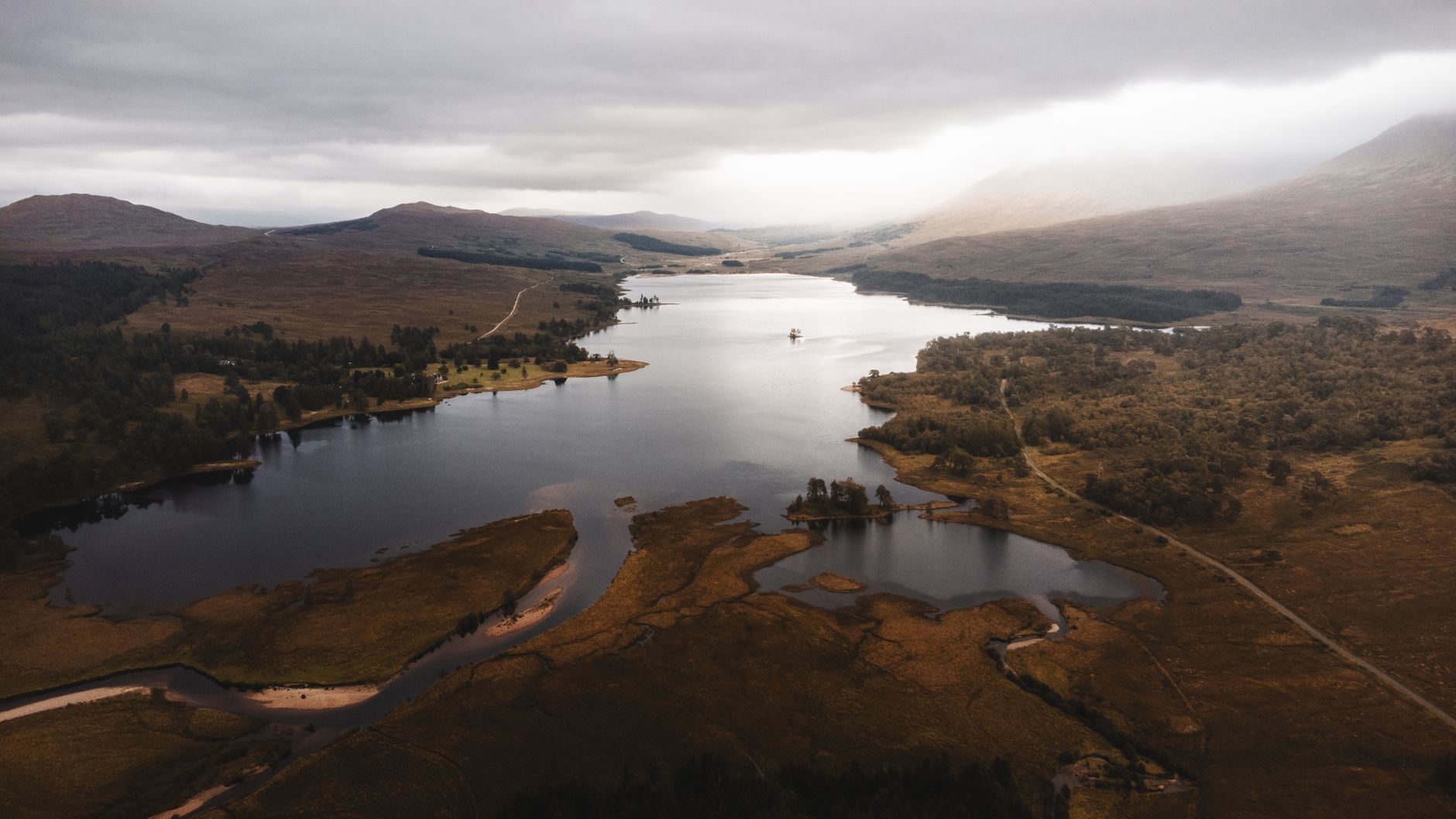
Aberdeen International Airport (ABZ) Airport Guide 2026 — The Airport That Works Offshore
Aberdeen International Airport sits at Dyce, about six miles northwest of the city centre, and since May 2026 Stagecoach’s all-electric 727 Jet bus has run that route 24 hours a day, seven days a week — £5.80 on a day ticket against £20–£25 for a taxi. The passenger terminal handled 2,301,978 people in 2025, but the figure that explains this airport is the one beside it: three helicopter runways and three helicopter terminals, flying crews to North Sea platforms. Eleven airlines serve a network of Scottish islands, UK cities, Norway, the Baltic and the sun. Currency is the pound sterling, and the UK runs its own entry system.
Last verified: September 2026.
⚡ 2026 Quick Reference — Key Facts at a Glance
727 Jet (Stagecoach, all-electric) to Union Square Bus Station, every ~15 min, 24 hours a day, 7 days a week. Single from £5; Dayrider £5.80 (~€6.75)
Dyce station is two miles from the terminal — no walk, no dedicated shuttle. Taxi to Dyce is about £12 and 5–10 min. Dyce is unstaffed: buy tickets at the machine or online
Ember E7 (pre-booked only, ember.to) direct to Keith, Elgin, Nairn and Inverness, every 3 hours, 04:30–18:30 from the airport
Official rank directly outside the terminal — turn left. Metered. £20–£25 to the city centre, about 25 minutes in light traffic
Express Drop Off £7.00 for 15 minutes. Long Stay is FREE for up to 1 hour with a free shuttle to the terminal
24 hours a day, 365 days a year — no curfew, unlike most UK regional airports
100 ml still applies here. Containers under 100 ml stay in the bag, no liquid bag, no limit on how many. Electronics stay in the bag too
Two: the Northern Lights Executive Lounge (pay to enter) and the British Airways Lounge (BA Executive Club or fully flexible UK fares)
Pound sterling. Scottish banknotes are not legal tender in Scotland or England — valid money, but any shop may refuse them
UK system: ETA £20 (~€23), up to 6 months a visit. Not needed with a British or Irish passport. eGates from age 8 and 120 cm
🏢 1. One Passenger Terminal, and Four More You Will Never See
Aberdeen opened in July 1934 and is now run by AGS Airports, the group that also holds Glasgow and Southampton. What you see as a passenger is a single terminal, refurbished in a £20 million transformation completed in 2019 and extended with a first floor that carries both lounges. It is a straightforward building: check-in, security, one departure lounge, gates. There is no train to a satellite and no bus to a remote pier.
What you do not see is the rest of the airport, and it is bigger than the bit you use. The airport’s own facts page lists one passenger terminal, one offshore fixed-wing terminal and three helicopter terminals, served by one fixed-wing runway and three helicopter runways. Four helicopter operators work from here — Bristow, CHC, NHV and OHS — flying crews out to North Sea oil and gas installations, and the airport publishes live flight information for each of them alongside the airline departure boards. Aberdeen also sells discounted “offshore parking” for energy-industry employees, and the airlines that serve the city run loyalty tie-ins aimed at the same people: Loganair’s Clan membership, SAS EuroBonus and Widerøe EuroBonus all appear on the airport’s own offshore-working page.
This is not trivia. It is why Aberdeen is a 24-hour airport, 365 days a year, with no night curfew of the kind that shuts Belfast City at 21:30 and shapes half the timetables in the UK. It is why the Norwegian routes exist — Bergen and Stavanger are working destinations, not holidays. And it is why the fixed-wing runway is 1,953 m after a 124 m extension, rather than the shorter strip a two-million-passenger leisure airport would need.
The airlines are an unusual set for an airport this size. The airport lists Aer Lingus, airBaltic, British Airways, easyJet, KLM, Loganair, Ryanair, SAS, TUI, Widerøe and Wizz Air. Look at what that combination reaches. Loganair holds the Highlands and Islands lifeline network — Kirkwall, Sumburgh and Wick John O’Groats — which is Aberdeen’s real monopoly and a set of flights that exist nowhere else in volume. KLM runs Amsterdam, British Airways runs Heathrow, SAS and Widerøe run Copenhagen and the Norwegian coast, airBaltic runs Riga, and the leisure carriers add Alicante, Faro, Malaga, Palma, Tenerife South, Corfu, Dalaman, Bourgas and Reus. There are also Paris CDG, Geneva, Gdansk, Esbjerg, Dublin, Belfast City, Newquay, Norwich and Humberside — a route list that reads like a working city’s, because it is one.
Baggage allowances vary enormously across that list, and the same trip can carry a 20 kg hold bag on one leg and nothing on the other. Our guides for Loganair, British Airways, KLM, SAS, Widerøe, airBaltic, easyJet, Ryanair and Wizz Air carry the current numbers, and the baggage checker puts them side by side.
Security: Aberdeen still runs the 100 ml rule, and you need to know that. The airport states it plainly on its own hand-baggage page: liquids in containers over 100 ml will not be allowed through, and you should pack them in the hold. What has changed is the packaging — containers under 100 ml can stay inside your cabin bag, with no transparent liquid bag and no limit on how many you bring, and electronic items can stay in the bag too. So the queue is faster than it used to be, but the litre of shampoo still goes in the suitcase. Several UK airports have moved to a two-litre allowance; Aberdeen has not, and assuming otherwise costs you the bottle. Priority Security is bookable in advance if you are travelling at a peak hour, and unusually the airport also sells a Priority Passport Lane for arrivals — worth knowing if you land back on an evening bank from Europe.
🛂 2. The UK Border, an ETA, and the Banknote Problem
Scotland is part of the United Kingdom, which runs its own entry system with nothing European about it. Everything below comes from GOV.UK, read this month.
The Electronic Travel Authorisation. Most visitors who do not need a visa now need an ETA. It costs £20 (about €23 at the ECB reference rate of 4 September 2026, €1 ≈ £0.859), and it covers the UK, Jersey, Guernsey and the Isle of Man for stays of up to six months per visit. Everyone travelling needs their own, infants included. Apply on GOV.UK or in the official UK ETA app and nowhere else — GOV.UK warns that other sites charge more for exactly the same document. An ETA authorises travel; it does not guarantee entry.
Who does not need one. British and Irish citizens. Anyone with a UK visa, settled or pre-settled status, or right of abode. Anyone with permission to live, work or study in Jersey, Guernsey or the Isle of Man. British overseas territories citizens and British National (Overseas) passport holders. Anyone transiting airside without crossing the border. And anyone legally resident in Ireland who is travelling to the UK from Ireland, Guernsey, Jersey or the Isle of Man — but if you are 16 or over you must be able to prove that residence, with an Irish driving licence, medical card, GP visit card, European Health Insurance Card, Irish Residence Permit or one of the other documents GOV.UK lists.
Aberdeen is a mixed border. Flights from Kirkwall, Sumburgh, Manchester or Heathrow are domestic — no passport control, though the airline will still want photo ID at the gate. Flights from Amsterdam, Copenhagen, Bergen, Stavanger, Paris, Riga, Gdansk or the Mediterranean are international arrivals and go through UK Border Force.
eGates. Where they are in use, GOV.UK’s rules are: you must be 8 or over, at least 120 cm tall, and if you are between 8 and 17 you must be accompanied by an adult. Eligible nationalities include British and EU/EEA citizens plus Australia, Canada, Japan, New Zealand, Singapore, South Korea and the United States. eGates do not stamp passports — GOV.UK is explicit that you cannot get a stamp if you use one. If you need documentary evidence of your entry date for a later visa or residence question, keep your boarding pass, and if you actually need a stamp in the passport, see a Border Force officer before you leave the airport rather than afterwards.
One document rule catches EU travellers. Most EU, EEA and Swiss citizens now need a passport to enter the UK; national identity cards are no longer generally accepted, with narrow exceptions for holders of settled or pre-settled status.
Money, and a peculiarly Scottish trap. The currency is the pound sterling, not the euro. Scottish banks issue their own sterling notes, and the Bank of England’s own explainer is startlingly blunt about their status: in England and Wales legal tender is Royal Mint coins and Bank of England notes, while in Scotland it is only Royal Mint coins and not banknotes at all — so “Scottish notes are not legal tender in England or Scotland.” That reads like a misprint and is not one. What matters practically is the sentence underneath it: “a shop owner can choose what to accept.” Nobody in Aberdeen will blink at a Royal Bank of Scotland twenty; a café in Cornwall might refuse it. Spend Scottish notes before you leave Scotland, or swap them at a bank. There is a Travelex bureau in the terminal, but the cheaper move is to withdraw from a bank ATM or simply tap a card, and to decline any terminal that offers to bill you in euros — that is dynamic currency conversion and the margin is not yours.
🚌 3. The 24-Hour 727, the Two-Mile Train Station, and the £7 Kerb
Aberdeen’s ground transport got materially better in 2026, and one option got quietly worse than people expect.
The 727 Jet is the answer, and it is now genuinely round the clock. Stagecoach relaunched the route in May 2026 as a 24-hour, seven-day service — the airport and the operator both describe it as Aberdeenshire’s first continuous 24/7 city-to-shire bus route. It runs every 15 minutes at normal hours, on a fleet of electric buses with free WiFi and USB charging, from stance 1 directly outside the main terminal to Union Square Bus Station, stance 3, calling at Bucksburn, Marischal College (for the Bon-Accord Centre) and Adelphi on Union Street on the way. Southbound it continues to Portlethen every day and to Stonehaven on weekdays.
On price it is one of the better airport buses in Britain. Singles start from £5, and the airport’s own figure for a Stagecoach Dayrider between Union Square and the airport is £5.80 (about €6.75) — which for a day ticket means the return leg and any city buses in between are included. Pay contactless, cash or card on board, buy in the Stagecoach app, or online. Against a metered taxi at £20–£25 for the same six and a half miles, the bus is the obvious default unless you are three people with four suitcases.
The train is the option to be careful about. Aberdeen has a railway station near the airport — Dyce, on the Aberdeen–Elgin–Inverness line, with some through services from Glasgow and Edinburgh — but the airport’s own wording is that Dyce is “about two miles from the terminal and easily reached by taxi or bus.” It does not name a bus, and there is no dedicated rail shuttle. Two miles is not a walk with luggage. The airport’s published taxi fare to Dyce station is about £12 for a five- to ten-minute ride, which makes a rail connection through Dyce cost more in taxi than the 727 costs to the middle of Aberdeen. Dyce station is also unstaffed — buy at the ticket machine or online before you travel.
So: use Dyce if you are heading straight north or west by rail and want to skip the city. Use the 727 to Union Square for everything else — Aberdeen’s main railway station is at Union Square, so the bus delivers you to the trains anyway.
The Ember E7 coach is the underrated option. It runs from the airport directly to Keith, Elgin, Nairn and Inverness, roughly every three hours, departing the airport between 04:30 and 18:30. It is pre-booked only through ember.to, so you cannot turn up and pay. If you are flying into Aberdeen and heading for Speyside or the Moray coast, this saves you the whole detour into the city.
Taxis rank directly outside the terminal — turn left out of the doors, where a forecourt coordinator directs the queue. Fares are metered under Aberdeen City Council rules, all cars take cards, and the airport’s own guidance is £20–£25 to the city centre in about 25 minutes in light traffic, more when it is heavy. Pre-book on +44 (0)1224 466229 for the return.
If someone is collecting you, do not use the kerb. The Express Drop Off on the upper forecourt is £7.00 for up to 15 minutes and the airport itself calls the area congested; overstay and you pay a premium on exit. The Long Stay car park is free for up to one hour, with a free shuttle bus to the terminal — that is a full hour of waiting for nothing, against £7 for a quarter of an hour outside the door. Blue Badge holders get 30 minutes free in Short Stay and are advised not to use Express Drop Off at all.
| Option | Where it goes | Time | Cost |
|---|---|---|---|
| 727 Jet bus | Union Square Bus Station (Aberdeen rail station), Marischal College, Bucksburn | ~25–30 min | From £5 single; Dayrider £5.80 (~€6.75). Every 15 min, 24/7 |
| 727 southbound | Portlethen (daily), Stonehaven (Mon–Fri) | — | Stagecoach fares |
| Ember E7 coach | Keith, Elgin, Nairn, Inverness | Direct, every ~3 hours | Pre-booked only at ember.to; 04:30–18:30 from the airport |
| Train via Dyce | Aberdeen–Elgin–Inverness line | 5–10 min to the station, then rail | ~£12 taxi to Dyce + rail fare. Station is unstaffed |
| Taxi | Anywhere | ~25 min to the centre | £20–£25 metered, cards accepted |
| Express Drop Off | Upper forecourt | 15 min | £7.00 — or free for an hour in Long Stay |
🛋️ 4. Two Lounges, a Whisky Wall, and a Lane for Arrivals
Aberdeen has two lounges, both on the first floor of the departure lounge and both reached from the Gate 1 area by stairs or lift.
The Northern Lights Executive Lounge is the one anybody can buy. It is the airport’s own multi-user lounge, built into the terminal extension with panoramic airfield views, and the drinks list is deliberately regional: BrewDog craft beer, Gordon Castle gin and a dedicated whisky wall, with a paid upgrade to prosecco or champagne. Booking runs by entry slot through the day, with separate adult and child tickets. Book ahead through the airport’s own lounge page rather than turning up, because slots sell out on the morning bank, and phone +44 (0)1224 348532 if you need to check.
The British Airways Lounge is the other one, and it is not for sale. Access is for British Airways Executive Club members and BA passengers holding fully flexible tickets for UK travel — a rule shaped around the Heathrow shuttle and the offshore business traveller who books late and changes often. If that is not you, it is invisible.
Whether to pay. Aberdeen is a single-terminal airport where a two-hour arrival is generous and the departure lounge has free WiFi and plenty of seating. The lounge earns its keep in three specific cases: an early Heathrow or Amsterdam departure when you want breakfast and a desk, a delayed evening return when the terminal is emptying, and — genuinely — the North Sea rotation, where the lounge is a civilised place to end a three-week hitch. For a family heading to Alicante in August it is money you would rather spend at the other end.
For everyone else there is a decent ordinary product: seating throughout, free WiFi, and the airport’s own seating and services pages if you need to check accessibility before you fly. Special assistance must be requested through your airline in advance, as everywhere.
🍽️ 5. Butteries, Cullen Skink, and Duty Free That Actually Exists
Airside food at Aberdeen is better named than it is large. The Distilling House is the bar-restaurant, Bocco the sit-down option and The Granite City the other bar and restaurant, with a WHSmith–Costa hybrid, a separate Costa after security, and Boots for the things you forgot. The airport’s own framing is breakfast for an early flight, a coffee while you wait, a hot meal when you land. That is honest, and it is roughly the whole of it — I am not going to print a menu that will be wrong by spring.
Eat the local things while you are in the region, not in the terminal. The north-east’s contributions to Scottish food are specific and worth seeking out. A buttery — also called a rowie — is Aberdeen’s own bread roll, flat, salty and heavily laminated with fat, closer to a savoury croissant that has been sat on; bakeries across the city make them and nobody outside the north-east does. Cullen skink is smoked haddock, potato and onion soup, named for the fishing village of Cullen on the Moray coast an hour up the road. Aberdeen Angus beef is from here rather than a marketing department. And the whisky is the region’s other export — Keith and Elgin, both on the Ember coach route, sit in Speyside, the densest concentration of distilleries in Scotland.
Now the shopping, where Aberdeen has a real advantage over some UK airports. Because Scotland is part of Great Britain, duty free applies to every overseas destination including EU ones — the airport’s own page says so directly, and points at savings on spirits for passengers flying to Spain, Portugal or Greece as much as for long-haul. Flying domestically inside the UK there is no duty free, though the shop still discounts fragrance, cosmetics, confectionery and sunglasses to all passengers. Compare that with Belfast City, where Northern Ireland’s post-Brexit position means the airport cannot sell genuine duty free to anyone at all.
Beyond World Duty Free there is InMotion for chargers and headphones, Travelex for currency, a set of clothing brands, and Discover Aberdeen for souvenirs. If you want one thing to carry home, make it whisky bought here on an international departure, or shortbread and smoked fish bought properly in the city.
💡 6. What Aberdeen Is Actually For: Granite, Castles and the Cairngorms
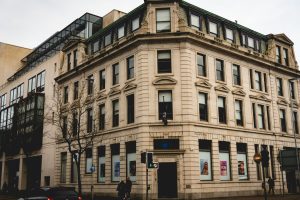
Aberdeen is Scotland’s third-largest city and it is not a city that flatters itself. It is built almost entirely from local grey granite, which in low sun glitters with mica and in horizontal rain looks like the inside of a filing cabinet. Both are true and both are worth seeing. Union Street is the spine, Marischal College — a 727 stop — presents an enormous carved granite frontage that stops people mid-pavement, and Old Aberdeen, around King’s College and St Machar’s Cathedral, is the cobbled medieval town the oil boom never reached.
Two city things are genuinely unusual. Aberdeen Harbour has resident bottlenose dolphins, and the airport’s own visitor pages point you at harbour cruises to see them — this is one of very few British cities where you can watch wild dolphins from an urban shoreline. And the beach is a two-mile stretch of sand running north from the harbour with the North Sea doing what it does; Footdee, the tight grid of former fishermen’s cottages at its southern end, is the best twenty minutes of walking in the city.
But the reason to fly here is the country behind it.
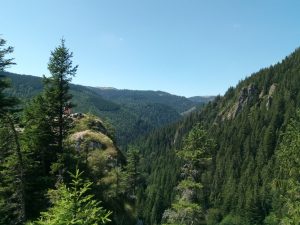
Royal Deeside runs west from the city along the River Dee: Crathes Castle, then Ballater, then Balmoral — the royal family’s Highland estate, which opens its grounds seasonally, so check dates before you build a day around it — then Braemar. Both Ballater and Braemar sit inside the Cairngorms National Park, at 4,528 km² the largest national park in the United Kingdom, established in 2003. This is the country’s high plateau: five of Scotland’s six highest mountains, Caledonian pine forest, and ski slopes at Glenshee and the Lecht that are perfectly real even if they are not the Alps.
Aberdeenshire’s castles are its other claim, and the number is not a marketing figure — the airport itself puts around 300 castles in the region, and the ones worth the drive are specific. Dunnottar, a ruined fortress on a sea stack outside Stonehaven, is the most photographed building in the north-east and — usefully — Stonehaven is on the 727 bus route on weekdays, so it is the one great castle you can reach from this airport without a car. Craigievar, Fyvie, Crathes and Drum are the classic drive.
Golf, if you play, is not an afterthought here: the airport notes that two of the ten oldest courses in the world are in the area, and the Aberdeenshire links coast is one of the reasons people fly in from Scandinavia and the US.
Practical judgements to close on.
Hire a car if you are going beyond the city. Deeside, the castle trail and the coast are all driving propositions, and the 727 and E7 only cover two corridors. If you are staying in Aberdeen, do not hire one — the 727 runs all night, the city is walkable, and parking is expensive.
Use the 24-hour operation. Aberdeen has no curfew and now has a 24-hour bus, so an 06:00 departure or a 23:30 arrival is a normal thing here rather than a logistical problem. That is genuinely rare among UK regional airports and it is worth building a cheap itinerary around.
And check the price before you assume. Aberdeen is an expense-account market, and fares on the London and Amsterdam routes reflect it; the leisure routes to Spain and the Canaries can be much better value than the same seats from Edinburgh once you count the drive. Run the route through our price checker before you book, and compare against Edinburgh and Glasgow rather than guessing.
❓ Frequently Asked Questions
📊 2026 Summary Data Table
| Category | Detail |
|---|---|
| Airport | Aberdeen International Airport (ABZ / EGPD), Dyce, Aberdeen |
| Distance | About 6 miles northwest of the city centre; the 727 bus journey is around 6½ miles |
| Opened | July 1934. Owned and operated by AGS Airports (also Glasgow and Southampton) |
| Opening hours | 24 hours a day, 365 days a year — no night curfew |
| Terminals | 1 passenger terminal, 1 offshore fixed-wing terminal, 3 helicopter terminals |
| Runways | 1 fixed-wing, 1,953 m (after a 124 m extension), plus 3 helicopter runways |
| Helicopter operators | Bristow, CHC, NHV, OHS — North Sea energy crews |
| Passengers 2025 | 2,301,978, up 0.1% on 2024 |
| Airlines | Aer Lingus, airBaltic, British Airways, easyJet, KLM, Loganair, Ryanair, SAS, TUI, Widerøe, Wizz Air |
| Unique routes | Loganair to Kirkwall, Sumburgh and Wick John O’Groats — Aberdeen’s island lifeline network |
| Bus | 727 Jet, Stagecoach, all-electric, 24/7 since May 2026, every 15 min, stance 1 outside the terminal |
| Bus fares | Single from £5; Dayrider £5.80 (~€6.75) Union Square ↔ Airport |
| Coach | Ember E7 to Keith, Elgin, Nairn, Inverness — pre-booked only, 04:30–18:30 from the airport |
| Rail | Dyce station, 2 miles away, unstaffed, ~£12 by taxi. Aberdeen–Elgin–Inverness line |
| Taxi | Metered, rank outside the terminal, £20–£25 and ~25 min to the city centre |
| Parking | Express Drop Off £7.00 / 15 min; Long Stay free for 1 hour; Blue Badge 30 min free in Short Stay |
| Security | 100 ml rule still applies. Sub-100 ml containers stay in the bag, no liquid bag, no count limit. Electronics stay in |
| Lounges | Northern Lights Executive Lounge (pay, book ahead) · British Airways Lounge (Executive Club / fully flexible UK fares) |
| Food & shops | The Distilling House, Bocco, The Granite City, WHSmith–Costa, Costa, Boots · World Duty Free, InMotion, Travelex, Discover Aberdeen |
| Duty free | Yes — including EU destinations. None on UK domestic flights |
| Currency | Pound sterling. ECB reference rate 4 Sep 2026: €1 ≈ £0.859. Scottish notes are valid money but not legal tender |
| Border | UK ETA £20, up to 6 months a visit, covers UK/Jersey/Guernsey/Isle of Man. eGates from age 8 and 120 cm; they do not stamp |
| Region | Royal Deeside, Balmoral, ~300 Aberdeenshire castles, the Cairngorms National Park (4,528 km², the UK’s largest) |