Seymour Galápagos Ecological Airport (GPS) — Airport Guide 2026
Every foreign adult who lands at Baltra walks out of the arrivals hall $220 lighter in cash — and if they didn’t know that before they boarded, the scramble starts immediately, because Baltra has no ATM.
Quick Reference
Seymour Galápagos Ecological Airport (GPS / SEGS)
Baltra
~45 km via bus + ferry + bus; ~60 min travel, ~$11 by public transport
US dollar (Ecuador dollarized in 2000)
Visa-free 90 days, most nationalities
$220 per foreign adult: $200 National Park fee + $20 Transit Control Card
$200 foreign adult / $100 child (under 12); under 2 exempt; cash USD, no cards at the desk
$20 — pre-register online; mandatory since 29 May 2025
LATAM (UIO, GYE, CUE) and Avianca (UIO, GYE)
LATAM Cuenca–Baltra, from 31 March 2026 (Tue/Sat)
23 kg on standard economy; lighter promo fares charge for hold luggage
None — Uber does not operate anywhere in the Galápagos
Aeropuertos VIP Club (Priority Pass), airside, 08:00–16:00
December 2012
World’s first LEED Gold airport (USGBC, July 2015)
Solar + wind, near-100% renewable; ~40% below a conventional terminal
Seawater desalination on site
2,401 m asphalt, single, daylight operations only
~300,000
Not required for Galápagos; advised only for Amazon travel
Not potable — bottled only
🏗️ The Airport: Recycled Steel, Off-Grid Power, and Why Baltra Has No Town
Baltra is a flat slab of dry lava in the middle of the archipelago with no permanent civilian population, no town, and nothing to do once you land except clear the fee desks and leave. That is not a criticism — it is the point. After Pearl Harbour, Ecuador agreed to let the United States build an air base here to defend the Panama Canal’s Pacific approaches. US personnel arrived from Panama in 1942, built hangars and landing strips on what they code-named Base Beta — soldiers knew it as “The Rock” — and then handed it back to Ecuador in 1946. The runway you land on is the lineal descendant of that wartime strip. The island became an airfield with no civilian life attached to it, and it has remained one.
The terminal that opened in December 2012 cost a little over $24 million and replaced a hot, cramped shed. Its structural frame is recycled steel tubing pulled from decommissioned oil-drilling rigs in the Ecuadorian Amazon — an unusually literal application of circular construction. Roughly 75% of the old terminal’s materials were reused in the new one. The building spans about 6,000 square metres and was designed to need no air conditioning in most of its spaces: high ceilings, cross-ventilation, and natural light handle what compressors do elsewhere. A solar array and three wind turbines generate close to 100% of the terminal’s power; seawater desalination supplies fresh water. The airport runs largely independent of Baltra’s near-nonexistent infrastructure, which matters on an island with no municipal grid to plug into. Overall energy consumption runs roughly 40% below a conventional terminal of the same size. In July 2015 the US Green Building Council awarded it LEED Gold — the first airport anywhere to hold that certification.
Operationally it is small and walkable end to end in two minutes: check-in and SICGAL bag-drop at one end, security, then a short airside concourse with the lounge, a café, and souvenir counters. One runway, 2,401 metres of asphalt, daylight operations only. About 300,000 passengers a year, nearly all tourists funnelling toward Santa Cruz or cruise ships. No jet bridges; you board across the apron.
⚠️ GPS and SCY are not interchangeable
Baltra (GPS) and San Cristóbal Airport (SCY) serve different islands. Most Santa Cruz itineraries and the majority of cruises use Baltra. Book the wrong one and you are an inter-island flight or an expensive speedboat hop from where you need to be.
🦎 The Conservation Detail Worth Knowing
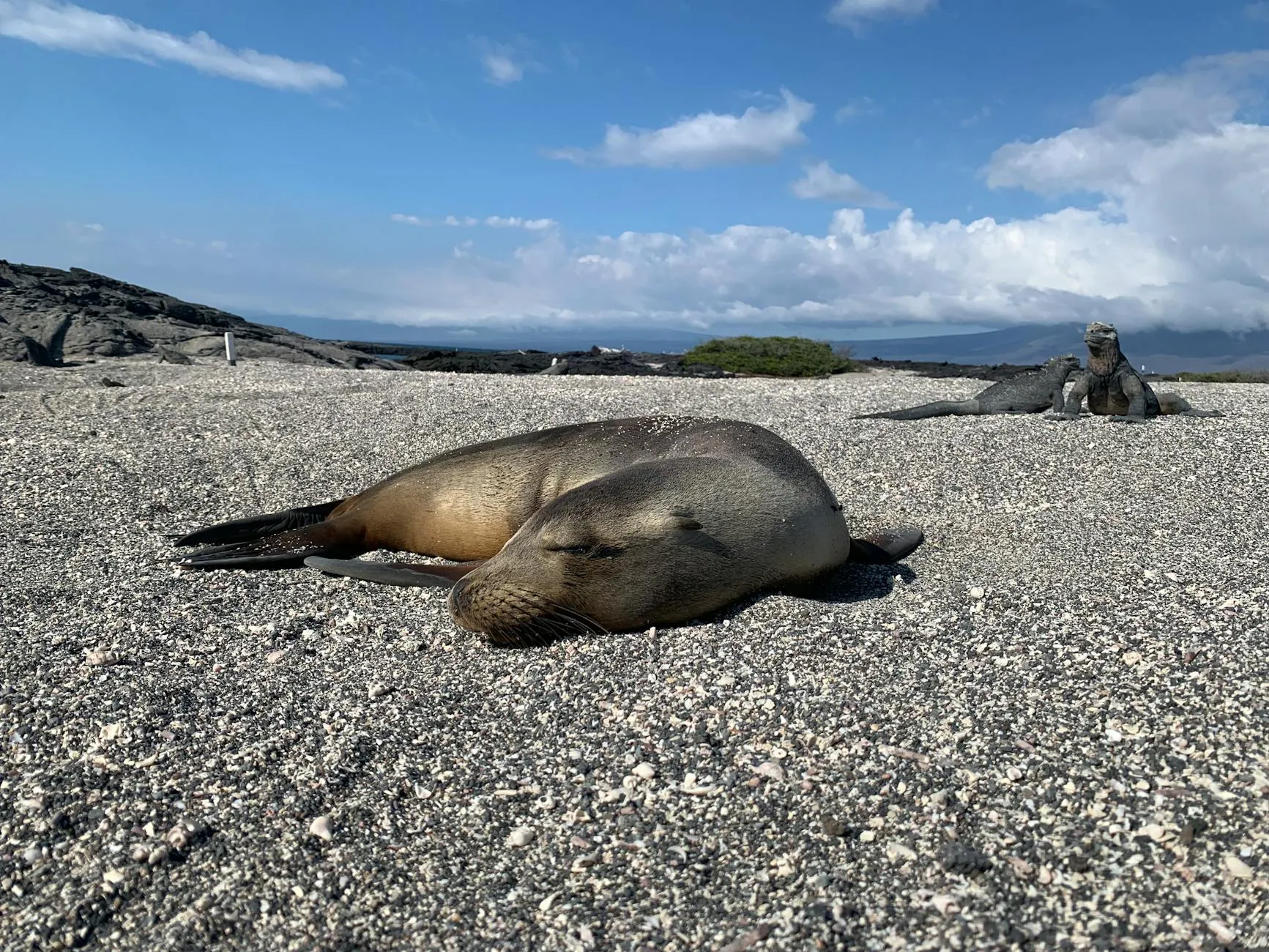
Baltra once had its own subspecies of land iguana. In 1932 the Hancock Expedition, concerned that introduced goats were destroying the iguanas’ food supply, moved about 70 of them across the channel to North Seymour island as insurance. That foresight proved decisive: Baltra’s iguanas went extinct during the war years, and the animals now reintroduced on Baltra — returned in 1991 — all descend from the North Seymour transplants. The lesson the Galápagos took from a century of introduced goats, rats, and ants is exactly the reason a SICGAL officer will x-ray your apple before you board on the mainland.
✈️ Airlines and Check-In
Two airlines serve Baltra in 2026: LATAM, from Quito (UIO), Guayaquil (GYE), and — new from 31 March 2026 — Cuenca (CUE); and Avianca, from Quito and Guayaquil. Older guides mentioning TAME and Aerogal can be ignored; both airlines are defunct. The Cuenca route runs twice weekly (Tuesday and Saturday), makes a technical stop in Quito outbound where you stay on the aircraft, and returns direct to Cuenca. A “Quito–Baltra” ticket may well touch Guayaquil too.
Standard economy on both carriers allows 23 kg checked. Lighter promotional fares charge for hold luggage — confirm your fare’s allowance before you fly, because excess on a Galápagos leg is expensive. Allow three hours before departure from Quito or Guayaquil: between the SICGAL bag inspection, the Goods Declaration QR check, and the TCT desk, the Galápagos check-in process is slower than a normal domestic flight.
🛂 Border & Entry: The $220 Cash Gauntlet
A foreign adult pays $220 in US cash to enter the Galápagos. The larger part of that cannot be paid by card. Bring it in small bills — $1, $5, $10, $20 — from the mainland, because Baltra has no reliable ATM.
⚠️ $220 cash, no cards at the park desk
The $200 National Park fee is collected in the arrivals hall at Baltra. Cash only, US dollars. No card reader. Baltra has no ATM. If you land short, your options are limited to whatever cash another traveller is willing to exchange. Withdraw before you board.
💵 The Dollar
Ecuador abolished its own currency in 2000 after a banking collapse and adopted the US dollar outright. You spend the same notes you would in Miami. The wrinkle: Ecuador mints its own centavo coins in the same sizes and values as US cents, legal tender within Ecuador but worthless the moment you leave. Spend them before you fly home.
🛃 Visa
Most nationalities — US, UK, EU, Canada, Australia — enter Ecuador visa-free for up to 90 days. Passport valid six months, one blank page. Ecuador enforces a 90-days-in-any-180-day period, so consecutive long stays get flagged. No advance online travel authorisation is required for the visa itself.
📋 Transit Control Card (TCT)
The TCT — Tarjeta de Control de Tránsito, issued by the Consejo de Gobierno del Régimen Especial de Galápagos (CGREG) — registers you as a temporary visitor and costs $20. Since 29 May 2025, you pre-register online through CGREG’s own platform at siig-cgreg.gobiernogalapagos.gob.ec within roughly 48 hours of your flight, pay by card, and receive the card by email. Print it or keep it on your phone. You need it at the CGREG desk on arrival and again when you leave; losing it can mean paying again. Older guides and travel agents still call this the INGALA fee or the INGALA booth, but INGALA has not existed since 2011 and there is no signage under that name — look for CGREG. Treat the online pre-registration as mandatory — do it in advance.
🌿 National Park Fee
Under Resolución No. 002-CGREG of 24 February 2024, the fee for foreign adults doubled from $100 to $200, effective August 2024 — the first increase in over two decades. The tariff table the park authority publishes today is headed by Ordenanza Provincial No. 001-CGREG-30-06-2025; the amounts are identical under both instruments. The fee structure:
- Foreign adults: $200
- Foreign children under 12: $100
- CAN/Mercosur nationals (Colombia, Peru, Bolivia, Argentina, Brazil, Paraguay, Uruguay): $100 adult / $50 child
- Foreign students enrolled at Ecuadorian educational institutions (and not resident in Ecuador): $50 — a student card from a university outside Ecuador does not qualify, and pays the full $200
- Ecuadorian nationals and residents: $30
- Ecuadorian nationals and residents under 12 or over 65, CONADIS disability-card holders, and the CGREG “Transient” category: $15
- Children under 2, Ecuadorian or foreign: exempt
Paid in cash at the park desk in the arrivals hall. Cards not accepted.
🔍 SICGAL and the Goods Declaration
Before you reach Baltra, your luggage is inspected on the mainland. SICGAL — the System of Inspection and Quarantine for the Galápagos — screens checked and carry-on bags at Quito and Guayaquil to stop seeds, soil, fresh produce, and live animals reaching the islands. Invasive species are the single biggest demonstrated threat to the ecosystem here, which is why enforcement is serious rather than theatrical. Travellers 18 and over must complete an online Goods Declaration up to 48 hours before departure and present the QR code at the airport. Don’t pack fresh fruit, plants, or unprocessed food; it will be confiscated. A SICGAL check is repeated on arrival at Baltra. Sealed, processed snacks from the mainland are fine.
🏥 Health and Altitude
Yellow fever vaccination is not required to enter the Galápagos and you will not be asked for a certificate. It is relevant only if you are also going to the Amazon. The altitude concern that dominates Quito travel writing is irrelevant here — the Galápagos are at sea level. If you connect through Quito (2,850 m), altitude is Quito’s problem, not Baltra’s. The health risks on these islands are equatorial sunburn, dehydration, and seasickness on boats.
🚌 Getting to Puerto Ayora: The Three-Leg Relay
Puerto Ayora, on Santa Cruz, is where most hotels, tour agencies, and restaurants are. It is on a different island. Getting there from Baltra involves three legs, two of them by bus and one by ferry, across a narrow channel that separates Baltra from Santa Cruz.
If you are on a cruise or pre-booked tour, a guide meets you at the terminal and handles all of this. The prices below are what independent travellers pay.
🚌 The full chain: $5 + $1 + $5 = $11 by public transport
Lobito bus to Itabaca Channel ($5, ~10 min) → government ferry across the channel ($1, ~5 min) → public bus to Puerto Ayora ($5, ~45 min). Plan for 60 minutes of travel plus waiting time. The bus leaves when it fills, not on a fixed schedule.
Leg 1 — Lobito Bus: Terminal to the Itabaca Channel
A green-and-white Lobito bus waits outside the terminal and runs the ten-minute hop to the Itabaca Channel, the narrow strait separating Baltra from Santa Cruz. The fare is $5 per person, paid on board in cash. This is not a free shuttle: it is free only when a tour package has already covered it. Staff move luggage from bus to ferry dock.
Leg 2 — Itabaca Channel Ferry
A small passenger barge run by the local government crosses in about five minutes for $1 per person, cash. It runs frequently through the day.
Leg 3 — Santa Cruz to Puerto Ayora
On the Santa Cruz side, two options. The public bus costs about $5 and takes roughly 45 minutes across the green highlands into town — but it departs only when it fills or on a loose schedule tied to flight arrivals, which can mean a wait. The alternative is a white pickup-truck taxi, locally a camioneta, which leaves immediately for around $25–30 for the vehicle, seating up to four. Split between a group of four, the camioneta costs roughly the same per head as the bus and cuts the wait; solo, the bus wins on price.
Pre-booked private transfers through a hotel or tour run $30–50 and meet you at the terminal, skipping the relay entirely. Worth the price if you have a cruise check-in deadline; otherwise it is a straightforward overpay.
Getting Back to the Airport
Leave Puerto Ayora at least 2.5 hours before your flight. The relay is unforgiving if the ferry queues or the bus is slow, and Baltra operates daylight-only with no recovery window if you miss your departure.
In-Town Taxis
Within Puerto Ayora, the same white pickups charge $1–2 per hop. For the highland sights — El Chato and the lava tunnels, roughly 22 km from town — hire a camioneta for a half-day and agree the price before you get in. There are no meters.
🛋️ Lounges: One Room, and It Closes at Four
Seymour has exactly one lounge: the Aeropuertos VIP Club, airside past security, near gates 2 and 3 by the food court. It accepts Priority Pass and is open to walk-in paying passengers as well. Inside: seating, Wi-Fi, complimentary snacks, an à-la-carte menu and bar drinks at extra cost, restrooms, and — incongruously for an airport that runs on solar and wind — a designated smoking room. Children under 12 enter free. It serves domestic passengers only, which here means everyone, since every flight is domestic.
🛋️ Aeropuertos VIP Club — 08:00–16:00 only
Many afternoon departures to Quito and Guayaquil leave after 16:00, which is when the lounge closes. Check your flight time against that cutoff before counting on access. If your flight is after 16:00, there is no lounge — you wait in the small concourse with the café and the souvenir counters.
There is no premium cabin lounge, no airline flagship room, no DragonPass or LoungeKey alternative. One shared facility is the entire offer, consistent with a single-runway airport handling two carriers. No showers, no sleep pods.
🍽️ Food Before You Fly
Airside catering at Baltra is thin: a café and snack counter near the lounge, plus the lounge’s own menu. The Galápagos freight premium — almost everything edible on these islands is shipped or flown in from the mainland — is baked into every price, and the captive airport markup sits on top of that. A bottle of water that runs $0.50–1 in a Puerto Ayora shop costs closer to $2–3 airside; a sandwich or empanada that is $2–4 in town runs noticeably more at the terminal café. Eat before you fly, or in the lounge if it is open.
🌊 What to Eat in Puerto Ayora
The food is coastal Ecuadorian rather than anything uniquely “Galápagos.” Ceviche here — typically shrimp or white fish cured in lime with red onion and cilantro, served with chifles (fried plantain chips) and popcorn — runs roughly $6–12 in a town restaurant. Encebollado, the Ecuadorian albacore tuna soup with yuca and pickled red onion, is a $3–5 breakfast at a working comedor. Bolón de verde (a fried green-plantain ball with cheese or pork) and patacones (twice-fried plantain discs) round out the cheap-eats.
The town’s after-dark option is Calle Charles Binford, the kiosk street where stalls set up grills each evening and serve whole grilled fish and langostino at prices well below the waterfront tourist restaurants. Lobster fishing is closed part of the year; if you are offered lobster, it is worth asking whether it is in season before ordering.
🧳 Duty-free: there isn’t any
Baltra is a domestic airport inside Ecuador’s own customs territory, so there is no international duty-free hall — just souvenir counters selling blue-footed-booby T-shirts, carved tortoises, and Galápagos coffee at a slight airside premium over the same items in town. Buy the coffee and palo santo in Puerto Ayora.
💡 Layovers and Day Trips: The Honest Math
Baltra has no attractions of its own. Everything worth seeing is on Santa Cruz, across the ferry, and the round-trip transit eats a substantial chunk of any gap before you have looked at a single tortoise.
The math: terminal to Puerto Ayora is 60 minutes at best, including the bus, ferry, and second bus. Round trip is therefore 2 to 2.5 hours of pure transit. Add a 2.5-hour return buffer to be back at Baltra with enough time to clear security and reach your gate. That adds up to a minimum gap of 6–7 hours to reach Puerto Ayora, walk around, and get back safely. A 3–4 hour connection does not allow a town visit. Stay airside, use the lounge if it is open, and refill your water bottle.
⚠️ 3–4 hour connection = stay airside
The Baltra-to-Puerto Ayora relay takes 60 minutes one way under good conditions. A 3–4 hour connection leaves no margin for a town visit once you account for transit time and the return buffer. There is nothing to do on Baltra itself.
What to Do If You Have a Full Day on Santa Cruz
Charles Darwin Research Station — about 1.5 km from the Puerto Ayora town centre, a 20–30 minute walk along the waterfront. The captive-breeding pens and giant-tortoise enclosures are the most reliable way to see the animals up close; entry is generally free, though donations are requested.
Tortuga Bay — a 2.5 km signposted footpath from the western edge of town, roughly 40–50 minutes on foot (no vehicles allowed on the trail). The trailhead has a registration kiosk. Playa Brava, the long surf beach, is where marine iguanas bask and where swimming is dangerous — the name means fierce beach for a reason. Walk another 10 minutes to Playa Mansa, the sheltered lagoon, for safe swimming and reef sharks cruising the shallows. No kiosks, no shade, no drinking water on the trail.
El Chato Tortoise Reserve and the lava tunnels — in the highlands about 22 km from Puerto Ayora, 30–45 minutes by camioneta. This is where you see giant tortoises free-ranging rather than penned, plus walk-through lava tubes more than a kilometre long. Budget about three hours for the round trip and the visit; agree a half-day fare with the pickup driver before you set off.
Las Grietas — a flooded volcanic fissure with clear brackish water between two lava walls. Take a $1 water-taxi (lancha) across the harbour from Puerto Ayora dock, then a 20–25 minute walk past the salt flats and over rough lava. Wear shoes you can scramble in; bring a mask. Go early to beat tour groups.
Inter-Island Connections from Baltra
There is no direct boat from Baltra; you first reach Puerto Ayora. Public inter-island speedboats to Isabela (Puerto Villamil) and San Cristóbal (Puerto Baquerizo Moreno) run roughly $30–35 per person one-way, take about two hours, and typically depart Puerto Ayora around 07:00 and 15:00 — so a same-day airport-to-Isabela connection is tight and weather-dependent. The crossings are open-ocean and can be rough; sit at the back and take a seasickness tablet if you are prone.
The faster alternative is an inter-island air taxi on a small prop plane operated by EMETEBE or ESAV, roughly $150–180 one-way for a 30-minute hop. Strict luggage limit — approximately 9–11 kg — which you must verify in advance.
Inter-island day trips to North Seymour (frigatebirds, blue-footed boobies) and Bartolomé (Pinnacle Rock) are full-day organised tours booked in Puerto Ayora. North Seymour is, fittingly, the island to which the Baltra land iguanas were evacuated in 1932.
🔧 Practical Notes
📶 Connectivity
The terminal has Wi-Fi; so does the lounge. Bandwidth in the Galápagos is satellite-fed and slow everywhere — do not expect to stream. For data, buy an Ecuadorian SIM (Claro or Movistar have the widest island coverage) on the mainland before you fly out. Coverage in Puerto Ayora is reasonable, patchy elsewhere on Santa Cruz, and effectively nil on boats and remote sites. An eSIM bought before arrival works if your carrier covers Ecuador.
💰 Money
US dollars throughout. Carry cash in small bills: the $200 park fee, the bus, ferry, taxis, and tips are all cash transactions. ATMs in Puerto Ayora — Banco del Pacífico, Banco Bolivariano — exist but run dry, cap withdrawals, and sometimes queue. There is no ATM on Baltra. Do not plan to draw cash on arrival. Cards work in larger hotels and tour agencies in Puerto Ayora, often with a 4–10% surcharge; small comedores, the ferry, and the park desk are cash-only. At the time of writing, $1 is roughly €0.86.
🌞 Safety
The Galápagos are among the safest places in Ecuador. The main risks are environmental: strong equatorial UV (the islands sit on the equator; UV is brutal even when overcast), dehydration, and rough water on boat transfers. Petty theft in Puerto Ayora’s busier streets at night is uncommon but not unknown — standard precautions apply. Do not touch or feed wildlife; it is illegal and fines are enforced.
🍽️ Tipping
Restaurant bills usually include a 10% service charge plus 15% IVA tax — check the bill before adding more. For naturalist guides and boat crew on multi-day trips, tipping is expected and substantial; operators typically provide guidelines. Camioneta drivers and porters do not expect a tip beyond rounding up.
💧 Tap Water
Do not drink the tap water on Baltra or Santa Cruz. Water is desalinated or trucked and not reliably potable. Buy bottled, or refill from the large dispensers most hotels and many cafés provide — the plastic waste problem on these islands is severe.
❓ Frequently Asked Questions
📊 At a Glance — GPS 2026
| Category | Detail |
|---|---|
| Airport name | Seymour Galápagos Ecological Airport |
| Codes | GPS (IATA) / SEGS (ICAO) |
| Island | Baltra |
| Terminal opened | December 2012 |
| Construction cost | ~$24 million |
| Terminal size | ~6,000 sq metres |
| Green status | World’s first LEED Gold airport (USGBC, July 2015) |
| Energy | Solar + wind, near-100% renewable, ~40% below conventional |
| Water supply | Seawater desalination on site |
| Runway | 2,401 m asphalt, single, daylight operations only |
| Annual passengers | ~300,000 |
| Carriers | LATAM (UIO/GYE/CUE), Avianca (UIO/GYE) |
| New 2026 route | LATAM Cuenca–Baltra from 31 March 2026 (Tue/Sat, via Quito outbound) |
| Currency | US dollar |
| Visa | Visa-free 90 days, most nationalities |
| Park fee | $200 foreign adult / $100 child (under 2 exempt), cash USD only (doubled Aug 2024) |
| Transit Control Card | $20, online pre-registration mandatory since 29 May 2025 |
| Cash needed on arrival | $220 minimum (foreign adult) |
| Airport → Puerto Ayora | Lobito bus $5 + ferry $1 + bus $5, ~60 min travel, ~45 km |
| Camioneta alternative | ~$25–30 for vehicle (up to 4 people), leaves immediately |
| Rideshare / rail | None — no Uber, no trains in the Galápagos |
| Lounge | Aeropuertos VIP Club, Priority Pass, 08:00–16:00 only |
| ATM on Baltra | None — withdraw cash before boarding on the mainland |
| Tap water | Not potable — bottled or refill dispensers only |