Juan Manuel Gálvez International Airport (RTB) — Airport Guide 2026
United opened a Denver route here on 1 November 2025, and the terminal that received those extra passengers had just finished a modernization — two quiet signals that Roatán is handling more US-direct traffic than at any earlier point in its history.
Quick Reference
RTB / MHRO
Juan Manuel Gálvez International Airport
Western Roatán, ~3 km east of Coxen Hole; ~50 km off the northern Honduran mainland
1 terminal; runway 07/25, 2,090 m asphalt, 20 ft elevation
~13 km / ~20 min by road
~15 km / ~22 min by road
Union taxis (fixed zone, no meter); colectivo rapiditos; rental cars on-site
~USD 25 (1 person), USD 30 (2 people); ~USD 10 per extra head
~USD 5 / L60 per person each way, ~10 min
~USD 30–50/day economy; Alamo, Avis, Enterprise, National on-site
Honduran lempira (HNL / L); USD accepted island-wide
~L26.6 per USD 1
~L31.0 per EUR 1
Visa-free 90 days for most nationalities under the CA-4 bloc
3 months from entry; onward / return ticket required
Certificate required only if arriving from a risk country
~USD 48.44 international (normally bundled into the ticket)
~L54.13
None (no Priority Pass / airline lounge); pay-per-use VIP meet-and-greet only
American, United, Delta, Air Canada (seasonal), WestJet, Sun Country
CM Airlines, Aerolíneas Sosa, TAG (TGU / SAP / Utila)
Tigo / Claro; SIM ~L50–150; eSIM ~USD 20 / 10 GB
Not potable — bottled or filtered only
Terminal modernization completed late 2025; US seat capacity rising
🏢 Terminal, Runway & the 2025 Rebuild
RTB is one terminal and one runway. The runway — designated 07/25 — runs 2,090 metres of asphalt at 20 feet above sea level, short by hub standards but adequate for the 737s and A320s that carry almost everyone who arrives. There is no second concourse, no airside transit, no remote stand worth worrying about. You walk off the aircraft, cross the apron or use a jet bridge depending on the gate, and reach immigration in a couple of minutes.
The building was modernized through 2025, with the upgraded terminal completed late in the year ahead of the December high season. The work expanded waiting areas, improved lighting, reworked passenger flow, and was designed to support a roughly threefold increase in seat capacity over time. United’s Denver route launched 1 November 2025, and American is reported to be adding seats into the March 2026 peak. Treat any “fully finished” framing with mild caution — forum reports through 2025 described the remodel as visibly ongoing past its target date, and island construction schedules are what they are.
Arrivals is straightforward: immigration, single baggage belt, customs. Cruise passengers dock at the Coxen Hole Town Center pier and Mahogany Bay — they never come through here, which keeps the terminal load almost entirely on scheduled-flight passengers. Departures has check-in counters, a security point, and a modest airside area with food counters and duty-free/souvenir retail. ATMs and a bank counter are landside.
⚠️ Security line stacks up on morning departures
The screening is single-file, and several US flights cluster in the late-morning bank. Give yourself margin — being tight here means running a genuine risk, not a notional one.
Domestically, RTB is the Bay Islands hub. CM Airlines, Aerolíneas Sosa and TAG run turboprops to Tegucigalpa (TGU), San Pedro Sula (SAP) and the island of Utila. If you’re connecting onward into mainland Honduras, this is where you do it.
🛂 Border, Visa & the CA-4 Bloc
Most nationalities — US, Canadian, EU, UK, Australian among them — enter visa-free for up to 90 days. The detail that consistently catches people out is the CA-4 Border Control Agreement, signed in 2006 between Honduras, Guatemala, El Salvador and Nicaragua.
⚠️ CA-4 clock starts at your first stamp — not at Roatán
The 90-day allowance is shared across all four countries. Spend three weeks in Guatemala before flying to Roatán and you land with 69 days, not 90. Overstaying carries exit fines. A 30-day extension is available at a National Migration Institute (INM) office in-country before your original stay expires — there is no INM counter at the airport for this on arrival.
Bring a passport valid at least three months beyond your entry date and proof of onward or return travel — immigration officers ask for it.
Yellow fever. Not required for arrivals from North America or Europe. A vaccination certificate is required only if you’re arriving from, or have recently transited, a country with yellow-fever risk — parts of South America and sub-Saharan Africa. If your routing touches, say, Panama or a South American hub, check the requirement before you fly; travelers who can’t produce one when it’s demanded can be refused entry.
💱 Currency & Departure Tax
The lempira (HNL, symbol L) is the legal currency, named for the 16th-century indigenous leader Lempira who resisted the Spanish conquest — his face appears on the one-lempira note. Notes run L1, L2, L5, L10, L20, L50, L100, L200 and L500; coins are small change you’ll rarely accumulate. In practice, Roatán runs on US dollars: hotels, dive shops, restaurants and tour operators quote and accept USD, many exclusively. As of May 2026 the rate sits near L26.6 to USD 1 and roughly L31.0 to EUR 1; the lempira has been broadly stable, drifting slightly weaker against the dollar over the year.
There is no parallel black-market rate worth chasing — Honduras runs a managed but openly quoted exchange, so bank and ATM rates are close to the headline figure. Carry small US bills (ones and fives) for taxis and tips; draw lempira from an ATM for rapiditos and local-market spending; don’t over-convert large sums, since change often comes back in a mix of both currencies. Airport ATMs dispense lempira and sometimes dollars; expect a fixed per-transaction fee, so draw a useful lump rather than topping up repeatedly.
💰 Departure tax: ~USD 48.44 — usually already in your fare
On American, United and Delta it’s bundled into the published ticket price, so most US-routed passengers never pay it separately at the airport. Some charter and smaller carriers collect it at the counter instead. Check your fare rules. The old routine of queuing at an airport bank window to pay it in cash was discontinued years ago.
🦟 Health Reality
Roatán is at sea level, so altitude is irrelevant here — no acclimatization, no soroche. The real concerns are mosquito-borne. Honduras declared a national dengue emergency in 2024, and the Bay Islands are not exempt.
⚠️ Dengue risk — use repellent at dawn and dusk
Mosquitoes are worst around dusk. Covered skin in the evening and repellent at dawn and dusk are the sensible baseline. Tap water is not for drinking — stick to bottled or properly filtered, which every decent hotel and restaurant provides.
Routine vaccinations should be current. Beyond that, standard Caribbean travel-health precautions cover most visits.
🚆 Getting from the Airport
There is no Uber, no Bolt, no rideshare app of any kind on Roatán. The island runs on union-organized taxis with fixed zone rates, colectivo minibuses, and rental vehicles.
🚕 Union Taxis
Taxis don’t use meters. Fares are set by destination zone, and you agree the price before you get in — this isn’t advice, it’s how the system functions, and a taxi that won’t quote a number upfront is one to skip. From the airport:
- West End, West Bay, Sandy Bay, French Harbour: ~USD 25 for one passenger, USD 30 for two, ~USD 10 per extra head above that.
- Return leg (west-side beaches back to airport): quoted higher — often USD 40 for one, USD 45 for two.
- East End (Camp Bay): a different tier altogether, ~USD 75–80.
- Cruise-day transfers around Coxen Hole: handled largely by the Mahogany Bay Taxi Association, a separate pool.
Settle both the fare and whether the cab is private or shared before the doors close. A shared cab may pick up and drop others along the way at a lower per-head rate; a private one costs more but goes direct. An after-dark surcharge kicks in toward evening.
🚌 Rapiditos (Colectivo Minibuses)
The island’s public transport is a fleet of minibuses running the main road between Coxen Hole, Sandy Bay and West End roughly every 10–20 minutes in daylight. Fares are paid in lempira on exit: ~L20–40 (roughly USD 1–2) depending on distance. The catch for airport arrivals: rapiditos run the main road, not the airport access spur, so you’d walk out to the highway to flag one — not practical with a pile of dive gear and suitcases. They’re genuinely useful once you’re settled and moving between West End and Coxen Hole. Service thins out after dark.
⛵ Water Taxi (West End ↔ West Bay)
⛵ Water taxi: USD 5 each way, ~10 minutes
The boat between West End and West Bay runs daily from around 7 am to sunset (later runs cost slightly more). It’s the quickest connection between the two west-side hubs and avoids the longer road loop. It does not serve the airport — it’s an intra-coast shuttle, not an arrival option.
🚗 Rental Cars
Alamo, Avis, Enterprise and National operate at the airport. Economy rates run ~USD 30–50 per day, with SUVs higher; book ahead in the December-to-April high season when stock tightens. Roatán has one main road, driving is on the right, and conditions include potholes, free-roaming animals and aggressive local overtaking. For a stay based at one West-side resort with the beach and dive shop on your doorstep, a car is largely dead weight. For exploring the quieter East End — Camp Bay, Punta Gorda — under your own steam, it earns its keep. Scooter and quad rentals exist but raise your risk profile on a road shared with minibuses that stop without warning.
The short version: solo or couple heading straight to a west-side resort, take the union taxi at USD 25–30 — fast and door-to-door. Budget traveler with light bags: walk to the highway for a rapidito at a dollar or two, if you don’t mind the extra ten minutes. Moving between West End and West Bay during your stay: the USD 5 water taxi beats the road every time. Self-drive only makes sense if you’re genuinely going to roam the East End.
🛋️ Lounges
RTB has no Priority Pass lounge, no LoungeKey or DragonPass lounge, and no airline-operated club. The airport is too small to support one, and none of the carriers serving it run a lounge here — no Admirals Club, no United Club, no Delta Sky Club. If card-based lounge access is part of how you travel, it does nothing for you at Roatán.
What does exist is a pay-per-use VIP meet-and-greet service sold by third-party concierge operators. Booked in advance, it provides a private waiting area with Wi-Fi and a fast-track escort through formalities — available on departure, arrival or transit, regardless of ticket class. It’s a paid private service, not a card-access lounge, and priced accordingly. Worth it if you specifically want the escort-and-privacy package; not a substitute for a club lounge.
For everyone else, the airside reality post-2025 refurbishment is improved seating, better lighting, a couple of food-and-coffee counters, and duty-free/souvenir retail. There’s no quiet members’ room to retreat to, so the better strategy is arriving with a sensible buffer rather than camping at the airport for hours — there’s little payoff in being early here beyond clearing the single security line.
🍽️ Food Before You Fly
The airport’s food offer is functional: an airside bakery-and-deli counter, a coffee outlet, snacks, and the duty-free and souvenir shops. As at every captive-audience terminal, prices sit above town. Buy a bottle of water before security if you’re price-sensitive.
The regional food worth knowing about is in Coxen Hole and West End, not the terminal. The baleada is the Honduran staple: a thick flour tortilla folded over refried beans, crumbled cheese and crema, often with egg, avocado or meat added. At a local comedor or street stand a basic baleada runs roughly L30–60 (about USD 1–2.50); a beachfront West End spot will charge several times that. On the Bay Islands specifically, look for machuca — a Garífuna coconut-and-fish stew served with mashed green plantain — and conch soup, both reflecting the island’s Afro-Caribbean Garífuna heritage rather than mainland mestizo cooking. Fresh fish and lobster are the local protein; lobster is genuinely cheaper here than most places a North American visitor is used to, though West Bay prices are set for tourists.
The local beers are Salva Vida and Port Royal. Expect to pay L40–70 a bottle at a casual local bar versus double that at a beachfront resort.
Duty-free at RTB is small. Honduran rum and cigars are the genuine local buys; the rest is standard terminal stock available cheaper elsewhere.
🌊 The Reef
Roatán’s pitch is underwater. The island sits on the Mesoamerican Barrier Reef — the second-largest barrier-reef system on the planet, running roughly 1,000 km from Mexico’s Yucatán down through Belize and Guatemala to the Bay Islands. The practical point is that the reef is close to shore here.
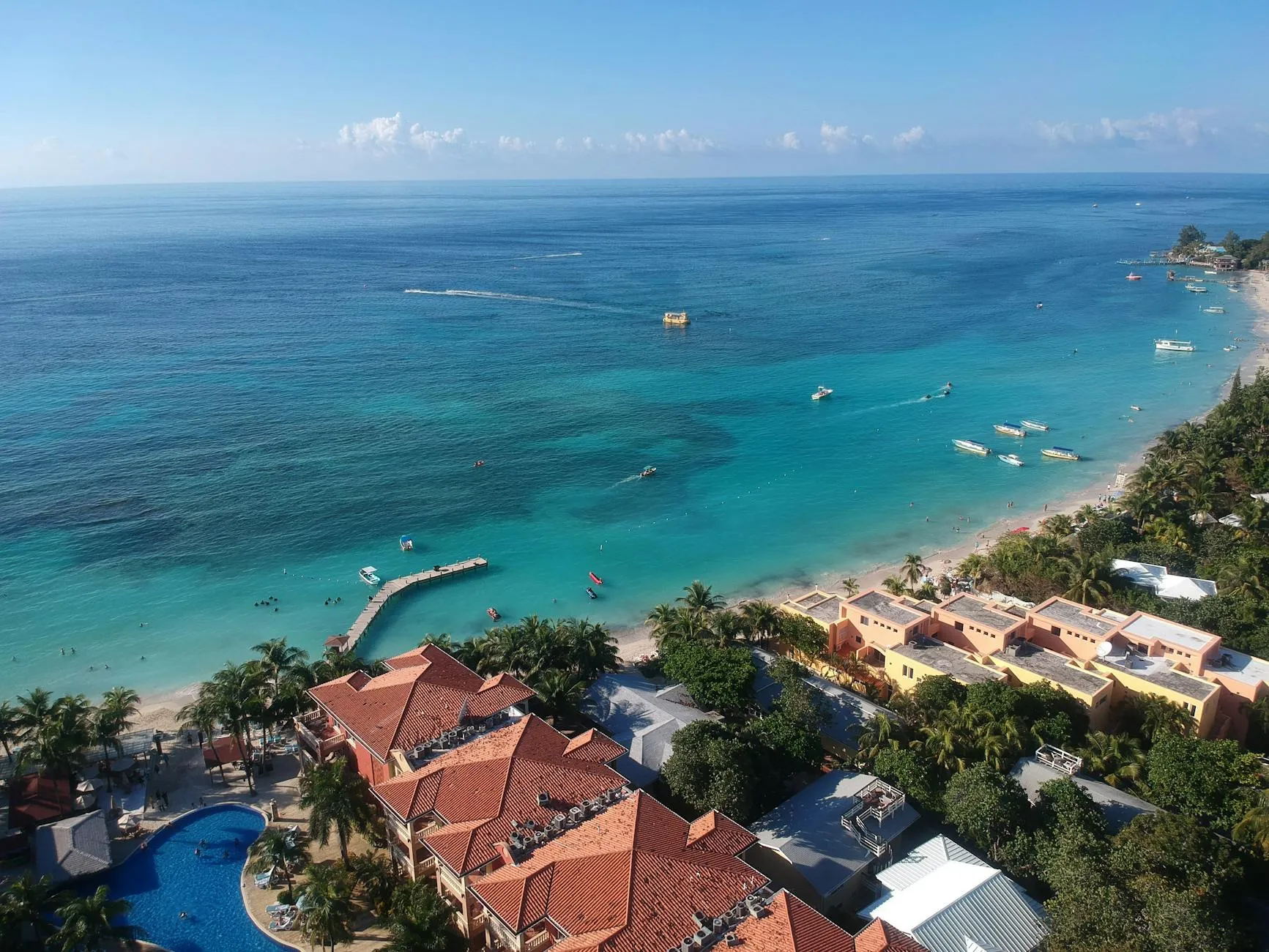
West Bay Beach (~15 km, ~22 min from the airport) has reef you can snorkel straight off the sand, with no boat required. Half Moon Bay in West End (~13 km, ~20 min from the airport) offers the same shore-snorkel access in a crescent bay, plus deeper coral channels a few minutes out by boat; West End is the diving hub, with shops lining the road and most certification courses running from there.
🤿 Best conditions: roughly March to September
Visibility and dive conditions are best in the dry-to-early-wet window. Booked dive trips can run year-round, but check current conditions if you’re visiting in the October–February rainy season.
Dive day-trips beyond the house reefs include wall dives, shipwrecks and marine-park zones bookable from any West End or West Bay shop. For non-divers, Gumbalimba Park (near West Bay) packages reef snorkeling with a monkey-and-iguana enclosure and zipline. The East End — Camp Bay and the Garífuna community at Punta Gorda — offers emptier beaches and a quieter atmosphere at the cost of a longer drive and a ~USD 75-ish taxi fare.
⏱️ Layover Math
⏱️ Under 4 hours: stay airside
West End and West Bay are 20–22 minutes by road each way — about 45 minutes of driving for a round-trip. Add the international departure buffer: back through the single security line with at least 90 minutes before your flight, ideally more during the late-morning departure bank. With no rideshare to summon, taxi-wait variability adds further margin. A realistic minimum for even a quick West Bay snorkel is 4–5 hours, and that’s tight. Under four hours, there is nothing of interest near the terminal itself — the reef requires reaching the coast, and the airport sits on a stretch of road with no sight to speak of. With a genuine half-day or overnight, West Bay and a shore snorkel are easily done.
🔧 Practical Notes
Connectivity. Tigo and Claro cover Roatán; both sell prepaid SIMs, and eSIMs from the usual travel providers ride those same local networks. A physical tourist SIM runs roughly L50–150 (USD 2–6) plus a data bundle; travel eSIMs are priced around USD 20 for ~10 GB. Coverage is solid across the developed west and the main road, patchier on the East End and offshore. Hotel and restaurant Wi-Fi in West End and West Bay is common but variable — adequate for messaging, less reliable for video calls.
Tipping. Restaurants may add a service charge — check the bill before adding more; if none is included, 10% is standard. Dive crews and tour guides are tipped (a few dollars per person per trip is the norm). Taxi fares are agreed upfront and not separately tipped.
Safety. Mainland Honduras carries elevated US State Department and UK FCDO travel advisories tied to violent crime in specific cities. Those advisories exist and shouldn’t be dismissed. The Bay Islands, Roatán included, are treated as a lower-risk tourism zone and aren’t where that violence concentrates; for a west-side visitor the day-to-day experience is closer to a developed Caribbean resort island. The realistic risks are petty: opportunistic theft from unattended beach bags, rental cars and around Coxen Hole town. Keep valuables secured, use hotel safes, don’t flash cash or electronics, and apply normal night-time caution off the lit tourist strips.
❓ Frequently Asked Questions
📊 At a glance — RTB 2026
| Category | Detail |
|---|---|
| Airport name | Juan Manuel Gálvez International Airport |
| IATA / ICAO | RTB / MHRO |
| Location | Western Roatán, ~3 km east of Coxen Hole |
| Distance from mainland | ~50 km off northern Honduras |
| Terminals / runway | 1 terminal; runway 07/25, 2,090 m asphalt, 20 ft elevation |
| Distance to West End | ~13 km / ~20 min |
| Distance to West Bay | ~15 km / ~22 min |
| Official currency | Honduran lempira (HNL / L) |
| USD exchange (May 2026) | ~L26.6 per USD 1 |
| EUR exchange (May 2026) | ~L31.0 per EUR 1 |
| Visa | Visa-free 90 days (CA-4 shared allowance) |
| Passport validity | 3 months from entry + onward ticket |
| Yellow fever | Only if arriving from a risk country |
| Airport taxi to west beaches | ~USD 25–30 private, fixed by zone |
| Colectivo (rapidito) fare | ~L20–40 (USD 1–2) on the main road |
| Water taxi West End ↔ West Bay | ~USD 5 / L60 per person, ~10 min |
| Car rental | ~USD 30–50/day economy; on-site Alamo / Avis / Enterprise / National |
| Departure tax | ~USD 48.44 international (usually bundled); ~L54.13 domestic |
| Lounges | None; pay-per-use VIP meet-and-greet only |
| Main international carriers | American, United, Delta, Air Canada (seasonal), WestJet, Sun Country |
| Domestic carriers | CM Airlines, Aerolíneas Sosa, TAG (TGU / SAP / Utila) |
| Connectivity | Tigo / Claro SIM ~L50–150; eSIM ~USD 20 / 10 GB |
| Tap water | Not potable — bottled or filtered only |
| Health watch | Dengue (2024 national emergency); sea-level, no altitude concern |
| Reef | Mesoamerican Barrier Reef, world’s 2nd-largest; shore-snorkel access from West Bay |
| 2026 change | Terminal modernization completed late 2025; US seat capacity rising |