Ramón Villeda Morales International Airport (SAP) — Airport Guide 2026
San Pedro Sula is Honduras’s industrial capital and its most dangerous city, and the airport that serves it — roughly 1.27 million passengers in 2023 — functions primarily as a transfer point: pick up a connection to Copán’s Maya ruins, the Caribbean coast towns of Tela and La Ceiba, or the Bay Islands dive economy of Roatán and Utila, and keep moving.
Quick Reference
SAP / MHLM
Ramón Villeda Morales International (also called La Mesa)
~11 km southeast; 25–40 min by road
Honduran lempira (HNL)
1 USD ≈ 26.6 HNL; 100 HNL ≈ 3.76 USD ≈ 3.45 EUR
Visa-free 90 days under CA-4 — shared across Honduras, Guatemala, El Salvador, Nicaragua
Required only if arriving from/transiting a risk country (South America, Panama)
~200–300 HNL (8–11 USD), 25–40 min
~350 HNL (13–15 USD) — negotiate before boarding
~30 HNL (~1.25 USD), roughly 06:00–22:00
Salas Internacionales VIP Club (two locations) — Priority Pass / LoungeKey / Diners Club
American, United, Delta, JetBlue, Frontier, Copa, Avianca, Aeroméxico, Air Europa
US Level 3 “Reconsider Travel”
Not potable — bottled only
🏢 Terminal History & Layout
SAP opened in February 1965 and is named after Ramón Villeda Morales, a physician who served as Honduras’s president from 1957 to 1963 before being deposed in a military coup. Locals call the airport “La Mesa” after the flat terrain it occupies in the Cortés department, 11 km southeast of the city.
The current terminal dates from 1997, designed for 300,000–400,000 passengers annually — a ceiling it blew past long ago, which explains why the building feels cramped when two or three wide-body departures stack up. A government-funded expansion announced in 2023 at around 3.8 million USD, with completion targeted for late 2024, widened the terminal and reworked passenger flow. Finishing works and signage changes may still be in progress; verify the gate layout on arrival rather than trusting an old map.
The building is a two-level single terminal split into Concourse A and Concourse B. Immigration and the baggage hall sit on the arrivals level; the lounges and most retail are airside on the upper floors near gates 6 and 7. The footprint is compact enough that you do not need to budget extra time for internal transfers, but the standard two-hour international check-in window is honest advice here rather than padding.
For context on the national picture: Honduras opened Palmerola International Airport (XPL) near Comayagua in October 2021, absorbing Tegucigalpa’s commercial traffic from the old, notoriously short Toncontín runway. SAP was unaffected — it remains the primary entry point for the north coast, the industrial belt, and the Bay Islands connection.
Carrier mix is heavily US-facing. American flies nonstop to Miami and Dallas/Fort Worth; United to Houston; Delta to Atlanta; JetBlue and Frontier add US leisure routes. Copa connects through Panama City for onward South America, Avianca links the wider region, Aeroméxico serves Mexico City, and Air Europa is the long-standing European link via Madrid. Domestic and Bay Islands hops run on CM Airlines and TAG; Tropic Air handles small-aircraft regional routes. Confirm your specific route before booking — schedules shift seasonally.
🛂 Visas, the CA-4 & Yellow Fever
The CA-4 and the 90-day clock
Honduras belongs to the Central America-4 Border Control Agreement with Guatemala, El Salvador and Nicaragua. Citizens of the US, Canada, the UK, the EU, Australia and most Western countries enter visa-free for up to 90 days. The catch most travellers miss: that 90-day allowance runs across all four CA-4 countries simultaneously. Spend three weeks in Guatemala first and you arrive in Honduras with 69 days left, not a fresh 90. Crossing an internal CA-4 border does not restart the clock the way crossing between unrelated countries would. To extend legally, you apply at a Honduran immigration office before the 90 days expire; an expulsion from one CA-4 state bars you from the other three. Carry a passport valid at least six months beyond arrival with two blank pages, and have an onward or return ticket ready.
⚠️ CA-4 shared 90-day clock
Your 90 days is shared across Honduras, Guatemala, El Salvador and Nicaragua combined. Time spent in any one of them counts against the allowance in all the others. There is no reset by crossing an internal CA-4 border.
The lempira
The currency is the Honduran lempira (HNL), named after Lempira — the 16th-century Lenca chief whose name translates roughly as “Lord of the Mountain” in Lenca — who led indigenous resistance against Spanish conquistador Francisco de Montejo in the 1530s until he was killed during negotiations. Lempira appears on the 1-lempira note and gives his name to one of the country’s 18 departments. The currency was introduced in 1931 at par with the peso. Banknotes run 1, 2, 5, 10, 20, 50, 100, 200 and 500 lempiras.
As of May 2026, 1 USD buys about 26.6 lempiras; 100 lempiras is worth roughly 3.76 USD or 3.45 EUR. The lempira drifts slowly against the dollar, so treat any quoted rate as approximate. There is no meaningful parallel exchange market — the official rate is the rate, unlike some Central American neighbours.
Airport ATMs dispense lempiras and sometimes US dollars; exchange counter rates at the airport are mediocre. Withdraw a working sum of lempiras for taxis and food and change the rest in town or at a bank. US dollars in good condition (post-2013 series, no tears) are accepted at hotels and larger mainland businesses at a poor informal rate; on Roatán and the Bay Islands, dollars circulate freely and prices are often quoted in USD outright.
Yellow fever
No vaccination is required for travellers arriving directly from the US, Canada or Europe. A yellow-fever certificate is required only if you are arriving from — or have transited more than 12 hours through — a country with risk of transmission: in practice South America or Panama. If your itinerary routes through Copa’s Panama City hub, check whether your specific connection triggers the requirement; a clean airside transit generally does not, but a long layover can. The age window for the requirement is broadly 1 to 60 years.
Entry fees
There is no separate arrival visa fee for visa-exempt nationals. International departure taxes are now generally bundled into ticket prices rather than collected in cash, but carry a small dollar reserve in case a counter asks. Cruise-passenger fees on the Bay Islands are handled at the ports, not at SAP.
🚆 Getting Into the City
The airport sits 11 km southeast of central San Pedro Sula, a 25–40 minute drive depending on traffic, which thickens badly at rush hour around the city’s ring road. Sort your ride before you walk out of arrivals; do not improvise at the kerb after dark.
🚗 Uber — the right default
Uber operates in San Pedro Sula and serves the airport, giving you a fixed price, a registered driver and a tracked route — none of which a negotiated street taxi provides. Fares to most city hotels typically run around 200–300 HNL (8–11 USD). You may need to walk to a designated rideshare pickup point rather than hail from the terminal door; Cabify has a thinner presence, so Uber is the one to rely on.
Official taxi
Taxis wait outside arrivals. There are no installed meters — you negotiate the fare before getting in, every time. The going rate to the city centre is roughly 350 HNL (13–15 USD). Agree the number out loud in lempiras before your bag goes in the boot. For a vetted car, radio-taxi dispatch services operate in the city; your hotel can arrange a called car, and for an arrival after dark this is the better option over flagging a street cab.
Public bus
A local bus stops just outside the terminal and runs to the city’s central bus station and surrounding towns. The fare is around 30 HNL (about 1.25 USD), with departures roughly every 15–30 minutes from about 06:00 to 22:00. It is by far the cheapest option. It is also a stopping local service where a luggage-laden tourist is conspicuous; given the city’s security profile, it is not the recommended airport transfer for a first-time visitor carrying bags.
Long-distance shuttles and intercity buses
For most readers, the relevant ground move is straight out of the region. San Pedro Sula’s Gran Central Metropolitana bus terminal is the largest in Central America and the hub for intercity lines and pre-booked shuttles to Copán, the Caribbean coast and Tegucigalpa. For Copán, Casasola Express runs a public bus several times daily at around 6 USD and about 4 hours; private shuttle operators do the same run door-to-door in approximately 3.5 hours. Premium first-class coaches run frequent Tegucigalpa departures at roughly 4 hours. To reach the terminal you transfer from the airport first — about a 25-minute ride — though some shuttle operators will collect directly from the airport if pre-arranged, which is worth paying for to avoid handling bags at a busy public terminal. Book coast and Copán runs for daylight hours.
Rental car
International and local firms have desks at the airport. The CA-13 north toward Tela and La Ceiba and the road west to Copán are paved and workable in daylight. The honest caveats: road signage is sparse, driving after dark is inadvisable on safety grounds, and you should not leave anything visible in a parked car. For airport-to-coast self-drive in daylight, a rental is reasonable; for in-city movement, Uber beats parking a conspicuous rental on the street.
Fare comparison — SAP to city centre (May 2026, approximate)
| Option | Price (HNL) | Price (USD) | Time | Notes |
|---|---|---|---|---|
| Public bus | ~30 | ~1.25 | 35–50 min | Cheapest; not advised with luggage |
| Uber | ~200–300 | ~8–11 | 25–40 min | Fixed price, tracked — best default |
| Negotiated taxi | ~350 | ~13–15 | 25–40 min | Agree fare before boarding |
| Rental car (per day) | from ~1,000+ | from ~40+ | — | Coast/Copán self-drive, daylight only |
🛋️ Lounges: One Brand, Two Doors
SAP’s lounge provision is operated by a single brand, Salas Internacionales VIP Club, at two airside locations — one on the third floor near gate 6, the other on the second floor near gate 7. Both keep hours of roughly 04:00 to 01:00 daily, which is genuinely useful given the early-morning US departure bank.
🛋️ Lounge access at SAP — what works and what doesn’t
Priority Pass, LoungeKey and Diners Club all work at the Salas Internacionales VIP Club. There is no Amex Centurion lounge and no airline flagship room — American, United and Delta route their elite passengers to the same VIP Club. If your only lounge access is an Amex Platinum expecting a Centurion or a Delta Sky Club, you are paying at the door.
Both locations offer an à la carte menu (a complimentary selection of mains, snacks and desserts, with extra items charged), TV, air conditioning, Wi-Fi, newspapers, computers and phones. House rules: children under 12 enter free, alcoholic drinks are capped at four per person, food and drink must stay inside the lounge, and smart-casual dress is expected. A separate “TACA Salones VIP” listing also appears on the Priority Pass network; treat its hours and amenities as unconfirmed and check the app on the day.
The VIP Club is clean and well-run for a mid-size Central American airport. Set expectations at “air-conditioned, decent food, reliable coffee” rather than “flagship.” On an early departure, the lounge is the difference between air conditioning and a modest public concourse — on that basis alone it earns the Priority Pass swipe.
🍽️ Food Before You Fly
The airside food picture at SAP is modest: a handful of cafés, fast-food counters and convenience shops, plus a small duty-free with spirits, tobacco and perfume. The concessions rotate and many are unbranded counters. The practical advice is to eat a proper meal before heading to the airport and treat airside food as a top-up.
The price gap is real. A baleada — a thick flour tortilla folded over refried beans, crumbly quesillo cheese and crema, under 50 HNL (under 2 USD) from a town vendor or comedor — commonly runs 100–150 HNL airside. Coffee that is 30 HNL in a city café runs 80–120 HNL past security; a bottle of water doubles or triples. None of it is expensive in absolute terms by US standards, but the markup is steep relative to what the same items cost in town.
☕ Honduran coffee — the duty-free worth buying
Honduras is a major Central American coffee producer, and beans from the Marcala highlands and the Copán region are genuinely good — sold as Honduran SHG (Strictly High Grown). The airport markup over a town roaster is small, and the quality is real. A bag of Honduran coffee is a better buy than the duty-free spirits; the rum selection is available (Honduran brands exist, though Flor de Caña from neighbouring Nicaragua is the regional benchmark) but the range is narrow.
For anyone eating in the city before heading to the airport: the baleada is the national staple. Other things worth eating in town: carne asada with chimol (a tomato-onion-cilantro relish), fried pescado, plátanos fritos alongside most plates. Sopa de caracol — conch soup, a Caribbean-coast speciality associated with Garifuna communities — is richest near Tela and La Ceiba, not in San Pedro Sula itself.
Tap water is not potable; buy sealed bottled water airside or bring an empty bottle. Ice in established airport outlets is generally fine.
💡 Day-Trips: Copán, the Caribbean Coast & Roatán
SAP’s value is as a connector. The destinations worth seeing are all reached by onward ground or air, and the layover math is unforgiving.
Copán Maya ruins (~4 hours west)
The UNESCO World Heritage Maya site at Copán is the reason many travellers fly into SAP at all. Smaller than Tikal but renowned for sculptural detail, it carries the Hieroglyphic Stairway — the longest known Maya text — alongside carved stelae and an on-site sculpture museum. The adjacent town of Copán Ruinas is low-key and visitor-oriented, a different Honduras from San Pedro Sula. Casasola Express runs buses several times daily from the city at around 6 USD and about 4 hours; private shuttles do the same run door-to-door in approximately 3.5 hours.
⚠️ Copán is an overnight, not a layover
Round-trip driving alone is roughly 8 hours before you set foot on the site. Do not attempt Copán on a same-day connection.
Tela (~1.5 hours northeast)
The nearest Caribbean beach town, about 90 km from the city via the CA-13 highway. Tela offers a workable beach and access to Jeannette Kawas National Park (Punta Sal) and Lancetilla Botanical Garden — one of the largest tropical botanical gardens in the world, dating to a 1925 United Fruit Company research station just outside town.
Roughly 90 minutes each way makes Tela the only coastal option that is technically reachable on a long layover, but the math is tight: 3 hours of driving, plus the two-hour international check-in buffer for your onward flight, means a 7-hour layover buys roughly 2 usable hours on the beach — and only with a pre-booked driver and a hard eye on the return clock.
La Ceiba (~3 hours northeast)
The larger coastal city and the mainland jump-off for Bay Islands ferries, plus access to Pico Bonito National Park — rainforest, waterfalls and white-water rafting on the Cangrejal river. There is also a short SAP–La Ceiba flight option. La Ceiba is a destination in its own right, best folded into a coastal or islands itinerary rather than attempted as a same-day trip from the airport.
Roatán and the Bay Islands (short flight to RTB)
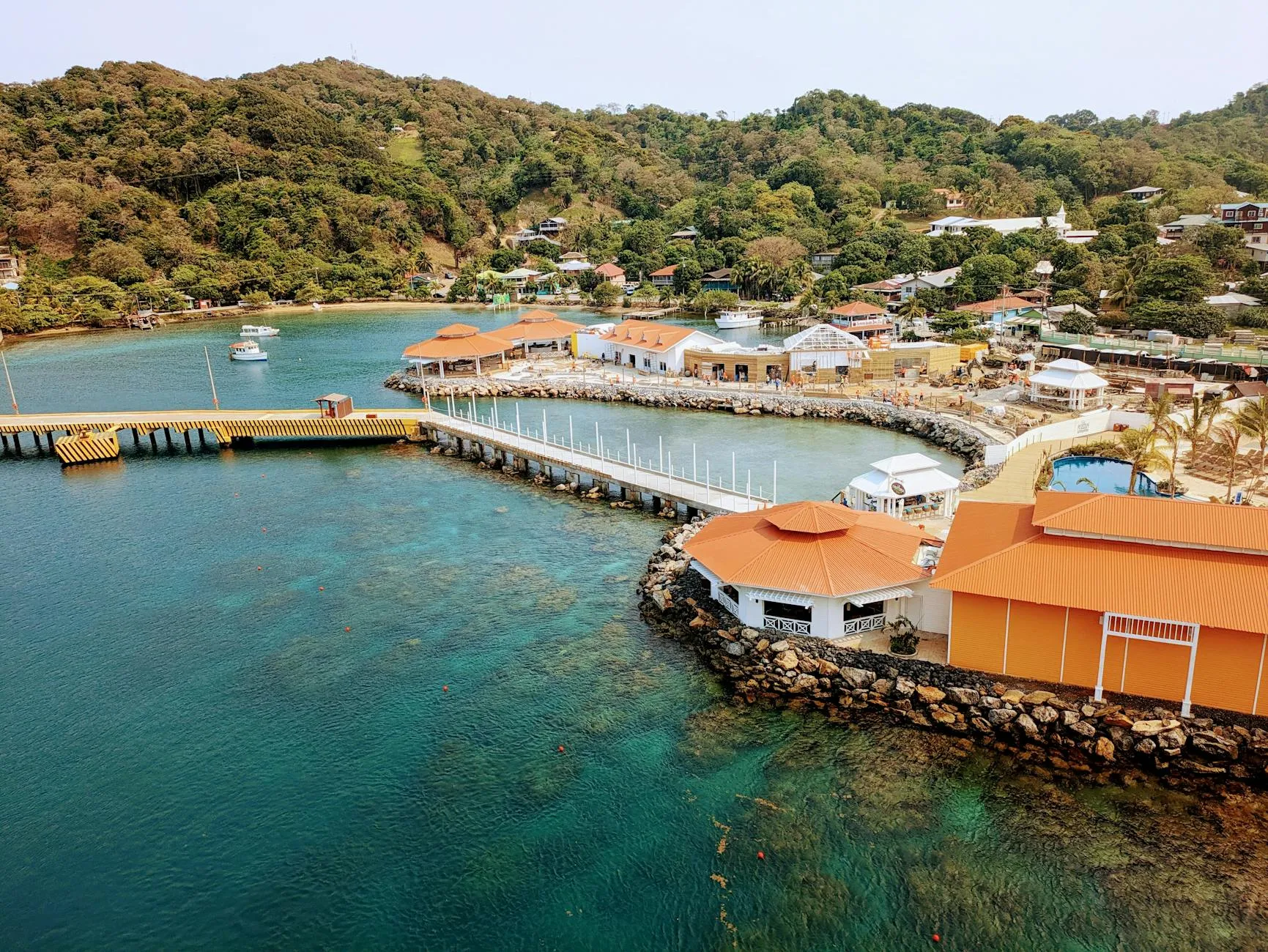
The Bay Islands — Roatán, Utila, Guanaja — sit on the Mesoamerican Barrier Reef and are the country’s primary dive economy and its safest tourist zone. Many travellers connect SAP to Roatán’s Juan Manuel Gálvez Airport (RTB) on a short hop, or reach the islands by ferry from La Ceiba. On the islands, US dollars circulate freely, prices are often quoted in USD, and the mainland travel advisory concerns largely fall away.
🤿 SAP to Roatán — the actual purpose of most leisure layovers
For the majority of leisure travellers, SAP is a transit step between a US hub and RTB. Confirm the SAP–RTB carrier (CM Airlines or TAG) and current schedule when you book — Bay Islands hops shift seasonally. Once on Roatán, the Level 3 advisory for the mainland is not a live concern.
Layover verdict
On a tight connection, stay airside and use the lounge. Tela is the only coastal sight reachable on a long daytime layover, and only with a driver booked in advance and a realistic return buffer. Copán, La Ceiba and the islands all require an overnight commitment. Given the city’s security profile, the default for a short stop is to avoid going into San Pedro Sula to sightsee — there is no tourist payoff in the city itself that changes that calculation.
🔧 Practical Notes
Wi-Fi and SIM
The terminal has free Wi-Fi; treat the connection as unsecured and avoid banking logins without a VPN. For a local SIM or eSIM, Tigo and Claro are the two main networks — Tigo generally has broader rural coverage for trips to Copán or the coast, while both are strong in the cities. Prepaid SIM registration is legally required in Honduras; bring your passport. An eSIM bought before you fly is the friction-free option for a short transit where you only need data for ride-hailing and maps.
Currency on the ground
Carry lempiras for taxis, buses, street food and small shops — many small vendors do not take cards. ATMs are common in the city; withdraw inside a bank branch or a guarded mall rather than at an exposed street machine, and avoid ATM withdrawals after dark.
Safety — stated plainly
⚠️ City security — read before leaving the airport
San Pedro Sula recorded a murder rate around 89 per 100,000 in 2025, concentrated in the Chamelecón and Rivera Hernández neighbourhoods — areas with no tourist reason to enter. Honduran authorities reported a sharp rise in kidnapping incidents touching foreigners in early 2026. The US State Department holds Honduras at Level 3 “Reconsider Travel.” The risk is overwhelmingly concentrated and opportunistic; a traveller who transits by day, uses Uber or a called taxi, and heads straight to a destination rarely encounters it.
The practical rules: arrive and move by day. Use Uber or a hotel-arranged taxi, never a flagged street cab at night. Do not walk around the city with bags or visible valuables. Keep one card and some cash separate from your main wallet.
Tipping and norms
Restaurants often add a 10% service charge — check the bill before adding more; if it is not included, 10% is normal. Round up taxi fares; tip hotel porters a few dollars’ worth of lempiras.
Health
San Pedro Sula sits in a hot, humid lowland valley — there is no altitude issue here, unlike highland Central American capitals. Dengue is endemic; Zika and chikungunya circulate. Bring repellent and treat the climate as tropical year-round. Tap water is not potable anywhere on the mainland; drink only sealed bottled water, and use it for brushing teeth if you have a sensitive stomach.
❓ FAQ
📊 At a glance — SAP 2026
| Feature | Detail |
|---|---|
| IATA / ICAO | SAP / MHLM |
| Full name | Ramón Villeda Morales International (La Mesa) |
| Opened | February 1965; current terminal 1997; remodel targeted late 2024 |
| Distance to city | ~11 km southeast; 25–40 min |
| Annual passengers | ~1.27 million (2023) |
| Terminal layout | Single two-level terminal, Concourses A and B |
| Currency | Honduran lempira (HNL) |
| Exchange rate | 1 USD ≈ 26.6 HNL; 100 HNL ≈ 3.76 USD / 3.45 EUR (May 2026) |
| Visa | Visa-free 90 days under CA-4 (shared regional allowance) |
| Yellow fever | Only if arriving from/transiting a risk country (South America, Panama) |
| Uber to city | ~200–300 HNL (8–11 USD), 25–40 min |
| Taxi to city | ~350 HNL (13–15 USD), negotiate first |
| Bus to city | ~30 HNL (~1.25 USD), 06:00–22:00 |
| Lounges | Salas Internacionales VIP Club ×2 (Priority Pass / LoungeKey / Diners Club) |
| Absent premium lounges | No Amex Centurion, no airline flagship |
| Main carriers | AA, UA, DL, B6, NK, F9, CM, AV, AM, UX |
| Copán ruins | ~4 hours west; overnight commitment, not a layover |
| Tela | ~1.5 hours northeast; only feasible coastal day-trip on a long layover |
| La Ceiba | ~3 hours northeast; Bay Islands ferry hub and Pico Bonito access |
| Roatán (RTB) | Short connecting flight; Bay Islands operate primarily in USD |
| Travel advisory | US Level 3 “Reconsider Travel” |
| Tap water | Not potable — bottled only |