Bratislava M. R. Štefánik Airport (BTS) — Airport Guide 2026
Bratislava’s airport has always had a split identity — officially the capital of Slovakia’s gateway, operationally the cheapest way into Austria — and in 2025–26 it acquired a third role: a working low-cost hub, with Ryanair’s fourth aircraft and Wizz Air’s brand-new base pushing the combined route count past the high thirties.
Quick Reference
Bratislava M. R. Štefánik Airport (Letisko M. R. Štefánika)
BTS / LZIB
~9 km north-east of Bratislava city centre
One building (opened 2012, ~5M capacity); check-in in Terminal A; gates A and B
Public bus 61 → Hlavná stanica (main railway station), ~25–30 min, ~€1.00–1.30, every 15–20 min
N61 covers the small hours when bus 61 is not running
FlixBus / RegioJet / Slovak Lines → Vienna city + VIE airport, ~1 hr, from ~€8, ~50+ departures/day
~€15–20, ~15–20 min (use marked rank or Bolt)
Euro (€) — Slovakia since 2009
Full member since 2007 (land) / 2008 (air); EES live since 10 April 2026; ETIAS expected, date not announced
Pearl Lounge, Terminal A, airside upper level — Priority Pass; walk-in pay
Ryanair (base), Wizz Air (base opened November 2025)
🏗️ Terminal & The Growth Spell
Everything at BTS passes through one terminal, opened in 2012 and dimensioned for around five million passengers a year — which means there is genuine headroom even as the schedule has thickened. Check-in and landside services sit in Terminal A; after the single central security point, departures split into the A and B gate piers. The whole building is crossable in a few minutes. That compactness is useful when you have a morning low-cost flight to catch, though it also means the morning departure bank briefly bunches queues at the same security checkpoint.
The growth is recent and structural. Ryanair has run a base here for some years; it expanded to a fourth aircraft for the 2026/27 winter and now covers around thirty-plus routes. Wizz Air opened its own Bratislava base in mid-November 2025 and is scaling toward four Airbus A321neo aircraft through spring 2026, with a route count in the high twenties — including a domestic Bratislava–Košice link, the first scheduled service between Slovakia’s two largest cities in some years. Between the two carriers the airport now reaches the high thirties in destinations across more than twenty countries. BTS is no longer a once-a-day secondary field; it operates as a lean budget hub, and the experience reflects that.
⏰ Morning Security Peak
The morning low-cost bank sees a brief queue spike at the single security point. Arrive with your airline’s stated cut-off in hand — the terminal is small, which works both ways.
🛂 Border, EES & Schengen Status
Slovakia sits squarely inside the EU’s core systems, and the border process changed materially in 2026. The currency and Schengen situation are simple; the EES change is the part to understand before you arrive.
💶 Currency — Euro Since 2009
Slovakia adopted the euro in 2009. Unlike its neighbour Bulgaria (which joined the eurozone only recently) or Romania (still using the leu), there is no currency transition to manage. Every price, ATM, and card terminal at BTS is in euro.
🇪🇺 Schengen — Fully Integrated
Slovakia has been a full Schengen member since December 2007 for land borders and March 2008 for air. A flight arriving from anywhere else inside the Schengen zone walks straight out — no passport control of any kind.
📋 EES — Live Since 10 April 2026
The Entry/Exit System (EES) became fully operational at Slovakia’s external Schengen border on 10 April 2026, following a phased rollout from October 2025. It replaces the inked passport stamp with a biometric record — facial image and fingerprints — that automatically tracks the 90-days-in-180-days short-stay allowance. The first crossing of a new cycle takes a few extra minutes while the record is created; subsequent crossings are faster. This applies to all non-EU arrivals from outside the Schengen bloc.
📋 ETIAS Is Not Yet Required
ETIAS — the online travel authorisation for visa-exempt non-EU nationals (UK, US, Canadian, Australian, and others) — is a separate system from EES and is not currently in force. It has no announced launch date. Until then, a valid passport is the only pre-travel document required.
| Passport | Visa needed? | EES applies? | ETIAS once live? |
|---|---|---|---|
| EU / EEA / Swiss | No | No | No |
| UK | No (≤90/180 days) | Yes | Yes |
| USA / Canada / Australia / NZ | No (≤90/180 days) | Yes | Yes |
| Japan / South Korea / Singapore | No (≤90/180 days) | Yes | Yes |
| India / China / South Africa | Yes — Schengen visa required | Yes (recorded at entry) | N/A while visa required |
🚌 Getting Into the City — and Into Vienna
There is no railway line to the airport. Bratislava’s main station, Hlavná stanica, is in the city — bus 61 connects the two.
🚏 Bus 61
Bus 61 runs from the stop directly outside the terminal to Hlavná stanica in about 25–30 minutes, every 15–20 minutes, from roughly 04:40 to 23:35. The night bus N61 covers the gap. From Hlavná stanica, trams and trains reach the city centre.
Buy at minimum a 30-minute single (about €1.00). Because the run can brush 30 minutes in traffic, the 60-minute ticket (about €1.30) is the safer option.
🚌 Save ~10% — Pay by Contactless Card or the IDS BK App
Paying by contactless card or the IDS BK transit app shaves roughly 10% off the bus fare. Both methods work at platform machines or in the app before boarding.
⚠️ Warning: Baggage Ticket Required for Large Suitcases
A large suitcase needs a separate reduced-fare baggage ticket — about €0.35 — on top of your own fare. The fine for travelling without it is €5. Buy from the driver or in the IDS BK app. Inspectors check.
🚕 Taxis and Ride-Hail
A taxi from the rank into central Bratislava runs about €15–20 and takes 15–20 minutes. The airport has a long-standing problem with unmarked private cars touting inflated fares at the terminal door. Use a clearly marked rank taxi with a posted tariff, or order Bolt in the app before reaching the kerb. Bus 61 is far cheaper either way.
🏙️ Vienna — Roughly Fifty Coaches a Day, No Border Stop
FlixBus, RegioJet, and Slovak Lines all run direct coaches from the airport forecourt to Vienna, serving both the city centre (near the Hauptbahnhof) and Vienna Airport (VIE), in around an hour. Fares start at about €8, and across the three operators there are roughly fifty-plus departures a day. Both countries are Schengen members using the euro — no border check, no currency exchange.
🏙️ Vienna Is a Connection, Not a Layover Excursion
An hour each way by coach, plus check-in buffers on both ends, makes central Vienna unreachable between two BTS flights. The coaches are genuinely useful if your itinerary takes you to Austria; they are not a sightseeing option between connections. In summer, the Twin City Liner catamaran also runs between the two city centres along the Danube — but it departs from central Bratislava, not the airport.
🛋️ The Pearl Lounge
The only lounge at BTS is the Pearl Lounge, in Terminal A on the airside upper level — past security, which means you need to be a departing passenger to access it. Since June 2025 it has been operated by Menzies Aviation. Priority Pass is accepted; walk-in paid access is available to everyone else.
💳 Mastercard Free Access Ended 1 January 2026
If you previously entered the Pearl Lounge on a Mastercard card benefit, that perk terminated on 1 January 2026. Verify your card’s current lounge benefits before counting on it at BTS.
The lounge is a single, modestly sized contract space — a quiet seat, drinks, and a light food spread. At a low-cost airport where the rest of the terminal is stand-and-wait, the seat is the whole value proposition.
🍽️ Food Before You Fly
Slovak cooking is hearty, Central European, and calorie-forward. The national reference dish is bryndzové halušky — soft potato dumplings topped with bryndza (a tangy, salty sheep’s-milk cheese) and fried bacon. Kapustnica is the other staple: a smoked-meat-and-sauerkraut soup that appears year-round but is particularly present in colder months. Lokše are thin potato flatbreads from the bakery end of things; trdelník, the cylindrical spit-cake sold everywhere near the Old Town, is more of a modern tourist item than a deeply traditional one — edible enough, but priced for visitors.
For drinks: Slovakia produces serious wine in the Small Carpathians just north of Bratislava, and it holds a share of the Tokaj wine region (the bulk of which is across the border in Hungary). The spirit worth knowing is borovička, a juniper brandy distilled in the style of gin.
The practical carry-home is a sealed bottle of Small Carpathian white or a Slovak Tokaj. Both clear EU customs without issue and are sold in euro.
💡 Bratislava on a Layover — Honest Math
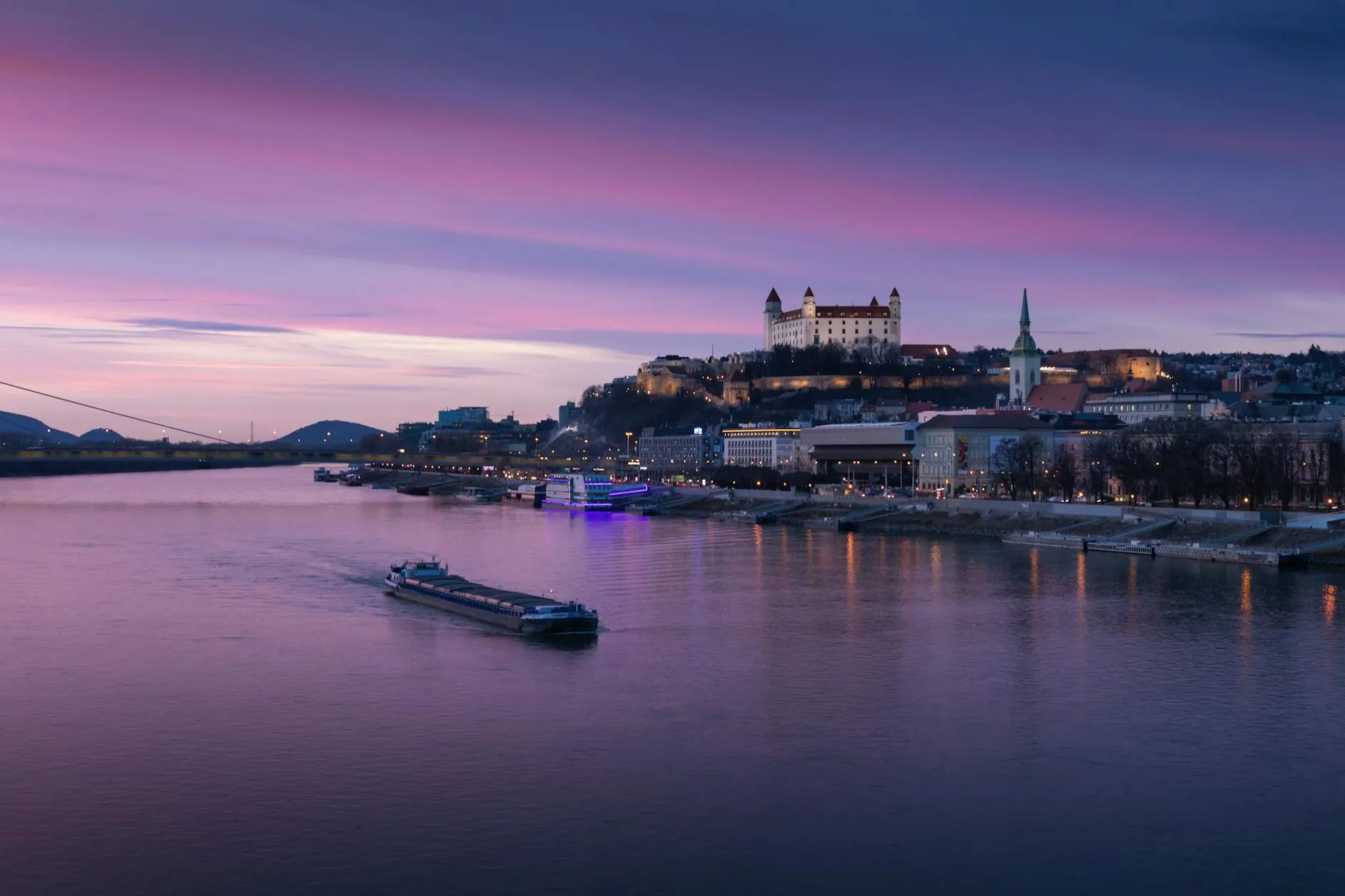
Bratislava’s centre is compact and walkable. The set pieces are the Old Town — Main Square, the Old Town Hall, and St. Michael’s Gate, the last surviving medieval gate in the old city fortification — and Bratislava Castle, the white four-towered block on the hill above the Danube that locals describe as resembling an upturned table, with the best views over the river and across to Austria. The city’s street bronzes include Čumil, a workman peering out of a manhole at pavement level, which has become one of the more photographed spots in the Old Town. Further out, the UFO observation deck sits atop the SNP bridge pylon over the Danube; Devín Castle, at the confluence of the Morava and Danube on what was the Iron Curtain frontier, is further west and beyond reach on a short layover.
⏱️ Layover Math
Bus 61 takes 25–30 minutes each way. Add a 90-minute return-security buffer. A four-hour layover covers the Old Town and a look at Bratislava Castle — tight but workable if the bus runs on schedule. A five-hour layover is comfortable. Under three hours: stay airside.
The UFO observation deck has an entry fee and is worth it only when visibility is good.
🧭 Practical Notes
- Arrive with your airline’s stated cut-off time in hand. There is one security point; the morning low-cost bank briefly bunches queues.
- The €0.35 baggage ticket on bus 61 is not optional — the €5 fine is real and inspectors check.
- Bolt is the practical ride-hail option at BTS; the door touts are a known overcharge risk.
- Coaches to Vienna run from the forecourt from about €8, take around an hour, and serve both the city and VIE airport — seamless crossing with Schengen and euro shared on both sides.
- Reduced-mobility assistance is free under EU rules but must be pre-booked through your airline at least 48 hours in advance; meeting points are signed in the terminal.
❓ Frequently Asked Questions
📊 At a Glance — BTS 2026
| Feature | Current Data (2026) |
|---|---|
| Official name | Bratislava M. R. Štefánik Airport (Letisko M. R. Štefánika) |
| IATA / ICAO | BTS / LZIB |
| Location | ~9 km north-east of Bratislava |
| Terminals | One terminal (opened 2012, ~5M capacity); Terminal A check-in; gates A and B |
| Rail to centre | None — no airport railway |
| Bus to centre | Public bus 61 → Hlavná stanica ~25–30 min, ~€1.00–1.30, every 15–20 min; night bus N61 |
| Coaches to Vienna | FlixBus / RegioJet / Slovak Lines → Vienna city + VIE airport, ~1 hr, from ~€8, ~50+/day |
| Taxi to centre | ~€15–20, ~15–20 min — marked rank or Bolt recommended |
| Currency | Euro (€) — Slovakia since 2009 |
| Schengen status | Full member since 2007/08; EES live since 10 April 2026; ETIAS expected, date not announced |
| Lounge | Pearl Lounge (Terminal A, airside; Menzies Aviation since June 2025; Priority Pass; walk-in pay) |
| Dominant carriers | Ryanair (base, ~30+ routes); Wizz Air (base since November 2025, high 20s routes) |
| Domestic link | Bratislava–Košice (Wizz Air) |
| Layover guide | 4 hr+: Old Town + Castle viable; under 3 hr: stay airside; Vienna = connection, not excursion |