Košice International Airport (KSC) — Airport Guide 2026
The biggest change in 2026 is the first scheduled domestic link between Bratislava and Košice — an hour by air in place of the five-plus-hour drive that has long kept eastern Slovakia in its own orbit.
Quick Reference
Košice International Airport (Letisko Košice)
KSC / LZKZ
~6 km south-west of Košice, eastern Slovakia
One passenger terminal
~600,000–700,000
Public bus 23 (DPMK) → railway station / centre, ~20 min; €1.00 (≤30 min) or €1.20 (≤60 min) + €0.90 bag ticket; timetabled, not turn-up-and-go
~€10–15, ~10–15 min; use a marked rank or Bolt
Euro (€) — Slovakia since 2009
Full member since 2007 (land) / 2008 (air)
Live for non-EU arrivals since 10 April 2026
Not yet live — no date announced
Airport Lounge (airside, first floor) — Priority Pass / LoungeKey / Diners Club; ~€19 walk-in; opens ~03:30, closes mid-afternoon
Austrian (Vienna), Ryanair, Wizz Air, Smartwings, LOT, SWISS
~18 destinations, ~8 airlines
🏢 The Terminal
Košice is a one-terminal airport of modest but honest ambition. Around 600,000 to 700,000 passengers a year pass through a building you can read end-to-end from the door — manageable in a way that Frankfurt, or even Vienna, is not. The route map is built around connections rather than a low-cost flood, and that shapes the experience: the defining link is Vienna with Austrian Airlines, roughly thirteen flights a week, which feeds the Star Alliance network and explains why there is a Priority Pass lounge here at all. Around it sit Ryanair and Wizz Air routes to London Stansted and Luton, Dublin, Liverpool, Doncaster and Warsaw; Smartwings to Prague; LOT to Warsaw; SWISS doing its thing. Total: roughly eight airlines to eighteen destinations as of mid-2026.
The standout addition is the new domestic Bratislava–Košice route — the first regular scheduled service between Slovakia’s two largest cities in years. Previously, the options were a five-hour-plus drive or a train of similar duration. Now it is an hour by air, which matters for business travellers in the east who have had to commute via Vienna.
🛂 Border & Visa
Slovakia is a full Schengen member — land borders since 2007, air since 2008. A flight from anywhere inside the bloc (Vienna, Prague, Bratislava) arrives with no passport control. The proximity of Košice to the Ukrainian and Hungarian land borders is irrelevant for air arrivals; it is a road-and-rail geography point, not an airport one.
Non-EU arrivals: EES is live
The Entry/Exit System (EES) has been fully operational at the Schengen external border since 10 April 2026, after a phased start from October 2025. It replaces the passport stamp with a biometric record — facial image and fingerprints — that tracks the 90-in-180-day short-stay allowance automatically. Your first crossing of a new cycle will run slower while the record is created; subsequent crossings in the same cycle are faster.
ETIAS: not yet required
The European Travel Information and Authorisation System is a separate thing and it is not live yet. It is expected on a date that has not been announced. Once it starts, visa-exempt non-EU travellers — UK, US, Canadian, Australian and equivalent — will need an online pre-authorisation before flying. Until then, a valid passport is sufficient.
| Passport | Schengen visa needed? | EES applies? | ETIAS (when live)? |
|---|---|---|---|
| EU / EEA / Swiss | No | No | No |
| UK | No (≤90/180 days) | Yes | Yes |
| USA / Canada / Australia / NZ | No (≤90/180 days) | Yes | Yes |
| Japan / South Korea / Singapore | No (≤90/180 days) | Yes | Yes |
| India / China / South Africa | Yes — Schengen visa required | Yes (recorded at entry) | N/A while visa required |
⚠️ EES first-crossing delay
If this is your first Schengen entry in a new 180-day cycle, expect the border lane to take longer than a passport stamp used to — biometric enrolment adds time. Factor it into your connection at Košice if you are continuing onward.
🚌 Getting Into the City
There is no airport railway station. The city’s main railway station is in the centre of Košice, and one city bus is the entire public-transport offering between the airport and town.
🚌 Bus 23
Public bus 23, operated by the city transport company DPMK, runs from the airport to the railway station, the city centre and the bus station in about twenty minutes. The fare is €1.00 for a journey up to thirty minutes or €1.20 for up to sixty, and a large bag requires its own separate €0.90 baggage ticket on top.
The honest catch: line 23 runs to a fixed published timetable, not on a turn-up-and-go basis, and the gaps between buses can be substantial. If your flight arrival lines up with a departure it is fine; if it does not, you are waiting. Check the city transport planner at imhd.sk for the day’s schedule before relying on it.
🚌 Bus 23 — the only public link
€1.00–1.20 per person plus €0.90 for a large bag, ~20 minutes to the centre. Check imhd.sk before you land — the timetable gaps are real, and an infrequent bus and a tight connection is a bad combination.
🚕 Taxi & Bolt
About €10–15 into the centre, ten to fifteen minutes. Cheap by Western European standards, and the reliable option when the bus timetable does not cooperate. Use a marked rank taxi with a posted rate card or book a Bolt ride via the app. Do not take an unmarked car from the forecourt.
⚠️ Unmarked taxis — avoid
Use a marked rank with a visible rate card, or Bolt. The usual rule applies: no meter visible, no posted rate, no thanks.
🛋️ The Lounge
Košice has one airside lounge: simply called the Airport Lounge, located behind the security control point on the first floor. It accepts Priority Pass, LoungeKey and Diners Club, and takes walk-in guests for around €19. Star Alliance passengers flying Austrian to Vienna or SWISS may also have access through their ticket.
The hours are heavily morning-weighted. It opens very early — around 03:30 on most days — to cover the dawn departure bank, and closes by mid-afternoon. Midweek hours are shorter. An evening or late-night flight may find it shut entirely. Inside: Wi-Fi, snacks, alcoholic and non-alcoholic drinks, a quiet seat. Note the dress code — no shorts, sandals or vests.
🛋️ Airport Lounge — check the hours before you bank on it
Opens ~03:30, closes mid-afternoon. Walk-in ~€19; Priority Pass, LoungeKey, Diners Club accepted. Dress code enforced (no shorts, sandals, vests). Evening flights: assume it is shut unless you have confirmed otherwise.
🍽️ Food Before You Fly
Slovak cooking is filling and Central European, and the east has its own lean. The national plate is bryndzové halušky — potato dumplings with sheep’s-milk cheese (bryndza) and fried bacon. Kapustnica, a smoked-meat and sauerkraut soup, turns up everywhere in the cold months. Eastern Slovakia edges toward Hungarian flavours because of where it sits geographically, so paprika-rich stews and dishes appear alongside the Slovak standards near the border.
To drink: borovička, a juniper brandy, is the Slovak spirit of record. For the carry-home, the east holds Slovakia’s share of the famous Tokaj wine region — the Slovak Tokaj sweet whites are the distinctive regional buy, alongside smoked oštiepok (sheep’s milk cheese) and eastern-Slovak honey. Sealed wine and spirits clear EU customs without issue; everything is priced in euro.
🧀 oštiepok and Slovak Tokaj — the two worth buying
Smoked oštiepok cheese and a Slovak Tokaj sweet white are the genuinely regional carry-home from this corner of Slovakia. Both clear EU customs sealed. Everything is in euro.
💡 Košice: The City
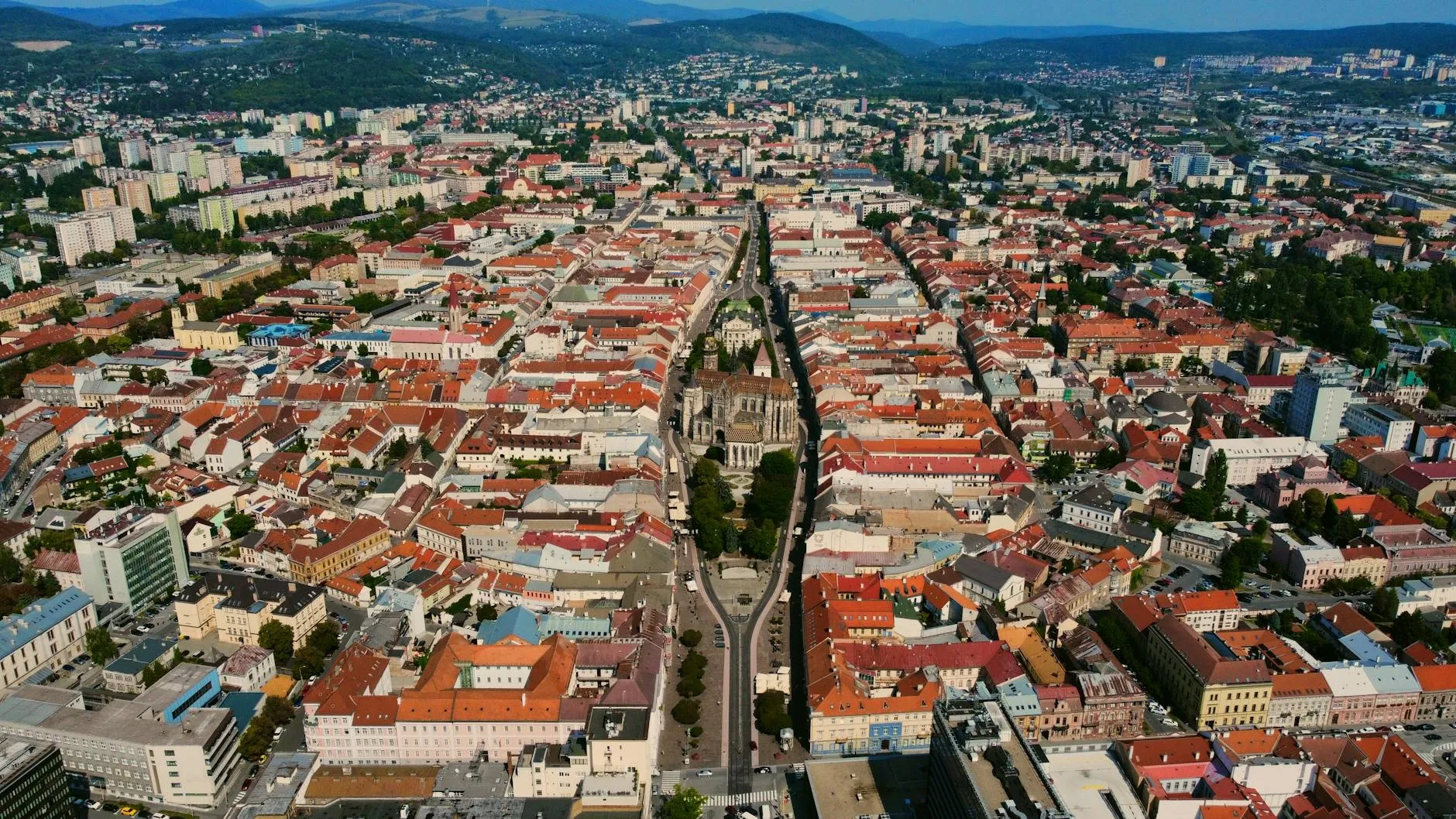
Košice is Slovakia’s second city and a real one — not a day-trip curiosity but a place with a functioning urban identity. It was a European Capital of Culture in 2013, which produced some infrastructure, but the bones were already there.
The spine of the city is Hlavná ulica (Main Street), a long spindle-shaped boulevard that widens into a plaza at its centre — one of the longest pedestrian zones in this part of Europe — lined with pastel townhouses, the State Theatre and the Singing Fountain with its musical clock. At the heart stands St. Elisabeth’s Cathedral (Dóm svätej Alžbety), the largest church in Slovakia and the easternmost Gothic cathedral in Europe, with a crypt holding the Hungarian rebel leader Ferenc Rákóczi and a climbable tower. Underneath Hlavná, the Lower Gate archaeological complex preserves the city’s medieval fortifications in situ.
One genuinely surprising fact for a city this size: this corner of eastern Slovakia is Andy Warhol’s ancestral region. His parents emigrated from a village nearby, and the Andy Warhol Museum of Modern Art at Medzilaborce is a couple of hours to the north-east. Too far for a layover, but a real destination if you are staying more than a night.
The wider region holds the High Tatras, the UNESCO-listed Spiš Castle and the gorges of the Slovak Paradise. All are at least an hour from Košice — destinations you fly in for, not layover add-ons.
⏱️ The Layover Calculation
The centre is 6 km out and compact once you are there. With four hours or more, you can cover Hlavná Street, St. Elisabeth’s Cathedral and the Singing Fountain and still clear security with ninety minutes to spare.
The timing risk falls almost entirely on bus 23, not on the sightseeing. The cathedral and the boulevard are close together and walkable; the bus is infrequent and fixed. For a layover, take a taxi (~€10–15) in at least one direction so the clock stays in your hands, not the DPMK timetable’s.
Under three hours: stay airside. The city is worth the trip, but not a rushed one.
💡 Four-hour layover: Hlavná + the cathedral, then back
Taxi in (~€10–15, 10–15 min), walk Hlavná Street and St. Elisabeth’s Cathedral, taxi or bus back with a 90-minute security buffer. Tight but workable. Under three hours: do not bother — the transit alone eats a third of your time.
The Tatras, Spiš and the Slovak Paradise are a separate trip. They are an hour-plus away in each direction and require a full day, not an airport connection.
🧭 Practical Notes
- Bus 23 is the only public link, and it is timetabled. Check imhd.sk for the departure that matches your flight before leaving the terminal. If no bus fits your window, the taxi (~€10–15) is the straightforward answer.
- Buy the baggage ticket separately. A large bag on bus 23 requires its own €0.90 ticket, in addition to your own fare. Skip it and you are travelling without a valid ticket.
- The lounge closes mid-afternoon. It opens very early and wraps up early. An evening departure will likely find it shut; check the day’s times before counting on it.
- Use a marked taxi or Bolt. The usual rule: no posted rate, no meter in view — walk past it.
- Reduced-mobility assistance is free under EU rules but must be booked through your airline at least 48 hours before departure. The meeting point is signed in the terminal.
❓ FAQ
📊 At a glance — KSC 2026
| Feature | Data |
|---|---|
| Official name | Košice International Airport (Letisko Košice) |
| IATA / ICAO | KSC / LZKZ |
| Location | ~6 km south-west of Košice, eastern Slovakia |
| Terminals | One passenger terminal |
| Annual passengers | ~600,000–700,000 |
| Rail to centre | None — no airport rail link |
| Bus to centre | Bus 23 (DPMK) → station / centre ~20 min; €1.00–1.20 + €0.90 bag; timetabled — check imhd.sk |
| Taxi to centre | ~€10–15, ~10–15 min; marked rank or Bolt |
| Currency | Euro (€) — Slovakia since 2009 |
| Schengen | Full member since 2007/08 |
| EES | Live since 10 April 2026 |
| ETIAS | Pending — no date announced — not yet required |
| Lounge | Airport Lounge (airside, 1st floor) — Priority Pass / LoungeKey / Diners; ~€19 walk-in; opens ~03:30, closes mid-afternoon |
| Main carriers | Austrian, Ryanair, Wizz Air, Smartwings, LOT, SWISS |
| Route count (mid-2026) | ~18 destinations, ~8 airlines |
| 2026 headline change | New domestic Bratislava–Košice scheduled route |
| Best layover move | Taxi to Hlavná + St. Elisabeth’s Cathedral (4 hr+ layover only); Tatras / Spiš are fly-in trips, not layover sights |