Roman Tmetuchl International Airport (ROR) — Airport Guide 2026
Palau runs one international airport — ROR on Babeldaob — and the country has built an entry system unlike anywhere else in the Pacific: a signed eco-pledge stamped in your passport, a $100 environmental fee baked into your ticket, and a mandatory QR form you submit before you ever board.
Quick Reference
Roman Tmetuchl International Airport (Palau International)
ROR / PTRO
Babeldaob island, Palau — ~6 km from Koror across the bridge
One modern terminal (opened 2021, Japan partnership)
US dollar (USD)
Palauan immigration — visa-on-arrival most nationalities; EU 90 days visa-free; US no visa
Palau Entry Form (QR) within 72 hr before flight; $100 environmental fee in airfare; Palau Pledge signed on arrival
Hotel shuttle (~$10) or pre-booked taxi/transfer (~$15–35); no taxis wait at arrivals
~15 min, ~6 km
No confirmed Priority Pass lounge
United (via Guam), Air Niugini + East-Asian links (Taipei/Seoul)
🏝️ The Terminal
ROR is Palau’s sole international airport — there is no other. It sits on the large island of Babeldaob, the same island as the tiny capital Ngerulmud, connected to the main town of Koror by the Koror–Babeldaob bridge. The terminal was rebuilt in 2021 in partnership with Japanese companies, which brought it up to modern comfort: calm, well-lit, easily navigated. It is compact. The schedule reflects that: a handful of flights a week rather than a hub’s daily churn.
Palau is in the western Pacific — north of Indonesia, east of the Philippines — and ROR is the only way in from outside. Treat it as what it is: an endpoint airport at the end of a long journey, not a spoke in anyone’s network.
🛂 Border & Entry: The Pledge, the Form, the Fee
Palau operates its own immigration, distinct from any bloc, and has layered three requirements onto the usual arrival process that catch visitors off-guard.
📋 Palau Entry Form — submit before you fly
Within 72 hours of arrival, complete the online Palau Entry Form and save the QR code. Present it at the airport. Forgetting it at home is a genuine problem; do it the day before you fly.
🌊 The Palau Pledge
Every visitor signs a written environmental and cultural promise on arrival — the Palau Pledge — which is then stamped into the passport. It commits you to treading lightly on the reef and the islands. It is a genuine legal requirement and a genuine statement of national values, not a tourism gimmick to breeze past.
💵 The $100 environmental fee
The Palau Protected Area Network Fee (PPEF) is $100 per visitor. It is already included in your airline ticket price — nothing to pay at the airport. You will not see a separate charge on arrival.
Standard entry requirements: passport valid 6+ months, proof of onward travel, sufficient funds (approximately $200 per week). Visa-on-arrival for nearly all nationalities. EU citizens: 90 days visa-free. US citizens: no visa.
🚐 Getting to Koror
The most useful thing to know before landing: taxis do not wait at ROR. There is no rank, no public bus, no rail. Arrive without a plan and you are on the phone trying to find a ride.
🚐 Arrange your transfer before you land
Most visitors use a hotel shuttle (often complimentary or around $10) or a pre-booked private taxi or transfer (roughly $15–35). The drive to Koror is about 15 minutes and 6 km, across the Koror–Babeldaob bridge. Book the same time you book the room and confirm on the day.
Rental cars are the other practical option for getting around Palau — the islands are spread out, public transport is essentially absent, and having a car on Babeldaob is useful. Book ahead rather than hoping for walk-up availability.
🛋️ Lounges
There is no confirmed Priority Pass lounge at ROR. The 2021 terminal has a café, a shop, and standard gate seating — comfortable enough for the short waits a thin schedule produces, but not lounge territory. If lounge access is something you plan around, Palau’s airport is not where you get it.
💵 Money & the Sunscreen Rule
Currency: Palau uses the US dollar outright, so no exchange is needed if you arrive with dollars. Cards are accepted at hotels, dive shops, and larger businesses in Koror. Carry cash for small vendors, boat operators, and anything outer-island, where ATMs do not exist.
🧴 Caution: Reef-toxic sunscreen will be confiscated
Palau banned sunscreens containing oxybenzone and certain other reef-harmful chemicals in 2020. Non-compliant products can be confiscated on arrival. Bring reef-safe sunscreen — do not assume yours qualifies without checking the label.
Export restrictions: marine products, shells, and corals are restricted from export. Palau’s reefs are the whole point of the place; the rules around them are serious.
Tipping follows US norms where it occurs.
🍽️ Food Before You Fly
Palau’s food reflects three overlapping influences — Pacific staples, Japanese technique, and Filipino cooking — and the result is better than small-island airports tend to suggest.
🐟 Reef fish and sashimi
Fresh reef fish is the backbone: grilled, raw, or Japanese-style. Sashimi and bento from the Japanese-influence side of the menu are common and genuinely good. Seafood is the thing to eat.
Taro and tropical staples appear throughout. The dish that gets mentioned in every write-up — fruit-bat soup — is a real traditional preparation, not a performance for tourists; whether you want it is a personal matter.
One practical note: marine products and certain shells and corals are export-restricted. Souvenirs made from reef material can be a problem at departure.
💡 The Rock Islands, Jellyfish Lake & the Layover Math
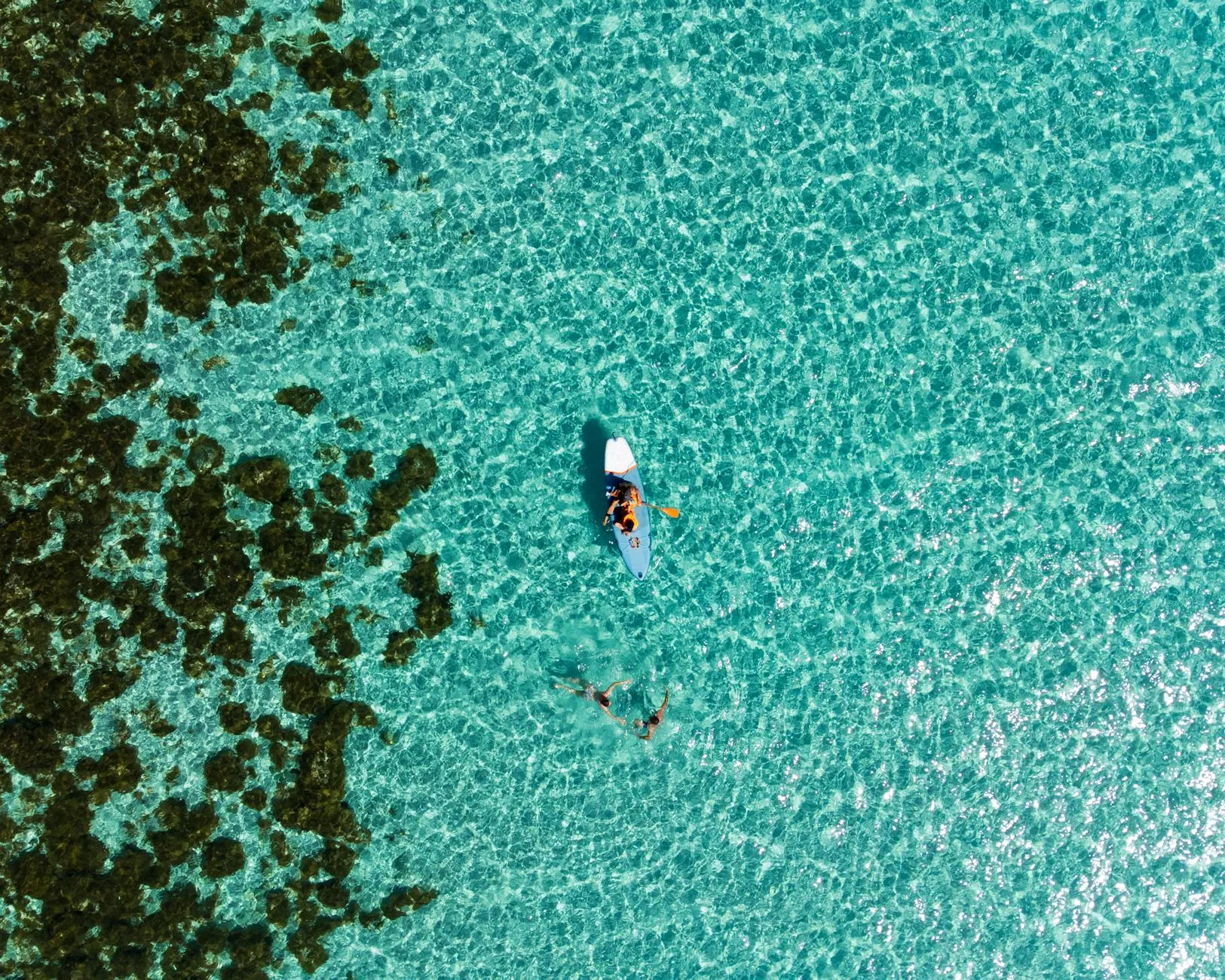
Palau’s draw is entirely aquatic. The Rock Islands Southern Lagoon — a UNESCO World Heritage Site — is a maze of mushroom-shaped limestone islets with jungle crowning every one. Jellyfish Lake sits within it: snorkel among millions of golden jellyfish, the vast majority stingless, which migrate across the lake daily tracking the sun. The diving at Blue Corner, the German Channel (mantas), and the Blue Holes ranks among the best on earth. Peleliu carries significant WWII history. On Babeldaob itself: the Ngardmau Waterfall and the tiny capital Ngerulmud, which functions more as a constitutional fact than a town. Koror is the actual base.
⏱️ The layover math: Palau does not work as a stopover
Flights are infrequent — a few a week — so the connection scenario rarely arises. But more fundamentally: everything worth coming for is a half-day-plus boat trip from Koror, requiring permits and operators arranged in advance. Jellyfish Lake, the Rock Islands, the dive sites — none of them are a dash from the terminal. Koror town is 15 minutes away if you have a few rare hours between connections, but the reef and islands need days. Plan Palau as a dedicated trip.
🧭 Before You Go
- Submit the Palau Entry Form (QR) within 72 hours of arrival and have it on your phone at check-in.
- The $100 environmental fee is already in your ticket — nothing extra owed at the airport.
- Arrange your ground transfer before landing — no taxis wait; hotel shuttle (~$10) or pre-booked transfer (~$15–35) are the standard options.
- Pack reef-safe sunscreen only — oxybenzone and certain other chemicals are banned, and confiscation on arrival is real.
- Carry USD cash for small operators and outer-island use; cards work in Koror hotels and dive shops, but ATMs are limited beyond that.
- Passport valid 6+ months, onward travel evidence, ~$200/week sufficient funds.
❓ Frequently Asked Questions
📊 At a glance — ROR 2026
| Feature | Current Data (2026) |
|---|---|
| Official name | Roman Tmetuchl International Airport (Palau International) |
| IATA / ICAO | ROR / PTRO |
| Location | Babeldaob island, Palau; ~6 km from Koror across the bridge |
| Terminal | One modern terminal (opened 2021, Japan partnership) |
| Rail / bus to Koror | None |
| Transport to Koror | Hotel shuttle (~$10) or pre-booked taxi/transfer (~$15–35); no taxis wait — arrange in advance |
| Journey time | ~15 min |
| Currency | US dollar (USD) |
| Border | Palauan immigration; visa-on-arrival most nationalities; EU 90 days visa-free; US no visa |
| Pre-arrival requirements | Palau Entry Form (QR) ≤72 hr before; $100 environmental fee included in airfare; Palau Pledge signed on arrival |
| Sunscreen | Reef-safe only — reef-toxic formulas banned 2020, confiscation enforced |
| Lounges | No confirmed Priority Pass lounge |
| Carriers | United (via Guam), Air Niugini + East-Asian links (Taipei/Seoul); limited and changeable |
| Layover viability | Not viable — infrequent flights, all attractions are half-day+ boat trips requiring advance permits |