Malaysia — Complete Travel Guide 2026
Malaysia is the most underrated country in Southeast Asia, and it gets overlooked for one silly reason: it sits right next to Thailand. While the backpacker world piles onto Bangkok and the Thai islands, Malaysia quietly offers nearly everything next door — the food, the islands, the rainforest, the orangutans, the colonial old towns — at the same prices, in a country where almost everyone speaks English, the infrastructure actually works, and the crowds are thinner. It is a multicultural food paradise stacked on top of one of the most biodiverse places on earth. The only real catch is that “Malaysia” is two completely different trips, and you can’t do both well in a week.
Quick Reference
Southeast Asia, split in two: Peninsular Malaysia (south of Thailand, down to Singapore) and Malaysian Borneo — the states of Sabah and Sarawak — across the South China Sea
Kuala Lumpur (KUL) — the big hub, with the full-service KLIA terminal and the separate klia2 low-cost terminal that is AirAsia’s global base; Penang (PEN); Langkawi (LGK); Kota Kinabalu (BKI) for Sabah; Kuching (KCH) for Sarawak
Malaysian ringgit (MYR), written RM — roughly 5 to the euro
Malay (Bahasa Malaysia) is official; English is very widely spoken; Mandarin/Chinese dialects and Tamil are everyday community languages too
Visa-free for most Western tourists for up to 90 days — but you must complete the free MDAC digital arrival card online within 3 days before you land
Two monsoons run opposite clocks: the west coast (KL, Penang, Langkawi) is driest Nov–Apr; the east coast islands (Perhentians, Tioman) and much of Borneo dry out Mar/Apr–Sep/Oct. KL works year-round
Arguably the best food country in Asia, gleaming Kuala Lumpur, UNESCO George Town, Borneo’s orangutans and rainforest, and proper islands and diving
KL for the peninsula and onward flights; George Town (Penang) for food and heritage; Kota Kinabalu for Sabah; Kuching for Sarawak — and accept you’ll do two trips, not one
Editor’s Note — two countries, one passport
Here’s the thing nobody tells you before you book: there are two Malaysias, separated by 600 km of the South China Sea, and they have almost nothing in common except the flag and the ringgit.
Peninsular Malaysia is the one most people picture — Kuala Lumpur’s skyline, the foodie heaven of Penang, the cool tea hills of the Cameron Highlands, the duty-free beaches of Langkawi, the snorkelling islands. It’s developed, easy, well-connected by good trains, cheap flights and decent buses. You could spend a brilliant ten days here and never get on a long-haul flight again.
Malaysian Borneo — the states of Sabah and Sarawak — is the wild one: equatorial rainforest, orangutans, the country’s highest mountain, world-class diving, riverboats through jungle, and Indigenous longhouses. It needs its own flights, its own week, and its own mindset. You fly into Borneo, you don’t drive there.
Try to cram both into seven days and you’ll spend half your trip in airports and see neither properly. My honest advice: pick a lane. First-timers and food lovers, do the peninsula — KL, Penang, an island, maybe the Cameron Highlands. Wildlife and adventure people, fly straight to Kota Kinabalu and give Sabah the full week. Got two weeks and you’re serious? Do the peninsula, then fly across for Borneo as a distinct second act. Don’t half-do both.
And the food. I’ll die on this hill: Malaysia is the best eating country in Asia, full stop. Thailand has the fame and Japan has the precision, but Malaysia has the crossover — three great culinary civilisations (Malay, Chinese, Indian) plus the Peranakan fusion they made together, served at hawker stalls for a couple of euros a plate. Penang alone justifies the flight.
💡 Decide peninsula-or-Borneo before you book flights. They’re effectively two holidays. A “Malaysia in a week” that tries to do both is a week of transits. One region, done properly, beats two skimmed.
Should You Go? Who it’s for — and isn’t
Malaysia is for the traveller who wants Southeast Asia’s full menu — culture, food, beaches, jungle, wildlife — without the rough edges. It’s outstanding for first-timers to Asia: English is everywhere, the cities are modern and clean, the transport is reliable, scams are mild, and you can eat like a king for pocket change. It’s a food obsessive’s pilgrimage — Penang and KL are among the great eating cities on earth. It’s superb for wildlife and adventure travellers (Borneo’s orangutans, Mount Kinabalu, the Kinabatangan river, Sipadan’s diving). And it’s genuinely family-friendly and good value — short island flights, warm sea, easy logistics.
It’s also for multi-faith, multicultural curiosity: a country where a mosque, a Chinese temple and a Hindu shrine sit on the same street, and three new years are public holidays. That layering is the whole point of the place.
Who it’s not for: anyone chasing a wild party-island scene. Malaysia is a Muslim-majority country; alcohol is available and legal in hotels, Chinese restaurants and bars, but it’s taxed heavily and it is not the cheap-booze free-for-all of southern Thailand or Bali. If beach raves are the goal, you’re in the wrong country. It’s also not for travellers who want one tidy, compact trip — the peninsula-Borneo split means real distances. And anyone expecting beaches to rival the Maldives should temper that on the west coast (Penang’s city beaches are mediocre); the good sand is on the east coast islands and around Langkawi, on the right monsoon clock.
Getting There & Around — KUL, AirAsia, trains and the Borneo problem
Kuala Lumpur International (KUL) is one of Asia’s major hubs and the key to cheap travel here. It has two physically separate terminals: KLIA (Terminal 1), the full-service terminal for Malaysia Airlines, the Gulf carriers, the European and East Asian flag carriers; and klia2, the vast low-cost terminal a few kilometres away that is AirAsia’s worldwide home base. They are not a quick walk apart — a free shuttle or the KLIA Ekspres train links them in about 3 minutes, but if you’re connecting between a full-service long-haul and an AirAsia hop, budget real time and check which terminal each flight uses.
That AirAsia base is your superpower. Domestic and regional budget flights from KL are absurdly cheap and frequent — KL to Penang, Langkawi, Kota Kinabalu or Kuching often runs €25–60 return if you book even a little ahead, and the network reaches across the whole of Southeast Asia. This is how you stitch a Malaysia trip together: fly the long legs, especially anything to Borneo.
Getting into KL from KUL: the KLIA Ekspres train is the easy answer — about 28 minutes nonstop to KL Sentral, roughly €11 one way (cheaper return). Grab (Southeast Asia’s Uber) is the other go-to and works flawlessly across the country; airport taxis use a coupon system. KL itself has a clean, cheap, English-signed network of LRT/MRT/monorail lines plus Grab — you do not need a car in the city.
On the peninsula, the trains are genuinely good now: the ETS (Electric Train Service) runs a fast, comfortable, modern intercity line up the west coast — KL to Ipoh in about 2 hours, KL to Penang’s mainland (Butterworth) in around 4, on to the Thai border. It’s cheap, scenic and far nicer than the bus. Long-distance coaches are also excellent value and cover everywhere the train doesn’t. You can do the whole western peninsula — KL, the Cameron Highlands, Ipoh, Penang — without renting a car, though a car helps for the Highlands.
Borneo is the asterisk. There is no road or rail link from the peninsula — Sabah and Sarawak are reached only by flying. Within Borneo, distances are big and the interior is roadless jungle, so you’ll fly between Kota Kinabalu, Sandakan, Kuching and Miri, and travel the last legs by 4WD, riverboat or small plane. Plan Borneo as its own self-contained logistics puzzle.
💡 Book the Borneo flight early, the peninsula flights late. KUL–Kota Kinabalu / Kuching fares creep up and the good wildlife lodges fill months out. Peninsula hops (KL–Penang–Langkawi) stay cheap and last-minute. And always double-check KLIA vs klia2 on connections.
Kuala Lumpur — the gateway city
KL is the smartest, easiest big-city introduction to Southeast Asia there is: modern, multicultural, walkable in patches, ridiculously good for food, and cheap. Give it two or three days at the start or end of a trip.
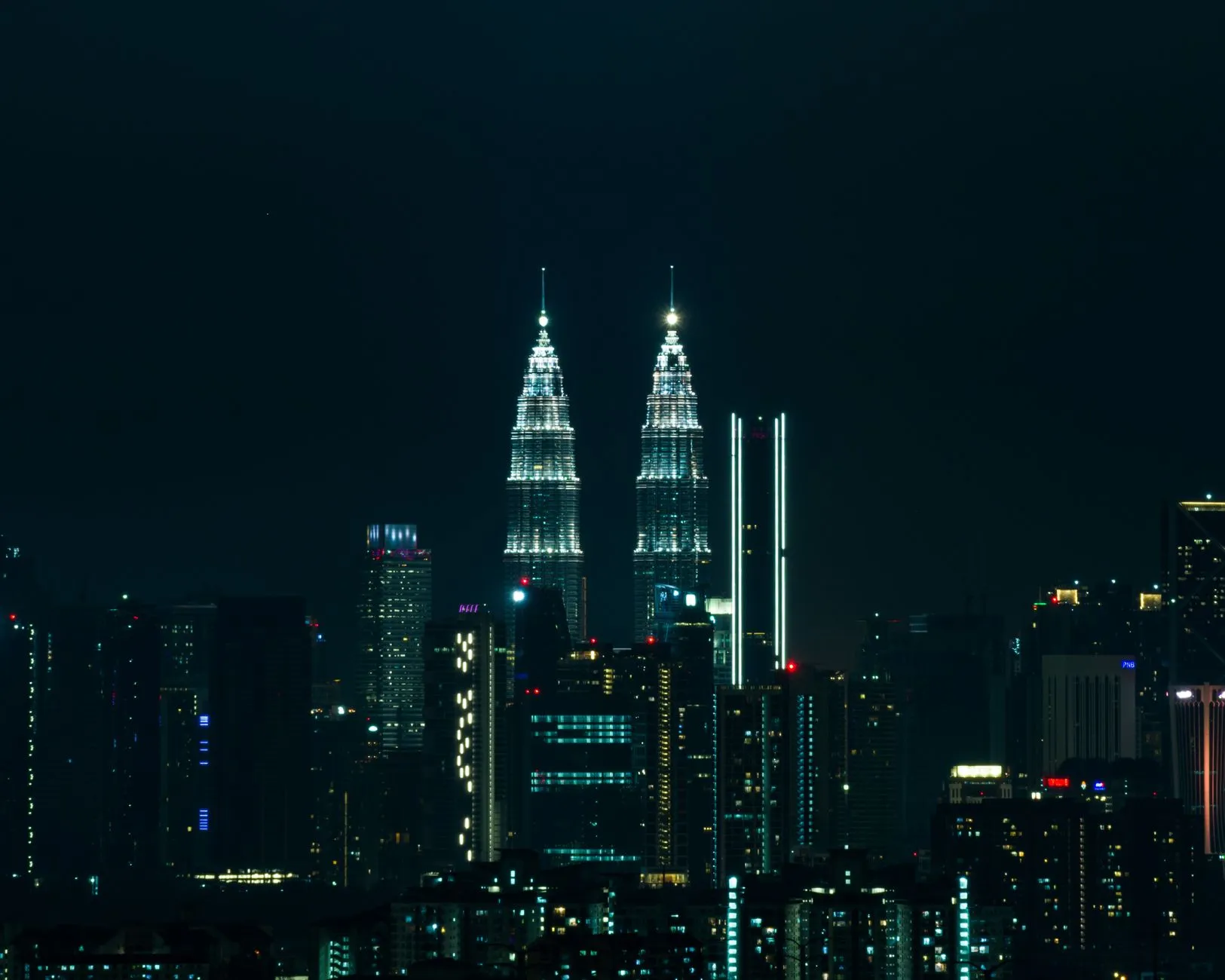
The icon is the Petronas Twin Towers — 452 m of steel and glass, still among the tallest twin towers on earth, floodlit at night above the KLCC park and fountains. Book the Skybridge and observation deck ahead, or just take the classic photo from the park lawn after dark, which costs nothing and is arguably better. A short ride out, the Batu Caves are unmissable: a 42.7-metre golden statue of Lord Murugan guards a rainbow-painted staircase of 272 steps climbing into a vast limestone cavern temple, alive with macaques and, at the Thaipusam festival (late January/early February 2026), one of the most extraordinary Hindu pilgrimages on the planet.
But the real KL is the food and the neighbourhoods. Jalan Alor is the famous after-dark hawker street — a smoky, neon canyon of seafood, satay and char kway teow that’s touristy but delivers. Better still, dig into Chinatown (Petaling Street, the old Chinese core), Little India (Brickfields), the Kampung Baru Malay enclave for nasi lemak in the shadow of the towers, and the colonial Merdeka Square heritage core — the Sultan Abdul Samad Building, the old railway station, the spot where independence was declared in 1957. KL’s contradiction is its charm: gleaming malls and Gulf-money skyscrapers on one block, a 100-year-old kopitiam (coffee shop) and a street-food cart on the next.
For the full breakdown — neighbourhoods, the best hawker spots, where to stay, day-trips — see our full Kuala Lumpur city guide.
💡 KL is a transport hub, not just a stop. Even if the city isn’t your highlight, you’ll route through KUL anyway — so build in 48 hours for the towers, Batu Caves and an evening eating your way down Jalan Alor or through Chinatown before you fly onward.
Penang — George Town and the best food in Asia
If you do one thing in Malaysia, make it Penang. George Town, the island’s old capital, is a UNESCO World Heritage Site — a dense, gorgeously decayed grid of Chinese shophouses, clan temples, colonial godowns, Indian mosques and Peranakan mansions, all peeling pastel paint and ceiling fans. It rewards aimless wandering: the clan jetties (stilt-house communities on the water), the lavish Pinang Peranakan Mansion, the Khoo Kongsi clan house, the famous wrought-iron and mural street art that’s turned the lanes into an open-air gallery. Rent a bicycle or just walk; the heat is the only enemy.
And then the food. I’ll say it plainly: George Town serves the best hawker food in Asia. This is the home of char kway teow (smoky wok-fried flat rice noodles with cockles and prawns), assam laksa (a sour, fishy, tamarind-and-mackerel noodle soup unique to Penang), char koay kak, Hokkien mee, cendol, and the Indian-Muslim nasi kandar that locals will fight you over. The magic is the crossover — three centuries of Chinese, Malay, Indian and Peranakan cooking pressure-cooked onto one small island. Hit the legendary hawker centres — Gurney Drive, New Lane, Chulia Street at night — and just eat. A bowl of laksa costs about €1.50; a full evening of stall-hopping rarely tops €8 a head.
Beyond the food, Penang Hill (a funicular up to cool air and views), the Kek Lok Si temple complex, and the colonial-era Eastern & Oriental Hotel round it out. The beaches at Batu Ferringhi are honestly forgettable — come for the city, not the sand.
💡 Penang is a stomach trip, not a beach trip. Stay in a George Town heritage shophouse hotel, skip Batu Ferringhi, and plan your days around meals. Two or three nights minimum — you’ll want every one of them at the table.
Langkawi & the islands
Malaysia’s beaches are real, but you have to know which coast and which season. Langkawi, off the northwest tip near the Thai border, is the headline island: a duty-free archipelago of 99 islands with proper beaches (Pantai Cenang the busy strip, Tanjung Rhu the quiet one), the dramatic SkyCab cable car and curved Sky Bridge over the rainforest, mangrove kayaking, and — because it’s duty-free — the cheapest alcohol and chocolate in Malaysia. It’s easy, family-friendly, reachable by cheap AirAsia flights or ferry, and best November to April when the west-coast sea is calm.
The country’s best beaches and clearest water, though, are on the east coast, on the opposite monsoon clock. The Perhentian Islands are the backpacker-and-snorkeller darling — turquoise water, cheap chalets, reef sharks and turtles a fin-kick from shore, no roads, minimal nightlife, glorious. Pulau Redang nearby is the smarter, resort-ier version. And Tioman, further south off Pahang, is a jungly, duty-free island with good diving and a laid-back charm. The catch: the east coast is firmly seasonal — these islands largely close down during the northeast monsoon, roughly November to February/March, when the sea turns rough and ferries stop. Come March to October.
For diving, the east-coast islands and Tioman are good; but Malaysia’s truly world-class diving is in Borneo, off Sipadan — more on that below.
⚠️ Match the island to the month. Langkawi (west coast) is a winter island — go Nov–Apr. The Perhentians and Tioman (east coast) are summer islands that close for the Nov–Feb monsoon. Book the wrong coast in the wrong season and you’ll get rain and shut ferries.
Malaysian Borneo — Sabah
Sabah is the headline reason adventure travellers come to Malaysia, and it earns a week of its own. The gateway is Kota Kinabalu (“KK”), a relaxed coastal city with cracking seafood night markets, sunset over the South China Sea, and easy boat trips to the Tunku Abdul Rahman marine park islands right offshore. But KK is a base, not the point.
The point is Mount Kinabalu — at 4,095 m, the highest peak between the Himalayas and New Guinea, rising out of rainforest in a UNESCO-listed national park. You don’t need technical skills, but you do need the legs: it’s a steep, lung-busting 2-day climb (overnight at the Laban Rata rest house, then a pre-dawn scramble to the granite summit for sunrise above the clouds). Permits are strictly limited and must be booked months ahead through the official Sabah Parks system — a guided 2D1N climb package for a non-Malaysian runs roughly €520–660 all-in (permit, guide, insurance, park fees, and the mountain hut). It is one of Asia’s great non-technical summits.
For wildlife, Sabah is a knockout. Sepilok, near Sandakan, is the famous Orangutan Rehabilitation Centre — semi-wild, rehabilitated apes swinging in to the feeding platforms, plus the adjoining Bornean Sun Bear centre. From there, the Kinabatangan River is the country’s best wildlife corridor: stay at a riverside jungle lodge and take dawn and dusk boat cruises to spot wild orangutans, proboscis monkeys (the big-nosed, pot-bellied endemics), pygmy elephants in season, hornbills and crocodiles along the muddy banks. The Danum Valley primary rainforest is the high-end, low-impact alternative for serious wildlife.
And Sipadan is one of the planet’s elite dive sites — a single oceanic pinnacle dropping 600 m into the blue, famous for tornado schools of barracuda and jackfish, turtles on every dive, and walls of grey reef sharks. It’s protected hard: only about 176 dive permits are issued per day, allocated through licensed operators based on the surrounding islands (Mabul, Kapalai), so you must book a multi-day diving package well ahead to be sure of a Sipadan day. Good news for 2026: divers can again do 3 dives a day at Sipadan (up from the 2-dive conservation limit). Note the island closes entirely for the whole of November 2026 for marine conservation — plan around it.
⚠️ Sipadan is permit-rationed — don’t wing it. With only ~176 permits a day, walk-up Sipadan diving doesn’t exist. Book a dive package out of Mabul/Kapalai (or Semporna) weeks ahead, confirm your Sipadan permit day in writing, and remember the island is shut all of November 2026.
Borneo — Sarawak
Sarawak, the larger Borneo state, is the wilder, more Indigenous, less-visited half — and it’s a brilliant trip for those who want rainforest and culture over beaches. The capital, Kuching, is one of Malaysia’s most charming cities: a laid-back riverfront town of restored shophouses, a historic White Rajah waterfront (the Brookes ruled here as personal kingdom for a century), excellent Sarawak laksa for breakfast, and a name that means “cat” — hence the slightly mad cat statues and a genuine Cat Museum.
The national parks are the draw. Bako, a short boat ride from Kuching, is the easy headline: rainforest trails, weird rock formations, and near-guaranteed sightings of proboscis monkeys, silver leaf monkeys and bearded pigs on a day or overnight trip. Gunung Mulu, deeper in and reached by a small plane, is a UNESCO World Heritage marvel of the world’s biggest cave chambers and the nightly bat exodus — millions of bats streaming out of Deer Cave at dusk in long ribbons against the sky. The Semenggoh centre near Kuching offers another semi-wild orangutan feeding experience.
Sarawak is also the place to encounter Borneo’s Indigenous Dayak cultures — the Iban, Bidayuh and Orang Ulu peoples — many of whom still live in communal longhouses along the rivers. A respectful, well-organised longhouse stay (book through a reputable Kuching operator, not a drive-by) is one of the most rewarding cultural experiences in Southeast Asia. Beyond that lies the genuinely wild interior of the upper Rejang river and the highland Kelabit plateau — serious, slow, rewarding travel for those with time.
The Cameron Highlands & the interior
Up in the cool mountains of the peninsula, the Cameron Highlands are Malaysia’s hill station — a 1,500-metre plateau of rolling tea plantations, strawberry farms, mossy cloud forest and colonial-era bungalows, where the temperature drops to a blissful 15–20°C and you reach for a jumper. It’s a few hours by winding road from KL or Ipoh (a car or a tour helps here — the bends are real). The signature experience is walking the emerald terraces of the BOH or Cameron Valley tea estates, sipping a pot on a verandah over the green hills, and doing a guided trek through the mossy forest to spot the giant Rafflesia flower in bloom. It’s a gentle, scenic, photogenic break from the lowland heat — overdeveloped in patches (the farms have sprawled), but the high tea trails still deliver.
For raw jungle, Taman Negara is the headliner — one of the oldest rainforests on earth (estimated 130 million years), a dense, dripping national park in the peninsula’s interior reached by road and a long boat ride up the Tembeling river. It offers a famous canopy walkway strung between giant trees, night safaris, river trips, and the chance — slim but real — of seeing wild elephant, tapir or even a tiger’s tracks. It’s hot, humid and properly remote; come for primary jungle, not comfort.
💡 The Highlands are a cool-down, not a destination in themselves. Two nights of tea trails and forest walks is the sweet spot, ideally en route between KL/Ipoh and the coast. Pack a warm layer — first-timers always underestimate how cold a Highlands night gets.
Food & Culture — the great crossover
Malaysian food is the country’s masterpiece, and it’s the product of its multicultural make-up: three great cuisines — Malay, Chinese and Indian — living side by side for centuries, plus the Peranakan (Nyonya) fusion the Straits-Chinese created by marrying Malay ingredients to Chinese technique.
The dishes you must eat: nasi lemak (the national dish — coconut rice with sambal, anchovies, peanuts, egg and cucumber, the breakfast of the nation); roti canai (a flaky, pan-fried Indian-Muslim flatbread with curry dhal, eaten at any hour); laksa in its regional wars (sour Penang assam laksa vs the rich coconut curry laksa vs Sarawak’s spiced version); satay (charcoal skewers with peanut sauce); char kway teow; Hainanese chicken rice; nasi kandar (the Penang Indian-Muslim rice-and-curry institution); and cendol and ais kacang for dessert. The temple of everyday eating is the mamak — the open-all-hours Indian-Muslim coffee shops where Malaysia of every race sits together over teh tarik (pulled, frothy milk tea), roti and a football match. There is no more democratic, characterful place to eat in Asia. And then there’s durian — the spiky, custardy, gloriously divisive “king of fruits,” banned from hotels and trains for its smell, worshipped by locals; try it once, at a roadside stall in season (June–August), and decide which side you’re on.
Culturally, Malaysia is a genuine plural society — Malay/Muslim, Chinese (Buddhist/Taoist/Christian), and Indian (Hindu) communities, plus the Indigenous peoples of Borneo, each with their own festivals and quarters. You’ll see a mosque, a Chinese temple and a Hindu shrine within a few streets, and the calendar runs on Hari Raya, Chinese New Year, Deepavali, Thaipusam and Christmas all as public holidays. For travellers this means warmth and ease, but also a degree of modesty: it’s a Muslim-majority country, so dress respectfully away from beaches and resorts (cover shoulders and knees at mosques and in rural/conservative areas — and there’s a no-prayer-hall, scarf-on policy at mosques), keep PDA discreet, and know that alcohol is legal and available but pricey and not part of Malay/Muslim life — you’ll buy it in Chinese restaurants, hotels and bars, and in duty-free Langkawi and Tioman.
Costs & Money — the ringgit goes a long way
Malaysia is excellent value — markedly cheaper than Singapore next door, on par with or below Thailand, and a fraction of European prices for the same quality. The ringgit (around 5 to the euro) stretches beautifully, especially on food and transport.
A rough daily on-the-ground budget (excluding international flights):
- Backpacker / budget: ~€25–40/day — hostels and guesthouses, hawker food, trains and budget flights, public transport. You can eat superbly for €8–12 a day if you stick to stalls.
- Mid-range: ~€55–100/day — comfortable hotels or heritage shophouses, a mix of hawker and restaurant meals, the odd cheap flight or tour, paid sights.
- Comfortable / Borneo-with-tours: €120+/day once you add jungle lodges, dive packages and guided wildlife, which are the genuine splurges here.
Sense of individual prices: a hawker meal €1.50–3; a sit-down restaurant dinner €6–12; a teh tarik or local coffee under €1; a city Grab ride a couple of euros; a domestic AirAsia hop €25–60 return; the KLIA Ekspres into KL about €11; a KL mid-range hotel €40–70/night; a Kinabatangan jungle lodge package (2D1N with meals and boat cruises) €100–180; a Sipadan dive day (within a package) €130–180; the Mount Kinabalu climb package €520–660. ATMs are everywhere and reliable in cities; cards work in malls, hotels and mid-range restaurants, but hawker stalls, small towns and rural Borneo are cash-first — and increasingly QR e-wallets (Touch ‘n Go, GrabPay) dominate among locals. Tipping is not expected — there’s no tipping culture; rounding up or leaving small change is plenty, and mid-range restaurants often add a 10% service charge already.
💡 Carry cash for the hawker scene and Borneo. The best food and the rural wildlife lodges are cash-only or QR-only. Keep small notes for stalls, and don’t assume a card reader exists once you leave the malls and cities.
Practical Information
Entry & MDAC: most Western tourists — UK, EU, US, Canada, Australia, New Zealand — enter visa-free for up to 90 days for tourism, getting a “social visit pass” stamped on arrival. But there is now a mandatory step: every foreign visitor must complete the free Malaysia Digital Arrival Card (MDAC) online, within 3 days before arrival. Do it on the official portal only (imigresen-online.imi.gov.my/mdac) — it’s free, takes a few minutes, and you’ll be turned around or hassled without it. A handful of nationalities (Singaporeans, certain pass-holders) are exempt, but for the big Western markets the rule is: MDAC, every time, in the three days before you fly. Passport valid six months beyond entry. Beware copycat sites charging a “fee” — the real one costs nothing.
Sabah/Sarawak immigration: here’s a quirk that surprises people — Sabah and Sarawak run their own immigration controls, even for Malaysians from the peninsula. Flying from KL to Kota Kinabalu or Kuching, you’ll clear a passport check and get a separate Sarawak/Sabah entry stamp on arrival; your 90-day pass carries over but you go through the gates again. Keep your passport handy on domestic Borneo flights — and remember it when planning, because you cannot road-trip into Borneo from the peninsula at all.
Monsoons & timing by region: Malaysia is equatorial — hot and humid (27–33°C) year-round, with no real “cold.” The variable is rain, and it runs on two clocks. The west coast (KL, Penang, Langkawi, Malacca) is wettest in the southwest monsoon’s shoulders (Apr–May, Sep–Oct afternoon storms) and driest Nov–Apr. The east coast islands (Perhentians, Tioman, Redang) and much of Borneo cop the northeast monsoon Nov–Feb/Mar, when east-coast islands close and Borneo sees heavy rain — go there Mar/Apr–Sep/Oct. KL and the western cities are doable all year; just expect a daily tropical downpour that clears fast.
Safety: Malaysia is one of the safer countries in Southeast Asia — low violent crime, easy for solo and female travellers by regional standards, well-policed cities. The standard cautions apply: watch for bag-snatching by motorbike in KL and Penang (carry bags on the building side), and use licensed Grab over random taxis. The one genuine regional flag: the east coast of Sabah and its offshore islands — the waters from Sandakan down to Tawau, near the Sulu Sea and the Philippine border — have a historical kidnapping-for-ransom risk, and some Western governments (notably the UK FCDO) still advise against travel to those specific offshore islands. In practice security has improved markedly — Malaysia reports no kidnap incidents in those waters since 2020, ESSCOM patrols the zone, and several countries lowered their warnings in early 2026 — and the dive resorts around Semporna/Mabul operate normally with armed security. But check your own government’s current advisory for east Sabah before you book a dive trip there, and note this affects only that one corner of the country — KK, Kuching, the peninsula and everywhere else are entirely off this list.
Water & health: tap water is officially treated but most travellers (and many locals) stick to bottled or filtered water for drinking — it’s cheap and everywhere. Standard tropical sense applies: mosquito repellent (dengue is present; Borneo jungle lodges have some malaria risk — check), sun protection, and a basic stomach-bug kit. Healthcare in the cities is excellent and cheap; travel insurance is sensible, especially for diving and the Kinabalu climb.
SIM & connectivity: cheap local SIMs (Maxis/Hotlink, Celcom, Digi) or an eSIM are easy and generous — buy at the airport or any phone shop with your passport. Coverage is strong on the peninsula and around the Borneo cities; expect patchy-to-none deep in the jungle and at sea. Wi-Fi is standard in hotels, cafés and malls.
Dress & alcohol: beachwear belongs on the beach and in resorts. Away from there, modest dress (shoulders and knees covered) is respectful — essential at mosques (where you’ll also remove shoes and, for women, cover hair). Alcohol is legal and easy to find in Chinese restaurants, bars, hotels and duty-free islands, but it’s heavily taxed and not cheap, and it’s invisible in Malay/Muslim settings — don’t expect a beer with your nasi lemak at a mamak.
When to Go
There’s no single right month for the whole country — it depends entirely on which half you’re doing.
For the peninsula and the west coast (KL, Penang, Langkawi, Malacca, the Highlands): roughly November to April is driest and best, with February–April a sweet spot. The cities work year-round; just dodge nothing in particular beyond the odd afternoon storm.
For the east-coast islands (Perhentians, Tioman, Redang): strictly a March/April to September/October game — they largely close in the Nov–Feb northeast monsoon. Aim for April–June or September for the calmest, clearest water.
For Borneo (Sabah & Sarawak): the drier window is broadly March to September/October, best for the Kinabalu climb, diving and river wildlife; the Nov–Feb monsoon brings heavy rain (and Sipadan’s full November 2026 closure). That said, Borneo is rainforest — it rains in any season, just more from November on.
Festivals worth timing for (or around): Chinese New Year (mid–late February 2026) lights up Penang and KL’s Chinatowns but books out flights and hotels; Thaipusam (early February) at Batu Caves is a spectacular Hindu pilgrimage; Hari Raya Aidilfitri (the end of Ramadan, spring 2026) sees the whole country travel home — magical, but transport and hotels go mad. Durian season (June–August) is the connoisseur’s window. If you want the country at its emptiest and cheapest, the shoulder weeks either side of these are ideal.
Frequently Asked Questions
Cheapest Flights to Malaysia
We have tracked 6,013 fares to Malaysia from 182 cities. As of June 2026, here is what a good price looked like from each — the lowest fare we recorded, and a “great-deal” benchmark to judge a quote against. These are tracked observations, not live prices: by the time you read this they will have moved, so treat them as a yardstick, not a quote.
| From | Lowest fare we tracked | Great-deal benchmark |
|---|---|---|
| Amsterdam (AMS) | €213 | €547 |
| Mallorca (PMI) | €342 | €488 |
| Barcelona (BCN) | €343 | €490 |
| Dublin (DUB) | €347 | €499 |
| Rome (FCO) | €353 | €504 |
| Zurich (ZRH) | €354 | €505 |
| Athens (ATH) | €356 | €509 |
| Copenhagen (CPH) | €364 | €592 |
| Paris (CDG) | €370 | €529 |
| Vienna (VIE) | €371 | €530 |
| Ankara (ESB) | €374 | €534 |
| Milan (MXP) | €377 | €538 |
| Geneva (GVA) | €380 | €542 |
| Kayseri (ASR) | €382 | €545 |
Recent deals we have posted to Malaysia:
- Dublin to Langkawi, Malaysia from €492
- Los Angeles to Kuala Lumpur, Malaysia from $820
- Dublin, Ireland to Langkawi, Malaysia from €456.0
- Dublin to Langkawi from €457
- Cheap Flights London to Langkawi 2026 — From 300 EUR
- Cheap Flights Brussels to Kuala Lumpur 2026 — From 300 EUR
- Cheap Flights Vienna to Kuala Lumpur 2026 — From 300 EUR
- Cheap Flights Singapore to Langkawi 2026 — From 300 EUR
- Cheap Flights Prague to Kuala Lumpur 2026 — From 300 EUR
- Cheap Flights London to Kuala Lumpur 2026 — From 300 EUR
These are fares aifly tracked to this destination, not live quotes — they have changed since and several of the deals above may have expired. Browse current flight deals →