France — Complete Travel Guide 2026
France is the most-visited country on earth — 102 million international visitors in 2025 — and the great paradox of travelling here is that most of those people crowd into a single arrondissement of a single city, photograph the same tower, and go home convinced they’ve “done France.” They’ve done Paris, badly. The real France is the four-day Loire château week, the Provençal village you can’t pronounce, the Alsatian winstub where the waiter switches to a German-accented French, the Lyon bouchon where lunch lasts three hours. This guide is an argument for getting on a train and leaving the capital behind.
Quick Reference
Western Europe, bordering Spain, Italy, Switzerland, Germany, Belgium and the Atlantic & Mediterranean
Paris CDG & Orly, Lyon (LYS), Nice (NCE), Marseille (MRS), Bordeaux (BOD), Toulouse (TLS), Nantes (NTE)
Euro (€)
French (English widely spoken in cities and tourist areas, less so in villages)
EU/Schengen. EES biometric registration live since 10 April 2026 for non-EU visitors; ETIAS expected, date not announced
May–June and September–early October (warm, uncrowded, everything open)
Paris, wine, cheese, châteaux, the Alps, the Riviera, regional food, the TGV
Paris for first-timers; then pick ONE region — Provence, the Loire, Alsace, the Dordogne — and stay put
Editor’s Note: The Mistake Almost Everyone Makes
I’ll say the unpopular thing first: Paris is not the best part of France. It’s the most famous part, and for a certain kind of traveller — first trip, three nights, a checklist — it’s the obvious move. But France rewards the person who treats Paris as a starting line rather than a destination. The country is genuinely, defiantly regional in a way few places still are. A Breton crêpe and an Alsatian tarte flambée are not variations on a theme; they are different civilisations on a plate. Burgundy and Bordeaux are not “French wine”; they are rival philosophies that barely acknowledge each other. The accent shifts, the architecture shifts, the cheese shifts, the attitude shifts every two hours down the TGV line.
So the single most useful piece of advice in this guide is this: do less, and go deeper. Pick one region beyond Paris and actually live in it for four or five days. Rent a stone house in the Luberon, base in Colmar and drive the Alsace wine route, or take the train to Lyon and eat your way through it. The travellers who come home loving France are almost never the ones who saw the most — they’re the ones who let a region get under their skin.
The French don’t think of their country as one place. They think of it as a federation of stomachs, dialects and wines that happen to share a flag. Travel accordingly.
The second unpopular thing: France is not as cold as you’ve heard, but it is formal. The famous Parisian rudeness is, nine times out of ten, a reaction to a tourist who barged into a shop and started talking — usually in English — without saying bonjour first. Get the ritual right and the country opens up. More on that at the end, because it matters more than any monument.
Should You Go? Who France Is For — and Who It Isn’t
France is for people who like to eat, drink and look — at food, at wine, at landscapes, at four centuries of architecture. It’s for the slow traveller, the wine-curious, the history nerd, the person who wants a single perfect lunch more than a packed itinerary. If you base yourself well and take it at French speed — a market in the morning, a long lunch, a walk, an aperitif — France is close to the platonic ideal of a holiday.
It is not for travellers who need everything fast, cheap and in English. Service is unhurried by design (a two-hour dinner is not slow, it’s correct). Many shops, restaurants and entire villages close down for lunch (roughly 12–2) and on Sundays and Mondays. August empties the cities of locals and shutters family-run businesses for weeks. And the cliché of the brusque waiter is real if you arrive expecting American-style warmth and efficiency. France asks you to meet it halfway. If your idea of a great trip is six countries in ten days, France will frustrate you; if it’s one perfect region in a week, it’s unbeatable.
It’s also a country that genuinely works for almost every budget — you can do it as a backpacker on Ouigo trains and picnic lunches, or as a Michelin-and-château splurge — but the middle is where it shines: a rented gîte, a hire car or a rail pass, good market food, and the willingness to drive twenty minutes off the main road.
The Paris Problem — and the Overrated List
Paris is wonderful and Paris is a trap, and you should hold both ideas at once. It is wonderful because the museums are world-class, the boulevards really do look like that, and a city of 35 million annual visitors still manages to feel like people actually live in it. It’s a trap because expectation curdles into disappointment so reliably that there’s a recognised name for it — “Paris syndrome,” the genuine letdown first-timers feel when the dreamy postcard collides with crowds, pickpockets around the Eiffel Tower, dog mess, and a metro that smells like a metro. The fix is simple: lower the postcard, raise the neighbourhoods. Spend your time in the Marais, Canal Saint-Martin, the 11th and Belleville, not just queueing at the headline sights.
For the full city treatment, see the dedicated Paris city guide — this overview won’t duplicate it. But here, candidly, is the overrated list:
- The Eiffel Tower summit queue. The tower is magnificent from below and from a distance (Trocadéro at dawn, the Champ de Mars with a bottle of wine). The two-hour wait to stand in a crowd at the top is the least rewarding way to spend a Paris afternoon. Go up Montparnasse Tower instead — the view is better because it includes the Eiffel Tower.
- The Mona Lisa. A small, dark, bulletproof-glassed painting mobbed by a thousand phones. The Louvre is staging a major redesign for overtourism — a new Seine-side entrance and eventually a dedicated Mona Lisa room to break the scrum — and from 1 January 2026 non-EU visitors pay a higher entry fee. Go for the Louvre’s astonishing everything-else, or skip it for the Musée d’Orsay and the Rodin, more pleasant and just as great.
- Champs-Élysées shopping. A traffic-clogged chain-store strip; the good shopping is in the Marais and Saint-Germain.
- “Authentic” bistros on tourist squares. Anywhere with a photo menu and a tout outside a monument is a tourist tax. Walk three streets back.
Notre-Dame reopened on 8 December 2024 after the fire, and it is genuinely worth seeing again — the cleaned interior is luminous. But it now runs on timed, advance-booked entry, and the diocese expects three million extra visitors a year. Book ahead or go early; do not just turn up at noon in July.
And the overtourism reality is real beyond Paris too: France has tightened tourist taxes across Paris and the Riviera, and the headline sights of Provence and the coast get genuinely overwhelmed in July and August. The answer, again, is the regions and the shoulder season.
Getting There & Around: The TGV Strategy
Here is the thing that should reshape your entire trip: France has the best high-speed rail network in the world, and it makes a car optional for most itineraries. The TGV runs at 300 km/h on dedicated lines, and the geography of the country means almost everything radiates from Paris. You can have breakfast at a café near Gare de Lyon and be eating lunch in Provence or Lyon the same day — Paris to Lyon is under two hours, Paris to Marseille about three, Paris to Bordeaux just over two, Paris to Strasbourg under two.
Two products to know. TGV INOUI is the premium high-speed service — reserved seats, more space, Wi-Fi, power, a bar car. OUIGO is SNCF’s low-cost double-decker high-speed train: single class, online-only tickets, fares from around €19 if you book early (and OUIGO Train Classique slower routes from as little as €10). Both are booked through SNCF Connect, the official app and site. Tickets typically release two to nine months ahead, and — crucially — French rail fares rise as the train fills. The €25 Paris–Avignon seat becomes an €90 seat if you buy it the week of travel. Book the moment your dates are firm.
The single best money-saving move in France: book your TGV the day the dates open, not the week you travel. Same train, a third of the price. Treat rail like a budget airline — early is cheap, late is brutal.
When do you need a car? When your trip is about villages and vineyards rather than cities: the Dordogne, the Luberon, the Alsace wine route, rural Brittany, the Loire’s scattered châteaux, the back roads of Burgundy. The smart pattern is train to a hub, car from there — TGV to Avignon and pick up a hire car for Provence; TGV to Bordeaux and drive into the wine country; TGV to Colmar and drive the wine route. You get the speed of rail for the long haul and the freedom of a car only where you actually need it.
A few practicalities: validate the old-style paper tickets if you ever have one (most are now e-tickets — ignore this); regional TER trains are cheap, frequent and don’t need advance booking; and the metros in Paris, Lyon and Marseille are excellent. You will not regret leaving the car at the airport for a city-only trip.
The Loire Valley: A Week of Châteaux
If you want the storybook France — Renaissance castles reflected in rivers, formal gardens, vineyards on the slopes — the Loire is it, and it’s absurdly easy from Paris (Tours is about an hour by TGV). The valley is a UNESCO World Heritage landscape strung with hundreds of châteaux, and the mistake is trying to see all of them. See three or four properly.
The unmissable trio: Chenonceau, the impossibly elegant château that arches across the River Cher on a series of bridges — go at opening or late afternoon to beat the coach crowds; Chambord, François I’s vast hunting-lodge fantasy with its double-helix staircase reputedly sketched by Leonardo, best appreciated from the rooftop terraces; and Amboise or Villandry, the latter for the most beautiful formal gardens in France — geometric vegetable parterres that are somehow thrilling. Skip the lesser châteaux that charge full price for half the wow.
Base in Amboise or Tours and rent bikes or a car. The Loire is also serious wine country most visitors ignore: crisp Vouvray Chenin Blanc, herbaceous Sancerre Sauvignon to the east, juicy red Chinon Cabernet Franc. A morning at a château and an afternoon in a small grower’s cellar is the Loire at its best.
Don’t do the Loire as a day trip from Paris. The châteaux are spread across 100 km of river, and the coach-tour version dumps you at two of them at peak crowd hours. Stay two or three nights, rent wheels, and you’ll have whole gardens to yourself at 9am.
Provence: Villages, Lavender, and the Light
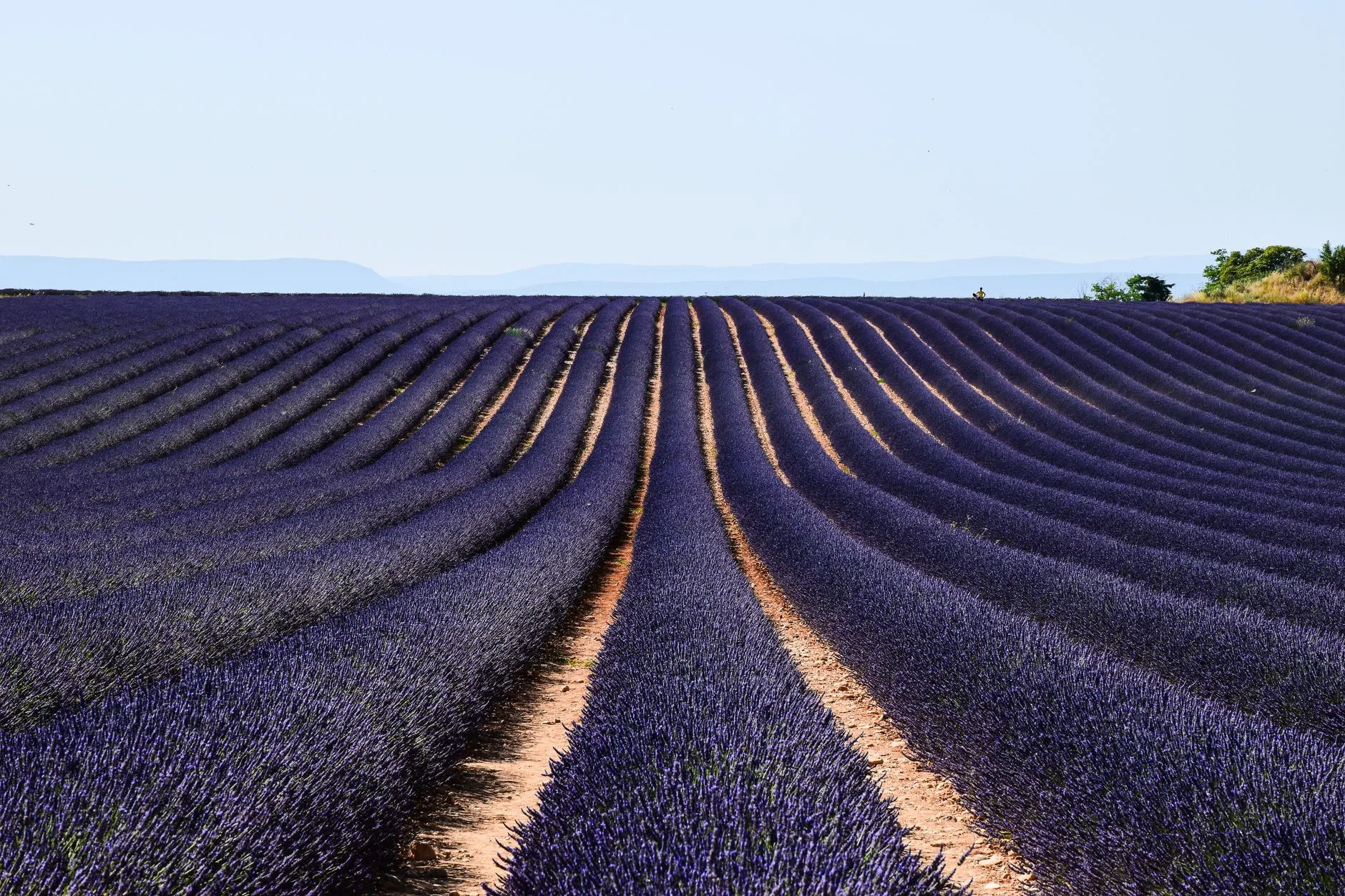
Provence is the France people fall in love with and never get over: hilltop villages the colour of honey, plane-tree squares with a fountain and a café, the Roman ruins, the markets, and — for about three weeks from late June into July — the lavender. It’s also ground zero for summer overtourism, so the strategy matters.
Base somewhere small and use it as a hub. The Luberon villages — Gordes, Roussillon (built from blazing ochre), Ménerbes, Bonnieux — are the postcard, and a rented stone house here is the dream. Avignon, the walled papal city with its half-a-bridge, is a great rail-friendly base (TGV from Paris under three hours), though its huge July theatre festival sends hotel prices through the roof. Arles is grittier, cheaper and steeped in Van Gogh and Rome; Aix-en-Provence is elegant and a touch bourgeois. The lavender itself peaks across the Valensole plateau and around the Abbaye de Sénanque roughly late June to mid-July — show up in August and you’ll find brown stubble where the photos were.
The markets are the real religion here: Tuesday in Vaison-la-Romaine, Sunday in L’Isle-sur-la-Sorgue (also the antiques capital), and a dozen others. Buy the tapenade, the goat cheese, the olive oil, the melon, and assemble lunch under a tree. That, not any monument, is Provence.
The lavender window is brutally short — roughly the last week of June through mid-July. If lavender fields are the reason you’re coming, that’s your fortnight. Everyone selling you “Provence in August” is selling you a memory of June.
For the coast just south and east of here — Nice, Cannes, Saint-Tropez, the corniche drives — see the dedicated French Riviera guide, and for the great gritty port city at Provence’s edge, the Marseille city guide. Provence proper is the inland villages, and they’re the better story.
Bordeaux and the Wine Country
Bordeaux the city has quietly become one of France’s most enjoyable urban breaks — a sweep of honey-stone 18th-century architecture along the Garonne, scrubbed clean over two decades, walkable, with the mirror-pool Miroir d’eau reflecting the grand riverfront facade. It’s two hours from Paris by TGV. But you come to this corner of France for the wine, and Bordeaux’s wine country is more accessible — and more fun — than its grand-château reputation suggests.
The geography matters. The Médoc, north of the city along the Left Bank, is the land of the famous names — Margaux, Pauillac, Saint-Julien, Saint-Estèphe — Cabernet-dominant, structured, ageworthy, and often requiring an appointment. The Right Bank around Saint-Émilion is softer, Merlot-led, and far more visitor-friendly: Saint-Émilion itself is a gorgeous medieval hill town honeycombed with limestone cellars and ringed by vineyards you can walk into. For a first wine day, skip the intimidating Médoc first-growths and go to Saint-Émilion — book a couple of small-château tastings, walk the vines, eat well in the village.
Don’t overlook the sweet wines of Sauternes (Château d’Yquem is the legend, but smaller estates pour generously), or the fact that Bordeaux pairs beautifully with a side trip to the Dune du Pilat — Europe’s tallest sand dune — and the oyster shacks of Arcachon an hour west, where you eat them straight off the boat with a glass of crisp white. One honest note on the wine: Bordeaux’s reputation for snobbery is half-deserved and half-outdated — the grand Médoc estates can be stiff and appointment-only, but the Right Bank and the satellite appellations are warm, cheap and genuinely glad to see you. Go where they’re welcoming.
Normandy & Brittany: The Atlantic Northwest
The two regions of the northwest coast are often lumped together and shouldn’t be — but they share a wild, salt-air, cream-and-cider sensibility that’s a world away from the sunny south, and they reward the traveller looking for something more sober and more moving.
Normandy is, above all, history. The D-Day beaches — Omaha, Utah, Gold, Juno, Sword — and the American Cemetery at Colleville-sur-Mer above Omaha are among the most affecting places in Europe; give them a full, unhurried day, ideally with a good guide who can make the geography of 6 June 1944 legible. Then there’s Mont-Saint-Michel, the abbey-crowned island rising from tidal flats — genuinely one of the great sights of France, and genuinely overrun by midday, so arrive early or stay late and time it with the tides. Add Bayeux for its astonishing 11th-century tapestry, the cliffs of Étretat, and Rouen for its cathedral and the spot where Joan of Arc was burned. Eat the Camembert, drink the cider and Calvados, and order anything with cream.
Brittany is Celtic France — its own language (Breton), its own flag, megalithic standing stones at Carnac older than Stonehenge, a jagged pink-granite coast, and the best seafood platters in the country. Base in Saint-Malo, the walled corsair city you can circle on its ramparts, or Dinan, or the wild Crozon peninsula. The food signature is unbeatable and cheap: the galette (a savoury buckwheat crêpe, classically with ham, egg and cheese — the complète) washed down with a bowl of dry cidre, followed by a sweet wheat crêpe. A galette-saucisse from a Breton market stall is one of France’s great €5 pleasures.
Brittany and Normandy are the antidote to Provence fatigue. Grey skies, dramatic tides, oysters and cider, second-world-war history that still matters — it’s France in a wool sweater, deeply rewarding if you don’t need sunshine to feel on holiday.
Alsace: France in a German Accent
Tucked against the German border, Alsace has changed nationality so many times that it feels like its own country — half-timbered houses painted in sweetshop colours, storks nesting on chimneys, winstubs (wine taverns) serving choucroute, and a wine culture that is unapologetically German in grape if French in soul. It is, to my eye, the single most charming region in France for a first-timer who wants fairy-tale Europe without the Provençal crowds.
Strasbourg anchors it — a proper city with a soaring pink-sandstone cathedral, the impossibly pretty canal quarter of La Petite France, and one of Europe’s great Christmas markets (December turns the whole place magical and books out months ahead). Just south, Colmar is the storybook one — so picturesque it borders on unreal — and the perfect base for the Route des Vins d’Alsace, the 170 km wine road threading flower-decked villages like Riquewihr, Eguisheim and Kaysersberg.
The wines are white and brilliant and oddly underrated abroad: bone-dry Riesling, perfumed Gewürztraminer, Pinot Gris, and the crisp sparkling Crémant d’Alsace that’s a fraction of Champagne’s price. The food is hearty and Germanic — choucroute garnie (sauerkraut with sausages and pork), baeckeoffe (a slow-baked meat-and-potato casserole), and the must-order tarte flambée (flammekueche): a thin crisp base with crème fraîche, onion and lardons, nothing like a pizza and better than it sounds.
Drive the Alsace wine route on a weekday in May or September, stop in three villages, taste at a small grower in each, and you’ll wonder why anyone fights the Provence crowds. It’s the prettiest, friendliest, best-value wine touring in France.
The French Alps: Chamonix, Annecy and the High Country
The Alps are two completely different holidays depending on the season, and both are superb. In winter, this is the most serious skiing in Europe — Chamonix, the Three Valleys (Courchevel, Méribel, Val Thorens), Tignes and Val d’Isère — running roughly December to April, and Alpine resorts reported strong 2025 seasons. In summer, the same mountains become a hiking, paragliding and lake paradise that far too few foreign visitors discover.
Chamonix, in the shadow of Mont Blanc (Western Europe’s highest peak at 4,808 m), is the headline — ride the Aiguille du Midi cable car to 3,842 m for a genuinely vertiginous view, or take the train up to the Mer de Glace glacier (now visibly retreating — a sobering climate lesson). Annecy, a couple of hours’ drive away, is the surprise gem: a canal-laced old town on a startlingly clear alpine lake, perfect for summer swimming, cycling the lakeshore path, and paddleboarding under the mountains.
Getting here is easy by rail to Annecy or Chambéry and onward; for ski trips, many resorts run transfers from Geneva airport (just over the border) and Lyon. The mountain food is gloriously unhealthy and exactly right after a day outside: fondue, raclette, tartiflette (potatoes, lardons, onions and melted Reblochon cheese), and a glass of crisp Savoie white.
Everyone knows the French Alps for skiing. The secret is the summer: Annecy’s lake is one of Europe’s most beautiful places to swim, the hiking is world-class, and you’ll pay a fraction of February’s prices.
The Dordogne: Foie Gras, Caves and Slow Days
If Provence is France’s most famous rural idyll, the Dordogne (and the broader Périgord) is its most underrated — a green, river-laced region of golden-stone villages, clifftop castles, prehistoric caves and some of the richest food in the country. It’s the place to do absolutely nothing slowly, and do it very well.
The Vézère valley holds the prehistoric treasures: Lascaux (you visit the meticulous Lascaux IV replica — the original is closed to protect the 17,000-year-old paintings, and the facsimile is genuinely spectacular) and the Font-de-Gaume cave with original art you can still see. Cruise or kayak the Dordogne river beneath the castle of Beynac, wander Sarlat-la-Canéda’s perfectly preserved medieval centre (its Saturday market is a foie-gras-and-truffle festival), and visit the cliff-clinging village of La Roque-Gageac and the bastide town of Domme.
The food is the Périgord’s glory and not for the faint-hearted: foie gras, confit de canard (duck slow-cooked in its own fat), walnuts in everything, black truffles in winter, and the robust dark wines of nearby Cahors (Malbec’s original home) and Bergerac. This is rich, wintry, generous cooking, and a long lunch here is an event. The Dordogne is what people imagine when they say “the real France” — and unlike Provence, it hasn’t been fully discovered by the international crowd. Rent a car, base near Sarlat, and give it four unhurried days.
Lyon: The Food Capital (and Why It Beats Paris for Dinner)
Here is a hill I’ll die on: for eating, Lyon beats Paris. France’s third city, two hours south of Paris by TGV at the meeting of the Rhône and Saône, has been the country’s gastronomic capital for a century — the home of the late Paul Bocuse, of the legendary “mères Lyonnaises” who professionalised home cooking, and of the bouchon, the small, convivial, paper-tablecloth restaurant serving the unfashionable, offal-heavy, utterly delicious cooking of the region.
A bouchon meal is an education: quenelles (airy pike dumplings in crayfish sauce), andouillette (a pungent tripe sausage — order it if you’re brave, it’s a local rite), salade lyonnaise (frisée, lardons, poached egg), tablier de sapeur (breaded tripe), and a pot of Beaujolais or Côtes-du-Rhône. Look for the official “Bouchons Lyonnais” certification to avoid tourist imitations. By day, prowl the Halles de Lyon-Paul Bocuse indoor market and the old silk-weavers’ quarter of Croix-Rousse with its hidden traboules (covered passageways). The Renaissance old town, Vieux Lyon, is one of the largest in Europe.
And Lyon is the gateway to two great wine regions within an hour: Beaujolais to the north (the cru villages — Morgon, Fleurie, Brouilly — make serious, joyful Gamay that has nothing to do with the cheap Nouveau) and the northern Rhône to the south (Côte-Rôtie and Condrieu, Syrah and Viognier at their most thrilling).
If you only add one non-Paris city to your trip, make it Lyon. Two hours from the capital, a fraction of the pretension, and a dinner you’ll talk about for years. Book a certified bouchon, order the quenelles, and don’t ask what’s in the andouillette until after.
The Food and Wine Map: Why Region Is Everything
The biggest conceptual mistake visitors make is thinking of “French food” and “French wine” as single things. They aren’t. France is a patchwork of fiercely distinct food cultures, and learning the map is the key that unlocks the whole country. Eat and drink what’s local to where you are — the regional dish in its home region, with the regional wine — and you’ll have the best meals of your life. Order a Bordeaux in a Lyon bouchon and you’ve missed the point entirely.
A working map for the traveller:
- Paris & Île-de-France — the showcase, not a cuisine of its own: it imports the best of everywhere. Classic bistro fare, the great markets, the patisserie.
- Normandy — cream, butter, apples: Camembert, cider, Calvados, and seafood.
- Brittany — buckwheat galettes, salted-butter caramel, oysters and the country’s best seafood platters; cider over wine.
- Alsace — Germanic and hearty: choucroute, tarte flambée, baeckeoffe; world-class dry whites (Riesling, Gewürztraminer) and Crémant.
- Burgundy (Bourgogne) — the Pinot Noir and Chardonnay heartland (Côte de Nuits, Côte de Beaune, Chablis), beef bourguignon, coq au vin, escargots, Époisses cheese. Not to be confused with Bordeaux — different grapes, different soul.
- Lyon & the Rhône — the offal-rich bouchon cooking; Beaujolais and the Rhône Valley (Côte-Rôtie, Châteauneuf-du-Pape further south).
- Bordeaux & the Southwest — the structured Cabernet/Merlot reds, oysters from Arcachon, and the duck-and-walnut richness of the Périgord/Dordogne; Cahors Malbec.
- Provence & the Mediterranean — olive oil, tomatoes, herbs, bouillabaisse, ratatouille, tapenade; rosé and the southern Rhône.
- Champagne — the one region the whole world borrows the name of, an hour east of Paris by TGV: Reims, Épernay, the chalk cellars, the grower-producers worth seeking over the big houses.
- Savoie/Alps — melted-cheese mountain food and crisp alpine whites.
Three rules will make you eat better than 90% of visitors: drink the local wine in its home region; eat the regional speciality where it’s from; and treat lunch (often the best-value menu du jour) as the main meal, not dinner. France was built for the long lunch.
A note on cheese: de Gaulle reputedly despaired of governing a country with 246 cheeses — the real number is higher. Buy from a fromagerie, ask for what’s à point (ripe today), and let the cheesemonger guide you. It’s one of the great cheap pleasures of the country.
Money, Costs and When to Go
France runs on the euro, cards are accepted almost everywhere (contactless is universal), and you’ll rarely need much cash — though carry a little for village markets, boulangeries and rural tabacs. ATMs at banks give the best rates; decline the “convert to your home currency” option machines offer, which buries a bad exchange rate.
Costs, roughly: a menu du jour (set lunch) at a good neighbourhood restaurant runs €18–28 and is the best value in French dining — frequently the same kitchen that charges €45 at dinner; a coffee at the bar is €1.50–2.50 (and cheaper standing at the counter than on the terrace — a real price difference); a glass of regional wine €4–7; a boulangerie lunch €5–8; a comfortable provincial hotel €90–160 a night; a rural gîte often €700–1,200 a week and superb value for a group. Paris and the Riviera in summer are markedly pricier than everywhere else. A useful frame: France costs about what Italy does, less than Switzerland or Scandinavia, more than Spain or Portugal.
When to go is where I’ll be firm. May–June and September–early October are the sweet spot: warm, long days, everything open, the crowds thinner, the prices saner. April and late October are lovely and cheaper if you accept some rain. Winter is for the Alps, Christmas markets (Strasbourg, Colmar) and a quieter, cosier Paris. And then there’s August — the one you must understand.
In August, France goes on holiday from itself. Parisians flee en masse; family-run restaurants, bakeries and shops shut for two or three weeks (you’ll see “fermeture annuelle” signs everywhere); the cities empty of locals while the coast and Provence jam with everyone else. It’s not unworkable — the headline sights stay open and the weather’s reliable — but it’s the most crowded, most expensive, least authentic month to meet the real France. If you can avoid August, do.
The Bonjour Rule: Etiquette That Unlocks France
I’ve saved the most important practical advice for last, because it will change your trip more than any itinerary: say bonjour first, always, to everyone. Walk into a shop, a bakery, a hotel, a doctor’s office — “Bonjour” (or “Bonsoir” after about 6pm) comes before anything else. Leaving, you say “Au revoir, merci, bonne journée.” This isn’t optional politeness; in France it’s the basic social contract, and skipping it reads as genuinely rude. Ninety percent of the famous “French coldness” experienced by tourists is simply a Frenchperson reacting to someone who launched into a request without the greeting. Get the ritual right — even a clumsy, accented bonjour followed by “parlez-vous anglais?” — and you’ll find people warm, helpful and patient. Try a few words of French and they melt further.
A handful of other things that matter:
- Tipping. Service is legally included (service compris) — you are not expected to tip 15–20%. For good service, rounding up or leaving a few euros (€1–2 for coffee, €5–10 on a nice dinner) is generous and appreciated, not obligatory. Don’t Americanise it.
- Lunch hours are real. Many restaurants serve lunch only ~12–2 and dinner from ~7:30. Turn up at 3pm hungry in a small town and you’ll find the kitchen closed. Plan around it.
- Sundays and Mondays. A lot of shops, and many restaurants, close. Markets are the great Sunday-morning exception.
- Dress. The French lean toward put-together and understated; athleisure and beachwear off the beach mark you as a tourist. You don’t need to be chic, just not sloppy.
- Bread and water. Bread comes free (it’s for the meal, not a starter); tap water is free and normal — ask for “une carafe d’eau” rather than paying for bottled.
Learn five words before you go: bonjour, merci, s’il vous plaît, pardon, au revoir. They are worth more than a phrasebook. The single act of greeting first, in French, before you ask for anything, is the master key to the entire country.
Frequently Asked Questions
Cheapest Flights to France
We have tracked 1,775 fares to France from 96 cities. As of June 2026, here is what a good price looked like from each — the lowest fare we recorded, and a “great-deal” benchmark to judge a quote against. These are tracked observations, not live prices: by the time you read this they will have moved, so treat them as a yardstick, not a quote.
| From | Lowest fare we tracked | Great-deal benchmark |
|---|---|---|
| Bratislava (BTS) | €28 | €50 |
| Rome Ciampino (CIA) | €31 | €45 |
| Wrocław (WRO) | €37 | €53 |
| Charleroi (CRL) | €48 | €68 |
| Rome (FCO) | €48 | €142 |
| Budapest (BUD) | €50 | €72 |
| Gdansk (GDN) | €52 | €75 |
| Geneva (GVA) | €59 | €84 |
| Sandefjord Torp (TRF) | €65 | €93 |
| Bologna (BLQ) | €66 | €94 |
| Eindhoven (EIN) | €66 | €95 |
| Hanover (HAJ) | €72 | €103 |
| Bergamo (BGY) | €85 | €152 |
| Gothenburg (GOT) | €88 | €125 |
Recent deals we have posted to France:
- Dublin to Nice, France from €55
- Manchester to Nice, France from £67
- New York to Paris, France from $445
- Toronto to Paris, France from C$585
- Miami to Paris, France from $485
- Birmingham to Paris, France from £28
- Dublin to Paris, France from €38
- Abidjan to Lyon, France from €462
- Bordeaux to Venice, Italy from €27
- Madrid to Venice, Italy from €43
These are fares aifly tracked to this destination, not live quotes — they have changed since and several of the deals above may have expired. Browse current flight deals →