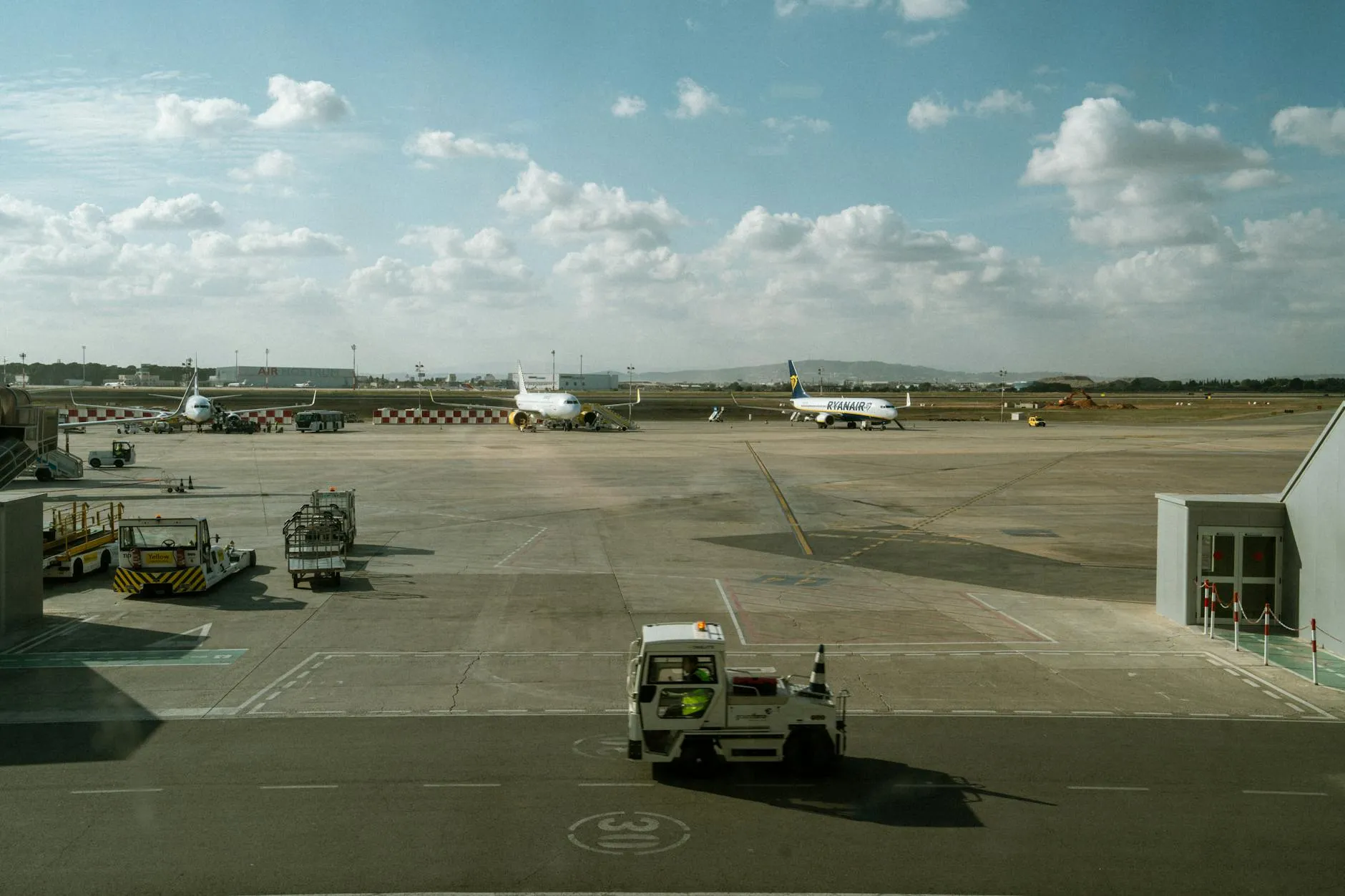
Barcelona El Prat (BCN) — The Complete 2026 Airport Guide
Barcelona’s airport had its busiest year ever in 2025 — over 57 million passengers — and it runs well once you know two things: which of its two far-apart terminals you’re actually in, and that the cheap-looking metro to town has a hidden airport surcharge that your 10-trip card won’t cover. Get both right and you’re in the city centre in half an hour for under a fiver. Get them wrong and you’ll burn 15 minutes on a shuttle bus or pay twice at the metro gate.
Last verified: July 2026. Fares, terminal assignments and Schengen entry rules change often — confirm the specifics on your ticket, on the ticket machine and at official signage before you travel.
Quick reference
| Detail | What you need to know |
|---|---|
| Airport | Josep Tarradellas Barcelona–El Prat, IATA BCN (ICAO LEBL) — Spain’s second-busiest airport after Madrid, 57.5 million passengers in 2025, an all-time high |
| Location | In El Prat de Llobregat, ~12–15 km southwest of central Barcelona — close by hub standards, so the transfer is quick |
| Terminals | T1 — the big modern terminal: Vueling, Iberia, Level and most full-service airlines. T2 — the older one: some low-cost carriers (Ryanair, easyJet) and the RENFE train station. No airside link — crossing means a landside shuttle |
| Into the city | RENFE R2 Nord train €4.90 (or free with an integrated card), ~19–27 min — but it only stops at T2 · Aerobús ~€7.75, ~35 min to Plaça Catalunya · Metro L9 Sud €5.90 special airport ticket, slower and indirect · Taxi roughly €35–40 |
| Entry | Schengen airport. EES biometric checks are live since 10 April 2026 — budget extra time at passport control if you’re a non-EU visitor. ETIAS has no announced launch date, not required yet |
| Watch out for | Landing at the wrong terminal · the metro’s hidden €5.90 airport supplement that a T-casual card does NOT cover · the train serving T2 only |
Two terminals, no shortcut between them
BCN’s single most expensive mistake has nothing to do with money — it’s arriving at the wrong terminal. Terminal 1 is the large, modern building that opened in 2009; it handles Vueling (the airport’s dominant carrier), Iberia, Level and the great majority of full-service airlines across all three alliances. Terminal 2 is the older complex — split into blocks T2A, T2B and T2C — and it’s home to several low-cost carriers, most notably Ryanair and easyJet. Airline-to-terminal assignments do shift, so the boarding pass wins over any list.
The two terminals are a few kilometres apart with no airside connection whatsoever. You cannot walk between them, and you cannot cross without going landside. The link is a free shuttle bus that runs 24 hours: roughly every 5 minutes during the day (08:00–20:00), every 7 minutes early and late, and every 10 minutes overnight. The ride itself is about 10–14 minutes, but the stops are outside the terminals, so a transit passenger who needs to switch has to exit, re-clear security and (for non-Schengen flights) passport control at the other end. Realistically, budget 15 minutes minimum for the hop and a lot more at peak — a wrong-terminal error is a genuine problem, not a short stroll.
Getting into Barcelona
Barcelona is one of the easier European airports to leave, because the airport is close and the train is cheap. The honest ranking: take the R2 Nord train if you’re at (or don’t mind reaching) T2, take the Aerobús if you want a direct door to Plaça Catalunya, and treat the metro as the option that looks cheap but usually isn’t.
| Option | Price | Time to centre | Verdict |
|---|---|---|---|
| RENFE R2 Nord train | €4.90 (~$5.30) single, or free with a T-casual / integrated card | ~19 min to Sants, ~27 min to Passeig de Gràcia | Best value — but serves T2 only |
| Aerobús | ~€7.75 (~$8.40) single, ~€13.30 return | ~30–35 min to Plaça Catalunya | Direct from both terminals, every 5–10 min, 24 h |
| Metro L9 Sud | €5.90 (~$6.40) airport ticket (T-casual NOT valid) | ~30 min-plus, with a change | Only worth it for the airport’s own neighbourhoods |
| Taxi | ~€35–45 (~$38–49) metered (€21 minimum, €4.60 airport supplement) | ~20–30 min, traffic-dependent | Groups, late arrivals or heavy luggage |
The R2 Nord train — cheapest and fastest, if you’re at T2
The RENFE R2 Nord commuter line is the local’s choice: about €4.90 for a single, or completely covered by an integrated ticket such as a T-casual (10 trips for €13) because the airport counts as fare Zone 1 on the mainline network. It runs roughly every 30 minutes and reaches Barcelona Sants in about 19 minutes, then Passeig de Gràcia and El Clot-Aragó — all central, all with metro connections.
The catch is geography. The train station is at Terminal 2 only — it sits about 200 m from T2B, reached by a covered pedestrian walkway. There is no station at T1. So if you’re flying from (or arriving at) T1, you must first take the free shuttle bus to T2, which adds 15–20 minutes and undercuts the train’s speed advantage. From T2 it’s unbeatable; from T1 the Aerobús is often the saner call.
The Aerobús — direct to Plaça Catalunya from either terminal
The Aerobús is the express airport coach and the most foolproof option, because it serves both terminals directly: the A1 runs from T1, the A2 from T2, and both follow the same route into town, stopping at Plaça Espanya, Gran Via–Borrell and Plaça Universitat before terminating at Plaça Catalunya. Journey time is about 30–35 minutes depending on traffic; departures are every 5–10 minutes, around the clock. Expect to pay about €7.75 one way (roughly €13.30 for a return), bought from the machine at the stop or online. It’s the option to choose if your hotel is near the top of the Ramblas and you don’t want to deal with terminal transfers or metro changes.
The metro trap — L9 Sud and the €5.90 supplement
This is the classic Barcelona airport mistake. Metro Line 9 Sud (L9 Sud) serves both terminals — stations Aeroport T1 and Aeroport T2 — which makes it look like the obvious cheap ride. It isn’t, for two reasons.
First, the airport metro stations carry a special supplement. You need the dedicated Bitllet Aeroport (airport ticket), €5.90. A standard single is no good here, and — the part that catches everyone — a T-casual multi-trip card is explicitly NOT valid at Aeroport T1 and Aeroport T2. Tap a normal T-casual at the airport gate and it simply won’t let you through. (Some tourist travel cards do include the airport metro — the Hola Barcelona travel card and certain city passes bundle the supplement in — so if you’re already carrying one of those, the metro is effectively free.) Second, L9 Sud does not run into the city centre — it heads to Zona Universitària on the western edge, where you change to another line, so the total journey is slow and indirect for most visitors.
Entry: EES is live, ETIAS is coming
Barcelona is a Schengen airport, and Europe’s border rules are mid-change in 2026 — this is the freshest thing to get right.
- EES (Entry/Exit System) has been live at Schengen external borders since 10 April 2026. If you’re a non-EU visitor — including UK, US, Canadian, Australian and other visa-exempt travellers — your first entry is now registered biometrically: a facial image and fingerprints replace the old passport stamp. It’s a one-time enrolment that speeds up later crossings, but the initial registration takes longer, so allow extra time at passport control, especially in summer peak. Member states are allowed temporary flexibility to ease checks when queues build, so the experience can vary day to day.
- ETIAS has no announced launch date and is NOT required yet. When it launches (currently indicated for the last quarter of 2026, with a grace period after go-live), visa-exempt non-EU visitors will need to apply online for a travel authorisation — a roughly €20, multi-year permit — before flying. As of July 2026 you do not need one; don’t pay any site claiming to sell you an ETIAS today. Check the official EU pages closer to your trip.
- EU, EEA and Swiss nationals are unaffected by EES/ETIAS and can use the e-gates as usual. Non-EU e-passport holders can typically use e-gates too once their EES record exists.
Lounges
The lounge action is concentrated in Terminal 1, which makes sense given it’s where most of the long-haul and full-service flying happens. If you’re flying business or hold an eligible card, the pay-in or Priority Pass options are solid:
- Sala VIP Pau Casals — the main Schengen-side lounge in T1 (A/B/C gates); Priority Pass accepted, walk-in available. The one most travellers use.
- Sala VIP Joan Miró and Sala VIP Colomer — also in T1; both take Priority Pass.
- Canudas and the arrivals Premium VIP Lounge round out the Priority Pass estate in T1.
Terminal 2 has far thinner lounge provision — another reason the low-cost terminal feels more basic. Whichever lounge you’re aiming for, check it’s on the correct side of security for your flight (Schengen vs non-Schengen), because the gate assignment decides which lounges you can actually reach.
Connections and minimum times
BCN is a real connecting hub for Vueling, so tight connections happen. The published minimum connecting times are modest, but they assume you stay in one terminal:
- Domestic to domestic: around 20 minutes.
- Domestic ↔ international, or international to international: around 60 minutes.
- Any connection that changes terminals (T1 ↔ T2): about 1 hour 15 minutes — because you have to ride the landside shuttle and re-clear security.
Those are minimums, not comfortable margins. Given there’s no airside link, a cross-terminal connection is the one to respect: if your inbound is delayed, 75 minutes evaporates fast. If you’re self-connecting on separate tickets — say a long-haul into T1 and a Ryanair onward from T2 — treat the terminals as two different airports and give yourself well over two hours plus time to re-check luggage.
Food, money and practicalities
Food: T1 is comfortably the better terminal to be hungry in, with a proper spread of sit-down restaurants and cafés airside on the upper levels — look for Catalan and Spanish options (jamón, pintxos, a decent menú del día) rather than defaulting to the global chains. T2’s choice is thinner and more grab-and-go, so if you’re on an early low-cost departure, eat before security or bring something.
Money & SIM: use bank ATMs rather than the currency-exchange booths, and if a machine offers to charge you in your home currency, decline and choose euros. Prepaid SIMs are sold in the arrivals areas, but an eSIM bought before you land is the least-hassle route and usually cheaper.
Practicalities: free Wi-Fi is available across the airport; there’s left-luggage storage on the airport grounds if you want a bag-free last day in the city. Both terminals have pharmacies and information desks. One habit worth keeping: because the R2 train and the metro leave from different points and the shuttle takes time, decide your route into town before you clear the arrivals hall, not while standing at a ticket machine with a queue behind you.
What’s coming: the €3.2 billion expansion
You’ll hear about a big BCN expansion — here’s the honest timeline so you don’t expect it on this trip. In June 2025, Spain’s airport operator Aena and the Catalan government approved a roughly €3.2 billion plan to grow the airport: a new satellite terminal connected to T1, a remodelling of both existing terminals, and a 500 m extension of the sea-side runway (to about 3,160 m) to allow more long-haul flights. It’s designed to lift capacity well beyond today’s record traffic.
The reality check: this is a next-decade project. The plan feeds into Aena’s 2027–2031 investment framework, with the final text targeted around 2029 and construction of the new terminal and runway not expected to complete until roughly 2033. For any trip in 2026, the airport you fly through is the two-terminal layout described above — plan around T1, T2 and that shuttle.
Frequently asked questions
Which terminal am I flying from at Barcelona airport?+
Terminal 1 handles Vueling, Iberia, Level and most full-service airlines across all alliances. Terminal 2 (blocks T2A/T2B/T2C) is used by several low-cost carriers, notably Ryanair and easyJet. Assignments can change, so always check the boarding pass. It matters more than usual here: the two terminals have no airside connection, only a free shuttle bus, and the airport train stops at T2 only.
How do I get from Barcelona airport to the city centre, and how much?+
Three main options. The RENFE R2 Nord train is cheapest and fastest — about €4.90 (or free with a T-casual/integrated card) and roughly 19 minutes to Sants — but it only serves Terminal 2. The Aerobús costs about €7.75 and runs direct from both terminals to Plaça Catalunya in around 30–35 minutes. Metro L9 Sud needs a special €5.90 airport ticket and is slow and indirect. A taxi is roughly €35–45 (there’s a €21 minimum and a €4.60 airport supplement).
Can I use a T-casual card for the metro to the airport?+
No — and this is the classic trap. The standard T-casual (10-trip card) and single metro tickets are NOT valid at the Aeroport T1 and Aeroport T2 stations on Line L9 Sud. Those stations require the dedicated €5.90 airport ticket (Bitllet Aeroport). Only certain tourist passes, such as the Hola Barcelona travel card, include the airport supplement. The T-casual does, however, cover the R2 Nord train, which is why the train is the better budget choice.
Does the airport train stop at Terminal 1?+
No. The RENFE R2 Nord station is at Terminal 2 only (about 200 m from T2B via a covered walkway). If you’re flying from or arriving at Terminal 1, you must first take the free inter-terminal shuttle bus to T2, which adds around 15–20 minutes. From T1, the Aerobús — which serves both terminals directly — is often the more sensible option.
How long does it take to move between Terminal 1 and Terminal 2?+
There’s no airside link, so you use the free shuttle bus, which runs 24 hours (every 5 minutes during the day). The ride is about 10–14 minutes, but because the stops are landside you have to exit and re-clear security — and passport control on non-Schengen flights — so budget at least 15 minutes, and more at peak times. A wrong-terminal error is a real time loss, not a short walk.
Do I need ETIAS to fly to Barcelona in 2026?+
Not as of July 2026. ETIAS — the EU travel authorisation for visa-exempt non-EU visitors — is currently with no announced launch date, with a grace period after go-live, so it isn’t required yet. Ignore any website trying to sell you one now. What is already in force is the EES biometric border system (live since 10 April 2026), which registers your face and fingerprints on entry; that means longer passport queues, not an application.
How much extra time should I allow for EES passport checks?+
EES has been operating at Schengen borders since 10 April 2026, and first-time registration of your biometrics takes longer than the old stamp. There’s no fixed figure, and authorities can ease checks when queues build, but as a non-EU visitor it’s sensible to allow extra buffer at passport control on arrival — particularly during summer peaks at a busy airport like Barcelona. Once you’re enrolled, subsequent Schengen entries are quicker.
Which lounges can I use at Barcelona airport with Priority Pass?+
The Priority Pass lounges are concentrated in Terminal 1: Sala VIP Pau Casals (the main Schengen-side lounge), Joan Miró, Colomer, Canudas and the arrivals Premium VIP Lounge. Walk-in access is generally available too. Terminal 2 has much thinner lounge provision. Check whether the lounge sits on the Schengen or non-Schengen side of security for your specific flight.
At a glance
| Codes | BCN / LEBL — Josep Tarradellas Barcelona–El Prat Airport |
| Terminals | T1 (Vueling, Iberia, Level, most full-service) · T2 (some LCCs + train station) · no airside link, free shuttle |
| Distance to centre | ~12–15 km southwest, in El Prat de Llobregat |
| Cheapest to centre | R2 Nord train, €4.90 (free with T-casual), ~19 min to Sants — T2 only |
| Simplest to centre | Aerobús, ~€7.75, ~35 min to Plaça Catalunya, from both terminals |
| Metro trap | L9 Sud needs the €5.90 airport ticket; T-casual is not valid at airport stations |
| Entry | Schengen · EES biometric checks live since 10 Apr 2026 · ETIAS expected, date not announced (not yet required) |
| Wi-Fi | Free, airport-wide |
Before you fly
- 📊 Check what a good fare to Barcelona looks like — our price-check tool shows the typical deal range so you know a bargain when you see one.
- 🧳 Baggage checker — confirm your airline’s carry-on and checked allowance before you pack (it matters most on the low-cost carriers in T2).
- 🏙️ Barcelona city guide — where to stay, eat and what’s actually worth your time in the city.
🏙️ Planning the trip? Read our Barcelona city guide — where to stay, what to eat, and how to spend your days.