Nagoya Chubu Centrair Airport (NGO) — The Complete Guide 2026
Terminal 1 is Centrair’s main passenger hub and handles all full-service carrier operations.
Nagoya Chubu Centrair International Airport (IATA: NGO) is not just one of Japan’s best-run airports — it is widely regarded as one of the most innovative and passenger-friendly aviation hubs in the world, and a rare example of an airport that functions as a genuine destination in its own right. Built on a spectacular artificial island in Ise Bay, 35km south of Nagoya city centre, NGO opened in 2005 and has consistently won international recognition for its design, passenger experience, and facilities. In 2026, Centrair operates at a new level of completeness: the “Face Express” biometric system runs end-to-end for international departures; the μSky Limited Express accepts contactless tap payment; and the airport’s two signature world-firsts — the Flight of Dreams Boeing 787 indoor exhibition and the Fu No Yu runway-view hot spring bathhouse — continue to make this the one airport in the world where arriving four hours early is genuinely worthwhile. Handling approximately 12 million passengers annually, NGO is a critical hub for ANA and JAL and the primary international gateway to the Chubu region’s extraordinary heritage — home to Nagoya Castle, Ise Grand Shrine, and Toyota’s Aichi heartland. This guide covers every dimension of the NGO experience in 2026.
IATA: NGO
Full name: Chubu Centrair International Airport (中部国際空港セントレア)
Location: Artificial island in Ise Bay, 35km south of Nagoya city centre
Primary carriers: ANA, JAL
Currency: Japanese Yen (JPY)
Terminal structure: Terminal 1 (full-service flagship), Terminal 2 (LCC hub)
Annual passengers: ~12 million
1. Terminal Infrastructure — T1 and T2, and How They Connect
Centrair operates two distinct terminal buildings serving fundamentally different passenger profiles. Getting the terminal assignment wrong has real consequences — T2 is a significant walk from the main Access Plaza and train station, and its minimal amenities make the T1 food and retail zone the correct pre-departure base regardless of which terminal you depart from. The two terminals are connected via the Flight of Dreams building — the 787 exhibition complex that physically links them — with the walk between the two terminal departure zones taking approximately 10 minutes at a normal pace.
Terminal 1 — The Flagship
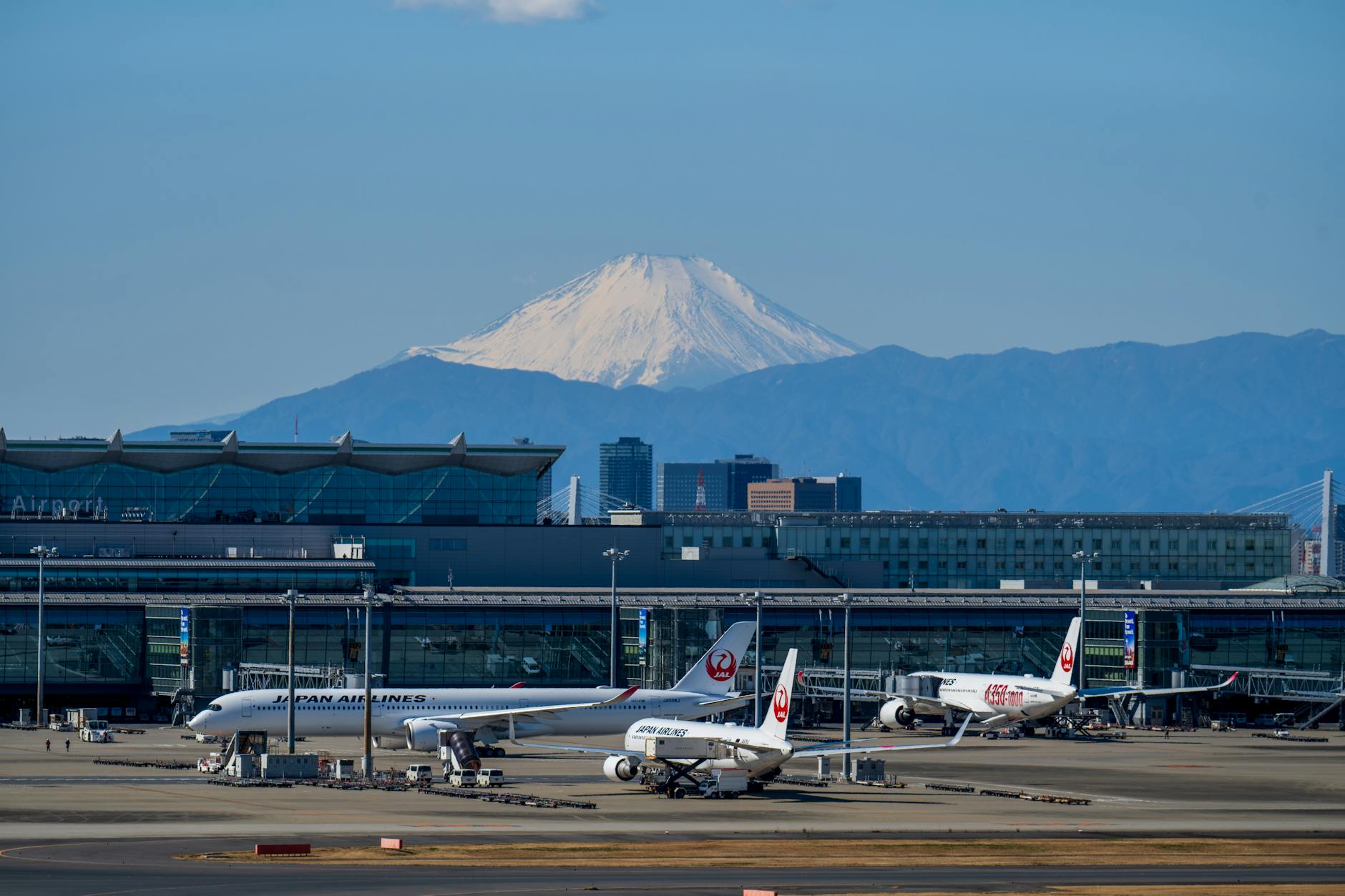
Terminal 1 is Centrair’s main passenger hub and handles all full-service carrier operations.
Airlines using T1: ANA, JAL, Singapore Airlines, Lufthansa, United Airlines, Cathay Pacific, Delta Air Lines, EVA Air, and all other full-service international and domestic carriers. If you are flying any network carrier to or from Nagoya, T1 is your terminal.
Layout: T1 is a large, single-roof structure organised across multiple floors, with domestic and international operations in separate wings:
- South Wing: Domestic departures and arrivals (ANA, JAL, Starflyer, and other domestic routes). The domestic zone operates Japan’s typically immaculate check-in and security processes with the added Centrair polish.
- North Wing: International departures and arrivals. Long-haul check-in counters, international security, passport control, and the international airside zone with duty-free and the Centrair Global Lounge.
3rd Floor (Departures level): The departure hall’s defining architectural feature is its traditional Japanese shopping street — a reproduced chouchin (paper lantern) lined arcade that evokes the streetscape of a historic Japanese town. Shops along this street sell regional Nagoya crafts, ceramics, Japanese sweets (wagashi), and gift items. It is a genuinely immersive commercial environment, not a standard airport retail corridor, and is worth a deliberate walk-through even for non-shoppers.
4th Floor: The primary dining and observation zone. The 4th floor houses Centrair’s main restaurant collection — including the Nagoya Meshi (local Nagoya cuisine) specialists that make this airport’s food offering famous — as well as the Fu No Yu bathhouse and the Sky Deck observation area. For passengers with time before their flight, the 4th floor is where the majority of Centrair’s distinctive experience is concentrated.
Terminal 2 — The LCC Hub
Terminal 2 is Centrair’s dedicated low-cost carrier terminal — streamlined, functional, and deliberately stripped of the premium amenities that define T1 in order to support the fast turnaround cycles that LCC operations require.
Airlines using T2: Jetstar Japan, Peach Aviation, Cebu Pacific, AirAsia (on applicable routes), and Spring Airlines. If your booking is on any of these carriers, verify the terminal assignment — T2 is confirmed for all the above in 2026.
Infrastructure: T2 operates simplified security and baggage systems designed for throughput efficiency rather than passenger dwell time. The terminal is functional but the dining and retail offer is minimal compared to T1 — a handful of café-style options, vending machines, and a convenience store format rather than the full restaurant complement of T1’s 4th floor.
The critical pre-departure strategy for T2 passengers: Arrive at the Access Plaza (the main Centrair hub connected to the train station) with sufficient time to eat and shop in T1 before walking through the Flight of Dreams to T2. The 10-minute walk between the terminals, combined with T2’s limited food options, means that attempting to eat in T2 after a long-haul connection is a disappointing experience compared to T1’s 4th floor. Eat in T1, then walk to T2.
Distance from the train station: T2 requires approximately an 800-metre walk (10 minutes brisk pace) from the Access Plaza and Meitetsu Airport Station. Factor an additional 15 minutes into your airport-to-gate timing if departing from T2 — this gap catches LCC passengers by surprise repeatedly.
2. Transport — Meitetsu μSky, High-Speed Ferry, and Onward Connections
Centrair’s transport links are a genuine strength of the airport’s design — Ise Bay’s artificial island location could have created significant connectivity challenges, but the Meitetsu rail connection and the high-speed ferry service make NGO one of the best-connected island airports in the world. Getting from Centrair to central Nagoya, or onwards to Kyoto and Osaka, is straightforward when you understand the options.
Meitetsu μSky Limited Express — The Recommended Option
Best for: All passengers travelling to or from central Nagoya, and as the first leg of any Shinkansen connection to Kyoto, Osaka, or Tokyo.
Route: Meitetsu Airport Station (directly beneath/adjacent to Centrair’s Access Plaza) → Meitetsu Nagoya Station, which is connected directly to JR Nagoya Station and the Shinkansen platforms.
Journey time: 28 minutes non-stop.
Fare: 1,430 JPY — comprising a base fare of 890 JPY plus a 540 JPY reserved seat supplement (µ-ticket). The μSky consists entirely of reserved seating — there are no free-seating carriages. You must purchase the 540 JPY µ-ticket separately in addition to the base fare; presenting only the base fare ticket at the gate results in being directed back to the ticket machine to add the reserved supplement. Purchase both components at the same ticket machine transaction to avoid this step.
Payment Options in 2026
Meitetsu completed full contactless payment integration in 2026. At Meitetsu Airport Station, all of the following are accepted at the fare gates:
- Contactless tap-to-pay: Visa, Mastercard, and American Express contactless cards — including via Apple Pay, Google Pay, and Samsung Pay. Tap once at the entry gate and once at the exit gate; the correct fare is calculated automatically.
- IC cards: Suica, Pasmo (widely used by Tokyo visitors), and Manaca (Nagoya’s regional IC card). All three are interoperable at Meitetsu gates in 2026.
- Cash ticket machines: Available at the station for passengers who prefer or require cash payment in JPY.
For international visitors making a single NGO–Nagoya trip, contactless bank card tap-to-pay is the most frictionless option — no card purchase required, no loading of credit, no exchange of cash. For visitors planning multiple city journeys over several days, loading a Suica card (available at any JR station machine across Japan) is the recommended approach for its universal acceptance on all Japanese rail, bus, and metro networks.
Getting to Kyoto and Osaka from NGO
NGO does not have direct Shinkansen access — the connection requires a rail change at Nagoya Station. The journey is nonetheless efficient:
- NGO → Nagoya Station: Meitetsu μSky, 28 minutes (1,430 JPY).
- Nagoya → Kyoto: Tokaido Shinkansen (Nozomi or Hikari), approximately 35 minutes. Standard seat fare approximately 5,500–6,000 JPY; covered by JR Pass.
- Nagoya → Osaka (Shin-Osaka): Tokaido Shinkansen, approximately 50 minutes. Similar fare range.
Total NGO to Kyoto: Approximately 1 hour 15 minutes, including the Nagoya Station transfer. This is one of the most efficient major-airport-to-second-city connections in Japan, making NGO a practical entry point for Kansai-region itineraries as an alternative to KIX (Osaka Kansai) or ITM (Osaka Itami).
High-Speed Ferry — To Tsu / Mie Prefecture
Best for: Passengers heading directly to Mie Prefecture — particularly those visiting the Ise Grand Shrine (Ise Jingū), Japan’s most sacred Shinto site, or travelling within the Mie coastal region.
Route: Centrair ferry pier → Tsu Nagisamachi (across Ise Bay).
Journey time: 45 minutes — significantly faster than any road route around the bay.
Fare: 2,600 JPY (2026 pricing).
The ferry departs from a dedicated pier accessible from Centrair’s ground level and operates on a fixed schedule — check the current Centrair ferry timetable before planning, as services are not continuous. For the specific use case of reaching Ise Grand Shrine from an arriving international flight, the ferry plus onward bus to Ise is meaningfully faster than any ground road route and a scenic introduction to Ise Bay.
Taxis and Rideshare
Taxi and rideshare services are available at NGO, but the economics and practicalities make them the right choice only in specific scenarios.
Cost: approximately 13,000–16,000 JPY to central Nagoya. The wide price range reflects the bridge and expressway toll structure that applies to all road crossings from Centrair’s island location — tolls are added to the metered fare and contribute significantly to the total cost.
Uber and Japan’s GO app (the dominant Japanese rideshare platform, which hails regulated licensed taxis rather than private drivers) both operate at NGO. Pricing via apps is broadly equivalent to street hail taxis once tolls are included. The app-based approach provides upfront fare transparency and cashless payment convenience.
When taxis make sense: For groups of 3–4 splitting the cost (per-person cost approaches train fare at that point), for passengers travelling to destinations not well-served by the Meitetsu network, or for arrivals at 03:00 when the train has ceased operation. For individual or couple travel at normal hours, the Meitetsu μSky is almost always the correct choice — the train cost is 1,430 JPY versus 14,000+ JPY by taxi for an equivalent journey.
3. Security and Biometrics — Face Express and CT Smart Lanes
Face Express — Japan’s Seamless Biometric Departure System
Japan’s Face Express biometric travel system reached full operational maturity at NGO in 2026 for international departures, delivering one of the most seamlessly document-free airport experiences available at any major hub globally.
How Face Express works at NGO:
- Enrolment at check-in: At the check-in kiosk (or staffed desk, for passengers who prefer it), you scan your passport and have a facial photograph taken. The system creates a temporary biometric token linked to your flight booking. The process adds approximately 60 seconds to check-in.
- Security entry: At the security checkpoint entrance, facial recognition cameras verify your biometric token and grant access — no boarding pass scan, no passport presentation. Walk through the recognition camera and proceed.
- Boarding gate: At the departure gate, the gate camera identifies you as you approach and confirms your boarding status. No boarding pass or passport required. Walk through.
The net effect for enrolled passengers is a departure experience from check-in to aircraft door that requires no document presentation whatsoever after the initial passport scan at check-in. For frequent NGO travellers and for the growing roster of international passengers transiting through Nagoya, Face Express represents a genuine operational improvement — particularly at boarding, where the conventional scan-and-check process for a full wide-body aircraft is replaced by continuous walk-through recognition.
Face Express is opt-in: Standard boarding pass and passport presentation remains available at every touchpoint for passengers who prefer it. There is no penalty or disadvantage for not enrolling.
CT Smart Lanes — No Liquids or Laptop Removal
Terminal 1 has implemented next-generation CT (Computed Tomography) scanner lanes at its international security checkpoints. In CT-equipped lanes:
- Laptops stay in your bag. No removal required.
- Liquids stay in your bag. The 100ml restriction and separate clear bag are not required in CT lanes.
Look for lanes with CT scanner signage in T1’s international departure security zone. Japanese security staff are helpful in directing passengers to appropriate lanes. NGO’s security culture combines thoroughness with courtesy — queues move efficiently and staff interactions are consistently professional.
4. The Centrair Experience — World-First Amenities
Centrair is the only airport in the world where arriving four hours early is a genuine recommendation rather than a stress buffer. Two facilities — unique globally — justify this entirely.
Flight of Dreams — The Boeing 787 Indoor Exhibition
Location: The Flight of Dreams building physically connects Terminal 1 and Terminal 2 — it is both a passenger transit corridor and a dedicated aviation attraction.
The centrepiece of Flight of Dreams is the Boeing 787 prototype aircraft ZA001 — the very first Boeing 787 Dreamliner ever built, preserved in its original test configuration and displayed in full scale inside the exhibition building. This is the aircraft that launched a new era of composite-material long-haul aviation, and seeing it at this scale, indoors, with the ability to walk beneath its wings, is a genuinely remarkable experience for any aviation enthusiast — and for many non-enthusiasts.
Seattle Terrace restaurant: The dining zone directly beneath and around the ZA001 aircraft is themed around Seattle, Boeing’s home city — offering American-style casual dining (burgers, clam chowder, Pacific Northwest-inspired dishes) in the surreal context of eating under the wings of the first 787. It is a deliberately immersive concept and well-executed.
TeamLab interactive digital exhibitions: Flight of Dreams hosts ongoing interactive digital art installations by TeamLab — the internationally acclaimed Japanese art collective whose immersive light and projection environments have become some of the world’s most visited contemporary art experiences. The Centrair TeamLab installation uses aviation as its thematic framework, combining aircraft movement, Ise Bay environmental data, and Japanese aesthetic sensibilities into a continuously shifting visual environment. For passengers with layover time, this is the highest-quality cultural experience available at any airport in Japan.
Fu No Yu — Japan’s Only Airport Bathhouse with Runway Views
The Fu No Yu (風の湯, “Bath of the Wind”) on the 4th floor of Terminal 1 is, without any qualification, one of the most distinctive passenger facilities at any airport in the world. It is Japan’s first and only airport bathhouse (sentō), and its defining feature — which deserves stating directly — is that from the hot spring baths, you can watch aircraft take off and land on the Centrair runway.
2026 entry price: 1,200 JPY, which includes towel rental. This is modest even by Japanese domestic bathhouse standards and represents extraordinary value for what the facility delivers.
The Fu No Yu operates on the standard Japanese bathhouse model: separate facilities for men and women, indoor and outdoor (露天風呂, rotenburo) baths, a rest area, and the specific amenity that no other airport in the world can offer — an outdoor bath with an unobstructed view of the flight operations on the Ise Bay runway. The combination of soaking in hot spring water at 42°C while watching ANA Boeing 787s rotate into the sky over the bay, with the visual context of Japan’s coastal landscape in the background, is an experience that cannot be replicated anywhere else. For passengers arriving on long-haul flights from Europe or North America and facing a connection or onward journey, the Fu No Yu — a proper Japanese soak, towel included, 1,200 JPY — is the objectively optimal recovery activity before continuing.
Practical notes: The Fu No Yu is open during standard terminal operating hours; check the current schedule as it is not 24 hours. You do not need a boarding pass to access the 4th floor or the bathhouse — it is a landside facility available to anyone in the terminal. Bring a small bag for your clothes and valuables (lockers are provided). Tattoo policies at Japanese public bathhouses vary; confirm current Fu No Yu policy at the entrance for heavily tattooed visitors.
5. Dining — Nagoya Meshi on the 4th Floor
Nagoya has one of the most distinctive regional food cultures in Japan — Nagoya Meshi (Nagoya cuisine) is famous among Japanese food enthusiasts for its bold, miso-heavy flavour profiles and a set of dishes that are genuinely different from Tokyo or Osaka food culture. Centrair’s 4th floor dining zone is one of the best single locations to experience this cuisine in a concentrated, accessible format.
Hitsumabushi — Maruya Honten
Hitsumabushi is Nagoya’s signature dish: grilled eel over rice, served in a lacquered wooden bowl, eaten in three distinct stages — first as grilled eel and rice eaten together, second with garnishes (wasabi, spring onion, nori seaweed) mixed in, and third as a loose ochazuke by pouring the accompanying dashi broth over the remaining rice and eel. Maruya Honten on Centrair’s 4th floor is one of the most respected hitsumabushi specialists accessible without a city reservation. For international visitors unfamiliar with Nagoya cuisine, this dish is the single most important first introduction — and the airport branch allows access without the waiting lists common at city-centre restaurants.
Tebasaki — Yamachan
Yamachan is the institution most associated with tebasaki — Nagoya-style spicy chicken wings, marinated and double-fried to a distinctive crispness and coated in a sweet-salty-spicy sauce specific to the Nagoya regional palate. The Centrair Yamachan branch serves the same recipe as the city original. Tebasaki are best eaten hot, immediately, with a cold Japanese beer — and the 4th floor dining zone provides exactly that combination. A portion of 5 wings costs approximately 500–700 JPY.
Miso Katsu
Miso katsu — pork tonkatsu (breadcrumbed cutlet) served with Nagoya’s thick, intensely savoury haccho miso sauce — is the third pillar of Nagoya Meshi and available at multiple counters on T1’s 4th floor. Yabaton is the most established miso katsu brand at Centrair. The haccho miso of Okazaki (a city east of Nagoya where this style of miso has been produced for over 700 years) gives the sauce its distinctive depth compared to the lighter miso used elsewhere in Japan.
6. Premium Lounges
Centrair Global Lounge (T1 International)
The Centrair Global Lounge is the primary third-party premium lounge in T1’s international airside zone — the main facility for Priority Pass, Lounge Club, LoungeKey, and DragonPass holders at NGO.
Walk-in rate: approximately 3,300 JPY per person (2026 pricing). Access also available via Priority Pass and equivalent programme memberships.
Features: The Centrair Global Lounge’s food and beverage offering reflects its Nagoya setting — the buffet includes local miso-katsu-style snacks alongside standard international lounge fare, and Japanese draft beer is on tap. For international passengers arriving on long-haul flights who want a proper sit-down environment before domestic connections or onward travel, the combination of lounge access, the food quality, and the Wi-Fi reliability make the 3,300 JPY walk-in a sound value decision.
ANA Lounge and JAL Sakura Lounge (T1)
Both ANA and JAL operate their carrier-specific lounges in Terminal 1 — the ANA Lounge in the domestic South Wing and the JAL Sakura Lounge accessible for JAL Business Class passengers and JMB Diamond/Sapphire members. Both lounges have been refreshed with high-speed Wi-Fi and individual work pod configurations in recent refurbishments. Access is carrier-specific: ANA lounge for ANA Business Class and SFC (Super Flyers Card) holders; JAL Sakura for JAL Business Class and equivalent JMB tier members.
7. Practical Facilities
Luggage Delivery — Hands-Free Travel (Takuhaibin)
One of the most distinctive and practically valuable services available at Japanese airports is takuhaibin — luggage forwarding by courier to your next destination hotel. At Centrair, Sagawa Express and Yamato Transport (Kuroneko) counters operate in the arrivals hall, offering delivery of checked-size suitcases to any address in Japan for approximately 2,500 JPY per bag (to Kyoto, Tokyo, or Osaka — distances vary the exact price slightly).
How it works: Hand your suitcase to the Sagawa or Yamato counter with your hotel address and contact number. Pay the fee. Travel to your hotel by train with only a backpack or day bag — your suitcase arrives at the hotel within 24 hours (next-day delivery for most Chubu-to-Kansai or Chubu-to-Tokyo routes, same-day for shorter distances). On departure, many hotels will accept a reverse booking — forward your luggage from the hotel back to Centrair for pickup before your flight.
For travellers planning a multi-city Japan itinerary, this service is transformative. A 28-minute train ride from Centrair to Nagoya Station, a 35-minute Shinkansen to Kyoto, and arrival at your hotel with only a backpack — your luggage waiting in your room — is the objectively superior Japan travel experience compared to dragging multiple suitcases through bullet train carriages and station stairs.
Luggage Storage Lockers
Extensive coin locker banks are available throughout Centrair — in the Access Plaza on the ground level, and on the 2nd and 3rd floors of T1. Sizes range from small (carry-on bags, bags) to large (full-size suitcases). 2026 rates: 400–800 JPY per day depending on locker size. Lockers accept both coins (100 JPY coins) and IC card (Suica/Pasmo/Manaca) payment at modern locker units. For passengers combining a Nagoya day visit with an evening departure, the Access Plaza lockers are the most convenient — deposit bags on arrival, explore freely, retrieve before the terminal transit.
Free Drinking Water
High-quality chilled drinking water fountains are distributed throughout Centrair’s terminal zones, in both the landside and airside areas. Japan’s tap water is sourced and treated to exceptional standards — municipal tap water in Aichi Prefecture and throughout Japan is consistently rated among the purest in the world. Quality: 10/10. Bring a refillable bottle. Avoid purchasing single-use plastic water bottles from vending machines or shops — the terminal fountain water is identical in quality and completely free. CT scanner security lanes at T1 do not require emptying a water bottle.
Sky Deck — Best Observation Deck in Japan
Centrair’s outdoor observation deck — the Sky Deck — extends approximately 300 metres toward the runway in a long, open-air terrace on the 4th floor, offering 360-degree views across Ise Bay and the runway operations. It is widely cited as the best airport observation deck in Japan — better than Haneda’s (which faces inward toward the apron) for its combination of runway proximity, bay scenery, and the dramatic visual of aircraft taking off over open water.
Admission: Free. Open during standard daytime and early evening hours (check Centrair’s current schedule for seasonal hours). In winter, the wind off Ise Bay is sharp — bring a jacket. In summer, the combination of early morning light and the bay view makes the Sky Deck a worthwhile pre-flight stop even for non-aviation enthusiasts.
Airport Hotels
Centrair Hotel: Directly connected to Centrair’s Access Plaza — a 1-minute walk from the airport entrance. The most convenient option for early-morning LCC departures from T2 or first-flight ANA/JAL departures. Rates typically 12,000–20,000 JPY per night.
Four Points by Sheraton Nagoya Chubu Airport: A 5-minute walk from the terminal (or a short internal transit), the Four Points offers international-standard Marriott Bonvoy amenities at a price point that positions it as the upscale alternative to the Centrair Hotel. Rates typically 15,000–25,000 JPY per night.
Both hotels are specifically recommended for passengers with early-morning departures from T2 LCC services, where arriving at the airport at 04:00 for a 06:00 Peach or Jetstar Japan departure is far more practical from an on-site hotel than from central Nagoya (the first Meitetsu μSky departs around 05:20, leaving no margin for delays).
Insider Tips for NGO in 2026
- Arrive 4 hours early — not for stress, but for enjoyment: Fu No Yu soak (1,200 JPY), Flight of Dreams TeamLab exhibition, hitsumabushi at Maruya Honten, Sky Deck — NGO is the only airport where pre-flight time is legitimately better than gate-waiting time. Budget the 4 hours deliberately.
- Buy the µ-ticket at the same machine as the base fare: The μSky requires both components. Don’t separate the transaction — the combined purchase takes 30 seconds and prevents the embarrassing re-queue at the gate.
- T2 passengers eat in T1: The 10-minute walk through Flight of Dreams is pleasant. Do it before you need to rush. T2’s food options are not worth building a meal around.
- Luggage delivery is the single best Japan travel decision: 2,500 JPY to have your suitcase at your Kyoto hotel when you arrive is among the best-value service purchases in Japanese travel. Sagawa and Yamato counters are in arrivals — use them before you exit.
- Sky Deck in the morning light: The 4th floor Sky Deck at 07:30–09:00 catches the low Ise Bay light with minimal other visitors. The best NGO view experience, free, uncrowded.
- Suica for the full trip: If you are connecting to Shinkansen and urban Metro journeys, a Suica IC card loaded at the Centrair station covers every transit fare in Japan. Load it once and tap through the entire trip.
- Tebasaki and draft beer at Yamachan for departures: The most satisfying possible use of a 30-minute window before your boarding call from T1 International. Specific recommendation: 10 tebasaki, one Asahi draft, 4th floor.
FAQ — Chubu Centrair Airport 2026
Can I get from NGO to Kyoto or Osaka by public transport?
Yes, efficiently. Take the Meitetsu μSky Limited Express from the Airport Station to Meitetsu Nagoya Station (28 minutes, 1,430 JPY), then transfer on foot to JR Nagoya Station (adjacent buildings, 3–5 minutes) and board a Tokaido Shinkansen Nozomi or Hikari train. Total journey time to Kyoto is approximately 1 hour 15 minutes (35-minute Shinkansen leg); to Osaka (Shin-Osaka) approximately 1 hour 30 minutes (50-minute Shinkansen leg). A JR Pass covers the Shinkansen portion; the Meitetsu μSky requires separate purchase.
Is Terminal 2 far from the train station?
Yes — allow for it. T2 is approximately 800 metres from the Access Plaza and Meitetsu Airport Station, requiring about 10 minutes of brisk walking through the Flight of Dreams building. If departing on a LCC (Jetstar Japan, Peach, etc.) from T2, add 15 minutes to your airport transit planning beyond what you would allow for T1. Most T2 passengers benefit from spending their pre-departure time in T1’s 4th floor dining and observation zone before making the T2 walk — eat, then walk.
Are there luggage storage lockers at NGO?
Yes. Extensive locker banks are located in the Access Plaza (ground level) and on the 2nd and 3rd floors of T1. Sizes accommodate everything from small day bags to full-size suitcases. 2026 rates: 400–800 JPY per day depending on size. Most modern locker units accept IC card (Suica/Pasmo/Manaca) payment as well as 100 JPY coins. For longer-term luggage forwarding (to your hotel in Kyoto or Tokyo), the Sagawa and Yamato delivery counters in arrivals offer next-day hotel delivery for approximately 2,500 JPY — more convenient for multi-day itineraries.
Is there a hotel directly at Centrair Airport?
Two hotels are effectively at the airport: the Centrair Hotel (1-minute walk from the Access Plaza, directly connected) and the Four Points by Sheraton Nagoya Chubu Airport (5 minutes). Both are strongly recommended for passengers with very early morning LCC departures from T2 (Peach, Jetstar Japan), where the first Meitetsu μSky from Nagoya city leaves insufficient time margin for a standard city hotel stay. The Centrair Hotel is the more economical choice; the Four Points offers Marriott Bonvoy points and a more complete hotel service.
What is the Fu No Yu and can anyone use it?
The Fu No Yu is a traditional Japanese sentō (public bathhouse) on the 4th floor of Terminal 1 — the only airport bathhouse in Japan that offers a runway view from the outdoor hot spring baths. Entry: 1,200 JPY including towel rental. No boarding pass required — it is a landside facility accessible to all visitors, arriving passengers, and people who are simply at the airport. The facility uses separate facilities for men and women in the standard Japanese bathhouse format. Heavily tattooed visitors should confirm the current tattoo policy at the entrance. Operating hours cover the main daytime and evening terminal period; not 24 hours. After a long-haul transatlantic or European arrival, a 45-minute Fu No Yu soak is a legitimate and highly recommended recovery strategy.
How does Face Express work and do I have to use it?
Face Express is Japan’s biometric departure system, fully operational at NGO for international departures. At check-in, you scan your passport and have a facial photo taken — this creates a temporary biometric token. At security entry and at the boarding gate, cameras recognise your face and process your clearance without any document presentation. No boarding pass, no passport, just walk through. It is opt-in — standard boarding pass and passport presentation remains available at every step. There is no disadvantage to not enrolling. For passengers who find it useful, enrolment takes approximately 60 seconds at the check-in kiosk.
2026 Quick Reference
| Feature | Current Data (2026) |
|---|---|
| IATA Code | NGO |
| Currency | Japanese Yen (JPY) |
| Meitetsu μSky to Nagoya | 1,430 JPY (28 min) — contactless/Suica/Pasmo/Manaca |
| NGO → Kyoto total time | ~1 hr 15 min (train + Shinkansen) |
| High-speed ferry to Tsu/Mie | 2,600 JPY — 45 min across Ise Bay |
| Taxi to central Nagoya | ~13,000–16,000 JPY (bridge tolls included) |
| Fu No Yu bathhouse | 1,200 JPY incl. towel — 4F T1, runway views |
| Flight of Dreams (787 ZA001) | Between T1 and T2 — free to walk through |
| Centrair Global Lounge walk-in | ~3,300 JPY (Priority Pass accepted) |
| Luggage delivery (Sagawa/Yamato) | ~2,500 JPY — next-day to Kyoto/Tokyo/Osaka hotels |
| Coin lockers | 400–800 JPY/day — Access Plaza and T1 floors 2/3 |
| Sky Deck | Free — 4F, 300m toward runway, Ise Bay views |
| Security tech (T1) | Face Express biometrics + CT scanners (no unpacking) |
| T2 walk from train station | ~800m / 10 min — allow extra 15 min in planning |
| Free drinking water | Chilled fountains throughout terminal — 10/10 quality |
| Wi-Fi | FreeWiFi@Centrair — unrestricted, throughout terminal |
Data verified: April 2026