The Costa Blanca — Complete Travel Guide 2026
The Costa Blanca is two coastlines wearing one name, and the brochure never tells you which one you’re booking. The south — Benidorm’s towers, Torrevieja, the package resorts and the endless white expat sprawl — is where the “White Coast” earned its slightly downmarket reputation, and it is genuinely over-built. But drive ninety minutes north into the Marina Alta and you find pine-clad headlands, a 332-metre rock rising straight out of the sea, whitewashed hill towns and some of the best rice cooking in Spain — and at the very top sits Valencia, which I’d argue is the most liveable big city in the country. This guide pushes you north, and tells you exactly why.
Quick Reference
Eastern Spain, Mediterranean coast of Alicante province (Valencian Community), running ~200 km from Dénia in the north to Pilar de la Horadada in the south
Alicante–Elche (ALC) — the workhorse; Valencia (VLC) for the north and the city itself
Euro (€)
Spanish (Castilian) and Valencian (a variant of Catalan); English everywhere on the resort coast
EU/Schengen Spain. EES biometric registration live since 10 April 2026 for non-EU visitors; ETIAS expected, date not announced (not yet required); EU/EEA/Swiss nationals unaffected
May–June and September–October. July–August is hot, packed and overpriced
300+ days of sun, paella’s birthplace (Valencia), Benidorm, Las Fallas, the Peñón de Ifach
Valencia or the Marina Alta north (Jávea, Altea, Calpe, Dénia) — not the southern resort belt
Editor’s Note: Two Coasts, One Name
Let me be straight with you, because most guides won’t be. I’ve spent a lot of time on this coast over the years, and the single most useful thing I can tell you is that “the Costa Blanca” is a marketing convenience, not a real place. It bundles together two completely different holidays under one cheerful white-sand label, and which one you get depends entirely on whether you turn left or right out of Alicante airport.
Go south and you get the coast of reputation: Benidorm’s skyline of holiday flats, Torrevieja’s salt lakes ringed by retirement urbanisations, Guardamar, the long flat beaches of the Vega Baja, and a stretch of inland-from-the-sea housing where you can drive for twenty minutes past supermarkets advertising in English, Sunday roasts and “proper” tea. It is not a scandal — millions of people love it, it’s cheap, it’s sunny, it works — but it is over-developed, and if you came to Spain hoping for Spain, you’ll feel slightly cheated.
Go north into the Marina Alta — Villajoyosa, Altea, Calpe, Moraira, Jávea, Dénia — and the whole register changes. The mountains come down to the sea, the towns have old quarters that predate tourism by centuries, the water turns that improbable turquoise around the headlands, and the cooking gets serious. This is the Costa Blanca that should be famous and somehow isn’t.
My one-line thesis: spend your nights in Valencia or the Marina Alta, treat the southern resorts as a day trip or skip them entirely, and you’ll come home wondering why this coast has a reputation problem at all.
That’s the spine of everything below. I’m not going to be snobbish about the south — Benidorm in particular does its thing better than its detractors admit — but I’m not going to pretend the two halves are equal, because they aren’t.
Should You Go? Who It’s For — and Who It Isn’t
The Costa Blanca rewards people who arrive with a plan and punishes people who arrive expecting it to all be the same. Here’s my honest sorting.
You’ll love it if you want guaranteed sun on a short flight and a tight budget, and you’re happy to rent a car and self-direct. It suits families (warm shallow beaches, no jet lag from the UK or northern Europe), walkers and cyclists who’ll head into the sierras, food travellers who’ll chase the rice, and city-breakers who’ll base in Valencia. It’s superb value compared with the Balearics or the south of France.
You’ll be disappointed if you want unspoiled, undiscovered, postcard Spain on the coast itself without doing any homework — the seafront has been thoroughly developed for sixty years and you can’t undevelop it. If you’re chasing white-village romance and flamenco soul, you want Andalusia, not here. If you want island glamour and clear-water coves with no concrete behind them, Mallorca or Ibiza will serve you better.
One more thing nobody says out loud: this coast has a large, settled foreign-resident population, especially in the south. That brings real upsides (English-friendly services, easy logistics) and a real downside — long stretches where you could be in any sunny suburb anywhere. If immersion matters to you, base north, and base in towns with a living old quarter rather than a purpose-built urbanisation.
Getting There & Around
Alicante–Elche (ALC) is the gateway for almost the entire coast, and it’s a genuinely easy airport: low-cost-heavy, well-connected to northern Europe, about 11 km from Alicante city. Valencia (VLC) is the smarter arrival if Valencia city or the far north is your focus.
From ALC into Alicante, take the C-6 bus — it’s the local secret hiding in plain sight. It runs 24 hours, every 20 minutes through the day and hourly overnight, costs €4.60 single (a 10-trip card is €8.10, valid through July 2026), and drops you at the Renfe station, Plaza de los Luceros and Puerta del Mar in around 20–25 minutes. A taxi is roughly €20–25. Pre-booked private transfers and the direct Benidorm shuttle buses are the path of least resistance if you’re heading straight to a resort with luggage and kids.
Now the part that genuinely surprises first-timers: the TRAM. This is a metre-gauge tram-train that runs up the coast and is one of the most scenic public-transport rides in Spain. Line L1 is a limited-stop tram-train from Alicante to Benidorm in about 70 minutes, gliding past Villajoyosa’s painted houses and along the cliffs. At Benidorm you change to the diesel Line L9, which trundles on through Altea, Calpe and Dénia. Fares are absurdly cheap — from €1.45 for a single in one zone up to about €3.90 across three zones — and you can buy on board.
Use the TRAM as a sightseeing line, not just transport. Alicante → Villajoyosa (lunch at the chocolate town) → Altea (whitewashed old town) → Calpe (the rock) is a full, car-free day for a handful of euros, with sea views the whole way.
But here’s the catch, and it’s a big one: the TRAM does not reach the airport, and Line L9 north of Benidorm is a slow, sometimes infrequent diesel service, not a metro. To get from ALC to the tram you take the C-6 bus to Luceros first. And honestly, to do the Marina Alta and the inland villages properly you want a hire car. The coast road (N-332) and the back roads to Guadalest, Jalón and the sierras simply aren’t served well by public transport. Rent at the airport, drive north, and use the TRAM for car-free days within Alicante or along the immediate coast.
Trains matter too: high-speed AVE links Alicante and Valencia to Madrid in roughly 2–2½ hours, and Cercanías commuter rail covers Valencia’s hinterland. The Alicante–Valencia hop by train is comfortable and frequent — you don’t need to fly between the two.
Alicante: The Gateway That Deserves a Night
Most people treat Alicante as the airport with a city attached and head straight for the resorts. That’s a small mistake. Alicante is a real, working Spanish port city with a terrific castle, a palm-lined promenade and a tapas quarter that fills with locals — and it deserves at least a night, ideally two.
The set-piece is Castell de Santa Bárbara, sprawled across Monte Benacantil 166 metres above the sea. It’s one of the largest medieval fortresses in Spain, the views are a full 360 degrees over the bay and the rooftops, and — crucially — entry to the castle is free. There’s a lift bored up through the rock from near Postiguet beach (a small charge), or you can walk up through the old town if your legs are willing. Go for sunset; the light over the marina is the photograph everyone comes home with.
Below it, the Explanada de España is the city’s heart: a wide seafront promenade paved with millions of red, cream and black marble tiles laid in a wave pattern, lined with palms, made for an evening paseo with an ice cream. Behind it climbs the Barrio de Santa Cruz, the old town’s tangle of narrow lanes, painted houses, flowerpots and tiny bars — the most atmospheric corner of the city and where you should eat.
Alicante also makes an excellent low-stress base for the whole southern half of the coast if you’d rather not move hotels: TRAM north, train to Valencia, car to the sierras, beaches in town. It’s underrated precisely because everyone is in a hurry to leave it.
Valencia: Spain’s Most Liveable City
If you take one thing from this guide, take this: go to Valencia. It sits at the top of the coast, it’s a 35-minute flight or a comfortable train from Alicante, and it is — I’ll plant the flag — the most liveable big city in Spain. Big enough to have everything, small enough to walk and cycle, on the sea, ringed by farmland that feeds it, and far cheaper and less besieged than Barcelona.
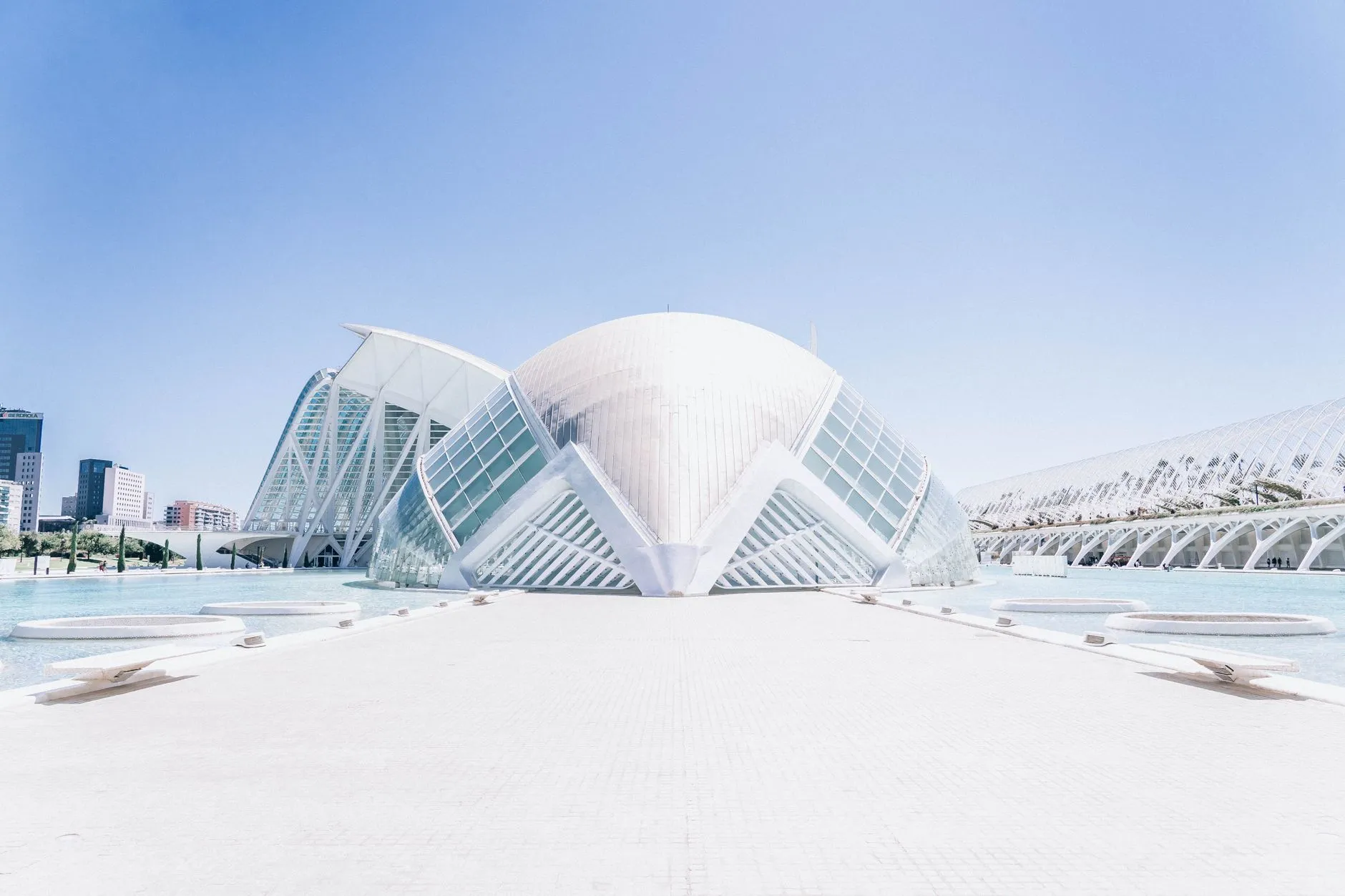
The masterstroke is the Turia. After catastrophic flooding in 1957, the city diverted the river out of its bed and turned the old course into a nine-kilometre green ribbon that loops through the centre — gardens, running tracks, cycle paths, football pitches, palms and fountains where a river used to be. You can walk or pedal the whole thing. At its seaward end it spills into the Ciudad de las Artes y las Ciencias (City of Arts and Sciences), Santiago Calatrava’s white, futuristic complex of opera house, science museum, IMAX and Europe’s largest aquarium — divisive as architecture, undeniable as spectacle.
But the old city is the soul: the Mercado Central (one of Europe’s great Modernista food markets, still a working market not a museum), the cathedral that claims to hold the Holy Grail, the climb up the Miguelet tower, the Lonja de la Seda silk exchange (a UNESCO Gothic gem), and the bar-crammed lanes of El Carmen and Ruzafa for the nightlife. And it is, of course, the birthplace of paella — more on that fight below.
A necessary, careful note. On 29 October 2024, a catastrophic DANA storm dropped extraordinary rainfall and caused devastating flooding across the province of Valencia, killing more than 220 people — overwhelmingly in towns south and west of the city such as Paiporta, Catarroja and Aldaia. It was one of Spain’s worst natural disasters in living memory, and the affected communities are still rebuilding. The city of Valencia itself, including its entire historic centre and tourist core, was largely spared and is fully open and operating normally; the tourist board confirmed normality before that Christmas, and the city today is exactly the welcoming place it was. Visit with confidence — and, if you can, spend your money in the wider region whose recovery still depends on people turning up.
Las Fallas: The Loudest Festival in Europe
If you can possibly time it, come to Valencia for Las Fallas. It runs 1–19 March 2026, with the climax between the 15th and the 19th, and it is unlike anything else in Europe. Over 400 enormous satirical sculptures — fallas, some five storeys high, papier-mâché and timber, skewering politicians and pop culture — are built across the city and then, on the final night, set on fire. All of them. On purpose. In the street.
The rhythm of it is what gets you. Every single day at 2pm in the Plaza del Ayuntamiento there’s the mascletà, which is not a fireworks display but a choreographed daytime explosion of firecrackers built to be felt in your chest more than seen — a percussion concert of gunpowder that ends in a wall of noise and smoke and a crowd roaring its approval. The big sculptures go up on La Plantà (15 March), the Ofrenda flower offering to the Virgin floods the Plaza de la Virgen on the 17th and 18th, the Nit del Foc mega-fireworks light the sky around midnight on the 18th, and the Cremà burns everything on the night of the 19th.
Fallas is brilliant and brutal in equal measure. Book accommodation months ahead and expect to pay festival rates; pack earplugs (the petardos are constant, children throw them in the street); and accept that you will not get a good night’s sleep. Go anyway.
It’s not a relaxing trip — it’s an assault on every sense and one of the great folk spectacles on the continent. If you want the city calm, come in May or October instead.
Benidorm, Honestly
Now the town that divides every dinner table. Benidorm gets sneered at by people who’ve never been, and defended fiercely by people who go every year, and the truth is somewhere more interesting than either camp allows.
Yes, it’s a forest of high-rises — one of the densest skylines in Europe, a kind of Manhattan-on-Med that was deliberately planned that way back in the 1950s and 60s to pack sun-seekers efficiently onto two superb beaches. Yes, the British strip around the New Town is loud, neon, all-day-breakfast, tribute-act, sunburn-and-lager Benidorm, and if that’s your nightmare it is very much real. But here are the things the snobs leave out: Levante and Poniente beaches are genuinely excellent — long, clean, gently shelving, Blue Flag, lifeguarded — and the Casco Antiguo (old town) on the headland between them is a charming, surviving fishing village with a blue-domed church (the Balcón del Mediterráneo viewpoint), proper Spanish tapas bars and a totally different atmosphere from the strip a few hundred metres away.
The trick with Benidorm: stay in the old town or at the quiet Poniente end, eat where the Spanish day-trippers eat, and use the place as a sunny, cheap, well-connected base — the TRAM to Altea and Calpe leaves from here. Treat the strip as optional entertainment, not the whole town.
Benidorm does mass tourism with a kind of cheerful, unpretentious competence, and it’s genuinely good value. I won’t tell you to centre your holiday on it. But I’ll defend it against the people who write it off without getting off the motorway — and I’ll point out that it’s the perfect launchpad for the beautiful coast just to the north.
The Marina Alta: The Costa Blanca No One Brags About
Here’s the coast I actually send people to. The Marina Alta is the northern tip of Alicante province, where the Sierra de Bernia and other mountains tumble down to the sea, and it’s everything the brochures promise the Costa Blanca will be and mostly isn’t.
Calpe (Calp) is dominated by the Peñón de Ifach, a sheer 332-metre limestone monolith jutting straight out of the Mediterranean — the coast’s defining image. You can hike it (through a tunnel bored into the rock to the summit), but it’s a proper scramble near the top and it’s a protected natural park, so you must reserve a free spot, ideally 10+ days ahead in high season, because daily numbers are capped. The town behind it is a bit over-built, but the rock, the old fishermen’s quarter and the salt flats with their flamingos redeem it.
Altea is the prettiest town on the coast and I’ll fight anyone on it: a whitewashed hill village crowned by a blue-and-white tiled church dome, cobbled lanes climbing to galleries and bougainvillea, looking out over the sea. It’s an artists’ town, slightly bohemian, and gorgeous at golden hour — though the beach is pebbly, so come for the town, not the sand.
Jávea (Xàbia) is the connoisseur’s choice — three distinct areas (the old town inland, the port, the Arenal beach), framed by the Montgó massif, with the pine-backed coves and the dramatic Cap de Sant Antoni and Cabo de la Nao headlands. It’s where well-off Spaniards and clued-in foreigners quietly buy houses. Moraira nearby is its smaller, smarter sibling — low-rise, low-key, expensive, lovely.
Dénia anchors the north: a likeable working port town under a hilltop castle, the ferry gateway to Ibiza and the Balearics, and — this is the headline — a UNESCO Creative City of Gastronomy. Its red prawns (gamba roja de Dénia) are among the most prized seafood in Spain, and the rice and seafood cooking here is the real thing.
Base yourself in the Marina Alta and the rest of the coast comes to you. Calpe and Dénia have train (TRAM L9) connections; everything else needs a car, but the driving is a pleasure — vineyards in the Jalón valley, the Bernia ridge, sea on one side and mountains on the other.
This is the answer to “where’s the nice Costa Blanca?” It’s right here, an hour north of where most package holidays land, and it’s still — astonishingly — underrated.
Guadalest & the Inland Valleys
Turn your back on the sea for a day. Behind the resort coast, the land rises fast into the sierras, and the difference in atmosphere is total — terraced almond and olive groves, vineyards, mountain villages, reservoirs and silence.
The honeypot is Guadalest (El Castell de Guadalest), a tiny fortified village dramatically perched on a crag above a turquoise reservoir, reached through a gateway tunnelled into the rock. The view of the bell tower against the impossibly blue water is one of the most photographed in the region — which means it’s mobbed by tour buses by mid-morning.
Do Guadalest early or late. Arrive before 10am or after 5pm and it’s magical; arrive at noon in August and you’re shuffling through a coach-trip souvenir gauntlet. The village is genuinely beautiful — it just needs you to dodge the crowd.
Combine it with the Algar waterfalls (Fonts de l’Algar) nearby, where you can swim in cold mountain pools in summer. Further inland, the Jalón (Xaló) valley is wine and almond-blossom country — visit in February for a sea of pink blossom, or any time for the Saturday rastro and the local Muscatel. The whole hinterland is a reminder that the Costa Blanca has depth the seafront never advertises.
The South: Salt Lakes, Sprawl & the Expat Belt
South of Alicante the character flips again, and I’ll give it to you straight. This stretch — Santa Pola, Guardamar, Torrevieja, Orihuela Costa, the Vega Baja down to the Murcia border — is the most heavily developed, most foreign-resident, most “could-be-anywhere” part of the coast. It’s flat, the beaches are long and sandy, the housing is endless, and it’s where the Costa Blanca’s downmarket reputation was largely earned.
That doesn’t mean nothing’s worth seeing. Torrevieja’s pink salt lakes (Las Salinas) are a genuine natural curiosity — the Laguna Rosa glows bubblegum-pink from the salt-loving algae, and flamingos wade in it; it’s a striking photo and a pleasant walk. Santa Pola has its salt pans, flamingos and the ferry to the little island of Tabarca (a former pirate haunt, a Marine Reserve, lovely water — and rammed in August). Guardamar has the best dunes and pine forests on this part of the coast. And the value is real: this is where your euro stretches furthest for self-catering sun.
Be clear-eyed about the southern costa. The beaches are fine and the prices are low, but the towns behind them are largely modern urbanisation — supermarkets, golf, and a lot of English spoken. Come for budget beach time; don’t come expecting Spanish soul.
Push a touch further and you cross into the Costa Cálida and Murcia — the Mar Menor (Europe’s largest saltwater lagoon, sadly ecologically troubled in recent years) and the buried-Roman-theatre city of Cartagena, which is honestly more interesting than most of the resorts north of it. If you’re based in the south, a day in Cartagena is a better use of your time than another beach.
Paella: A Hill I Will Die On
We need to talk about rice, because you are about to be lied to, repeatedly, on every beachfront menu from Dénia to Torrevieja.
Paella is Valencian. Not Spanish-generic — Valencian, born in the fields and the freshwater lagoon (the Albufera) just south of Valencia city. And the original, the paella valenciana, contains no seafood at all: it’s rabbit, chicken, sometimes snails, with flat green beans (ferraura) and garrofó butter beans, saffron, rosemary, and short-grain rice (Bomba or Senia), cooked thin and wide over wood fire until the bottom layer caramelises into the prized socarrat. That’s it. A Valencian will tell you — correctly — that anything else is a rice dish, not paella, and they’re not being precious; they’re being accurate.
Three rules I’d stake my reputation on:
- Paella is a lunch dish. Real arrocerías serve it at midday because it’s heavy and traditionally the main meal. A restaurant offering paella at 9pm “every night” to whoever walks in is cooking for tourists, not feeding a family.
- It’s cooked to order, for two people minimum, and it takes time. If it arrives in fifteen minutes it was pre-made and reheated. Good rice is a 30–40-minute wait. That wait is the point.
- Be suspicious of “paella” on a beachfront photo menu with eleven flags. Especially the lurid yellow ones studded with a token prawn and a mussel — that’s frozen arroz with food colouring, and the giveaway is the colour: real saffron is subtle and reddish-gold, not highlighter yellow.
If you want the real thing, eat arroz at lunch in Valencia, in the Albufera villages (El Palmar), or in Dénia — and order what the locals order: not “paella” reflexively, but the right rice for the place. Seafood? Get an arroz a banda or arroz del senyoret. Soupy? arroz caldoso or the magnificent arroz a banda. Authentic paella valenciana? In a proper Valencian restaurant, at lunch.
Saying “I’ll have the paella” on a tourist strip and being served neon rice is the single most common food disappointment on this coast, and it’s entirely avoidable. Make rice a thing you seek out properly, once or twice, rather than a thing you order absent-mindedly, and the Costa Blanca will feed you brilliantly.
Beyond Rice: Eating & Drinking
Rice gets the headlines, but this coast eats well far beyond it. Dénia, that UNESCO gastronomy city, is the high end — its red prawns are sweet, intense and worth the splurge, and the town runs a culinary scene out of proportion to its size. All along the coast, look for gambas, pulpo, grilled local fish, esgarraet (roasted red pepper, salt cod, garlic and good oil — order it everywhere), and all i pebre (a garlicky eel stew from the Albufera that’s better than it sounds).
Sweet things are a regional point of pride. Turrón — the almond-and-honey nougat eaten across Spain at Christmas — comes from Jijona (Xixona), just inland from Alicante, and the local stuff is a world away from the supermarket bars. Villajoyosa is the chocolate town (the Valor factory). And on a hot afternoon, do as Valencia does: horchata (a cold, sweet, milky drink made from tiger nuts — chufa — grown right outside the city) with fartons to dip. It’s the regional soft drink, it’s delicious, and it’s everywhere.
For wine, look inland: the Jalón/Xaló valley Muscatels and the broader Alicante DO (the local Monastrell reds and the historic sweet Fondillón) are good and cheap. And don’t sleep on the vermouth hour — la hora del vermut, a pre-lunch vermouth-and-snack ritual the Spanish do beautifully.
What’s Overrated — and What to Skip
Travel writing that only enthuses is useless. Here’s where I’d save you time and money.
- Beachfront “paella.” Covered above. The single biggest tourist trap on the coast.
- The Benidorm strip as a destination. Fine for a night’s entertainment if that’s your scene; a poor reason to choose your whole holiday. The old town and beaches are the real Benidorm.
- Tabarca and Guadalest in August at midday. Both genuinely lovely, both completely overwhelmed in peak season at peak hours. Go shoulder-season, or go at the edges of the day.
- Theme parks over the actual coast. The region is heavy on water parks and Terra Mítica-style attractions. They’re fine for kids on a rainy week, but if you’re skipping a mountain village or a rice lunch to queue for a flume, you’ve got the priorities backwards.
- Driving the N-332 coast road expecting speed. It’s slow, traffic-light-heavy and clogged in summer. For distance, use the AP-7 motorway; use the N-332 only when the view is the point.
- Over-paying for a “sea view” in the south. A sea-view flat above a developed strip isn’t the same as a sea-view in Altea or Jávea. Spend the view premium where the view is actually beautiful.
Money, Costs & When to Go
The Costa Blanca is one of the best-value coasts in Western Europe, and that’s a large part of its appeal. Rough, realistic 2026 numbers:
- Coffee: €1.50–2. Caña (small beer): €1.50–3. Glass of local wine: €2–3.50.
- Menú del día (set lunch): €12–16 inland/local; more on the seafront.
- Proper paella/arroz, cooked to order, per person: €18–25 in a good arrocería.
- Red prawns in Dénia: market price and not cheap — a genuine splurge.
- TRAM single: €1.45–3.90. Airport C-6 bus: €4.60. Taxi airport–Alicante: ~€20–25.
- Hire car: from ~€25–40/day off-peak, much more in August — book early.
The big variable is season, and it’s dramatic. The same apartment that’s a bargain in May can triple in August. Cash is rarely needed — cards (and contactless) are accepted nearly everywhere — but carry a little for small village bars and markets.
On when to go: my strong preference is May–June and September–October. The sea’s warm enough (it holds heat into October), the days are long and hot-but-not-brutal, the prices are sane and the crowds are bearable. July and August are the coast at full tilt — hot (mid-30s°C and humid), packed, and at peak prices; come then only if you’re tied to school holidays, and book everything far ahead. Winter (Nov–Feb) is mild, quiet and cheap — daytime often 16–20°C, perfect for walking, golf, almond blossom and the long-stay foreign-resident crowd, though sea-swimming is for the hardy and many resort businesses shut down. March belongs to Fallas in Valencia.
The sweet spot is late September into October. Warm sea, warm air, empty-ish beaches, half the summer prices, and the rice tastes just as good.
Practical: Entry, EES & Staying Sane
Entry. This is EU/Schengen Spain. Since 10 April 2026, non-EU visitors (UK, US, Australia, Canada and others) go through the EES (Entry/Exit System) — biometric registration (fingerprints and a facial photo) at the external Schengen border on first entry, replacing the old passport stamp; it logs your entries and exits to enforce the 90-days-in-any-180 short-stay limit. Expect it at Alicante and Valencia airports, and allow a little extra time at passport control, especially at peak — though Spain’s airport operator AENA has from late April 2026 run a flexibility rule diverting travellers to manual lanes if biometric queues exceed about 25 minutes. ETIAS, the separate pre-travel authorisation, is Expected, with no date announced and is not yet required as of writing — but check before you fly, as the timeline has moved before. EU/EEA/Swiss nationals are unaffected by both.
Getting around, recapped: hire a car for the Marina Alta and the sierras; use the TRAM and trains for the coast and city-hopping; the C-6 bus for the airport.
Language: Spanish (Castilian) works everywhere; the region also speaks Valencian (a form of Catalan) and you’ll see place names doubled (Jávea/Xàbia, Alicante/Alacant, Calpe/Calp). English is universal on the resort coast and patchy inland — a little Spanish goes a long way in the villages.
Safety: the Costa Blanca is very safe. The realistic risks are sunburn, dehydration, summer road traffic, and petty theft (bag-snatching, car break-ins) in busy tourist spots — don’t leave anything visible in a parked car, the classic mistake here.
One last steer: don’t try to “do” the whole coast. Pick a base — Valencia, or the Marina Alta — settle in, and let the days unfold from there. The people who leave loving the Costa Blanca are the ones who went deep on one stretch, not the ones who drove its full 200 km ticking off resorts.
Frequently Asked Questions
Cheapest Flights to The Costa Blanca
We have tracked 1,019 fares to The Costa Blanca from 63 cities. As of June 2026, here is what a good price looked like from each — the lowest fare we recorded, and a “great-deal” benchmark to judge a quote against. These are tracked observations, not live prices: by the time you read this they will have moved, so treat them as a yardstick, not a quote.
| From | Lowest fare we tracked | Great-deal benchmark |
|---|---|---|
| Bologna (BLQ) | €27 | €38 |
| Milan (MXP) | €27 | €160 |
| Porto (OPO) | €28 | €40 |
| Nantes (NTE) | €29 | €41 |
| Lisbon (LIS) | €31 | €44 |
| Charleroi (CRL) | €32 | €46 |
| Sandefjord Torp (TRF) | €37 | €53 |
| Bordeaux (BOD) | €38 | €54 |
| Bratislava (BTS) | €38 | €54 |
| Krakow (KRK) | €38 | €55 |
| Dublin (DUB) | €39 | €56 |
| Warsaw (WMI) | €41 | €58 |
| Wrocław (WRO) | €41 | €58 |
| Gdansk (GDN) | €42 | €60 |
Recent deals we have posted to The Costa Blanca:
- Manchester to Alicante, Spain from £40
- Helsinki to Alicante, Spain from €95
- Marseille to Alicante, Spain from €48
- Newcastle upon Tyne to Alicante, Spain from £57
- Ibiza to Alicante, Spain from €36
- Gothenburg to Alicante, Spain from €53
- Stockholm to Alicante, Spain from €79
- Madrid to Alicante, Spain from €50
- Gdańsk to Alicante, Spain from €58
- Porto to Alicante, Spain from €37
These are fares aifly tracked to this destination, not live quotes — they have changed since and several of the deals above may have expired. Browse current flight deals →