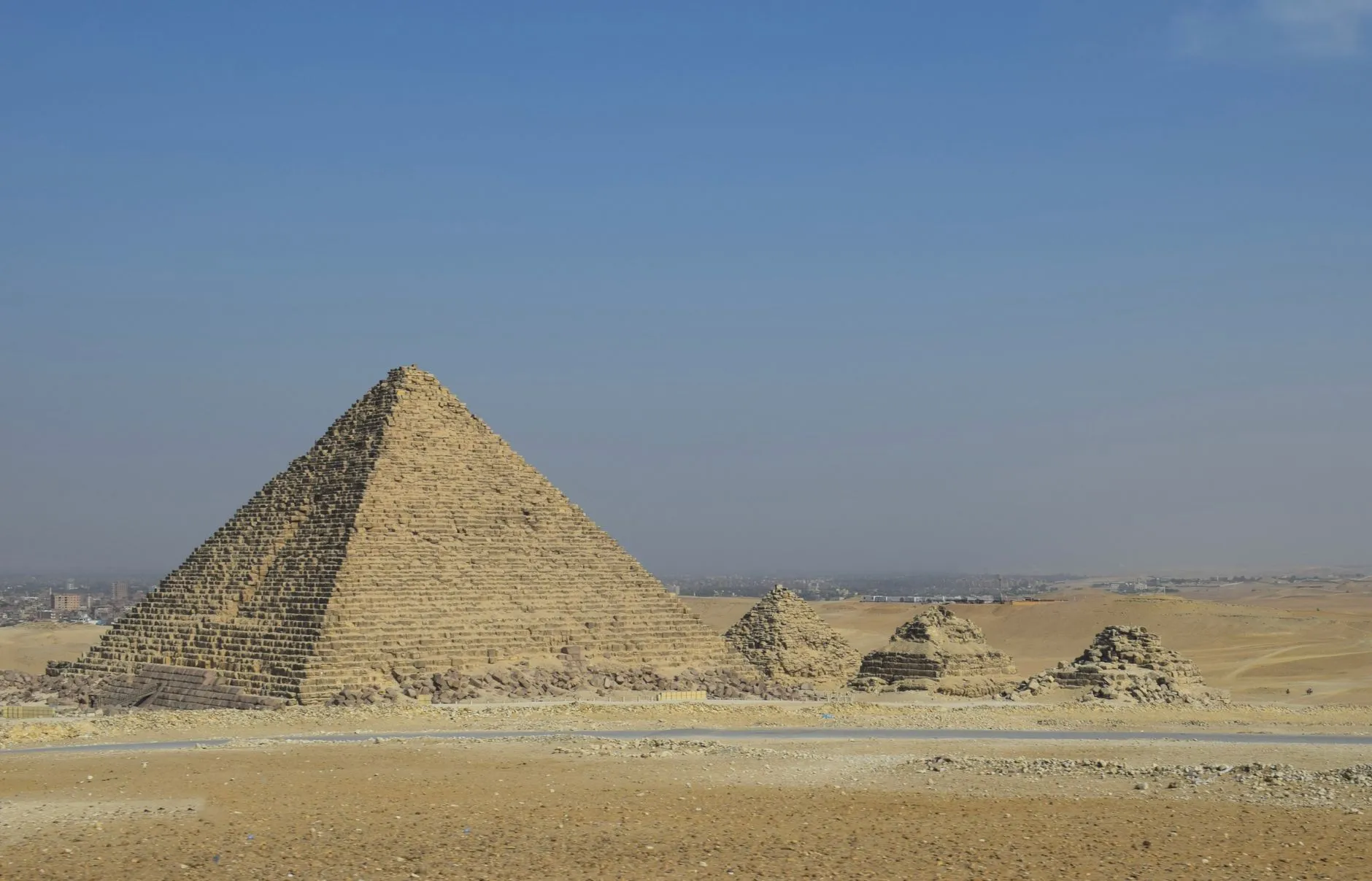
Egypt — Complete Travel Guide 2026
Egypt rewards the traveller who builds the trip around two things: a couple of days in Cairo for the Pyramids and the new Grand Egyptian Museum, and a Nile cruise between Luxor and Aswan that is, honestly, the spine of the whole thing. Do that and you’ll see more concentrated ancient grandeur than almost anywhere on Earth — provided you accept that the touts, the baksheesh and the heat are part of the deal, not a flaw in it.
Quick Reference
North-east Africa, on the Mediterranean and Red Sea, split by the Nile
Cairo (CAI), Luxor (LXR), Aswan (ASW)
Egyptian pound (EGP) — heavily devalued, ~56 EGP to €1 in mid-2026
Arabic; English widely spoken in tourism
e-Visa or visa-on-arrival for most Western travellers (~US$30 single entry, March 2026)
October to April (cool, dry); avoid May–September heat
The Pyramids, the Valley of the Kings, Nile cruises, the Grand Egyptian Museum
Cairo for the pyramids + the GEM; Luxor and Aswan for the ancient Nile
Editor’s Note: How to Actually Plan This
Most people overthink Egypt and then under-plan the one decision that matters. Here it is: Cairo + a Nile cruise is the backbone of a good first trip. Two to three nights in Cairo (Pyramids, the Grand Egyptian Museum, a half-day in old Islamic Cairo), then fly south to Luxor or Aswan, sail the Nile for 3–4 nights, and fly home from the other end. Seven to nine days total. That’s it. Everything else — Alexandria, Abu Simbel, the White Desert, the Red Sea — is an add-on you bolt onto that core, not a substitute for it.
The temptation is to try to “do” the country overland in a fortnight. Don’t. Egypt is huge and the distances are punishing; the ancient sites worth your time cluster tightly along a 200-kilometre stretch of river between Luxor and Aswan. A cruise solves your transport, your accommodation and your guiding in one move, and it delivers you to temples by boat the way they were meant to be reached.
Plan around the heat, not around your annual leave. From May to September, Luxor and Aswan routinely hit 40–42°C, and exploring Karnak’s open courtyards at midday in August is genuinely miserable and mildly dangerous. October to April is the only sane window. If you can only travel in summer, the Mediterranean coast and a dive trip on the Red Sea are far more bearable than the Nile valley.
Budget realistically. Egypt is cheap on the ground — meals, taxis, local entry fees are a fraction of European prices thanks to the collapsed pound — but the things tourists actually buy (a decent cruise, a private guide, internal flights, the headline monuments) are priced in something closer to hard currency. A comfortable mid-range week, flights aside, runs roughly €700–1,200 per person. You can do it for far less independently, or spend a great deal more on a luxury dahabiya.
Should You Go? Who It’s For — and Who It Isn’t
Egypt is for people who came for the antiquity and will forgive the friction to get it. If standing inside the Great Pyramid, watching the sun rise over Karnak’s hypostyle hall, or drifting past the Nile’s green ribbon on a felucca is the kind of thing that gives you goosebumps, you will have the trip of your life. The density and scale of what survives here is unmatched.
It is not a destination for people who want to be left alone. The hustle is real and constant at the big sites — camel touts at Giza, “helpful” men who appear beside you at temple gates expecting a tip, shopkeepers who treat “no” as the opening move in a negotiation. None of it is dangerous, almost all of it is exhausting if you’re not braced for it, and a good licensed guide makes the whole thing 80% gentler. Solo women travel here regularly and safely but should expect more attention and dress conservatively.
Caution — the hassle is a feature of the economy, not aimed at you personally. Tourism employs around one in ten Egyptians and formal wages are tiny, so everyone in your orbit has a small financial interest in you. Take it as transactional friction, not hostility. A firm, friendly “la’, shukran” (no, thank you) said once and a steady walk away works far better than arguing.
Skip Egypt — or save it for later — if you need a relaxing, low-effort holiday, if extreme heat is a deal-breaker and you can only go in summer, or if crowds at A-list sites ruin things for you (winter peak at the Valley of the Kings and the GEM is busy).
Getting There & Entry: CAI, LXR, ASW
Most travellers fly into Cairo International (CAI), Egypt’s main hub and EgyptAir’s base, with direct connections across Europe, the Gulf and beyond. But you don’t have to start in Cairo: Luxor (LXR) and Aswan (ASW) both take international and charter flights, and a clever itinerary flies into one Nile city and out of the other (or out of Cairo) so you never double back. Hurghada and Marsa Alam on the Red Sea also take heavy charter traffic if you’re combining a beach leg.
On entry, most European, British, North American, Australian and many other passport holders need a tourist visa, and you have two easy options:
- The official e-Visa at visa2egypt.gov.eg — apply a few days ahead, pay by card, around US$30 for a single-entry (multiple-entry is roughly US$65). Print the approval.
- Visa-on-arrival: buy the visa sticker at a bank window in the arrivals hall before immigration. As of 1 March 2026 the single-entry fee rose from US$25 to US$30. Pay in cash US dollars or euros (have it ready); cards are sometimes accepted but the dollar booth is the cleanest route.
Your passport must be valid for at least six months beyond arrival. The e-Visa is the lower-stress choice — it removes one queue at a tired airport — but the on-arrival sticker is quick enough at Luxor and Aswan, which see far less traffic than Cairo.
Cairo & the Pyramids: The GEM and Giza
Keep Cairo deliberately short — two, maybe three nights — and spend the depth further south. The city is chaotic, loud and wonderful, but a little goes a long way, and we’ve got a our full Cairo city guide for when you want to dig into Islamic and Coptic Cairo, the Citadel and where to eat. Here’s the essential spine.
The Pyramids of Giza & the Sphinx. They sit on the city’s western edge, not out in a remote desert, which surprises everyone. General plateau admission is around 700 EGP (~€12.50); going inside the Great Pyramid of Khufu costs extra (about 900 EGP) and is claustrophobic, hot and largely empty inside — worth it once for the experience, skippable if tight on time. Go early, both for the light and to beat the heat and the touts.
Avoid the camel-and-horse circus at Giza unless you’ve pre-arranged it. The operators at the gate are the most aggressive in Egypt: agree every price in writing before you mount anything, never hand over your ticket or phone, and expect a “tip” demand at the end regardless. A licensed guide or a reputable tour eliminates the whole pantomime.
The Grand Egyptian Museum (GEM). This is the headline of any 2026 trip. After years of phased soft openings, the GEM held its full grand opening on 1 November 2025 and is now completely open — all galleries, the colossal Ramses II statue in the atrium, the grand staircase, and the crown jewel: the entire Tutankhamun collection of 5,398 pieces displayed together for the first time ever. It’s the largest museum on Earth devoted to a single civilisation, beside the Giza plateau. Foreign-adult admission is about 1,450 EGP (~€26); tickets must be bought online in advance via the official site. Note a further price rise is scheduled for 1 November 2026, so budget a little more if you’re travelling late in the year. Allow at least half a day; a full day if you love museums.
Old Cairo & Khan el-Khalili. Carve out a half-day for the medieval city — the mosque-madrasas of Islamic Cairo, the Coptic churches and the Hanging Church in Old Cairo, and the Khan el-Khalili bazaar, free to wander, a sensory overload of brass, spice, lanterns and aggressive charm. Haggle hard, buy little, drink a tea at the historic El Fishawy café.
Luxor: The World’s Greatest Open-Air Museum
If Cairo is the warm-up, Luxor is the main event. Built over ancient Thebes, it holds a density of monumental antiquity that no other city on the planet can touch, neatly split by the Nile: the temples of the living on the East Bank, the tombs and mortuary temples of the dead on the West Bank.
East Bank — Karnak & Luxor Temple. Karnak is the largest religious complex ever built, and its Great Hypostyle Hall — 134 colossal columns, some 23 metres tall, in a stone forest — is the single most overwhelming space in Egypt. Go at opening or late afternoon; midday flattens the light and bakes the courtyards. Luxor Temple, in the heart of town and connected to Karnak by the recently restored Avenue of Sphinxes, is best seen at dusk and after dark, when it’s floodlit and far cooler.
West Bank — the Valley of the Kings. Cross the river for the royal necropolis. The general ticket (around 500 EGP) lets you into three tombs of your choice from those open on the day — and they rotate, which is fine, because the painted tombs of Ramesses III, Ramesses IV or Merenptah are spectacular. Headline tombs cost extra and separately: Tutankhamun’s small tomb (KV62) and, the real splurge, the breathtaking, deep, vividly painted tomb of Seti I (KV17) at around 2,000 EGP — the finest tomb in the valley and worth every pound if your budget stretches.
Buy the optional photography pass or leave the camera off in the tombs. Tomb guards will wave you in to “their” tomb, point out details and then expect baksheesh, and flash photography is restricted; an official photo ticket and a polite refusal of unsolicited “help” saves both money and friction. The painted reliefs are what you came for — give them your eyes, not your lens.
The rest of the West Bank. Don’t stop at the Valley. The terraced Temple of Hatshepsut (Deir el-Bahari) rising against its cliff is one of Egypt’s most photogenic sights (around 440 EGP), the two weathered Colossi of Memnon are a free roadside stop, and the Valley of the Queens and Medinet Habu reward those with extra time.
How to do Luxor well: give it a minimum of two full days, hire a licensed Egyptologist guide for at least the West Bank (the context transforms a row of tombs into a story), and start each day at dawn. A sunrise hot-air balloon over the West Bank is touristy and genuinely magnificent — the temples and the green valley below, the desert beyond.
Aswan & Abu Simbel
Aswan is the antidote to Cairo: calmer, smaller, prettier, with the Nile at its widest and bluest, dotted with granite islands and lateen sails. Many travellers find it their favourite stop, and the Nubian culture here gives it a distinct, gentler character.
Philae Temple. The graceful temple of Isis, relocated stone by stone to Agilkia Island when the High Dam threatened to drown it, is reached by a short motorboat and best at opening or for the evening sound-and-light show. One of Egypt’s loveliest temples and a great primer on the dam-era rescue archaeology.
The High Dam & the dam story. The 1960s Aswan High Dam created Lake Nasser, ended the Nile’s annual flood, and forced the largest archaeological rescue in history. It’s a quick, sobering stop, usually paired with Philae the same morning since they’re ten minutes apart.
Nubian villages & the felucca. Cross to the brightly painted Nubian villages on the west bank or Elephantine Island for home-cooked food, hibiscus tea and the most genuine cultural exchange in Upper Egypt. And do not leave Aswan without a felucca at sunset — the traditional sailboat drifting past Elephantine Island and the desert cliffs in golden light is the trip’s quiet, perfect moment (roughly €10–15 an hour, agreed up front).
Abu Simbel. South of Aswan, near the Sudanese border, stand Ramses II’s colossal rock temples — four 20-metre seated pharaohs guarding a deep sanctuary, themselves famously cut apart and lifted to higher ground above Lake Nasser in the 1960s. It’s a 280 km, ~3.5-hour drive each way (most go by convoy in the early hours) or a quick 45-minute flight from Aswan. Long day, unforgettable payoff.
The Abu Simbel Sun Festival falls on 22 February and 22 October 2026 — the two mornings each year when the rising sun penetrates the entire temple to illuminate the inner statues of Ramses, Amun and Ra (leaving Ptah, god of the underworld, in shadow). It draws huge crowds and books out months ahead; magical if you plan for it, gridlocked if you stumble into it unprepared.
The Nile Cruise: The Spine of the Trip
The Luxor–Aswan stretch is the classic cruise, and for good reason — it strings together Edfu, Kom Ombo and the riverside life between the two great cities, and you wake up at a new temple each morning. The cruise is the backbone of most Egypt trips, and you sail it one of two very different ways.
The big cruise ships — floating three-to-five-star hotels carrying 100–150-odd passengers — are the mainstream choice. They’re comfortable, air-conditioned, have a sun-deck pool, run a fixed Luxor↔Aswan schedule (typically 3 or 4 nights), and bundle guided shore excursions. The trade-offs: you arrive at sites in a flotilla with everyone else, the ships moor side-by-side three or four deep (your “river view” can be another boat’s hull), and the experience is efficient rather than intimate. For a first trip on a budget, they’re great value and do the job well.
The dahabiya is the connoisseur’s alternative: a small, elegant traditional sailing boat — usually 6 to 12 cabins — that drifts under sail rather than engine, moors at quiet banks the big ships can’t reach, and gets you to temples when the crowds aren’t there. It’s slower, quieter, far more atmospheric and noticeably pricier, and on the smaller end you trade some amenities (no big pool, limited Wi-Fi) for a sense of the 19th-century Nile. If the romance of the river is why you’re here and the budget allows, the dahabiya is the better experience by a wide margin. A felucca multi-day camp is the rough-and-ready, cheapest version — basic, beautiful, mattresses-on-deck sailing for the young and unfussy.
Whichever you pick: sail Luxor to Aswan or Aswan to Luxor (either direction works — upstream is slower and more relaxed), book a boat with good recent reviews rather than the cheapest bed, and treat the included guiding as a major part of the value. Three to four nights is the sweet spot.
Alexandria & the Western Desert (Briefly)
Alexandria, two to three hours north of Cairo on the Mediterranean, is a different Egypt — breezy, faded, Greco-Roman and Levantine rather than pharaonic. The standout is the Bibliotheca Alexandrina, the soaring modern library and cultural centre that reimagines the ancient one, with museums and a planetarium inside. Add the Catacombs of Kom el-Shoqafa (a striking Egyptian-Roman fusion tomb), the seafront Citadel of Qaitbay built on the ruins of the lost Pharos Lighthouse, Pompey’s Pillar and a walk along the Corniche with a seafood lunch. Very doable as a long day trip or a one-night overnight from Cairo; it’s a change of pace, not a rival to the Nile.
The Western Desert is for travellers with extra days and a taste for the surreal. The White Desert near Bahariya Oasis — wind-sculpted chalk formations glowing under the stars on an overnight 4×4 camp — is the headline, reachable on a 2–3 day trip from Cairo. Further west, remote Siwa Oasis, where Alexander the Great consulted the Oracle of Amun, offers salt lakes, hot springs, mud-brick Berber architecture and a genuinely off-grid feel — but it’s a long haul and needs a dedicated 4–5 days. Both are winter-only; the desert is lethal in summer, and the Libya-border zones are off-limits on security grounds.
The Red Sea (Briefly)
Egypt’s Red Sea coast — Hurghada, Marsa Alam, El Gouna and the Sinai resorts — is a world-class diving and beach destination with year-round warmth and some of the best reefs on the planet, and it pairs beautifully with a Nile trip as a relaxing tail end. It’s a different holiday, though, so we keep it brief here and cover it properly in our full Red Sea guide — where to dive, which resort suits you, and how to combine it with Luxor. Note that the northern and central Sinai carry strict travel warnings; the established South Sinai and mainland Red Sea resorts do not and remain safe and open.
When to Visit: Month by Month
The headline is simple: October to April is the season; May to September is the heat you should respect.
- October–November (excellent): Warm, dry, the summer furnace breaking, smaller crowds than peak winter and better prices. Many seasoned travellers call autumn the sweet spot. The 22 October Sun Festival falls here.
- December–February (peak, cool): The most comfortable temperatures for tramping around temples — Luxor and Aswan in the low-to-mid 20s°C by day, chilly at night (pack a fleece for the felucca and the Abu Simbel pre-dawn drive). Also the busiest and priciest; book the cruise and the GEM ahead. The 22 February Sun Festival falls here.
- March–April (excellent shoulder): Pleasant, quieter, good value — though watch for the occasional khamsin dust storm in spring.
- May–September (brutal): Luxor and Aswan regularly hit 40–42°C, peaking in August. Sites are emptier and hotels cheapest, but midday exploration is genuinely hard. If you must travel now, do dawn starts, hide indoors at midday, and lean on the Red Sea coast, which stays more bearable.
What to Eat & Drink
Egyptian street food is cheap, filling and, where it’s busy and freshly cooked, very safe. The trio you’ll come back to:
- Koshari — the unofficial national dish: a layered bowl of rice, lentils, macaroni, chickpeas, crispy fried onions and a sharp tomato-and-garlic-vinegar sauce, for the equivalent of a euro or two. The legendary spot is Abu Tarek in Downtown Cairo.
- Ful medames — slow-cooked fava beans with garlic, lemon, cumin and olive oil, scooped up with fresh aish baladi flatbread. The Egyptian breakfast of champions, around for millennia.
- Ta’meya — Egyptian falafel made from fava beans rather than chickpeas, fried into herby green discs, often crusted with sesame; the breakfast counterpart to koshari.
Beyond the holy trinity: mulukhiyah (a garlicky green soup), mahshi (stuffed vegetables), hawawshi (spiced-meat-stuffed bread), grilled kofta and shawarma, and molokhia with rabbit or chicken in the better local kitchens. Drink shai (sweet black tea), fresh sugarcane juice, karkadé (hibiscus, hot or iced, the Nubian welcome drink) and good Egyptian coffee. Alcohol exists — local Stella and Sakara beers, decent enough wine from the Gianaclis vineyards — but it’s not pervasive outside hotels, cruises and tourist areas.
Eat where Egyptians eat and stick to hot, freshly-cooked food first. A busy koshari or ta’meya joint with high turnover is far safer than a quiet tourist café; cooked dishes are reliable, raw salads and unpeeled fruit are where stomachs go wrong. And drink bottled water only — see below.
Getting Around
Pick the right tool for each leg and Egypt is far easier than its reputation suggests.
- Domestic flights are the workhorse. EgyptAir flies Cairo–Luxor and Cairo–Aswan many times daily (Cairo–Luxor alone has well over a dozen flights a day), each about an hour, and there are short Aswan–Abu Simbel hops. Flying saves a full day versus the road and is the standard way to reach the Nile cities. Don’t invent fares — they swing widely — but book ahead in winter.
- The overnight sleeper train (Cairo–Luxor–Aswan) is a genuinely fun alternative to flying, now run by Abela (formerly the Watania service), with private cabins, dinner and breakfast included, and a 10–13 hour run. Reckon on roughly US$100–130 per person for a standard cabin one way (premium cabins more), bookable via the operator. Book the cabin class, not the cheaper seats, and don’t expect luxury — expect character.
- The Nile cruise handles all your Luxor–Aswan transport, lodging and guiding in one (see above).
- Taxis & ride-hailing: Uber and Careem work well in Cairo and Alexandria and remove the haggle — use them. Elsewhere, agree the fare before you get in; the meter is theoretical.
Don’t rent a car to drive yourself across Egypt. Traffic is anarchic, intercity roads run through security checkpoints and convoys, and the time saved is negative. Domestic flights, the sleeper train, the cruise and a hired car-with-driver cover everything; a self-drive saves nothing and costs nerves.
Where to Stay
Cairo: For first-timers, the historic Giza/pyramids side lets you wake up to the Pyramids and reach the GEM in minutes — pricier hotels here have legendary pyramid views. Downtown and Zamalek put you among restaurants and the Egyptian Museum and Nile waterfront; choose by what you want on your doorstep. Budget hostels through five-star Nile palaces both exist.
Luxor: The East Bank (around town and the Corniche) is convenient and well-served; the quieter West Bank has charming guesthouses among the sugarcane fields, closer to the tombs and the dawn balloon launch. Mid-range here is excellent value.
Aswan: Stay where the view is — Nile-front hotels and the Nubian guesthouses on the west bank and Elephantine Island are the whole point. The grand old riverside hotels here are an experience in themselves.
The cruise is, for several nights, your hotel — so put real thought into which boat (see the Nile cruise section). Across the board, the devalued pound makes Egyptian accommodation a strong value: a comfortable mid-range room costs a fraction of its European equivalent.
Costs & Budget
Egypt has become, for the foreign visitor, genuinely cheap — because the Egyptian pound has lost the majority of its value since 2022 through a run of devaluations, trading around 56 EGP to €1 in mid-2026. That makes ground costs — meals, local transport, taxis, the entry fees to most monuments — feel almost trivial in euros. A koshari lunch is €1–2; a felucca hour €10–15; many temple tickets a few euros each.
What still costs real money: the Nile cruise (the single biggest line item — anything from a few hundred euros for a budget ship cabin to well over a thousand for a dahabiya), internal flights, a private guide (the standard, and very worth it: roughly €10–15/day in tips plus the guide fee), the GEM and Giza headline tickets, and Abu Simbel. Rough per-person daily ground budgets, flights aside: backpacker €30–50, comfortable mid-range €80–150, luxury €250+.
Carry cash and tip in small notes — baksheesh is the lubricant of Egyptian travel. Budget a daily tipping float: a few euros for the felucca captain, €1–2 per bag for porters, 10% in restaurants, small EGP notes for restroom attendants and the men who “show” you things. Use euros or dollars for guides and drivers, EGP for everything small. It adds up to a meaningful slice of the trip — plan for it rather than be ambushed by it.
Practical Information
Entry / e-Visa. Most Western travellers need a tourist visa: the official e-Visa (visa2egypt.gov.eg, ~US$30 single entry, apply a few days ahead) or visa-on-arrival (buy the sticker at a bank window before immigration; US$30 since 1 March 2026, pay cash in USD/EUR). Passport valid six months beyond arrival. The e-Visa is the calmer option, especially at busy Cairo.
Money. The currency is the Egyptian pound (EGP), heavily devalued (~56/€1, mid-2026). Carry a stash of clean US dollars or euros for visas, guides and big tips; use EGP for daily small spending. ATMs are common in cities and at the airports; many monument ticket offices have shifted to card-only payment, so carry a working card too. Don’t change large sums in advance — you’ll get better rates inside Egypt.
Safety. Egypt’s main tourist corridor — Cairo, Luxor, Aswan, Alexandria and the established Red Sea resorts — is safe and heavily policed; the Luxor–Aswan route is among the most patrolled tourist zones on Earth. The US advisory sits at Level 2 (exercise increased caution) in 2026, with firm Do Not Travel designations only for the northern/central Sinai and the Libya-border Western Desert. Petty scams and overcharging, not violent crime, are your realistic concern.
Never drink the tap water, and skip ice and unpeeled raw produce you didn’t prepare. Stick to sealed bottled water (cheap and everywhere), use it for brushing teeth, and you’ll dodge the most common traveller’s ailment. Pair that with eating hot, busy, freshly-cooked street food and your stomach should be fine.
Dress & cultural respect. Egypt is a conservative, predominantly Muslim country. Cover shoulders and knees at religious sites and modestly in towns and on the street (a scarf for women entering mosques); resort and cruise areas are relaxed. Ask before photographing people, especially women, and expect a tip request if you photograph someone working. Friday is the holy day; Ramadan (timing shifts each year) changes opening hours and daytime eating.
Connectivity. Buy a local Vodafone, Orange or Etisalat SIM or eSIM on arrival — cheap data, good coverage in the Nile cities, patchier in the deep desert and on some dahabiyas. Hotel and cruise Wi-Fi exists but is often slow; download your maps and tickets offline before the sailing leg.
Frequently Asked Questions
Cheapest Flights to Egypt
We have tracked 1,099 fares to Egypt from 87 cities. As of June 2026, here is what a good price looked like from each — the lowest fare we recorded, and a “great-deal” benchmark to judge a quote against. These are tracked observations, not live prices: by the time you read this they will have moved, so treat them as a yardstick, not a quote.
| From | Lowest fare we tracked | Great-deal benchmark |
|---|---|---|
| Thessaloniki (SKG) | €105 | €156 |
| Ankara (ESB) | €120 | €171 |
| Bologna (BLQ) | €128 | €183 |
| Paphos (PFO) | €132 | €188 |
| Naples (NAP) | €138 | €197 |
| Gothenburg (GOT) | €141 | €202 |
| Krakow (KRK) | €143 | €204 |
| Sicily (CTA) | €144 | €206 |
| Malta (MLA) | €151 | €216 |
| Bucharest (OTP) | €155 | €221 |
| Prague (PRG) | €157 | €224 |
| Budapest (BUD) | €159 | €227 |
| Cluj-Napoca (CLJ) | €162 | €231 |
| Dalaman (DLM) | €162 | €231 |
Recent deals we have posted to Egypt:
- Los Angeles to Cairo, Egypt from $715
- Chicago to Cairo, Egypt from $689
- Athens to Cairo, Egypt from €96
These are fares aifly tracked to this destination, not live quotes — they have changed since and several of the deals above may have expired. Browse current flight deals →