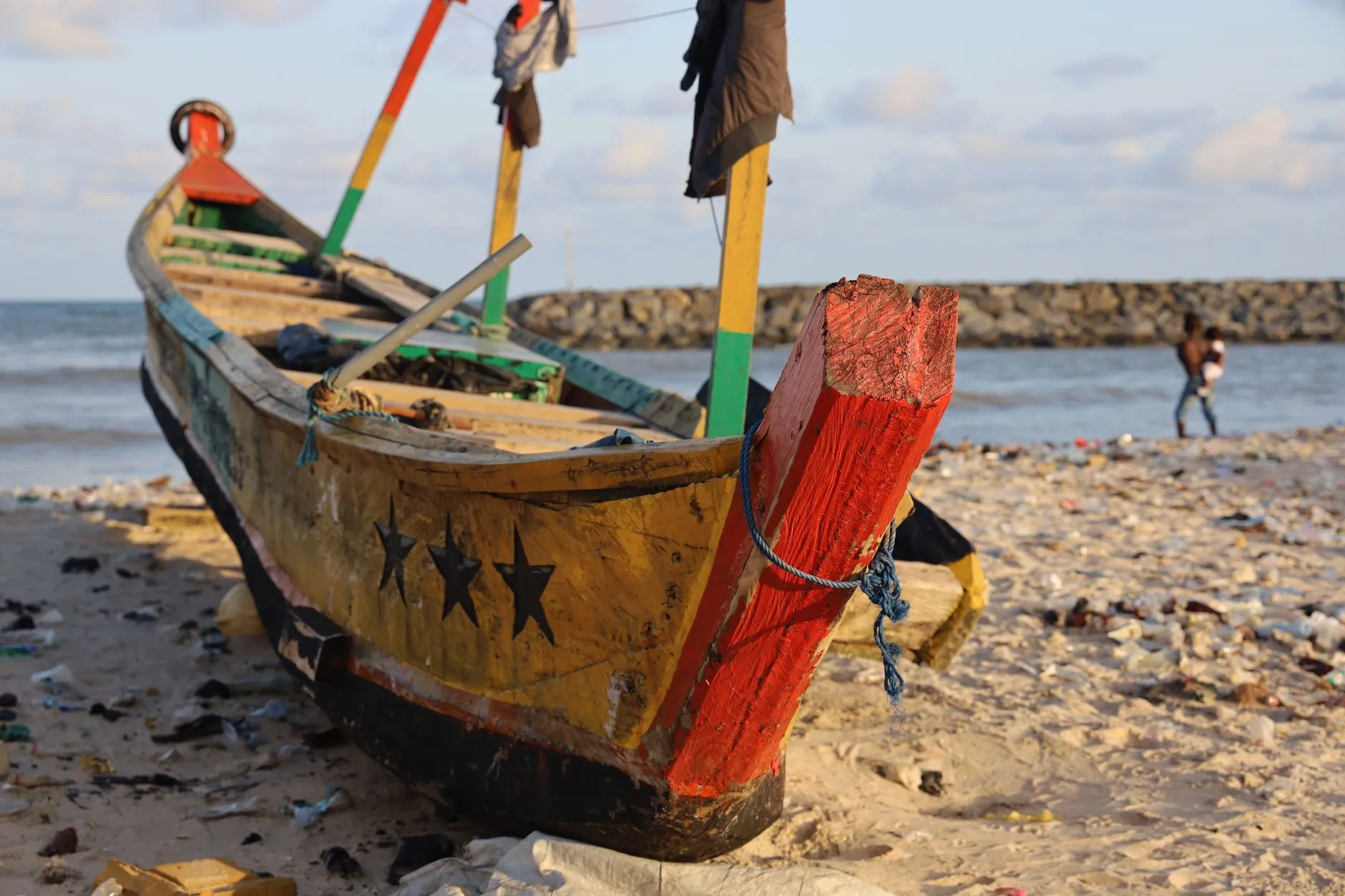
Ghana — Complete Travel Guide 2026
Ghana is the best first trip in West Africa — full stop. It is stable, it is safe by the region’s standards, it runs on English, and it carries more meaning per kilometre than almost anywhere on the continent: you can stand inside a slave castle on the Cape Coast in the morning, walk a rainforest canopy 40 metres above the ground by lunchtime, and be eating grilled tilapia and banku with your fingers by a roadside that night. The heat is real, the roads are slow and the traffic in Accra will test a saint — but the welcome, that single word akwaaba you’ll hear a hundred times, is the most genuine thing about the place. Come for the meaning; stay for the people.
Quick Reference
West Africa, on the Gulf of Guinea, between Côte d’Ivoire and Togo
Accra International Airport (ACC — the former Kotoka, renamed in February 2026); Tamale (TML) and Kumasi (KMS) for domestic hops
Ghanaian cedi (GHS) — roughly €1 ≈ 13 cedis in mid-2026; a cash-and-mobile-money economy
English (official); Twi/Akan is the lingua franca, plus Ga, Ewe, Dagbani and dozens more
Visa required in advance for almost all Western tourists (no visa-on-arrival for non-Africans); a valid yellow-fever certificate is mandatory and checked on arrival
Late November to March — the dry season; avoid the heavy rains of May–June and September–October
The Cape Coast slave castles, the Ashanti gold kingdom, Kakum’s canopy walk, Mole’s elephants, jollof rice, and the warmest welcome in the region
Accra to start; then Cape Coast, Kumasi, and either the Volta hills or the far north
Editor’s Note: Why Ghana, and Why First
I have spent a lot of time in West Africa, and I send first-timers to Ghana for one unglamorous reason: it works. The taxis turn up, the lights mostly stay on, English is everywhere, and the bureaucracy — while it exists — does not eat your trip. That sounds like faint praise. It isn’t. In a region where neighbouring countries can demand a great deal of nerve and Francophone fluency, Ghana lets a curious traveller get on with the actual point of being here, which is the country itself.
And the country is extraordinary. Ghana was the first sub-Saharan African nation to win independence (1957, under Kwame Nkrumah), and that early confidence still hums through the place — in the political stability, in the press that argues out loud, in the way people meet your eye. This is not a country that needs you to feel sorry for it. It’s a country that will feed you, argue with you about football and jollof, walk you to the right tro-tro stop because pointing wasn’t enough, and ask, sincerely, whether you are enjoying yourself.
My single strongest piece of advice: slow down and halve your itinerary. First-timers try to “do” Accra, Cape Coast, Kumasi, Mole and the Volta in ten days and spend most of it in a vehicle, exhausted and underwhelmed. Ghana’s distances are short on the map and long on the road. Pick three places and go deep.
The other thing to grasp before you arrive: Ghana is layered. The Cape Coast castles are not a sightseeing stop — they are among the most important and harrowing historical sites on earth, the points from which more than a million enslaved Africans were shipped to the Americas. The Ashanti kingdom in Kumasi is not a folkloric relic but a living monarchy with a reigning king. The “Year of Return” was not a marketing slogan that came and went — it permanently rewired how the African diaspora relates to this coastline. Treat all of it with the seriousness it deserves and Ghana rewards you tenfold.
Should You Go? Who It’s For — and Who It Isn’t
Ghana is for the traveller who wants substance over polish. If your idea of a great trip is history that lands like a punch, markets that overwhelm the senses, food eaten with your hands, and conversations with strangers that you remember for years — this is your country. It’s superb for solo travellers (it’s friendly and navigable), for the African diaspora tracing roots (Ghana has built an entire welcome around exactly this), for culturally-minded couples, and for anyone who has done the standard safari circuit and wants something with more human texture.
It is not a beach-resort destination, and you’ll be disappointed if you come expecting one. The coast is dramatic but the swimming is patchy and the rip currents are dangerous; the all-inclusive infrastructure of East Africa or the Indian Ocean simply isn’t here. It is not a Big Five safari — Mole has elephants and antelope, and they’re a genuine thrill on foot, but this is not the Serengeti. And it is not a place for travellers who need everything frictionless: power cuts happen, journeys take longer than promised, and “now now” can mean an hour.
Be honest with yourself about heat tolerance. Ghana sits a few degrees north of the equator and it is hot and humid the entire year. Coastal cities hover around 28–32°C with sticky humidity; the north is drier but hotter still. If you wilt in heat, plan rest days, drink relentlessly, and don’t schedule the canopy walk for noon.
A specific, important caveat for some readers: in 2026 Ghana’s Parliament passed a sweeping anti-LGBTQ bill (the “Human Sexual Rights and Family Values” bill) that, if signed into law, would criminalise simply identifying as LGBTQ+. Same-sex relations were already criminalised under older statutes. Ghanaians are overwhelmingly warm and the risk to a discreet visitor is low, but LGBTQ+ travellers should go in clear-eyed about the legal and social climate and the wisdom of discretion. I’d be doing you no favours to gloss over it.
Akwaaba: What the Welcome Actually Feels Like
You will hear akwaaba — “welcome” in Twi — before you’ve cleared the airport forecourt, and you’ll keep hearing it. It is not performative. Ghanaian social life runs on greeting; skipping the hello and going straight to your question reads as rude, so learn to start every interaction with “good morning, how are you?” and mean it. Do that and doors open everywhere.
This is one of the most religious societies on the planet — Christianity dominates the south, Islam the north, and traditional belief threads through both. Sundays are loud with churches; the names painted on trucks and hairdressing kiosks (“God’s Time Is Best Barbering,” “By His Grace Cold Store”) are a national art form. Football is the secular religion: the Black Stars, and a fierce loyalty to English Premier League clubs.
Ghanaians take immense pride in their country and will ask, repeatedly and sincerely, whether you are enjoying it. The correct answer is enthusiasm. A traveller who engages — tries the food, butchers a few words of Twi (medaase, thank you), laughs at themselves — gets a completely different Ghana than one who hides behind a hotel and a phone.
Getting There & Around
Almost everyone arrives at Accra International Airport (ACC) — the airport most signage and older guidebooks still call Kotoka, which the government officially reverted to “Accra International Airport” in February 2026. The airline code remains ACC and nothing operational changed, but don’t be confused by the two names. It’s a modern, manageable airport with direct links to London, Amsterdam, Brussels, Istanbul, Addis Ababa, the Gulf hubs, and across the continent. Have your yellow-fever certificate out before the immigration hall — the Port Health desk checks it separately, and a missing one can mean denied entry.
Once you’re here, understand the central truth of Ghanaian travel: the country is small but the roads make it feel enormous. Distances that look like two hours stretch to five. The Accra–Cape Coast run (about 150 km) is a comfortable two-and-a-half to three hours on a decent highway; Accra to Kumasi (250 km) is a tiring four to six depending on traffic and road works; Accra to Mole in the far north is a brutal 600+ km that realistically eats ten to twelve hours by road.
If you take one piece of logistical advice, it’s this: fly to the north, don’t drive it. Africa World Airlines and PassionAir run frequent domestic hops from Accra to Tamale and Kumasi for roughly €50–90 one way. The Tamale flight turns a soul-destroying two-day drive into a 70-minute hop, leaving you fresh for Mole. Book ahead; planes are small and fill up.
Within Accra, use the ride-hailing apps — Bolt and Uber both operate and are cheap (€2–6 for most city trips), metered, and spare you the haggling and the inflated “obroni” (foreigner) fares of street taxis. Outside Accra, hailing apps thin out fast. For everything else there are tro-tros — battered shared minibuses that are the circulatory system of the country, absurdly cheap (often under €1), and a genuine cultural experience if you have the patience and a sense of humour. A mate’s elbow on the way and a preacher mid-sermon are both included free.
For serious touring, the smartest move is to hire a car with a driver — not a self-drive, which the roads, the police checkpoints and the night driving make a bad idea. Reckon on roughly €40–70 per day plus fuel for a driver who knows the routes, sorts the checkpoints, and waits while you explore. Over a week with two or three travellers splitting it, that’s the difference between a relaxed trip and a fraught one. The intercity coach company STC is a respectable budget alternative on the main routes, with air-con and assigned seats.
Accra — Loud, Hot, and Worth Two Days, Not Five
Accra is a sprawling, sweating, honking coastal megacity of more than four million people, and I’ll say the unfashionable thing: it is not the reason you came, and you shouldn’t give it five days. Two is about right — enough to land, adjust, eat well, see the essentials, and get out toward the things that make Ghana extraordinary.
What’s worth your time: Jamestown, the old colonial fishing quarter, best seen on a walking tour with a local guide — the lighthouse, the boxing gyms that have produced world champions, the crumbling forts, the riot of fishing-canoe life. Independence (Black Star) Square and the Kwame Nkrumah Memorial Park, the mausoleum of the man who led Ghana to freedom, recently restored and genuinely moving if you understand the history. Makola Market for the full-volume, full-contact reality of Ghanaian commerce. And the Arts Centre (the Centre for National Culture) for crafts — though brace for hard selling and inflated opening prices.
Skip the resort-strip bubble unless you need a pool day. Accra’s pleasures are its neighbourhoods, its live highlife and afrobeats music, and its food — not its (modest) sights. Spend an evening in Osu or Labadi over grilled tilapia and a cold Club beer and you’ll understand the city far better than any monument will teach you.
Accra is also the engine room of “Detty December,” the diaspora party season (roughly 20 December to New Year) when tens of thousands of returnees fill the clubs, beaches and concerts. If you come then, the energy is electric and the prices spike — book accommodation months ahead. Any other time, the city is calmer and cheaper.
The Cape Coast — Standing in the Castles
This is the heart of any honest Ghana trip, and it deserves more than a paragraph of awe. Strung along the Central Region coast are dozens of European forts and castles, and two of them — Cape Coast Castle and Elmina Castle — are among the gravest, most important historical sites on earth. From these whitewashed fortresses, with their churches built directly above the dungeons, more than a million enslaved Africans were held in unspeakable conditions and shipped through the “Door of No Return” to the Americas. They never came back. Most never saw daylight from the moment they entered.
Go with a guide and do not rush it. You will stand in the male dungeon, where hundreds were packed into a lightless stone room, and the guide will turn off the torch so you understand the dark. You will see the scratch marks. You will stand at the Door of No Return — and, in a deliberate act of reclamation, walk back through it, the symbolic homecoming the Year of Return made famous. Entry for foreign visitors runs roughly €6–9; the guided tour is included and essential. Both castles are UNESCO World Heritage Sites.
This is a pilgrimage, not a photo stop. For many African-American and Caribbean visitors it is the emotional centre of the entire journey, and it is common to see people weep. Whatever your background, conduct yourself accordingly: this is sacred, painful ground. Save the selfies for the ramparts and the sea, not the dungeons.
A practical note: Cape Coast and Elmina are about 12 km apart, so you can do both in a day, but I’d give Cape Coast town an overnight rather than day-tripping from Accra and bolting straight back. The town has a faded coastal charm, decent guesthouses, and lets you take the castles at the pace they demand. Pair the morning’s gravity with an afternoon at nearby Kakum (below) and you have one of the great days in African travel.
The Year of Return (2019, marking 400 years since the first enslaved Africans reached Virginia) and its ongoing successor Beyond the Return (2020–2030) turned this coast into the centre of a global homecoming movement. Tourism receipts hit a then-record $1.49 billion in 2019 and the broader sector has since grown enormously — diaspora arrivals, citizenship ceremonies, “Right of Abode” residency pathways, and investment have followed. You feel the legacy everywhere on this coast, in the welcome extended to returnees and in a country that has consciously positioned itself as the African motherland’s front door.
Kakum’s Canopy Walk — Overhyped, or Worth It?
Twenty minutes inland from Cape Coast, Kakum National Park protects a swathe of genuine West African rainforest, and its headline act is a canopy walkway — a series of seven rope-and-plank suspension bridges strung between giant emergent trees, the highest sections around 40 metres above the forest floor and roughly 350 metres long in total. It is, deservedly, one of Ghana’s most photographed experiences.
Is it worth it? Yes — with caveats. The walkway itself is a thrill, especially the first wobbling steps out over the void, and the forest canopy is a perspective you rarely get. But manage expectations: this is not a wildlife-spotting exercise. The forest’s elephants, monkeys and forest birds are shy and largely nocturnal, and a casual midday walk will show you trees and a view, not a menagerie. Entry plus the walkway runs roughly €7–11 for foreign visitors.
Go at opening time (around 8am) or book the dawn/early walk. By mid-morning the queues build, the bridges back up with tour groups, and the heat and humidity become punishing. First on the bridges, you get the forest to yourself and the light is magical. The serious birders and wildlife hopefuls should book a guided early-morning or overnight forest walk instead of just the canopy.
Kumasi & the Ashanti Kingdom
If Accra is Ghana’s loud commercial present, Kumasi is its proud cultural soul. This is the capital of the Ashanti (Asante) kingdom, one of West Africa’s great pre-colonial empires — built on gold, fearsome in war (it gave the British a serious fight in the 19th century), and, crucially, still here. The Asantehene, the Ashanti king, reigns from Kumasi today; this is a living monarchy, not a museum exhibit.
The unmissable sights: the Manhyia Palace Museum, the royal residence-turned-museum, for the history of the kingdom and the symbolism of the Golden Stool (the sacred soul of the Ashanti nation — never sat upon, never, by anyone). The Kejetia/Central Market, one of the largest open-air markets in West Africa, a labyrinth of tens of thousands of stalls that is genuinely overwhelming and wonderful in equal measure. And, outside town, the craft villages: Bonwire for kente, the dazzling hand-woven silk-and-cotton royal cloth whose every pattern carries meaning; Ahwiaa for wood carving; Ntonso for adinkra stamping.
Buy your kente at the source in Bonwire, watch it being woven on the narrow looms, and understand that a genuine handwoven full cloth takes weeks and costs accordingly — anything suspiciously cheap is printed imitation. A small authentic strip makes a better, more honest souvenir than a “kente” print run off a machine.
Kumasi rewards a couple of days and a curious mind. It’s also your logical staging point if you’re continuing north toward Mole, breaking the long haul.
The Volta Region — Waterfalls, Mountains, and the Quietest Ghana
East of Accra, toward the Togo border, the Volta Region is the country’s green, hilly, blissfully under-touristed corner — and my pick for travellers who want Ghana without the crowds. The landscape changes: forested ranges, lakes, and a string of low-key adventures.
The highlights: Wli Falls (also spelled Agumatsa), the tallest waterfall in West Africa, reached by an easy lower-falls forest walk teeming with fruit bats, or a sweaty, properly rewarding climb to the upper falls. Mount Afadja (Afadjato), Ghana’s highest peak at around 880 metres — a short, steep, genuinely satisfying hike. The Tafi Atome Monkey Sanctuary, where habituated, locally sacred mona monkeys come down to feed from your hand. And Lake Volta itself, one of the largest artificial lakes in the world, with crossings and the laid-back town of Ho as a base.
The Volta is the antidote to “I’m exhausted from the road.” It’s a region for two or three slow days of walking, swimming under waterfalls and staying in modest eco-lodges and community guesthouses where your money goes straight to the village. It will not appear on most ten-day itineraries — which is exactly why you should consider it.
North to Mole — Elephants on Foot in the Savanna
The far north is a different Ghana — drier, hotter, Muslim, sparser, and home to the country’s flagship wildlife experience. Mole National Park is Ghana’s largest protected area, a savanna reserve of around 4,800 square kilometres, and its great trick is that you can track elephants on foot with an armed ranger. Standing twenty metres from a wild bull elephant with nothing but bush between you is a primal, unforgettable thing that no game-drive does quite the same way.
Manage expectations honestly: this is not the dense Big Five spectacle of southern or eastern Africa. You’ll likely see elephants (especially in the dry season when they gather at the waterholes below the escarpment), plus antelope, warthogs, baboons and birds — but it takes patience and a bit of luck, and the density is lower. The classic stay is the Mole Motel, perched on the escarpment with a pool and a terrace overlooking the waterhole where elephants come to drink at dusk — a genuinely magical sundowner. Walking and driving safaris are both available and cheap by global standards (a guided walk is around €10–15).
Don’t drive to Mole. Fly Accra–Tamale (about 70 minutes), then it’s a two-to-three-hour transfer west to the park. Doing the whole thing by road from Accra is a punishing 600 km-plus, two-day ordeal that wastes the best days of your trip. Fly in fresh, walk with the elephants, and you’ll thank yourself.
While you’re up here, stop at the Larabanga Mosque near the park gate — a small, beautiful Sudanese-style mud-and-stick mosque, one of the oldest in West Africa, all whitewashed pyramidal buttresses. It’s a five-minute look and a lovely one. The north also gives you a window into the country’s Islamic culture, the chief’s compounds, and the slower rhythm of savanna life.
A safety footnote: the upper north-eastern and north-western border zones near Burkina Faso and Côte d’Ivoire carry real risk from regional instability and banditry, and several governments advise against travel right up to those frontiers. Mole and the main northern towns (Tamale, Larabanga) are well away from that and visited routinely — but check current advisories and don’t freelance toward the borders.
The Beaches — Manage Your Expectations
Ghana has a long Atlantic coastline and some genuinely lovely beaches, but I’m going to save you a disappointment: this is not a beach-holiday country. The surf is often rough, rip currents are dangerous and have drowned careless swimmers, and the polished resort infrastructure of other tropical destinations largely doesn’t exist. Come to the beach for atmosphere, sunsets, fresh fish and a hammock — not for safe lazy swimming or five-star pampering.
That said, the good ones are good. Busua, in the Western Region, is the closest thing to a traveller-friendly beach town — surfable waves, guesthouses, a relaxed scene. Cape Three Points, the southernmost tip of Ghana, is wilder and more beautiful, with eco-lodges and a genuine end-of-the-world feel. Ada Foah, east of Accra where the Volta meets the sea, is a mellow estuary spot good for kayaking and quiet. And Kokrobite, just west of Accra (home of the long-running Big Milly’s), is the easy weekend escape with drumming and dancing.
Respect the water. Where there are no lifeguards — which is almost everywhere — treat the Atlantic with real caution, ask locals where it’s safe, and don’t swim out of your depth. The currents here are not for showing off.
What to Eat — Jollof, Banku, and the Chop-Bar Gospel
Ghanaian food is bold, starchy, soulful and built for the heat, and eating well here is one of the trip’s true pleasures — most of it from humble “chop bars” (local eateries) rather than smart restaurants. Eat where the crowds are and you’ll eat brilliantly for a couple of euros.
The essentials. Jollof rice — tomato-and-pepper-cooked rice, the dish over which Ghana and Nigeria wage a permanent, only-half-joking culinary war (pick Ghana’s side loudly and you’ll make instant friends). Banku and tilapia — a slightly sour fermented corn-and-cassava dough eaten with a whole grilled fish and fiery pepper sauce, my desert-island Ghanaian meal. Fufu — pounded cassava and plantain in a rich soup (groundnut/peanut, or light soup, or palm-nut), eaten with the right hand, swallowed not chewed. Waakye — rice and beans cooked with millet leaves, the great breakfast, piled with sides. Red red — a bean stew with fried plantain. And kelewele — spicy fried plantain, the perfect street snack.
Eat with your hand (the right one), at the chop bar, where the locals eat. The best meal of your trip will cost €2–4 and come without a menu. Wash it down with a cold Star or Club lager, or sobolo (hibiscus juice). For all the value, sit down only where the turnover is high and the food is hot and fresh.
A word on cost and markup: in chop bars and markets you pay local prices and they’re tiny. In hotel restaurants and the tourist-facing places of Osu and the resorts, prices climb to €10–20 a plate. Both have their place — but the soul of Ghanaian food is firmly at the cheap end.
Money, Costs & the Cash Economy
The currency is the Ghanaian cedi (GHS), and the single most important practical fact is that Ghana runs on cash and mobile money, not cards. Outside upmarket Accra hotels and a handful of restaurants, card payment is unreliable to non-existent. Carry cash, and expect to use it for almost everything.
Mobile money — universally called MoMo, dominated by MTN — is how the country actually transacts; locals pay each other and small businesses by phone, and MoMo volumes dwarf bank transactions. As a short-term visitor you’ll mostly live on cash, drawing cedis from ATMs (widely available in cities, scarcer in the countryside — stock up before heading rural). Bring some clean US dollars or euros as backup to change at a forex bureau (better rates than the airport). The cedi floats and has been volatile — it weakened sharply over recent years before steadying somewhat in 2026 — so check the day’s rate; in mid-2026 it sat at roughly €1 to 13 cedis.
Carry cash in small denominations, keep a stash separate from your wallet, and draw out enough before you leave a city for the bush — ATMs near Mole or in small Volta towns are unreliable, and a card-only traveller will get stuck. MoMo is the local magic, but cash is your safety net.
Costs, in plain terms. Ghana is inexpensive for the traveller who lives a bit local and mid-range for the one who wants comfort. A clean budget guesthouse runs €15–30 a night; a comfortable mid-range hotel €50–90; international-standard Accra hotels far more. A chop-bar meal is €2–4, a sit-down restaurant €10–20. A Bolt across Accra is €2–6; a hired driver €40–70 a day. Castle and park entries are €6–15 each.
And the haggling: in markets, craft villages and with street taxis, the first price is theatre, and a foreigner (“obroni”) will be quoted high. Negotiate with good humour, settle around half to two-thirds of the opener, and don’t grind a struggling trader over fifty cents — but do refuse the absurd. Tipping isn’t deeply ingrained but is appreciated for guides and good service (round up, or 10% in tourist-facing restaurants).
When to Go — Dry Season, Harmattan, and the Rains
Timing matters here more than the eternal-summer climate suggests. Ghana has two rainy seasons and a dry season, and you want the dry one.
The dry season — roughly late November to March — is the prime window, with the best chances of clear roads, accessible parks and good wildlife viewing (the late dry season, February–March, is excellent at Mole as elephants crowd the shrinking waterholes). Layered over the early dry season is the harmattan (roughly December–February), when dry, dusty Saharan winds blow south, cooling the nights, hazing the skies and coating everything in fine dust — atmospheric, a touch grey for photos, and hard on sensitive eyes and chests.
The sweet spot is December to early March: dry roads, the best Mole game viewing, and the diaspora “Detty December” festival energy if you want it (with the crowds and price spikes that come with it). Want it quieter and cheaper? Aim for late January and February, after the holiday rush.
Avoid the heavy rains if you can — the main wet season peaks around May–June, with a second, shorter one around September–October. Rain here means sudden tropical downpours, flooded streets in Accra, and dirt roads (including the Mole approach) turning to mud. It’s not unmanageable, and the landscapes are gloriously green, but it complicates everything.
What’s Overrated — and What to Skip
A few honest unpopular opinions, to save you time and money.
Don’t over-invest in Accra’s “sights.” Beyond Jamestown, the Nkrumah memorial and the markets, the city’s formal attractions are thin. Its real value is food, music and people — give it two days and move on. The Arts Centre / craft markets are worth a browse but notorious for aggressive selling and triple-priced “antiques”; buy crafts at the source (Bonwire, Ahwiaa) where they’re cheaper and authentic. Skip the long road slog to the north in favour of flying — the drive is the single most common way people wreck their Ghana trip. Manage the beach fantasy — beautiful for atmosphere, frustrating if you came to swim. And don’t try to see everything: the cardinal sin of Ghana travel is an over-packed itinerary that turns the trip into a tour of the inside of a Land Cruiser.
The thing genuinely worth your money and reverence — the Cape Coast castles — is the thing some travellers shortchange to fit in more. Reverse that instinct. Give the castles their full weight and cut something else.
Health, Safety & the Honest Realities
Let’s be grown-up about this, because doing your homework here matters.
Yellow fever is non-negotiable. A valid International Certificate of Vaccination (the “yellow card”) is mandatory for entry — it’s checked by Port Health officials on arrival at Accra, separate from passport control, for every traveller over nine months old, and you can be denied entry without it. Get vaccinated at an authorised yellow-fever centre at least ten days before travel (the certificate is valid for life under current WHO rules), and carry the original, not a printout from an app.
Malaria is present in every region, all year. This is not a maybe — take prophylaxis. Talk to a travel clinic four-plus weeks before you go about Malarone (atovaquone-proguanil), doxycycline or mefloquine, and combine the tablets with the basics that actually prevent bites: DEET repellent, long sleeves at dusk, and a treated net if your room isn’t sealed and air-conditioned. Any fever during or after your trip needs a malaria test, promptly — tell the doctor you were in Ghana.
Don’t skip the anti-malarials because “it’s only a week.” Falciparum malaria, the dangerous kind, is the one here. The pills and a bit of bite discipline are a trivial price; the disease is not.
Water and food: drink bottled or sachet (“pure water”) water, not the tap; the ubiquitous cold sachets are cheap and fine. Eat at busy chop bars where the turnover is high and the food is hot. Carry rehydration salts and a basic stomach kit. Beyond malaria and yellow fever, your travel clinic will likely suggest typhoid, hepatitis A and B, and routine boosters.
Now the reassuring part, said plainly: Ghana is one of West Africa’s safest and most stable countries, with a long democratic track record and a deserved reputation for friendliness. Violent crime against tourists is uncommon. The realistic risks are petty crime — pickpocketing and bag-snatching in crowded markets and on busy Accra streets, scams of the over-friendly-stranger variety, and inflated foreigner pricing — all managed with ordinary city sense: don’t flash valuables, use Bolt rather than random taxis after dark, keep your phone away in crowds. The genuine no-go is the far-northern border belt near Burkina Faso and Côte d’Ivoire, where regional instability spills over and several governments advise against travel; the rest of the country, including Mole, is visited routinely. Solo women travel here widely and successfully but should expect some persistent attention and marriage-proposal banter — usually harmless, occasionally tiresome, deflected with firm good humour. And, as noted above, LGBTQ+ travellers should weigh the harsh legal climate and stay discreet.
Go prepared, go vaccinated, keep your wits in the crowds — and then relax, because the overwhelming texture of a Ghana trip is not danger. It’s akwaaba.
Frequently Asked Questions
Cheapest Flights to Ghana
We have tracked 642 fares to Ghana from 51 cities. As of June 2026, here is what a good price looked like from each — the lowest fare we recorded, and a “great-deal” benchmark to judge a quote against. These are tracked observations, not live prices: by the time you read this they will have moved, so treat them as a yardstick, not a quote.
| From | Lowest fare we tracked | Great-deal benchmark |
|---|---|---|
| Verona (VRN) | €379 | €541 |
| Sicily (CTA) | €420 | €600 |
| Naples (NAP) | €440 | €629 |
| Basel (BSL) | €466 | €665 |
| Rome (FCO) | €472 | €675 |
| Turin (TRN) | €472 | €675 |
| Bremen (BRE) | €494 | €706 |
| Hamburg (HAM) | €497 | €710 |
| Stuttgart (STR) | €500 | €714 |
| Florence (FLR) | €510 | €728 |
| Hanover (HAJ) | €516 | €737 |
| Cologne (CGN) | €532 | €760 |
| Ljubljana (LJU) | €547 | €781 |
| Tallinn (TLL) | €550 | €785 |
Recent deals we have posted to Ghana:
- Hanover to Accra, Ghana from €680
- Riga to Accra, Ghana from €695
- Bologna to Accra, Ghana from €596
- Cheap Flights New York to Accra 2026 — From 300 EUR
- Cheap Flights London to Accra 2026 — From 300 EUR
- Cheap Flights Dubai to Accra 2026 — From 300 EUR
- Brussels, Belgium to Accra, Ghana from €397
These are fares aifly tracked to this destination, not live quotes — they have changed since and several of the deals above may have expired. Browse current flight deals →