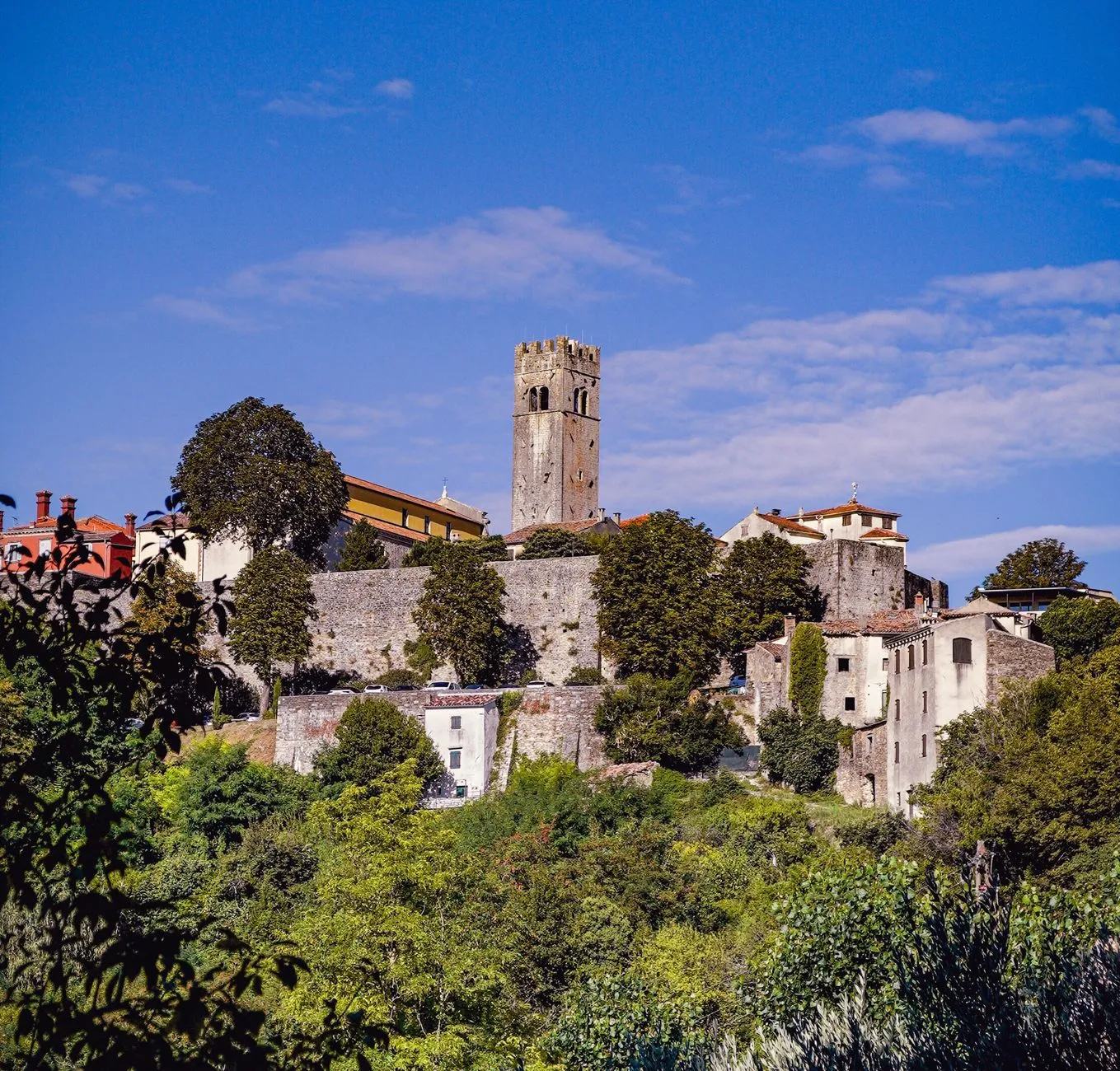
Istria — Complete Travel Guide 2026
Istria is the part of Croatia that doesn’t look like the Croatia on the postcards — and that is exactly why I keep going back. Forget turquoise channels and island-hopping ferries; this is a green, hilly, Italian-accented peninsula where the real action is inland, among truffle forests, family konobas and walled hill towns that look like Tuscany with the prices knocked down. Treat it as a food-and-hill-towns region with a pretty coast attached, rather than a beach holiday, and Istria will quietly become one of your favourite corners of Europe.
Quick Reference
North-west Croatia — a heart-shaped peninsula jutting into the northern Adriatic, bordering Slovenia and an hour from Italy
Pula (PUY) on the peninsula; Trieste (TRS) and Venice (VCE/TSF) in Italy; Zagreb (ZAG) and Ljubljana (LJU) within a 2–3 hour drive
Euro (€) — Croatia adopted the euro on 1 January 2023; the kuna is gone
Croatian; Italian is co-official in much of the region and widely spoken; English fine in tourist areas
EU/Schengen — euro zone since 2023; EES biometric registration live since 10 April 2026 for non-EU visitors; ETIAS expected, date not announced
May–June and September–October; the white-truffle autumn (Sept–Nov) is the region’s secret high season
Truffles, olive oil (the world’s #1 region), Malvazija and Teran wine, Rovinj, the Pula Arena, walled hill towns
Rovinj for the coast; Motovun or a stone agritourism in the interior for the food country; many people do one of each
Editor’s Note: This Is Not Dalmatia — and Thank Goodness
Let me get the single most important thing out of the way first, because it determines whether you’ll love Istria or feel mildly cheated: Istria is not the Croatia of the glossy ads. That Croatia — Dubrovnik’s walls, the island-hopping out of Split, the swimming-pool-clear channels of the Adriatic archipelago — is Dalmatia, the long southern coast. If that’s the trip you’ve been picturing, read aifly’s Dalmatian Coast guide instead, or pair the two, because they are genuinely different countries of the mind.
Istria sits up in the far north-west, closer to Venice than to Dubrovnik, and it has a wholly different temperament. There is no big-island-hopping circuit here; the offshore Brijuni are a small national park, not a ferry network. The coastline is gentle and indented rather than dramatic and cliff-backed. The interior is rolling, vineyard-striped, dotted with stone hill towns — and it is the interior, not the coast, that is the reason to come.
The mistake I see again and again: people book Istria expecting Dalmatia-lite, spend three days hunting for a sandy beach that doesn’t exist, and leave underwhelmed. Booked with the right expectations — a foodie, hill-town, slow-driving trip — the very same week is a revelation.
Five centuries under Venice and a long Italian-administered 20th century left Istria bilingual, pasta-eating and architecturally Venetian. People here pour olive oil the way the French pour wine, argue about truffle dogs, and serve you fuži with a casualness that would cost a fortune in Piedmont. Come for that, and you’ll go home a convert.
Should You Go? Who It’s For — and Who It Isn’t
Istria is for you if: you love eating and drinking your way through a place; you’d rather wander a near-empty medieval hill town at golden hour than fight for a sunlounger; you’re happy to hire a car and meander; you like the idea of Tuscany or Provence but want it quieter and 30% cheaper; you’re a wine, olive-oil or truffle nerd; you want a base from which a day trip to Venice, Ljubljana or the Slovenian coast is genuinely realistic.
Istria is probably not for you if: your holiday is built around a sandy beach and a sea you can wade into for fifty metres — Istrian beaches are rocky coves and concrete swimming platforms, and the seabed shelves quickly; you want a wild island-hopping adventure (go to Split/Dalmatia); you refuse to drive and need everything walkable from one hotel; you’re chasing big nightlife (this is a wine-and-konoba region, not a club coast, with a couple of summer exceptions).
Be honest with yourself about the beach question before you book. Istria’s swims are lovely in a clear-water, dive-off-the-rocks way, but if your mental image is white sand and shallow shallows, you will be disappointed — and it isn’t Istria’s fault, it’s the expectation’s.
It is also one of the most family-friendly and easy-going corners of the Croatian coast — short flights, safe, well-organised, short driving distances — so don’t let the “foodie” framing scare you off if you’ve got kids. You’ll just be feeding them very, very well.
Green, Grey and Blue: The Lay of the Land
Locals divide Istria three ways, and it’s the most useful map you’ll carry. Green Istria is the lush, forested, vineyard-and-truffle interior — the Mirna river valley, the Motovun forest, the hill towns. Grey Istria is the cultivated middle around Pazin, the geographic heart. Blue Istria is the coast: Pula in the south, then up the west side through Rovinj, Poreč, Novigrad and Umag to the Slovenian border.
The whole peninsula is small — you can drive border to border in under two hours — but the experiences are wildly different across that short distance. The west coast is where the resorts, marinas and the prettiest towns are. The east coast (the Učka mountain side, around Rabac and Labin) is quieter and more rugged. The interior, fifteen minutes uphill from the sea, is another world: cooler, slower, and where the food gets serious.
The single best decision you can make is to spend time in both the coast and the interior. Far too many visitors never leave the seafront. The ones who drive twenty minutes inland for a truffle lunch in a stone village come home telling everyone about Istria.
Getting There & Around (And Why You Really Want a Car)
The peninsula’s own airport is Pula (PUY), on the southern tip — small, seasonal, and increasingly well-connected: for 2026, Jet2 is adding a London Gatwick route to its existing Stansted, Birmingham and Manchester service, alongside the usual summer carriers from across Europe. It’s a 10-minute drive from Pula town and about 45 minutes up to Rovinj. Outside the summer schedule, flights thin out fast.
The clever alternative — and often the cheaper, more frequent one — is to fly into Italy. Trieste (TRS) is the closest airport of all, barely an hour from the Slovenian-Istrian border; Venice (Marco Polo VCE or Treviso TSF) is a scenic 3–4 hour drive that lets you bolt a city break onto your trip. Ljubljana is two hours, Zagreb three. The FILS coach runs Venice–Pula, and buses from Trieste thread down the coast through Buje, Poreč and Rovinj — so a car-free trip based in one coastal town is possible.
But here’s my firm advice: hire a car. Istria’s soul is in places public transport barely reaches — a konoba down a gravel lane, a hill town with no bus, a winery whose sign you’ll miss if you blink. Without a car you’ll see Rovinj and little else. With one, the whole peninsula opens up, and the driving is a pleasure: short distances, good roads, the ipsilon (the Y-shaped Istrian motorway) tying it together.
A couple of practicalities. If you’re crossing from Italy or Slovenia, you’re crossing an EU internal Schengen border — usually no checks, but queues build at peak summer weekends. Croatia drives on the right, the motorway is tolled, and parking in Rovinj and Pula is paid and scarce in July–August (use the edge-of-town car parks and walk in). Distances are deceptively small; resist the urge to over-pack the itinerary.
Entry and the new EU systems, briefly and accurately, because the rules changed recently: Croatia is in the Schengen Area, so for non-EU visitors (UK, US, Australia, Canada and the like) the Entry/Exit System (EES) now applies — it went fully live across the external Schengen border on 10 April 2026, replacing the passport stamp with a biometric record (photo and fingerprints) taken on your first arrival into the zone. ETIAS, the €20 pre-travel authorisation, has no announced launch date, and no date has been set for it becoming mandatory; until it’s live you don’t need it. EU, EEA and Swiss nationals are unaffected by both. If you fly into Pula directly from outside Schengen, that’s where you’ll do the EES enrolment; if you land in Italy and drive in, you’ll have been registered on entry to Italy.
Rovinj: The Jewel (With the Honest Footnotes)
If Istria has a single must-see, it’s Rovinj — and for once the hype is earned. A pastel huddle of houses crammed onto a former island, tipped by the soaring baroque bell tower of St Euphemia’s church (climb it; the rickety wooden staircase and the view over terracotta roofs to the sea are worth the small entry fee), Rovinj is one of the most photogenic towns on the entire Adriatic. The old town is a tangle of stepped lanes, lines of laundry, cats and tiny galleries, and at sunset the western waterfront glows in a way that makes everyone reach for their phone.
Lose the map and just climb. The lane called Grisia, hung with artists’ work, leads up toward the church; the eastern and southern rock shelves are where locals swim; the little harbour fills with fishing boats and the smell of grilling fish.
Two honest caveats. First, in July and August Rovinj is busy — properly busy, cruise-tender and tour-group busy, with the main square and the Grisia climb shoulder-to-shoulder by mid-morning. Go early (before 9am the old town is magical and yours) or, better, come in the shoulder seasons. Second, the “beaches” are rock and concrete — swim off the platforms south of town or take the little boat to Sveta Katarina or the wooded Red Island (Crveni Otok). It’s a beautiful swim, just not a sandy one.
Base yourself here for the coast and you won’t be wrong. But don’t make the common error of never leaving — Rovinj is a wonderful two days, not the whole trip.
Pula: Rome by the Adriatic
Down at the peninsula’s tip, Pula is Istria’s biggest town and its history lesson. The headline act is the Arena, a Roman amphitheatre that stops you dead the first time you round the corner and see it standing whole beside the modern street. Built between roughly 27 BC and AD 68 under Augustus and Vespasian, it’s the sixth-largest Roman amphitheatre in the world and — crucially — the only one to keep its entire outer ring of walls intact, all three tiers of arches still standing. You can walk the underground passages where gladiators and animals once waited, now an atmospheric exhibition on Roman oil and wine production. In summer it becomes a concert and film venue; catching a gig under those arches is a genuine bucket-list evening.
Pula is more than the Arena, though it’s a workaday port city rather than a chocolate-box town, and I’d manage expectations accordingly. The Roman forum still functions as the main square, anchored by the beautifully preserved Temple of Augustus; the Arch of the Sergii and the old Roman gates are scattered through the centre; and the hilltop Venetian fortress gives you the lay of the harbour. A morning of Roman Pula plus a swim is about right — then move on.
Don’t sleep on the Brijuni Islands from here. Just off the coast at Fažana (a 15-minute boat ride), this archipelago of fourteen islets has been a national park since 1983 — once Tito’s private retreat, now a curious, lovely mix of Roman ruins, dinosaur footprints, a safari park of his gifted exotic animals, and Habsburg-era grandeur. It’s one of Istria’s genuinely distinctive half-days.
South of Pula, the Cape Kamenjak nature reserve near Premantura is the wild card — a windswept, undeveloped headland of low cliffs, hidden coves and some of the clearest water in Istria. Bring water shoes and a sense of adventure; the rough track and lack of facilities are the price of having a slice of unspoilt coast.
Poreč and the Mosaics Worth the Detour
Further up the west coast, Poreč is the region’s package-holiday workhorse — a big resort town that, in high summer, is busier and more commercial than I’d choose. But it holds one true treasure that justifies the stop: the Euphrasian Basilica, a UNESCO World Heritage complex whose 6th-century Byzantine mosaics — shimmering gold-ground apse mosaics on a par with Ravenna’s — are simply astonishing, and far less visited than they deserve. Climb the bell tower, see the atrium and baptistery, and give the gold a proper twenty minutes.
My honest take on Poreč: come for the basilica and the compact Venetian old town, then leave. The sprawling resort strips of Plava and Zelena Laguna are fine for what they are, but they’re not why you came to Istria. The mosaics are; everything else here is replaceable.
The Hill Towns: Motovun, Grožnjan, Buzet — The Real Istria
Now we get to it. If you remember one paragraph from this guide, make it this one: the interior is the reason to come to Istria, and the hill towns are its crown. Drive twenty minutes up from the coast and the whole register changes — vineyards and oak forest, stone villages clinging to ridgetops, church bells and almost no crowds.
Motovun is the icon: a perfectly walled medieval town spiralling up a hill above the Mirna valley, ringed by ramparts you can walk for a 360° sweep over the truffle forest below. Cars stop at the bottom (only residents and special-pass holders drive up), so you climb on foot through the gates — which is exactly right. It hosts a much-loved summer film festival, has a couple of excellent restaurants, and at sunset, when the day-trippers have gone, it’s pure magic.
Grožnjan, the “town of artists,” is tinier and dreamier — a cluster of stone lanes that was nearly abandoned until artists colonised it in the 1960s. Today nearly every other doorway is a gallery or open studio, musicians practise in summer, and you can spend a slow hour wandering with a gelato and buying something you’ll actually keep. Buzet, the self-styled “City of Truffles” up in the north-east, is the gateway to the white-truffle country and the hub of the autumn festivals.
These towns are small — half an hour of wandering each — so the trick is to string several together with lunch in between. A classic loop: morning in Grožnjan, a truffle lunch down in Livade, an afternoon climb up Motovun, sunset wine on a ridge. That’s the best day Istria offers, and it’s almost entirely interior.
Don’t overlook the smaller ones either — Oprtalj, Hum (which bills itself as the “smallest town in the world”), Vodnjan with its mummified saints, and Bale. Half the pleasure of the interior is the village you stumble on with no name you remember.
Truffles: The Hunt, the Season, and Where to Eat Them
Istria is one of the great truffle regions of the world, and the forests of the Mirna valley — the “truffle triangle” between Pazin, Buje and Buzet, centred on the Motovun forest — yield both the prized white truffle in autumn and black truffles through the warmer months. This isn’t a niche curiosity here; it’s woven into everyday cooking. Order fuži or scrambled eggs with truffle in a village konoba and you’ll pay a fraction of what Piedmont charges for the same magic.
The seasons matter. The white truffle — the rare, intensely aromatic one — runs roughly 1 September to 31 December, peaking in October and November. That autumn window is, to my mind, the single best time to visit Istria: the forests are turning, the festivals are in full swing, the coast has emptied, and the food is at its peak. Summer black truffles are around from spring through autumn, milder and cheaper, and are what you’ll mostly meet in July–August dishes.
If you do one “experience” in Istria, make it a truffle hunt. Several family operations around Livade, Buzet and Motovun take small groups into the woods with their trained dogs — it’s genuinely charming, the dogs are the stars, and it usually ends with a tasting of truffle products and a glass of Malvazija. Book ahead in autumn; the good ones fill up.
The autumn calendar is dense: Buzet’s Subotina in mid-September (famous for a giant truffle omelette), the Teran & Truffle festival in Motovun in October, and Livade’s late-October truffle weekends are the big ones, with truffle “days” running most autumn weekends. For eating the real thing, the Livade–Motovun–Buzet axis is your headquarters — the long-established truffle houses there built the region’s reputation, and there are now plenty of excellent independent konobas doing it just as well for less.
Wine and Olive Oil: The Croatian Tuscany on a Plate
The “Croatian Tuscany” tag is overused, but in one respect it’s literally true: Istria makes world-class wine and, astonishingly, the best olive oil on the planet. The Flos Olei guide — the global bible of extra-virgin olive oil — has named Istria the world’s number-one region, most recently in its 2026 edition, for the ninth time, with dozens of Istrian growers listed. That is not regional marketing; it’s the considered verdict of the people who judge oil for a living. Buy oil here. Visit a grove, taste across a producer’s range the way you would a flight of wine, and bring bottles home — it travels well and it’s the single best souvenir Istria offers.
On the wine side, two grapes define the region and both are worth seeking out. Malvazija Istarska is the signature white — fresh, floral, faintly almondy, made nowhere else in this style — and it’s a brilliant match for the seafood and the truffles. Teran is the headline red: deep, dark, tannic, best drunk young and local, and a little rough-edged in the way that suits hearty interior cooking. The wine country is studded with family wineries from the coast up into the hills — many are small, welcoming and happy to pour for you with notice.
My advice: don’t treat the wineries and oil mills as a checklist. Pick two, call ahead, and linger. A proper tasting at a family producer — oil first, then Malvazija, then Teran with a plate of pršut and cheese — is the whole region distilled into an afternoon. It beats any beach.
This is also a region of cured Istrian pršut (the prosciutto), sheep’s cheese, wild asparagus in spring, mussels from the Lim fjord, and boškarin (the indigenous Istrian ox, now a slow-food cause célèbre). Eat the place, not just the truffle.
The Konoba: How to Eat in Istria
The konoba — a rustic family tavern, traditionally a wine cellar that started serving food — is the institution to seek out, and learning to read them is the key to eating well here. The best ones are inland, often signposted casually off a back road, with a short handwritten menu, a wood-fired grill or open hearth (na ognjištu), house wine in a jug and an owner who’ll tell you what’s good today. This is where the famous dishes live: fuži and pljukanci (the local hand-rolled pastas) with truffle or game ragù, maneštra (a hearty bean-and-vegetable soup), grilled fish and lamb, and fritaja (a truffle or asparagus omelette).
Eat where the menu is short and in Croatian first, the car park has local plates, and there’s no laminated picture menu. On the coast, the seafront restaurants are pleasant but pricier and more touristy; the konoba twenty minutes inland is cheaper, better and the real thing. Reserve in summer and autumn — the good ones are small and known.
A note on rhythm: Istrians eat late-ish, lunch is a serious meal, and many konobas close one day a week and for an afternoon break. Don’t roll up at 5pm expecting dinner. And do try the rakija (fruit brandy) and the local biska (mistletoe brandy) the owner inevitably offers at the end — refusing is harder than accepting.
Beaches and the Coast: The Honest Truth
Let me say it plainly because the brochures won’t: Istria’s beaches are rocky. The classic Istrian swim is off a flat rock shelf or a concrete platform built into a pine-shaded cove, into deep, gloriously clear water. There is essentially no white sand; what little “beach” exists is pebble or shingle. The seabed shelves quickly, so bring water shoes (the rocks and sea urchins are real) and adjust your expectations away from a wade-in-shallows family beach.
Within those terms, the swimming is excellent. The water is clean and clear, the pine-backed coves are pretty, and you’re never far from one. The wild Cape Kamenjak south of Pula has the best of it — undeveloped coves and turquoise water for the price of a bumpy track and no amenities. The Lim Bay (often called the Lim fjord, though it’s a drowned valley) is a dramatic green inlet famous for its mussels and oysters more than its swimming. And the offshore Brijuni and Rovinj’s little islands give you a boat-trip swim with a view back at the town.
If a sandy beach holiday is non-negotiable for your group, Istria isn’t the match — and that’s not a flaw, it’s a different product. Come here for everything else and treat the swims as a refreshing bonus between lunches, and you’ll be perfectly happy.
When to Go
Timing makes or breaks an Istria trip more than almost anywhere I write about. May–June and September–October are the sweet spots — warm enough to swim, the interior green and uncrowded, restaurants open, the light beautiful, and prices and queues a fraction of high summer. Spring brings wild asparagus and a quiet coast; early autumn brings the grape harvest.
Autumn (September–November) is Istria’s secret high season, and if you’re here for the food it’s the time to come: the white-truffle season is in full cry, the festivals run most weekends, the coast has emptied, and the cool hill-town air is perfect for long lunches. I’d take a foggy, golden October week in Motovun over a sweltering August day in Rovinj every single time.
July and August are hot, busy and pricey — the coast is at full tilt, Rovinj heaves, parking is a war, and the konobas are booked out. It’s still lovely if you accept the crowds and book everything, but it is the least Istrian way to see Istria. If you can possibly travel in the shoulders, do.
Winter is very quiet — many coastal places shut, but the hill towns and truffle restaurants soldier on, and a crisp clear day on the ramparts with a truffle lunch has its own austere charm.
Money, Costs and the Euro
Croatia switched to the euro on 1 January 2023, so ignore any older guidance that talks about the kuna — it’s history, and prices are all in euros now. Cards are accepted nearly everywhere; carry a little cash for small konobas, markets, parking machines and rural producers.
Istria is noticeably cheaper than Italy or France for comparable quality — that’s a large part of its appeal — but it is no longer a bargain-basement destination, and the popular coastal spots in peak summer can shock you. Expect Rovinj waterfront prices to rival a mid-tier Italian resort; expect an inland konoba to cost half of that for better food. A truffle pasta that would be €30+ in Piedmont might be €15–22 here; a serious olive-oil tasting is often free or a token fee with the expectation you’ll buy a bottle or two.
The value play is simple and it’s the same as the eating advice: spend on the interior, economise on the coast. Sleep in a stone agritourism inland or a smaller town, eat in konobas, taste at family producers — and you’ll have a richer trip for less than a week on the busy seafront.
Budget the big costs realistically: a hire car and fuel, motorway tolls, paid parking in Rovinj and Pula, and museum/tower entries. None are large individually; together they’re the bulk of a frugal Istria budget.
Overrated, Overlooked, and What to Skip
A few candid calls after many trips:
Overrated / skip-able: the big purpose-built resort strips around Poreč and Umag — fine for a package, not why you came. The Pula “do everything” day — see the Arena and the forum, but don’t grind through every minor Roman fragment. Cruise-season Rovinj at midday — beautiful but miserable in the crush; reschedule to dawn or dusk. And the temptation to stay only on the coast — the single most common Istria mistake.
Underrated / go: the interior, full stop — most visitors give it an afternoon when it deserves half the trip. Cape Kamenjak for a wild swim. The Euphrasian mosaics in Poreč, weirdly under-visited for their quality. A truffle hunt and a family olive-oil tasting, which beat any “attraction.” The tiny hill towns — Hum, Oprtalj, Bale, Vodnjan — that aren’t on the headline list. And the shoulder seasons, which are the real Istria the summer crowds never see.
If I could overrule one decision for every Istria-bound traveller, it would be this: cut a coast day and add an interior day. Nobody who does it regrets it; plenty who don’t wish they had.
Practical Notes for the Road
- Hire a car — restating it because it matters most. Book early for summer; an automatic is worth requesting in advance.
- Reserve restaurants in summer and autumn, especially the well-known konobas and truffle houses — they’re small.
- Water shoes for the rocky swims; the urchins and sharp rock are not a myth.
- Parking: use perimeter car parks in Rovinj and Pula in peak season and walk in; the centres are restricted and jammed.
- Cash for konobas, markets, parking and rural producers, though cards work in most places.
- Bilingual region: Croatian and Italian both fly here; a dobar dan and a hvala go a long way.
- Cross-border day trips are easy — Venice, Ljubljana, Trieste, the Slovenian coast and the Postojna caves are all in range — but remember EES applies when you re-enter the Schengen external border from outside the zone (not on internal EU drives).
- Pack layers for the interior: hill-town evenings are cooler than the coast even in summer.
Istria rewards the traveller who slows down. Drive a little, eat a lot, climb a few hill towns at the quiet end of the day, and let the coast be the supporting act it’s happiest being. Do that, and you’ll understand why the people who find Istria tend to go quiet about it — and come straight back.
Frequently Asked Questions
Cheapest Flights to Istria
We have tracked 551 fares to Istria from 36 cities. As of June 2026, here is what a good price looked like from each — the lowest fare we recorded, and a “great-deal” benchmark to judge a quote against. These are tracked observations, not live prices: by the time you read this they will have moved, so treat them as a yardstick, not a quote.
| From | Lowest fare we tracked | Great-deal benchmark |
|---|---|---|
| Vienna (VIE) | €26 | €37 |
| Weeze (NRN) | €27 | €38 |
| Charleroi (CRL) | €31 | €44 |
| Gothenburg (GOT) | €38 | €54 |
| Basel (BSL) | €39 | €56 |
| Hanover (HAJ) | €42 | €60 |
| Dusseldorf (DUS) | €70 | €100 |
| Stuttgart (STR) | €74 | €105 |
| Cologne (CGN) | €90 | €128 |
| Copenhagen (CPH) | €107 | €153 |
| Wrocław (WRO) | €108 | €154 |
| Stockholm (ARN) | €111 | €158 |
| Amsterdam (AMS) | €117 | €167 |
| Munich (MUC) | €127 | €182 |
These are fares aifly tracked to this destination, not live quotes — they have changed since and several of the deals above may have expired. Browse current flight deals →