Japan — Complete Travel Guide 2026
Japan is, hands down, the most rewarding first trip in Asia — and that is now precisely its problem. The country that ran like a Swiss watch and felt like a secret has become the planet’s hottest destination, a record 42.7 million visitors deep and counting, and the very things you came for — a misty temple, a quiet Kyoto lane, the cone of Fuji at dawn — are increasingly shared with three hundred of your closest strangers. None of which makes it less worth doing. It just means the difference between a magical Japan trip and a frustrating one is no longer luck; it’s planning, timing, and a willingness to step one stop off the headline route. This guide is about getting that right.
Quick Reference
East Asia — an archipelago of nearly 14,000 islands off the Pacific edge of the mainland
Tokyo Narita (NRT) & Haneda (HND); Osaka Kansai (KIX); Nagoya (NGO); Fukuoka (FUK); Sapporo New Chitose (CTS)
Japanese yen (¥ / JPY) — roughly ¥184 to €1 in mid-2026
Japanese; usable English in big-city hubs, patchy-to-none beyond them
Visa-free 90 days for UK, EU, US, Canada, Australia & ~74 nationalities. Register Visit Japan Web for fast-track. JESTA not before ~2028–29
Late March–April (blossom) and November (foliage) for the show; May, June, October and early December for the smart traveller
Shinkansen, temples and shrines, ramen and sushi, cherry blossom, onsen, Mount Fuji, ryokan, anime
Tokyo and Kyoto for a first trip; add Hakone, Kanazawa or Hiroshima for a second leg
Editor’s Note: The Best First Trip in Asia — and It’s Booked Solid
I’ll plant my flag: if you have never been to Asia and you get one shot, go to Japan. Nowhere else combines this much strangeness with this much ease. The trains leave to the second. The streets are spotless and safe enough to walk at 2am. The convenience-store food is genuinely good. The toilet warms your seat and the staff bow when you leave a shop. For a first-timer the country does most of the heavy lifting, and the cultural distance — the script you can’t read, the food you’ve never seen, the rituals you don’t understand — is the point, not a tax.
And yet. I’ve watched Japan change fast over the last few years. The weak yen turned a once-expensive country into a relative bargain at the exact moment social media made it inescapable, and the result is a kind of crush the country was never built for. Kyoto’s most photogenic alleys now move like a festival exit. The bus to the famous temples runs full and the locals who actually need it can’t board. Mount Fuji had to start charging people and turning them away. This is the real 2026 Japan: still extraordinary, but no longer a place you can wing.
So this guide leans into the tension. I’ll send first-timers down the classic route because it genuinely is the right introduction. Then I’ll spend most of my breath pushing you to do the thing that fixes Japan: get off it. And the single best decision you’ll make about the whole trip is when you go — shift your dates off the two peak windows and the same itinerary becomes a different, better holiday: emptier temples, cheaper hotels, calmer trains. More on that below; file it now.
Should You Go? Who Japan Is For — and Who It Isn’t
Japan is for you if you like cities, eating, walking, trains, design, and quiet ritual; if you’re curious enough to be the only person in the room who doesn’t know what’s going on and find that fun; if you want a country where solo travel and female solo travel are about as safe and frictionless as it gets on Earth. It rewards the slow and the observant. It is a phenomenal trip for couples, for families with school-age kids (the trains, the theme parks, the politeness), for design and food obsessives, and for hikers and onsen-soakers who want mountains and hot water.
Japan is harder if you need a beach-resort holiday where you switch your brain off — Okinawa aside, that’s not really the offer, and the package-resort culture is thin. It’s harder if you have a very tight budget and refuse to eat at konbini and chains, because the cheap-and-cheerful backpacker economy is shallower than in Southeast Asia. It’s harder if you can’t handle structure and queues, or if step-free access is critical (the big cities are excellent; older stations and ryokan less so). And it’s harder than people admit if you have zero patience for not understanding — the language barrier is real, and I’ll come back to that.
⚠️ Japan is not a “cheap Asia” destination in the backpacker sense. Transport is pricey, a decent dinner adds up, and the weak yen makes Japan cheap for you, not cheap in absolute terms. Budget like you’re going to a developed country running a discount, not to Thailand.
One honest filter: how do you feel about crowds? If you can shrug at a packed train and a 40-minute wait for ramen, you’ll be fine anywhere. If crowds genuinely ruin your day, you must either travel in shoulder season or build an itinerary that dodges the famous bottlenecks — and you absolutely can.
The Weak-Yen Moment (and the 42-Million Crowd It Created)
Here is the macro story in one breath: the yen is historically weak — around ¥184 to the euro in mid-2026, a level that would have seemed absurd a few years ago — and that single fact is rewriting Japanese tourism. In 2025 the country logged 42.7 million inbound visitors, smashing the previous 36.9-million record from 2024 by nearly 16 percent. Your money goes startlingly far: a proper bowl of ramen for €5–6, a great convenience-store breakfast for under €3, a clean business-hotel room for €45–70. For European and North American travellers, Japan in 2026 is the rare place where world-class quality feels like a sale.
The catch is that everyone else read the same memo. The weak-yen bargain and the record crowds are two faces of one coin, and the squeeze shows up exactly where the cameras point: central Kyoto, the Fuji trails, Tokyo’s most-tagged corners, and a now-infamous railway crossing in Kamakura. The government has noticed — overtourism countermeasures are written into the 2026 national tourism budget, from congestion dashboards to deliberate “demand dispersion” away from the hotspots. My advice: spend the yen edge on the things that are genuinely better here than at home — a ryokan night, a counter sushi meal that would cost triple in Paris or New York. This is the trip to do it.
What this means practically: book accommodation and any marquee restaurants early (the bargain has compressed availability), and treat the crowd as a fixed cost you plan around rather than a surprise that ambushes you.
Getting There & Getting Around: Airports and the Rail Maths
Most travellers fly into Tokyo — Narita (NRT), the older long-haul gateway about an hour out, or Haneda (HND), closer to the city and increasingly the better arrival if you can get it. Kansai (KIX) serves Kyoto/Osaka and is the smart choice if you’re starting in the west or doing an open-jaw (in via one, out via the other — a genuinely good idea that saves you backtracking). Regional entries via Fukuoka, Nagoya and Sapporo are worth a look if your trip skews to one region.
The first thing to do on landing — ideally before you land — is register Visit Japan Web, the government portal that turns immigration and customs into a QR code and a fast-track lane. It’s not strictly mandatory, but skipping it means the slow queue. The second thing is to grab an IC card (Suica or Pasmo): tap-to-ride on virtually every train, subway, bus, vending machine and convenience store in the country. After the chip shortage of recent years, cards are flowing again — pick up a Welcome Suica at Narita or Haneda (28-day validity, no deposit), or, better, load a Mobile Suica straight into your phone’s wallet and top it up with a card. A new Tourist Pasmo launched in May 2026 on the same 28-day, no-deposit terms if Suica’s sold out.
Now the part that trips everyone up: the Japan Rail Pass is probably not worth it any more, and you need to do the maths. After a brutal ~70% hike in late 2023, the 7-day nationwide pass costs ¥50,000 (about €270), the 14-day ¥80,000 (~€435), and the 21-day ¥100,000 (~€545) — and from October 2026 overseas purchases nudge up again (7-day to ¥53,000). For context, a one-way Tokyo–Kyoto shinkansen is around ¥14,000 (€76). So the classic Tokyo–Kyoto–Osaka first-trip loop — which is what most people actually do — comes nowhere near breaking even on a nationwide pass. You’d buy point-to-point tickets and save real money.
⚠️ Do not buy a 7-day JR Pass on autopilot. For a Tokyo–Kyoto–Osaka trip it’s a straight loss of roughly €100–150 versus individual shinkansen tickets. The pass only earns its keep when you add a long western leg — Hiroshima, Fukuoka — or range across multiple regions in the week.
When does the nationwide pass win? Roughly when you’d otherwise rack up four or more long bullet-train legs in seven days: think Tokyo → Kyoto → Hiroshima → back to Tokyo, or a multi-region sprint. Even then, regional passes (JR East, the Kansai–Hiroshima Area Pass, JR Kyushu, the Hokkaido pass) are usually the sharper tool — they cover the area you’re actually in for a fraction of the nationwide price. So the default for a two-city first trip is simple: skip the rail pass, buy Tokyo–Kyoto point-to-point, ride the city subways on an IC card, and pocket the difference for dinner. Reserve shinkansen seats free online through smartEX or at the station; you rarely need to, but on peak-season Fridays and around holidays, do.
Within cities, the subways are the move — fast, frequent, and signed in English with station numbers so you can navigate by code. Buses matter mainly in Kyoto (and are part of why Kyoto’s bottleneck is so acute). Taxis are pristine and pricey; fine for a tired night, not your daily mode.
The Golden Route: Tokyo, Kyoto, Osaka
The “Golden Route” — Tokyo, Kyoto, Osaka, strung along the shinkansen — is the standard first-timer spine, and I won’t pretend it’s wrong. It is the most efficient way to taste the three sides of Japan: the hyper-modern metropolis, the historic heart, and the food-and-fun city. Each of these has its own full aifly guide, so I’ll keep them short and point you onward.
Tokyo is not one city but a dozen, and it rewards picking neighbourhoods over checklists — the back lanes of Shimokitazawa and Yanaka over yet another observation deck. Give it three nights minimum; you could give it ten and not repeat a meal.
Kyoto holds Japan’s densest concentration of temples, gardens and tradition — and, in peak season, its densest concentration of tourists. It is glorious and it is a scrum; the trick is timing your days, not skipping the city. (Much more on that below.)
Osaka is the loud, hungry, friendly counterweight — Japan’s kitchen, looser and cheaper than Kyoto, a brilliant base for eating and for day trips to Nara and Himeji. Many travellers sleep in Osaka and day-trip to Kyoto; given Kyoto hotel prices and crowds, that’s often the smarter call.
💡 Open-jaw your flights — into Tokyo (Haneda/Narita) and out of Osaka (Kansai), or the reverse. You’ll cover the whole Golden Route in a clean line with no doubling back and one fewer internal transfer.
Here’s my real opinion on the Golden Route, though: it’s the right introduction and the wrong whole trip. Do it on a first visit, absolutely — but build in at least one leg that steps off it. That’s the section that follows, and it’s the one I’d fight for.
One Leg Off the Route — Where Japan Gets Really Good
The fastest upgrade to any Japan itinerary is a single detour the crowds skip. You trade two hours on a train for a version of the country that still breathes. Pick one of these for a first trip; chain two if you’ve got the days.
Kanazawa is my standard recommendation for “the off-route leg,” and the shinkansen made it easy (under three hours from Tokyo). It’s a small, walkable city with one of Japan’s three great gardens — Kenroku-en — plus an immaculately preserved samurai district, gold-leaf workshops, a buzzing seafood market, and a genuinely good contemporary art museum. It delivers a concentrated hit of “historic Japan” with a fraction of Kyoto’s friction. Two nights and you’ll wonder why everyone funnels into one city.
Takayama and the Japan Alps are the move if you want mountains and old wood. Takayama’s preserved merchant streets, morning markets and sake breweries are the reward; nearby Shirakawa-go, with its steep thatched farmhouses, is one of the country’s storybook villages (go early or stay over — the day-trip buses turn it into a queue by 11am). This is also the gateway to Kamikōchi, a high alpine valley that is, for my money, the most beautiful easy walk in Japan.
Hiroshima and Miyajima form the most moving day-and-a-half in the country. The Peace Memorial Museum is unflinching and essential — give it real time and don’t rush it. Then ride out to Miyajima island for the floating torii gate of Itsukushima Shrine at high tide, deer wandering the lanes, and the best okonomiyaki-and-oysters of your trip. It’s the western anchor that, conveniently, is also what tips the JR Pass maths.
Naoshima and the art islands of the Seto Inland Sea are the wildest swing on this list and my personal favourite. Naoshima is a sleepy fishing island reinvented as a living museum — Tadao Andō concrete galleries set into hillsides, a Monet room you walk to in slippers, a yellow pumpkin on a pier that became a national meme. It takes effort to reach (train to Okayama, then ferry) and that effort is the filter that keeps it special. Build in a night; the islands empty out beautifully after the last ferry.
💡 If you do one thing differently from the average first-timer, make it this: subtract a day from Kyoto and spend it in Kanazawa, on Miyajima, or on Naoshima. You’ll remember the quiet day longer than the crowded one.
Going Further: Hokkaido and Okinawa
Past the main island of Honshu, Japan splits into two completely different holidays.
Hokkaido, the northern island, is the wild, spacious, four-seasons one. Winter is the headline — Niseko and Furano deliver some of the lightest powder skiing on the planet, and Sapporo’s February Snow Festival is a spectacle — but summer is the secret, with cool air, lavender fields around Furano, vast national parks (Daisetsuzan, Shiretoko) and the best seafood and dairy in the country while the rest of Japan swelters. Hokkaido is for the traveller who wants nature and elbow room over temples; it’s a second- or third-trip destination, or a deliberate single-region trip in itself.
Okinawa and the southern Ryukyu islands are Japan’s tropics — white sand, coral reefs, a distinct culture, language and cuisine that grew up closer to the rest of Asia than to Tokyo. This is the closest Japan comes to a beach holiday, and it’s a long flight south, so treat it as a destination, not a side trip. The main island is developed and easy; the outer Yaeyama islands (Ishigaki, Iriomote, Taketomi) are where the water turns unreal and the pace drops to nothing.
⚠️ Both Hokkaido and Okinawa are flights, not train rides, from the main island — and Okinawa’s outer islands add a second internal hop. Don’t try to bolt either onto a tight 7-day first trip; you’ll spend the saving on airfares and lose the days to airports.
Mount Fuji & Hakone
Everyone wants Fuji, and 2026 is the year the mountain finally pushed back. Climbing it now costs ¥4,000 (about €22) per person, payable online in advance, across all trails — and the popular Yoshida Trail caps entries at 4,000 hikers a day, with the gate closing at 2pm. Without a confirmed mountain-hut reservation you can’t pass after the gate closes (no entry again until 3am), and a hut booking is the only way to both climb overnight for sunrise and dodge the daily cap. The climbing season is short — roughly early July to early September — and the mountain is, frankly, a hard slog up volcanic scree that’s more endurance test than scenic walk. Do it if summiting is the dream; the views are of Fuji, not from it.
⚠️ If you intend to climb in 2026, reserve and pay your ¥4,000 permit online before you travel, and book a mountain hut if you want the sunrise climb or any flexibility past 2pm. Turning up at the trailhead and hoping is no longer a plan — the cap is real and busy days fill.
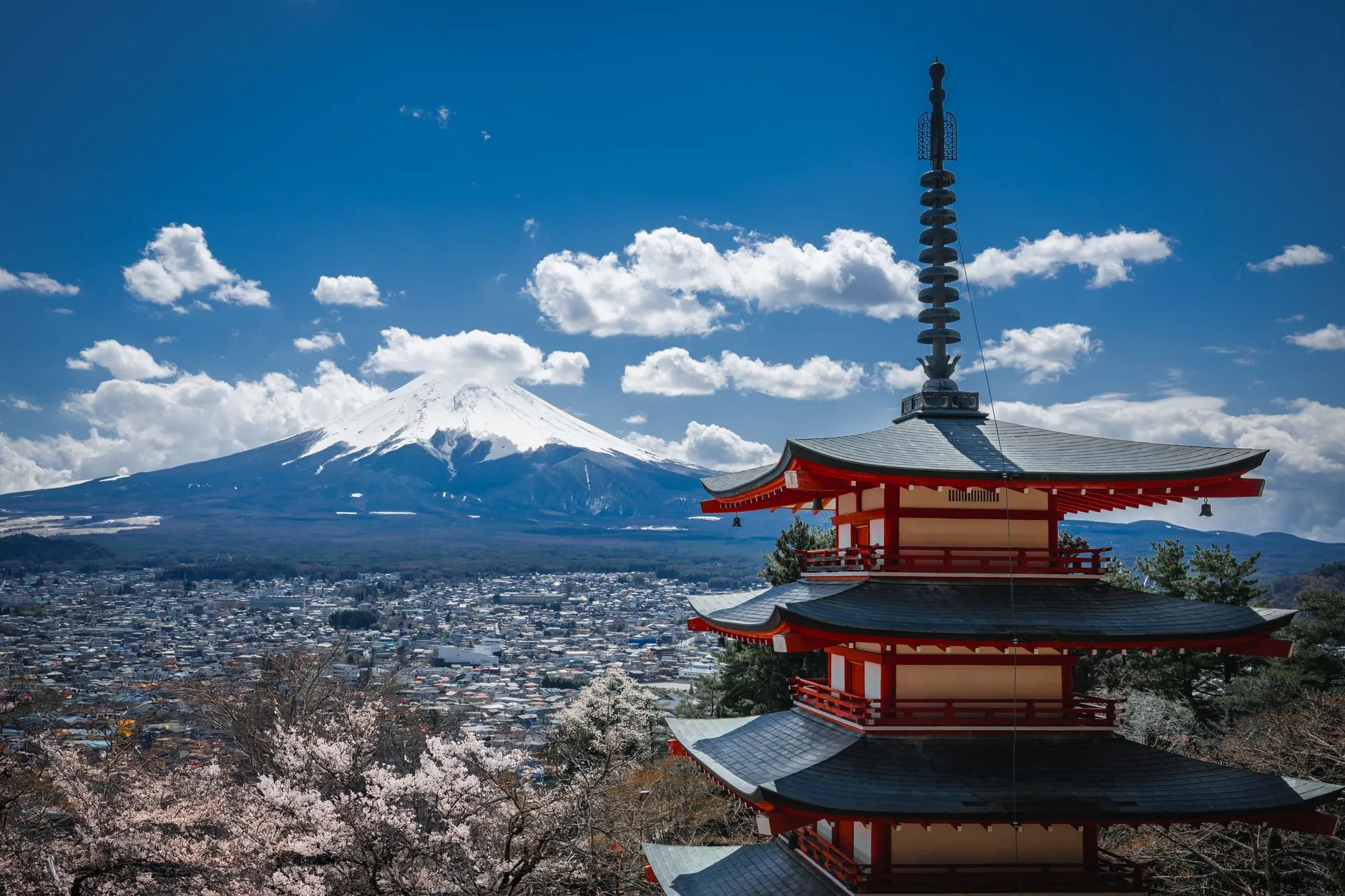
Here’s the contrarian take most people need to hear: the best Fuji experience is not climbing it. The mountain is far more beautiful seen than scaled, and the place to see it is Hakone or the Fuji Five Lakes (Kawaguchiko). Hakone is a hot-spring resort town an easy ride from Tokyo, looping you through a sulphur valley, a pirate-ship lake cruise, a great open-air sculpture museum, and — on a clear morning — a postcard cone reflected in Lake Ashi. Stay a night in a Hakone ryokan, soak with a view, and you’ve had the definitive Fuji day without a single blister. Kawaguchiko offers the classic lakeside-and-cone shot, though its own crowd problem (and the now-fenced “Fuji over a convenience store” photo spot) tells you how thoroughly the internet found it.
💡 Fuji is shy — it hides behind cloud for much of summer. Your best odds of actually seeing it are the clear, cold mornings of late autumn and winter. If a Fuji view matters, build slack into your dates and don’t bank on a single day.
Ryokan & Onsen: The Night That Pays for the Flight
If you do one splurge in Japan, make it a night in a ryokan — a traditional inn with tatami floors, futon bedding, a private or communal hot-spring bath, and a multi-course kaiseki dinner that is, on its own, worth the trip. A good ryokan is not accommodation; it’s the experience, and the weak yen makes a genuinely high-end one (€110–220+ per person with both meals) attainable in a way it isn’t at home. Hakone, the Japan Alps, Kyoto’s edges and any onsen town will have them.
The onsen (hot spring) is the heart of it, and it comes with rules that are non-negotiable and easy to get right. You wash thoroughly at the seated showers before getting in — the bath is for soaking, not cleaning. You go in fully naked (swimsuits are not a thing); the little modesty towel stays out of the water, usually folded on your head. Baths are almost always sex-segregated. Keep your voice down, don’t splash, and don’t dunk your hair.
⚠️ Tattoos remain a real barrier. Many onsen still refuse anyone with visible ink, no matter how small or how tasteful, because of the lingering association with organised crime. Look for “tattoo-friendly” onsen, book a room with a private bath (kashikiri or an in-room onsen), or use waterproof cover patches for something small. Don’t assume you’ll be waved through.
Get past the etiquette and the onsen is the most restorative ninety minutes in Japanese travel — outdoor rotenburo baths steaming under snow or stars are a core memory in the making.
What to Eat — and the Reservation Game
Japan is, plainly, one of the two or three best eating countries on Earth, and the depth runs from the convenience store to the three-star counter. Some orientation:
The everyday food is the secret weapon. A bowl of ramen (€5–7), a set lunch teishoku (€6–9), a conveyor-belt sushi plate, a bowl of soba, a 7-Eleven egg sandwich and a Lawson fried chicken — this is where most of your meals live, and it’s uniformly excellent and cheap. Depachika, the food halls in the basements of department stores, are a glorious grazing lunch. Izakaya (Japanese pubs) are the great social meal: small plates, cold beer or sake, no fuss. And the regional specialities are worth chasing — Osaka’s okonomiyaki and takoyaki, Hiroshima’s layered okonomiyaki, Fukuoka’s tonkotsu ramen, Hokkaido’s seafood and soup curry, Nagoya’s miso-everything.
💡 Don’t waste meals being precious. Some of the best things I’ve eaten in Japan cost under €5 — standing-bar tempura, a station ekiben bento on the shinkansen, a midnight bowl of ramen from a vending-machine-ordered counter. Eat widely and cheaply; save the budget for one or two special bookings.
The reservation game is the one thing to understand in advance. The famous small sushi counters, the buzzy izakaya, the destination restaurants — many take a limited number of seats and book out days or weeks ahead, some only through a hotel concierge or a Japanese phone number, some refusing foreign walk-ins entirely. If a specific meal is a bucket-list item, arrange it before you fly, through your hotel or a booking service. For everything else, walk in, queue cheerfully, or eat at the place next door that’s just as good and empty.
A few honest notes: vegetarians and vegans have a harder time than the food press admits — dashi (fish stock) lurks in nearly everything, including dishes that look plant-based — so learn a couple of phrases and lower your expectations outside the cities. And tipping does not exist; don’t do it, it confuses people. The bill is the bill.
Money, Cash, and the Friction Nobody Warns You About
Two things genuinely catch first-timers out, and neither makes the brochures.
First: Japan is more cash-dependent than its reputation suggests. The country of robot toilets and bullet trains will still, in 2026, hand you a small restaurant, a temple entry, a rural bus, a market stall or a old-school ryokan that takes only cash. Cards and IC-card tap work widely in cities and chains, but the moment you go small or rural the plastic stops. Carry a reliable wad of yen, and know that the most dependable place to withdraw it is a 7-Eleven ATM (in every konbini, English menu, takes foreign cards) or a Japan Post Bank ATM. Your IC card covers a surprising amount of the small stuff — vending machines, konbini, fares — so keep it topped up as a cash buffer.
Rough costs to calibrate, at ~¥184/€:
- Konbini breakfast / onigiri: €1–3
- Bowl of ramen or a lunch set: €5–9
- Casual izakaya dinner with drinks: €18–30 per person
- Counter sushi or a special dinner: €60–150+
- Business-hotel room: €45–80 / night
- Ryokan with two meals: €110–220+ per person
- City subway hop: €1–1.80
- Tokyo–Kyoto shinkansen (one way): ~€76
- Mid-range daily budget (eating well, mixing trains): €120–180 / person before flights and big rail legs
Less if you lean on konbini and business hotels; a lot more the moment you add ryokan nights and counter dining. It’s a country where you can spend €40 or €400 in a day and have a great one either way.
Second: the language barrier is real, and it’s bigger than people let on. In Tokyo, Kyoto and Osaka you’ll manage fine on English signage, translation apps and goodwill. Step into a neighbourhood izakaya, a regional town, or a rural ryokan and English thins out fast. This isn’t a problem so much as a posture: download Google Translate’s offline Japanese pack and its camera mode (it reads menus and signs in real time), learn sumimasen (excuse me / sorry / thank-you-for-your-trouble, the most useful word in the country) and arigatō gozaimasu, point, bow, and relax. Japanese people are overwhelmingly patient and kind with lost foreigners. The friction is part of the texture; treat it as adventure, not obstacle.
When to Go: Blossoms, Foliage, and the Quiet Months
Timing is the highest-leverage decision in the whole trip, so here’s the honest seasonal map.
Cherry blossom (late March–early April) is the famous one and it deserves the hype — for about a week. In 2026, a warm winter pulled the forecast early: Tokyo flowering around 19–20 March with full bloom near 27–28 March, and Kyoto opening around 23 March, full bloom near 1 April. Peak is short — five to seven days once full bloom hits — and it’s also the most crowded, most expensive week of the year, with hotel rates and flight prices to match. Worth it once if you accept the crush.
Autumn foliage (November) is, in my opinion, the better of the two showpiece seasons: comparable beauty, longer window, kinder weather, and slightly thinner crowds. Kyoto’s maples typically peak from around mid-to-late November into early December. If you can only pick one big-ticket season, I’d take November over April.
💡 The smart traveller’s months are the shoulders nobody puts on a poster: May (warm, dry, green, post-blossom calm), June outside the rainy stretch, early-to-mid October, and early December before the foliage tail and New Year. You get great weather, real availability, and a fraction of the crowds and prices.
The seasons to walk in eyes-open: mid-June to mid-July is tsuyu, the rainy season (humid, grey, but quiet and lush); August is brutally hot and sticky across most of the country — genuinely uncomfortable for sightseeing, and exactly when you’d flee to Hokkaido or the mountains. Winter (December–February) is underrated: crisp, clear, cheap, the best odds of seeing Fuji, world-class skiing in Hokkaido and Nagano, and steaming onsen at their most magical — just avoid the New Year holiday (roughly 29 Dec–3 Jan), when the whole country travels and shuts down at once.
The Overtourism Reality — and What’s Actually Overrated
Let me be the friend who tells you the unflattering truth, because almost nobody selling you a Japan trip will.
Kyoto in peak season is a managed disappointment if you do it wrong. Fushimi Inari’s torii gates, Arashiyama’s bamboo grove, Kiyomizu-dera’s approach — the icons are mobbed from mid-morning, and the experience the photos sold you exists only at the edges of the day. The fix is simple and it works: be at the famous places at opening (or after 4pm), and spend the crowded middle of the day in Kyoto’s quieter temples and northern neighbourhoods. Fushimi Inari at 7am is sublime and nearly empty; at noon it’s a stairwell at a stadium. Same gates, different trip.
⚠️ Kyoto’s Gion geisha district has cracked down hard. Photography is banned on the private alleys, with fines around ¥10,000 for shooting there or harassing geiko and maiko. Even on the public streets, never photograph a geisha without permission, never chase or block one, and step aside to let them pass. The “geisha paparazzi” behaviour is exactly why locals are closing streets — don’t be the reason.
What’s overrated, in my honest opinion?
The Shibuya Scramble crossing is a 20-second novelty, not a destination — see it, move on. The themed cafés (owl, hedgehog, robot) are tourist traps trading on novelty and, in the animal cases, dubious welfare. Tsukiji’s “inner market” moved to Toyosu years ago and the outer-market tour is now a crowded snack crawl. Queueing two hours for a single viral pancake or a specific Instagram ramen is almost always a worse use of your day than the equally good place with no line. And the Kamakura railway crossing made famous by an anime has become a genuine safety and nuisance problem — locals are pleading with people to stop, so don’t.
The cure for all of it is the same as the cure for the crowds generally: go early, go late, go one stop further than the algorithm. Japan still has endless quiet — it’s just no longer in the first ten search results.
Etiquette: The Short List That Matters
You don’t need to master Japanese manners; you need to not be the obvious problem. The short, high-value list:
- Be quiet on trains. Phone on silent, no calls, no speaker. It’s the loudest social rule in the country precisely because it’s silent.
- Don’t eat while walking. Eat at the stall, by the konbini, on a bench — not strolling down the street.
- No tipping, ever. It’s not generous here; it’s confusing. The price is the price.
- Cash gets handed over on the little tray, not into the hand. Two hands for business cards and gifts.
- Take your shoes off when you see a step up and a shoe rack — ryokan, many restaurants, temples, homes. Slippers provided; never wear them onto tatami, and there’s a separate pair for the toilet.
- Bins are rare and that’s deliberate — carry your rubbish until you find one (often by vending machines or in konbini). Yet the streets are spotless; follow the locals’ lead and pack it out.
- Queue, and let people off first. Line up at the painted marks on the platform.
- At shrines and temples, follow the cleansing-fountain ritual at the entrance, be respectful and quiet, and check whether photography is allowed inside (often it isn’t).
- Learn two words. Sumimasen (excuse me / sorry / thanks for the trouble) and arigatō gozaimasu (thank you), each with a small bow, smooth almost any interaction. It’s 90% of the social toolkit.
Get these right and you’ll be treated with the warmth Japan is famous for. None of it is hard; all of it is noticed.
Frequently Asked Questions
Cheapest Flights to Japan
We have tracked 7,907 fares to Japan from 221 cities. As of June 2026, here is what a good price looked like from each — the lowest fare we recorded, and a “great-deal” benchmark to judge a quote against. These are tracked observations, not live prices: by the time you read this they will have moved, so treat them as a yardstick, not a quote.
| From | Lowest fare we tracked | Great-deal benchmark |
|---|---|---|
| Athens (ATH) | €342 | €488 |
| Mallorca (PMI) | €374 | €534 |
| Copenhagen (CPH) | €397 | €567 |
| Vilnius (VNO) | €397 | €567 |
| Milan (MXP) | €407 | €581 |
| Nice (NCE) | €419 | €599 |
| Riga (RIX) | €421 | €601 |
| Krakow (KRK) | €421 | €602 |
| Tallinn (TLL) | €422 | €603 |
| Dublin (DUB) | €428 | €611 |
| Paris (CDG) | €430 | €615 |
| Budapest (BUD) | €436 | €623 |
| Vienna (VIE) | €439 | €627 |
| Venice (VCE) | €449 | €641 |
Recent deals we have posted to Japan:
- Cheap Flights Tokyo to Osaka 2026 — From 300 EUR
- Copenhagen to Tokyo, Japan from €553
- Kraków to Osaka, Japan from €560
- Dublin to Tokyo, Japan from €531
- Gold Coast to Osaka, Japan from A$862
- Warsaw to Tokyo, Japan from €653
- Riga to Tokyo, Japan from €582
- Tallinn to Tokyo, Japan from €581
- Budapest to Tokyo, Japan from €551
- Calgary to Tokyo, Japan from C$1161
These are fares aifly tracked to this destination, not live quotes — they have changed since and several of the deals above may have expired. Browse current flight deals →