Kenya — Complete Travel Guide 2026
Kenya is the original safari country, and it still does the two things that matter best: huge, predictable game in the Masai Mara, and a Swahili coast that turns a wildlife trip into a holiday. It is not cheap, the main reserve gets genuinely crowded in migration season, and a bad operator will ruin it — but get the structure right (a conservancy over the public reserve, a good guide, the dry season) and nowhere in Africa delivers more, faster.
Quick Reference
East Africa, on the Indian Ocean, straddling the Equator; borders Tanzania, Uganda, Ethiopia, South Sudan and Somalia
Nairobi / Jomo Kenyatta (NBO) — the safari gateway; Moi International, Mombasa (MBA) — the coast
Kenyan shilling (KES); ~€1 ≈ KES 150 in mid-2026
Swahili and English (both official); English widely spoken in tourism
eTA required for almost all visitors — apply online before travel at etakenya.go.ke (US$30, ~72h)
Jul–Oct (dry season + the Mara migration) and Jan–Feb (short dry season); the rains come Mar–May and Nov
The Big Five, the Great Migration river crossings, Amboseli’s elephants under Kilimanjaro, the white-sand Swahili coast
Nairobi for safari logistics; a Mara conservancy for game; Diani, Watamu or Lamu for the beach finish
Editor’s Note — Read This First
Most people overcomplicate Kenya and then book it wrong. Here is the whole trip in four decisions.
Which parks?
You do not need six. The strongest two-week build is the Masai Mara (or, better, a Mara conservancy) for sheer density of cats and the migration, plus one of Amboseli (elephants and Kilimanjaro), Samburu (northern dry-country species you see nowhere else) or Lake Nakuru (rhino and flamingos, and it’s a quick add). Stacking Tsavo, Nakuru, Amboseli AND the Mara into ten days means you spend the trip in a vehicle on long transfer roads, not watching animals.
Conservancy or national reserve?
For the wildlife experience itself, a private conservancy beats the public Mara reserve almost every time — fewer vehicles, off-road driving to actually reach a leopard, night drives and walking safaris that are flatly illegal inside the reserve. The catch: the dramatic river crossings happen in the reserve, not the conservancies. So the smart play is to stay in a conservancy and drive into the reserve on the days a crossing looks likely.
Fly in or drive?
Driving from Nairobi to the Mara is 5–7 hours each way on roads that range from fine to brutal; flying is ~45–60 minutes from Wilson Airport. A road safari is genuinely cheaper, sociable and lets you see the country; a fly-in saves a full day in each direction and is the only sane way to reach Lamu or a remote northern camp. If your budget allows the ~€140–320 per leg, fly the long hops.
Safari then beach. This is the iconic Kenya combo and it works: tired, dusty, over-stimulated from the bush, you fly straight to Diani or Lamu and collapse on white sand. Build it in — it’s the best holiday structure in the country.
Don’t skimp on the guide. The single biggest variable in a Kenyan safari is the person driving the vehicle. A great guide finds the leopard, reads the migration, and knows which gate to be at. A cheap operator’s guide circles the same lions all morning. Pay for the operator’s reputation, not the lowest quote.
Should You Go? Who It’s For — and Isn’t
Kenya is for anyone who wants wildlife at scale without a long learning curve — first-time safari-goers, families (many camps take kids and the coast is easy), couples doing a safari-and-beach honeymoon, and photographers chasing the migration. The infrastructure is mature, English is everywhere in tourism, and the classic circuit is well-trodden.
It is not a budget backpacking destination in the way Southeast Asia is. Safari is structurally expensive: you are paying for park fees (US$80–200 per person per day before you’ve slept anywhere), vehicles, guides, and remote camps that fly everything in. A genuine bush experience starts around €180–250 per person per day at the budget end and climbs fast. If your honest budget is “a hostel and street food,” Kenya’s coast is affordable but the safari — the reason most people come — is not.
It’s also not for travellers who want total wilderness solitude in the famous spots. The public Mara reserve in August is a parade of minibuses at a good sighting. The fix is conservancies, shoulder-season timing, or both — but go in knowing the headline reserve is busy.
The cheap-safari trap. A suspiciously low Mara quote usually means a packed minibus, a guide paid to keep costs down, a camp on the crowded reserve fringe, and skipped park days. You’ll see animals — through six other vehicles. Spend a bit more for a small-group 4×4 and a conservancy, or go genuinely budget on a camping safari and accept the trade-offs honestly.
Getting There — NBO vs MBA & Entry
Nairobi (NBO / Jomo Kenyatta) is the gateway for everything wildlife. It has the most international flights from Europe, it’s where the safari domestic-flight network (out of nearby Wilson Airport) begins, and it’s the logical first and last night of a trip. Fly into NBO for any safari-first itinerary.
Mombasa (MBA / Moi International) is the coast’s airport — fly in here if you’re going straight to a Diani or Watamu beach holiday and skipping safari, or arriving for the second (beach) half of a combo. Some European charter and seasonal flights serve Mombasa directly.
A common, elegant structure: international flight into NBO, safari, then a domestic flight or the SGR train to the coast, and the international flight home out of MBA (or back via Nairobi). Open-jaw it if the fares work.
Entry — the eTA. Kenya replaced visas-on-arrival with a mandatory electronic Travel Authorization (eTA) for nearly all foreign visitors, including infants. Apply online before you travel at the official portal, etakenya.go.ke — the fee is US$30 (non-refundable, single processing ~72 hours; an expedited option costs more), and standard validity is 90 days from issue, with a multiple-entry eTA valid up to five years also available. You’ll need a passport valid six months beyond entry, a photo, your arrival flight details and proof of accommodation. Use only the official site — countless lookalike sites charge a fat markup for the same thing.
Apply for the eTA yourself, days ahead. It’s a simple US$30 government form at etakenya.go.ke. Third-party “visa services” charge €50–100 extra to fill in the same fields. Allow at least 3 business days — don’t leave it to the airport.
The Safari — The Parks, Honestly
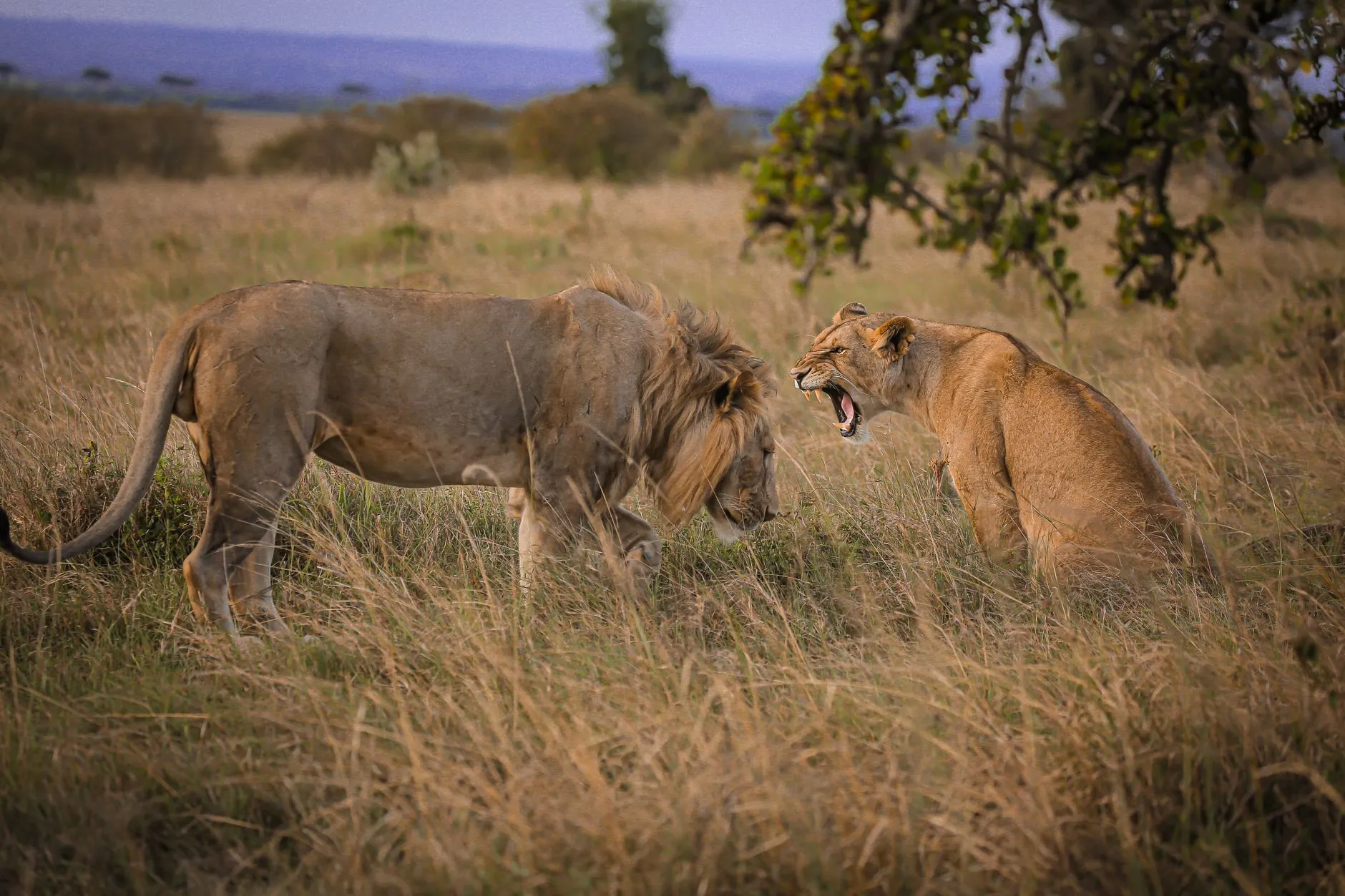
The Masai Mara is the headline act and earns it: open savanna stiff with lions, cheetah on the termite mounds, and — from roughly July to October — the Great Migration, when over a million wildebeest and zebra pour up from Tanzania’s Serengeti and throw themselves across the crocodile-filled Mara River. The crossings are the most dramatic wildlife spectacle on Earth. They are also unpredictable to the day; the herds mass, hesitate, and go when they go. Plan a few days in the Mara in season and accept you’re playing odds, not a timetable. Outside migration months the Mara is still superb resident-game country — cats are there year-round.
Amboseli is the elephant park, and the one image everyone wants: big tuskers crossing a dry lake bed with Mount Kilimanjaro filling the sky behind them. The mountain is shy — it hides in cloud and haze — so come in the dry season and shoot at dawn or dusk when it clears. Amboseli is compact and the elephant viewing is among the best in Africa.
Samburu, up in the hot northern drylands on the Ewaso Ng’iro River, is the connoisseur’s pick: it has the “Samburu Special Five” — Grevy’s zebra, reticulated giraffe, gerenuk, Beisa oryx and Somali ostrich — species you simply don’t see in the southern parks. Quieter, wilder, and a genuine change of scene.
Lake Nakuru is a fast, high-value add: a Rift Valley soda lake fringed with flamingos and a fenced sanctuary that’s one of Kenya’s best places to see both black and white rhino. Easy to slot in en route, a day or two is plenty.
Tsavo East & West are vast, raw and far less crowded — red-dust elephants, dramatic lava and springs in Tsavo West, big open spaces in Tsavo East. They’re also conveniently on the Nairobi–Mombasa axis (the SGR train stops at their doorstep), which makes Tsavo a natural bridge between safari and coast. Game is more spread out and the experience more rugged than the Mara — good for a second safari, less so as your only one.
No off-roading in the national parks — and that’s the rule. Inside the Mara reserve, Amboseli, Tsavo and the KWS parks, vehicles must stay on tracks, and there are no night drives or walking safaris. A guide who churns across the grass to a cheetah is breaking the law and stressing the animal. The legal way to get off-track and out after dark is a private conservancy.
Conservancies vs National Parks — Why It Matters
This is the decision that most changes the quality of your safari, and most first-timers don’t know it exists.
The Masai Mara National Reserve is public land run by the county. Anyone with a ticket can drive in; there’s no cap on vehicles; you must stay on the tracks; and gates close — it’s strictly 6am to 6pm, no walking, no night drives. At a good sighting in August you may share it with a dozen other vehicles.
The conservancies — Mara Naboisho, Olare Motorogi, Ol Kinyei, Mara North and others — are private land leased from Maasai landowners and ringed around the reserve. They cap the number of camps and vehicles per area, which means you might have a leopard to yourself. They allow off-road driving (to actually reach a sighting), night drives (genet, civet, aardvark, hunting lions) and guided walking safaris. The conservation model also puts tourism money directly into local Maasai hands, which is the more ethical structure. You pay a conservancy fee (typically rolled into your camp rate), but the experience is materially better and quieter.
The one thing conservancies usually can’t give you is a river crossing — those happen in the reserve. So the textbook migration-season plan is to stay in a conservancy for the exclusivity and night drives, and drive into the reserve on the days the crossings look on. Best of both.
The Swahili Coast — Diani, Watamu, Malindi & Lamu
After the bush, the Indian Ocean. Kenya’s coast is hot, palm-fringed, reef-protected and steeped in centuries of Swahili, Arab and Indian trade — and each stretch has a distinct character.
Diani Beach, about 30 km south of Mombasa, is the famous one: a long sweep of powder-white sand, a calm turquoise lagoon held back by a reef, and the widest range of hotels, watersports and restaurants on the coast. It’s the easy, classic beach choice and the simplest safari-then-beach pairing (fly Mara → Diani).
Watamu, further north, is the coast’s nature-lover pick: a marine national park with superb snorkelling and diving, sea turtles, the Mida Creek mangroves, and a relaxed, less-built-up feel than Diani. Excellent eating, too.
Malindi mixes beach with history and a strong Italian influence (it’s long been a favourite of Italian travellers); good food, an old Swahili town, and Vasco da Gama’s pillar. A solid all-rounder if you want more than just a sun lounger.
Lamu is the one that’s truly different. A UNESCO-listed island town with no cars — donkeys and dhows are the transport — where the medieval Swahili streetscape of coral-stone houses and carved doors is still a living town, not a museum. It’s slow, atmospheric, culturally rich and a bit of an effort to reach (you fly in). For travellers who want soul over resort polish, Lamu is the highlight of the coast.
Sea conditions change by season. The calmest, clearest water — best for snorkelling and diving — is roughly December to March, on the gentle Kaskazi winds. The mid-year months bring breezier seas and seaweed on some beaches at low tide. If diving Watamu is your reason to come, weight your dates toward the December–March window.
Nairobi — The Gateway
Nairobi is where almost every trip starts and ends, and it’s worth a day rather than a dash. Uniquely among capitals, it has a national park on its doorstep — Nairobi National Park, where you can see lions, rhino and giraffe against a skyline backdrop, an hour from the city centre.
The two must-dos are in the leafy Karen/Langata suburbs. The Sheldrick Wildlife Trust elephant orphanage runs a single public hour, 11am to 12 noon daily (closed 25 December), when the keepers bring out the rescued orphan calves to feed and mud-bathe — book ahead, and note you also pay the KWS Nairobi National Park gate fee to reach it. A few minutes away, the Giraffe Centre lets you eye-to-eye feed endangered Rothschild’s giraffes from a raised platform. Round it out with the Karen Blixen Museum (her old farmhouse in the suburb that bears her name) and you have a full, genuinely good Nairobi day.
Book the Sheldrick orphanage in advance. It’s one short hour a day, capped, and it sells out — especially in high season. Reserve directly with the Trust before you arrive, and arrive early; turning up on spec often means missing it.
When to Visit — Month by Month
Kenya runs on two dry seasons and two rainy ones, and timing genuinely changes the trip.
June–October — the main dry season and peak. The best all-round window. Vegetation thins, animals concentrate at water, roads are good, and — crucially — the Mara migration is in the country, with river crossings peaking around August and September. This is prime time, so it’s also the busiest and priciest (Mara park fees jump to US$200/day from 1 July). Book early.
January–February — the short dry season. An underrated sweet spot: warm, sunny, good game viewing, fewer crowds than the migration peak, and clear Kilimanjaro views from Amboseli. No river crossings, but excellent resident game and lower demand.
March–May — the long rains. April is the wettest. Some camps close, dirt roads get tough, and the bush is thick and green (harder to spot animals). Upside: dramatically lower prices and near-empty parks. For a budget-conscious, crowd-averse traveller who’ll accept some rain, late May can be a bargain.
November–December — the short rains. Brief, often-afternoon showers rather than all-day rain; the bush greens up and birding is excellent. Generally still a good time to travel, and December’s coast is at its calm-sea best. Prices climb again over the Christmas/New Year peak.
The coast roughly inverts the inland logic for water clarity: aim for December–March for the calmest, clearest sea.
What to Eat
Kenyan food is hearty inland and aromatic on the coast.
The national obsession is nyama choma — “roasted meat,” usually goat, slow-grilled over charcoal, hacked into pieces and eaten with the fingers alongside kachumbari (a fresh tomato-onion-chilli-coriander salad). It’s social food: a Sunday gathering, a roadside grill, a celebration. The staple beside it is ugali, a firm maize-meal cornerstone you pinch into a scoop for stews and greens — including sukuma wiki, the ubiquitous sautéed collard greens whose name means “stretch the week.”
The Swahili coast is a different, spice-led cuisine shaped by Arab and Indian trade: pilau and biryani rich with cloves, cinnamon, cardamom and cumin; coconut everywhere, in coconut fish curries and kuku paka (chicken in creamy coconut sauce); fresh seafood; and mandazi (lightly spiced fried dough) for breakfast. In Lamu and Mombasa, eat seafood and anything cooked in coconut — it’s the best food in the country.
On safari, lodge and camp food is generally excellent and varied; expect buffets that lean international with Kenyan touches. For a drink, Tusker is the national lager, and Kenyan coffee and tea are world-class — buy beans to take home.
Getting Around — Safari Flights, the Train & the Road
Domestic safari flights are the time-saver. Small carriers — Safarilink and AirKenya, plus Governors Aviation and others — fly light aircraft from Nairobi’s Wilson Airport (not the main international JKIA) to the airstrips at the Mara, Amboseli, Samburu, Tsavo, Lamu and beyond. A Mara hop is ~45–60 minutes versus 5–7 hours by road; reckon roughly €140–320 per leg. The catch: a strict 15 kg total baggage limit in soft-sided bags — pack a duffel, not a hard suitcase.
The SGR — Madaraka Express. Kenya’s modern standard-gauge railway links Nairobi and Mombasa in about 5 hours, with three departures a day each way (a stopping daytime service and a faster night express). It’s reliable, comfortable and cheap — economy from around KES 1,500 (~€10), first class more — and it stops at Voi and Mtito Andei, right beside Tsavo, which makes it a clever way to chain safari and coast. Book ahead in high season; it sells out.
Road safaris use 4×4 Land Cruisers (the gold standard, with a pop-up roof for game viewing) or, on cheaper trips, minivans. A road trip is the affordable option, lets you see the country and is sociable, but the long transfers are real — Nairobi–Mara is a half-day. Insist on a 4×4 with a pop-up roof rather than a minivan if game-viewing quality matters; minivans struggle off rough tracks and crowd at sightings.
Mind the bush-flight baggage limit. Safarilink and the other small carriers cap you at ~15 kg in a soft bag — hard shells are refused. If you’re flying to a camp and continuing to the coast, plan your packing (and any excess) around that limit before you leave home.
Where to Stay
Kenya’s lodging splits cleanly into safari and coast, across three budget tiers.
On safari, the spectrum runs from budget tented camps and small lodges (simple, often on the reserve fringe or doing camping safaris) through mid-range tented camps and lodges (comfortable, en-suite “glamping” tents, good guiding) to luxury and conservancy camps (small, all-inclusive, private-guide, often with the off-road and night-drive privileges that make a conservancy worth it). The jump in price largely buys exclusivity, location inside the best wildlife areas, and the quality of the guiding — which, as above, is the thing that matters most.
On the coast, Diani and Watamu offer everything from backpacker guesthouses and mid-range beach hotels to high-end boutique resorts; Lamu skews toward atmospheric Swahili-house guesthouses and a handful of stylish boutique stays rather than big resorts.
A note on the famous Giraffe Manor in Nairobi (where giraffes poke their heads through the breakfast-room windows): it’s iconic, genuinely special, and books out a year ahead at a serious price. If it’s a bucket-list item, reserve very early; if not, the Giraffe Centre next door gives you the giraffes for a few euros.
Costs & Budget
Be honest with yourself about safari pricing — it’s the part that surprises people. These are realistic all-in per person, per day on safari ranges (accommodation, meals, park fees, game drives and ground transport), in euros:
- Budget — roughly €160–280/day: camping safaris or simple lodges, shared 4×4 or minivan, larger groups. Real wildlife, fewer frills, more driving.
- Mid-range — roughly €280–550/day: comfortable tented camps and lodges, good guiding, smaller groups, a mix of road and the occasional flight.
- Luxury — €650–1,800+/day: small exclusive conservancy/fly-in camps, private guide, all-inclusive, the off-road-and-night-drive experience.
On top of the daily rate, budget for park fees (already inside packaged rates, but stark à la carte: Mara US$100/day Jan–Jun and US$200/day Jul–Dec; Amboseli and Nakuru ~US$90; Tsavo ~US$80 — all per non-resident adult, per day), domestic flights (~€140–320 per leg), tips (see below) and your international airfare.
A fly-in safari costs meaningfully more than a road safari — easily €1,500+ more over a week — but buys back a full travel day in each direction and reaches places the road can’t. The coast is far cheaper than safari: you can do Diani or Watamu comfortably on a fraction of the daily safari spend.
Practical Information
Entry / eTA. Mandatory eTA for almost all visitors — apply at etakenya.go.ke, US$30, ~72h, before you fly. Use the official site only.
Money. Currency is the Kenyan shilling (KES), around €1 ≈ KES 150 in mid-2026. M-Pesa mobile money is everywhere and cards are widely accepted in tourism, but carry some cash for tips, markets and small towns. Park fees are quoted in US dollars but payable in shillings; some gates (including the Mara Triangle) are cashless only — card or M-Pesa. ATMs are common in cities and on the coast, scarce in the bush.
Health — malaria & yellow fever. Malaria is present across much of Kenya below ~2,500 m, including the Mara, the coast, Amboseli and the lake region; take antimalarial prophylaxis (atovaquone-proguanil, doxycycline or mefloquine — see a travel clinic), use repellent and cover up at dusk. Nairobi and the highlands above ~2,500 m are low/negligible risk. Yellow fever vaccination is only required if you’re arriving from (or transiting >12h through) a yellow-fever-endemic country — coming straight from Europe, you don’t need it for entry, though carry the certificate if you’ve recently been in an endemic region. The certificate is valid only 10 days after the jab, so don’t leave it late.
Take the malaria precautions seriously. This isn’t optional caution — the Mara, the lakes and the coast are real malaria zones. Start prophylaxis on the schedule your travel clinic gives you (some begin before you arrive), wear long sleeves at dusk, and sleep under the net. A safari is not the place to skip the tablets.
Water & food. Drink bottled or filtered water, not the tap; lodges provide it. Coast and city food is generally safe in established places; be sensible with street food.
Safety. Kenya is broadly safe on the established safari and beach circuits, but practise normal city sense in Nairobi — watch for opportunistic crime, don’t flash valuables, use trusted transport at night, and avoid the Eastleigh and Kibera areas. Government advisories flag the far northeast and Somali-border regions as off-limits; the tourist areas (Mara, Amboseli, the central coast, Nairobi) are not in those zones. Book reputable operators and you remove most risk.
Nairobi after dark: take a known taxi or rideshare. Petty theft and the odd scam are the real risks in the capital — violence against tourists is rare on the circuit. Don’t walk unfamiliar areas at night, keep your phone away on the street, and use a hotel-arranged car or a reputable rideshare rather than flagging one down.
Tipping. Expected and appreciated. Guides are the big one — budget roughly €10–20 per day for your safari guide (more for an exceptional one, often pooled across a small group), plus camp staff tip boxes, ~€1–2 per bag for porters, and 10% in restaurants. Tip in shillings where you can; dollars and euros are accepted.
Connectivity. A local Safaricom SIM (or eSIM) is cheap and gives good coverage in cities and on the coast; the deep bush has patchy-to-no signal, which is rather the point. Most camps and lodges have Wi-Fi at the main area.
Frequently Asked Questions
Explore More
- The Swahili coast pairs naturally with a Zanzibar or Tanzania add-on if you have longer.
- For the migration’s other half, the same herds spend the rest of the year in Tanzania’s Serengeti — a Kenya–Tanzania combo follows them across the border.
Cheapest Flights to Kenya
We have tracked 7,884 fares to Kenya from 179 cities. As of June 2026, here is what a good price looked like from each — the lowest fare we recorded, and a “great-deal” benchmark to judge a quote against. These are tracked observations, not live prices: by the time you read this they will have moved, so treat them as a yardstick, not a quote.
| From | Lowest fare we tracked | Great-deal benchmark |
|---|---|---|
| Prague (PRG) | €253 | €361 |
| Brussels (BRU) | €254 | €363 |
| Milan (MXP) | €331 | €473 |
| Amsterdam (AMS) | €340 | €486 |
| Mallorca (PMI) | €341 | €487 |
| Gothenburg (GOT) | €345 | €493 |
| Stockholm (ARN) | €347 | €586 |
| Barcelona (BCN) | €347 | €496 |
| Vienna (VIE) | €351 | €501 |
| Geneva (GVA) | €357 | €510 |
| Zurich (ZRH) | €357 | €510 |
| Rome (FCO) | €357 | €510 |
| Lisbon (LIS) | €364 | €620 |
| Copenhagen (CPH) | €365 | €681 |
Recent deals we have posted to Kenya:
- Stockholm to Nairobi, Kenya from €376
- New York to Nairobi, Kenya from $895
- Basel to Nairobi, Kenya from CHF 476
- London to Nairobi, Kenya from £458
- Hamburg to Nairobi, Kenya from €562
- Riga to Nairobi, Kenya from €680
- Tallinn to Nairobi, Kenya from €652
- Edinburgh to Nairobi, Kenya from £626
- Oslo to Nairobi, Kenya from €502
- Paris to Nairobi, Kenya from €549
These are fares aifly tracked to this destination, not live quotes — they have changed since and several of the deals above may have expired. Browse current flight deals →