Mongolia — Complete Travel Guide 2026
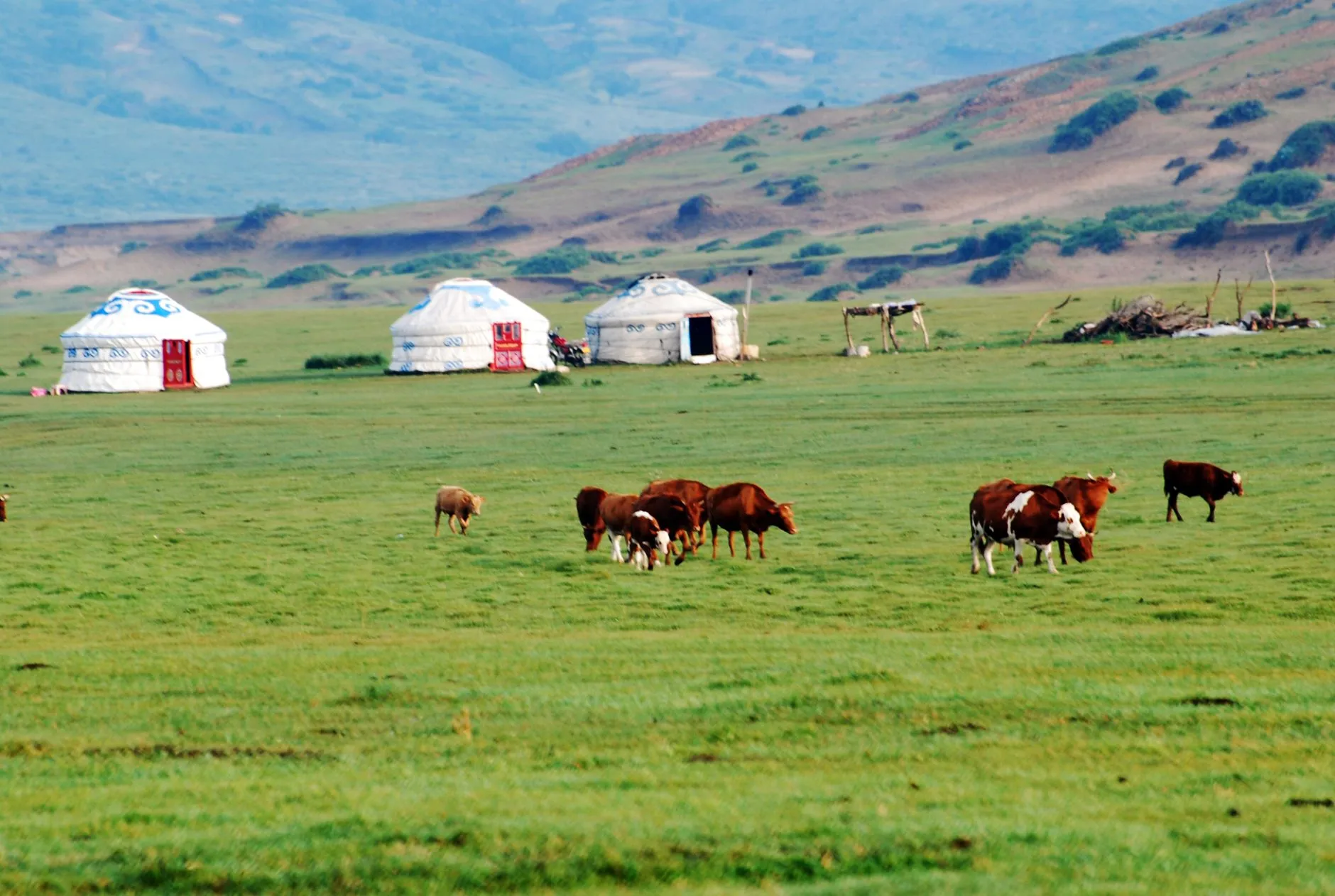
Mongolia is the great empty space at the centre of Asia, and it is the closest thing left on earth to genuine wilderness travel with a living nomadic culture still running through it. This is Genghis Khan’s homeland — the launchpad of the largest contiguous land empire in history — and eight centuries later half the population still lives semi-nomadically, herding sheep, goats, horses, yaks and camels across a steppe so vast it bends your sense of scale. You come here for the Gobi’s flaming cliffs and singing dunes, for the Kazakh eagle hunters of the Altai, for nights in a stranger’s ger with a bowl of fermented mare’s milk pressed into your hands, and for the simple, disorienting freedom of a country with almost no fences. It is not a turn-up-and-wander trip. It is a logistics-heavy overland adventure with a very short window — and for the right traveller, the best one on the continent.
Quick Reference
Landlocked Central Asia, wedged between Russia and China — endless steppe, the Gobi Desert and the Altai, and one of the least densely populated countries on earth (~3.5 million people in a land three times the size of France)
Ulaanbaatar Chinggis Khaan International (UBN) — the new airport ~50 km south of the capital, opened 2021; small regional fields at Mörön, Ölgii, Dalanzadgad and Khovd for domestic hops
Mongolian tögrög / tugrik (MNT) — cash is king outside the capital; ≈ 3,700 MNT to €1
Mongolian (Cyrillic script); English is limited and patchy outside UB tourism; Russian still common among the over-40s
Visa-free up to 30 days for 34 nationalities incl. the UK, Ireland, most Western European countries, Australia and NZ (extended through 2027); South Korea gets 90 days. US and Canadian passports also enter visa-free 30 days. Passport valid 6 months
June–September is the short usable season; ~11–13 July is the Naadam festival; early October** for the Golden Eagle Festival; winter is brutal (−30°C) but it’s the eagle-hunting and Tsagaan Sar season
The last great nomadic culture, the Gobi, Genghis Khan’s homeland, the eagle hunters, gers (yurts), horses, and more empty sky than you’ve ever seen
You don’t base in a town — you base in a 4×4 and a string of ger camps, with Ulaanbaatar as the arrival/departure hinge
Editor’s Note — the hard truth about Mongolia
Read this before you do anything else, because Mongolia is the destination most often misjudged by people who plan it like a normal country. There is almost no tourism infrastructure outside Ulaanbaatar. No resort strip, barely any signage, very few hotels, and — this is the one that breaks people — very few actual roads. Beyond the handful of paved highways radiating out of the capital, “the road” to the Gobi or to Khövsgöl is frequently just a set of tyre tracks braided across open ground, chosen by feel, that change with the weather. Towns are hundreds of kilometres apart. There is no Mongolian equivalent of jumping on a train and figuring it out.
What this means in practice: you do not self-drive Mongolia, and you do not backpack it the way you’d backpack Thailand. The two sane ways to travel are (1) an organised tour, or (2) a privately hired Russian 4×4 (the legendary Soviet UAZ “Furgon” van or a Land Cruiser) with a driver who knows the tracks, almost always paired with a guide-translator and very often a cook. One Western tourist behind the wheel of a hire car, navigating un-mapped pistes with no fuel for 200 km and no English-speaking soul for 100, is a recipe for a stranded, miserable, and occasionally dangerous trip. The driver-guide-4×4 model isn’t a luxury here — it’s the basic unit of travel.
The second hard truth is the season. Mongolia’s usable tourist window is brutally short: roughly mid-June to mid-September, with July and August the heart of it. Outside that, the steppe freezes — winters routinely hit −30°C to −40°C, ger camps close, passes block, and travel becomes a serious cold-weather expedition. There’s a magnificent winter niche (the eagle hunters in the snow, Tsagaan Sar lunar new year, the frozen Khövsgöl ice festival) but it’s for the hardened, not the holidaymaker. Plan for the short summer, build the trip around it, and book the 4×4 — that’s the whole game.
⚠️ You cannot improvise Mongolia. Distances are vast, the roads are tracks, the season is ten weeks long, and the infrastructure ends at the edge of Ulaanbaatar. Either book a reputable tour or hire a 4×4-with-driver-and-guide. Trying to wing it solo with a rental car is the single most common — and worst — mistake travellers make here.
Should You Go? Who it’s for — and isn’t
Mongolia is for the adventurer who measures a trip by the experience, not the comfort. If the phrase “twelve hours bouncing across open steppe in a Russian van, then a night in a felt tent with no plumbing and a sky thick with the Milky Way” reads as a promise rather than a warning, this is one of the great trips of your life. It’s made for the off-grid traveller, the horse-rider (Mongolia is arguably the best place on earth to ride hard across open country), the photographer (the light, the dunes, the eagle hunters, the herds), and the culture-traveller who wants to sit in a real nomad’s home and learn how a family survives a place like this.
It is also, specifically, for people who came for the Gobi, the eagle festival, Khövsgöl, or Naadam — the four headline experiences — and are willing to put up with a lot of road to earn them.
Who it’s not for: the comfort-seeker, full stop. Long days of rough off-road driving, basic toilets, intermittent or no showers, simple mutton-heavy food, and limited connectivity are the texture of the entire trip outside the capital. It’s not for the no-plan, last-minute backpacker — the logistics demand forward booking, especially around Naadam and the eagle festival, when drivers, guides and camps sell out. It’s not a beach-and-cocktails culture, and it’s not a city break (Ulaanbaatar alone, frankly, is not worth the airfare). And it is genuinely physically demanding — the driving days alone are tiring in a way a guidebook can’t quite convey.
If you want easy, go elsewhere. If you want real, almost nowhere does it better.
Getting There — UBN, who flies, and the railway
Almost everyone arrives by air into Ulaanbaatar Chinggis Khaan International Airport (UBN) — the gleaming new airport opened in 2021 that replaced the old, fog-prone Buyant-Ukhaa field. It sits about 50 km south of the city, a 45-minute-to-over-an-hour transfer depending on the capital’s notorious traffic; your tour operator or hotel will pick you up, which is the norm and the sane move.
There are no direct flights from Western Europe, North America or Australia — you connect. The most useful hubs and carriers:
- Turkish Airlines — Istanbul to UBN, generally the best-value one-stop from across Europe and often the cheapest into Mongolia.
- MIAT Mongolian Airlines — the national carrier, with its own long-haul links to Frankfurt, plus Istanbul, Seoul, Tokyo and Osaka.
- Korean Air / Asiana / Korean low-cost carriers — Seoul (Incheon) is the single busiest gateway, with several daily flights; routing via Seoul is the standard play from North America and much of Asia.
- Air China — via Beijing, and a Hohhot link; Aeroflot via Moscow for those for whom that routing works.
- Plus seasonal and regional links to Tokyo, Osaka, Bangkok, Hong Kong and Almaty.
The cheapest fares are usually via Istanbul, Seoul or Beijing; budget around 40 days ahead and expect a one-stop journey of 10–16 hours from Europe.
The romantic alternative is the Trans-Mongolian Railway, the middle leg of the Moscow–Beijing line that crosses Mongolia through Ulaanbaatar. Riding in (or out) overland — Beijing to UB is roughly 30 hours through the Gobi and the great wall country — is a classic journey in its own right, though the current geopolitics around the Russian half of the route make the Beijing side the more straightforward direction in 2026. Check the operating status before you build a trip around it.
💡 Connect via Seoul or Istanbul, and never plan a tight onward connection. UBN flights can shift and the city’s traffic is unpredictable. Land with a buffer, let your operator handle the airport pickup, and you skip the single biggest arrival headache.
Getting Around — the 4×4-and-driver reality
Forget timetables. Inside Mongolia, you move one of three ways.
The hired 4×4 with driver (and usually guide + cook) is how the overwhelming majority of independent travellers see the country, and it’s the right answer. You’re paying for a Land Cruiser or the iconic Soviet UAZ “Furgon” van, a driver who reads un-signed tracks like a map and can fix the vehicle with a spanner and faith, and a guide who translates, arranges the ger stays, and turns the landscape into a story. Reckon on roughly €120–200 a day for the 4×4-plus-driver, with a guide and cook adding more — split across a small group it’s very reasonable, and it’s the difference between a trip and a survival exercise. Days are long (8–12 hours of driving is normal on a Gobi or Khövsgöl run) and slow; 300 km can take all day on the pistes.
Organised tours bundle all of the above into a fixed itinerary — the easiest route in, and the only practical one if you’ve a fixed window. A multi-day Gobi tour runs roughly €80–150 per person per day all-in (transport, guide, ger-camp lodging, most meals), more for small-group or comfort operators. Book a reputable operator over the cheapest offer — the gap between a good driver-guide and a bad one is the gap between a brilliant trip and a broken-down nightmare.
Domestic flights save the spine-jangling road days when distances are extreme. The most useful are UB to Ölgii (the far west / eagle hunters — a 4-day drive otherwise), UB to Dalanzadgad (the south Gobi) and UB to Mörön (Khövsgöl), roughly €120–250 each way on carriers like Hunnu Air, Aero Mongolia and MIAT. They’re worth it for the west especially — flying Ölgii instead of driving turns a multi-week trip into a one-week one.
There is no useful public bus network for tourists, no Uber off the main UB grid, and self-drive is for experts with a support vehicle only. The 4×4-and-driver is the country’s circulatory system.
Ulaanbaatar — the chaotic capital
Roughly half of Mongolia lives in Ulaanbaatar — a sprawling, traffic-choked, fast-changing city ringed by the felt-tent ger districts where rural migrants settle, and shrouded each winter in some of the worst air pollution on the planet (the coal-stove smog from late autumn through early spring is genuinely hazardous — a real reason to come in summer). It’s not pretty, and it’s not why you came. But it’s the hinge of every trip, and a day or two before and after your overland legs is well spent.
The headline sights: Gandantegchinlen (“Gandan”) Monastery, the spiritual heart of Mongolian Buddhism and home to a soaring 26-metre gilded statue of Migjid Janraisig — the one place in the city that survived the Stalinist purges of the 1930s mostly intact. Sükhbaatar (Chinggis) Square, the civic centre, with its enormous seated bronze of Genghis Khan presiding over the parliament steps. The National Museum of Mongolia, the essential primer on the empire, the nomads and the deel (the national robe) — do this before you head out and the steppe makes far more sense. The Bogd Khan Palace Museum, the winter palace of Mongolia’s last theocratic ruler, with its eccentric treasures. And out east of the city, the genuinely jaw-dropping 40-metre stainless-steel Genghis Khan equestrian statue at Tsonjin Boldog — the largest equestrian statue in the world, which you can climb up through the horse’s mane for a view across the steppe.
Eat, stock up, swap your money, buy a SIM, and sleep in a real bed while you can — then point the 4×4 at the horizon. For the deep dive on the city — neighbourhoods, where to eat and stay, the cashmere shopping, the nightlife and the practical detail — see our full Ulaanbaatar city guide.
⚠️ Don’t come to UB in winter for the city itself. From November to March the coal-smog can be among the worst on earth, with daytime readings that make sightseeing genuinely unpleasant and unhealthy. Winter Mongolia is for the eagle hunters and the frozen lake out west — not for lingering in the capital.
The Gobi Desert — the headline trip
If Mongolia has one bucket-list run, this is it — and it bears no resemblance to the rolling-dunes desert of the imagination. The Gobi is a vast, varied, cold-blooded desert of gravel plains, rock canyons, scrub steppe and only patches of true sand, where Bactrian (two-humped) camels graze and nomad families still herd against an impossibly empty backdrop. The classic southern Gobi loop, out of Dalanzadgad, strings together three unforgettable stops.
Bayanzag — the Flaming Cliffs — are the rust-red sandstone escarpments that glow like embers at sunset, and they are world-famous for one reason: this is where the explorer Roy Chapman Andrews’ 1920s expeditions first found dinosaur eggs and a trove of fossils, making the Gobi one of the great palaeontology sites on earth. You can still stumble on fossil fragments in the sand (look, photograph, leave them — it’s the law).
Khongoryn Els — the Singing Dunes — are the postcard: a 100-km-long, up-to-300-metre-high wall of golden sand that hums and roars as the grains shift, climbable (brutally, on a sliding two-steps-forward-one-back ascent) for a sunset view that justifies the entire trip. This is camel-trek and dune-camp country.
Yolyn Am — the Vulture’s Mouth — is the counterpoint: a deep, narrow rock gorge in the Gurvan Saikhan mountains that holds a sheet of ice deep into summer, a green, cool, lammergeier-haunted canyon in the middle of a desert. The contrast — ice and sand within a day’s drive — is the Gobi’s whole personality.
A proper southern Gobi loop is 4 to 7 days by 4×4 (or fly into Dalanzadgad to top-and-tail the driving), staying in tourist ger camps and with herder families. It’s long, dusty and utterly worth it.
💡 Fly one leg of the Gobi if your time is short. The drive from UB to the southern Gobi swallows the best part of two days each way. Flying UB–Dalanzadgad and running the loop from there can turn a punishing road-trip into a tight, brilliant 4-day adventure.
Central Mongolia — the steppe & Kharkhorin
The accessible heart of the country, an easier-to-reach loop from UB (paved most of the way, by Mongolian standards) that delivers the classic steppe-and-monastery Mongolia without the marathon Gobi distances. This is the best region for first-timers, short trips, and the genuine nomad-homestay experience.
Kharkhorin (Karakorum) is the historic prize — the site of Genghis Khan’s great-grandson Ögedei’s 13th-century imperial capital, the administrative heart of the Mongol Empire, now almost entirely vanished into the grass. What remains is profound by association rather than spectacle: a couple of standing stone monuments, the foundations, and above all Erdene Zuu, the oldest surviving Buddhist monastery in Mongolia, built in 1585 from the rubble of the old capital and enclosed by a wall of 108 white stupas. It’s atmospheric, working, and the single best monastery you can reach on a short trip.
From here the Orkhon Valley — a UNESCO cultural landscape that has cradled nomadic empires for two thousand years — opens up: grassy river country dotted with gers and grazing horses, the Orkhon waterfall, hot springs, and the chance to stay with herder families, ride their horses, and watch the daily rhythm of milking, herding and the dairy-making that runs a nomad household. A 3–5 day central loop (Kharkhorin, the Orkhon Valley, a night or two of homestay, maybe the dunes of Elsen Tasarkhai) is the ideal first taste of nomadic Mongolia — and the most logistically forgiving.
The North — Khövsgöl & the reindeer people
Head north toward the Siberian border and the steppe gives way to forested mountains, larch taiga and water. The jewel is Lake Khövsgöl — the “Blue Pearl of Mongolia,” a vast, deep, achingly clear freshwater lake (it holds a meaningful share of the world’s fresh water) ringed by mountains and pine forest. After the dust of the Gobi it’s a shock of green and blue: you can ride horses along the shore, kayak, hike, and stay in lakeside ger camps in air that smells of pine. It’s the country’s cool, scenic, restorative north — and a long haul (a flight to Mörön plus a drive is the smart way in).
Deeper into the northern taiga live the Tsaatan — the Dukha reindeer herders, one of the last reindeer-herding cultures on earth: a tiny community who live in conical teepees (not gers) and move with their domesticated reindeer across the high forest near the Russian border. Visiting them is a genuine expedition — a flight, a long drive, then hours on horseback into roadless taiga, only feasible in the short summer. Go with a responsible operator who has a real relationship with the community and pays them fairly: the Tsaatan are not a tourist attraction but a fragile, threatened way of life, and the worst version of this trip is an exploitative drive-by. Done right, it’s one of the most extraordinary cultural encounters left in the world.
The West — the Altai & the eagle hunters
The far west — Bayan-Ölgii province, tucked against China, Russia and Kazakhstan in the high Altai — is a different Mongolia again: snow-dusted glacier peaks, Kazakh-Muslim culture, and the legendary golden-eagle hunters, the berkutchi who hunt foxes and hares across the winter mountains on horseback with trained female golden eagles riding their arms. It is, visually, the most spectacular human-and-animal tradition on the planet, and it’s the reason a lot of serious travellers come to Mongolia at all.
The headline event is the Golden Eagle Festival, held in early October (the main festival falls around 3–4 October 2026) near Ölgii — up to 80 eagle hunters in full fur and embroidery, parading on horseback with their eagles before competing in calling their birds down from the mountaintops, plus horseback games like the bone-snatching kökpar. It is a photographer’s dream and books out far ahead; a smaller spring festival runs in March. To witness it you fly UB–Ölgii (the drive is multiple punishing days) and base with a local Kazakh operator.
Beyond the festival, the west holds Altai Tavan Bogd National Park — Mongolia’s highest peaks, glaciers, alpine lakes, petroglyphs and serious trekking — and the chance to stay with eagle-hunter families year-round (the real hunting season is the snowbound winter, when a tougher kind of traveller can ride out with a hunter for the actual hunt). The Altai is the most logistically committing region in the country and the most rewarding for it.
⚠️ The Golden Eagle Festival sells out a year ahead. Flights to Ölgii, the limited beds, and the good local guides are all gone months in advance for early October. If the eagles are your goal, lock the trip in early — and fly the leg; nobody drives four days each way to Ölgii by choice.
Naadam & nomadic culture
To understand Mongolia, time your trip to Naadam — the national festival held nationwide each July (the big Ulaanbaatar event runs roughly 11–13 July 2026, with the opening ceremony on the 11th), a celebration of the “Three Manly Sports”: wrestling, archery and horse-racing. In the capital’s stadium you get the spectacle — the costumed opening, the hundreds of wrestlers in their tight zodog jackets and eagle-dance victory struts, the archery, the colour. But the better Naadam is often a small countryside Naadam in a provincial town, where the famous long-distance horse races — run by child jockeys across open steppe for up to 30 km — happen on the grass in front of you, and the whole community turns out. If you can, see a rural one.
Beyond the festival, the culture you’ll actually live is the ger and the hospitality code. Step into a herder’s felt tent — and you will, repeatedly — and there are quiet rules: enter to the left, accept whatever’s offered, take it with your right hand, don’t step on the threshold, move clockwise. You’ll be handed snuff, hard dried curds (aaruul), milk tea, and very probably airag — fermented mare’s milk, mildly alcoholic, sour, fizzy, and a genuine acquired taste that it’s rude to refuse outright (take a sip, smile). The nomadic generosity to strangers is real and humbling: in a land this empty, hospitality isn’t a courtesy, it’s a survival pact.
The other great cultural moment is Tsagaan Sar, the lunar new year (late winter — around mid-February 2026), the most important family festival of the year, built around mountains of buuz dumplings and ritual visiting. It’s a magnificent time to be hosted by a family, if you can handle the cold.
💡 A countryside Naadam beats the stadium. The Ulaanbaatar Naadam is the spectacle and easiest to attend, but the smaller provincial Naadams put you right at the edge of the steppe horse-race finish line, among the families, for free. If your route passes a town holding one in mid-July, go.
What to Eat & Drink
Be honest with yourself before you arrive: Mongolian food is mutton, mutton, and more mutton, built for surviving a savage climate, not for delighting a food critic. It’s heavy, meat-and-dairy-centric, low on vegetables and spice, and entirely logical once you’ve spent a freezing night on the steppe. Embrace it for what it is and there’s real, hearty pleasure in it.
The two dishes you’ll eat constantly: buuz — fist-sized steamed dumplings stuffed with minced mutton and fat, the national comfort food and the centrepiece of Tsagaan Sar — and khuushuur, their deep-fried cousin, flat fried mutton pastries that are the unofficial food of Naadam. Then there’s tsuivan (steamed-then-fried noodles with mutton and a little veg, the everyday hot meal), boodog and khorkhog (the spectacular feast methods — meat cooked with fire-heated stones inside the carcass or in a milk can, hot stones passed hand to hand afterward for luck), and endless mutton soups and stews.
The dairy is everywhere and unavoidable: süütei tsai (salty milk tea, the universal welcome drink — it’ll surprise you the first time), dried curds (aaruul, jaw-breakingly hard), clotted cream (öröm), and the famous airag, the fermented mare’s milk that’s the cultural drink of summer. For booze beyond airag, Mongolia makes serviceable beer (Chinggis, Sengur) and a great deal of vodka (Chinggis vodka is the national pour, and toasting is a serious business). In Ulaanbaatar you’ll find genuinely good international restaurants, Korean and Japanese food, hipster cafés and craft beer — eat your vegetables there, because out on the steppe it’s mutton and milk tea, and that’s the deal.
Costs & Money
Here’s the counter-intuitive thing about a Mongolia budget: the trip is mostly the tour, not the daily spending. Your on-the-ground costs for food and trinkets are low — but the unavoidable cost of the 4×4, driver, guide and ger camps is what defines the bill, and there’s no cheaping out of it without ruining the trip.
A realistic 2026 breakdown:
- The overland tour / 4×4: the big line item. An all-inclusive multi-day tour runs roughly €80–150 per person per day (transport, driver-guide, ger-camp nights, most meals), more for small-group comfort operators. Hiring your own 4×4-and-driver is roughly €120–200 a day for the vehicle, split among your group, plus guide and cook.
- Ger-camp night: a tourist ger camp (felt tent, shared facilities, breakfast/dinner) runs roughly €25–50 per person; staying with a herder family directly is much less, often arranged through your guide.
- Domestic flight: €120–250 each way for UB–Ölgii or UB–Dalanzadgad — worth it to skip the worst drives.
- Naadam / eagle festival premium: expect a real surcharge in early-mid July and early October — everything (drivers, guides, beds, flights) is dearer and books out months ahead.
- Daily spend in UB: modest. A good restaurant meal €6–12, a beer €2, a museum €2–4, a city taxi a few euros, a quality cashmere sweater (the great Mongolian buy) from around €60.
The currency is the tögrög, and outside Ulaanbaatar it is overwhelmingly a cash economy — ATMs and cards work in the capital, but in the countryside there are no machines, no card terminals, and no fallback. Withdraw a generous wad of tögrög in UB before you head out. Tipping isn’t traditional but is now expected by tour crews — budget to tip your driver, guide and cook at the end (a few euros per person per day each is a reasonable benchmark, more for an exceptional crew).
⚠️ Get all your cash in Ulaanbaatar — the countryside has no ATMs. Once you leave the capital you’re in a pure cash world for days at a time: ger camps, fuel, food, souvenirs and tips. Run out on the steppe and there is no machine for 300 km. Carry far more tögrög than you think you need.
Practical Information
Entry & visa: visa-free for 30 days for 34 nationalities — including the UK, Ireland, most Western European countries, Australia, New Zealand, the US and Canada (the scheme has been extended through 2027); South Korea gets 90 days. Holders of ordinary passports for tourism just get a stamp on arrival. Anyone staying over 30 days must register with the Immigration Agency in UB within their first seven days. Passport valid six months. Confirm your own nationality’s terms before flying — these policies have been on annual extensions and can shift.
The season: this is the practical fact that shapes everything — the realistic window is mid-June to mid-September, with July and August prime. Ger camps and operators largely shut outside it, and shoulder-season weather is volatile (snow can fall in any month at altitude). Winter travel is possible but is a genuine cold expedition, not a holiday.
The ger-camp reality: outside UB you sleep in gers — round felt tents, often charming, usually with a wood or dung stove, shared bathroom blocks at tourist camps, and frequently no plumbing at all when staying with herder families (a long-drop or the open steppe). Showers are intermittent; pack wet wipes and lower your expectations. It’s part of the deal and part of the charm.
The cold & the altitude: even in summer the nights are cold and the days swing wildly — pack serious layers, a warm hat and gloves regardless of the calendar. Much of the country sits at 1,200–2,000 m+, and the west goes higher; nothing dramatic, but factor it in.
Connectivity: mobile coverage is genuinely sparse off the main routes — Mobicom and Unitel SIMs (buy in UB with your passport) give you data in towns and along major roads, but expect long stretches of no signal at all on the steppe and in the Gobi and Altai. Treat a Mongolia trip as a real digital detox; tell people at home you’ll be offline for days.
Why you book through an operator: the combination of un-mapped tracks, vast fuel-less distances, no English off the tourist trail, a language in Cyrillic, and the brutally short season means an organised tour or a hired driver-guide-4×4 isn’t optional for almost everyone. Choose a reputable, well-reviewed operator (and pay a little more for a good one) — it’s the single decision that most determines whether your trip is magnificent or miserable.
Safety & health: Mongolia is a low-crime, welcoming country and the wilderness is the real “hazard” — get travel insurance that covers remote-area evacuation, because help is genuinely far away. Petty theft happens in crowded UB spots (markets, the train station); the steppe itself is about as safe as travel gets. Carry any personal medication; pharmacies are UB-only in practice.
When to Go
There is one answer for most travellers — the short summer — and it’s worth being precise about it.
Mid-June to mid-September is the season. July and August are the warm, green, fully-operational core: long days, comfortable temperatures, every camp open, the grass at its lushest and the herds out — and the two great events, with Naadam in mid-July (~11–13 July 2026) the headline. The trade-off is that July is also peak demand and peak price, and Naadam itself books out far ahead.
June and early September are quieter, slightly cooler shoulders that still work well — early September in particular gives you golden steppe, thinner crowds and the start of autumn colour, with the camps still running.
Early October is the eagle window: cold and the season winding down, but the Golden Eagle Festival in Bayan-Ölgii (~3–4 October 2026) is a reason all its own to brave the chill — book a year out.
Winter (November–March) is for the committed only: −30°C and colder, most of the country shut to ordinary tourism, the UB smog at its worst — but with two singular prizes for the hardy, the real winter eagle-hunting in the Altai and Tsagaan Sar (lunar new year, ~mid-February 2026), plus the frozen Lake Khövsgöl ice festival in spring. Magnificent, harsh, and not a beginner’s trip.
For the overwhelming majority: aim squarely at July–August, decide whether you want Naadam (book early if so), and build everything around that window.
Frequently Asked Questions
Cheapest Flights to Mongolia
We have tracked 2,887 fares to Mongolia from 89 cities. As of June 2026, here is what a good price looked like from each — the lowest fare we recorded, and a “great-deal” benchmark to judge a quote against. These are tracked observations, not live prices: by the time you read this they will have moved, so treat them as a yardstick, not a quote.
| From | Lowest fare we tracked | Great-deal benchmark |
|---|---|---|
| Kastamonu (KFS) | €411 | €587 |
| Nevşehir (NAV) | €412 | €589 |
| Konya (KYA) | €413 | €590 |
| Debrecen (DEB) | €422 | €603 |
| Dalaman (DLM) | €437 | €624 |
| Edremit (EDO) | €444 | €634 |
| Zonguldak (ONQ) | €448 | €640 |
| Kayseri (ASR) | €454 | €649 |
| Antalya (AYT) | €456 | €652 |
| Ankara (ESB) | €457 | €653 |
| Kütahya (KZR) | €460 | €657 |
| Izmir (ADB) | €470 | €671 |
| Heraklion (HER) | €478 | €683 |
| Thessaloniki (SKG) | €489 | €699 |
Recent deals we have posted to Mongolia:
- Geneva to Ulaanbaatar, Mongolia from CHF 597
- Nuremberg to Ulaanbaatar, Mongolia from €656
- Stuttgart to Ulaanbaatar, Mongolia from €749
- Stockholm to Ulaanbaatar, Mongolia from €591
- Oslo to Ulaanbaatar, Mongolia from €741
- Helsinki to Ulaanbaatar, Mongolia from €655
- Bucharest to Ulaanbaatar from €654
These are fares aifly tracked to this destination, not live quotes — they have changed since and several of the deals above may have expired. Browse current flight deals →